Do Skunks Eat Ducks?

A few years ago, an aunt asked me, “Don’t you get bored looking at the same trees and park everyday?” She looked genuinely concerned because she had heard my mother-in-law say, yet again,  that I was setting off on my walk. 

They could not imagine why I would take the children on walks, or if they weren’t in the mood, then set off by myself. 

I was genuinely shocked. Not because of the question but because nature is very rarely boring. It is full of adventure and mystery, not to mention humor, and joy. 

Take for instance the morning walk a few days ago for me. 

Hibernation would be a marvelous pursuit

Winters in California can be tricky – cold, foggy, misty, cloudy, cold (did I mention cold already? Well – the cold this week is worth mentioning twice, so I’ll leave it). 

I went reluctantly for a walk. See climatic conditions mentioned above for explanations. When I get up in the morning these days, I fervently wish I was born a bear. Hibernation would be a marvelous pursuit. The self-help channels and articles are all banging on about getting enough sleep, and yet society wants you to be up and about for long hours and at absurdly cold times too. Ridiculous!

That morning I moaned about being awake, and the husband gave me an amused look. I snapped petulantly, “What?! I have to be awake all the time once I get up – till I sleep again!” 

“Isn’t that true for all creatures who aren’t nocturnal?”, he said, and I apparently replied in gibberish. Semantics. The point is, I did not want to get up. I do not want to get up. I do not want to start my day in the cold. But I do – everyday the alarm seems to go off earlier and earlier. It could not have been the whole night gone, could it?! I just got warm and comfortable. The comforter took that long to trap body heat, the heater did not turn on, the frozen nose took awfully long to thaw. 

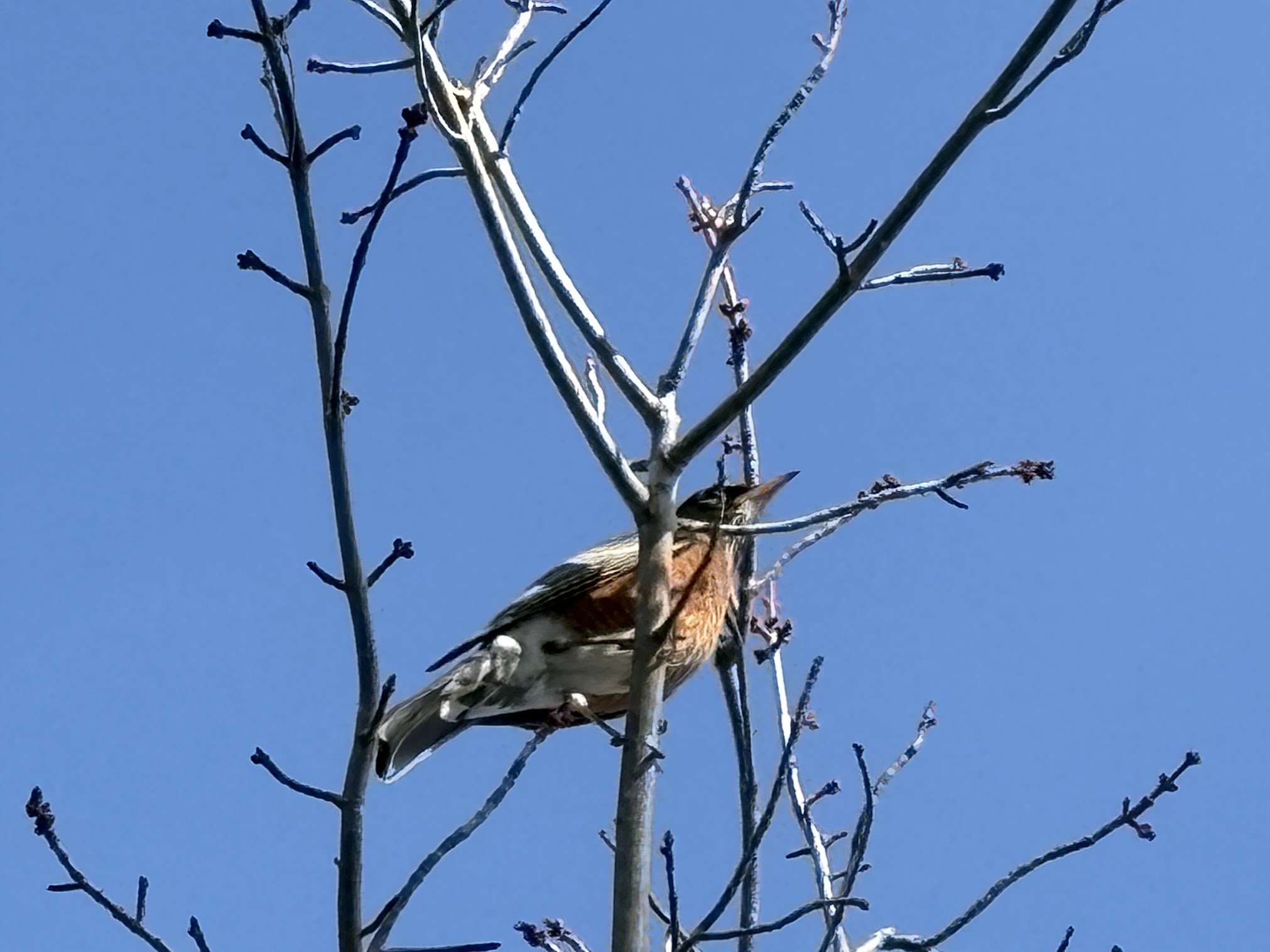
But human-beings are resilient if nothing else. So, I dragged myself out into the cold. On my morning walk, the fog was still lifting, and the cold made me look like Rudolph the red-nosed reindeer. Even the birds seemed to be quieter. No chirping, no loud squawking. 

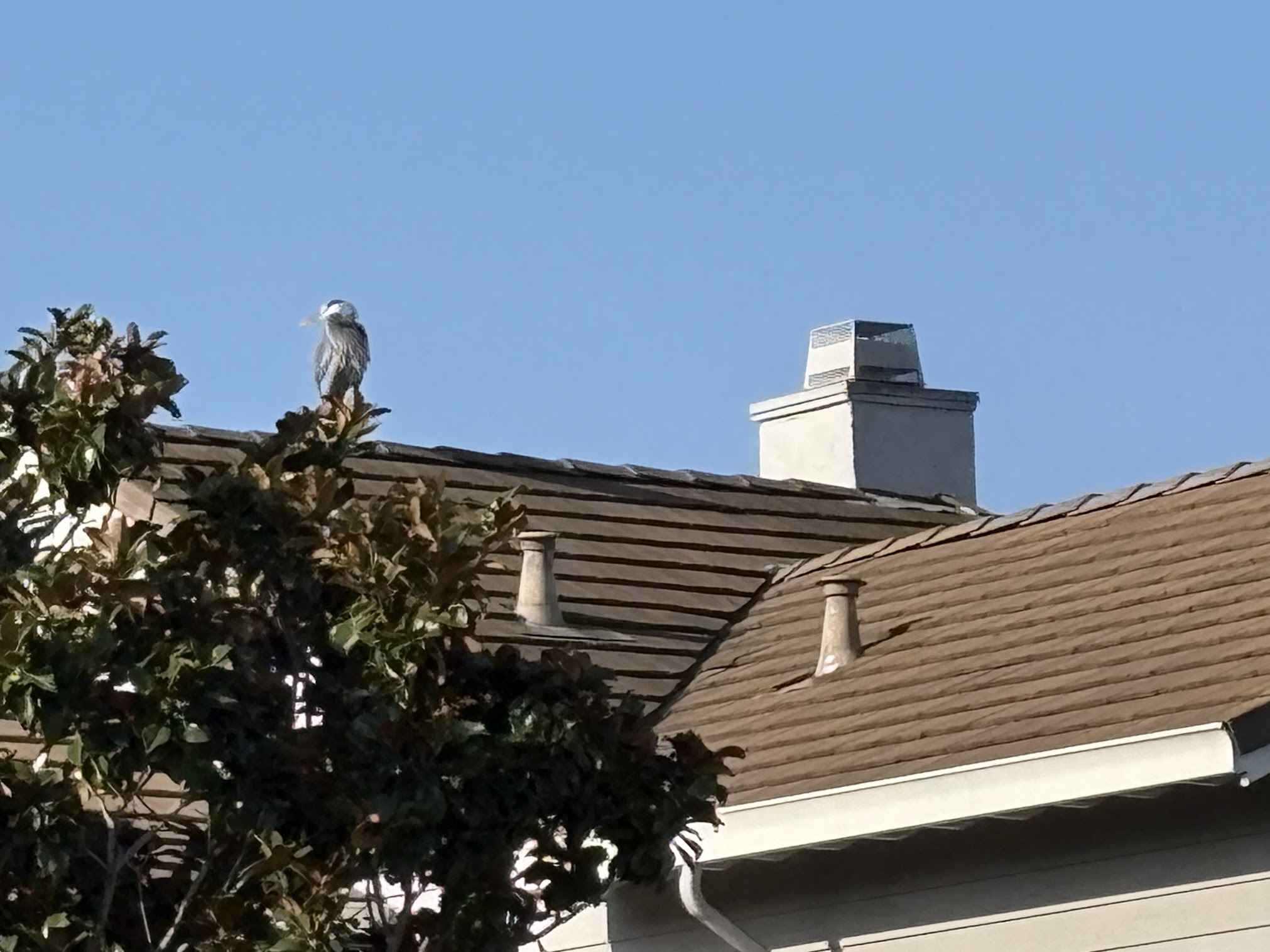
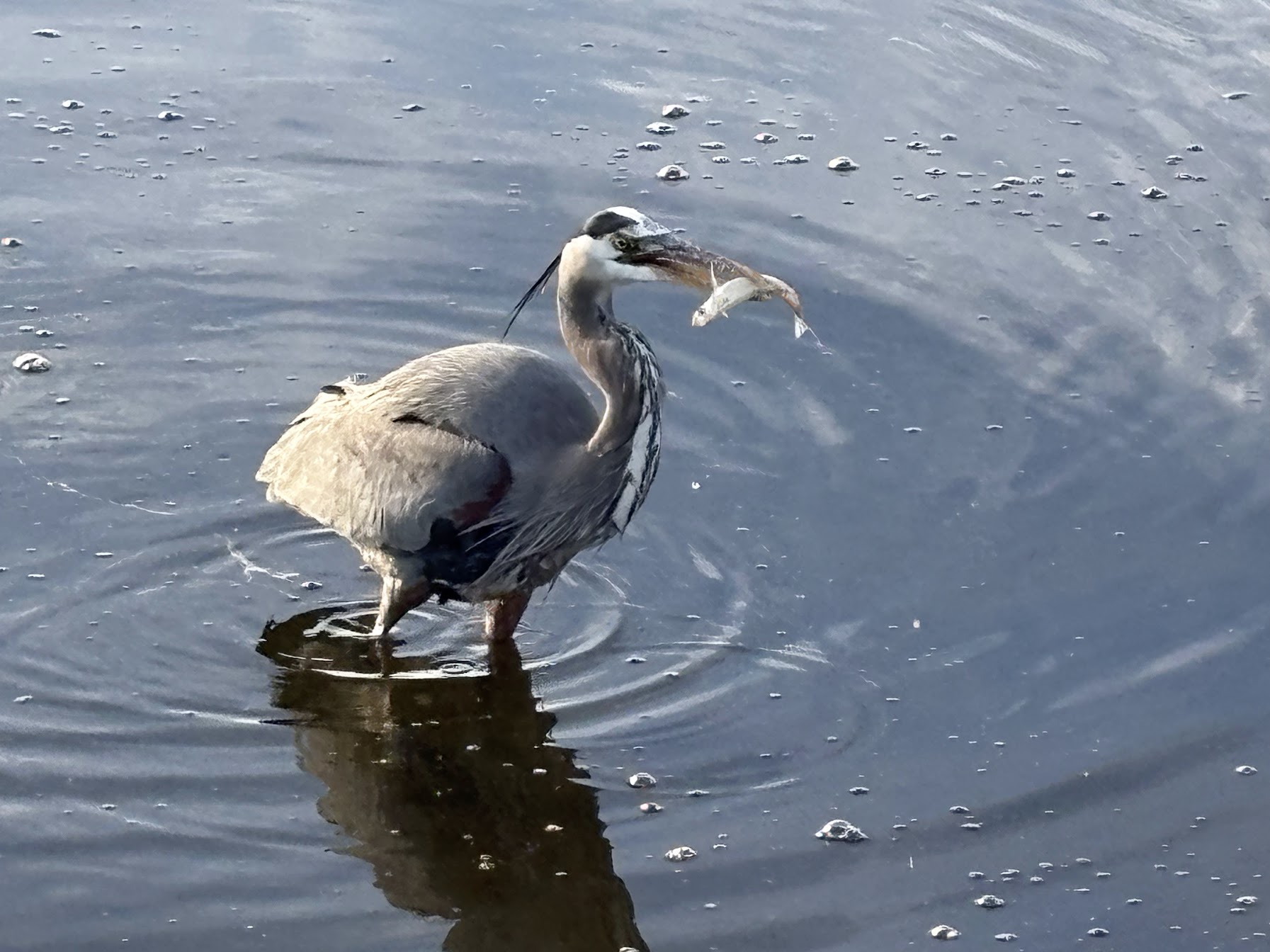
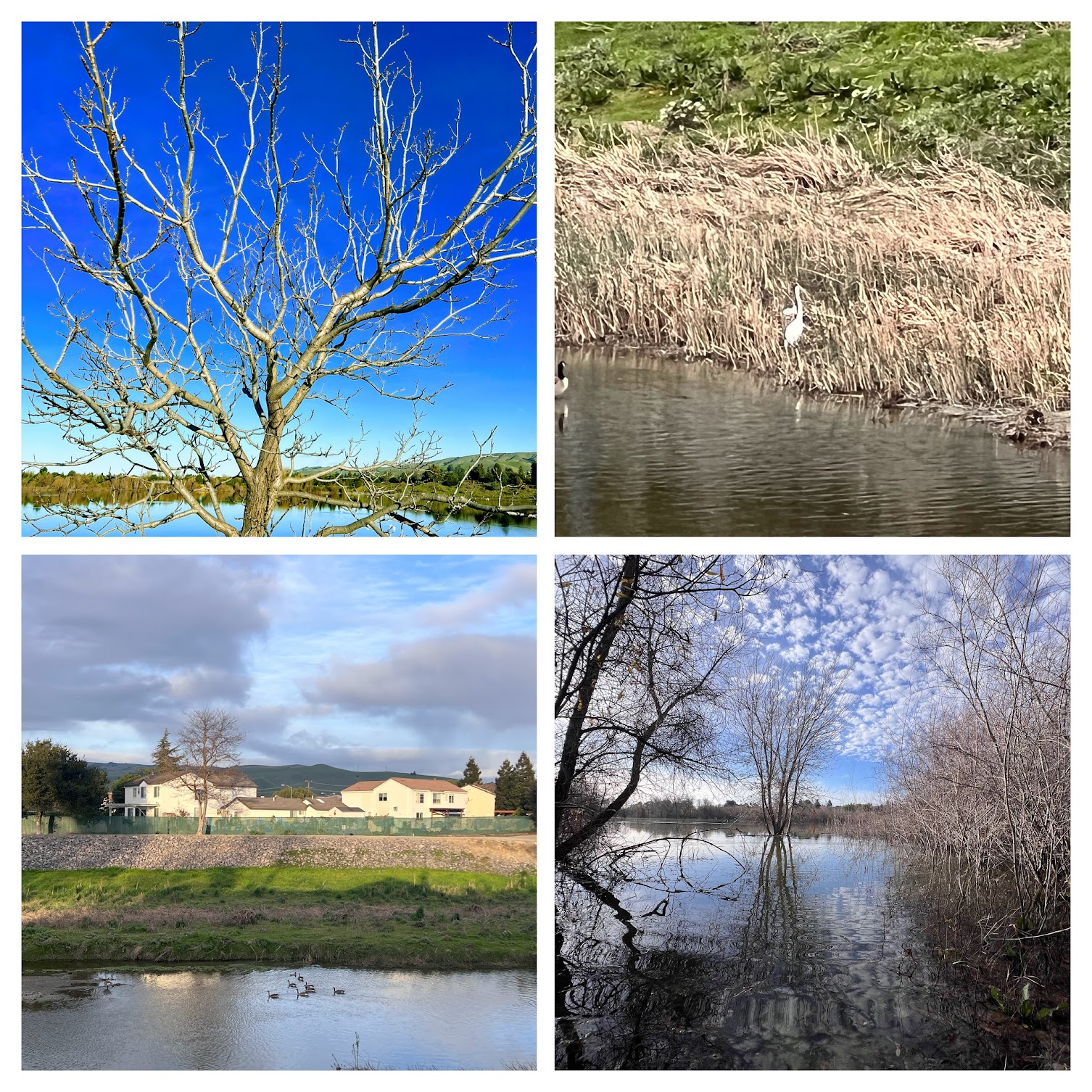
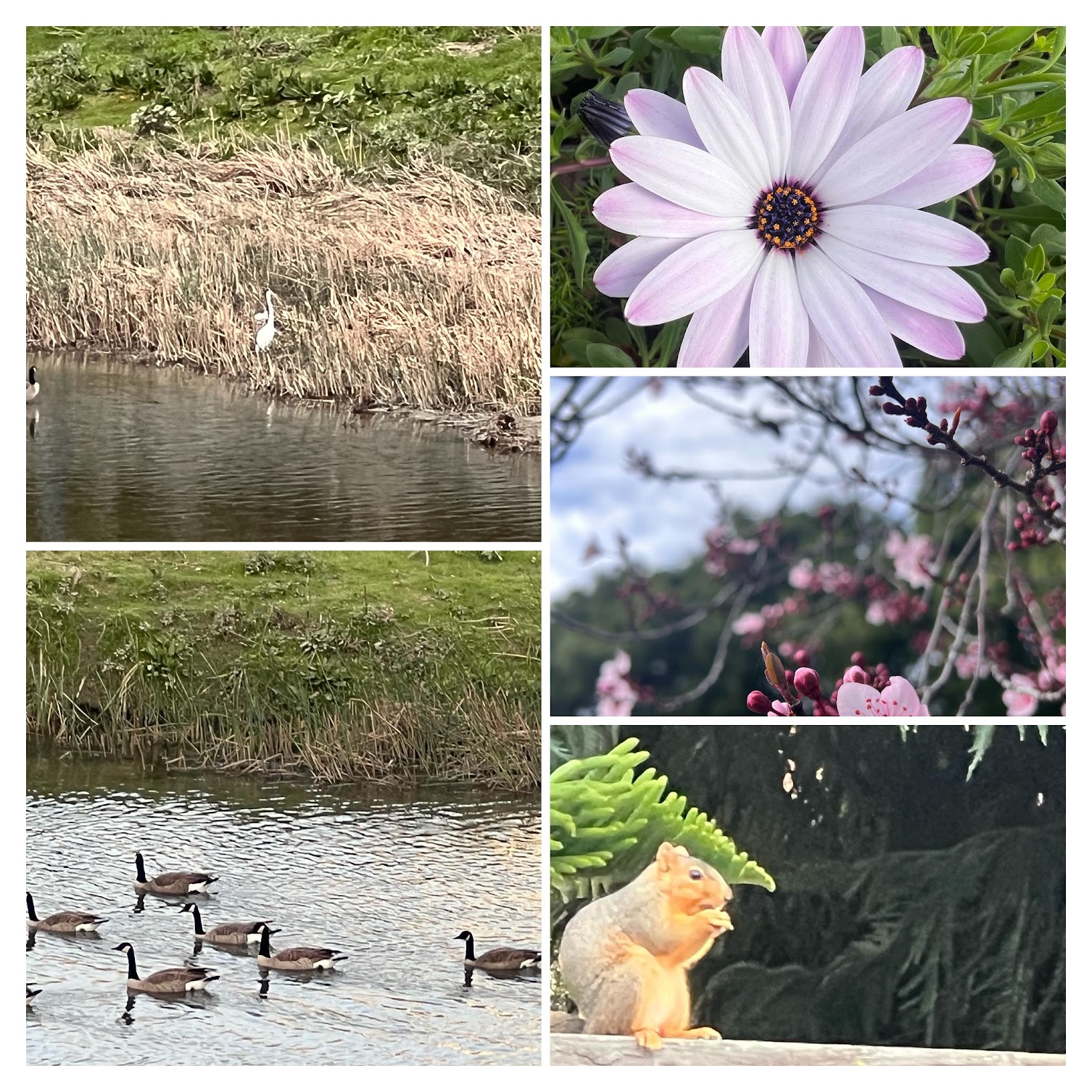
Down in the riverbed, that I stopped to take a quick stroll before starting the day, life was slow too. I saw a great white egret with her little chick, some geese, some ducks, and a grey heron. All lethargic enough to match the atmosphere around them. 

What is that – a rat, mole, otter, weasel?

That’s when I saw the sleek quick movement of the water mole. The water must have been biting cold. The frost on nearby rooftops could confirm that much at least. Yet, the water rat or mole or weasel or otter (I honestly do not know) was sleek and fast. 

I was fascinated. I started walking to keep pace with it, and looked on amused as it kept away from the waiting blue heron. Smart.

That’s when I saw a duck family nearby. The duckling must’ve hatched late. For it was the only one its size in vicinity. The water rat was gaining on it, and I held my breath.  That’s when I caught the white streaks on its tail. Ahh – it must be a skunk. 

Do Skunks Eat Ducks?

Would I be witness to a tragedy that early in the morning? A creature’s got to eat, sure. But can’t it be less gruesome than watching a little duckling being pulled under water? 

I willed the duckling to fly away, but it seemed oblivious. After what seemed like an eternity it sprang to life and ran away from the skunk. Slapping its webbed feet rapidly on the water like a basilisk – those creatures the children were fascinated with in elementary school. 

I released a huge breath of air – I hadn’t realized I had held my breath in for that long. 

Who says there is no adventure and mystery in nature? 

There’s plenty of it. I will have to tell the aunt all about it. 

The water-skunk went on its way, the sun slowly started to peek its way through the misty morning, and I jogged my spirits up to get back home and start a day of work.

Those who contemplate the beauty of the earth find reserves of strength that will endure as long as life lasts.

-Rachel Carson

🦢🦢🦢 A Pod 🦢🦢🦢, 🥁🪘🪵 A Drumming 🥁🪘🪵, and a  🦅 ☕🦅 A Kettle 🦅 ☕🦅 

It isn’t often that one feels like the poet, Mary Oliver. The October mornings are starting to feel crisp, and then one remembers that this is California – so we have a beautiful mix of windy, cloudy, frosty, and this year, rainy days. 

🥁🪘🪵 A Drumming 🥁🪘🪵

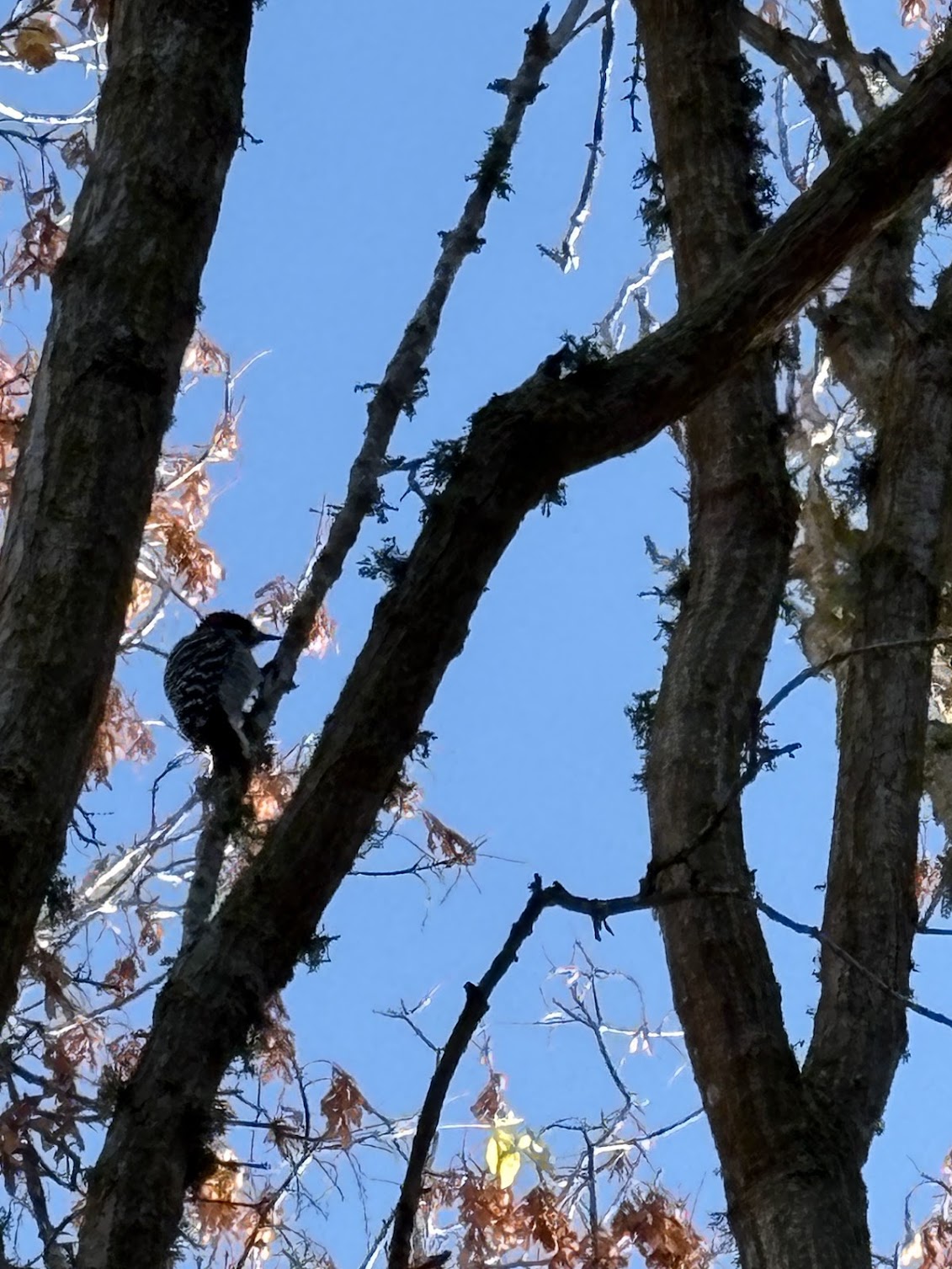
The vibes that morning seemed to be around the themes of: Ready to bear moisture, and don the colors of autumn. Some trees had started turning orange, and the little family of woodpeckers I stopped to observe on my morning walk had me enthralled. There is something about the morning sun through the orange leaves, and little downy woodpeckers flitting and pecking their way through their morning that has to be experienced. They are called a descent of woodpeckers, or a gattling or a drumming of woodpeckers. I like the last term more – suits their percussion band theme. 

The trees reached and yearned for the blue skies, the birds tittered and chattered. I couldn’t say they sounded happy exactly, but they sounded content. The Earth around me at that point felt content to be part asleep, part awake. 

🦢🦢🦢 A Pod  🦢🦢🦢

Thinking of this and that, I made my way to a little spot I knew was favored by pelicans for their spot of morning fishing. Watching pelicans do a spot of coordinated fishing is one of the best experiences of nature. For all these men and their wars and their power trips, they should learn a lesson or two from a pod of pelicans

Glide, swim, swoop,

Glide, swim, swoop,

Glide, swim, swoop,

Glide, swim, swoop

Ballerinas and group dancers they are – It isn’t a rhythmic time-based swoop, for sometimes, they glide, glide, swim, and then swoop. 

Community creatures they are, and so totally in sync with each other, it is a joy to watch their companionship. Maybe they are territorial with their nesting and breeding grounds, but they also have an immense sense of taking care of each other.  

https://nourishncherish.org/?s=coordinated+fishing

🦅 ☕🦅 A Kettle 🦅 ☕🦅  

By the time I came home, my spirits were soaring with the kettle of hawks overhead. Hawks really do have a musical cry. They swooped and cried high in the skies, and really, they could be called a Swoop of Hawks. The agility!

Musical cries, percussion bands and group dancing is more than a morning’s worth of excitement, don’t you think?

A pod, a drumming and a kettle put me in mind for a hot cuppa tea, and I bustled into the kitchen full of purpose. A few minutes later, I sat sipping my brew content in the knowledge that mornings like this are not easy gifts. They are meant to be savored one precious breath at a time. After all, poetry, music, orchestra and words can only try to capture beauty.

Celebrate World Elephant Day: Protecting Our Gentle Giants

World Elephant Day

August 12th, is World Elephant Day. Seeing elephants (even the cute AI generated pictures) makes me smile. The huge, gentle, loving, empathetic, loyal, family and community oriented animals have always captured the human spirit. It is the reason one of the most popular gods of Hinduism features an elephant-headed god. His birthday is celebrated with so much pomp and splendor, I am sure the elephants wonder what the fuss is all about on those days. 

I am not sure if they’ve heard how much their stories resonate with human-beings – Water for Elephants or Rosy is my Relative for instance. Even my own modest attempt, Mother’s Day in the Jungle, was such a joy to write. Oby Elephant and his pals are all that we want our children to be. 

https://books.apple.com/us/book/mothers-day-in-the-jungle/id874603773
Mother’s Day in the Jungle

It is no wonder that elephant related documentaries are always a hit. We want to see them succeed, we want to know that peaceful living can take us far. 

The question is, are we happy to suppose that our grandchildren may never be able to see an elephant except in a picture book?

– – David Attenborough

Temporal Range of Elephants 

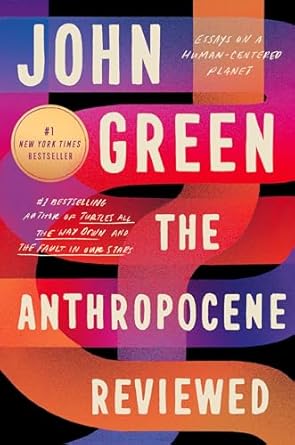
In the essay, Temporal Range, in the collection of essays by John Green, The Anthropocene, he talks about how long these majestic creatures have been a recognized species – 2.5 million years as opposed to humans who were only classified as such for the last 250,000 years. Yet in that short time, we have endangered almost every other notable species on the planet in small and big ways. 

Dolphins have been here for 10-11 million years – with their songs of wisdom, playful natures, and community based raising of their pods. Dolphin grandmas are delightful, and critical in the raising of their young. The same way the matriarch of the elephant herd is instrumental in passing on skills to the younger generation of pachyderms. Humans have somehow managed to emulate and disregard this ancient piece of wisdom by denying women freedom and basic rights, but also making them critical to the caring of the family unit. Sigh.

When we talk about accumulated wisdom,  most of the philosophy we have at our disposal caps out at 5000 years. But, elephants and dolphins? Please. They have figured out how to live out their lives cancer-free. 

Unpacking 🐘🐘🐘, 🐬🐬🐬 & 🐦🦚🐧🕊️

A friend of mine shared this article, Face it! You’re a crazy person, on unpacking the life of someone’s job. As I read what it meant (trying to visualize every Tuesday afternoon for the next few years, the day-in-the-life-of series), I found myself thinking that I would love to unpack being an elephant in the wild, a dolphin in the oceans, or a bird in the gardens before deciding whether to remain a human-being.

Wouldn’t that be wonderful?

What are some things related to elephants you’d like to share? Anything.

Happy World Elephant Day!

Nilgiris: Nature’s Abundance on an Early Drive

“We need to leave by 4:30 a.m. if we are to beat the traffic!” the brother said. 

There were enthusiastic nods. I kept the alarm for 3:30 a.m, confident in our abilities to get going that early in the morning. After all, there is nothing as pleasant as a drive up to the Nilgiris from Bangalore. 

The route passes through two beautiful national forest reserve areas – Bandipur and Mudhumalai. The hills are usually green and welcoming at this time of year. Early summer in the Nilgiris is a joy – there are flowers blooming everywhere, the rivers and streams are flowing with healthy levels of water, and all of life seems like it should be: Full of beauty and abundance. 

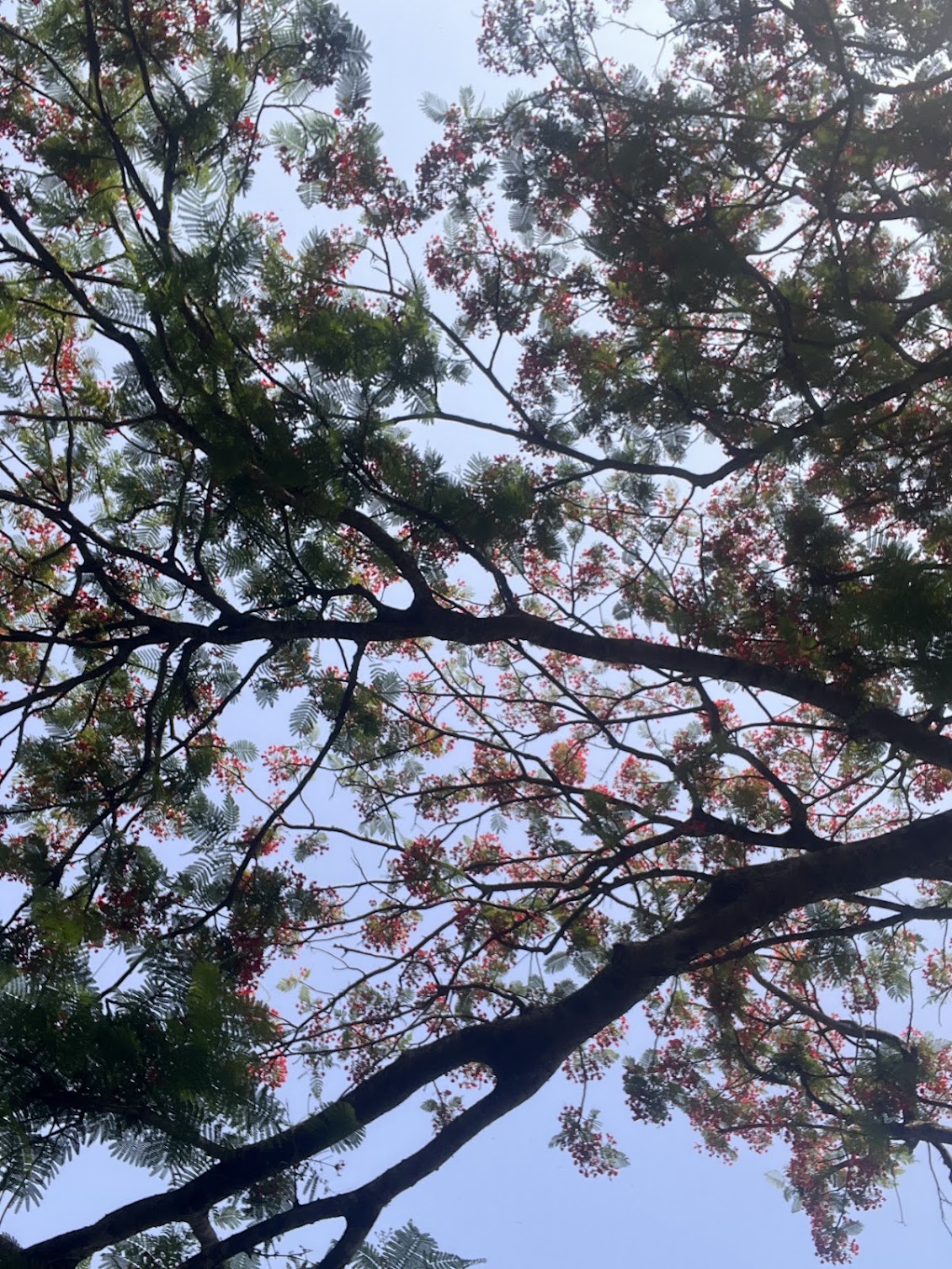
I had quite forgotten the true splendor of a gulmohar tree in full bloom, but oh! What a joy to see these resplendent looking trees! 

You can spend all day gazing up at the branches – all the different ways in which the light dances and trickles through the very orange blossoms, all the different shapes the branches have spread themselves – no two trees the same, yet distinctive enough that they cannot be misunderstood for another tree.

The brother who is always in his element when he is driving anywhere other than city roads, shook his head as he saw me bouncing in my seat. He pulled over by a side road, and if you were to ask me the previous evening to imagine this road, I would not have been able to do it justice. I grew up in the Nilgiris, and have visited many times in the past two decades, but every time the hills surprise me (mostly good ways, but the increasing population and traffic snarls contribute to the bad ways) 

I tumbled out of the car, my heart bursting with song. Luckily it was just my heart that was singing, for who wants to frighten a bunch of elephants taking a calm dip in the Moyar River? 

The peacocks cooing in the distance provided a musical backdrop.

As we headed back to the winding road of 36 hairpin bends, all of the forest seemed to have risen. There were peacocks, sambar deer and spotted deer, iguana-like creatures, monkeys, langurs, and elephants. I cannot think of another experience where the soul feels as nourished or sated. 

By the time we had passed through the forests, we had been filled with the beautiful imagery of flora and fauna of the Nilgiri Hills. It is always so humbling to call this marvelous place home along with the thousands of creatures who live more unobtrusively in these parts.

The cheeky road signs only added to the allure of the morning forest scenes.

“Watch for deer crossing the road, remember the road is crossing their home!”

“Attention: Crocodiles in the River – do not swim. Survivors will be prosecuted.”

Witnessing Nature: A Baby Egret’s Journey to Independence


No swimming No diving No fishing

The sign that greets the visitor to the riverside can be daunting. 

If one wonders why they never heard the whooshing sounds of the gushing river waters as they made their way up to the riverside, it is because there usually isn’t any. The mighty river retains its classification by becoming a river for about three days a year when there is heavy rainfall. Like a courtly princess who only dresses in regalia at Christmas.

The rest of the year, it trickles like a stream, while the major portion of the riverbed is lush with vegetation. It is the teeming home to plenty of wildlife – deer, blue herons, geese, coots, ducks, grebes, red tailed hawks, blackbirds, egrets, harriers, turkeys, turkey vultures, owls, wild cats, squirrels, rabbits, the occasional fox or coyote, possibly small snakes and fish in the simmering strip of waters. 

The trail by the riverside is, however, a charming place and one that always manages to lift your spirit. The stirrings of spring are in the air all around us, and we decided to go for a run / walk / bike / drive (No guesses for matching the family member with mode of transport ) to enjoy the river. Pale pink and white cherry blossoms on thick dark brown branches, clusters of chamomile in gardens, squirrels bustling up and down garden fences and hugging trees, geese squawking their way out in the world. It is a beautiful world and one that can ensure one forgets all the breaking news if only for the hour or so by the riverside.

An Egret’s Dash For Independence

A few minutes into the run, I watched fascinated as a baby egret chick stood by its mother in the marshy waters. Even in my first glimpse, my heart leaped, for the egret chick showed a fierce determination for independence. It edged away – throwing a look towards its mother, and the mother let her (or him) go. By this time, I had jogged on a bit, and the egret chick had clearly had enough of waddling away from its watchful parent and took to flying. The mother let it go, and then followed a few minutes later, setting herself down a little further upstream so she could keep an eye on the little one. It was a charming scene, and the egret and the watchful mother kept me entranced for several minutes. 

There is so much to learn from springtime with regards to parenting. Nest building is happening in earnest, and it is a common sight to watch a crow or a wren pick up some twigs to line their little nest. The geese will have their goslings soon, and those are the best to watch. The same loud, sometimes rude geese, somehow have the most obedient goslings. 

I was attracted once again by the egret chick and found myself looking for the mother. This one had certainly taken off a ways, and I watched a little nervously as a rambunctious dog broke into a run and came careening into the riverbed. I almost stopped and called for the egret mother and urged the chick to run. But I needn’t have worried. Long before I saw the dog, the chick had heard, and flippantly flew across the stream landing elegantly on the opposite side. The egret’s mother flew by too, and went back to fishing a little further away. 

I was impressed – she kept an eye on her chick, gave it the space to learn to navigate danger, and kept giving the little one the space and security to grow. 

All was well. Everyone was having their fun, their adventure and their springtime joys. I smiled and peered ahead to see the son way ahead of me.

Beauty in the Eyes of the Beholder

This was an idea for a children’s book and also a pair of creature glasses that I wanted to make: You could choose the animal in your app settings, wear your glasses, and voila! You would see the world around you as the animal does:  an ocular device that transported you into the alternate reality of that creature. But as most good ideas of mine, they festered in a document of Potential Ideas.

So, I was intrigued when I saw this book in the library. 

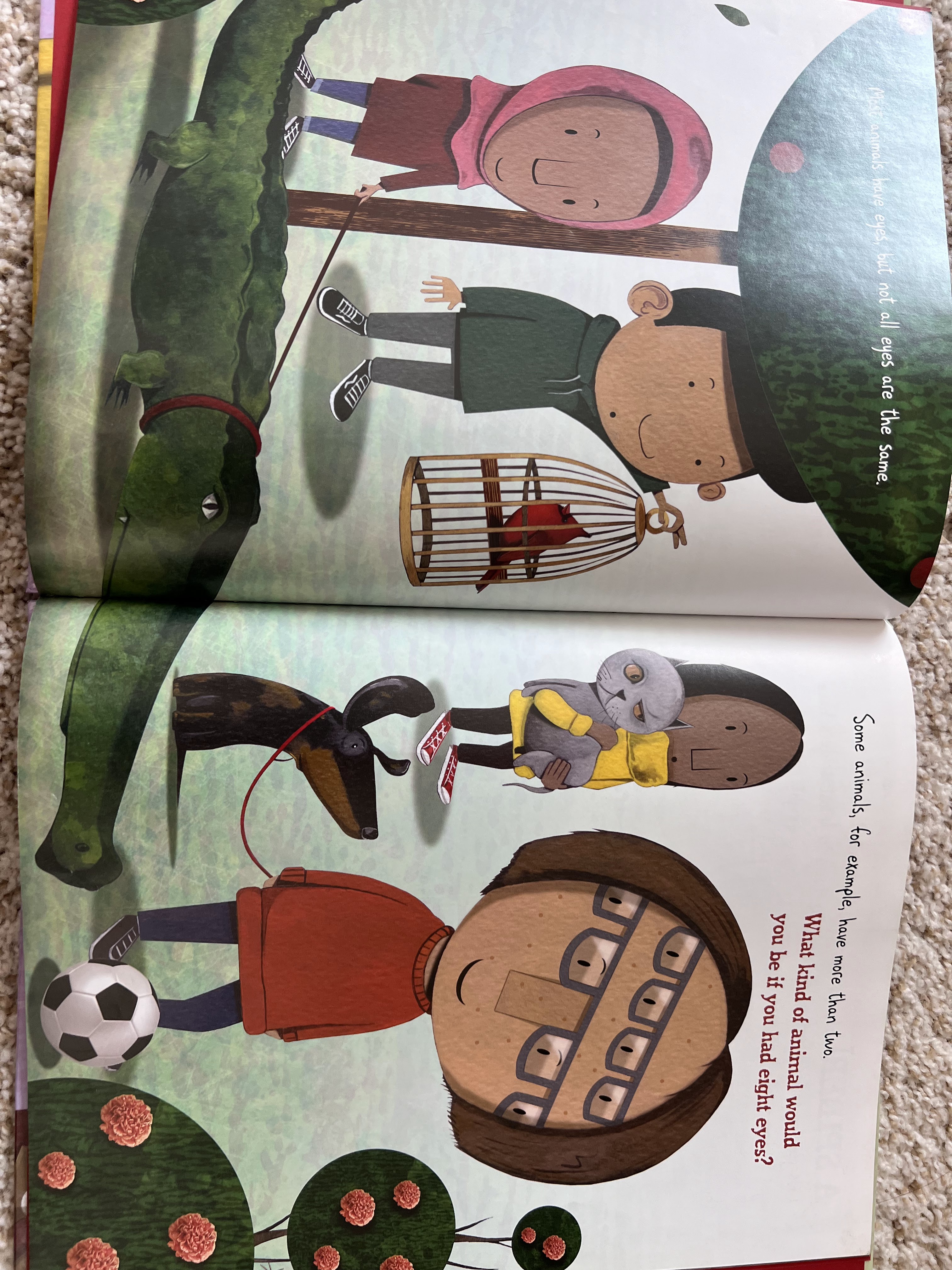
Eye By Eye – Comparing How Animals See – By Sara Levine, illustrated by T S SpookyTooth

img_2088

Even as you open this whimsical book, you realize that seeing the world like we do can be a unique gift. That is not even considering perspective, personality and all the rest of it: just the ocular aspect of it. 

How would an animal with eight animals see the world? 

img_2090

A Spider’s Vision

The illustration of a woman bespectacled in all 8 eyes is endearing, but it does make you think of a spider.

A Spider’s Vision

I noticed a spider has really taken a liking to our car’s external rear-view mirror. Everyday, there is a fine web spun there – I wonder whether the little creature sees itself spinning its beautiful web, and admires itself for it. 

What if you had six eyes, one located at the end of each of your six arms?

Shapes & Colors

The book not only considers creatures with differing number of eyes, but differing eye shapes as well: like that of an owl.

Pupil shapes matter – goats have rectangular pupils. ( I confess I have looked into the eyes of plenty of goats and never noticed this.)  Cuttlefish’s pupils are W-shaped.

img_2066

Small hexagon shapes in an eyeball ( like in a bee hive?) Well, flies have that.

Then we come to colors, but we can have colorful differences in our outlooks as well. Butterflies and hummingbirds, we have known for some time, see the world very differently than we do. As do dogs, and cats.

So, whether or not I make those creature glasses or some company comes up with such ubiquitous VR that it seems like it was always there, it is a fascinating world out there. Go outside and imagine life as a hummingbird, or a jellyfish. Glasses or not, your thoughts will transform your mood.

The Birds of Paradise

The World Around Us

I don’t remember when exactly we start noticing birds and animals around us as being separate from human-beings. If there is a conscious point in time when we say:

This is us, that is a bird.

Don’t eat those – they’re mosquitoes &

Keep away from man-eating tigers – they want to eat us. 

Keeping the neuroscience behind it all aside, the world around us is fascinating. Even if you see a bird everyday, the little chirp, and the flutter of its wings cannot help but take us out of ourselves for a bit can it? 

What is it about this diversity of life that is so appealing? 

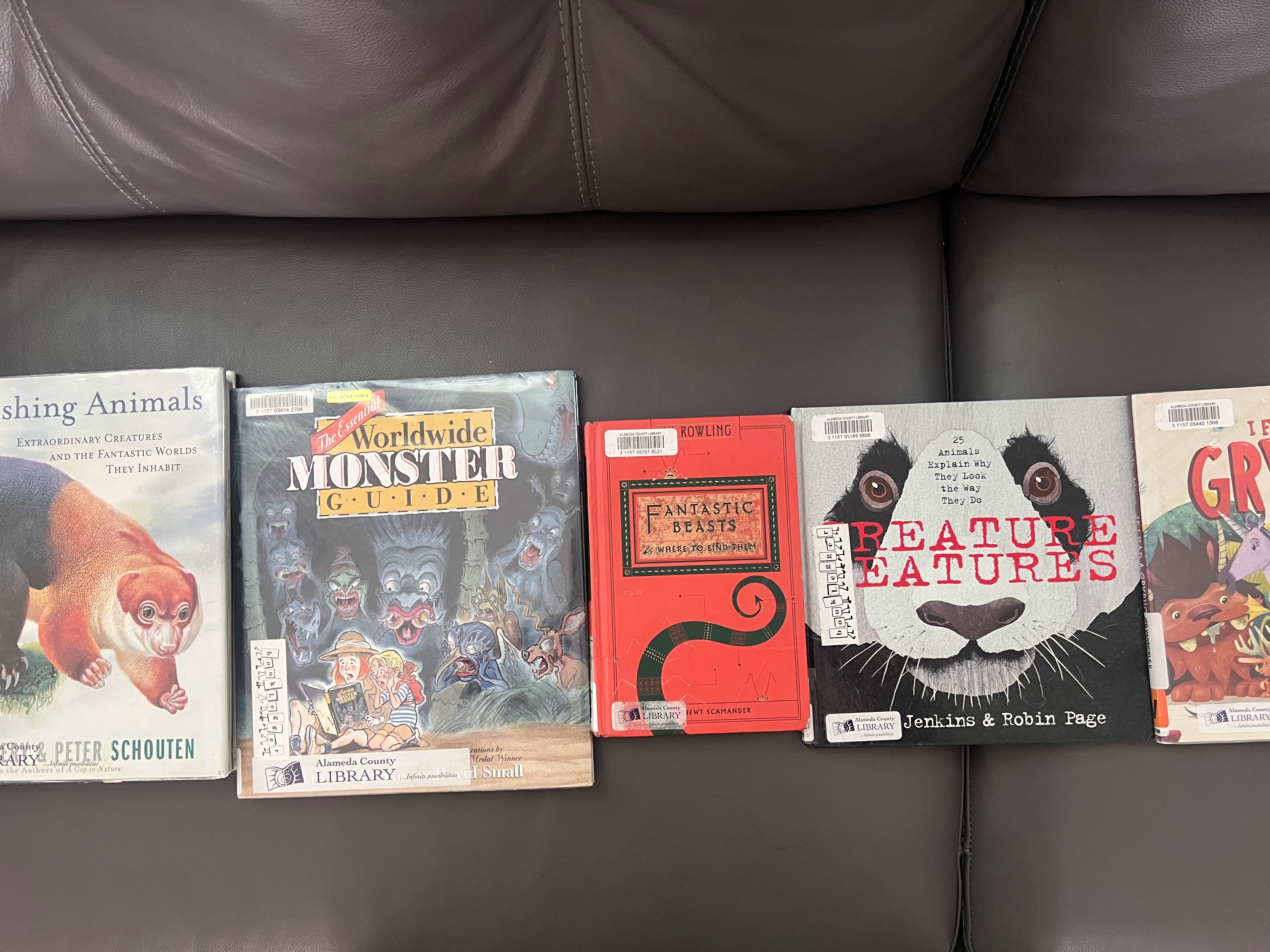
I was sitting one afternoon engrossed in books. Books on beautiful beasts and fantastic features of the creatures we share our planet with.

img_1575

As I flipped through the colorful pictures and the accompanying text in the book, Astonishing Animals – Extraordinary Creatures and the Fantastic Worlds They Inhabit. – By Tim Flannery & Peter Schouten, I couldn’t help being drawn to the birds of paradise in the book.

Rarely do we stop and just admire the beauty and precision of a bird’s structure. The birds themselves are flighty. Our attention spans are even more so. Plus, these birds are all in exotic places. But it made me wonder – even the less exotic birds around us, how long and how often do we study them? Ornithologists do. Bird photographers do. But otherwise? Those of us who love nature stop to notice them. The rest of us are too busy to notice. 

Birds of Paradise

I was admiring the different birds of paradise illustrations in the book, and I felt myself drawn to the Himalayan Satyr as much as the blue bird of paradise.

The blue bird of paradise is illustrated beautifully in the book – long side up taking up two pages and you can see why:

blue_bop

he dances upside down, hanging from a branch. As he begins his display, he flexes, sending waves of blue and violet shimmering through his feathers. At the center of his chest is a dark oval patch lined on its lower margin with red. This is rhythmically expanded and contracted so that it resembles a huge, slowly expanding eye whose effect, even on humans, is hypnotic. All the while the performer’s own eyes are closed, revealing white eyelids, which lend him an unearthly air.

Like a little opera singer, dancing on the stage. How marvelous!

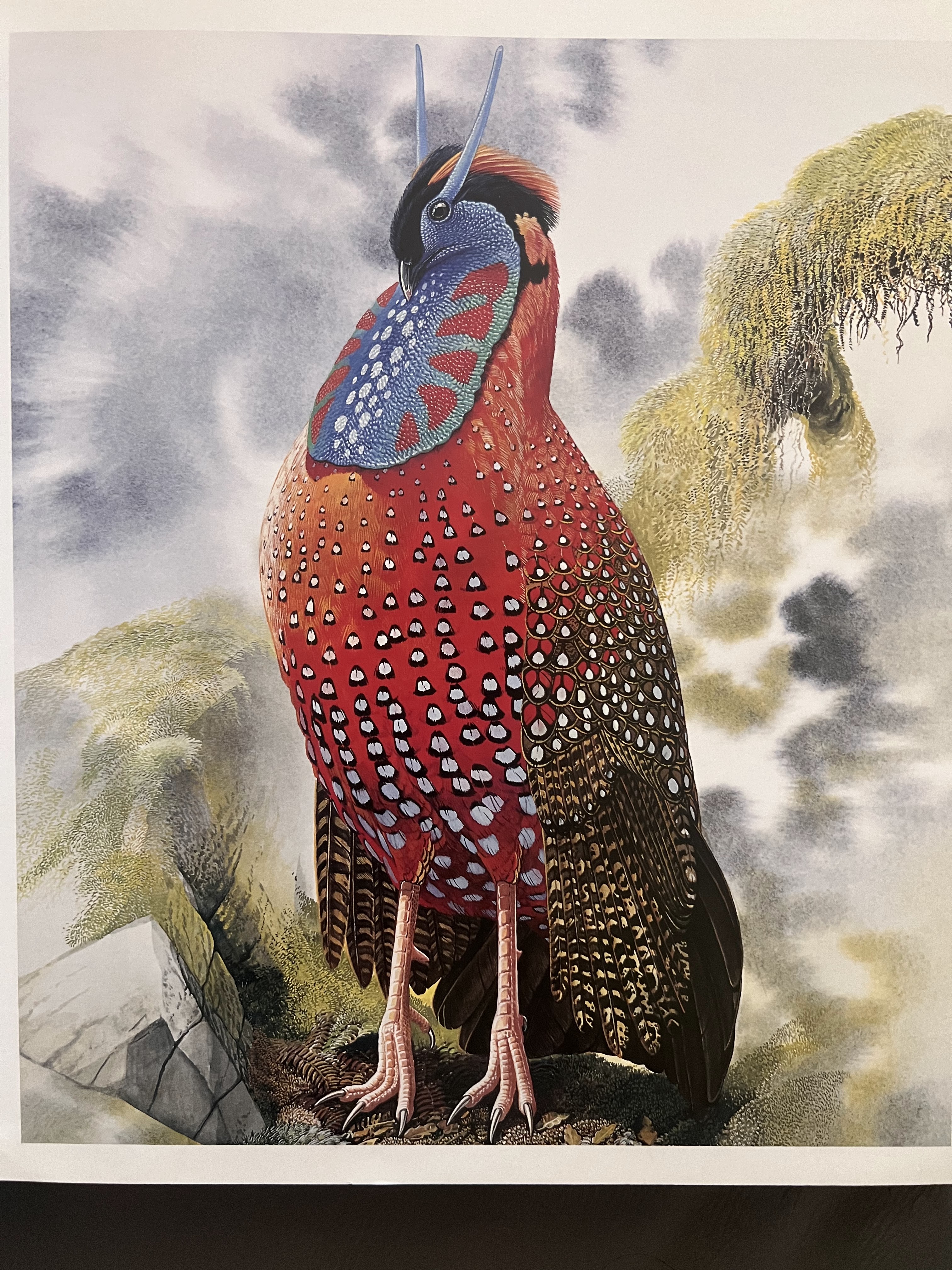
The Satyr Tragopan, another beautiful Himalayan bird, drew me for another reason.

img_1563

It is often the case among birds that a gorgeous cock is a poor provider. Beautifully adorned males may put on a wonderful courtship, but all too often contribute nothing to the raising of the chicks, leaving that duty to the dull hen-birds. The satyr tragopan is a stand-out exception here, for not only is he dashingly handsome but he seems to be monogamous and a dutiful father as well. … The father contributes equally to the upbringing and care of the young.

The Himalayan Monal, and other birds of paradise are equally dashing.

Split into beautiful sections about creatures who live in the ocean, tree dwellers, mountains dwellers, the book journeys across continents, landscapes, ocean surfaces and deep surfaces. The artwork, though, is spell-binding. 

One cannot help feeling like the world is beautified and expanded just a little after an hour just looking at these beautiful creatures and reading about their curious lives.

Recommended Books:

🐘🐘🐘🐘🐘 The Tusks of Extinction 🐘🐘🐘🐘🐘

The Mammoth Tale

Few passages capture the bane of consumerism like this one does. It is from the novella, The Tusks of Extinction by Ray Nayler.

The premise of the book is an intriguing one. 

  • It is set in a future when mankind has figured out how to upload one’s consciousness into the cloud. A manner of immortality. This is very much in the realm of possibility.
  • It is also set in a time where the Siberian mammoths have been resurrected. This has already transcended realms of possibility into reality

The wooly mammoth is being resurrected – being cross bred from the genetic remains frozen in the Siberian Tundra with  the Asian elephants (because they are gentler than African elephants). 

Thus, begins the tale of a doctor whose life was hacked from him moments after he uploaded his thoughts and knowledge to the web. This man, Dr Damira, was a passionate naturalist, a man who studied the African elephants and their ways. He fought for their conservation but failed. This is set in a future where the last of the elephants no longer roam the Earth. 

tusks_extinction

The resurrected mammoths in Siberia are facing difficulty thriving in the wild. They have all been bred in captivity, and do not understand how to survive the demands of living by themselves, caring for each other, and forging paths so they can forage and live through the cruel winters. They are thus being killed by poachers in a cry that reminds scientists of how the elephants were all killed off one by one. 

In an attempt to give them a chance at life, the doctor’s consciousness is uploaded to a mammoth – a matriarch by the name of Damira. 

Bane of Consumerism

There are several aspects of this novella that can appeal to us, but one in particular stood out to me, and that was how our consumerist culture alienates us from the natural world. For we buy things, we want things, we accumulate, we hoard – who is it hurting? I am earning and I am buying. It is all helping the economy is it not?

Extract:

In offices-a tusk in a case, beautifully carved, transformed into a world of its own, worked by human hands into a chain of elephants walking trunk to tail. Beautiful, lifeless elephants carved from the destruction of an elephant, hacked into what had once been a part of a body, a tooth, a tool. A part of a life.

“Among the skyscrapers, there were also older places-little streets of cramped shops, survivors from another Hong Kong. Marginalia that had been missed by the eraser of progress. And there, in the shop windows, so crammed with clever things, there it was. My eyes found it over and over again. Ivory. Ivory jewelry, ivory stamps used to sign decrees that were meaningless now, ivory game pieces of every kind. Ivory turned into useless gewgaws, dripping with the blood in my home. It could be carved into any lovely shape they wished, but all of it began in killing. No-more than that all of it began in killing that took place far away. That took place somewhere the people who thought of ivory as a material could not see. Killing that took place in an extraction zone.

I remember the horror I felt when I first learnt that certain types of leather were obtained from the skin of crocodiles and were thus priced higher. 

Cities like Hong Kong and New York and London at the center, vortexes into which the currents of trade accelerated, into which goods from all over the world were pulled. Places where things became materials. Where things became commodities.

Many of us rarely stop to think of the source of all the things we use as part of our daily lives. In all honesty it is overwhelming to do so. How does the kidney bean come to be in its packet in the grocery store? Once we start down that road though, what about the almond flour, the diamond ring, the leather handbag, the silk scarf, the perfume, the spice, the watch, the gold ring, the ceramic jug? Everything has its tale, its journey, its place in the human chain of wants and needs. 

What Can We Do?

In reality, we cannot give in to an almost paralyzing analysis of source-to-table for everything we consume. Is there economic exploitation along the way, unscrupulous practices, inhumane treatments? Would we be happy to know it all and make informed decisions – yes, (I am hoping that humans have enough humanity to make the right choices if we do), but can we do so? Not always. 

I spent a pleasurable few hours at the mall the other day, and found my fellow human beings doing the same. Glancing around at the happy faces of those of my fellow humans that morning, I did not see malice or greed – I simply saw folks at a mall on a rainy week-end. 

I like that mass production has made life easier, the jobs it has created, alleviating entire nations from poverty. I like that poor children can have new clothes, and that horizons have expanded thanks to the general prosperity of nations. I do not, however, like the ever-increasing pressure to produce and consume more. 

Is the economy to be weighed against the Earth’s resources at every step in the mall? Or just more more meaningful consumption? I do not know.

The Animals Within


The evening was a beautiful one. The children played looking like little angels in the glowing sun, and I threw affectionate glances at the noise in the playground.

I was mooning about the streets admiring the shabby looks of late summer. The same hills that looked brown and uninviting in the distance during the day, now looked ravishing bathed in sunset’s golden glow. Little specks of clouds in the sky were blushing to different degrees. The purple, red, orange and pinks poufs flicked about looking snippy and sharp. The oleander trees and the crepe hyacinths lining the streets looked prettier than ever before.

The approaching week-end seemed inviting, promising in its possibilities: my outlook was cheerful; my spirits soaring with the multi-colored clouds up there; and no must-dos competed for attention in the old brain.

T’was after a little growl came from within that I stopped to wonder what was amiss. I had completely missed the making-dinner task at hand, and the growl was reminding me, that I had not just 1 growl from my stomach to contend with, but the whole family’s as well. The husband trundled in, the children trooped in to say hi, and I whisked them all off for a dinner outside.

‘Forgot to cook?!’ cackled the teenaged daughter, looking indulgent and proud that I was not being the conscientious cook, and filling her plate with healthy muck. “Didn’t the sunset fill you up?”

“It filled me spiritually my dear. I could not be fuller!”, said I patting my heart, “but the stomach still asks for its due, Alas! “ I said remembering a poem my mother-in-law often references about what an irascible taskmaster the stomach is. I always smile at the wisdom of the poem. Loosely translated, it means
“Oh stomach!
What an irascible creature you are!
I ask you to eat a lot at one meal, and you rebel, and push back saying you are full.
So, then I ask you to skip a meal, but that too wouldn’t do for you.
What a slave to your demands have I become?
It is very difficult to live with you!”

So, off we went to a Chinese restaurant in various states of hunger.

This is one of those places that believes in keeping you engaged while they prepare the food for you. In front of each was a sheet of paper containing the Chinese Zodiac Animals and their characteristics. We started off in typical fashion:
You are a monkey!
Really? A snake – ha!
How could you be a tiger?
I don’t want to be a pig!

For those who moon about on Friday evenings without considering the demands of the stomach, here is a tip: Don’t! Friday evenings beckon all mooners-about, and restaurants find themselves busier than usual that day. As we sat around with hunger gnawing at the insides, the sheet of paper telling us about our characters based on the year we were born in looked inviting. Soon, we started tabulating and cross-referencing the listed characteristics against the personalities in the family.

It is an interesting exercise, and really makes everyone stop and pause and think about oneself. There are characteristics that the whole family gave a miss to. There were some that we hoped we did not have, but found we did. There were others we hoped to have in a higher degree. The tabulations were derailed every now and then with questions such as “Why are hippos not there in the Chinese calendar?”, After going into habitats and biomes with glaring holes of knowledge, seeing as none of us had ever to China, we got the animals back on track.

The resulting diagnoses has us giggling uncontrollably:
“You are most like a rabbit, but also have the tongue of a dragon, and the heart of a pig!”
“Snake hissing and pouting maybe, while galloping like a horse, and snoring like an ox.”

It turned out that we churned out more fantastical creatures in that half hour than a whole mythological genre could in a book. “Imagine if these creatures were sitting in us, wouldn’t that be something?” I said.

inyo_20q

Humanity’s capacity to imagine strange and wonderful creatures has always been remarkable, though there are precious few creatures left for us to imagine. No one is bringing another Clara to our midst any time soon.

Clara the rhinoceros, was brought to Europe on a tour in the 18th century. No one had yet seen any of the creatures of the East, and had not even heard of such an animal. Clara became an instant darling of the masses – her gentle demeanor, her love of oranges and her sheer size endeared her to all those who had the privilege of seeing her. I can well imagine the wonder and curiosity such a creature brought to human society, and the number of children in whom the wonders of the natural world was rekindled. How many Gerald Durrells, who imagined the beautiful world of their family and other animals?

500px-Clara_1749_Oudry.jpg
Image title
Rhinoceros Clara
Author
Jean-Baptiste Oudry
Copyright holder
PD

Today, we silently add more and more creatures to the endangered species list, watch in alarm as forest cover disappears and wait for magic to happen in our lives. Anthropologically, will we hear the news of a Middle Earth tucked away somewhere with hundreds of majestic creatures again?

Maybe one day, our space explorations will yield something. Till that day, we shall have to content ourselves with imagining the various creatures and creature traits within us.

Books:

Clara the Hippopotamus – By Emily Arnold McCully

My Family & Other Animals – By Gerald Durrell

Galactic Plumes

I had been mooning about the fields outside in the village where we stayed near Topslip National Forest. People told me to be careful about venturing out far – “There are Elephants nearby, and they love the fields. “, they said emphasizing the word, Elephants. My eyes lit up. The villagers exchanged looks that doubted my sanity and hurried on, “It isn’t Good seeing Elephants in the fields – you never know what they will do. If you hear fire crackers in the distance, come straight back here!” said one toothless fairy godmother, and her husband (I think) nodded in agreement vigorously.

img_3588

Off we went then, sauntering through the fields, listening to the loud orchestra of birds, crickets and frogs, accompanying the beautiful colors that nature was setting forth for us to see. It is magical indeed to see a half dozen peacocks take flight into the sunset. By the time, we fumbled for the phones they were gone, and I was glad I did not waste those precious moments of seeing them start off awkwardly and then gain elegance in flight by trying to get a picture. I have it in my mind’s eye, along with the indescribable moment of feeling your heart soar with the peacocks’ trajectory.

Screen Shot 2019-08-16 at 9.52.43 AM.png

Peacocks have long feathers, and while they know how to fan them out and preen in front of peahens looking splendid in the process; when they fly, it looks like it can feel like long hair feels to women.

Gather your tresses,
Of plume and multi-colored beauty
Tuck them in,
Letting it stream behind you elegantly while
Trying not to let it look messy
And all the rest of that.

It was then in the distance that we heard firecrackers go off in the distance. I don’t know about you, but this is the sort of thing that holds mystique. It is what inspired my Mother’s Day in the Jungle tale. Trumpy elephant going off to Farmer Hasalot’s farm – there is such an element of thrill and romantic mysticism to this kind of thing, though I think the elephants and farmers in question disagree.

Screen Shot 2019-08-23 at 10.06.10 AM

I spent dusk in a similar fashion enjoying the fading sunlight, the rising moon, the fields, the clouds, the village, the children, the adults and creatures of beautiful Earth. Every now and then, crackers went off in the distance – elephants in the distance we whispered. Though, why we were whispering we had no idea. Dusk seems to call for these things. A laid back village in South India tucked away in the recesses of the Western Ghats with all the fascination of the bucolic. An occasional rumble of a vehicle is all there was to remind us of civilization, corporates, power tussles, wars, micro/ macro economics, nuclear heavy-lifts, and motives of profit.

Post dinner, I traipsed indoors, happy with life, still rattling on about the beautiful image of the peacocks taking flight together in the evening light. We stayed chatting happily into the night (Part 2)

It was well past midnight when the electricity went out, and the husband said, “Outside now! Completely dark – yes!”

Off we went, self carrying the son piggy-back to see the stars in all its glory outside. With the electricity gone, it was pitch black outside.
Oh!
My foot!
Not there.
Ouch!

We bumped into one another spectacularly and I tripped on a chair outside in the verandah, carrying the little fellow on my back. Both of us went crashing down, self trying to save the poor fellow from being dropped from my back. One splendid moment later, I truly saw what ‘seeing stars’ meant.

The pair of us dragged ourselves off our feet and took our eyes skyward. The light pollution we have unleashed on our planet means that there are very few places in the world that humanity can stand and gaze at the sheer immensity of the universe in which we live. On an average dark-ish day, we can see about 3000 stars, on a day like this surrounded by mountains, forests and fields for miles around us, we could see tens of thousands of them lighting up entire bands of the sky with their luminance. The stars and galaxies are always there, and maybe because of this very permanence, it is seldom appreciated.

Standing there in the surrounding darkness with people I love, I felt light-headed. There we were, standing on an Earth that was spinning incredibly fast in its journey around the sun; the sun was swirling around the Milky Way galaxy; and the galaxy itself was spinning and whirling away into vaster expanses. Carrying us all: our ethereal thoughts, wishes and desires; and our solid physical selves on a solid planet.

The galaxy tucking its star-studded plumes behind it gracefully, and taking flight with all its organic and inorganic components streaming gracefully along its path. Huge balls of gas and flames hurtling through space, and some spots in this beautiful expanse sanguine enough to cool down for a spot of life to flourish. #The Pale Blue Dot.

pale_blue_dot

The beautiful image of the peacocks taking flight earlier that evening came to me, and in that moment, the galaxies above looked like peacocks taking flight into horizons unknown.

Do the dreams of galaxies have limits? Do they have purposes?

Thinking back on that beautiful spin through the gathering darkness, I am reminded of this quote by Ursula K Le Guin:
“Things don’t have purposes, as if the universe were a machine, where every part has a useful function. What’s the function of a galaxy? I don’t know if our life has a purpose and I don’t see that it matters. What does matter is that we’re a part. Like a thread in a cloth or a grass-blade in a field. It is and we are. What we do is like wind blowing on the grass.”