Exploring The Anthropocene: Life Between Cosmic Events

The Anthropocene by John Green

In the book, The Anthropocene by John Green, there is an essay in which he he mentions Mark Twain’s life being sandwiched between the two appearances of Halley’s Comet 76 years apart. He was born the year it was born, and he wrote famously the year before his death that he hoped to go out with it, and he did.

When I read that the first time, I felt sorry for him. He was born in 1835, and died the day after its perihelion in 1910. I hope he got to see the second occurrence. Imagine being alive for 2 appearances and not being able to see them both times. I suppose there is a poetic beauty to being born and dying between the spectacular cosmic events. But then, plenty of people did not see Halley’s comet even when it was visible in their lifetimes, so what’s the big deal?

Halley’s Comet

I remember being excited about Halley’s Comet in 1986. I was thrilled at being included in the viewing party – it was for my older sister’s classmates, and they had agreed to let her little sister tag along. 

I remember peering through the telescope. I cannot say with any conviction that I remember the comet itself. Some blurry recollection is all that remains. But the feeling of the evening remains. The excitement at being included in an elite group of senior students, the protective aura of having my older sister and her friends look out for me, and the cold temperatures of the night. That cup of Bournvita before bed was enough. 

Astrophilia

Nights and stars seem to have similar experiences ever since. The feeling more important than the viewing itself. For a star is a star. A celestial object – a celestial object – nothing more. Yet spectacular enough to be other-worldly. To tap into the possibilities of a vast universe. 

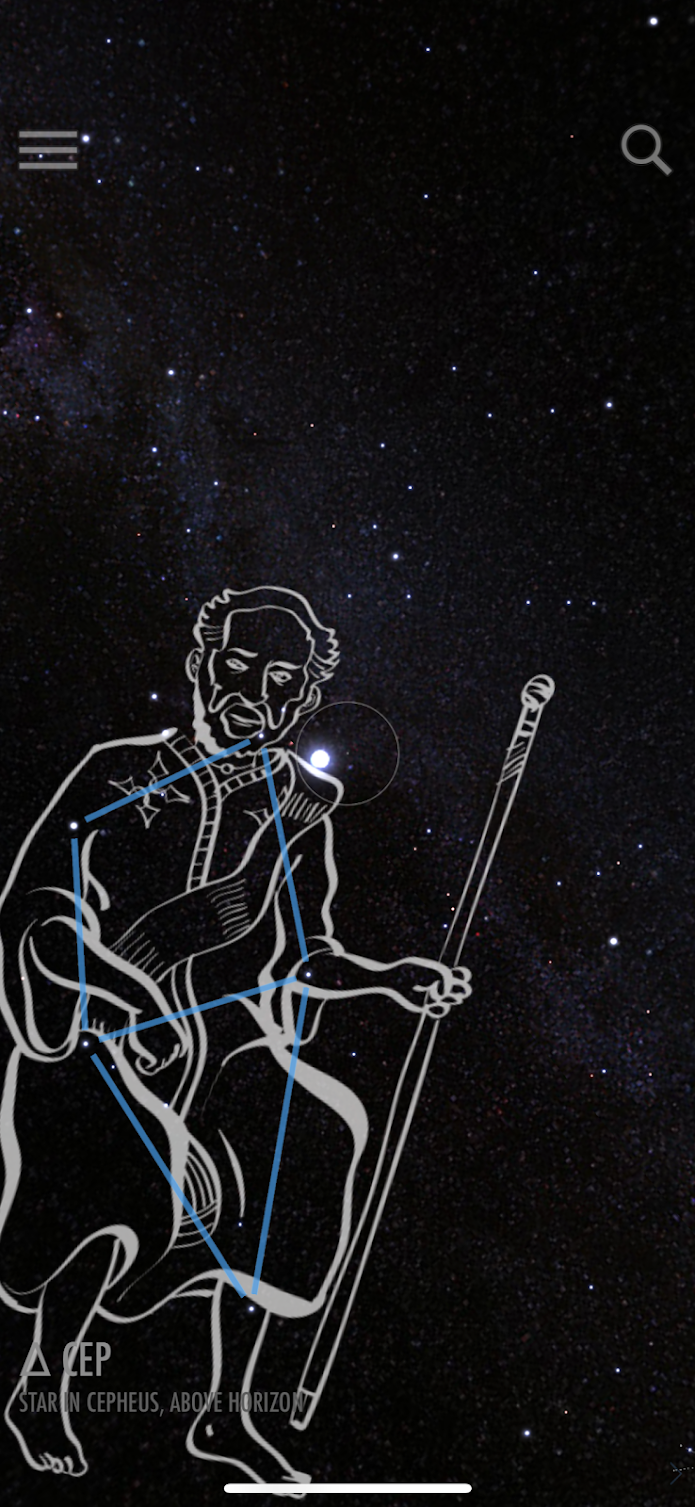
One night, we were out looking for a star system, Delta Cep in the Cepheus constellation, and I could not help wondering what their Delta-rise and Delta-set looked like on the planets in that star system. Did they have moons beaming the reflected lights of the stars to them? Were there any microscopic creatures willing its way into rudimentary life? Life seems to be so hardy and resilient and willing to thrive, it seems a little surprising that we have yet to discover traces of life elsewhere. 
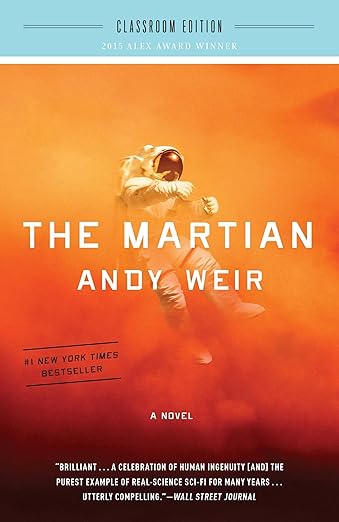
The Martian by Andy Weir

We were reading The Martian by Andy Weir for our book club, and thoughts of life elsewhere held all the more appeal. One only had to peer at the way weeds take root and crack through pavements, to see how resilient life can be. (It is another matter altogether that the plants I do try to grow on purpose seem to fizzle out on me, and routinely droop and call it a day, but that is a post for another day. ) 
In any case, it got us all thinking about all the things that enabled a planet full of sentient life, and how we sometimes forget to marvel at the sheer beauty of it. Wrapped up in our worries, anxieties, and livelihoods. 

The son is doing a science experiment in which they are experimenting to see how microbial colonies develop in  slice of bread under different conditions. In a fit of whimsy, he spoke and sang to the bread (gave it lectures on George Washington – his latest obsession, sang a Hamilton song) – to get the microbes on the slice, and has placed them in airtight containers in different conditions throughout the kitchen – in the dark, in perpetual light, and in freezing cold conditions. It will be interesting to see where life can thrive. 

That life had a starter kit is miracle enough, but the fact that it thrived enough to produce the kind of beings we find on this planet is astounding, and, yet, we forget it everyday. 

We are reminded periodically about the miracle of our lives through celestial objects, meteorites, the beauty of a full moon, the blooming of the kurinji flowers every 12 years, the cicadas coming to life every 17 years and so on. Still we forget. We forget to stop and marvel. We forget to stop and think.

The book of essays in The Anthropocene Reviewed by John Green is an interesting read. For it each is an essay about a different topic – short but through provoking. Covid-19, geese, Halley’s comet. Combined with the kind of scientific and regimented problem solving that a book like Martian makes you think about, the possibilities to keep oneself occupied is manifold – like the possibility of life itself.

How Daughters Protect Planets

The daughter is home, brimming with chatter and tales from college. I cannot deny that we have been counting down days to have her come home. The house feels different, quieter somehow without her, and I listened happily as she jabbered on a few miles a minute, and gushed and laughed with her little brother. I sat there letting all the flurry blanket me, and smiled. 

“What are you smiling about?”, she said.

I said ‘something soppy’ about being happy that she is home again. She looked at me appraisingly and said, “Oh Amma! Look at you. You’ve mellowed into this sad thing who is ‘just happy to have her her daughter home’! What happened to you? What happened to the fierce woman who flew about the place?” 

“I am still fierce!” I said. 

“Nah! These days – I think she is going to just say something sharp, and she takes a deep breath and shrugs! She really does miss you!”, said her little brother, and I gave him a reproachful look. 

A few hours later, she had convinced us to settle down to a week-end movie night of Our Planet II – a Netflix documentary on the state of the planet, narrated by David Attenborough. It is an excellent program of course, and this particular episode veered from the whale sharks in the Persian Gulf to the wildebeest and zebras in the Savannah to the bees in search of their home with equal ease. We sat there mesmerized by the images, occasionally commenting on how hard it must’ve been to capture some of these shots. It had apparently taken 4 years to film and we could well understand why. 

“But think about it! Most species are absorbed with staying alive – finding food, reproducing and life resets, for the next generation, right?” I yawned sleepily.

“Yes – Amma & I were talking about that. I mean, if you are a duck: have ducklings, feed yourselves and them, and make sure they are safe. That’s it. That’s their whole life.”

“Yeah!”, the daughter said, laughter ringing in her voice, “Low-key simple, but also every day is just survival! Dog-eats-dog-world. I mean look at us. Tucked into our blankets on reclining couches, watching this on TV, and popping chips into our mouths.”

“We are a spoilt species.  “ I agreed. “But I am also glad that we have sentience and energy enough to ponder on more than survival, don’t you think?” I yawned again, ready to head up to a comfortable bed, and thought about that. This extra brain power is probably a double-edged tool. If we hadn’t this extra bandwidth, would we have been happy with survival, and learned to shake down down with our cohabitants better, or can we use this extra bandwidth in ways other than what we have done thus far? Maybe there has to be another leap in our understanding and way of life to truly protect our home and those we share it with. 

IMG_5618

Documentaries, and books certainly help us along that path, I mused, but a true awakening and action? I yawned another jaw splitting yawn, and decided that my brain power just then had about enough to contemplate sleep and relish in the thought of getting up to no alarms the next day (a rare gift in our busy lives). 

As I drifted off to sleep, I thought of the likes of Jane Goodall, Sylvia Earle, Rachel Carson, Gerald Durrell et al, who are voices that help us see the importance of ecosystems. I thought of the question that Sylvia Earle brings up in her book on Oceans: She was asked by a journalist as she stood staring into the vast ocean on the Australian shores, “What would happen if the oceans were to just dry up?”

Flabbergasted, she attempts an answer of the all-encompassing need for the oceans for our survival. Wouldn’t we go the way of lifeless and barren Venus and Mars without the waters of our beloved oceans and its ability to nurture life?

But all of us cocooned in our daily lives of earning our living, and living our lives, and raising our children do not stop to wonder why the jellyfish, and whale sharks are important to us do we? 

That is why we need daughters to come home from college. To ponder on the beauty of life, and what we must do to sustain and protect our lovely home: Earth. 

The Dream Within The Dream

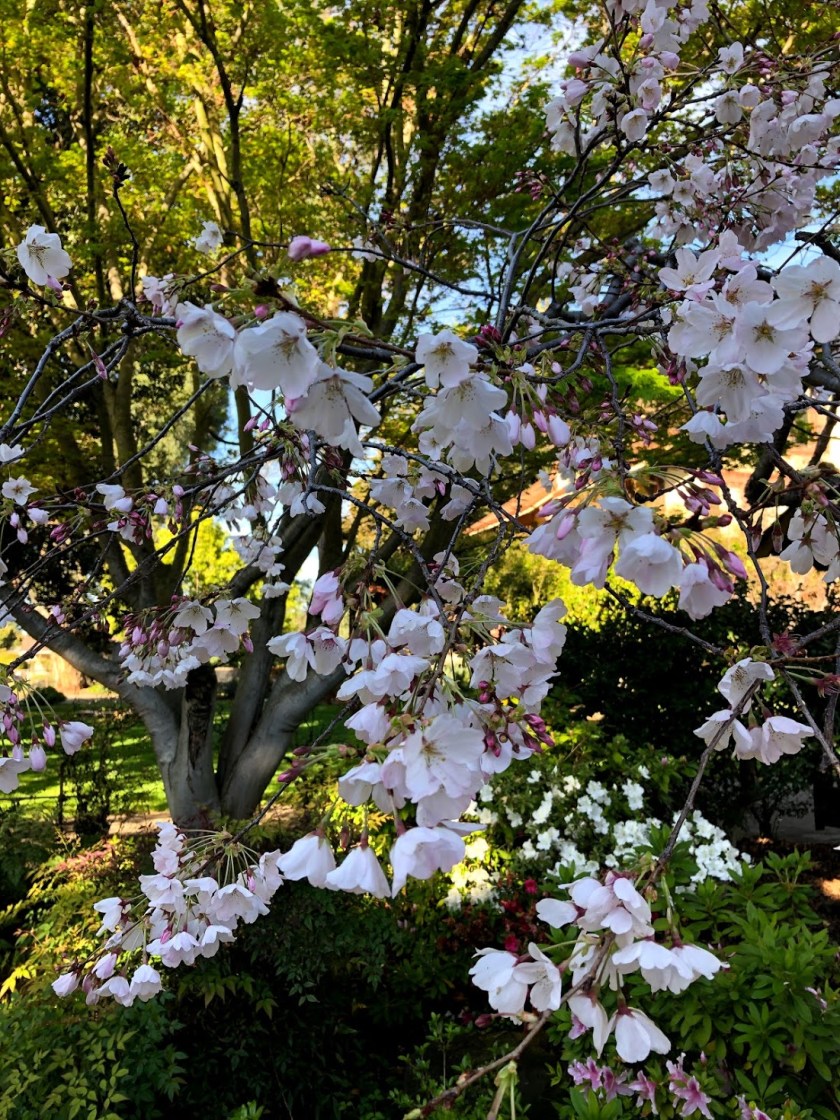
It was Saturday morning. I got up, convinced I had come back to the real world. The world outside looked beautiful. The dew drops on the cherry blossoms glinted in the morning sunshine . A Californian blue jay was sitting on one branch and pecking at the flowers – such a beautiful sight is to be seen to be believed.

cherry_blossom

Was that a really vivid dream or what? Covid-19 did feel surreal – what a dream?!

I sat on my bed the previous Friday evening exhausted. It was the first week of large scale disruptions – schools, offices, and malls had closed; crazy grocery shopping was behind us; and while I was grateful for being to work from home during all of this, I also realized that I was enervated.

That was how, you found me on Friday evening, determined to not think of the Corona Virus anymore at least for the night. I put it resolutely from my mind. I eyed the stack of books near my bed. I retreated to simpler times in an English village with Miss Read, I read about gardening, and I read about the life and times of Jane Austen in the 1800s.

The daughter was happy to not Coronaspeak anymore, and magnanimously offered to sit and watch Little Women with me. By the time, I went to bed, I had restored the mind to a semblance of normal.

Maybe the preceding Coronaweek was in my version of The Lathe of Heaven after all.

The Lathe of Heaven is a marvelous book written by Ursula K Le Guin. The book examines a scenario where a young man is gifted with the ability to make his dreams come – his psychiatrist realizes this, and uses his condition to his advantage. He attempts to change the world by offering to guide the young man. While under hypnosis, he makes suggestions and leads his mind into conjuring up dreams. One such dream reminds me of this scenario the most.

lathe_of_heaven
He dreams for World Peace and for all of humanity to be united.

When he gets up, his dreams are realized. Humanity is united. United against the face of an alien attack. The aliens are already positioned on the Moon and are poised to strike Earth soon. Suddenly, Earthly borders and barriers melt away. All of humanity is united against the threat of green-belted aliens on the Moon

The psychiatrist tries making amends from them on, but the patient realizes what is happening and tries to distance himself. He is scared, vulnerable and refuses to fall asleep.

Could Covid-19 be a version of a dream playing out? It certainly feels like that at some times.

But if this were a dream, how would we know? I went and stood outside below the Cherry tree, and the cherry blossoms flitted down and landed gently all around me. The California blue jay was still there having a blissful breakfast as it let the petals float to the ground below. One petal settled on my hair, and I felt it. It was solid and soft. It was real. That settled it – the preceding week of Covid-19 must have been a dream.

Slightly shivering with the morning cold, I traipsed into the kitchen and opened the refrigerator. It was full: stacked with extra cans of milk, vegatables and 2 cans of soup – so, we were in the Covid-19 reality. That wasn’t a dream.
The blue jay was confirming what with me exactly? That this too was a reality?
That our realities have a tendency to get warped?

I related this the daughter and son as they walked into the kitchen looking sleepy and exuberant respectively. The husband said, it did feel very much like a scenario in the movie Inception. The Dream within a Dream. That is how we always depicted it in our dumb-charades games.

The day wore on. As Saturday ticked into Sunday, I saw the digital clock in the microwave glow 11:59 – a moment in time that the young son loves to see. Maybe this was a reality within a reality too.

I am going to bed. After all, this version of reality does have some aspects that I dreamt about too:

  • I did hope to get a month to spend with the children at home.
  • I did hope to be able to spend at least time together without external demands on our time, to hear the clock tick in the quiet of the home.

I can understand why the whole thing seems so surreal. While some problems certainly unite humanity like Climate Change and our effect on the Planet, none seems to be as urgent and visceral as the Covid-19 reaction. It is happening, it is real, it is what it is.

This week seems less surreal than the week before. We have settled in to new realities of life. The life in which the simple, bare necessities of life will come to you. They’ll come to you!