Existential Angst or Gelato?

Every block of stone has a statue inside it and it is the task of the sculptor to discover it.
“Michelangelo Quotes on BrainyQuote”

As we walked past the thousands of statues displayed in the Roman corridors and roadsides, it is astounding and humbling to see the thousands of hours of creative labor that survives. The Vatican alone houses so many art forms and pieces of art, that we were quite naturally hurrying along if we did not wish to spend a good decade in there admiring every piece.


The Roman Empire is probably the most famously chronicled and studied empires in the world. The human condition across millennia has sought peace, temperance, a cultivation for the finer aesthetics even while battling the evils of war, famine and barbaric practices, and nowhere is that more apparent than in Ancient Rome.

Many portraits and statues were commissioned by the noble wanting to cast a sliver of their mortal presence into the immortal. The legacy of their lives as they might have seen it. But in works such as these, who endures? The person whose statue was carved, or the work of the sculptor whose ability enabled it? (See this picture drawn by my friend, of a statue)

Is it the Artist or the Object of the Art who endures?

head_bust_suresh
Image by Suresh (SureshSketches)

It isn’t hard to imagine the artist with a philosophical bent of mind when one sees the thousands of head busts carved out of stone. The busts themselves may be of emperors and powerful men, but they were carved by the skilled artisans who were not all famous. I’d like to imagine that the artisan who carved Caligula’s head had his laugh by secretly carving a statue of Caligula’s favorite horse, Incitatus. (Incitatus was made a senator, and was granted a place at the royal dinner table. ) Claudius, the one everyone assumed to be the local fool turned out to the successor to Caligula in the end. His head bust stands right next to Caligula’s in the hall of head busts in the Uffizi gallery.

claudius_bust

So, who endures and who doesn’t? It was Claudius’ writing that showed us all about the dangerous, mad tyranny of Caligula after all. ( The book, I, Claudius by Robert Graves is an excellent peek into Ancient Rome)

Walking past the arrays of the head statues, I could not help thinking of the Tamil poem by Bharathiyar that the husband quotes often:

Pirappal pala pizhaigal seidhu …
narai koodi kizhaparuvam eidhi …
Verum kootrukku eraiyagum pala vedikkai manidharai polae
Naanum vizhuvaen endru ninaithaayo?

“பிரப்பால் பல பிழைகல் செய்து
நரை கூடிக் கிழப்பருவ மெய்தி
கொடுங் கூற்றுக் கிரையெனப்பின் மாயும்
பல வேடிக்கை மனிதரைப் போலே
நானும் விழுவேன் என்று நினைதாயொ?”

Loosely translated it means:
Did you think I too would live the life that wracks ordinary human beings?
That I would sport grey hair, grow old, be small enough to talk pettily about people, and fall at the hands of fate?

The angst that has wracked mankind for centuries is apparent in the poem, and in the head busts and portraits by which I was surrounded. So, what is it we hope to leave as our legacy and for whom? We should aspire to be a thread holding the tapestry of life together while alive, but beyond it, what do we crave?

After the 160th picture of non-smiling faces, 100 head busts, and the n-th depiction of the crucifixion and the nativity scene, I knew what we craved for: Gelato.

“Before we go though, let’s go to the next floor. There is a gallery of musical instruments of the time.” said the husband. The children groaned, but I was intrigued. Music is a beautiful anthropological constant. We even sent a recording of whale song, Beethoven, Bulgarian folksongs and so much more on  the Golden Record  when we sent it out into space aboard the Voyager. NASA did not want to waste the space, but Carl Sagan, saw the poetic touch to it. The need for space exploration was to learn and connect, and what better mode to connect than through music?

cd

The image of a man playing the harp in a city square, as people walked by tingled in my brain, and I rose happily, urging the children on. “That man playing a harp could be from the 12th century or the 16th or the present. How beautiful is that?” I said to musical groans.

man_harp_today

After we climbed up the flight of steep stairs, however, we found ourselves peeking into another floor of more paintings. I looked around confused. The husband pointed to the sign there: Piano Secondo:

piano_level

‘Piano’ in Italian means ‘Floor’, and not a collection of pianos. He looked sheepish, but happy to be the person who relieved the tension, and off we went in an indecent hurry looking for gelato. Anthropological musings and existential angst can wait, Gelato cannot.

Una buona immagine

“Amma – you were sleep talking so much last night – it was hilarious!” said the daughter. The children and the husband giggled. In my defense, it had been a rather long few days. Roaming around in Rome had taken the wind out of my sails.

“I must have been tired!” I said. “ I had dreams of the weirdest nature. I dreamt the horses ran out of the picture, and out into the gardens that had the whomping willow type of tree.” (Pitti Palace & Boboli Gardens which are perfectly delightful to behold: A lovely spot of nature in Florence)

“Yes we know. And you sat up in bed sending Sabrina to get the horses back! Poor lady doesn’t have enough work in the reception, you have to send her galloping behind horses!”  I laughed with them. Sabrina had saved us considerable time by getting us a slot of time to visit the Uffizi Gallery.

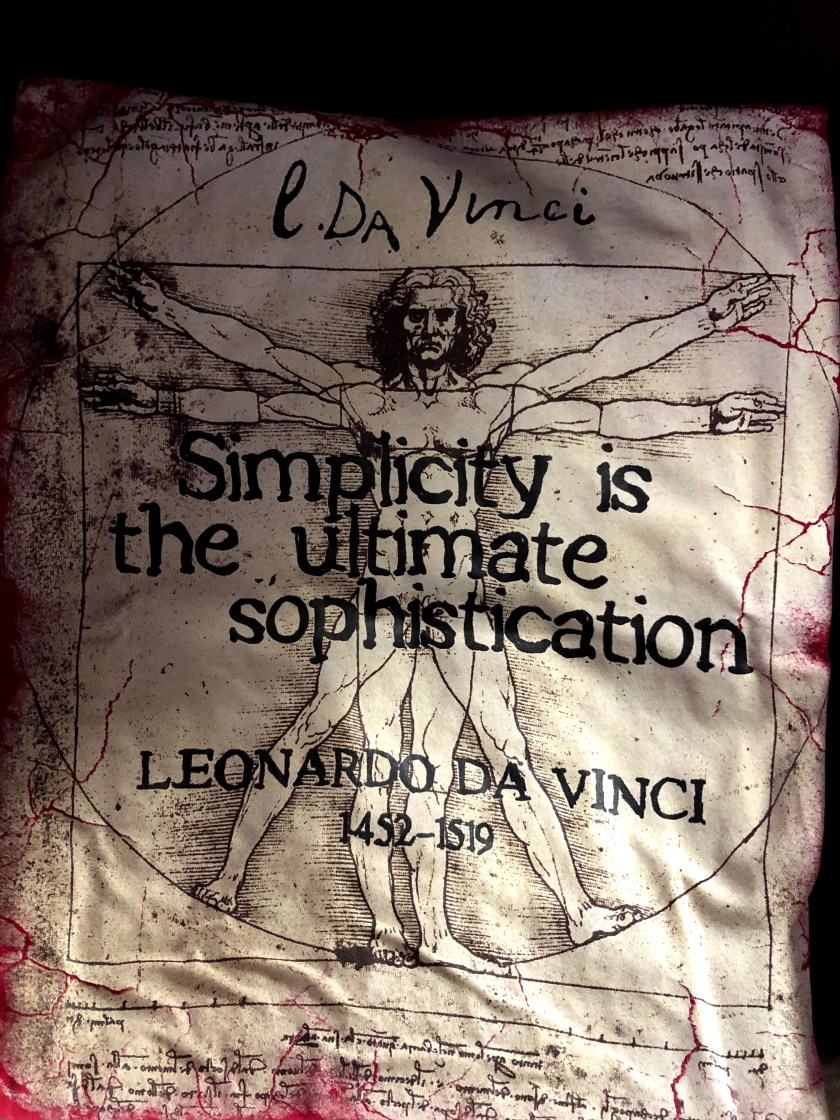
I was trying to extricate the strands of weave from the coagulated mess in the brain. A number of galleries collapsed in the various chambers of the brain leaving the paintings smushed together. Waddling through the galleries with a coat hanging off one hand, a child off another and a bag on my shoulders, I wandered through the works of Leonardo Da Vinci, Michelangelo and Raphael – entire galleries devoted to Renaissance artists. I naturally gravitated towards pictures featuring the rich myths, with a whiff of the beautiful Italian countryside in the background. The Birth of Venus, Primavera et al were as beautiful as everybody said, and had I known the nuances of art could have enjoyed it more.


I felt like one of those canvases that inspired the starry night by Van Gogh. All the different colors flowing into each other, forming a confused mess of colors, but having a unique kind of beauty in itself.

Art can never exist without naked beauty displayed - William Blake.

The first time we spotted a picture featuring a nude, the son tugged at my hand, and giggled, “Why isn’t he wearing any clothes?”

I giggled with him. Do you think this is what William Blake had in mind? The renaissance era with its developments in the anatomy and study of the human figure really did go overboard on the whole human body thing. Considering that it was winter in Italy, there we were dressed in thermals, sweaters, jackets, caps, gloves and socks, looking upon the stone cold statues of apparently virile, strong men with muscles exploding out of their bodies, and not a thread of clothing on them. It was amusing, and the pair of us giggled like children in the pristine halls of the museums.

statues

Standing outside a fountain on the way from one gallery to another, I posed for a photograph. I smiled and asked if the picture was okay. Apparently, it wasn’t.

The teenaged daughter took a deep breath and with the air of explaining basics to an idiot child started instructing me on the best method to pose for a photograph. Apparently, smiling like I am happy to be in the photograph is out.
“Go for this look.” she said, and looked morose, angry, pensive all at once. “And those shots of you standing in front of a place is so third century! Look at this one, “ said she showing me a picture of a person with a sharp nose in a red coat overlooking a ruin.

If it weren’t for the fact that she was looking stylish in my coat, I could barely have recognized her, and that, she said, was the angle you have to go for.

I am not sure I will get it entirely. I come from a generation that saw as many people crowded together in one frame as possible, and all of us smiled at the the count of three – with at least one blinking at the opportune moment. From there to this sort of “Don’t even show your best face, and please don’t smile” slide is a bit quick.

But after looking at the numerous pictures in the galleries across Rome, Florence & Venice, I can see the impulse. I mean this trend probably came from too many pictures. It is probably why Madonna looks apathetic holding a babe Jesus in her hands, who displays no curiosity in his surroundings or joy or mischief. It was quite disquieting to see picture after picture like this with frozen expressions. Was the smile frowned upon so much? I can understand the looks of anguish in the scenes of the crucifixion, but even in the more joyous pictures of Madonna and Child, can one not introduce a motif of joy?


That’s what our million pictures must look like isn’t it? Frozen expressions  “capturing the moment”. If we are capturing frozen expressions, I don’t mind jumping on those galloping horses out into the gardens from the painting with a wild look of freedom and joy on my face any day.

So that brings me back to the basic question of what constitutes a good picture (una buona immagine). Does every picture need to tell a story? Why is Mona Lisa so famous, and not the beautiful pictures of these ladies?


Please recommend books on the art of appreciating Art.

The Roman Holiday

“Can you believe we are going to roam around in Rome?” said the excited son. He was very proud of his homophone.

“Isn’t it funny? Roaming around in Rome?”

“Yes! You bobble head! I said it was funny the first time you said it.” said the teenaged daughter pulling an I-can’t believe-this little fellow face. I laughed, knowing this was only setting the stage for at least another 108 times we would have to endure the phrase in Rome, and I was not mistaken. The nourish-n-cherish household is proud of its jokes.

“Have you done your homework? Did you spend some time trying to figure out the places to see?”

The husband’s I-love-my-wife-but-I-know-what-she-doesn’t-do-well tone deepened.

Setting aside the dismal feeling of being caught in school, I told him (patiently),
“Relax – I got the itinerary from my colleague who went there for his honeymoon, and it has a pretty good list of things to do including details on where to catch a sunset.” I said winking. “I even prepared a doc and shared it with you.”

He looked surprised, but right enough, when he opened the doc, he discovered entries like:
Check out the colosseum, if there is enough time, also add Palantine hill, and the Piazza Navona.
On the way back,  spend some time on the Spanish steps, and near that is Trevi Fountain.

I am no trip advisor, and when I generally send people on their way, I give them a vague list like above, keeping a wide margin for ducking into random stores that attract one’s fancy, stopping at random spots that demand one’s attention, looking at people scurrying about their business, tucking in an extra gelato, dribbling along and finding a couple of boys play football – it is all good fun.

roman_list

I like to blame my list-making on being one of those staunch believers in the super power of Serendipity, and the gift of winging it. For instance, the taxi driver the previous night told us not to miss the Piazza Venizia.  Piazza Venizia, as it turned out, was one of the most grandiose buildings I have seen. Built recently by Roman standards, it is only a century old among ruins millennia old, but the views from up above of the sprawling city of Rome,  Colisseum and the Palantine Hill were brilliant.

rome-aeriel

The Romans didn’t believe in skimping on the grandeur. Glancing skywards and finding flying chariots bearing regal men atop their chariots was so novel that we found ourselves gawking like fish seeing Poseidon’s horses swishing through the seas for the first time.
“Poseidon was a Greek God, his Roman equivalent, Neptune, wasn’t as powerful because the Roman Navy wasn’t very powerful then”, said the mythology expert, the teen- queen in her mythical world.

Rick Riordan has done a marvelous job in getting tens of thousands of teenagers interested in the Greek and Roman myths, and our tour guide at the Vatican, told us she wrote up a Percy Jackson tour that was hugely popular. I could well imagine it. The city burst with myths. Flying chariots, fountains of fortune, serpents of evil, winged harbingers of war or prosperity jostled along with busts of statues of philosophers, kings, and senators.

1920px-piazza_navona_0956_2013
Bengt Nyman [CC BY 2.0 (https://creativecommons.org/licenses/by/2.0)%5D, via Wikimedia Commons
It was also slightly disconcerting to read about the forms of entertainment in early Rome. We have heard stories of the slave, Androcles, who was not mauled by the hungry lion remembering a past kindness, seen movies of the era etc, but there is something disconcerting about standing amidst the ruins of the Coliseum and reading about the manslaughter, the barbaric practice of skinning people alive etc. A place where hundred of years ago,  people watched this gore as a form of entertainment raises goosebumps.

coliseum

If that is the kind of evolution mankind has had to come through, we have come a long way, but we also still have several ways to go.

What was that poem about “Miles to go before I sleep” ? by Robert Frost.

Walking among the ruins, you are intensely aware of the fact that toga-clad Roman senators walked the same path 2000 years ago, and if you are even slightly distracted, there are thousands of tourists, their phones, and their respective tour guides to remind you of the significance. In spite of that, it felt strange to see the husband looking at the GPS to figure out directions beside a ruin that was literally thousand years old. What if a spirit from that age were to spring in our paths then and there?

Maybe one did, for the husband saw a chain lying across the road, and attempted his boyish skip across the chain. He underestimated its height and went sprawling face-down on the pavement. After the initial shock wore off, he started laughing, and the son said, “Appa tripped on the trip. Hey! Appa tripped on the trip while roaming around in Rome. Get it? Get it?”, and we all laughed.

Our jokes! Well, they need to evolve too.

The Anthropological Note – Bonjourna

Traveling from the US to any other continent is different. Continents with older civilizations hold an anthropological charm, and a cry to learn from History. Setting foot in the first city on our Italian holiday, Rome, I could palpably feel everything we have heard about Rome ringing in my years.

All roads lead to Rome
When in Rome, be a Roman
Rome was not built in a day

The Great Roman empire, Remus and Romulus fed by a wolf. An Italian Sojourn was unfolding, and I was filled with the milk of human kindness as we made our way to the first place of stay.

roman_ruins
Ruins in the middle of the city – Roman Forum. A pathway over 2000 years old!

Rattling along in the taxi from Rome airport to our place of stay nearer to the tourist spots, our driver was helpful. He gave us tips on places to see, and warned us about staying away from the railway stations at night. “Many people gather there, poor people, people from other countries, it can sometimes be , eh, dangerous for tourists.” he said in his thick Italian accent. I grew to love the tune with which Italians spoke English. “Italy now, there are no jobs enough for Italians, where will these other people find jobs? But they have no place to go, no work to do also.” he said sadly.

It was a sentiment that is commonly heard across Europe these days. Across Italy and Ireland, I heard variants of the same thing: The human heart that wants to share and welcome has to work hard to find the resources to aid all. It is easier for people to take to cynicism, nationalism and protectionism.  The refugee crises has peaked because of religious tensions, economic collapse, tyrannical governments – Rohingya, Syria. Millions are being displaced (Source UNHCR) without any shot at livelihood, and this will have consequences to a planet already stretched to its limits.

Do We Belong On Earth Blog Series

Travel as a Political Act by Rick Steves is a good book to read in this context. It is a book of short essays based on his travels to the countries of turmoil. Israel-Palestine border, Serbia-Herzegovina, Syria, Iran, Honduras.

You can watch the video here

travel_as_a_political_act

Traveling makes me think of Mark Twain’s quote:
“Travel is fatal to prejudice, bigotry, and narrow-mindedness, and many of our people need it sorely on these accounts. Broad, wholesome, charitable views of men and things cannot be acquired by vegetating in one little corner of the earth all one’s lifetime.”

A broad, wholesome, charitable view of men is all well when things are going well, and when one as a traveler or tourist is sublimely soaking in another culture, being helped by strangers and so on. I have to admit though, that I had difficulty summoning up charitable views of men when I had my purse stolen a few days later. I was sore at the end of a weeklong journey, and I swore at the pickpocket who stole my purse. Charitable view forsooth!

But, it too taught me something. I had ignored the pater’s teaching about splitting your assets and had stupidly taken all my credit cards together. That learning came with a cold lesson( a painful 6 hour wait in the whipping winds outside the DMV.) Another post for another day.


The Book of Kells

I was intrigued to see the book that Dublin is so proud of, and I wasn’t disappointed. Walking through the rain-washed squares of Trinity College, past all the students and tourists milling about the campus, I walked into the Trinity College Old Library to see the much talked about Book of Kells. Written about 800 years ago by at least 6 different scribes, it is reputedly the oldest book in existence in its original format. It was probably written at a monastery similar to the one below by monks.

IMG_0086

I was all agog to see the Book of Kells, rose early and off I went with nothing but 3 eggs, 2 pieces of toast with butter and blackberry currants jam, 3 cups of tea, some fruit, a spot of yogurt and some freshly squeezed fruit smoothie in me. (European hotels really do have the best continental breakfasts in the world. Try as I might, I could not get them to feed me less. Please can I have just 1 egg, nothing else, I’d say. “Just a leetel beet of vegetables on the side.” they’d say, and soon a tray bearing a couple of fried eggs, mushrooms, spinach, baked beans and toasts accompanying the eggs appeared behind a tottering waiter with a benevolent smile.)

breakfast

Anyway, the Book of Kells has scholars poring over its pages, art historians and critics study the dyes used for the illustrations in the book, and the book does look elegant. The letters were different, probably Celtic letters at the time, and the lettering had a calligraphic touch to it that we seem to have lost in the world of keyboards. What the book is about is, I guessed, derived more from the artful illustrations rather than the prose.

While it was inspiring to see writing as early as all that, I was not wholly prepared for how it made me feel later on.

Days later while walking down the streets, I’d recognize some rune from the Book of Kells or something similar looking displayed on the shop fronts, and feel a little strange. How ephemeral are our lives and its influences? Even the greatest works of the times, mean so little now. And only one book survived the times. What about the rest of the books written at that time?

So many languages fade away taking with it, another chunk of literary history forever with it. The thirukkurals in Tamil have had a good run so far.

IMG_0113

What writing will stand the tests of time, and which ones would not? What does it say about the writer who started with the intention of writing about the lofty Books of Kells and wrote instead of the fantastic breakfast she tucked into her stomach? Given how ephemeral even our inscribed works are, shouldn’t we have a little less ego, a little less lust for power, and little more acceptance of our state of being?

I mused on our social media presences. The place most avid users go to share our thoughts and feelings. Maybe we are subconsciously evaluating every thought that flits in like fluffy clouds on a bright day, taking a pulse of our feelings.  What of thoughts not shared, and if thoughts trigger feelings, will the absence of thought then remove suffering, but then what is the state of being?

Maybe that is why the old Eastern philosophers taught us to calm our minds. Ursula Le Guin’s quote comes to mind:

“Things don’t have purposes, as if the universe were a machine, where every part has a useful function. What’s the function of a galaxy? I don’t know if our life has a purpose and I don’t see that it matters. What does matter is that we’re a part. Like a thread in a cloth or a grass-blade in a field. It is and we are. What we do is like wind blowing on the grass.”

I like my spot of writing even if sometimes I have muddled things up a little more by the end of it all.

Boarding the Flight of Fancy

A version of this post was published in The India Currents Magazine: On a Flight to a Land Without Borders

I boarded the flight at the end of a long week. I was going to be away for a week, and I had spent weeks trying to get things in order for the week I was gone. It felt good to finally stretch one’s legs (as much as an economy seat would allow anyway), relax one’s senses, and stretch one’s mind.

The flight was strangely beautiful. It left in the evening, and as it took off, I left behind a sparkling firework of lights. The vast, urban sprawling city and surrounding areas looked kindlier from above. The freeways glowed like veins throbbing with cars as they crammed their way home for the week-end along the packed highways. I have watched ants with interest as they scurry about their daily duties and I felt we must look the same if someone were to be observing us. Maybe those monitoring satellites do have the feeling every now and then.

Bay area at night is beautiful from an airplane, however else it feels when one is on the road.

img_08171

I fell into an uneasy slumber once we passed the populated sections and darkness fell. I looked out the window hours later, to be pleasantly surprised by the beauty that greeted me. The plane was gently reverberating with the satisfied sighs of sleep from most passengers. A few were watching the brightly glowing screens. I peered out of the window, at first unable to see anything since my eyes took some time adjusting to the sudden lack of light. Once I did though, it was marvelous.

I have always loved gazing at the moon while traveling. The feeling of us moving, and our beautiful cosmic neighbor giving us company even though we are moving so fast is surreal.

I could not see the moon just yet, but I recognized the belt of Orion. We were flying along side the big hunter as he made his way in his pursuit of the seven sisters across the skies. It is a strange feeling to watch the stars and a familiar constellation accompany us on the trip while we journey through the stars.

cd

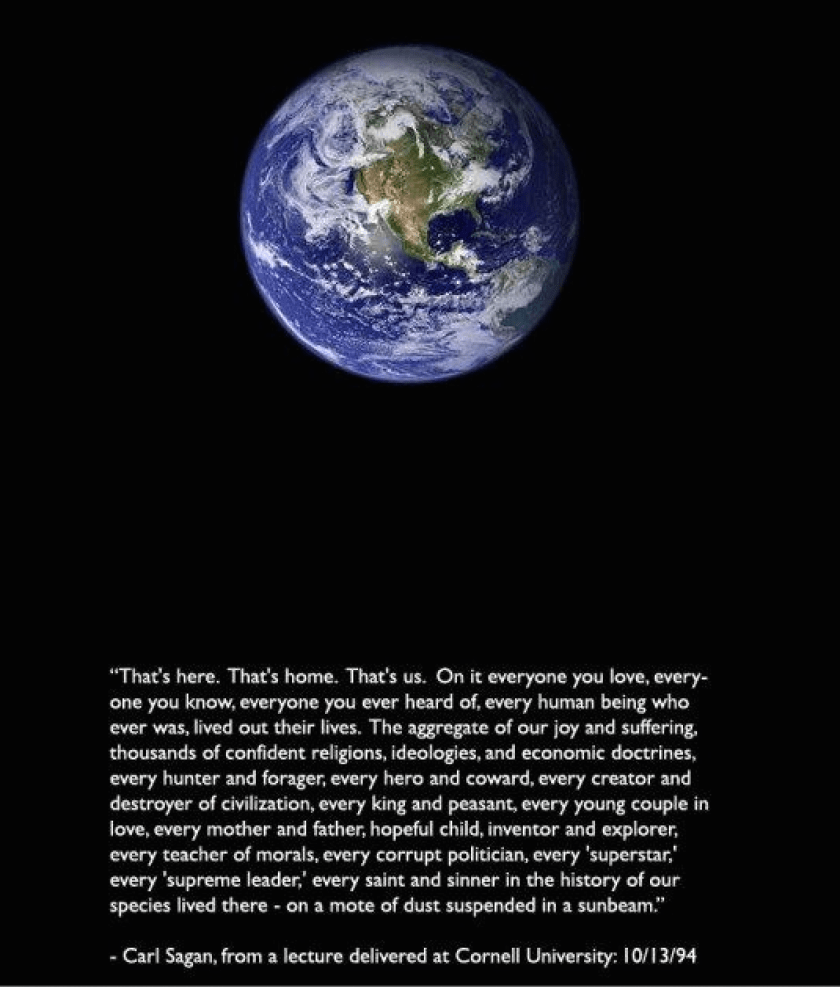
The Pale Blue Dot, as Carl Sagan so beautifully christened our lovely, if sometimes crazy planet, seems wonderful from high above. It helps us forget how judgmental, critical, harsh and war-mongering a species we are. While up there, borders and countries seem like a strange concept, like a tiger marking its territory. Can the tiger determine where life can flourish, where the weeds grow, or how many gusts of wind may swish through the bamboo groves? Our borders mean much the same especially when surveyed from the stratosphere: Meaningless asks from an arbitrary marking.

Musings from the wonderful book, Lands of Lost Borders by Kate Harris, took me to an uneasy land of half slumber in which strange dreams accompanied unknown stars through a flight that even a 150 years ago was nothing but a flight of fancy. Kate Harris’s work is one for every traveler’s soul.

lands_of_lost_borders

I got up to see the moon looking slightly alarmed at still being up and about when the sun was rising. The pink, and orange skies twinkled benignly upon the clouds below, and all the world was still full of promise and expectant. The blush of joys unknown.

flight_clouds.jpg


To All Astrophiles

“Did you know, the Voyager Insight is going to land on Mars tomorrow?” said an excited son. T’was the night before school reopened after a joyous 10 day Thanksgiving break, and the night before the much anticipated Insight landing on Mars. I looked at his shining face when it should have been a sleepy one.  The sparkle in his eyes did not smack of eyes wanting to make the journey into the Land of Nod any time soon. So, I sat down next to him and said, “Really? How do you know?”

That’s better, his posture seemed to indicate, and said, “Yes…Appa told me. It has to land at an 12 degrees angle it seems.”

“Why 12 degrees?” I asked intrigued. 

Space.com article : Mars Insight Landing

Quote from article:

“InSight hit the thin Martian atmosphere at about 12,300 mph (19,800 km/h), nailing its entry angle of exactly 12 degrees. If the lander had come in any steeper than that, it would have burned up; any shallower, and it would have skipped off the atmosphere like a flat stone across a pond.”

After chatting a little more on the impressive Mars voyage, I asked the little fellow if we should read a book on Space exploration. He nodded. Anything to keep from falling asleep.

So, we picked up the sweet little children’s book, “Also an Octopus” or “A Little Bit of Nothing” 

also_an_octopus
Also an octopus : or, A little bit of nothing / Maggie Tokuda-Hall ; illustrated by Benji Davies

Also an octopus : or, A little bit of nothing / Maggie Tokuda-Hall ; illustrated by Benji Davies

The book is about an octopus who plays the ukulele, and wants to get on a purple spaceship. Who can help it build one though? Why a rabbit scientist of course!


We laughed as we read the book. As different as it was from Counting on Katherine by Helaine Becker, Illustrated by Dow Phumiruk, it stretched one’s imagination in a thoroughly whimsical manner that made us giggle at the very thought of the Octopus on the spaceship. If ever we need to convince ourselves of the diversity of life that we seem to be threatening, we need look no further than the impressive marine life we host on Earth. 

counting_on_katherine
Counting on Katherine – by Helaine Becker, Illustrated by Dow Phumiruk

All space lovers should definitely read the beautifully illustrated children’s book, Counting on Katherine. Based on the scientists featured in Hidden Figures, Counting on Katherine illustrates the love for Mathematics and its application to space travels in the most endearing fashion. A child who has the inclination towards numbers cannot help deepen their fascination with them, and hopefully, those who do not share that fascination, will develop a curiosity towards them. I have always loved the look of a blackboard with neatly written mathematical formulae and calculations: this book captures the aesthetic beauty of the blackboard beautifully.

img_0287
Counting on Katherine – by Helaine Becker, Illustrated by Dow Phumiruk

Anyway back to Voyager Insight I said, “Do you think we can watch it land?” 

“Yes….it will be on You-tube.”, said the little fellow, positive that the image transmission from the Insight landing on another planet can make it to the nebulous internet without any trouble at all.

Here is a video link prepared by LockHeed Martin in collaboration with NASA’s JPL:

Automatically, my mind harked back to the old times when an image was work, precious work, with days in between clicking the pictures and getting them developed. When they came out, you saw the lighting could have been better the framing better, the shake a little less, and solemnly swore that you were up to no good, and waited it out till the next film roll proved it. 

I still marvel at any photographs we receive from Space. 

Human minds can adjust to improvements so easily – if only, we had the sagacity to adjust just as quickly to hardship.

Hero-Worship, Nicomacean Ethics & Baloney Detection Kits

I have heard friends rave about Dune by Frank Herbert many times over the past few years. I finally got to read the book, and I feel richer in mind and thought for it. The book was long and at times hard to keep track of (especially in the beginning). This is one of those times when I realize how my mind flutters with attention spans that drive calm butterflies to frenzy. But slowly, steadily, I settled into the book, and there were multiple moments when I felt like I must grab a pen and start writing (but that stern butterfly gave me a look, and kept me at my the task of reading). This, is probably the reason I have forgotten half the things I wanted to write about (This is where I glare back at the butterfly guardian who kept me reading)

Dune-Frank_Herbert_(1965)_First_edition
First Edition Cover – Image from Wikipedia

One of the many things that appealed to me in the Dune was the fact though there were vague references made to technology and the number of technological devices used by those living at the time, it is not a mainstay.

The book is a multi-layered piece of literature with over-arching themes of ecology, the art of war, religion, philosophy and politics. There is a particular quote that stuck with me in the Prologue written by Brian Herbert, Frank Herbert’s son, about the dangers of hero worship.

Quote:

As Liet Kynes lay dying in the desert, he remembered the long ago words of his own father: “No more terrible disaster could befall your people than for them to fall into the hands of a Hero.”

Having studied politics carefully, my father believed that heroes made mistakes…mistakes that were simplified by the number of people who followed such leaders slavishly.

In many ways, hero worship is what leads people to choose leaders who then turn into despots and dictators. Adulation affects everyone, and those with fragile egos are the most prone to its lure.

Towards the end of the book, Paul Atreides recognizes that he is being hailed as the Messiah and regardless of his acceptance of the title, there is a holy jihad in his future. He can either lead to the best of his abilities like his able and excellent father, Duke Leto or simply be the mascot of a movement that has already gathered momentum – a force that is much larger than him. This sort of trusting faith in one human being is never a good sign, and is a malady that has affected us for centuries. 

I quite agree with how Aristotle describes the nobility required of politicians: he opines that politicians should take an oath, almost as sacred as a Hippocratic oath, to remain fair and mete out justice. From the Nicomachean Ethics – By Aristotle. 

The lecture on Aristotle and Socrates on How Does One Live The Good Life? From 36 Books That Changed The World (Chapter 8) is an excellent listen.


There are no initiation courses for politicians. No training. Though, I have a suggestion to have every politician complete the Butter Battle Course, it is unheeded. (The Butter Battle Course is an excellent course consisting of childrens’ books not more than a few pages each, and should only take a few moments of every leader’s time):

butter_battle

However, till politicians start taking their careers to truly be in service of humanity, we need to equip ourselves with Carl Sagan’s excellent Baloney Detection Kit from the book: The varieties of scientific experience : a personal view of the search for God / Carl Sagan ; edited by Ann Druyan. This book contains the Gifford lectures given by Carl Sagan in 1985.

The_Varieties_of_Scientific_Experience
By Source, Fair use, https://en.wikipedia.org/w/index.php?curid=28513011

When someone asked Carl Sagan after his lecture what we can do when the governments do not act in our best interests, he advised us to have Baloney Detection Kits handy.

Quote:

“I would say that the first thing to do is realize that governments, all governments, at least on occasion, lie. And some of them do it all the time – some of them do it only every second statement-but, by and large, governments distort the facts in order to remain in office.

And if we are ignorant of what the issues are and can’t even ask the critical questions, then we’re not going to make much of a difference. If we can understand the issues, if we can pose the right questions, if we can point out the contradictions, then we can make some progress. There are many other things that can done, but it seems to me that those two, the baloney detection kit and use of the democratic process where available are at least two things to consider.”

This seems to be age old wisdom: our oldest myths write about flaws in heroes, what brings about the downfall of the most powerful tyrants  etc; and yet, the reminder for our own Baloney Detection Kits is a timely one.

Books:

  • Dune – Frank Herbert
  • Varieties of Scientific Evidence  – Carl Sagan 
  • Nicomachean Ethics – Aristotle
  • 36 Books That Changed The World – Lectures on Great Courses
  • Butter Battle Book – Dr Seuss

When Love is Theratti Paal Sweet

This article was published in The India Currents Magazine for Krishna Jayanthi. Link here: When Love is Theratti Paal Sweet

“Do you remember?”, started an aunt, “how he stuck his hand in the theratti paal * container when the lights went out during Krishna Jayanthi?”

*Theratti paal refers to a heady Indian sweet made of condensed milk, ghee and cardamom

*Krishna Jayanthi – Lord Krishna’s birthday

The story was being related to peals of laughter. The hero of the tale beamed and laughed heartily at his boyhood escapades – it had all happened about 70 years ago after all. We knew the story, but it did nothing to diminish the retelling of it. I already knew my father was the naughtiest of the 9 children borne by Visalam Paati and Kalyanam Thaatha. (Paati – Grandma; Thaatha – Grandpa)

I sat watching the glow on the faces around the table, like an eternal torch lit by the essence of shared times and space of childhood. There was genuine affection, laughter and love there, and it enveloped all those around in its warm embrace. We had been to visit our aunts in Atlanta. The septuagenarian father has two septua sisters who live there, and I went with him to enjoy the siblings get together. I watched indulgently as their laugh lines etched over the years crinkled with every anecdote. 

His sisters and nieces had lovingly charted out the menus for a whole week. A week that included all of the father’s favorite dishes. Dishes remembered from childhood, dishes acquired in far off lands, and dishes that made my paternal grandmother, Visalam paati, come alive in the retelling of the process. The delectable snacks and the satisfying compliments such as, “You have your mother’s gift with the art of cooking.” flowed graciously.  The brood of Visalam and Kalyanam were known for their sweet tongues, and every meal had a different dessert to go with it. 

The sweet of this meal was theratti paal. It’s commercial cousins are called Milk Peda, but it is an unpoetic name and as a sweet is a poor substitute for the Theratti Paal. Theratti paal, when made on the stove with fresh milk takes hours to come to the right consistency. I can imagine how Hinduism came to have the myth of churning the milk ocean. There are so many milk based sweets in the land, and it is quite possible that that particular myth was the gift of the dreamy subconscious thoughts of some person making theratti paal hours at a time. One can go into a sort of meditative trance as the milk gathers its cream, and then folds and bubbles again, and then again and again, till the color changes, the consistency changes, and the sweet smell of condensed milk wafts through the air. In slow measures, one adds the sugar, butter or ghee and the cardamom to send those in the vicinity to realms of ecstatic waiting. 

Screen Shot 2018-08-17 at 10.32.21 AM

Today the same marvel can be obtained from a can of condensed milk, a stick of unsalted butter, and a microwave in under 10 minutes, and I felt the tongue dance and explode in joy as the microwave theratti paal melted on the tongue. The ghee, condensed milk, and cardamom all tickled the nostrils. 

I remember listening to stories about her children from my grandmother, Visalam Paati. (Visalam means vast, and the name suited her. She was generous with her time, attention and her servings, and when one wanted to play with the jiggling oodles of arm fat, there was plenty of that too and she never once got irritated when we teased her about her bulk. ) Feeding and taking care of a brood like that makes me shudder, but Visalam paati seemed to have done it with love, competence and skill. 

The tale being narrated was the one on Krishna Jayanthi. Krishna, Lord Vishnu’s avatar, is said to have loved theratti paal. 

krishna_therattipaal.jpeg

Apparently, the evening pooja was ready to start. Bowls of snacks: (mysore pak, payasam, thattai, seedai, murukku, theratti paal), butter and ghee were all placed in front of the Gods, and just before the offering to the God was complete, the electricity went out plunging the little village house in South India in the 1940’s, into a darkness lit just by the flame of the small wicker lamp near Lord Krishna’s deity. Visalam Paati having the kind of prescience that comes from raising nine children immediately placed her hand covering the theratti paal container. True enough, within seconds, a small hand struck at the theratti paal container – Visalam paati caught the hand, and waited for the lights to come on again. Just as she thought, the malefactor was none but the naughtiest of her brood, my father. 

“I knew you will reach for the theratti paal. Little rascal! “ she said. 

We all laughed heartily while spooning in some more excellent microwave theratti paal ourselves. 

The smells and scents of ghee, condensed milk and cardamom cut across decades and the siblings sat there giggling like school children again. 

Isn’t it marvelous how regaling our pleasant memories often transforms the bleak horizons of time to become as brilliant as the Milky Way studded with the shining moments of our memories?

Next week is Krishna Jayanthi, and I will go about the joyous task of drawing tiny Krishna feet from the doorstep to the kitchen. I shall make the microwave theratti paal, and think of the children in the 1940’s who shared the adventure of theratti paal, and waited the whole afternoon for the exotic taste of it in the evening. I shall regale the children in the twenty-first century with the story again, and smile indulgently at the fact that his sisters remember their naughty brother every time they eat theratti paal.

Love takes various shapes. Ours is sweet. Theratti paal sweet.

Zephyr Tales

A few days before our trip to Iceland, I was reading a beautiful book on Lewis Carroll, One Fun Day with Lewis Carroll – A celebration of wordplay and a girl called Alice, and how the world was gifted with Alice’s Adventures in Wonderland. The book had exceptional illustrations and I found myself looking longingly at the pages multiple times over. Written and illustrated by Kathleen Krull & Julia Sarda, the book lets us peek into the journey of Lewis Caroll, and his particular penchant for finding words when the English language fell short.

IMG_8187

What was fabulous and joyous at the same time? Why ‘Frabjous’ of course.

I thought of this book while running down a mountain in Iceland. I was in a magical place and everything around me felt surreal. I was also reveling in the spurts of fresh air, reminding me every now and then that I was not in a dream. So, I suppose I could not really be Alice scuttling after a rabbit, though….I was running behind a friend whose physical fitness is legend in our little circle, and before I could say “Ho!”, he had loped easily ahead of me like a rabbit in a waistcoat. I was lost in the beauty and strangeness of the world around me, and kept on.

IMG_8730
Just as a sample of the brilliant art work in the book, please check it out.

Uphill, it was torture. I was wearing multiple layers of clothing, and huffing and puffing like puffins in a marathon. I plucked at my scarf, petulantly tugged at my jacket, and tied it around my stomach, and kept running. The marvelous scenery around me was ever so slightly befuddled by the mambo drums in the heart.

Downhill however, it was marvelous. I could feel the cool breeze on my face. Knowing that I had a gushing waterfall on the right, and a huge glacier to the left helped. The weather had become cooler, and the clouds that ordinarily I would have found beautiful were now stunningly beautiful.


Isn’t there a beautiful word that describes the heady feeling of feeling the cool air against your face as you run downhill? Zephyr was the closest word I could think of.  Could horses have something that captures this particular joy? Maybe in the timber of their neighs.

horse

Exultant, I kept running. There is nothing in the world that can take that feeling from you, I thought, and smoothly tripped on a pebble, and did a routine that could be incorporated in to the next vaudeville act.

In a place where the winds are ubiquitous, there must be many words for describing the wind. I looked up words for wind in Icelandic and I was not disappointed to see 56 distinct words. (Counting Icelandic Words for Wind (JóB))

The search for this particular word led me to other beautiful ones though. Psithurism, for instance. Describing the sound of the wind rustling through the trees, I often stop and listen for this marvel during walks. Some others here:

A Nemophilist’s Orchestra

In the cathedral of the trees,
The bells of the wind
Like perfect music sounds
Accompany our montivagant joys.

Maybe we do need to follow Lewis Carroll’s wisdom and come up with a new word for the wind beneath your wings or the wind on your face.

P.S:
Nemophilist – a haunter of woods, one who loves the forest for its beauty and solitude
Psithurism – describing the sound of the wind rustling through the trees.
Montivagant – wandering over hills and mountains