I call it Tao

I lowered the tired frame gingerly onto the mattress. The once firm mattress sagged a little, and I felt the springs creak, as though mattresses moaned. The senses were feeling somewhat overwhelmed. It is often the case after a long day amidst crowds, and cacophonous sounds. Crowded airports, train stations, bus stations can all bring the feelings to a head.

After a couple of weeks of continuous travel, I felt unmoored from the Earth. I had been flying a lot: both for long hours and frequently. I felt euphoric amidst the clouds, but yearned to stretch my legs and feel that solid connection to the Earth.

My steps on Mother Earth between my travels gave me a rushed feeling as well. Asian cities are crowded, and I lacked the narrative of control in my feet. I shuffled along with the crowds to make it in and out of places. I was being harried and jostled to a particular direction. I needed to slow down, to take it all in at my own pace, in solitude. Maybe speed isn’t a good thing, and bullock carts were better off.

I don’t know how our ancestors felt after traveling a few days by horseback or bullock carts to neighboring villages. At first, I started my musings on the travels in time assuming simpler times and less problems, but my pragmatic side took over: If all our modern methods of comfortable travel still pounded the muscles and energies out of our system, how must rudimentary modes of travel have felt on their poor frames? After their tiring journeys, there were no instant methods of heating water, drinking tea, or cooking a meal after all. If the humans felt that way, how did the bulls and horses feel?

tring-tring

No, maybe we all have bodies that need rest regardless of bullock carts or airplanes.

This is where I rewind to the place in the narrative where I lowered the t.frame gingerly onto the mattress. The m sagged and springs creaked, thoughts swirled. You get the picture.

I tried to calm the senses enough to sleep, but it was uphill work. I tried visualizing the misty mountain tops that I love hiking in. I tried imagining the body after a good hike amidst the mountains, but found I just could not! It was then that I surrendered to the written word with a deep breath.

In the Snow Leopard, Peter Matthiessen was on a journey to find snow leopards in the upper reaches of the Himalayas. Journeying into the heartlands of Tibet’s Dolpo valley, and possibly an inner journey much richer. The author was discovering the meaning of being present. He was walking a high cliff and looking down upon a distant meadow with goats grazing. The cliffs on either side of him a constant reminder that unless his entire being was concentrated on being there, he would not. There was a moment of clarity he says, when he realized that he would never set foot on that distant valley in this lifetime, and not be amidst the same goats in that distant wanderland ever. But he was given the opportunity of being there on that ledge-like cliff at that moment, and he took it.

snow_leopard

Of course, I realize I am doing a poor job of both my explanations and interpretations of the passage. (I was too tired at the time to jot down the passage for reference), but that was a clairvoyant moment for me. In one sentence, in one breath, I felt space both in me, and around me. I was in a cramped city with no parks or beautiful walkways nearby, but I was transported to the clear mountain ledge atop the Himalayas. Maybe we all have such moments of clarity, and appreciate them. Or the moments themselves vaporize and there is a vague feeling of contentment, I do not know.

I felt one such moment when I came home, and was standing in my backyard. Winter had come in, the leaves had all been stripped bare from the trees, and the wet earth squelched as I walked gingerly on it. There, in the glorious peek of the sun’s rays, I felt a moment of grounding, a moment so profound that I can visualize it now. The suns rays caught on the rain drops in a spider web that was gently swaying to the winds. The work of one creature that did its work in solitude, with perfection, and at its own pace. Though the web itself was spun well above the ground, it held against the branches of the trees, on a planet spinning very fast in its cosmic journey with the Universe.

mars_watching

I remembered this passage from the book then:
“Before heaven and earth
There was something nebulous
     silent isolated
     unchanging and alone
     eternal
     the mother of all things
I do not know its name
I call it Tao

The Dream Weavers Web

It had been a few years since we had taken the magical pill. When the daughter was younger, she was enamored with Disney movies, was obsessed with unicorns and mermaids (the mermaids still hold sway), but the general euphoria with Disney has come down somewhat, or so we thought. It turns out, magic may be dormant, but thankfully not absent. When those Mickey ears came on, so did the smiles, the magic, the ridiculous mixed with the plausible, the tales with long tails, the myths and legends, everything came bubbling up in one hot cauldron full of fun and adventure.

I must say I was thrilled too. The day to day living tends to routinely pound magic out of us unless we make a concerted effort to keep it. The schools manage to do so for the children. There are Dr Seuss weeks, there are Read-a-thons, crazy hair days and crazed sock days to keep it all intact. But as the business of earning a living and adult hood takes on, there is a brush working in the background to make us more even keel, more predictable and less whimsical.

Reading children’s books keeps it for us in some ways.

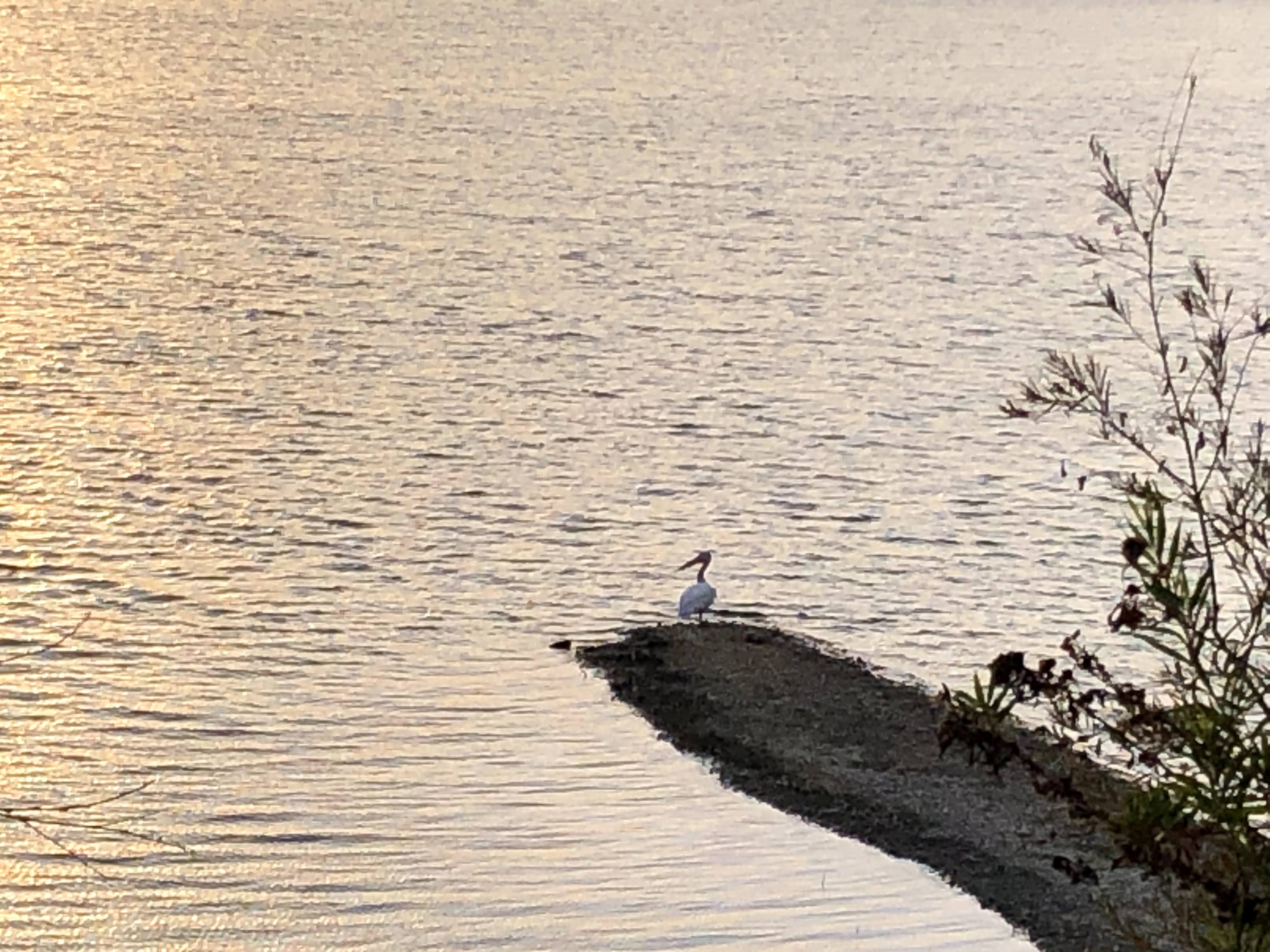
I had expected to have a good time at Disneyland. I manage to put my whimsies on with a delight, and get the children going too. So far so good. But there are serendipitous surprises lurking even in the most magical of places. The Disney World in Florida was even better than I had expected. There was Animal Kingdom, in which I expected plastic hippos and lions made to scale. Consider my surprise then when we went on the Kilimanjaro safari to be taken into the hinterlands with animals in relatively free reign. It is marvelous to see a bloat of hippos, a tower of giraffes, a something of warthogs, and a blush of pelicans roaming freely. When a white horned rhino waddled across our path, we simply waited for it to move quietly. Even the children, though looking awed, did not utter a sound. There is majesty in nature.

One of the best surprises for me was the onus on conservation of our beautiful planet for the years to come. There were green houses showing us the marvels and possibilities of vertical farming. It was apparent to those of us floating in the boats by the lazy river taking us through these green houses, that many of us had never seen plants of many vegetables and fruits before. One excited child pointed to an eggplant plant, and squealed – “Look the eggplants are hanging from them!” I could see it was a beautiful revelation for the child who had simply assumed you picked it up in the grocery aisles of the supermarket, while making a passionate case for a Hot Wheels toy car at the billing counter.

Saturated with the magic of life on this beautiful planet, we spent a day amidst the shots to space. Kennedy Space Center. The past merged with the magic of fairy-tales, the present beautifully thrumming with possibilities for conservation and conversation, and the future hits among the stars. Looking for possible planets for us to expand into.

It is marvelous to see we are on the cusp of a decade that holds so much promise. For among the young I saw in the parks, there will be quite a few starting their careers in the coming decade.

IMG-6125

The whole time, I was absorbing the atmosphere around me, little words were forming themselves into sentences. I was making my journey on the river of time and I was grateful for so many things. Some good sentences disappeared because I had not written them down, but I didn’t fret. It is often like this – playing with the words to relive my experiences.

Imagine how I felt then, when I read Ursula Le Guin’s essay on Writing. I felt the sage author’s words like balm, and nodded along. Writers are creators, but unlike potters and weavers, our products are less tangible. Our dreams are webs weaved in the magical recesses of the brain, and not all of it worth reading or sharing.

“Writing is a risky business. No guarantees. You have to take the chance. I’m happy to take it. I love taking it. So, my stuff gets misread, misunderstood, misinterpreted, – so what? If its the real stuff, it will survive almost any other abuse other than being ignored, disappeared, not read.”

When I read this piece in the essay though, I was grateful. I have written 800 posts over the past 14 years, and I would never have done that if not for the encouragement I have received from my dear friends and readers. It is magical. Encouragement like Love, is so fuzzy a thing to try to describe. For both the forces have the power to gently nurture, nudge, and poise for acceptance.

Thank you for all of that. Let the magical dreams weave on in the coming decade as well. Happy New Year and Happy New Decade – May the River of Time course on gently.

The Chrysalis of Clouds

Long flights are a time for introspection and solitude. Maybe given how little I get of this precious time unconnected, and alone, I am doubly appreciative of these spots of solitude gifted to me.

It is strange to think I am surrounded by sentient beings on a flight amidst the clouds. It was cramped being surrounded by people, but yet, free enough to let my fancies roam the beautiful worlds outside. The stars that I stare at from down below seem closer, and more familiar without the forms of the lit urban landscape to obscure the view.

Squinting into the night, it is faintly possible to remember a world swirling below and worlds swirling all around us, and worlds in which our problems are just that – fleeting wisps of cloud.

It is also rarely that I get to indulge in the beautiful meditations afforded by looking out the window. The tinkling lights of spots of civilization below make me think of how our problems look from above. I can think benignly of mankind just as I can do so when I am atop a mountain looking down at our lives.

img_5571

The rain bearing clouds were floating heavily as I surveyed them longingly from the airplane window. There is a strange uplifting feeling in being up among the clouds. When you are up there for hours together just quietly admiring the clouds, and the various lights that illumine them, there is cosmic beauty there. A calm beauty that words cannot do justice to. The idea of a soaring high atop a large thrumming bird watching the moonbeams light up the clouds is magical.

Watching the sun rise from above the clouds is even more magical. The transformation between dusk to night and from night to dawn is amazing. When on a long flight like that, it is doubly interesting to note that it is hard to imagine trees among the clouds. There is just a white/grey world tinged with silver, gold, yellow and orange against a black or blue sky. Where are the greens and purples that the eyes yearn for up there?

img_5532-effects

Flying among the clouds, there was a strange sense of being transient. Aren’t we all transient beings, here among the clouds for a while? This world. While it feels beautiful to experience this fleeting sensation, it is also bourne upon us about the fragility of our beings. We are in pressure controlled vessels , being looked after by flight attendants with food and drink that our peculiar palates can accept.

As the flight announcements came on about our landing, I felt an unease. A return from the lands of fancy above to one tinged with reality. Was this how adventurers felt? Maybe it was because of the chapter I was reading in The Snow Leopard by Peter Matthiessen as he wraps up his 6 month trek in the Tibetan Dolpo region on the lookout for snow leopards:
“To emerge gradually from such a chrysalis, drying new wings in the sun’s quiet, like a butterfly, to avoid a sudden tearing of the spirit. Certainly this has been a silent time, and a hallucinatory inner journey too, and now there is this sudden loss of altitude.”

The transcendental nature of flights,  watching the moonbeams, suns-rays and so on illumine the fluffy worlds below is a gift indeed. A time of mellifluous thought,  the landing to the earth is seldom smooth – do birds feel that way?

img_5549

A Poem From The Clouds:


The rain bearing clouds shimmer over the city lights below

Giving way to a darker journey where

The stars keep me company as they twinkle over the wing

Blinking and twinkling their friendly greeting as my eyes fathom their shapes.
The sun’s rays across the wing span creep in, slowly

Ushering in a new world

The same world blanketed by the stars

Or is it?
A billion diamonds replaced by one

One Star that outshines everything – The Supreme Star

Till Time takes charge at dusk again

A reminder that Time alone endures.

When Deserts Are Cool

I was calling the parents in India, flushed with excitement from the week-end trip. A Girls Trip to Sedona, Arizona! I twirled the words around in my mouth relishing the effect it would have on the mater in particular. She was bound to be critical for ‘leaving’ the children on this ‘unnecessary jaunting’, and I looked forward to telling her about the trip, for this very reason. (My teenage years have been long drawn out, I know)

I had seen the pictures of all-girls trips on Facebook with a tinge of yearning for so long.

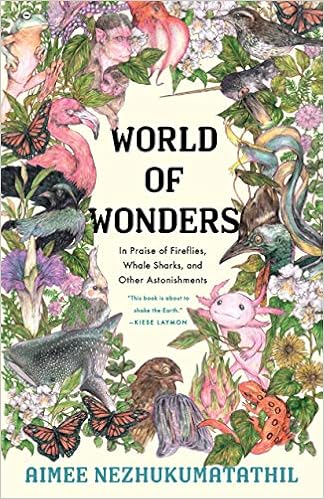
I had read the slightly romanticized version of Kate Harris’ version of two girls traveling on the Silk Road in The Lands of Lost Borders.

lands_of_lost_borders

I had followed XPD 2470, the all- women’s group that set out on a road trip from Coimbatore, South India to London via the vast plains of India, through the mountainous regions of the Himalayas, the difficult (socially and physically ) terrains of Afghanistan through Iran, Iraq – emerging into Eurasia and traveling on towards the heartlands of Europe over 72 days and passing through 24 countries in all.

How marvelous it all sounded?

Our own modest trip was nowhere close on the adventure scale or on the hardship scale, but it was exciting nevertheless. I did not have to take care of everyone’s packing, hygiene, hydration, and food? Liberation comes in various doses and forms I tell you.

Anyway, the mater picked up the phone and launched into a Grade 2 complaining session about the pater almost soon after saying Hello. I listened amused – “He doesn’t allow me to go alone and he won’t accompany me either!” she said.

I don’t know whether Jhansi Rani got an opportunity like this when she came in to lay down her sword after a rigorous day of training. Imagine, Jhansi Rani’s mother or aunt complaining to her how that she is never allowed to yield the kitchen knife. I felt like that.

Rani_of_jhansi
Lakshmibai, Rani of Jhansi 

Image: By Lakshmibai, Rani of Jhansi – Gallery, which that says it is from the British Library’s ‘Images Online Collection’, but the provided link to the Collection is dead., Public Domain, https://commons.wikimedia.org/w/index.php?curid=5624069

I launched into my version of “Take up your own butter knife!” with gusto.

“Why do you care what he says? You go where you want. As though you don’t know how to get around. Its your own fault for listening to him.”

“As if! I cannot be like you people. Just go wherever I want whenever I want!” she said. I ignored the dig.

The pater sensed what was going through my head and quickly chimed in, “Nothing of the sort ma! I allow her to go anywhere, do anything!”

“First of all – who are you to allow her to do anything may I ask?” said I.

“True True – she allows me to allow her to go anywhere she wants!” said he.

“Secondly, what are you holding her back for? If she goes, you can have some quiet time of your own too, can’t you?”

He chuckled.

Then, in all grand glory, I told them all about the amazing trip we girls took to Sedona, Arizona. “Isn’t that a desert area?” said the pater who had touchingly moved to the map of the United States that hung on the walls of the home, and was now tracing his finger on the places I was telling him about.

“Yes it is! But when the girls go together, even deserts are cool!” I said and beamed. Lost on them of course, for they couldn’t see me, and by the sounds of it barely hear me as well.

img_4695

“What did the children do when you weren’t there?” the mother asked.

“Why?! Had fun of course -what do you think they did?” I said smartly and felt the glow of a battle won.


Running like Elephants

“Guys! Let’s hurry up a little. I like how we are dawdling, but the school bell waits for no ships to sail across the seas! ” I said. There had been a mild spattering of rain across the dry summer season. A few snails had popped out to enjoy the moist, and the son and his friends were looking at them as they chatted and made their way to school. Rain drops on the late summer roses and oleander flowers made the scene a rather endearing one.

img_3991-effects

The response from the children was predictable – they ran, and I ran shouting like a charioteer pulling the reins on the excited steeds, “Slow down! No running here – oncoming traffic!”
“But you asked us to hurry up!”
“Yes – run like Elephants!” I said.

I had told the children earlier about the Elephant’s gait, and they exchanged glances and started laughing. The snail they were studying looked startled and showed a leap of speed as it made its way back to the comfort of the garden bed.

Is this walking? *giggle*
Is this running? *giggle giggle*
Is this fast walking? * giggle giggle giputly duggle*
Is this slow running? *giggle puddle chuckle duffle*

I smiled slowly. “Pretend you are Elephants teaching Snails to run.”

elephant_snail

I suppose that was a wrong metaphor altogether. By the time we arrived in the school, not only were we out of breath with the laughing, but we were also fashionably disconcerted. The legs seem to not remember how to walk straight or run properly, and were caught in this limbo of the Elephant’s Gait.

Later that week, I was sitting in the garden and watching the world go about its true business of living. I watched a hummingbird’s fast-paced wing movements up in the trees. A few butterflies were flitting hither and tither. A skein of geese were flying overhead in that beautiful v-shaped formation. Closer to the ground, a few snails were marking their slow way across the courtyard.

This combination of sitting in a garden, and watching life flit by had me take a hundred pictures with my phone. Pictures that may or may not be seen and appreciated again. I could capture the slow motion video of the humming bird whizzing up above or the butterflies in my midst. I could use time-lapse videos to capture the slow moving snails and a dozen pictures to capture the beautiful movement of the caterpillars.

As I sat there musing on the ease with which we capture movement these days, I could not help comparing and contrasting humanity’s struggle to capture that. I remember yawning in the Art galleries after seeing the n-th painting of a horse or the x-th statue of a horse drawn chariot.

But as I sat there that afternoon, I wondered whether I had appreciated them enough. After all, at the time of their making, studying movement was not all easy. One had to have an almost eidetic memory to understand the muscles and the way they moved.

Leonardo Da Vinci’s work is appreciated because of the lengths he went to study the anatomy of the creatures in his works. 300 years ago, movement must have been particularly hard to study.

In Oliver Sacks’ essay on Elephant Gaits in the book, Everything in its Place, he writes about the problem of studying movement.

everything_place

More than a century ago, Etienne-Jules Marey had made a pioneering investigation of elephant gaits. Of course, he did not use video analysis then, but still photography. I quote: “Marey’s lifelong fascination with movement started with the internal movements and processes of the body. He had been a pioneer here, inventing pulse meters, blood pressure graphings and heart tracings – ingenious precursors to the mechanical instruments used in Medicine even today.

Later, he moved onto the animal movements and analysis.
For animal analysis he used pressure gauges, rubber tubes, and graphic recordings to measure the movements and positions of limbs. From these recordings, he rotated in a zoetrope, reconstructing in slow motion the movements of the horse.

Muybridge, a contemporary of Marey, however, a peripatetic artist as Sacks describes him used 24 cameras along a track where the shutter would be tripped by the horses themselves as they galloped past to capture the movements of the horse as they raced.

When a similar technique was used to analyze the fast movement of elephants, it was found that they neither walked nor ran, but rather a combination known as fast walking.

I remember a long ago conversation with a friend who was training for a marathon on the more recent study of leopards running, and how he had changed his running technique to take a few tips from the world’s fastest runner.

As we watch the world around us, I wish different creatures could teach us some of their marvelous techniques. The dragonfly and the humming bird for flight; mallards and coots for water locomotion. Doesn’t Biomimicry as a field of study sound more fascinating than ever before? I positively yearn to be Dr John Dolittle at times!

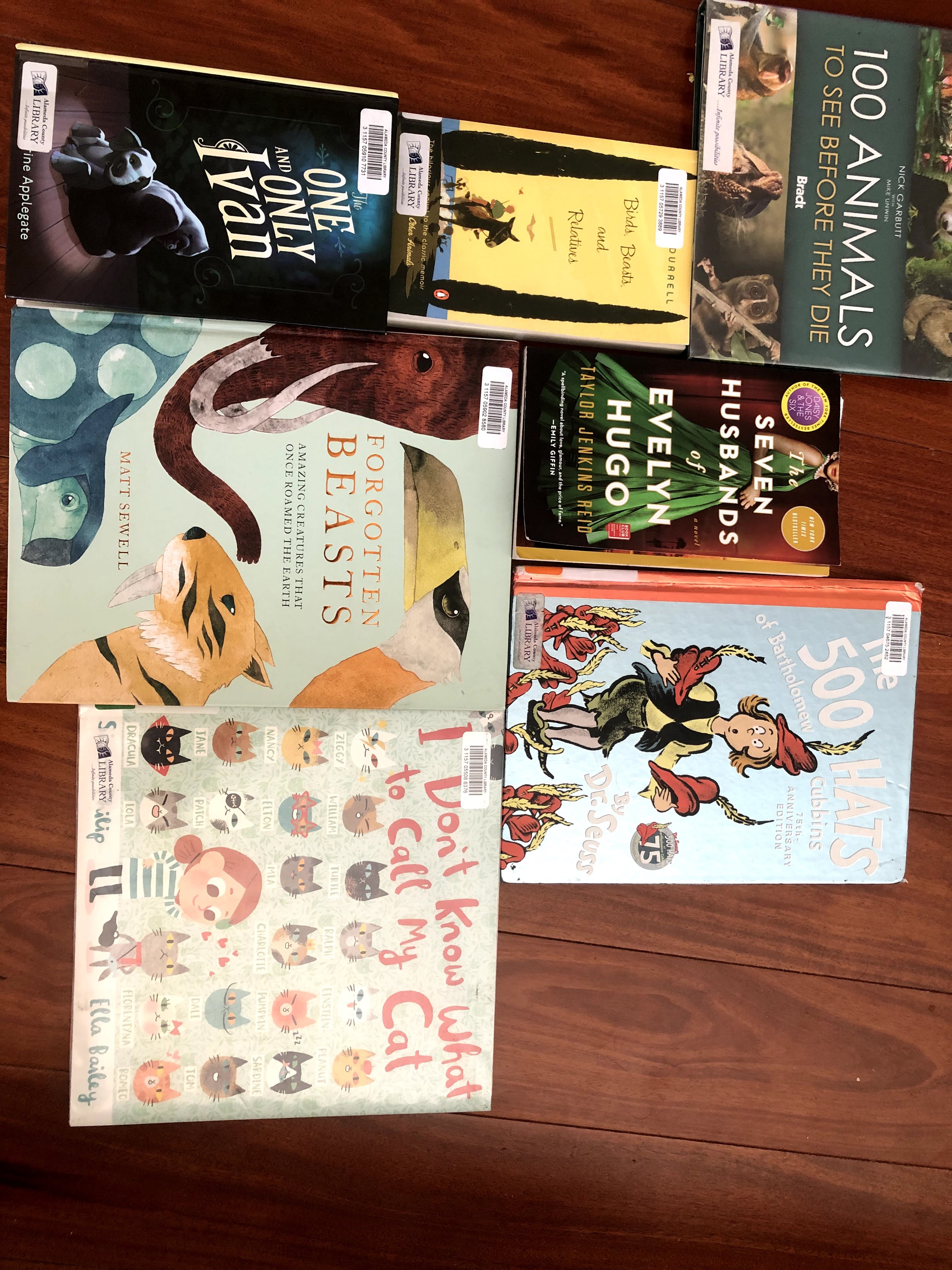
Books/Articles to be read/referenced in this post:

Leonardo Da Vinci’s Horse

The husband was wearing a red t-shirt that had Leonardo Da Vinci’s drawing on it, that said, Simplicity is the ultimate Sophistication.

He was particularly fond of the t-shirt, especially as he was reading the biography of the great man.

img_4057

“Be like Leonardo Da Vinci guys. Be simple and eh… persistent.”, I said.

“Oh! I don’t know about that! Did you know about Leonardo Da Vinci’s horse? “, said the husband. He was reading the biography of Leonardo Da Vinci by Walter Isaacson, which is to say we almost read it. The book is a lengthy one, and as he made his way through it, he shared tidbits of things that fascinated him.

Time has probably been kind to the memory of Leonardo Da Vinci. Most of us only seem to be remember his genius in art, his legendary stature as a polymath, he said. The husband chuckled as he read and told us about Walter Isaacson’s portrayal of him – a tempestuous man who often did not complete the commissions given to him. Leonardo Da Vinci’s horse is an excellent example.

He then went on to relate the tale to much mirth and chuckling from the children. Apparently, what was commissioned to him was to build an epic statue of the Duke’s son riding a horse. He then went off to live on a farm, to study horses. The farm life yielded a treatise – an unpublished book, on different kinds of horses, equine surgeries to understand horse anatomy etc. He had originally planned to create a statue of a rearing horse.

This is an image that is much popular in the art forms at Italy, I remembered. The raw power of a horse rearing up on its hind legs is both attractive and magnetic. I am not sure how riders feel when they are about to be bucked off, but it makes for good Art. The prince would have to look brave while clinging onto dear life.

Study_for_the_Sforza_Monument
Abandoned Design. Image Courtesy: Public Domain, https://commons.wikimedia.org/w/index.php?curid=59580

Anyway, after a few years studying horses, their physiology, their movements etc, he started developing models for his statue. Clay, lead and bronze made its way from the armies to Da Vinci for his great statue. Then, he figured that the greatest statue of the magnitude he had in mind would not be supported by the hind legs structurally, and he went on to make it a standing horse. The prince riding the horse resplendently was forgotten!

These things took time, but it did not seem to perturb him. His sponsors may have been antsy, the bronze supplies may have been running low, the armies getting fidgety with not having enough new armor, but that was their problem, seemed to be his opinion.

In time, a large clay model of a beautiful horse may its way for the Duke’s inspection. The model won Da Vinci much critical acclaim. It truly was beautiful. If the Duke was slightly upset about not seeing his son on the horse, he did not show it. The royalty raise their children well.

Soon, war broke out, and no longer could his rich patron commission bronze and lead to be diverted to the most magnificent horse statue of all time. The clay model was put up in Milan, and was used as target practice by the young lads joining the army.

“But isn’t there a big horse in Milan or Florence? Da Vinci’s horse? I remember seeing a picture somewhere.” said I.

“Yes, but that was not done by him. Years later, somebody else finished it. “, said the husband.

By now, we were all laughing.

“What is remarkable is his insatiable curiosity and creativity however, and though he went off down rabbit holes, it was from a deep motivation to understand the world around him “, said the husband.

Read also : Gates Notes on Leonardo Da Vinci

“These days it is so easy to take a picture of a horse, model it, and run a simulation for structural evaluations. We sometimes forget how hard studying movement must have been!” I said, remembering the essay by Oliver Sacks on the Elephant’s Gait, in the book, Everything in its Place.

everything_place

He writes about how more than a century ago, Etienne-Jules Marey & Eadward Muybridge pioneered the study of animals running using 24 cameras along a track where the shutter would be tripped by the horses themselves as they galloped past to capture the movements of the horse as they raced.

Persistence comes in various forms, we all agreed. Muybridge and Marey were examples in a long list of people for whom a problem was intriguing enough to delve deeper and deeper into things that may or may not yield results.

But we never know the breakthroughs possible, and how things will change. That is why I am vary of futurists. A few centuries ago, to study the muscles straining for a horse running, one had to have an almost eidetic memory, along with a decent understanding of anatomy.

Today, photography has come so far as to allow us to snap a thousand pictures, take slow motion videos, and analyze everything from a butterfly flutter to the swift flying of hummingbirds. People are still extraordinarily creative with photography, and as long as we retain curiosity and creativity, I suppose we shall thrive.


Sketching Freedom

It fell to the teenaged daughter to keep her little brother and nephew in line during our forays into the forest. While they generally listened to her, they also enjoyed pulling her leg. Smarty pants that she is with me, it is sweet indeed to see her stumped by her little brothers. One such time when she was speechless, she said something wise and insightful. I looked at her with awe – “So, you finally got around to reading Marcus Aurelius’ Meditations I see!” I said beaming. Pride shone through my pores though I tried my best not to show it.

“Nope – still boring! Siri told me.” said she and laughed at my expression.

“Confucius, Buddha,  Marcus Aurelius, and a thousand other philosophers in your Kindle, and you go for Siri?”

I shook my head and went off to do some philosophizing of my own. The walking philosopher if ever there was one. I walked into the sunset philosophizing, as I said.

Sunsets are beautiful things anywhere – enjoy them with a rustic feel, and they can be few things more poetic or romantic. That evening’s sunset had been particularly fruitful – it isn’t everyday that one gets to see a dozen peacocks take flight into the horizon, witness the chirp-filled fooling around of parrots, cuckoos and at least a dozen different kinds of birds, and encounter the folly of frogs skipping and narrowly avoiding one’s feet.

I traipsed indoors, happy with life, still rattling on about the beautiful image of the peacocks and parrots taking flight together in the evening light. “I wish I could be a bird sometimes! So Free!” I said, and walked straight into the trap.

“What is Freedom for you Amma?” said the daughter. She was sitting on the bed, looking happy and sketching.

“Well…errmm, eh?” After this coherent response, I decided something more was warranted and fumbled a bit more. ” Well…umm…it is the ability to be able to live without fear I suppose. ”

“So, is a free country a place where people aren’t scared?”

I paused – my answers were shaky. Why did I think birds were free? Because they could take to the skies when they wished? But they also take flight when startled or scared. Hmm. I have never been one of those lawyer types who could cover all angles, and espouse something that if examined from all angles will hold water. This needed thought.

So, I did the next best thing, and reached into the recesses of my teenage brain. I remember a song we used to sing at morning assembly in school, and a particular set of phrases that I liked at the time without fully realizing the impact of it all. It went something like this:
Blah Blah Blah-dee-blah
Freedom from Want & Fear
Freedom of Worship
Freedom of Speech & Thought
Blah-Blah-Blah

That was it. The husband said – “Hmm – good answer!” with the tone of one who wished he had thought of the answer himself.

Pretty soon, the discussion on Freedom took on multiple angles, and the whole family was there weighing in with their take on the concept of Freedom.

Is Freedom of Choice a thing?
What of the rules and laws required for a free society?
What about Freedom to Live? Is Immortality a worthy goal then? If so, is the opposite a freedom as well?
Freedom to Dream? Is there a limit on one’s dreams?

I remembered Trevor Noah’s narrative in Born a Crime on dreams,

“We tell people to follow their dreams, but you can only dream of what you can imagine, and, depending on where you come from, your imagination can be quite limited.”

Born_a_Crime_by_Trevor_Noah_(book_cover).jpg

The concept of our Imaginations being limited by our circumstances is an interesting and clairvoyant one. It got us discussing the dreams of women in far flung places like the toothless old lady we had met earlier that evening – what were her dreams for her life? In her book, Moment of Lift, Melinda Gates gives us a sneak peek into the lives of hard working women struggling in remote places. What were their dreams and ambitions? Do our dreams all follow Maslow’s triangle and what then for those who have reached the zenith – is there more at the end of it.

moment_of_lift


The daughter continued sketching looking strangely amused by the heated and fast pace at which Freedoms were galloping in the laid back villages of South India. It seemed to be the only thing galloping at the moment.

“So why do you ask about Freedoms my dear?” I asked.

“Oh, I was thinking of drawing a girl who was free, and I kept imagining a happy one. But free is not always happy, is it?!” said she.

I looked around at the serious faces of the gathered folks and burst out laughing. “Really! Gotten us arguing on freedom to dream and imaginations and the Lord knows what else. You sketched us all having a good go I suppose – Well, my dear, what did Wise Siri tell you that Freedom was?” I said

She laughed raucously, and swished her long hair freely.

“Show us what you’ve got and we’ll see which face looks Free!” I picked two random ones from the 5 or 6 she showed us.

Which one looks free?


Galactic Plumes

I had been mooning about the fields outside in the village where we stayed near Topslip National Forest. People told me to be careful about venturing out far – “There are Elephants nearby, and they love the fields. “, they said emphasizing the word, Elephants. My eyes lit up. The villagers exchanged looks that doubted my sanity and hurried on, “It isn’t Good seeing Elephants in the fields – you never know what they will do. If you hear fire crackers in the distance, come straight back here!” said one toothless fairy godmother, and her husband (I think) nodded in agreement vigorously.

img_3588

Off we went then, sauntering through the fields, listening to the loud orchestra of birds, crickets and frogs, accompanying the beautiful colors that nature was setting forth for us to see. It is magical indeed to see a half dozen peacocks take flight into the sunset. By the time, we fumbled for the phones they were gone, and I was glad I did not waste those precious moments of seeing them start off awkwardly and then gain elegance in flight by trying to get a picture. I have it in my mind’s eye, along with the indescribable moment of feeling your heart soar with the peacocks’ trajectory.

Screen Shot 2019-08-16 at 9.52.43 AM.png

Peacocks have long feathers, and while they know how to fan them out and preen in front of peahens looking splendid in the process; when they fly, it looks like it can feel like long hair feels to women.

Gather your tresses,
Of plume and multi-colored beauty
Tuck them in,
Letting it stream behind you elegantly while
Trying not to let it look messy
And all the rest of that.

It was then in the distance that we heard firecrackers go off in the distance. I don’t know about you, but this is the sort of thing that holds mystique. It is what inspired my Mother’s Day in the Jungle tale. Trumpy elephant going off to Farmer Hasalot’s farm – there is such an element of thrill and romantic mysticism to this kind of thing, though I think the elephants and farmers in question disagree.

Screen Shot 2019-08-23 at 10.06.10 AM

I spent dusk in a similar fashion enjoying the fading sunlight, the rising moon, the fields, the clouds, the village, the children, the adults and creatures of beautiful Earth. Every now and then, crackers went off in the distance – elephants in the distance we whispered. Though, why we were whispering we had no idea. Dusk seems to call for these things. A laid back village in South India tucked away in the recesses of the Western Ghats with all the fascination of the bucolic. An occasional rumble of a vehicle is all there was to remind us of civilization, corporates, power tussles, wars, micro/ macro economics, nuclear heavy-lifts, and motives of profit.

Post dinner, I traipsed indoors, happy with life, still rattling on about the beautiful image of the peacocks taking flight together in the evening light. We stayed chatting happily into the night (Part 2)

It was well past midnight when the electricity went out, and the husband said, “Outside now! Completely dark – yes!”

Off we went, self carrying the son piggy-back to see the stars in all its glory outside. With the electricity gone, it was pitch black outside.
Oh!
My foot!
Not there.
Ouch!

We bumped into one another spectacularly and I tripped on a chair outside in the verandah, carrying the little fellow on my back. Both of us went crashing down, self trying to save the poor fellow from being dropped from my back. One splendid moment later, I truly saw what ‘seeing stars’ meant.

The pair of us dragged ourselves off our feet and took our eyes skyward. The light pollution we have unleashed on our planet means that there are very few places in the world that humanity can stand and gaze at the sheer immensity of the universe in which we live. On an average dark-ish day, we can see about 3000 stars, on a day like this surrounded by mountains, forests and fields for miles around us, we could see tens of thousands of them lighting up entire bands of the sky with their luminance. The stars and galaxies are always there, and maybe because of this very permanence, it is seldom appreciated.

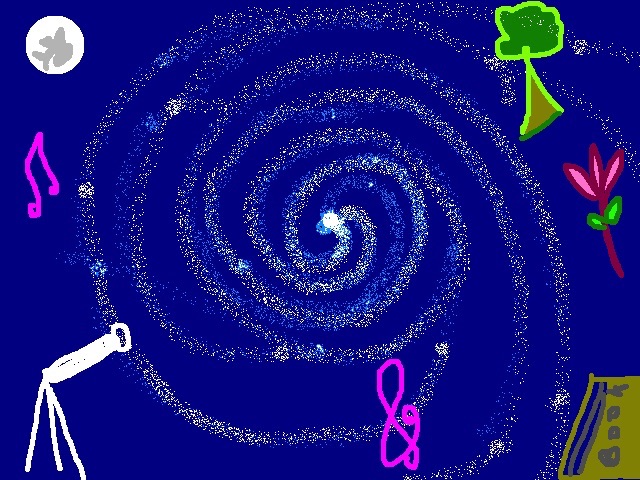
Standing there in the surrounding darkness with people I love, I felt light-headed. There we were, standing on an Earth that was spinning incredibly fast in its journey around the sun; the sun was swirling around the Milky Way galaxy; and the galaxy itself was spinning and whirling away into vaster expanses. Carrying us all: our ethereal thoughts, wishes and desires; and our solid physical selves on a solid planet.

The galaxy tucking its star-studded plumes behind it gracefully, and taking flight with all its organic and inorganic components streaming gracefully along its path. Huge balls of gas and flames hurtling through space, and some spots in this beautiful expanse sanguine enough to cool down for a spot of life to flourish. #The Pale Blue Dot.

pale_blue_dot

The beautiful image of the peacocks taking flight earlier that evening came to me, and in that moment, the galaxies above looked like peacocks taking flight into horizons unknown.

Do the dreams of galaxies have limits? Do they have purposes?

Thinking back on that beautiful spin through the gathering darkness, I am reminded of this quote by Ursula K Le Guin:
“Things don’t have purposes, as if the universe were a machine, where every part has a useful function. What’s the function of a galaxy? I don’t know if our life has a purpose and I don’t see that it matters. What does matter is that we’re a part. Like a thread in a cloth or a grass-blade in a field. It is and we are. What we do is like wind blowing on the grass.”

For the Love of Libraries

“We are going to give you something special!” coo-ed the nieces as soon as I landed in India.
“What is it? I don’t really want anything, just time to spend with you lovely girls.” said I, ever the Aunt imparting Valuable Life Lessons.
They smiled it away without batting an eyelid. Life Lessons – pish tosh bigosh! If, as a child, you don’t know how to ignore that stuff, you’ve learnt nothing in life was the philosophical angle the children seemed to take and I appreciated them for it.
“Yes, yes we know. But you will really like what we have planned for you!” they said in unison. “It is an Experience!”

The children obviously knew where to get me, loop me with my own tune – Experiences are worth more than Possessions.

I grinned expecting a trip to the ice-cream store across the street. That was an experience for sure. There were flavors there that made me swoon. Could I have the coconut -lemon and the orange-watermelon and mango and jackfruit flavored ones?

Come evening, we all headed out. The nieces ,with touching sincerity, told me that they would forfeit their quota in my honor, given how much I would like where we are going. All highly puzzling so far.

When we finally made our way through the Gulmohar lined streets, the skies looking beautiful and benign over the towering apartment buildings, I stopped and watched the excitement build in their faces, as we turned the corner. Beaming at me in a small two-roomed store front tucked away near eateries and grocery stores, was a tiny library. I gave them a slow, wide smile. This was amazing. Off we went inside. I was grateful that the children had access to this small lending library.  (Yes – we stopped for ice-cream afterwards.)

bookworm_readingcorner.png

The lack of easy access to public libraries in India has always been a sore point with me. As long as we are in school and college, we have access to libraries in some form or another – the institutions themselves have them. Even if the Engineering college library lacked sorely in the Literature section, one could read IEEE journals to pass the time. I am immensely grateful to the librarians in my schooldays. During our school holidays, the librarian in my mother’s school, Mr Gandhi, would happily supply me with books enough to whet my appetite (Life’s blessings come in many forms – my mother’s school vacations did not coincide with ours, so their library was still open). Years later, when I came home with a broken leg to recuperate, Mr Gandhi, sent books that he thought I would like. That kind of care from anybody is touching. It is no wonder that one of my earliest career aspirations was to be a teacher and a librarian.

When first I moved to the big city, I felt unmoored without a library to frequent. I dedicated a Saturday morning every month for the trip across the city to the used books market, and pile up on books to read, making my way back with a teetering pile of books (I had no idea about the concept of copyright, how payments were made to authors etc). Most were in bad condition, not great authors or titles, but I took what I could. It was my only indulgence.

I read somewhere that people don’t really feel the need for Art if it was never a part of their life. But once exposed to the beauty and depth of any Art, if taken away, the void is there. An emptiness that you didn’t know existed. That resonated with me, for I feel the same way about libraries and access to good books.

I mourned the day the physical books stores went out of business in the United States. In every mall, every shopping street, I kept my eyes open for a place to dip into. There were none.

We bought clothing and fabrics simply because we were there and the clothes lured me through the shop windows.
We drank coffee because the coffee store was there.
We ate ice-cream b – well you get the gist.
But we didn’t read books with differing viewpoints and thoughts that could rejuvenate the brain because they weren’t there.

I chatted with the nieces once we were back here, and I asked them what they had checked out that week from their little sweet library. “Oh…they closed it now in the afternoons because they are using the space for English and Math tuitions.” they said, and I couldn’t help whimpering.

When we place so much importance on clothing that we change out everyday, shouldn’t we place more on thoughts that flit in and out even more constantly?

A quote from one of my favorite books, Fahrenheit 451, By Ray Bradbury:
There are worse crimes than burning books. One of them is not reading them.

I wish we all get to the chance to experience Ray’s Bradbury’s nugget of wisdom:

“You must write every single day of your life… You must lurk in libraries and climb the stacks like ladders to sniff books like perfumes and wear books like hats upon your crazy heads… may you be in love every day for the next 20,000 days. And out of that love, remake a world.”
Ray Bradbury

Also read :

Brain Pickings: Oliver Sacks on Libraries
Brain Pickings: How Libraries Save Lives

Love in a …

One of the best things in the world is to wash up at the sister’s house after a long and tiring journey across the fertile and populous plains of the Indian subcontinent. Her welcoming abode is en-route to our own home in the United States, and I was glad to get a spot of space to recover before heading on towards our own home.

While the sister herself has expressed a wish that we stir ourselves to sight-see the beautiful city she lives in, her marvelous husband takes our side, and says that during the best vacations, anything we do at all is a bonus and is quite happy to see us lounge around on the sofa reading and chatting.

Knowing this unfortunate tendency of ours to behave like sofa cushions when we visit, she nevertheless does her bit and lays out books to read, and in periodic intervals supplies us with food and drink. One of her favorite authors is Jean Sasson, who writes about the Middle Eastern life, having worked there as a nurse for over two decades. Jean Sasson’s books deal with real-life stories based on the lives of people who have reached out to her to have their story told. Their biographies are sketched out giving us a sense of life in the regions she deals with.

Would we otherwise hear of the life of a Saud princess, or the son and wife of Osama Bin Laden?

The book this time dealt with the harsh conditions existing in the regime of Iraqi leader, Saddam Hussein; and how a young Arab-Kurdish bride, Joanna, summoned the courage to flee the persecution of Kurds in Iraq. Written in 1st person, it is as though Joanna wrote it herself. It was gaunt reading.

Like billions of people, I watch with alarm the rise of dictatorship world-over including in previously democratic strong holds such as the United States. My nerves are on edge reading about the atrocities these crazed despicable dictators are capable of doing. Midway through the book, I set it down on the sofa and declared that I cannot take it anymore. “This is so sad, and brutal, and my imagination is not helping! ” I said somewhat ruefully.

The sister said in a brisk return to her elder sister mode, “I know about you – read the whole book and then talk. If you leave it midway you will feel terrible. This book has a happy ending. In fact, you will be pleased to know that I have met Joanna in person. She is well and happy, and is an inspiration, so read!”

I meekly plodded on.

I had no idea about Kurds and their persecution by multiple regimes. The Western press had caught on about the Sunni Vs Shia conflicts, but to read about the Kurds also being persecuted by chemical weapons, torture and execution on such a massive scale is heart-rending. The peshmerga life is a hard one, and it was written well.

There are millions of people with similar fates similar the world over. Syria, China, Somalia, Nigeria, Venezuela, Mexico, Afghanistan, Burma, and many more.

The behaviors behind these are as old as humanity itself. In fact, older, as I was reminded of Jane Goodall’s interview, that somewhere along the evolutionary chain we developed the genes to be territorial and to persecute one another. (Apes have been observed having territorial wars, and trying to follow imposed social orders.)

How in spite of all this, human beings as a species have the rare combination of love, compassion, and sacrifice on the one hand balancing out the cruelty, lust, and every other form of despicable behavior on the other, is a miracle in itself.

“Only when our clever brain and our human heart work together in harmony can we achieve our true potential.”  – Jane Goodall