The Appalam Pounder’s Daughter

This article has been published in Open Page of  The Hindu.

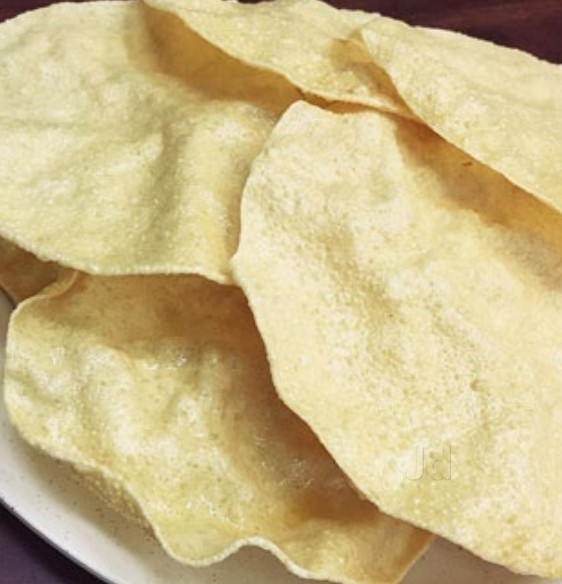
An Aunt was visiting, and her nieces had all gathered around. Lunch was in progress, and though some of the dishes had not turned out quite as expected, they were well appreciated by the folks at the table. Crisp, creamy white lentil snacks called appalams or papads, were passed around with aplomb, and I got approving nods for frying them. 
appalam

The husband had been jesting around the aunt that he had last eaten fried appalams about a year ago.  The aunt gave me a distinctly doleful look.  How could the niece she loved so much have denied her loving son-in-law appalam for this long?

We sat around a distinctly large meal with the fried appalams being passed around, and I looked on amused at the satisfied smiles on the faces of all around. “Any meal becomes special with fried appalams!” my father used to say whenever he spotted them gracing the table.  He truly became a child beaming happily while breaking them off with a joy that is quite disproportionate to the humble appalams.

I said as much to my aunt, the pater’s sister,  and she chuckled happily. “Yes, appalams were your father’s favorite. Three days every month was dedicated to making appalams“, said she, and I sat back to enjoy the nostalgic look that lit her eyes.

We sat enthralled as she narrated the story of how her mother, Visalam Paati, would roast the dhals and set them out to dry. My grandmother’s life has always fascinated me, A mother to 9 children, that generation was responsible for the burgeoning population we have on Earth today thanks to rising health and lack of birth control. 

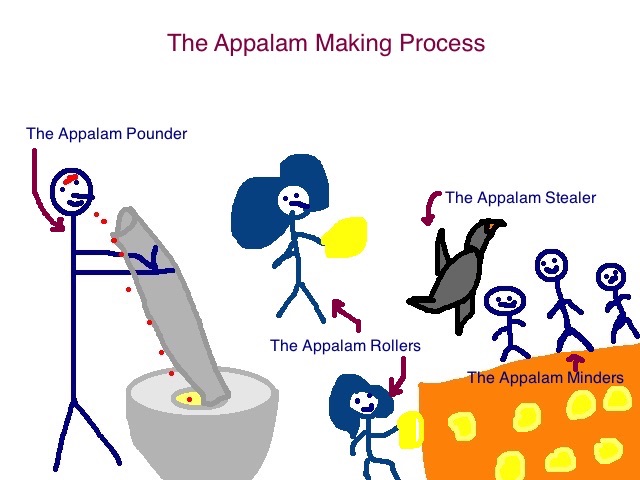
Feeding and raising such a large family must have been a herculean task, but Visalam paati seemed to have been a competent taskmaster, planner, forecaster, chef and mother. As the appalam making tale unfolded, it was evident that those three days were filled with important buzz. Everyone had work to do, and everyone’s task was equally important:

  • The younger ones had to shoo away the birds while the lentils dried in the sun. #AppalamMinders
  • The older boys would have to pummel and cudgel the dried lentils with an iron cudgel. “No grinders, and mixies or any machines in those days, remember?”, my aunt said. #AppalamPounders
  • The older girls would then have to take the powdered lentils, mix them to cookie dough consistency and roll them out into neat little circles before setting them out to dry again. #AppalamRollers
  • The younger ones took up their sentry watch to shoo away the birds while the appalams dried in the sun again. #AppalamMinders
appalam

“One time, my mother was alarmed to see the appalam dough below spotted with blood and looked up to see that while pummeling, your father had accidentally hit himself on the forehead with the pummel a few times and his forehead had started to bleed. Poor fellow. That month, we had a little less appalam stock because we had to throw out that batch, but your father got his full share because he liked appalam so much, and of course he played the sympathy factor the whole month!” she said and giggled.

Three days a month set aside for appalam making, so that the children may enjoy fried snacks every once in a while seemed to be a lot of planning and processing, Obviously, fried appalams held a special appeal in the hearts of the children. Each one felt they had contributed to the process, and the satisfying crunch must have had a special meaning.

Going to the supermarket and picking up a packet of papads or appalams has become so blasé a task, that I rarely stopped to think about how it was prior to mechanization and automation. 

“Automation has changed so many things hasn’t it?” said one voice, and we all piped in.  The topic of automation took us for a bumpy ride down the river of time. While automation has helped feed and clothe the billions of us, it has not really helped the global climate very much. Mass production and capitalism have also blurred the lines between needs and wants. 

It was a lot to process. Sometimes, in our rush to simplify things, we do rather complicate them don’t we? I loved the mental image of appalam making in a small village house in South India. When was the last time, the whole family pitched in on one activity together that contributed towards something meaningful? Maybe when we painted the rooms a couple of years ago.

Probably that is why the Little House in the Prairie by Laura Ingalls Wilder remains a much loved American classic. It talks of a time when every body helped each other in order to live. 

little_house_priarie

I read the book recently, and found myself ardently wishing I could sit with the deer in the prairie even if certain wolf-heavy nights were scary. A simple tale of building a log cabin in the middle of the priarie is a marvelous read, and I am grateful for the fact that I read it as an adult. 

“I am beginning to learn that it is the sweet, simple things of life which are the real ones after all.” – Laura Ingalls Wilder
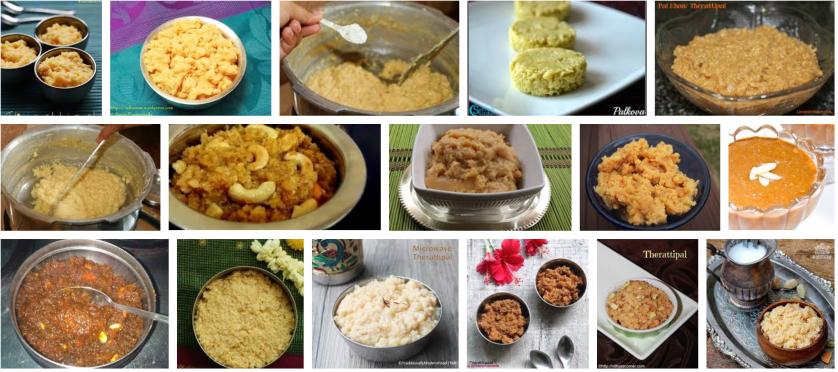
When Love is Theratti Paal Sweet

This article was published in The India Currents Magazine for Krishna Jayanthi. Link here: When Love is Theratti Paal Sweet

“Do you remember?”, started an aunt, “how he stuck his hand in the theratti paal * container when the lights went out during Krishna Jayanthi?”

*Theratti paal refers to a heady Indian sweet made of condensed milk, ghee and cardamom

*Krishna Jayanthi – Lord Krishna’s birthday

The story was being related to peals of laughter. The hero of the tale beamed and laughed heartily at his boyhood escapades – it had all happened about 70 years ago after all. We knew the story, but it did nothing to diminish the retelling of it. I already knew my father was the naughtiest of the 9 children borne by Visalam Paati and Kalyanam Thaatha. (Paati – Grandma; Thaatha – Grandpa)

I sat watching the glow on the faces around the table, like an eternal torch lit by the essence of shared times and space of childhood. There was genuine affection, laughter and love there, and it enveloped all those around in its warm embrace. We had been to visit our aunts in Atlanta. The septuagenarian father has two septua sisters who live there, and I went with him to enjoy the siblings get together. I watched indulgently as their laugh lines etched over the years crinkled with every anecdote. 

His sisters and nieces had lovingly charted out the menus for a whole week. A week that included all of the father’s favorite dishes. Dishes remembered from childhood, dishes acquired in far off lands, and dishes that made my paternal grandmother, Visalam paati, come alive in the retelling of the process. The delectable snacks and the satisfying compliments such as, “You have your mother’s gift with the art of cooking.” flowed graciously.  The brood of Visalam and Kalyanam were known for their sweet tongues, and every meal had a different dessert to go with it. 

The sweet of this meal was theratti paal. It’s commercial cousins are called Milk Peda, but it is an unpoetic name and as a sweet is a poor substitute for the Theratti Paal. Theratti paal, when made on the stove with fresh milk takes hours to come to the right consistency. I can imagine how Hinduism came to have the myth of churning the milk ocean. There are so many milk based sweets in the land, and it is quite possible that that particular myth was the gift of the dreamy subconscious thoughts of some person making theratti paal hours at a time. One can go into a sort of meditative trance as the milk gathers its cream, and then folds and bubbles again, and then again and again, till the color changes, the consistency changes, and the sweet smell of condensed milk wafts through the air. In slow measures, one adds the sugar, butter or ghee and the cardamom to send those in the vicinity to realms of ecstatic waiting. 

Screen Shot 2018-08-17 at 10.32.21 AM

Today the same marvel can be obtained from a can of condensed milk, a stick of unsalted butter, and a microwave in under 10 minutes, and I felt the tongue dance and explode in joy as the microwave theratti paal melted on the tongue. The ghee, condensed milk, and cardamom all tickled the nostrils. 

I remember listening to stories about her children from my grandmother, Visalam Paati. (Visalam means vast, and the name suited her. She was generous with her time, attention and her servings, and when one wanted to play with the jiggling oodles of arm fat, there was plenty of that too and she never once got irritated when we teased her about her bulk. ) Feeding and taking care of a brood like that makes me shudder, but Visalam paati seemed to have done it with love, competence and skill. 

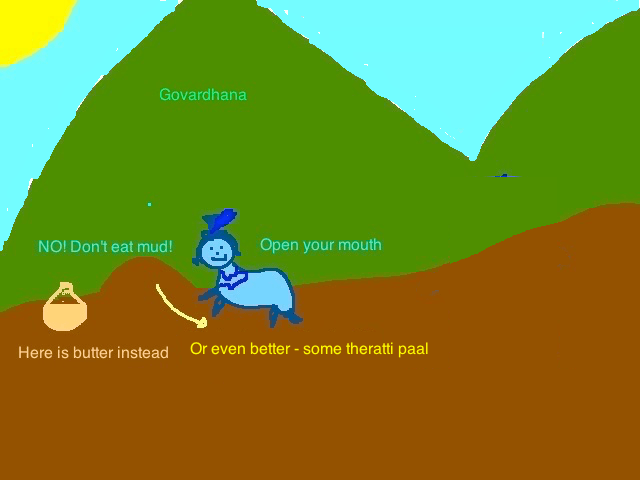
The tale being narrated was the one on Krishna Jayanthi. Krishna, Lord Vishnu’s avatar, is said to have loved theratti paal. 

krishna_therattipaal.jpeg

Apparently, the evening pooja was ready to start. Bowls of snacks: (mysore pak, payasam, thattai, seedai, murukku, theratti paal), butter and ghee were all placed in front of the Gods, and just before the offering to the God was complete, the electricity went out plunging the little village house in South India in the 1940’s, into a darkness lit just by the flame of the small wicker lamp near Lord Krishna’s deity. Visalam Paati having the kind of prescience that comes from raising nine children immediately placed her hand covering the theratti paal container. True enough, within seconds, a small hand struck at the theratti paal container – Visalam paati caught the hand, and waited for the lights to come on again. Just as she thought, the malefactor was none but the naughtiest of her brood, my father. 

“I knew you will reach for the theratti paal. Little rascal! “ she said. 

We all laughed heartily while spooning in some more excellent microwave theratti paal ourselves. 

The smells and scents of ghee, condensed milk and cardamom cut across decades and the siblings sat there giggling like school children again. 

Isn’t it marvelous how regaling our pleasant memories often transforms the bleak horizons of time to become as brilliant as the Milky Way studded with the shining moments of our memories?

Next week is Krishna Jayanthi, and I will go about the joyous task of drawing tiny Krishna feet from the doorstep to the kitchen. I shall make the microwave theratti paal, and think of the children in the 1940’s who shared the adventure of theratti paal, and waited the whole afternoon for the exotic taste of it in the evening. I shall regale the children in the twenty-first century with the story again, and smile indulgently at the fact that his sisters remember their naughty brother every time they eat theratti paal.

Love takes various shapes. Ours is sweet. Theratti paal sweet.