Musical March

March is one of the most beautiful months in the Bay Area. Poets have tried over the years to capture some of the rapture of the month. But even poets such as Emily Dickinson (Dear March—Come in), Or William Wordsworth ( Written in March) seem to do the month justice.

Maybe they lived in colder climes, and the month did not yet burst forth in glory the way it does in California. You see? This is the month of rainbows, clouds and sunsets, golden california poppies, fields of yellow flowers, green grass knolls, sunshine and rain, oranges, cherry blossoms…I could literally go on and on.

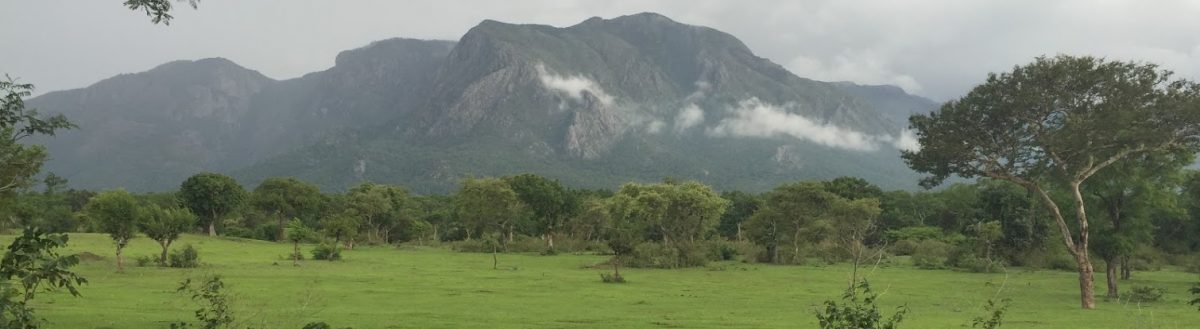
The time change happens in the first week of March, and suddenly, cold and bleak evenings seem to shed their winter cloaks and don resplendent spring robes billowing in the wildflower scented breeze. The squirrels are chippier, the birds chirpier, and the breezes gentler.

A run along the river/stream by our home is a joy to endure. There are many places in the trail where the heart bursts with joy. All around you are gentle green hills adorned with wildflowers, the rivers are flowing, the birds are nest-building, and all of nature seems to be in one harmonious, vibrant orchestra.

It is so fitting that the month hosts lesser known festivals for the two things that appeal to the nourish-n-cherish household: whimsical & geeky. St. Patrick’s Day in the Jungle & Pi Day 

St. Patrick’s Day in the Jungle

St. Patrick's Day In The Jungle
St. Patrick’s Day In The Jungle

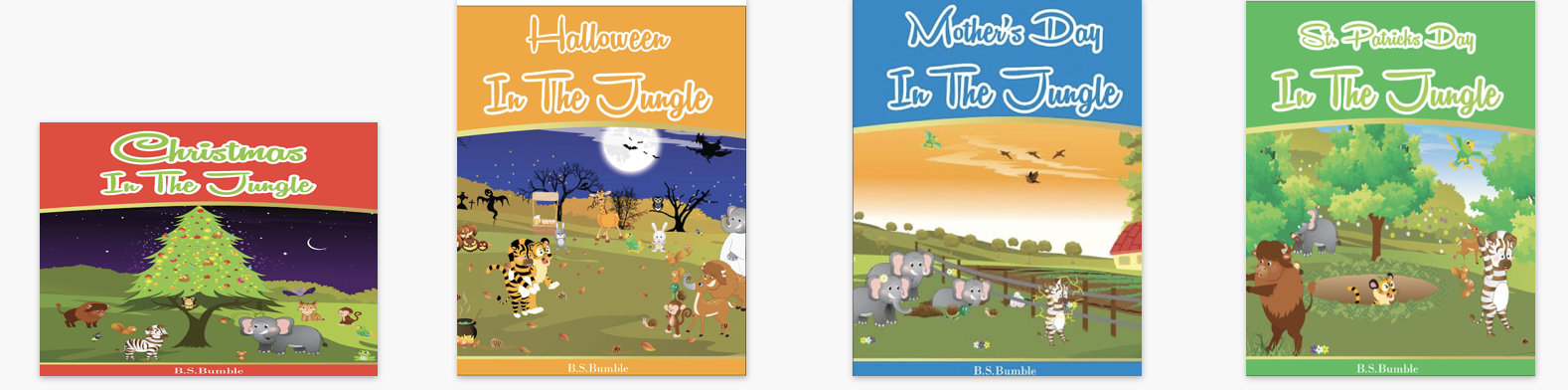
The son & I listened to Irish music on the way to school this morning. The music had us humming along even though we were sleepy. I came home and opened one of the favorite books of mine, St. Patrick’s Day in the Jungle. My friend, Krishna Srinivasan , worked on the musical track for the book St. Patrick’s Day in the Jungle.  It has the same vibrant quality to it.

This is the sort of music that makes you peer out to see if a rainbow is there, and if the birds and animals are playing hide-n-seek too. Not to mention the sweet voice of the daughter, who has lost the childish intones in that beautiful book now.  So, please do give a listen to the books, and enjoy the music, narration, and pictures for this story – even if you are having a stern day full of important things to do.

Also, any recommendations for Irish music, March poetry, and the general splendidness of Spring is welcome.

Why Do We Grow Up Really?!

The son and I were poring over the article to select. It was an important decision to make. I was being given the opportunity to read to the son’s classroom. He was proof reading the list of articles I had from approximately 1000 articles that I thought might interest an elementary school classroom.

“This one is nice Amma, but it has too many big words.”

“This one – ahem! No!”

“Oh come on! How about this one? That’ll appeal to the cat lover in your class!”

“Hmm….you are right there. But I already showed him that article you showed me last week on toxoplasma gondii Amma.”

“This one – maybe – maybe. But let’s look for something that will catch the attention from the beginning.”

So it went, till I showed him one that I knew would get his attention. 

Why is our sky not green?

The cosmologist in him sat up, the child in him shone. He beamed at this one. 

In this one, the astrophysicist, Carl Sagan, writes about how he could get up anywhere on the solar system and figure out which planet he would be on purely by looking at the skies. I could say the children marveled at that thought process. 

The essay, Sacred Black , in the book, Pale Blue Dot is well worth reading. He explains the reasoning behind the colors of the planets as we see them. He deduces the color of the sky based on the elements found in their atmospheres. 

  1. Venus, he says, probably has a red sky.
  2. Mars has a sky that is between ochre and pink much like the colors of the desert.
  3. Jupiter, Saturn – worlds with such giant atmospheres such that sunlight hardly penetrates it, have black skies interrupted here and there by strokes of lightning in the thick mop of clouds surrounding the planets.
  4. Uranus & Neptune – uncanny, austere blue color. The skies may be blue or green at a certain depth resulting in an aquamarine or an ‘unearthly blue’.

When we were through with the article, I asked the young cosmonauts what they visualized their best skies to look like. Of course, there was a magnificent range of answers including one that somehow involved cats!

“Oh! You must be the cat-lover!” I said laughing, and the ailurophile or felinophile (cat lover) grinned cattishly. 

ailurophile, aelurophile

a lover of cats. Also called felinophile, philofelist, philogalist.

I told the fellow about the post on toxoplasma gondii and their teacher laughed too. Her day involves moving attentions from cats to maths multiple times a day. 

So, it was that I read: Why the sky isn’t green – a science based article followed by a trip to a place of pure imagination and fantasy: St Patrick’s Day in the Jungle

By B.S.Bumble

Of course, the children switched tracks marvelously, and we finished the class reading by discussing the Irish music in St Patrick’s Day in the Jungle done by a good friend with a refined musical sense, and the talented artists from Holland who helped with the illustrations for the little book.

St. Patrick's Day In The Jungle
St. Patrick’s Day In The Jungle

The iBook is also available: https://itunes.apple.com/us/book/st.-patricks-day-in-the-jungle/id829152649?ls=1&mt=11 (Please go to iBooks on your iPad and then look for the book)

After the story, the c. lover was the only one who wanted to know whether the tiger did manage to escape the trap set by Oby Elephant after all in the St Patrick’s Day in the Jungle book.

I seldom fail to come away refreshed after a visit to the classroom, and this time was no different. An otherwise dull week sparkled with the memory, and shone on through the week-end.

Why do we grow up really?