Philosophers & Tinkerers

I picked up the book Black Hole Blues by Janna Levin partly because I was intrigued by the poetic title, and partly because I like reading about our dear Cosmos, and its many mysteries. The skies have given me endless joy, peace and continue to do so, even though light pollution in our suburban areas mean that we cannot see the stars, planets and stars as clearly.

black_hole_blues

Excuse me for a while, while I meander to a black hole of my own for a moment: I was appalled to note that a Russian startup intends to sell advertisements that can only be visible in the night sky. Are our products so important that we have to dwarf the shows the Cosmos puts up every night to sell toothpaste and whatever gawd-awful thing we contrive in our numerous factories? (I have a post clamoring and rattling in the brain waiting to get out on the number of contraptions that folks felt I must have, or I myself felt I must have, and now occupy valuable shelf-space in the home somewhere.)

Climbing out of the black hole then, the cosmos has given me endless joy and I indulge in dipping into its mysteries every now and then. What surprised me about detecting gravitational waves is the immensity of human endeavors. Theorizing and coming up with the supporting Mathematics to validate the concept is in itself a phenomenal achievement, but conceptualizing an experiment of such magnitude as to detect a stirring as faint as gravitational waves emanating when two black holes collide millions of light years away is astonishing.

As Janna Levin says, it is a project to fulfill a fool’s ambition.

“An idea sparked in the 1960s, a thought experiment, an amusing haiku, is now a thing of metal and glass.”
― Janna Levin, Black Hole Blues and Other Songs from Outer Space

The LIGO (Laser Interferometer Gravitational-Wave Observatory ) is astronomical in scope and dimensions. Janna Levin’s book takes us into the human dramas and the corridors of Caltech and MIT where much of this played out. While I did feel the flow and structure of the book could have been more crisp, and less about the human politics that plague undertakings such as these, it was nevertheless interesting.

As I read, I was amused at how humans unfailingly bring drama into our existence. At the altar of Science, many have sacrificed their egos, had their egos bruised, and have propelled or obstructed the flow of Science, but like a river it flows on and hopefully propels our understanding forward, not always cognizant of the applications of Science (One of my favorite sayings of Ursula K Le Guin:

When you light a candle, you also cast a shadow).

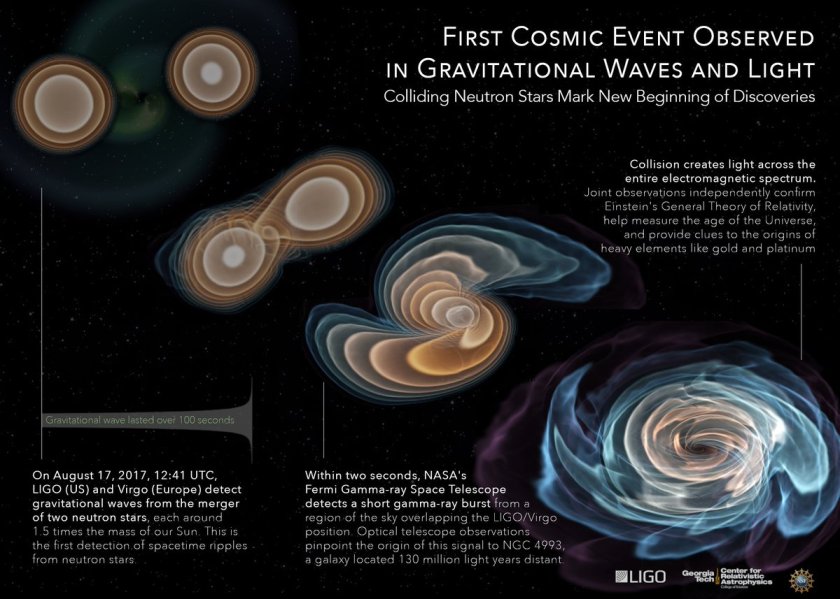
After the monumental setbacks and roadblocks along the way, it is a satisfying end to the book that the experiment finally paid off. Twice, it detected Gravitational waves as they passed through the Earth from the collision of two massive black holes millions of light years away.

ligo.jpeg
(Image tweeted by @LIGO)

We do not yet know how this will change our understanding of the Universe, and its applications, but we can be rest assured that both are underway. We have come a long way from the Sun God riding the sky every morning on his chariot, though I am reading a fascinating book on this very myth at the moment.

Human-beings are philosophers and tinkerers at the very core, are we not?

Also read: Cranes of Hope (Essay of the Value of Science by Richard Feynman with A Thousand Paper Cranes by Eleanor Coerr).

The Queen of Espirit d’escalier

One cold January morning, I clutched at my tea for life giving support. I was sitting through the kind of gathering that happens across Corporate America when a calendar year rolls over. Executives suddenly pep up, and sit up looking important, and feeling purposeful. Like a pup in spring, who thinks he can play with the ball if only folks would toss it instead of gadding about.

aging

I sometimes like to watch these events. The actors change every so often, and the ones who remain have subtle changes in their motivations and ambitions too. The varieties of personalities we surround ourselves with is an ever fascinating experience, and we only really have the luxury of sitting back and watching occasionally. I suppose that is why the Dalai Lama is full of the milk of human kindness – he meditates, and observes.

Anyway, the gathering reached a place where credits were rolled and I noticed happily how people brightened when they were given credit for their work. It is true one should do the work without expectation of the reward, but how nice it was to see people get the credit where it is due. The meadow suddenly seemed spotted with frisking happy pups.

There was an amusing interjection when one team was accidentally left out of the credits, and claimed what was their due.

I smiled to myself thinking of this normal human tendency to crave recognition. We all do it. Just the other day, I bragged about how clean the kitchen floor looked: ‘gleaming like glass’ as I said, till I was reminded by the family almost gleefully that I had better stump it given that I had to clean up the glass I had broken, and therefore ‘gleaming like glass’ doesn’t really count.
“I am neither Jocelyn Bell Burner nor Alfred Russell Wallace. When I clean the floor, I want credit! “ is the quip that I would have liked to come up with.

But I didn’t.

I came up with the inelegant, “Well…I am eating the potato fry then!”, and stuck my tongue out at the children.

I am a queen of that phenomenon where you think of the perfect verbal comeback too late. I was delighted to note there is a word for that: Espirit d’escalier.(Wiki Link for the word, Esprit De Escalier) The link writes about the amusing origins of the word, please read it.

Where am I going with all this spirited Espirit d’espalier, potato fry stuff? One moment. Yes, Credit and Work and Meaning and all that.

Sitting there at the corporate meeting, and watching the team claim credit for their small part in the puzzle, I was reminded of Jocelyn Bell Burner and Alfred Russell Wallace.

Wallace, independently arrived at natural selection for the mechanism for evolution before Darwin did, but he jointly published the paper with Darwin. Darwin’s Origin of Species is vastly credited with the theory though. Did that make Wallace spout and keep the potatoes? No, he continued to travel the world, writing about injustice and social causes. He never stopped exploring or lost the joy of wonder or ceased writing on the causes that deeply appealed to him.

Jocelyn Bell Burner is another scientist whom I find admirable for this very reason. She was passed over for the Nobel Prize. Credited with detecting the first Pulsars in the universe ( she should have been a Nobel Prize recipient for Astrophysics in 1974). When asked how she felt that her Professor got the prize, and did not adequately exert himself to get her name on the nomination, she shrugged and said, “If you get a prize, it’s not your job to explain why you got the prize. ”

I read about these two stalwart scientists in the books, Lands of Lost Borders by Kate Harris and Black Hole Blues by Janna Levin. Every book teaches us different things. Even queens of Espirit d’escaliers can find a way to come back with Jocelyn Bell Burner & Alfred Russell Wallace and their phenomenal attitude towards recognition as it related to their work.


It makes me realize now what my stellar teachers were saying on those cold Assembly mornings when they dangled tantalizing pieces of wisdom in their morning speeches.

Bhagawad Gita on work without reward

Karmanye Vadhikaraste, Ma phaleshou kada chana,

Ma Karma Phala Hetur Bhurmatey Sangostva Akarmani

कर्मण्- ेवाधिकारस- ते मा फलेषु कदाचन।

मा कर्मफलहेतु- र्भूर्मा ते सङ्गोऽस्त्- वकर्मणि॥

Loosely meaning: Do not anticipate fruits while doing the labor, this was oft quoted by teachers trying to inculcate the importance of work.

Boarding the Flight of Fancy

A version of this post was published in The India Currents Magazine: On a Flight to a Land Without Borders

I boarded the flight at the end of a long week. I was going to be away for a week, and I had spent weeks trying to get things in order for the week I was gone. It felt good to finally stretch one’s legs (as much as an economy seat would allow anyway), relax one’s senses, and stretch one’s mind.

The flight was strangely beautiful. It left in the evening, and as it took off, I left behind a sparkling firework of lights. The vast, urban sprawling city and surrounding areas looked kindlier from above. The freeways glowed like veins throbbing with cars as they crammed their way home for the week-end along the packed highways. I have watched ants with interest as they scurry about their daily duties and I felt we must look the same if someone were to be observing us. Maybe those monitoring satellites do have the feeling every now and then.

Bay area at night is beautiful from an airplane, however else it feels when one is on the road.

img_08171

I fell into an uneasy slumber once we passed the populated sections and darkness fell. I looked out the window hours later, to be pleasantly surprised by the beauty that greeted me. The plane was gently reverberating with the satisfied sighs of sleep from most passengers. A few were watching the brightly glowing screens. I peered out of the window, at first unable to see anything since my eyes took some time adjusting to the sudden lack of light. Once I did though, it was marvelous.

I have always loved gazing at the moon while traveling. The feeling of us moving, and our beautiful cosmic neighbor giving us company even though we are moving so fast is surreal.

I could not see the moon just yet, but I recognized the belt of Orion. We were flying along side the big hunter as he made his way in his pursuit of the seven sisters across the skies. It is a strange feeling to watch the stars and a familiar constellation accompany us on the trip while we journey through the stars.

cd

The Pale Blue Dot, as Carl Sagan so beautifully christened our lovely, if sometimes crazy planet, seems wonderful from high above. It helps us forget how judgmental, critical, harsh and war-mongering a species we are. While up there, borders and countries seem like a strange concept, like a tiger marking its territory. Can the tiger determine where life can flourish, where the weeds grow, or how many gusts of wind may swish through the bamboo groves? Our borders mean much the same especially when surveyed from the stratosphere: Meaningless asks from an arbitrary marking.

Musings from the wonderful book, Lands of Lost Borders by Kate Harris, took me to an uneasy land of half slumber in which strange dreams accompanied unknown stars through a flight that even a 150 years ago was nothing but a flight of fancy. Kate Harris’s work is one for every traveler’s soul.

lands_of_lost_borders

I got up to see the moon looking slightly alarmed at still being up and about when the sun was rising. The pink, and orange skies twinkled benignly upon the clouds below, and all the world was still full of promise and expectant. The blush of joys unknown.

flight_clouds.jpg


To All Astrophiles

“Did you know, the Voyager Insight is going to land on Mars tomorrow?” said an excited son. T’was the night before school reopened after a joyous 10 day Thanksgiving break, and the night before the much anticipated Insight landing on Mars. I looked at his shining face when it should have been a sleepy one.  The sparkle in his eyes did not smack of eyes wanting to make the journey into the Land of Nod any time soon. So, I sat down next to him and said, “Really? How do you know?”

That’s better, his posture seemed to indicate, and said, “Yes…Appa told me. It has to land at an 12 degrees angle it seems.”

“Why 12 degrees?” I asked intrigued. 

Space.com article : Mars Insight Landing

Quote from article:

“InSight hit the thin Martian atmosphere at about 12,300 mph (19,800 km/h), nailing its entry angle of exactly 12 degrees. If the lander had come in any steeper than that, it would have burned up; any shallower, and it would have skipped off the atmosphere like a flat stone across a pond.”

After chatting a little more on the impressive Mars voyage, I asked the little fellow if we should read a book on Space exploration. He nodded. Anything to keep from falling asleep.

So, we picked up the sweet little children’s book, “Also an Octopus” or “A Little Bit of Nothing” 

also_an_octopus
Also an octopus : or, A little bit of nothing / Maggie Tokuda-Hall ; illustrated by Benji Davies

Also an octopus : or, A little bit of nothing / Maggie Tokuda-Hall ; illustrated by Benji Davies

The book is about an octopus who plays the ukulele, and wants to get on a purple spaceship. Who can help it build one though? Why a rabbit scientist of course!


We laughed as we read the book. As different as it was from Counting on Katherine by Helaine Becker, Illustrated by Dow Phumiruk, it stretched one’s imagination in a thoroughly whimsical manner that made us giggle at the very thought of the Octopus on the spaceship. If ever we need to convince ourselves of the diversity of life that we seem to be threatening, we need look no further than the impressive marine life we host on Earth. 

counting_on_katherine
Counting on Katherine – by Helaine Becker, Illustrated by Dow Phumiruk

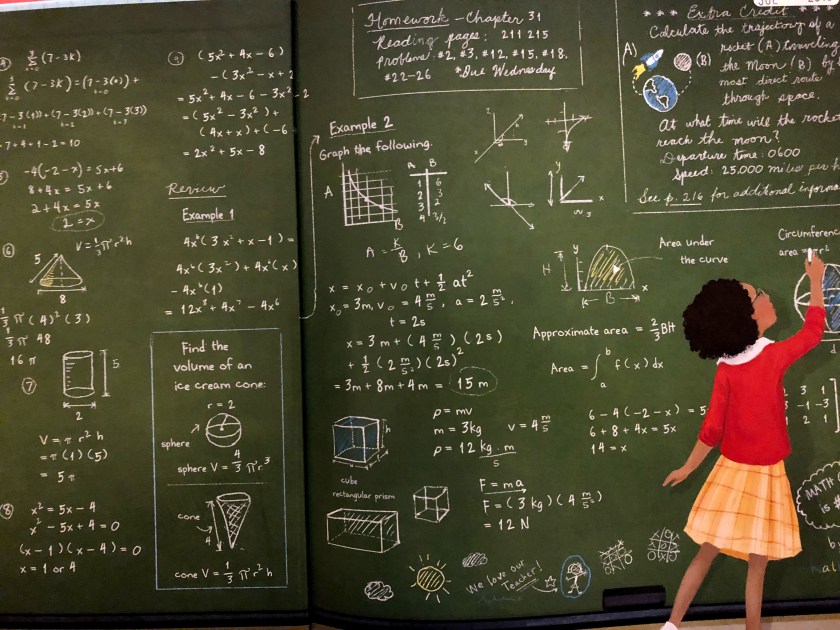
All space lovers should definitely read the beautifully illustrated children’s book, Counting on Katherine. Based on the scientists featured in Hidden Figures, Counting on Katherine illustrates the love for Mathematics and its application to space travels in the most endearing fashion. A child who has the inclination towards numbers cannot help deepen their fascination with them, and hopefully, those who do not share that fascination, will develop a curiosity towards them. I have always loved the look of a blackboard with neatly written mathematical formulae and calculations: this book captures the aesthetic beauty of the blackboard beautifully.

img_0287
Counting on Katherine – by Helaine Becker, Illustrated by Dow Phumiruk

Anyway back to Voyager Insight I said, “Do you think we can watch it land?” 

“Yes….it will be on You-tube.”, said the little fellow, positive that the image transmission from the Insight landing on another planet can make it to the nebulous internet without any trouble at all.

Here is a video link prepared by LockHeed Martin in collaboration with NASA’s JPL:

Automatically, my mind harked back to the old times when an image was work, precious work, with days in between clicking the pictures and getting them developed. When they came out, you saw the lighting could have been better the framing better, the shake a little less, and solemnly swore that you were up to no good, and waited it out till the next film roll proved it. 

I still marvel at any photographs we receive from Space. 

Human minds can adjust to improvements so easily – if only, we had the sagacity to adjust just as quickly to hardship.

Hero-Worship, Nicomacean Ethics & Baloney Detection Kits

I have heard friends rave about Dune by Frank Herbert many times over the past few years. I finally got to read the book, and I feel richer in mind and thought for it. The book was long and at times hard to keep track of (especially in the beginning). This is one of those times when I realize how my mind flutters with attention spans that drive calm butterflies to frenzy. But slowly, steadily, I settled into the book, and there were multiple moments when I felt like I must grab a pen and start writing (but that stern butterfly gave me a look, and kept me at my the task of reading). This, is probably the reason I have forgotten half the things I wanted to write about (This is where I glare back at the butterfly guardian who kept me reading)

Dune-Frank_Herbert_(1965)_First_edition
First Edition Cover – Image from Wikipedia

One of the many things that appealed to me in the Dune was the fact though there were vague references made to technology and the number of technological devices used by those living at the time, it is not a mainstay.

The book is a multi-layered piece of literature with over-arching themes of ecology, the art of war, religion, philosophy and politics. There is a particular quote that stuck with me in the Prologue written by Brian Herbert, Frank Herbert’s son, about the dangers of hero worship.

Quote:

As Liet Kynes lay dying in the desert, he remembered the long ago words of his own father: “No more terrible disaster could befall your people than for them to fall into the hands of a Hero.”

Having studied politics carefully, my father believed that heroes made mistakes…mistakes that were simplified by the number of people who followed such leaders slavishly.

In many ways, hero worship is what leads people to choose leaders who then turn into despots and dictators. Adulation affects everyone, and those with fragile egos are the most prone to its lure.

Towards the end of the book, Paul Atreides recognizes that he is being hailed as the Messiah and regardless of his acceptance of the title, there is a holy jihad in his future. He can either lead to the best of his abilities like his able and excellent father, Duke Leto or simply be the mascot of a movement that has already gathered momentum – a force that is much larger than him. This sort of trusting faith in one human being is never a good sign, and is a malady that has affected us for centuries. 

I quite agree with how Aristotle describes the nobility required of politicians: he opines that politicians should take an oath, almost as sacred as a Hippocratic oath, to remain fair and mete out justice. From the Nicomachean Ethics – By Aristotle. 

The lecture on Aristotle and Socrates on How Does One Live The Good Life? From 36 Books That Changed The World (Chapter 8) is an excellent listen.


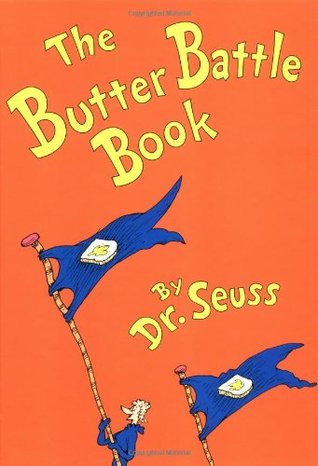
There are no initiation courses for politicians. No training. Though, I have a suggestion to have every politician complete the Butter Battle Course, it is unheeded. (The Butter Battle Course is an excellent course consisting of childrens’ books not more than a few pages each, and should only take a few moments of every leader’s time):

butter_battle

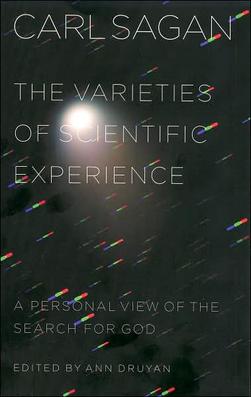
However, till politicians start taking their careers to truly be in service of humanity, we need to equip ourselves with Carl Sagan’s excellent Baloney Detection Kit from the book: The varieties of scientific experience : a personal view of the search for God / Carl Sagan ; edited by Ann Druyan. This book contains the Gifford lectures given by Carl Sagan in 1985.

The_Varieties_of_Scientific_Experience
By Source, Fair use, https://en.wikipedia.org/w/index.php?curid=28513011

When someone asked Carl Sagan after his lecture what we can do when the governments do not act in our best interests, he advised us to have Baloney Detection Kits handy.

Quote:

“I would say that the first thing to do is realize that governments, all governments, at least on occasion, lie. And some of them do it all the time – some of them do it only every second statement-but, by and large, governments distort the facts in order to remain in office.

And if we are ignorant of what the issues are and can’t even ask the critical questions, then we’re not going to make much of a difference. If we can understand the issues, if we can pose the right questions, if we can point out the contradictions, then we can make some progress. There are many other things that can done, but it seems to me that those two, the baloney detection kit and use of the democratic process where available are at least two things to consider.”

This seems to be age old wisdom: our oldest myths write about flaws in heroes, what brings about the downfall of the most powerful tyrants  etc; and yet, the reminder for our own Baloney Detection Kits is a timely one.

Books:

  • Dune – Frank Herbert
  • Varieties of Scientific Evidence  – Carl Sagan 
  • Nicomachean Ethics – Aristotle
  • 36 Books That Changed The World – Lectures on Great Courses
  • Butter Battle Book – Dr Seuss

The Lentil Chips Shine Down

The excitement in the bunch of children gathered was palpable. They were united by a sense of wonder and pleasant anticipation. Were they really going to be able to touch the telescope, and see something remarkable? A bar stool had been borrowed from a kindly neighbor and the little telescope was perched on it. An earthworm like line was formed with the children waiting to get a turn at the telescope. It was as wiggly and restless as an earthworm, and just as fascinating to watch from a safe distance.

mars_watching

Mars in the distance shone with the iridescence of a star. Mars has been exceptionally bright in the evening skies, and the Mars viewing party was happening on the week it was closest to the Earth.

Mars has fascinated mankind for centuries. It started with hoaxes of finding extra terrestrial life on Mars: maybe those rigged lines on the planet were canals? said a 19th century astronomer, and from that hypothesis, sprang a vibrant story of alien life. In our enthusiasm to find extra terrestrial neighbors, the populace went along. That kind of hope is refreshing even if misguided. 

https://en.wikipedia.org/wiki/Life_on_Mars

Tonight the telescope we had with us was only as big as a professional camera, and I hoped it would not disappoint the children gathered.

While the telescope was being deftly handled by the husband, I diverted the attention of the children skyward. Their questions about progress were distracting the misguided astronomer who was pointing the lens towards the stile on our neighbor’s roof, and wondering how he could see things fluttering there (I pointed to the sycamore tree nearby that had shed a few of its leaves on the stile, and crushed the poor fish’s soul about finding extra terrestrial life on Mars. Andy Weir might have imagined potato cultivation on Mars, but even by his standards, a sycamore tree was a leap, I told him kindly. He guffawed loudly at this and fiddled on.)

https://en.wikipedia.org/wiki/The_Martian_(Weir_novel)

In the meanwhile, I pointed out the familiar constellations to the hopeful looking children. The budding astronomers were skeptical. 

‘How do you know it is Big Dipper?’ 

‘It could be anything or nothing’, said another, and quickly the pendulum swung from hope to disillusionment. I managed a quick save by not letting it swing too far, and told them about the excellent app, Skyview, using which they could confirm the stars for themselves. The older teenagers who had smartphones for themselves were suddenly beset upon to share the marvels of the night sky. 


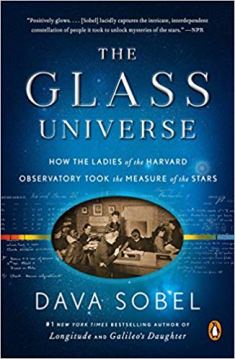
Cecilia Payne would have been proud indeed of the motley group of astronomers gathered in our driveway. It is marvelous to see how the work of early astronomers & physicists set the base for us to be able to map the skies and predict the movements of stars and planets.

glass_universe

The Glass Universe

Book recommendation: The Glass Universe by Dava Sobel

“Oh look!”, said the Big-Dipper-doubter, pointing the phone wildly at the sky, “the moon, the moon!”. 

An experienced hand said he had seen the moon before and there was nothing remarkable about it.

“But it is so beautiful!” said another sounding reproachful at the dismissal of the beautiful moon, and I agreed. The moon has exerted her pull over mankind almost since the beginning of time. Even if we do see it everyday, the moon has a poetic beauty all of its own. That night it was looking achingly beautiful. 

Maybe it was the effect of the scintillating talk I had the privilege of attending earlier that week.

I have never had the opportunity to listen live to a TED Talk. But that week, I had listened to a very TED-esque talk by Jon Carmichael the cosmic photographer. He shared the beautiful story of how he photographed the full lunar eclipse a year ago with the help of a Southwest crew. 

jon_carmichael_speech

Please listen to the talk on the site if you can.

I was telling the children about the talk, when the husband let out an involuntary yelp and said this time he was fairly sure it was Mars. 

One child gazed into the telescope and said, “It looks like a Papad in the sky.”, and we all laughed. (Papad  – is a sort of flat, round lentil chip!)

The cosmos has a way of uniting us in the darkest of times. Even during the most inane days, there is always a cosmic show that is ready to enthrall us and fill our souls with enchantment. It is why I was so happy to be standing among the children gazing up at the stars, and soaking in the wonders of the cosmic show above me that day. Even if the children did see a lentil chip in the sky, I hope for some of them at least the magic seed was sown. A seed nurtured by the hopeful innocence of youth, tempered by the wisdom of years, with the potential to mature into a star of their own.

Life is a Circus

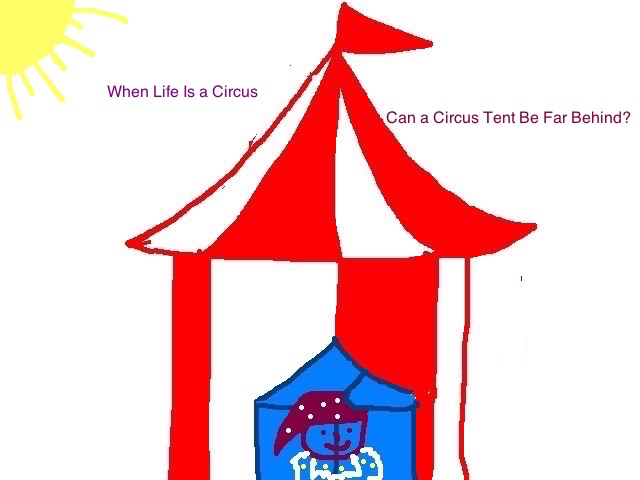
This article was published in The Hindu Open Page dated 19th August 2018, with an excellent cartoon by cartoonist Surendra  . I love the illustration of the mother (me) sitting like a circus elephant on a stool and looking fondly at the clown in the tent!

When life is a circus, can a circus tent, be far behind?

That’s what I tell myself everyday as I walk into the home. It helps me cope. You see as soon as I walk into our modest home, apart from a heavily used sofa set (on which I seldom find place to sit when I want to, because it is overrun with books, stationary, toys, papers and coats: relax! It is summer – Chill!), and a dining table (which has not an inch of real estate to spare, what with the pater claiming it as his office on which his laptop and assorted junk sits and the mater using it for her sewing machine and her sewing needs), one also finds a red circus tent with a clown inside.

clown

It was meant to be a fortress – a haven of peace and quiet in a noisy world.

It all started with a sales pitch one evening. The son was trying to sell me a fort. The little fellow was going the salesman on me. I suppose it is frustrating if a customer does not bite. The evening sun shone on his eager face and his voice chirruped louder than the birds. Folks stopped by to see what the furore was about, and wondered why I was being unreasonable about buying a fort. 

Before one runs off with the idea that I buy forts and palaces in my spare time, I must assure you that the fort was going to be engineered with paper, and tape borrowed from, that’s right, from me. I poked holes at the plan dubiously, and tried telling him the obvious answer, “I don’t need a fort!”

“You said you did not need that sheet set, but you bought it, and now you like it. Like that, once you buy the fort, you will like it.” he said.

Fair point, but I got to tell you, a sheet set and a fort are not quite the same things.

“But I am quite happy in our house, why would I need a fort?” I asked. 

“It is your own place to sit, and relax and do stuff Amma. “ Painted that way, the fort did seem appealing. I mean I do crave for a little quiet every now and then. A fort that is my own in the middle of all the everyday drama sounded marvelous.

Sweet are the thoughts that savour of content;
The quiet mind is richer than a crown. – Robert Greene

“But where will you build the fort?”

“Inside the house of course!” said the architect and I quailed. The house is barely big enough for our needs, and when folks come, I land up frantically shoving things into closets and hope no one opens them to have stuff tumble out on them. I certainly don’t have the kind of spare real estate required for building forts in them. 

But the little beaver would not back down. “It will upgrade our house. Remember you gave that man money for putting tiles in the bathroom? He upgraded the bathroom right? (Subject for another blog post) Like that, I will build you a fort and upgrade the house, and you pay me money.”  

This discussion went on for a bit, and things reached an impasse. I hoped the passage of time would make him forget and so on, but I should have known better. When fate socks me, it socks me with a big red flapping hand.

A couple of days later, the son and I were enjoying some down time together while the rest of the family went to Ikea for some shopping.

Imagine my chagrin when they trooped home with a surprise for the beaver. “Your very own tent – ta da da da! “ proclaimed his protective sister, and the fellow hugged her as hard as he could every chance he got for the rest of the day. He invited us into his tent, and it was soon forgotten that the tent was supposed to be made for me.  

circus_tent

So, now there he sits at every opportunity he gets. Last night, I found a pillow I’d been looking for in the tent: he took it in there to lie down and read a book. 

Interior designers may shudder at the aesthetics of it, but the clown inside is immensely happy.

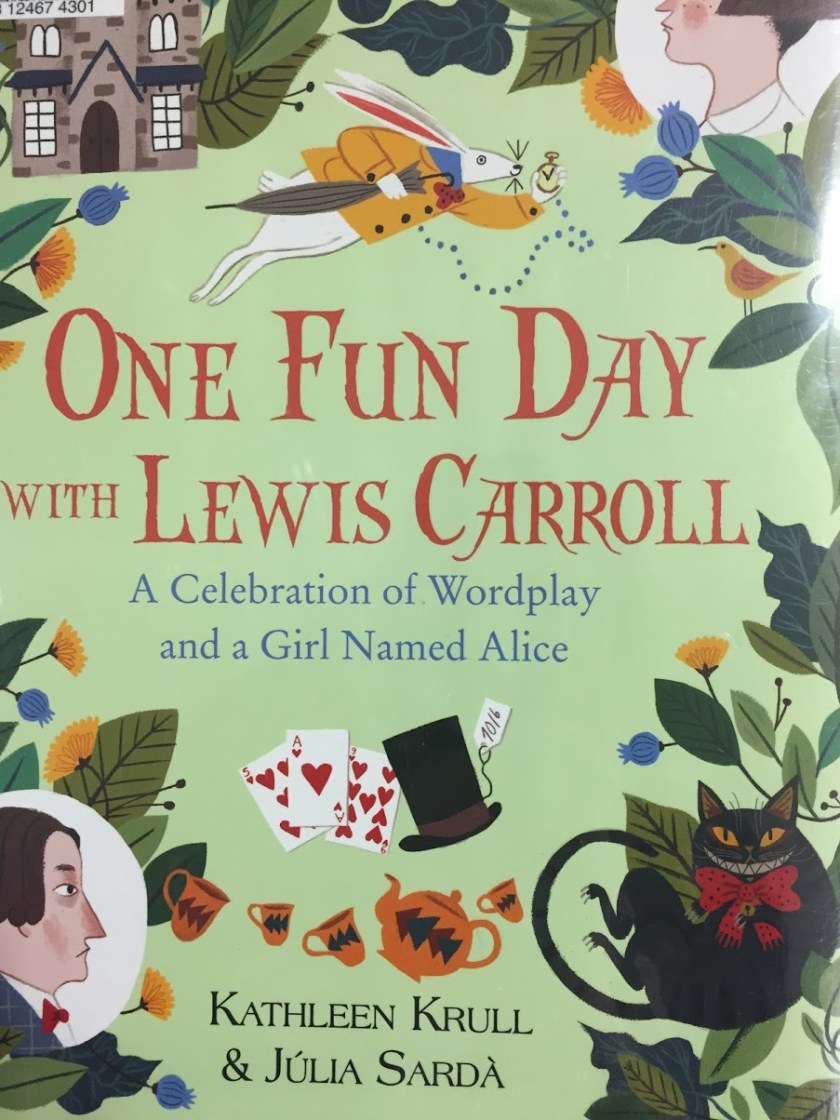
Solitude by Lewis Carroll

I’d give all wealth that years have piled,
The slow result of Life’s decay,
To be once more a little child
For one bright summer-day.

IMG_8187

See also:

The Land of Crumpled Cardboards


Sunset In The Queen’s Garden

In what was an impressive track record for last minute booking, the husband booked a trip, that flew us into Las Vegas and from there onto the beautiful sights in Utah. In one week, we had been in 4 states: California, Nevada, Arizona and Utah.

Sitting in the car that bright morning as we drove past Zion national park into Bryce Canyon national park, I felt the familiar stirrings of wonder. Nature often has this effect on me. The magnificence, brilliance and grandeur of nature never fails to instill awe. Always partial to trees, rivers and mountains when it comes to scenery, I could not help thinking how nature had once again jostled me out of my familiar likes and dislikes and opened my mind to appreciate beauty so different and so breath taking.

As Johannes Kepler says in his book, Mysterium Cosmographicum

The diversity of the phenomena of Nature is so great, and the treasures hidden in the heavens so rich, precisely in order that the human mind shall never be lacking in fresh nourishment. 

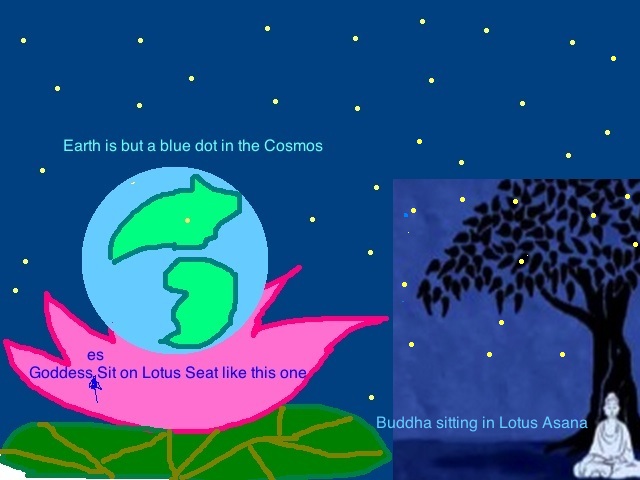
Buddha in Lotus?
Buddha in Lotus?

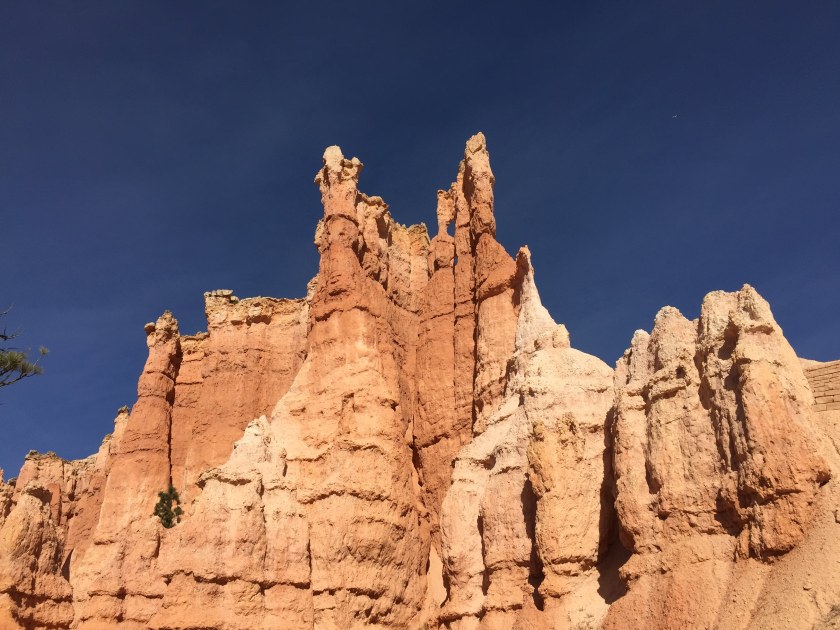
We had driven past Zion national park early enough in the morning to go on to Bryce Canyon National Park. We received the first glimpse of hoodoos in Dixie national forest. Set against the bright blue sky, they looked like statues from another world sent here to evoke an art that stuns and astonishes. We were listening to a Harry Potter audio book: a series that nudges even the most reluctant thinker into imagination, so it was no wonder that my mind buzzed with actors from another world setting the stage for the impressive hoodoo theatre.

“What should we do at Bryce?” asked the husband

“Well… the Queen’s Garden trail comes highly recommended, so that and a few other trails ought to do it.” I said vaguely, and continued musing.

Would the Queen’s Garden be as poetic as its name?  Would there be any hoodoos?  Little was I to know that Bryce Canyon hosted an entire amphitheater of them, and that we would be able to walk amidst them.

IMG_7300.jpg

One of the things I like best about road trips through the National Parks in the USA are the poetic names every point is given. Take for instance the Queen’s Garden. Instead of saying Rock Point or Hoodoo Lookout, the trail was given a mystifying  and satisfying name: Fairy Loop through the Queen’s Garden in the Amphitheater. Who wouldn’t want to do that? Apparently, one of the hoodoos resembled Queen Victoria in the setting sunlight’s shadow.

Could there really be a weird coincidence of having one’s silhouette set in stone that gives us a clue as to which human beings live on in name and fame? Or do we only assume likenesses to those already living on in name and fame?  Hoodoo musings are quixotic.

The day at Bryce Canyon was beautiful and as other-worldly as it is possible to get in so short a span of time.

Meandering through the park, we found ourselves washing up near the Queen’s Garden trail towards day’s end. The trail itself looped from Sunrise Point dipped via the Queen’s Garden and came back up near Sunset Point. If the point had not been named Sunset Point, would we have stopped to take in the grandeur of the sunset over the Amphitheater like setting of the valley? I am not sure. I do not think the sunset is any more spectacular here than at any other point in the Canyon, but simply by naming a point Sunset Point, we were encouraged to wait for the hues of the setting sun to unleash its marvelous palette of colors across the skies, thus bathing the amphitheater before us in surreal colors.

The setting sun took its time. It first peeked behind a hoodoo and then cast its fading light slowly upon the horizon.

As we stood there bundled up bracing for the sudden dip in Winter temperature after the sun sets, I could not help thinking of Ray Bradbury’s thought on the Happiness Machine in the book, Dandelion Wine: A Sunset is only beautiful because it doesn’t last forever.

While it lasted though, it was magical.

IMG_4979.jpg

“Doesn’t it make you feel poetic?”, I said gazing mesmerized at the hoodoos in the amphitheater before us.  “This Queen’s Garden hike reminds me of Alice’s trip down the rabbit hole. This is a Wonderland. The gargantuan arches of orange and pink beauty beckon!”, I said theatrically, flourishing my hands wide and raising my face heaven-wards. It is imperative at moments of impetuousness such as this to ignore teenagers inserting the practical note into life.

“It is just erosion.”, said the daughter bringing me back to Earth in a thud, but I saw her smiling happily and taking in the horizon.

Without art, science would be as useless as a pair of high forceps in the hands of a plumber. Without science, art would become a crude mess of folklore and emotional quackery. The truth of art keeps science from becoming inhuman, and the truth of science keeps art from becoming ridiculous. -Raymond Thornton Chandler 

http://www.zionnational-park.com/bryce-canyon-trails.htm Quote below:

The Queen’s Garden Trail leads hikers past wonderful rock formations, including Gulliver’s Castle, the Queen’s Castle and many that are unnamed. Man-made bridges are scattered throughout the trail. At the end is Queen Elizabeth’s garden and the Queen herself, standing on a backward facing camel, calling out orders to the ships in the garden. The queen can also be seen from Sunrise Point.

Standing there under the rays of the setting sun, waiting to unleash another cold night, before rising again, the daughter and I imagined the place as it would have been millions of years ago, with underwater life teeming in its depths, crafting the very hoodoos for us to delight in today.

“Nature does not hurry, yet everything is accomplished.” — Lao Tzu

If only, we let Nature go on its course without hurrying to leave our indelible imprint on the canvas, I am sure something even more remarkable can be handed down to generations after us.

Can Mammoths Stop Thawing Arctic Permafrost?

“Let’s not watch this – it is depressing, and some of that stuff makes my blood curl.”, I said as the daughter suggested some gothic fiction. It was the week-end before Halloween, and we were picking our Friday evening entertainment. Never an easy task.

“Fine! What do you want to watch?”

Cosmos” I said without flipping a heart beat. (Watch the you-tube video introducing Cosmos here)

To her eye-roll, I said “No really! You see, there are so many things in there that I wanted to understand as a student.  I plodded along to the library and I got to admit, the Physics books in there. “ I gave a shudder here, and I fully meant it. “I suggest you curl up with one of those tomes in our library looking jaundiced, pale, and excellent cures to Insomnia. I thought some of them needed vitamins, sunshine and exercise to regain what Doctors call a healthy glow. “

geek_world

So, we sat together and watched a Cosmos episode by Neil deGrasse Tyson on global warming. In his slow, sure voice, he rumbled like the volcanoes on Venus that set the poor planet into an irreversible green house cycle.

The World Set Free (Cosmos: A Spacetime Odyssey)

http://channel.nationalgeographic.com/cosmos-a-spacetime-odyssey/episodes/the-world-set-free/

We have twenty years at the current rate to stop us from going into an irreversible state like Venus.

The daughter gave me a significant look .I gave her a more sig. look, and we sat there looking like stuffed frogs with s. looks etched on our faces digesting the info. “How could you think this was okay to watch, but that movie was too scary. This is the scariest thing I have ever seen. How do you think it will all end?” said the daughter sounding worried, and deeply stirred.


A few days later, I read out a passage from the book I was reading. Woolly: The True Story of the Quest to Revive One of History’s Most Iconic Extinct Creatures. (Related post: Mankind trying to resurrect the woolly mammoth by impregnating Asian elephants with mammoth genes.)

Screen Shot 2017-10-27 at 4.37.00 PM

Pleistocene park  – Using 160 square kilometers of Siberian Tundra given to him by the Russian government, Zimov’s goal was repopulating the area with modern equivalents of prehistoric animals that had adapted to Arctic conditions (moose, Yakutian horses, Finnish reindeer and even North American bison.) … To re-create the effects of the Woolly Mammoths on the land, he’d bought in a World War II tank …. Punching holes in the snow, … , using the tank treads to mimic the continual stomps of Mammoth feet, he’d worked the land, year after year. And along the way, he’d accumulated data that were staggering in their implications.

Within his 16- square kilometers refuge, he had lowered the permafrost temperature by an average of fifteen degrees. 

We change the world just be being. I remember watching a video by National Geographic in which they chronicle how 41 wolves introduced in the Yellowstone park, changed the ecology and even the physical structure of the park.

Introducing Wolves in YellowStone National Park – National Geographic Video

If that was the case with 41 wolves, what would introducing Mammoths do? Would it save us from the brink of extinction or introduce problems of the kind we hardly envisioned?

We never know the ramifications of our creations. I mean we are a species who has unintended consequences from a ‘Like’ button on Social Media.

Squirrels, Berries & Fringe Myths

We had been on a trip to Crater Lake over the summer. Among other things, we hiked a little bit around the lake, taking in the marvelous view. The lake is a mesmerizing sight sparkling in its deep, pristine blue. We indulged ourselves in small hikes that afforded us beautiful views of the lake and the surrounding Cascade mountains merging into the Sierra Nevadas in the South. It was one of those places where nature cures, nature soothes and all that. The son is my ardent nature companion, and the pair of us went looking for pinecones and acorns.  It was steep going.

squirrel_hike

We stopped at one place to take a few breaths at a spectacular rock placed there for the purpose and we saw a little squirrel. We may have been nervous during the hike, but it did little to wrack the squirrel. Up close the son noticed that unlike the squirrels near where we live, these fellas were smaller and had stripes across their back. He said in his excited voice that these were the ones that had helped Rama build his bridge and nearly gave the poor squirrel heart failure with his excitement.

I peered closely, and so it was. Here were little squirrels that looked like the squirrels mentioned in the ancient myth of Ramayana. According to the story, the little squirrels were helping Lord Rama’s army build a bridge from India to Lanka so that he could save his kidnapped wife, Sita, from the clutches of the evil demon-king Ravana, in their own small way, with little rocks and acorns.  Lord Rama was so impressed with them, that he picked one of them up and stroked its back lovingly. The legend goes on to say that is why squirrels have stripes. The son had heard the story before, and  was understandably excited when he saw the stripes the squirrel’s back. I suppose the story must have sounded silly to him when it said, “That is why squirrels have stripes on their backs.” Because the ones he sees do not have stripes on their backs, and that is the sort of discrepancy that will keep the fellow puzzled and curious for days.

<Squirrels with stripes on their backs>

Chipmunks or Squirrels
Pic obtained via google search

I was reminded of that little story when I read the news items that Remains of the Day had won the Nobel Prize. Remains of the Day examines the concept of work, and why it is an important factor in man’s life. Screen Shot 2017-10-26 at 10.08.53 AMHow often have we been asked our names, followed by a what-do-you-do? How does one attach a sense of importance to one’s work, and feel purposeful about it? Sometimes, it is by means of attaching ourselves to the goal of the entity you work for like the squirrels did. But maybe, it is to the concept of work that we need to attach our purpose to like the bees do.

This year Deepavali – the festival of lights came like the coat-tails of a comet after a string of tragic events – fires, shootings, floods: catastrophes both man-made and natural shook the populace. But now is a good time to throw our mind back to these oft forgotten little mythological tales, the fringe stories that provide food for thought. I must remember to tell them the hilarious tale of the old lady, Sabari, tasting the berries before giving them to Lord Rama.

I looked forward to the chat with the children while drawing up a rangoli outside the house using colored chalk. It is a beautiful feeling of light. The triumph of good over evil, a call to nurture our inner light and so much more.

IMG_7077

Mythology, fairy tales, and magic are all so beautifully interwoven in our magic of story-telling. Heroism and quests for the inner self are never jaded. Starting from the Epic of Gilgamesh, the Avatars of Vishnu,  Ramayana & Mahabharatha,  Odyssey & Iliad, the Bible and right down to Harry Potter, it is a story line that always enthralls, and is ever relevant.

I’ve come to the conclusion that mythology is really a form of archaeological psychology. Mythology gives you a sense of what a people believes, what they fear. George Lucas

In all these millennia, it seems little has changed, and so much has.

Please share some of your favorite fringe tales – I would love to hear them.