The Edge of the Sea

The Edge of the Sea beckoned with increasing urgency. 

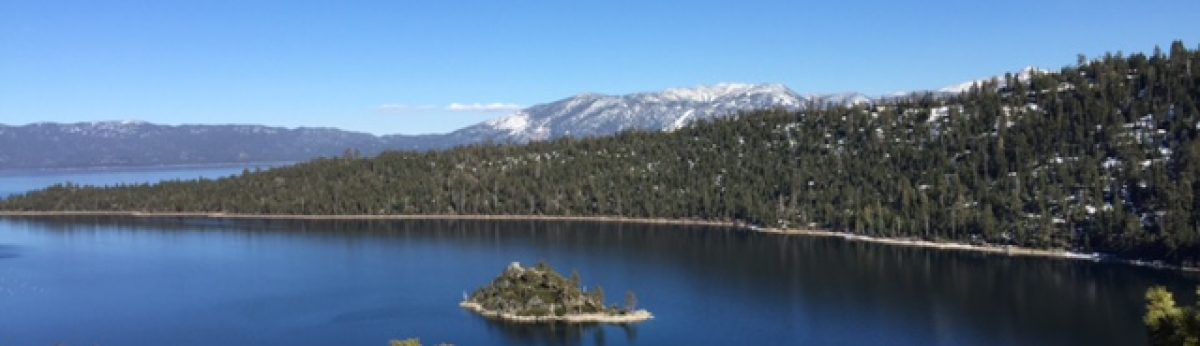
We can technically reach the sea shores within a couple of hours drive, but the routines of life mean that we rarely do so. I looked at the pleading look in the daughter’s eyes as she pumped for a day at the beach, and consented. And so, it was with considerable energy that the children and I packed our picnics for the day. The entertainment bag with books, snacks and sandwiches were ready, soul filled up to the brim with good hearted spirits, and we set off to the cold shores of the Pacific Ocean on the Californian coastline. 

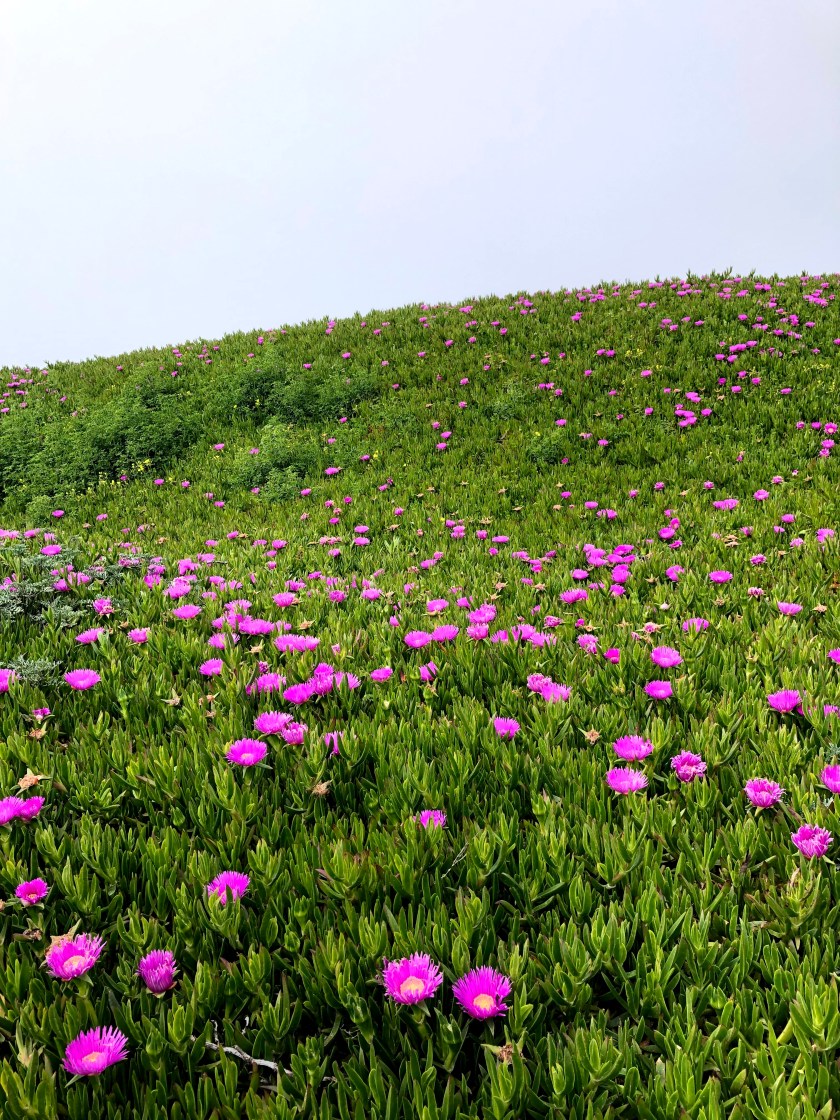
I must admit it is a beautiful thing to do. It is especially sweet when one has taken the day off. One can imagine the rest of the world working in drab offices, spouting theories, pouting about the myriad tasks that occupy one’s day, while we gaze contentedly at the ocean, listening to the sound of the waves lapping the shore. Wildflowers bloomed creating a kaleidoscope of color a short distance away. Birds and butterflies flitted around them gaily.
 

img_2484

Out on the beach, there were a couple of families who were also enjoying a small Spring break, and there was harmony between land and ocean dwellers alike.

Kites were being flown by some, and the little dragon and butterfly shaped kites took off with an ease that is hard to get in landlocked parks. The sea gulls were making pests of themselves over an upturned packet of someone’s carefully packed picnic. Every time someone came to shoo them, off, they lifted themselves with a grace that the man-made kites could never quite get.

img_2465-effects

A little farther away from us were a couple of small birds, who I have since learned are called sandpipers. And what a fitting, poetic name for the little marvels?! They darted in and out with the waves looking for whatever it is they eat from the foam that washes up. They inspired us to play the same game of keeping as close to the lapping waves as possible but not getting wet. We did, but we were nowhere as elegant and nimble as those little busy sandpipers.

Days later as I bustled about the day, a quick darting image of these little birds would flash before my mind’s eye, and I would indulge in a small smile. A smile that reminded me of the bigger gift of life that surrounds us, a life and planet so marvelous that our daily tensions can in an instant be gone just by stopping to think of them.

The edge of the sea is a strange and beautiful place – Rachel Carson

Regular readers know that the teenaged daughter should have been born a mermaid. Since she is a human being, she makes up for the shortcoming by thriving on all things ocean related. Her reading is generously sprinkled with mermaids; her drawings of coral reefs, fish and dolphins reached a point where her teacher said she had to choose a land based theme to draw so she learns the techniques for drawing different scapes; her favorite myths involved the Greek God of the Oceans, Poseidon. And it all started early. She watched Finding Nemo & The Little Mermaid 666 times.


Every time, I crave for the forest, she craves for the beach. “A quiet day at the beach is a wonderful thing. Most importantly, you don’t have to do anything. No hikes, no walks, no did-you-see lists Amma!” she said, and as I watched her loll on the beach with a book in her hands, I must admit that the appeal is infectious.

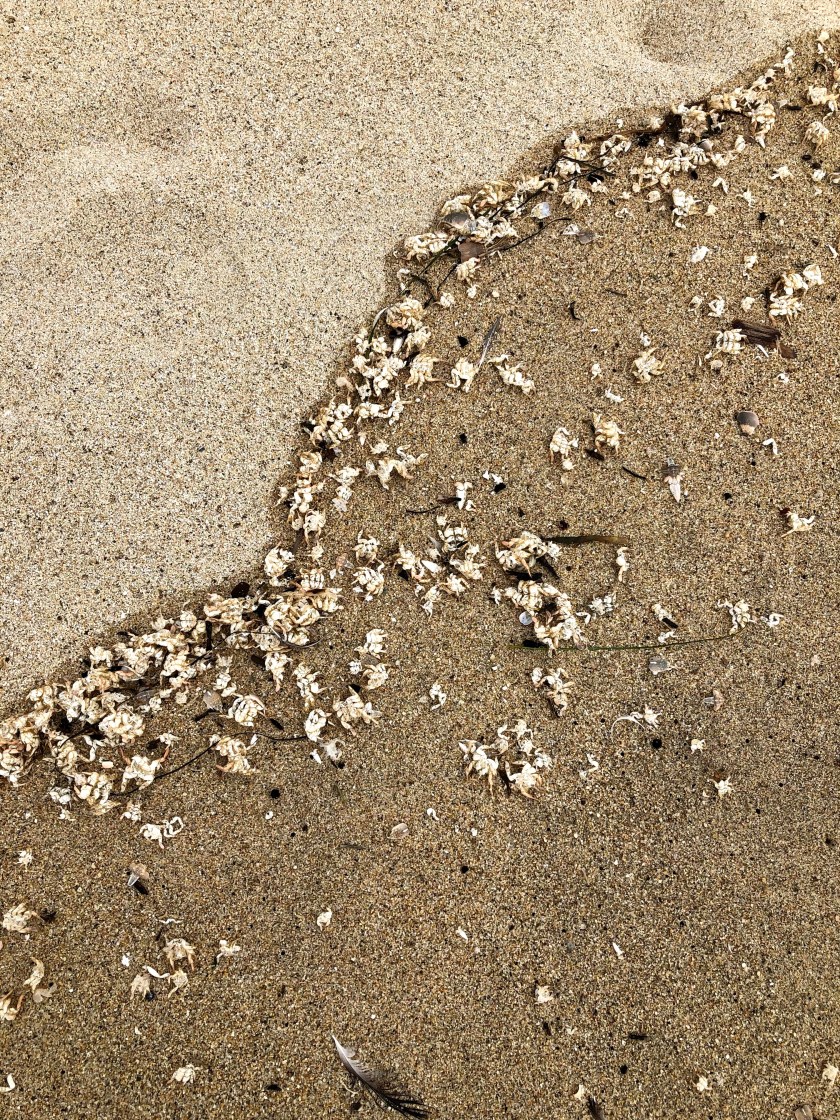
The edge of the sea is fascinating. Watching the shoreline move in accordance with the tides and waves is engaging. The sandpipers and seagulls can entertain you all day. Who needs phones by the beach? (Coming up next)
img_2480

Books: The Edge of the Sea – By Rachel Carson
Cephalopods

The husband had an amused expression on his face as he walked into the kitchen and saw me reading while making dinner. His eyes were set to roll, and his lips had already started on the journey to upward curvature that results in an indulgent smile. I told him so.

“Your neurons, it seems, are all controlled by one brain – tut tut! Not the case with Cephalopods. Take octopi or octopuses for example. They have neurons tingling all over their many arms, and each arm can function almost independently of another. Severed arms have been known to collect food on their own you know?”

“What are you reading now?”, asked the husband.

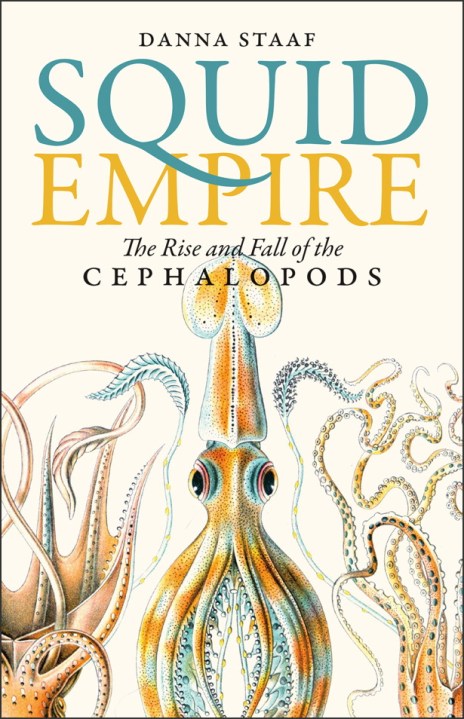
“Squid Empire by Danna Staaf. It is a book about squids, octopuses, and some other creatures called nautiluses and ammonoids, coleoids and cuttlefish and god-knows-what-else. Apparently, they are all called Cephalopods.” I said beaming happily, while slowly roasting the dinner. It made me feel like an eight armed goddess myself just reading about these fascinating creatures, and cooking at the same time. Never mind that I was making the most gawd-awful hash at both these tasks.

SquidEmpireCover

“Did you know? The humble garden snail is descended from the ammonoids and squids?” I said.

“Well….I will leave you to it then.” said he squiggling out of the kitchen like an octopus out of a tank.

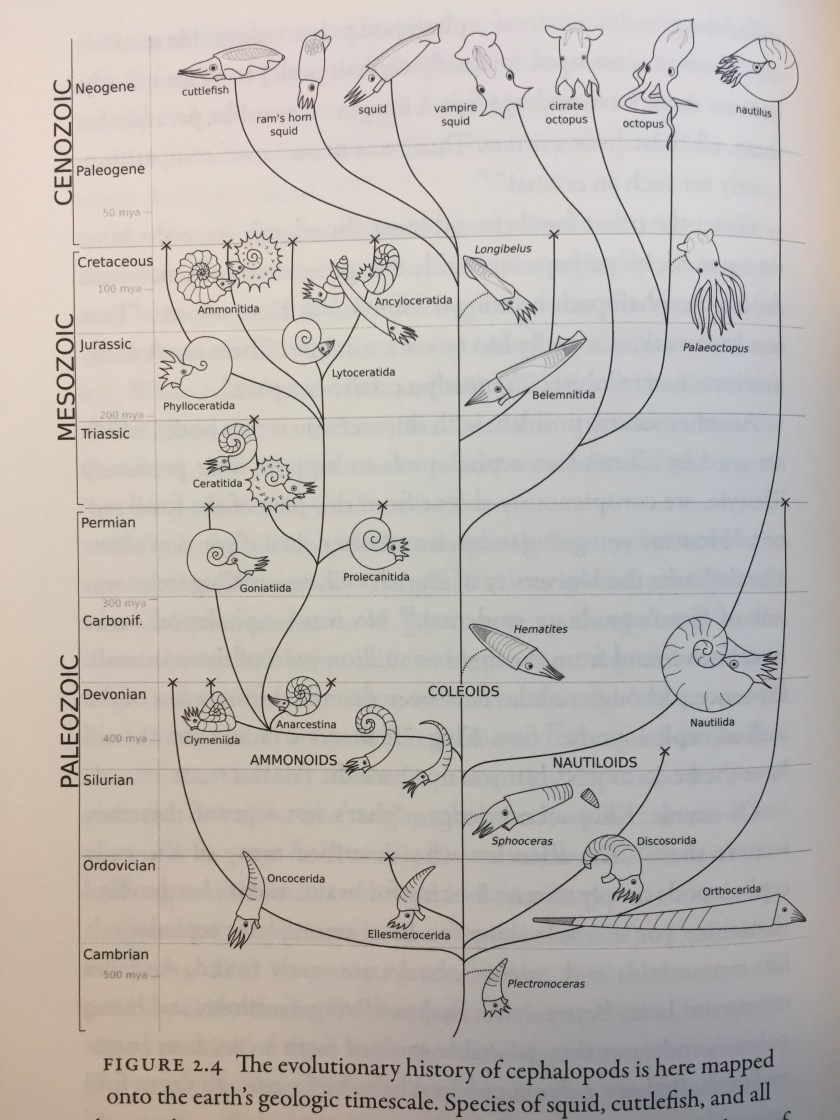
I went back to the book and though I was at times confused by the various scientific terms, I enjoyed the read. It yanked me through the ages, and took me to a time in Earth’s history well before dinosaurs or life on land had started. It was intriguing to see how they formed shells, and how those very shells helped them move from the ocean floor to the central zones of the ocean where they could swim and live with no apparent threat till the whales and larger fish evolved to eat them. The shells secreted a liquid less salty than the surrounding sea water, and this helped them float and remain buoyant instead of being brought down by the heavy shells.

IMG_8046.jpg
The Evolutionary History of Cephalopods from the book, Squid Empire

Why did I pick up a book on Squids?

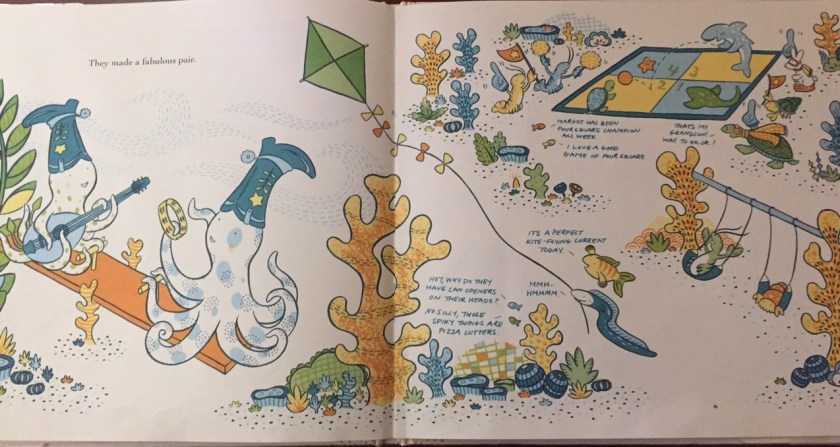
I don’t really know, except that I loved the children’s book, Octopus and Squid by Tao Nyeu. A book that the son and I read every now and then for its beautiful friendship between two seemingly different creatures.

Imagining
Squid and Octopus by Tao Nyeu

Then, a few months ago, I read The Soul of an Octopus by Sy Montgomery

Cosmic Nature of Living:

Quoted from The Soul of an Octopus by Sy Montgomery:

Cambridge Declaration on Consciousness asserts that “humans are not unique in possessing the neurological substrates that generate consciousness”, and that “nonhuman animals, including all birds and mammals and many other creatures, including octopuses also possess these neurological substrates.”

Now, I felt it was time to get acquainted with Squids. I don’t distinctly remember a squid – I must have seen them at the Monterey Bay Aquarium.  Their evolution is fascinating. The book is written by a genuine marine lover (Danna Staaf’s site is here: cephalopodiatrist), and her love for these creatures shines through in the book. I only wish the book had more pictures. I had to keep looking up pictures on the internet. Pictures of nautilus, cuttlefish, squid and octopus obtained from Google search below:

I had never used the word, Cephalopod, before, and I was glad to learn so much about another way of life, even if I may never fully comprehend what it means to have consciousness so permeable, so distributed, and yet co-ordinated.

If there is magic on this planet, it is contained in water. Loren Eiseley

jelly