The Birds of Paradise

The World Around Us

I don’t remember when exactly we start noticing birds and animals around us as being separate from human-beings. If there is a conscious point in time when we say:

This is us, that is a bird.

Don’t eat those – they’re mosquitoes &

Keep away from man-eating tigers – they want to eat us. 

Keeping the neuroscience behind it all aside, the world around us is fascinating. Even if you see a bird everyday, the little chirp, and the flutter of its wings cannot help but take us out of ourselves for a bit can it? 

What is it about this diversity of life that is so appealing? 

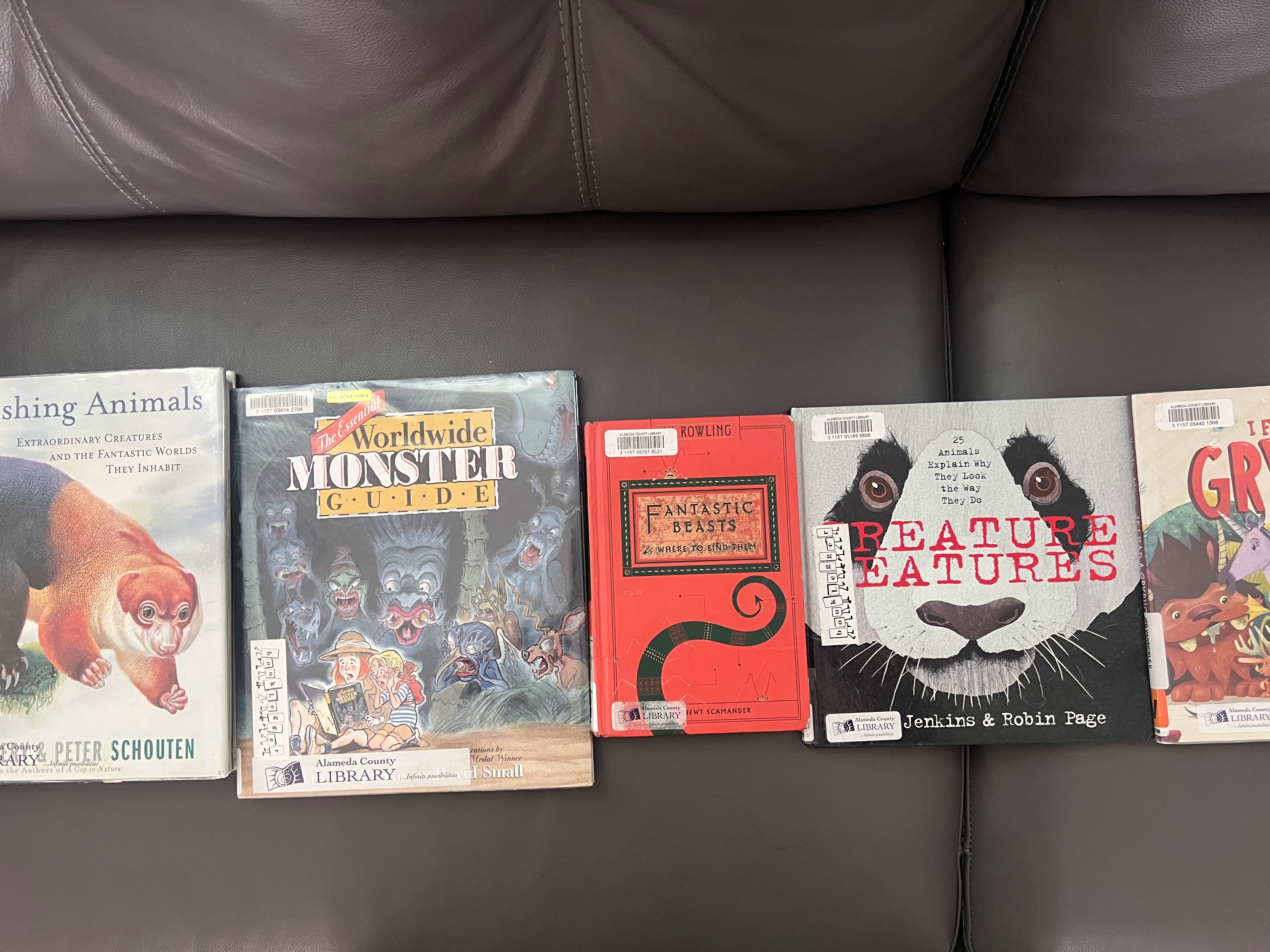
I was sitting one afternoon engrossed in books. Books on beautiful beasts and fantastic features of the creatures we share our planet with.
img_1575

As I flipped through the colorful pictures and the accompanying text in the book, Astonishing Animals – Extraordinary Creatures and the Fantastic Worlds They Inhabit. – By Tim Flannery & Peter Schouten, I couldn’t help being drawn to the birds of paradise in the book.

Rarely do we stop and just admire the beauty and precision of a bird’s structure. The birds themselves are flighty. Our attention spans are even more so. Plus, these birds are all in exotic places. But it made me wonder – even the less exotic birds around us, how long and how often do we study them? Ornithologists do. Bird photographers do. But otherwise? Those of us who love nature stop to notice them. The rest of us are too busy to notice. 

Birds of Paradise

I was admiring the different birds of paradise illustrations in the book, and I felt myself drawn to the Himalayan Satyr as much as the blue bird of paradise.

The blue bird of paradise is illustrated beautifully in the book – long side up taking up two pages and you can see why:

blue_bop

he dances upside down, hanging from a branch. As he begins his display, he flexes, sending waves of blue and violet shimmering through his feathers. At the center of his chest is a dark oval patch lined on its lower margin with red. This is rhythmically expanded and contracted so that it resembles a huge, slowly expanding eye whose effect, even on humans, is hypnotic. All the while the performer’s own eyes are closed, revealing white eyelids, which lend him an unearthly air.

Like a little opera singer, dancing on the stage. How marvelous!

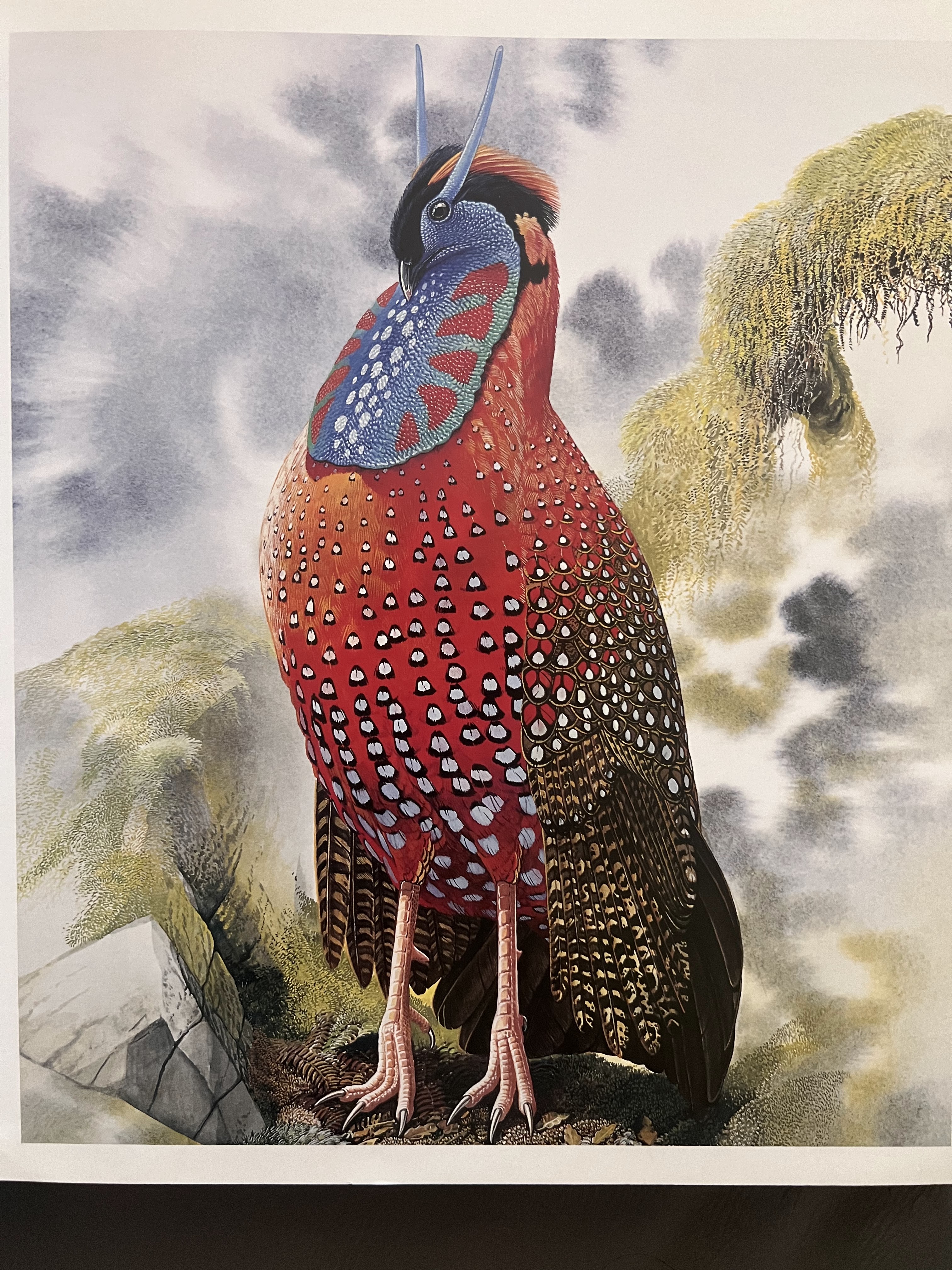
The Satyr Tragopan, another beautiful Himalayan bird, drew me for another reason.
img_1563

It is often the case among birds that a gorgeous cock is a poor provider. Beautifully adorned males may put on a wonderful courtship, but all too often contribute nothing to the raising of the chicks, leaving that duty to the dull hen-birds. The satyr tragopan is a stand-out exception here, for not only is he dashingly handsome but he seems to be monogamous and a dutiful father as well. … The father contributes equally to the upbringing and care of the young.

The Himalayan Monal, and other birds of paradise are equally dashing.

Split into beautiful sections about creatures who live in the ocean, tree dwellers, mountains dwellers, the book journeys across continents, landscapes, ocean surfaces and deep surfaces. The artwork, though, is spell-binding. 

One cannot help feeling like the world is beautified and expanded just a little after an hour just looking at these beautiful creatures and reading about their curious lives.

Recommended Books:

🐘🐘🐘🐘🐘 The Tusks of Extinction 🐘🐘🐘🐘🐘

The Mammoth Tale

Few passages capture the bane of consumerism like this one does. It is from the novella, The Tusks of Extinction by Ray Nayler.

The premise of the book is an intriguing one. 

  • It is set in a future when mankind has figured out how to upload one’s consciousness into the cloud. A manner of immortality. This is very much in the realm of possibility.
  • It is also set in a time where the Siberian mammoths have been resurrected. This has already transcended realms of possibility into reality

The wooly mammoth is being resurrected – being cross bred from the genetic remains frozen in the Siberian Tundra with  the Asian elephants (because they are gentler than African elephants). 

Thus, begins the tale of a doctor whose life was hacked from him moments after he uploaded his thoughts and knowledge to the web. This man, Dr Damira, was a passionate naturalist, a man who studied the African elephants and their ways. He fought for their conservation but failed. This is set in a future where the last of the elephants no longer roam the Earth. 

tusks_extinction

The resurrected mammoths in Siberia are facing difficulty thriving in the wild. They have all been bred in captivity, and do not understand how to survive the demands of living by themselves, caring for each other, and forging paths so they can forage and live through the cruel winters. They are thus being killed by poachers in a cry that reminds scientists of how the elephants were all killed off one by one. 

In an attempt to give them a chance at life, the doctor’s consciousness is uploaded to a mammoth – a matriarch by the name of Damira. 

Bane of Consumerism

There are several aspects of this novella that can appeal to us, but one in particular stood out to me, and that was how our consumerist culture alienates us from the natural world. For we buy things, we want things, we accumulate, we hoard – who is it hurting? I am earning and I am buying. It is all helping the economy is it not?

Extract:

In offices-a tusk in a case, beautifully carved, transformed into a world of its own, worked by human hands into a chain of elephants walking trunk to tail. Beautiful, lifeless elephants carved from the destruction of an elephant, hacked into what had once been a part of a body, a tooth, a tool. A part of a life.

“Among the skyscrapers, there were also older places-little streets of cramped shops, survivors from another Hong Kong. Marginalia that had been missed by the eraser of progress. And there, in the shop windows, so crammed with clever things, there it was. My eyes found it over and over again. Ivory. Ivory jewelry, ivory stamps used to sign decrees that were meaningless now, ivory game pieces of every kind. Ivory turned into useless gewgaws, dripping with the blood in my home. It could be carved into any lovely shape they wished, but all of it began in killing. No-more than that all of it began in killing that took place far away. That took place somewhere the people who thought of ivory as a material could not see. Killing that took place in an extraction zone.

I remember the horror I felt when I first learnt that certain types of leather were obtained from the skin of crocodiles and were thus priced higher. 

Cities like Hong Kong and New York and London at the center, vortexes into which the currents of trade accelerated, into which goods from all over the world were pulled. Places where things became materials. Where things became commodities.

Many of us rarely stop to think of the source of all the things we use as part of our daily lives. In all honesty it is overwhelming to do so. How does the kidney bean come to be in its packet in the grocery store? Once we start down that road though, what about the almond flour, the diamond ring, the leather handbag, the silk scarf, the perfume, the spice, the watch, the gold ring, the ceramic jug? Everything has its tale, its journey, its place in the human chain of wants and needs. 

What Can We Do?

In reality, we cannot give in to an almost paralyzing analysis of source-to-table for everything we consume. Is there economic exploitation along the way, unscrupulous practices, inhumane treatments? Would we be happy to know it all and make informed decisions – yes, (I am hoping that humans have enough humanity to make the right choices if we do), but can we do so? Not always. 

I spent a pleasurable few hours at the mall the other day, and found my fellow human beings doing the same. Glancing around at the happy faces of those of my fellow humans that morning, I did not see malice or greed – I simply saw folks at a mall on a rainy week-end. 

I like that mass production has made life easier, the jobs it has created, alleviating entire nations from poverty. I like that poor children can have new clothes, and that horizons have expanded thanks to the general prosperity of nations. I do not, however, like the ever-increasing pressure to produce and consume more. 

Is the economy to be weighed against the Earth’s resources at every step in the mall? Or just more more meaningful consumption? I do not know.

The Fascinating Behavior of Songbirds: A Morning’s Musings

It was one of those mornings in May – clear skies, the sun’s rays dancing through windows, and replacing moans quickly with sharpness and dedication.

I stood there wondering how it was so thoroughly that we transition from a supine, sleepy form to an alert, going-about-the-day form. The demands of the clock are relentless indeed. 

For an instant, I stopped to hear the beautiful voice of the songbird on our garden fence. It was trilling and beautiful, and I could have sworn just a little inspired – that last note a little higher than a human would have envisioned for that piece. 

It was as I was musing thus, that I noticed the son charging down the driveway to get to school on time – a sock hanging in one hand, a school project in another, and off we went. The songbird flew from my mind as we navigated the traffic, spoke of this-and-that, and chose music for the ride there. 

When I came back, the songbird was still flitting about here and there. I stood mesmerized by the little flashes of movements that my phone camera would not be able to capture anyway, and listened as it chirped, and went about gathering its breakfast.

I remembered a book that I had from the library – patiently waiting its turn.

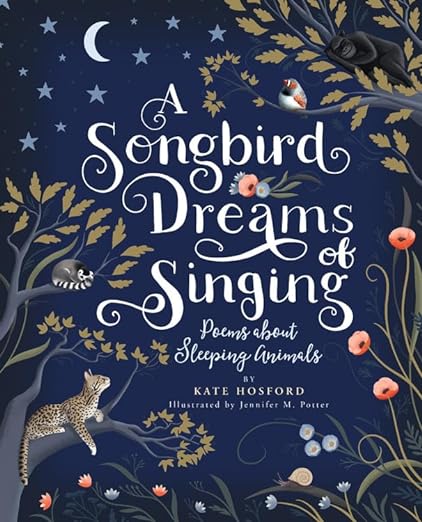
A Songbird Dreams of Singing – By Kate Hosford, Illustrated by Jennifer M Pottersongbird

I flicked open the book. The poem about the songbird was there:

Other birds may dream of worms 

Or flower beds or thunderstorms 

But every night this bird performs 

A concert in his mind.

How marvelous to imagine a songbird rehearsing and getting better at its craft subconsciously – every night.

The book goes on to talk about research made about sngbirds:

In the case of songbirds, scientists at the University of Chicago have done studies on zebra finches demonstrating that the males practice and refine their songs while dreaming, adding little flourishes to make their version of the song unique. Zebra finches are diurnal birds who rest in the afternoon and sleep for about ten hours a night. Like many other songbirds, when they awake in the morning, they sing with particular enthusiasm in what is known as the dawn chorus.

Children’s book illustrators are so wonderful at their craft. This book too has beautiful illustrations, color schemes, and an overall look and feel of a book that is all set to send us to our worlds of dreams too.

So, what should we dream about, and subconsciously try to get better at?

The Powerful Epiphanies

The Power of Spring

As epiphanies often go, it was unexpected, and oh so satisfying. This spring season has been particularly fantastic – there are bumblebees, butterflies, dandelions, ducklings – all tripping over themselves to give you epiphanies of life, miracles, hope and so on.

One such day, we sat watching lazy waves rippling through a large pine tree. The previous day had been a cold, and windy day, we had scuttled inside for warmth. The next day was warm, pleasant and entirely suited to lounging around watching wind waving through pines, firs, and gingkos. 

The house was filled with noises of spring – young children exclaiming at blueberries, standing on tiptoes and peering up at the oranges on the tree, running through the house in a mad scramble looking for juice packets and snacks while playing freeze tag or mock-cricket. 

When the next stampede grew closer, I wondered whether to move aside from the herd of stampeding rhinos, or sit my ground and continue gazing at the roses in bud, and the pine in the wind. I continued to sit, and luckily, the fellows stopped, and one-by-one they all flapped around, and flopped on the grasses. 

“What are you thinking about?”

The Ginkgo’s Wisdom

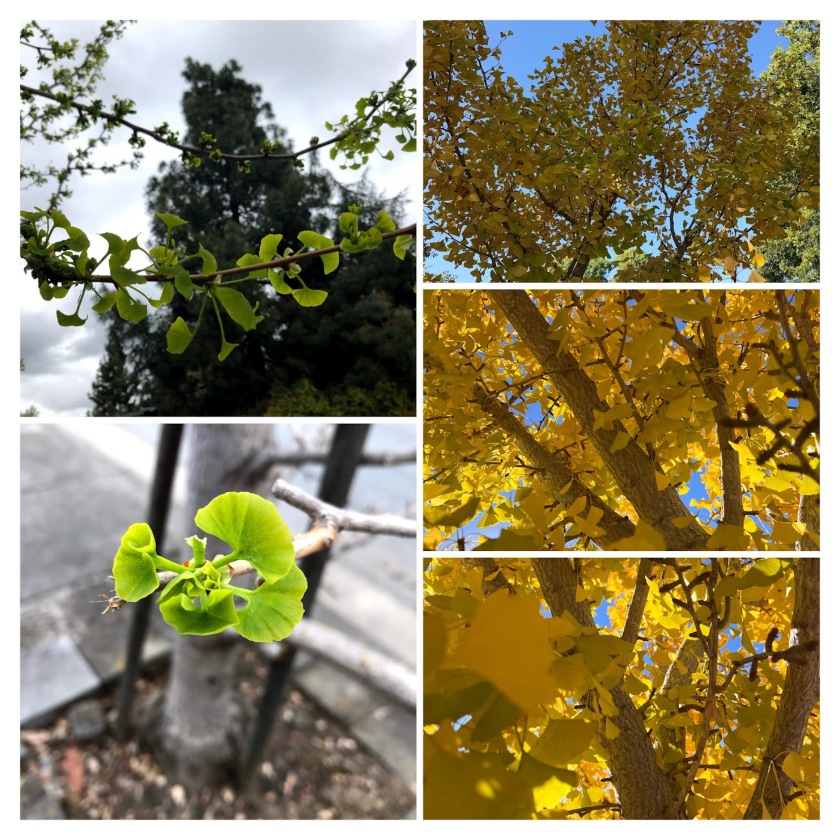
I told them, and they sat pondering for a moment, sipping their juice. I couldn’t resist the pull of a quiet moment, and an uncharacteristically pliant audience. “Did you know about the ginkgo trees?” I asked my young fellow admirers of wind and trees.

ginkgo-COLLAGE

Thrilled that they didn’t all know, I launched on the ginkgo train – telling them about how they were around from the days of the dinosaur, and how they all communicated to each other, and decided when to shed their leaves. The son said that one of the trees will slow down if it is going too fast in the color changing race, waiting for its fellow ginkgos to catch up.

“Like friends are supposed to be!” piped up another. 

I beamed appreciatively. “Yes – exactly like friends – all helping each other get there. Together.”

Read also: The night of the Gingko : By Oliver Sacks in the New Yorker magazine.

The day’s epiphany done, the playgrounds beckoned, and I let them all run off their sugar highs before expecting them to quieten down for the night. I wonder how the birds manage to quiet their brood when they’ve had a little too much nectar. That epiphany can’t wait for another day.

“A real artist is the one who has learned to recognize and to render the ‘radiance’ of all things as an epiphany or showing forth of the truth.” ~ Joseph Campbell

The Problem of Perspective

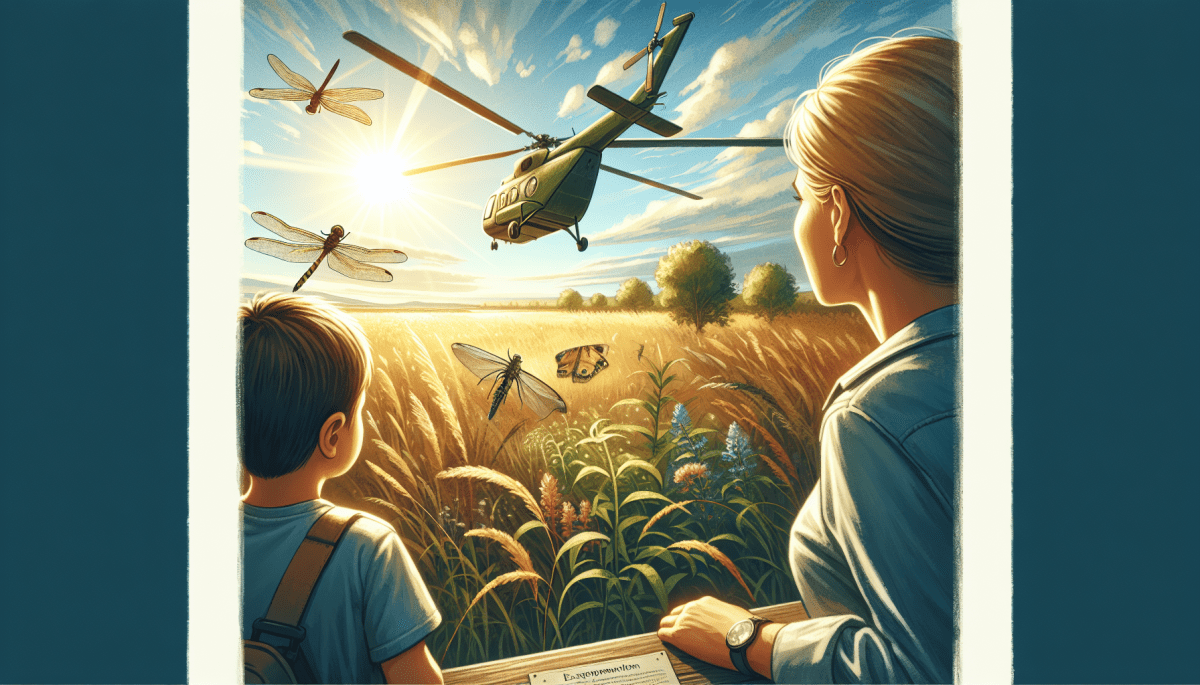
It was one of those clear, cloudless days. The temperature was just right, when we stepped out of the house. A lazy dragonfly and a helicopter flying overhead got young minds and old talking about the similarities between them, and of course biomimicry-based inspiration between them.

Even as ubiquitous as air travel has become, that sense of aerial adventure still kindles something special and adventurous in us. I remember telling my friends the other while reading When Women Were Dragons book by Kelly Barnhill that I hoped to become a dragon – if not for anything, but for the soaring power of flight, and the perspective such an act affords us.

Seeing the world around us in different perspectives is an endless fascination is it not? It is why the artist painstakingly sketches that wart on the nose, or that dimpled chin, or that shadow of the leaf with so much love and attention. Perspective.

Perspectives in Art

So what is it about our day-to-day lives that we can apply the same principle to? We have been trained or naturally possess the ability to view a problem from another person’s perspective, in order to see their perspective. It all helps of course -it is what makes us human.

That morning as we watched the dragonfly flit and the helicopter fly lazily overhead – probably on a routine patrol, I felt the urge to see things from both their perspectives. What would they see? A young boy and a lady out on a walk, certainly, but what else? The helicopter certainly would not have seen the dragonfly, but could the dragonfly have seen or sensed the helicopter? I think so.

Watching the skies is endless fascinating especially if you live near fairly busy airport zones. A few hours later, I sat on the porch with a toddler, and peered up again – the child had spotted an aircraft and wanted to know whether it was a plane. “It is a 747!” piped a voice – older and wiser than the toddler, and he looked with awe at the plane overhead.

With my neck craned at the sky above, I felt a rush of gratitude for being able to relish these everyday joys with young minds. How often we don’t notice the planes, helicopters, and dragonflies overhead? How often we miss the perspective from above when solving the problems of our lives? If only, we could take our minds for a whirl of perspective, how marvelous that would be?

Time as a Map of Reality?

Time in our Universe

I was reading about time, its paradoxes, black holes and white holes while awaiting our turn at the salon. It was a busy day, and luckily, the son and I had the foresight to take our books along to pass the time. 

Every time I looked up, I saw hairdressers concentrating on their craft, while making small talk and easing their customers to relax into their chairs. It is a gift, I realized, to get their customers to trust a stranger with scissors nipping at their heads. It is hair, and it does grow back. But it also does change your immediate appearance and the perception of yourself and those around you, even if only momentarily. For a species that is vain, visually conscious, it is a fine balance to get the right look. 

Time as a Map of Reality?

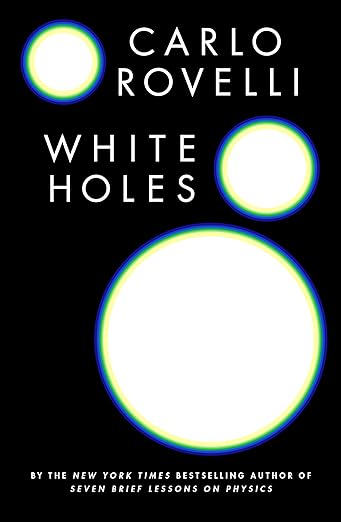
Back in my book on White Holes by Carlo Rovelli, the paradox of time was being explained:

white_holes

I can’t say I understood it all, but it was lovely to try:

“The reason we remember the past and not the future is entirely due to the fact that the universe was further from equilibrium at one point in the past than it is now.”

Whatever did that mean?

I read on about equilibrium, till I found something that I liked.

“The flow of reality is always more fluid than any of our frantic attempts to capture it might lead us to believe. Time is not a map of reality: it is a kind of memory storage device …”

I liked that. Time as a map of reality, or not?

No Trace Will Remain

I looked up trying to fix the concepts and the reality of my physical space at the same time. I noticed the many small ways in which we trust ourselves to those around us. It should all be organic, safe, slow, and yet in our quest for productivity everything has sped up. Watching barbers and hairdressers doing it all with confidence and aplomb in such a short span of time, was fascinating. 

Watching the people in the salon getting their hair cut with those cutting the n-th customers’ hair, while trying to understand the concepts of equilibrium and time is a strangely meditative experience. The son and I watched and read in turns. The annoyance of the long wait mitigated by the philosophies of being. 

“Sooner or later, every memory vanishes, canceled through the wear and tear of time. Sooner or later, of our proud civilizations, of everything that we have understood, of the words in books such as this one, of our controversies and of our desperate passions and loves…no trace will remain.”

“Would you come please?” It was our turn.

“Soon of our long locks of hair, no trace would remain!” I smirked to the son, and chin up, we made our way in.

At that moment where we are not in a black hole, or not reversing into white a hole, there is only the experience of time, and the trimming of hair.

127e22d1d2494032867770d78ef0335f_ComfyUI_20682_

Chance Encounters For a Magical Journey

🐕‍🦺🪷🦌🍀🐺❄️🐀🍁 The Deer Families 🐕‍🦺🪷🦌🍀🐺❄️🐀🍁

“Think we’ll see James and Lily today?”

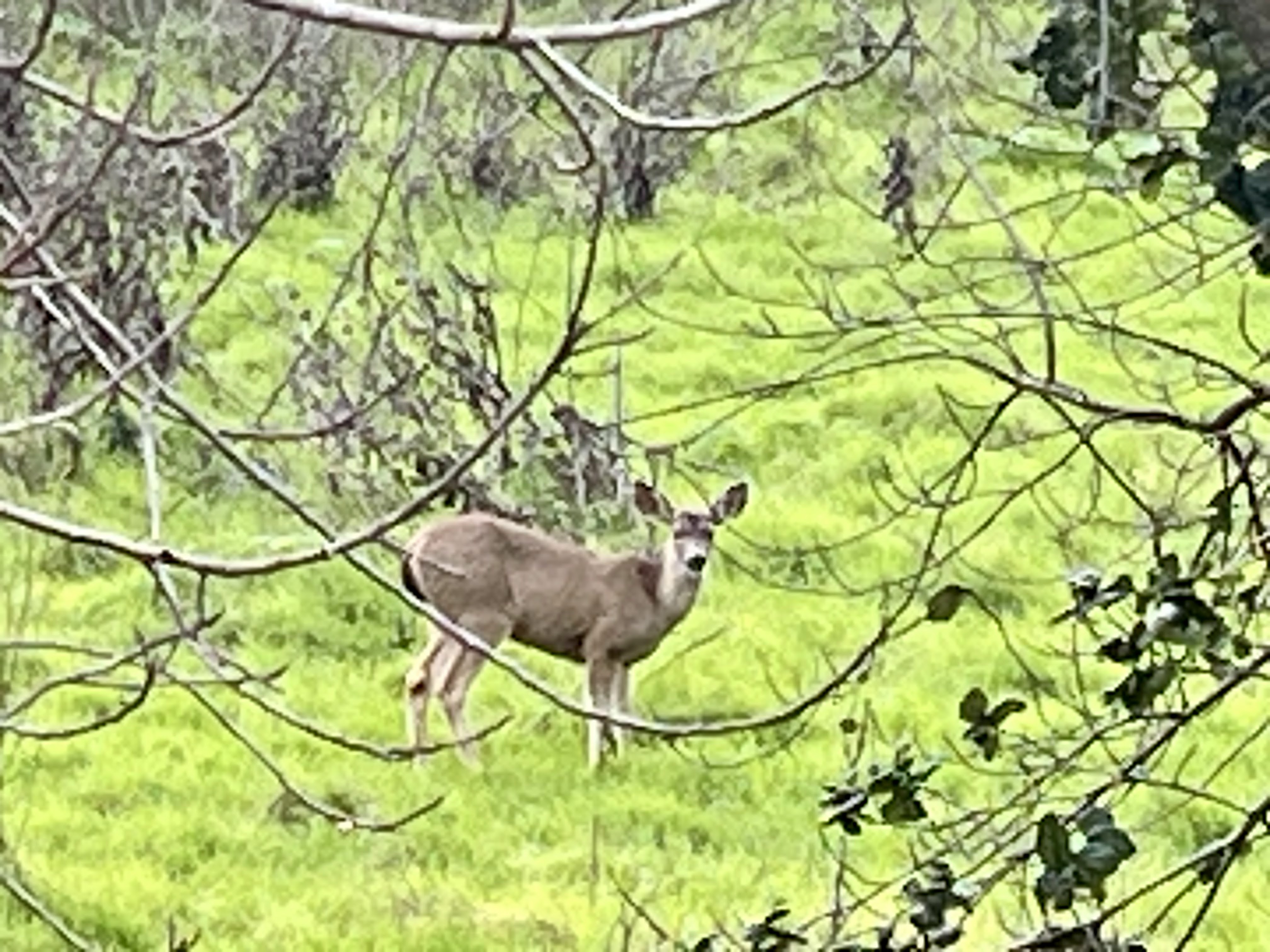
“I don’t know! Hopefully. It has been raining, so the poor things may have moved away, ” I said. We’ve christened the deer family near our homes. The mother and father are called Lily & James (I know!). Sometimes, there are several families – we call them all James & Lily. 

img_9619

We caught sight of them – much closer than they usually are, that evening, and exchanged a look so close up, it was … revealing, deep? (hard to pin down in one word). It isn’t often one gets the chance to exchange a deep searching look with a deer. It is a marvelous experience – and one we wouldn’t forget soon. Those brown eyes seem endless, and so full, it somehow fills up your being too. When poets write of moments feeling like eternity etc, I suppose this is what they meant. It could not have been more than a few seconds, and yet, the eyes spoke a language of eyes. 

Whenever writers talk about pools of emotion showing in the eyes, and the shapes of their ghosts flitting through their characters’ eyes and all of that, I am never sure what to think of it. Sure, it sounds brilliant and poetic, but can we really show all of that in one glance? Looking into the deer’s eyes was oddly satiating, and it was definitely more than words can try. 

Clearly the son was moved too, for he said, as soon as it left, “Do you want to talk to animals sometimes?”

I nodded. “That would be nice.”, I said

“What do you think they’d talk about?”

🐕‍🦺🪷🦌🍀🐺❄️🐀🍁 Understanding Animals 🐕‍🦺🪷🦌🍀🐺❄️🐀🍁

“I suppose it depends on the animals. Elephants have different concerns than pangolins. Bees, squirrels and ants – being more community animals may have similar concerns. But I think I’d like to know the range of emotions they have. Do squirrels have greed? Do ants have jealousy? Pelicans have been known to sacrifice themselves for their pod. “

Are there some emotions or behaviors that are completely unknown to man that our creatures possess? We know many animals feel love, despair etc. 

If a wolf is kicked out of its pack, it never howls again. 

– From the book, Sad Animal Facts – by Brooke Barker

“For instance, and we all know whales have complex legends in song format that they pass down. With all the skills of navigation, survival, and protecting required, I am sure they all have different topics.”

image-1

“I think I’d also like to see what kinds of things they keep in long term memory. I mean we know elephants have long-term memories, but what does that constitute? Just routes to water during times of drought or also towards betrayals etc. They must have some extraordinary lives and stories to tell then, isn’t it?”

He was nodding along. We talked about the size of their brains in proportion to their sizes. Brain ratio requires a separate post in itself, but there are so many fascinating things once you start looking into it.

For instance:

“An alligator’s brain weighs less than an oreo. “

– Quote from the book, Sad Animal Facts – By Brooke Barker

The alligator literally has the smallest brain to body ratio. Only 0.2 % of its body mass is the brain.

🐘 🐊 ⌘ Gajendra Moksha & Vishnu Sahasranamam 🐘 🐊 ⌘

This led to research on a few things about body to brain ratios, and curiously, the myth of the crocodile vs the elephant in Hindu mythology, Gajendra Moksha. It is curious how the myth pitted the lowest brain ratio animal against one of the wild animals with the highest ratios (the elephant). It is supposed to be a reminder to keep our egos in check. Gajendra finally relinquished his ego, and required the great god, Vishnu, to come in avatar form and save the elephant. 

Gajendra’s plea to Lord Vishnu is called the Gajendra Stuti and is the first stanza of the Vishnu Sahasranamam (the 1000 names of Vishnu) 

Please read: Post by Krishna2 on the Vishnu Sahasranamam  – this post helps us comprehend us the depths of Vishnu Sahasranamam

शुक्लांबरधरं विष्णुं शशि वर्णं चतुर्भुजं
प्रसन्न वदनं ध्यायेत् सर्व विघ्नोपशान्तये

śuklāṃbaradharaṃ viṣṇuṃ śaśi varṇaṃ caturbhujaṃ |
prasanna vadanaṃ dhyāyēt sarva vighnōpaśāntayē ||

We came home fascinated by all the different things we usually do not pay attention to – filled with wonder, and awe. Many of us have forgotten what it is like to have encounters with our fellow beings – sometimes, exchanging a glance with a deer is all it takes to take on this incredible journey. 

The multiplicity of forms! The hummingbird, the fox, the raven, the sparrow hawk, the otter, the dragonfly, the water lily! And on and on. It must be a great disappointment to God if we are not dazzled at least ten times a day.

Good Morning – By Mary Oliver, Book: Blue Horses

References: 

🐙The 🐙🐙Kraken 🐙🐙Sleepeth🐙

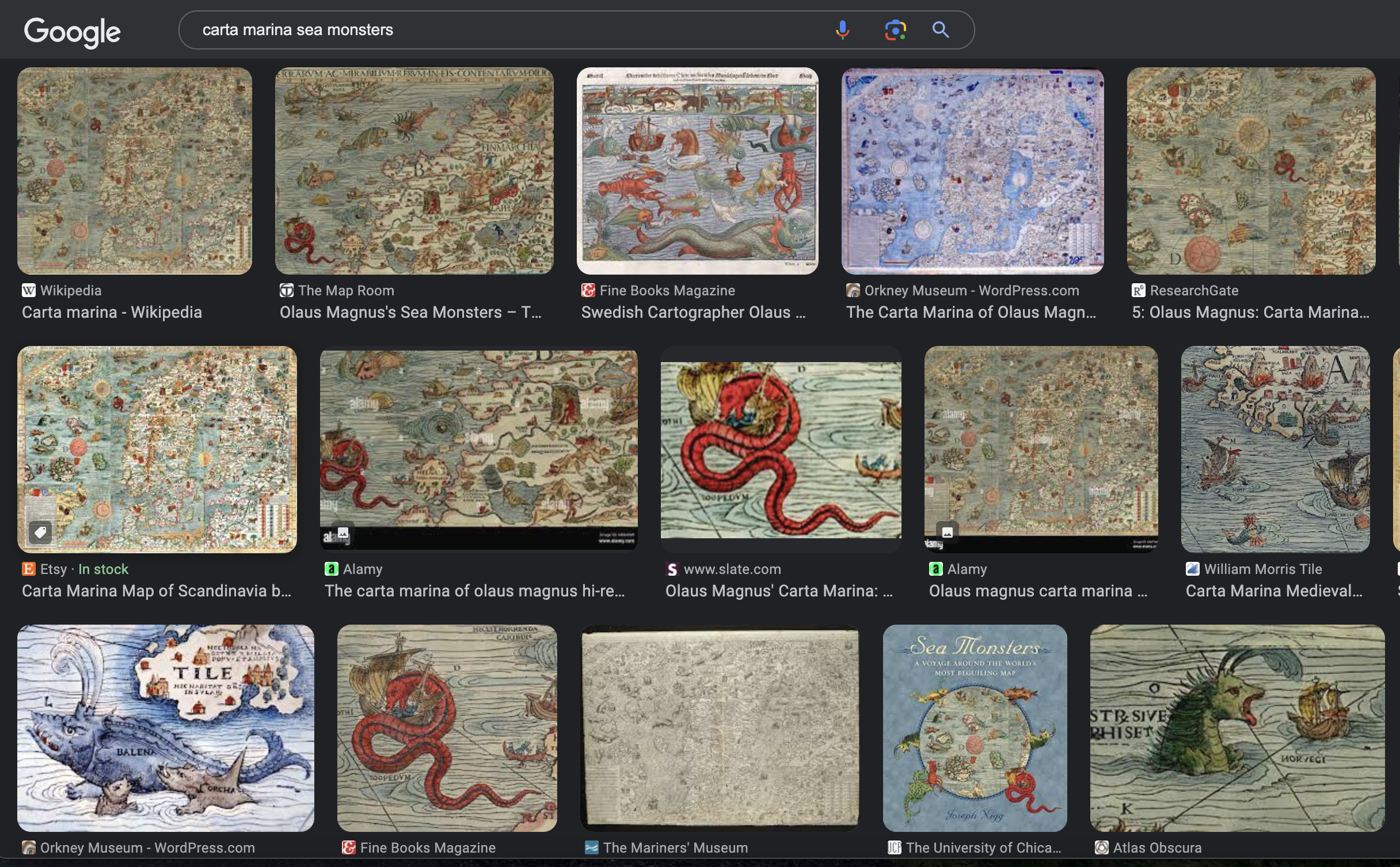
I don’t know how many of you have heard of the Carta Marina: I hadn’t and was agog after reading about it. It is a fascinating geological map showing the mythical monsters in the oceans and where they are to be found. 

Completed by Olaus Magnus in Italy in the mid sixteenth century, it attempts to outline all the monsters known at the time in the Nordic regions from various accounts. 

In the book, The Underworld – Journeys to the Depths of the Ocean – By Susan Casey, she writes about the Carta Marina:

“On land the action is orderly: tiny figures are farming, hunting, skiing, playing the violin, By contrast, the ocean is in chaos, awash in dangers and tragedies, livid with waves and currents flowing, swirling, pooling, seething. Aid the tumult, twenty-five monsters make their appearance.”

  • Susan Casey – The Underworld – Journeys to the Depths f the Ocean

I may have mentioned several times in these archives that the daughter is a mermaid born to human parents. Which is to say the endless fascination with the oceans, and natant joys of reveling in the waters are things we all enjoy. 

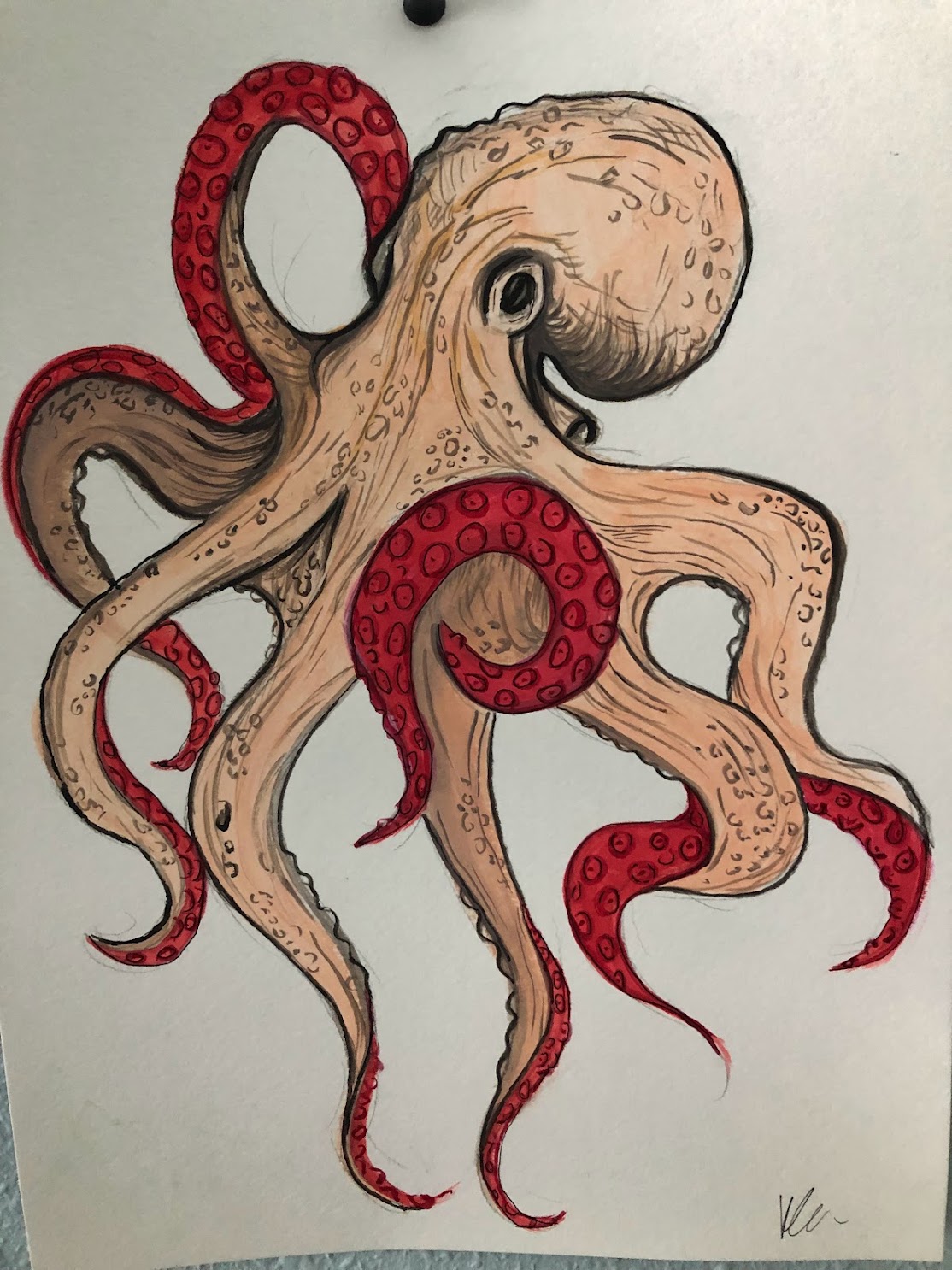
After reading about the Carta Marina, I went looking for the Kraken picture. When you browse through the daughter’s artwork, there are quite a few aquatic themed paintings. This one – it is Kraken – the mythical creature that is spoken of with awe among the nautical elite. I must admit I am endlessly fascinated with octopii, squid and I suppose the kraken  as well.

octopus

Dictionary.com summarizes this perfectly: https://www.dictionary.com/e/squid-vs-octopus/

In summary, if you see a sea creature with eight sucker-covered arms and a round shape, that’s an octopus. But if it’s got a long, thin, triangular shape and 10 limbs—eight arms and two tentacles—it’s a squid. If you see it swallowing a ship, it’s a kraken.

Sea-faring must have been a difficult vocation as most vocations in humankinds’ past seems to have been, but it also provided the richest tales of adventure and mystique to those whose fortunes or destinies never allowed them to leave the small square footage they’d been born and raised in. 

Screenshot 2023-11-13 at 6.48.32 PM

Even now, as we set out sights on interplanetary travels, I find the deep allure of the deeps as fascinating as ever.  Would we see into the eyes of a greenland shark that is rumoured to live on for 350 years or be pulled into the clutches of the mythical Kraken? Or be dumbfounded in the noises of the monster that rises out of the depths of the ocean in the FogHorn – By Ray BradBury (I believe the book is out of print – but I can never truly forget that feeling of deep awe and fear as the monster rears towards the lighthouse thinking it’s being called by a mate. I felt a strange sense of loneliness for the last monster standing the night I read it as a teenager)

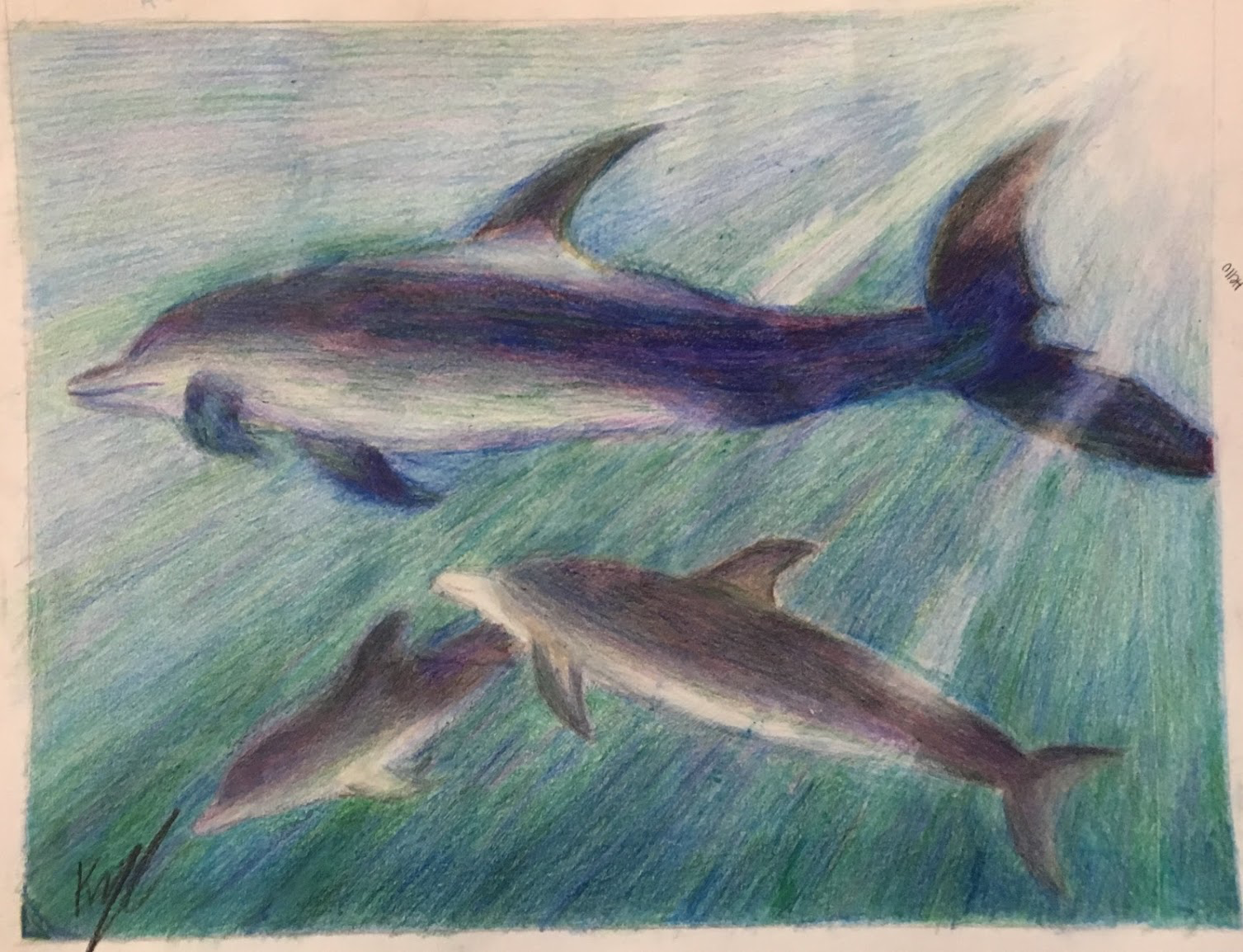
As Sylvia Earle says, “Looking into the eyes of a wild dolphin – who is looking into mine-inspires me to learn everything I can about them and do everything I can to take care of them…You can’t care if you don’t know.”

I looked at the picture, and remembered the poem by Lord Tennyson

Below the thunders of the upper deep

Far, far beneath in the abysmal sea,

His ancient, dreamless, invaded sleep

The Kraken sleepeth

– Alfred, Lord Tennyson

References:

  • Life in the Ocean – the Story of Oceanographer Sylvia Earle – by Claira A Nivola
  • The Underworld – Journeys to the Depths of the Ocean – By Susan Casey
  • The Carta Marina – The map of monsters 16th Century – By Magnus
  • The FogHorn – by Ray Bradbury

The Past, Present and Future of Jobs

“So, you work at a job that essentially takes away your own job?”, said the son.This is the kind of meta stuff that he finds exciting.

The Thanksgiving week-end was rife with conversations about the corporate drama that in yester years could be equated to the coups of thrones. Would the CEO go? Would the Board of Governors go? Would they both go? Who would be their replacement?

Last year the world popped their popcorns and watched the unfolding drama of an unraveling Twitter with Elon Musk and his hostile takeover of the company, now rechristened X, though the URL still points to twitter.com because the TFE team was probably let go.

This year, it seems much of the dramatic action came from OpenAI CEO, Sam Altman. In modern day Wall Street wars, CEOs, (or C-Staff) and the Boards of companies provide for much of the action. Will the market hold? Will the Sensex drop?

What happens to the interest rates?

One of our friends was explaining to the children about their own roles – technical roles in which they enable AI to be utilized intelligently. One was working on images, another on code frameworks itself. A niece who was majoring in biology told me how they were already being encouraged to use ChatGPT to generate code for them. They only needed to see the results of the datasets fed into the model.

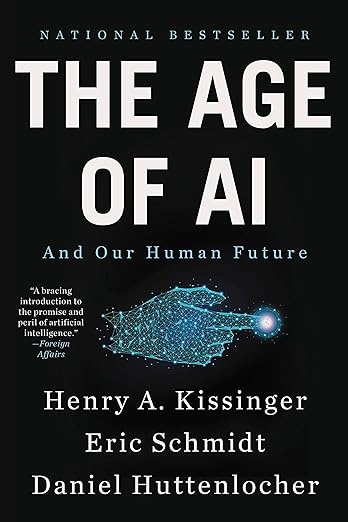
age_of_ai

Fascinating as it all was, I was left musing on the future of work. It seems a rather recurring theme of late. There are image generators to replace artists, code generators for software engineers, of course plenty of writing that can be replaced with intelligent prompting. So, why not the design and maintenance of these systems too?

I picked up the book from my recent library pile:

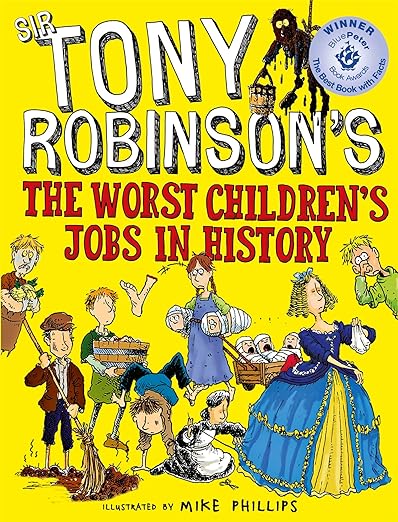
The Worst Children’s Job in History – Sir Tony Robinson

worst_jobs

The book was truly horrific and true. If anyone was wondering about the future of jobs and feeling glum, they could actually be grateful that the past nature of our jobs are well behind us.

Every job not only held misery, but a generous helping of walloping, not enough food, abysmal conditions, no thought for safety etc. Compared to those jobs, the present day conditions of occupying ourselves and our children seems fantastic. I only hope this trend continues for, our current nature of jobs is about to upended again.

It seems with the speed of technological challenges, the cycles with which our jobs are upended seems to be quicker and quicker.

A couple of generations ago, seamstresses, tailors, knitters, bat makers, ball makers, farmers, equipment handlers all saw their jobs upended by mechanization.

Then the next generation saw people’s fortunes needing more specialized skillsets such as coding, scientific knowledge etc.

Recently, call center jobs, desk phones, phones that were in the family room all went away, to be replaced by cell phones. Those of us who remember having to take a friend’s call in the living room with three uncles, five aunts, three cousins of varying age and maturity levels, two grandparents and a maid, will forever envy the children of today who quietly buzz out of vicinity taking their phone calls mysteriously with them. 

The next wave of AI seems to be disrupting industries that I’d hoped would not be. Creative industries that are already hard to make a living in: storytelling, image generation, writing, etc

Will our grandchildren read books about us in this era and feel sorry for us that we had to slave in front of our computers all day long to accomplish certain things, spend days getting tests done in medical labs to determine what was the matter with us?

What would the future of our jobs look like?

More importantly, in this quest for bettering the use of our time, do we hope to become at peace with who we are without being defined by what occupies our time? If so, maybe we should start equipping ourselves towards that, shouldn’t we?

Let me know your thoughts.

Books:

  • The Worst Children’s Jobs in History – Sir Tony Robinson
  • The Age of AI – Henry Kissinger

🍁Sauntering🍁,🍁Strolling🍁, 🍁Scrunchfesting 🍁

The son and I pranced into the house with our bouquet of fall leaves. We went for a walk to feel the nippy November air on our faces. While out there, we ran after leaves fluttering down in the winds, and indulged in the inevitable scrunch party. 

“No one saw us jump and scrunch in the leaves, Appa!” he said entering the house wind-blown and happy.

“Are you sure?” said the husband, accepting the beautiful bouquet of fall leaves from us, and giving it right back to me with a flourish.

“ I saw some neighbors scuttle inside looking dubious at the activity outside. You sure it wasn’t you two?” 

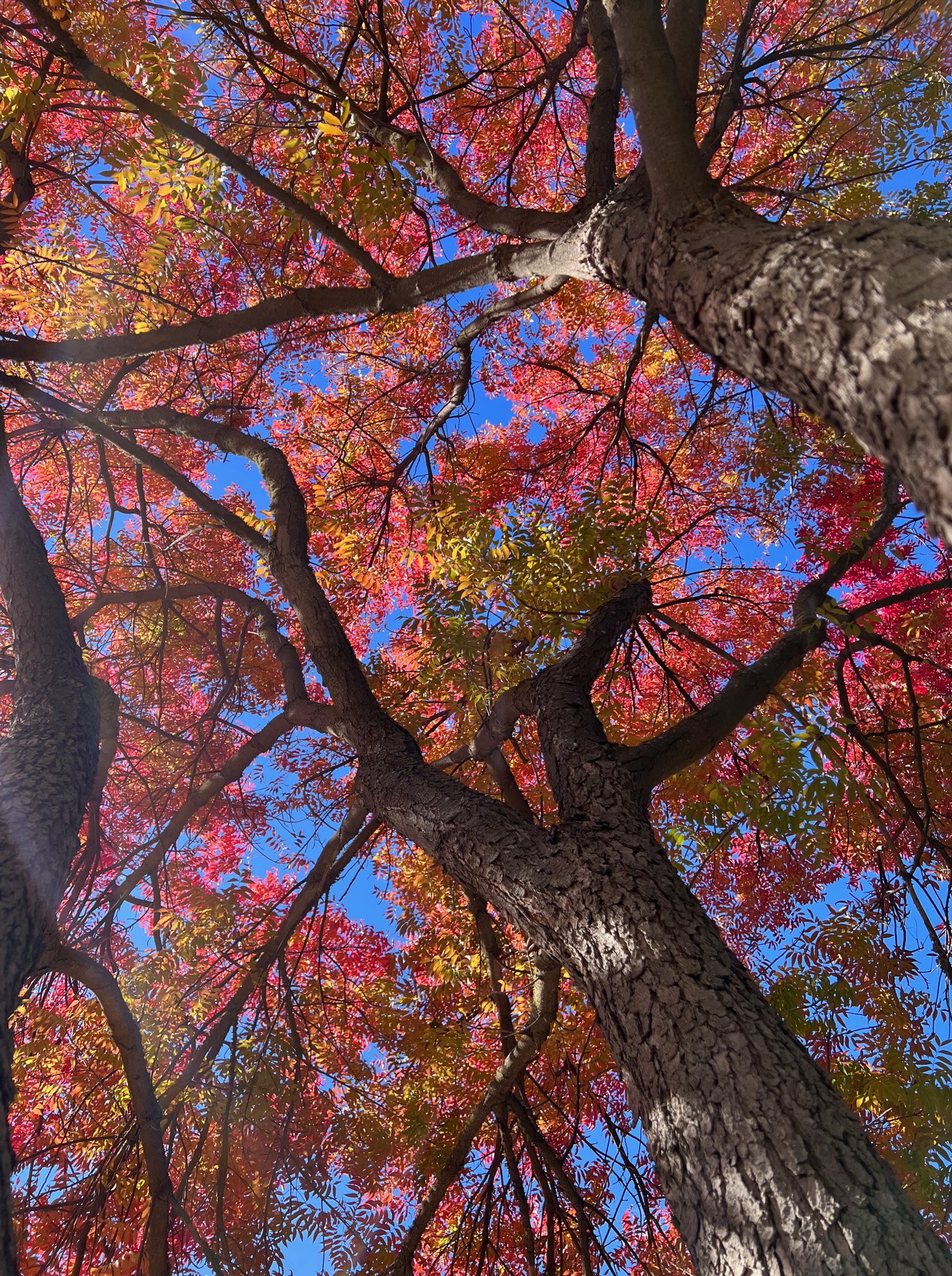
The son guffawed loudly at that. I scrunched up my face – but was too happy to care. Who could when you’ve just been able to look at views like this?

IMG_0506

Seems only yesterday we were ushering in 2023 and now we are already looking at the final curtain calls of the splendid trees before the closing of the year. As usual, if I throw my mind back the year felt differently at different points in time. Bleak, dreary, joyous, hectic ,the travails of aging with parental figures, friends, events, work, school, volunteer work and so much more.

There is a book called the Secrets of Infinity in my library – Edited by Anonio Lamua, it is a gorgeous book. It gets taken out and seen every now and then just for the sheer brilliance of the topics and the range of topics in them. But there is one thing the book doesn’t quite put the finger on: the feeling of infinity in the repeating seasons of the Earth, the different joys of each month. 

The Tibetan Infinity Knot and the Ouroboros come close in their symbolism – but one of more to do with our actions and therefore Karma and the other a destruction/creation paradigm. 

“So, how do the leaves turn color?”, I said with a flourish revealing the book Summer Green to Autumn Gold – By Mia Posada. The book’s illustrations managed to capture the natural beauties outside, and we settled in to read the book contentedly. 

We flipped the pages comparing the leaves we had in our precious bouquet to the ones in the book. The final reveal of the pigment colors gave us the different colors.

🍁Carotenids : the pigments for the orange and yellow colors

🍁Anthocyanins: the pigments that are responsible for the purples and reds. 

🍁Tannins: responsible for the brown color.

“Trees must be beings of infinity!” , I said sighing happily and the son rolled his eyes.