Stop and Look at the Snails

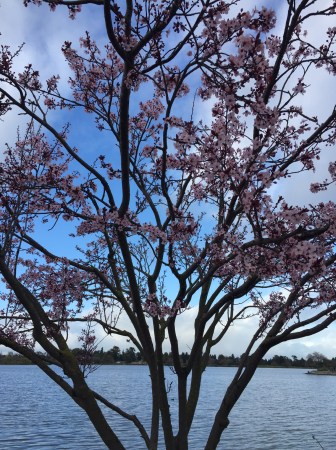
After enduring a particularly long spell of drought, we are relishing the rains lashing down on us this year. The clean, fresh air after the rain is one we relish. As the toddler son and I make our way to school every morning, our heart lifts at the marvelous rainbows, the cherry blossoms starting to bloom and the beautiful snails out on the roads.

img_5103

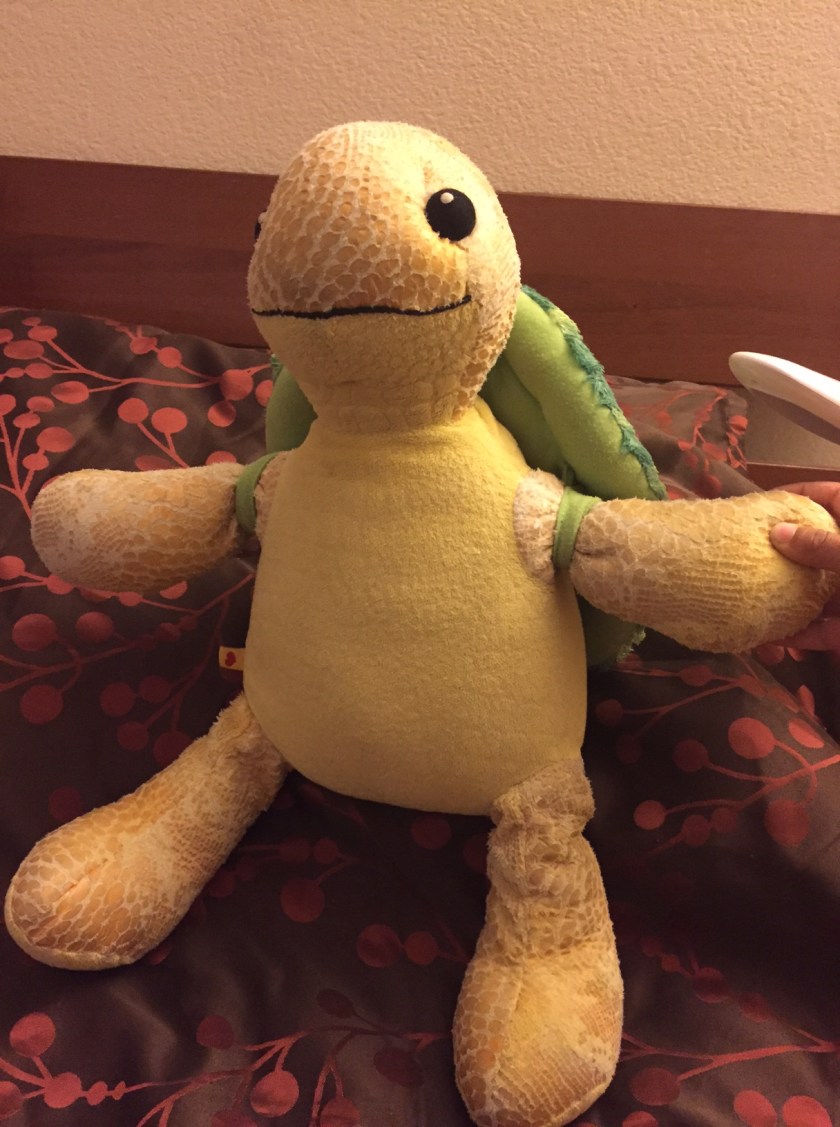
Sometimes, we come up with silly names for the little creatures we find on our path. Turbo the Snail is always a welcome sight. Earthy Worm invokes the same curiosity if not adoration. Toby Turtle is remembered with affection, and we wonder aloud how we can find ways to hobnob more freely with turtles.

Watching the snails leave a shiny trail behind them one rainy day, we squatted there wondering whether that trail left behind by snails is poisonous. That innocent minute squatting on the sidewalk looking at snails criss-cross our path raised so many questions. It looked to us like a snail could not get very far if it had to flee a predator.

Where do they live when it is not raining and can’t move?
What if we had slippery slopes for snails? said the toddler always keen to help.
Do only snails walk the slippery slope? (completely lost on the toddler of course) and so on.

pets


“Amma, we will be late! Hurry up.” said the conscientious fellow and we galloped past the snails wondering how much there was to do in the world, and how little we manage to do.

The thought that there is so much more to be done can sneak up at you in the most unexpected moments. Like the time I was reading a love story written by Alexander McCall Smith in the book Chance Developments. The story imagined the life of a young man in Scotland using a vintage photograph of a young man helping to change a car tire in the presence of a beautiful young lady in a cream colored coat.


In the book, the young man is taking a stroll around a loch and is fascinated by some plants that many ignored because they were believed to be poisonous, but he nibbles at them lovingly almost, since his father had tried and demonstrated to him that these particular plants were not poisonous at all. He had studied the properties of the plant, and traced the origins of the myth to a Celtic folktale, and though most tales started off with a kernel of truth, this one probably did not.

How is a story as innocuous as that supposed to make one feel like there is so much to be done? Because they are so many ways in which we can remain curious, to question the this-is-how-it-is-done-s of the world. The fact that we can bust one myth just by questioning it is good. And it proves that we pave the path for one more myth to be broken and then one more.

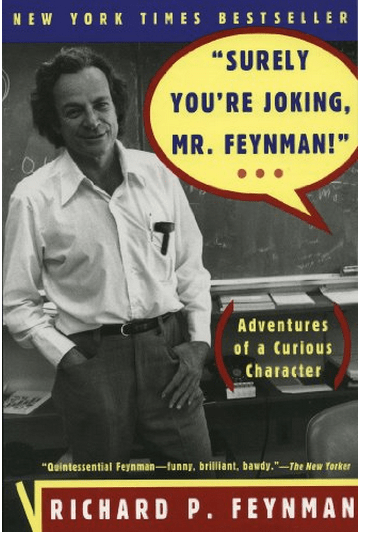
It has been a few years since I read ’Surely, You’re Joking Mr Feynman – Adventures of a Curious Character’ By Richard Feynman. I remember one passage in which the celebrated scientist talks of watching ants as they made their way around his backyard. Marveling at how they navigated obstacles placed in their path, and admiring the innate steadfastness of the species.

Screen Shot 2017-02-16 at 10.28.43 AM.png

The quest for knowledge can be a curious, interesting journey, if only we take the time to stop and look at the snails.

Richard Feynman on the Meaning of Life – Brain Pickings

Toby Turtle’s Lessons on Life

Toby the Turtle came home for a week. He was a much loved member of the family, and soon after helping to cook a meal would join hands with heroic forces to battle evil in Spiderman Vs Sinister Six wars. Toby the Turtle is the kindergarten classroom stuffed toy who comes home for a week to the proud Star of the Week. It is a great honor for the children, and I saw the kindergartener in our home puff out his chest and look important, as he carried Toby around. He loved having someone to take care of, and I must say Toby lightened the atmosphere in the house.

img_4965

We all seemed to like having the stuffed toy around, not least because of the change in pace, but also because Toby brought the class journal with him. Every child who had Toby had written a page or two about what they did with Toby, and how much they loved him.

“Toby is my friend.”, ” I wish I could keep Toby with me forever.” seemed to be common sentiments across all the pages in the journal, and I must say had I been Toby, I would have loved it.

In other news, I recently read a book on aging, Being Mortal: Medicine and What Matters in the End by Dr. Atul Gawande. Atul Gawande is a surgeon, and the book is a must read for all of us who must contemplate mortal life. The business of living with dignity, pride, compassion and meaning. In the book, Dr Gawande explores the process of aging using multiple examples, interspersed with his experience with his own father, who was also a surgeon. His father gradually loses his health, and despite his deterioration, was determined to lead life on his own terms.

Modern medicine has made phenomenal advances. Life expectancy has increased, and for the first time in the history of mankind, we have as many people under the age of 5 as above 80.

When something happens and people make it into hospitals, the attending surgeons and doctors will do everything in their power to ensure that they can save lives, and often let the near and dear know what the problem is, and what the medical options are, but not much more.

Dr. Gawande explains that it is up to us, as patients, family members or friends to ask and be equipped with the critical questions of living. Questions such as:

1. What is your understanding of your illness and how far along has the condition progressed?

2. Your fears or worries for the future

3. Your goals and priorities

4. What outcomes are unacceptable to you? What are you willing to sacrifice and not?

And later,

5. What would a good day look like?

Though it examines a serious subject, it is not a morbid book, and pragmatically looks at the problem of aging in the current medical system. There are lively portions that explore the elements of a happy life as much as it opens our eyes to mortality. Take for example: Bill Thomas’s effect on Geriatric care.

Dr Gawande talks about one scenario where Dr Bill Thomas, a director of a medical facility in upstate New York, was upset about the well-being of those in the geriatric ward. He being a quirky, brilliant gentleman, and felt that it was the lack of vibrant life around hospitals that is the cause for long term residents to suffer from boredom, loneliness and depression.

Having grown up on a farm himself, he petitions the management that the missing link was teeming life. After some work, he manages to convince the management that having some plants, birds etc would help people get better sooner. As soon as the nod came, he got busy, and before people knew what was happening, truck loads of living beings descended on the premises: Not a dog here and a cat there, but hundreds of parakeets, dogs, cats, rabbits, hens – a whole menagerie.

aging

The next few days were mayhem as nurses and doctors worked hand in hand trying to get the birds into cages and making sure there was someone to feed the birds and so on. The hospital was furious, nurses complained about having more to do as if caring for the old people were not enough. Administrators complained about infections, they complained about cleanliness.

But something phenomenal came about from the experiment: Patients who were uninterested and mute took notice. They would watch the birds, and weeks later would talk, and in some cases, patients cared for the birds, and whenever they could, took up feeding the birds. In time, it resulted in fewer health interventions. People were happier and general health improved. Every body liked having some being to care for.

(You can read the section of his interview here, though the book has the whole story)

http://nymag.com/scienceofus/2014/10/atul-gawande-on-being-mortal.html

Quote:

And it didn’t boil down to how the animals saved them. It boiled down the idea that people need to have purposes in their lives, and that you could offer ways that they could connect to them. That they could live for something larger than just being alive.

That is the essence of humanity. We need to care, we need to feel needed and wanted, and we need to feel empathy: whether we are 5, 40 or 80.

Toby the Turtle taught us that. Kindergarten teaches us about life in lovely ways.

Weaving The Sequins Of Time

This article was published in The India Currents magazine dated 17th Feb 2018: The Magic We Miss Every Night

Taking a drive up the mountains is always a nostalgic experience for me. Regular readers know I grew up in a small village nestled in the mountainside and every time I spot a pine cone or take in a whiff of Eucalyptus scented air, I get a gleamy look in my eyes that prompts the daughter to ask me for a story about my childhood. I comply almost gleefully and she sits back and imagines her mother as a little girl, a person who is vastly more interesting than the adult version. One loopy enough to jump across streams, build mud tree houses and make a wish against a shooting star.

I was thoroughly pleased to do that again during our recent visit to the Inyo Canyons. Not build a mud tree house, but to make a wish against a shooting star. One of the best things about going out to the vast expanses of nature that we urban dwellers completely forget is how the dark the sky is at night (duh!) and how many stars we can see against this backdrop.

We were blessed with remarkably clear skies during our time there, and we headed out bundled up like Eskimoes in Winter to see the night skies. We made our way up a winding mountain road that overlooked a vast plain thereby giving us a wonderful vantage point for seeing the skies. Maybe it was the enormity of what was in front of us, but it subdued our normally stentorian voices temporarily. We stood there in companionable silence for a while just gazing at the outer arms of the Milky Way (at this time of year, apparently, we do not get to see the whole Milky Way).

My, it is so dark – it can be lonely here, we whispered to each other after some time.

The stars tousled our hair gently teasing us : of course it is dark, what did you expect, and look up at us. You are not lonely unless you wish to be. You have a universe unto yourself. ( I have an idea brewing here: it may be laughably inadequate, but that has not stopped me from publishing before)

The sun groaned from the other side : Duh, everyday I give you the gift of night, you know?

For the first time, I saw Ursa Major or Big Dipper drawn large against the night sky, with nothing to impede its view. It is amazing how many different civilizations managed to study the skies in varying yet similar ways.

There is the North Star, that was known as the Dhruva Nakshatram  in the early days when the Indian civilization named it (Story here: https://en.wikipedia.org/wiki/Dhruva).

Can you see Arundathi? Did you know the story about Arundathi being a twin star to Vashishta and rotating around each other? That is why it is a wedding ritual.  Alcor & Mizar known as Vashishta and Arundhati. Really?

So it went.

The daughter rattled stories from Greek Mythology that we tried to find Indian equivalents for. The magic of story-telling under the stars came alive for us that night. Sirius barked and Taurus ran. The hunters belt was bright and gleaming, the Plaeidis cluster was there, the Seven sisters were being relentlessly chased by the Big Hunter, while the same Krittikai sisters raised Karthikeya in the plains of Indus Valley millenia ago.

sequins_of_time

Lest you run off thinking that the daughter has sat down with the classics and pondered the deep recesses of ancient cosmology, let me assure you that Rick Riordan and his Percy Jackson books formed the basis for the bulk of her knowledge.

The white cloud that we never really see in urban areas was visible – consisting of millions of stars, the cosmos probably is home to millions of Earths fostering life and intelligent lifeforms. I was reminded yet again of Carl Sagan’s words  about the pale blue dot.

pale_blue_dot.png

It is true, every tyrant, every usurper of power, every chaser of money, every person with cares in this world, should stand beneath the blanket of stars everyday, and look at our souls in a detached manner. See ourselves as specks in a dark world where the only place for us to find light is by looking inwards and capture the feeling of light in our hearts like Earth captures sunlight and warmth in its atmosphere.

As we stood there with the children bundled up in the cold on a mountainside overlooking a vast plain with the stars shining down, we saw in the distant horizon seven or eight shooting stars.

Magical moments come in various ways, sometimes it comes in the form of shooting stars, sometimes it comes in the form of a fluttering leaf falling upon you and other times it comes in the warmth of a lazy winter morning when all the world outside seems bleak, but you feel warm inside. Even these cold winters can be translated to a warm feeling that the Danish have a wonderful word for: Hygge. ( pronounced – Hoo-ghey)

Embracing Hygge – The Danish Secret to staying happy in the winter

It is the feeling of warmth and coziness even when the world outside is harsh and cold.

As Louisa Thomsen Brits, author of The Book of Hygge: The Danish Art of Living Well says, “It leads to a sense of a rich inner life that radiates out through bleak days.”

What better way to weave the little sequins of magical moments into the fabric of life?

The Boy Who Harnessed The Wind

Every now and then, there arrives a book that is designed to knock the sails out of your windpipe. William Kamkwamba’s journey to build a windmill and uplift his community is one such. It is the true story of a poor boy in Malawi.

boy

I bought the book a while ago, and it lay languishing on my tsundoku pile. Maybe, there was a purpose to the book. The book needed to be read at a time when I most wanted to reassure myself on human potential if only we choose to apply it for good.

The only son, among eight children, of a poor Malawian farmer in Wimbe near Kasungu, Malawi, this is a true story of William Kamkwamba.

The book started off slowly talking about tales of magic, witchcraft and sorcery in Africa. As you read about William and his journey, you cannot help getting absorbed into the life around him with good natured understanding. You like his dog, Khambe, and his friends, Geoffrey and Gilbert, who show themselves to be the kind of stalwart friends you wish your children will grow up to be. Kind hearted, supportive, fun and ready to lend a hand, always.

When, famine hits Malawi, William Kamkwamba is forced to drop out of school, it is crushing to read how his father felt and I wish no parent should have to face that in their life.He writes about how his family struggled for months with nothing but a few nsima cakes between them to eat everyday. Everything we tell our children about starving children in Africa is true.

During those long hours of working in the fields to do their best to see if they can fortify themselves against another famine, it is William’s dream to build a windmill that keeps him going. William had seen pictures of a windmill, and given that his little village is always blessed with wind, he wants to build one, so that water and electricity can mitigate another famine. He is called misala (crazy) for haunting the trash piles to find something reusable to build his windmill.

After months, of scouring trash piles and junkyards, using tools that would not pass any safety standards laid out in the West, it is a proud moment indeed when finally he connects his rickety windmill to a tiny light bulb.

img_4243

The windmill is noticed by a school official who notifies a professor and a blogger. From there to TED Fellow in 2007 is a remarkable journey for a boy who had never set foot outside his little village in Wimbe.

When William is finally called upon to talk at the TED conference, he is justifiably nervous. His English is poor among other things, and to make it easier for him, his host on stage, Chris, prefers to ask him a few questions that he can answer instead:

My heart beat fast like a mganga drum as I climbed the steps to face the audience, which totaled 450: inventors, scientists and doctors who’d stood on that stage in the previous days.

Five years ago, you had an idea”, Chris said, “What was that?”
“I want to made a windmill”. Wrong again. Chris smiled.
“So what did you, how did you realize that?”
I took a deep breath and gave it my best. “After I drop out of school, I went to library…and I get information about windmill…”
Keep going, keep going…”And I try and, I made it.”

The problem with reading a book like The Boy Who Harnessed The Wind on public transport is that it is takes phenomenal effort to keep from tearing up. You can manage a silent tear that just needs to come out, and one that you can unobtrusively wipe away as if some dirt got in there. But if the book goes on to make you want to weep not out of despair or sadness, but out of pride, joy and the eternal good-ness of mankind despite everything, that is hard to do.

Some pictures from the book: The image of his prototypes, his big windmill and one of his parents after he was able to harness the energy generated from the windmill to provide clean drinking water and electricity in his village.

Unfortunately, for every William who is outstanding in perseverance, grit and intelligence, there are thousands of williams who flounder in the stormy tempests of life. Every time I am caressed by the wind during this Thanksgiving break, I will know what to give thanks for. Thanks to William Kamkwamba.

I try, and I made it.

Please watch the TED talks, even if you are unable to get to the book:

TED Fellow William Kamkwamba

Oh Snap!

I attended a conference last week, a vast sprawling area brimming with people having an analytical bent of mind, or at least that is what they do for a living.

It was wonderful, for many reasons: It not only provided a good change of pace for me, but it also helped me cope with the post election disbelief by observing vast numbers of people from different parts of the country.

Before one of our trainings, our instructor put up a hashtag on the screen and requested everybody to tweet with that hash tag, so we could analyze the data coming in for that hashtag for the exercise.

For our convenience, he was also streaming the tweets as his code picked them up. For a hall containing at least 200 people, the tweets were trickling in. 5 and then 10 and then a plateau. After some time, another few.

The instructor then showed us how he was going to analyze this data and when he tried to pull up the dashboard he had created for the purpose of the training, the server went down. As it turns out, the instructor was embarrassed, obviously, that his carefully prepared presentation ran into a glitch in this uncharacteristic manner, but he had a Plan B, and going by the way he conducted his training, probably had Plan C, and D. Competence and Determination. He took a derogatory stab at himself, got a laugh, and moved on. He chose instead to recreate the dashboard from scratch, so we all get to see how it is done, instead of showing us the finished product.

The person right next to me, pulled out his phone though, and tweeted the hashtag almost instantly saying “#Hashtag Demo not working. Not Cool.” I was sitting right next to him , so I could see his tweet. I also remembered that he had not tweeted when the instructor asked us all to tweet so that he could get a dataset, but when it came to calling someone’s failures out, he was more than willing to do so.

That is human nature. We all suffer from it. So, I am not blaming this person by any chance, but rather hoping to use this as a call to introspection. Are we so quick to judge that we are losing our ability to empathize just because we now have the power to quickly voice our opinions? That could have been us fumbling when the server went down unexpectedly, couldn’t it?

I was reading an article in which President Obama warned us in a similar manner about snap judgments that social media enables us to make:

Obama, without directly naming Trump, appeared critical of the political discourse in the United States, saying social media has made it easier “to make negative attacks and simplistic slogans than it is to communicate complex policies.”

Obama-Merkel issue joint rebuttal to the coming era of Donald Trump

Every tool has its place, but if we attempt to mow the lawn with a kitchen knife, it will not work. I cannot help thinking of our gardeners, who in my mind have magical abilities, get things done quickly and efficiently, while I blubber and fly rudderless because I do not use the right tools for the job. (Divine Intervention of the Gardening Gods)

mow_the_lawn

Now is the time for all of us to tap the critical thinkers in us, to read extensively, to seek the truth and take up the job of providing a voice of reason. All of us know how distorted our consumption of information can be. Sites like Snopes.com have their work cut out for them in the age of social media.

Snopes.com Check Facts!

P.S: I loved Angela Merkel’s measured response to Trump’s victory:

Angela Merkel in her note to Trump offered cooperation reiterating that cooperation should be based on “a common platform of democracy, freedom, advocacy for human rights all over the world and championing the open and liberal world order.”

After all, we all may have to pack up and go to different planet soon (in which case we are all in the same boat regardless of race, creed or gender.)
Stephen Hawking’s prediction that humans have at best 1000 years in which to find another planet to inhibit

The Sun Shall Rise Again

I wish I could have captured the toddler son’s reaction to the election results. He burst out crying and sobbed that he did not want President Obama to go. “He has been the President my whole life!” he sobbed. That is true. The little fellow has since picked up a book on Barack Obama from the library and has had it read to him every night.

“Amma – stop over-reacting. Why are you so sad? It is fine.”, said the daughter, seeing me mope around with drooping shoulders. I was reading a Children’s book called ‘Night World’ by Mordicai Geistein, and my mood matched the illustrations in the book.

I am not able to shrug it off in my usual manner, because this time it feels personal.

What I am about to tell you happened all of 20 years ago. I was selected to become the first female General Secretary of the Department in my college in my final year. It was not exactly an earth shattering position, but enough to cause a stir in the conservative community.

I took my responsibilities seriously and went out of my way to find someone note worthy in the industry to come and give us a talk for kicking off the year. I myself prepared a speech simply dripping with quotations and positivity, exhorting us all to Dream Big, Achieve High, Reach For Stars and so on. Einstein jostled with Jawaharlal Nehru, Ramanujan and C V Raman.

Some stalwart friends (both boys and girls) helped me with the various tasks associated with this event. A large auditorium was booked, flowers procured for chief guests and professors, some of the folks with the best singing voices were to ring in the August Assembly and wrap up with a hearty chorus of the National Anthem. It seemed to me that it was going to be a function fit enough to ring in a new year of hard work, and success.

What I neglected to do was order sufficient food for the gathering, and here I accept full responsibility. The truth is that I had simply under-estimated teenage appetites. I assumed everyone will be content with half a biscuit and a whiff of tea. But that apart, time and venue were printed out and sufficiently publicized in the college, professors reminded their students in the classes and smiled at me when they told me that they had told their respective classes to attend, and how they themselves will be there with their bells and whistles on. The Principal himself came out for the event. All very noteworthy.

I must say everything went well except for one glitch: Not a single boy turned up for the event. Minutes before the Chief Guest was to arrive, a boy in the first year came and told me that he had been told to inform me that all boys were boycotting the event because they were biffed that the ‘prestigious’ position of General Secretary of the Association had gone to me, a girl.

My crest fallen face evoked sympathy from the poor fellow and he left looking miserable and determined. That boy went on to become a friend in time, but then I could not bear his looks of sympathy. Tears stung my eyes. I turned away from him. I told myself that I must brace myself and got on stage. Great leaders instead of romping on stage with their inspirational quotes simply waddled up there like dispirited ducks on sewage water.

When the Chief Guest was speech-ing away about Networks and Protocols, a few of the more decent fellows made an appearance and lurked at the back entrance so it would look like they came but also would not look like they had overtly supported me. Obviously, that boy must have told the other boys how crushed I looked.

Twenty years on, the humiliation still rankles. What I wanted to do most was to take off the next day, week or month, and possibly burrow myself in a hole. But of course, I knew I had to face this problem head on. So, I made my way to college the next day determined to find out what the problem was. Had I done something to upset all the boys? Were all the boys upset with all the girls? Or just me?

The previous year, I had been the first Associate Secretary, and that time there did not seem to be dissent of any kind. So, this was truly baffling. Had I done something wrong? When I holed some fellows in my class, who were decent enough to look abashed the next day for staying away, and then making a half hearted appearance, they told me, that the Boys did not really mind me being the Associate Secretary because that involves a lot of work, and not much recognition. But the General Secretary was quite something else, I was told. There was recognition here, and that was what they could not bear. They felt recognition should not go to a girl.

Who could not bear? I asked. But all I got out of them was that ‘They’ felt that way.

I pushed on. Can you not bear?

‘No no’, – they quickly assured me. ‘We like you, but we were told by Them not to go. You understand? ‘

I told them I didn’t.

Twenty years later, America has done the same thing to Hillary Clinton, and I still do not understand it. The pain is raw. The wound still stings. I am sure there are plenty of women out there who have things in their past that hurts the same way, and for those people I offer solidarity.

I sighed a bit and continued reading. I turned the book over to the last page, and like President Obama said, The Sun Did Rise Again. In the book at least.

IMG_3697.JPG

If

We had been to the East coast to gulp in the beauty of the fall colors before the trees were stripped bare for the Winter. I marveled at the beautiful tapestry that nature had laid out for us. The greens, golds, yellows, rusts, oranges, reds and browns blended together beautifully to please the eye. The same patch of forest looked beautiful in the different lights of day. The color of the skies above, the intensity of the sunlight, the shadows of the scudding clouds above, all painted marvelous pictures and nature soothed in a way that it has always done.

A forest is beautiful to look at. A forest in fall colors is brilliant to look at. The diversity in colors is mind boggling, and it all pieces together beautifully in a marvelous tapestry. It is the differences in color that make it glorious.

An artist’s palette is made more vibrant with different shades.

As much as we all like everyone to be like us, it is the fact that we are different that makes the world a beautiful place. It is the disappointments that should propel us forward.

I am distraught at the person America has chosen as its President elect. I am trying to find solace in the words of Carl Sagan on Earth:

Look again at that dot. That’s here. That’s home. That’s us. On it everyone you love, everyone you know, everyone you ever heard of, every human being who ever was, lived out their lives. The aggregate of our joy and suffering, thousands of confident religions, ideologies, and economic doctrines, every hunter and forager, every hero and coward, every creator and destroyer of civilization, every king and peasant, every young couple in love, every mother and father, hopeful child, inventor and explorer, every teacher of morals, every corrupt politician, every “superstar,” every “supreme leader,” every saint and sinner in the history of our species lived there-on a mote of dust suspended in a sunbeam.

screen-shot-2016-11-14-at-1-56-32-pm

Now, more than ever before, is the time for all of us to come together and become heroes in our own ways. I felt this was the right time to read Rudyard Kipling’s poem ‘If’ to the children.

If you can keep your head when all about you   
    Are losing theirs and blaming it on you,   
If you can trust yourself when all men doubt you,
    But make allowance for their doubting too;   
If you can wait and not be tired by waiting,
    Or being lied about, don’t deal in lies,
Or being hated, don’t give way to hating,
    And yet don’t look too good, nor talk too wise:
If you can dream—and not make dreams your master;   
    If you can think—and not make thoughts your aim;   
If you can meet with Triumph and Disaster
    And treat those two impostors just the same;   
If you can bear to hear the truth you’ve spoken
    Twisted by knaves to make a trap for fools,
Or watch the things you gave your life to, broken,
    And stoop and build ’em up with worn-out tools:
If you can make one heap of all your winnings
    And risk it on one turn of pitch-and-toss,
And lose, and start again at your beginnings
    And never breathe a word about your loss;
If you can force your heart and nerve and sinew
    To serve your turn long after they are gone,   
And so hold on when there is nothing in you
    Except the Will which says to them: ‘Hold on!’
If you can talk with crowds and keep your virtue,   
    Or walk with Kings—nor lose the common touch,
If neither foes nor loving friends can hurt you,
    If all men count with you, but none too much;
If you can fill the unforgiving minute
    With sixty seconds’ worth of distance run,   
Yours is the Earth and everything that’s in it,   
    And—which is more—you’ll be a Man, my son!


When the materialistic society around us automatically glorifies money, we can use the moment to say that money does not equal dignity, money does not beget culture, money may earn you servitude, but not loyalty.

And point to the example in The White House.

The Cry of Natural Symphonies

Regular readers of this blog know what a pesky cricket I can be when it comes to babbling about nature. If I see one of those news articles about hippos dwindling in number, I grieve.  The day I saw a ninety foot tree logged in our neighborhood, I grieved. I had seen the number of birds that roosted in the tree every evening as dusk fell, and I felt that we lost out on all that natural chitter for no good reason.

I moon about hills and flop around pictures of beautiful Mother Earth and all that in spite of negligible botanical and zoological knowledge. Ducks and Canadian Geese I will bucket as one, hippos and rhinos I draw about the same (one with a horn and one without).

I am also one for natural sounds – I like to listen to the cascading brook or the patter of the rain. I like to be able to say, “Coo! Did you hear that blue kingfisher? Easily distinguishable by that rich guttural sonic burst.” So, one can readily imagine why I picked up a book called ‘The Animal Orchestra’ by Bernie Krause. I must say the book was a revelation of sorts.

screen-shot-2016-10-06-at-8-48-46-am

Most of us have an idea about the damage we are wreaking on Earth. We are aware of over population, we are aware of shocking deforestation and we are aware of global warming. What this book gives us is another perspective to the problems that face Earth.

Bernie Krause is a musician who has since turned to recording the natural sounds around him. He has recorded the forest areas before and after selective logging operations, he has dipped his receivers into a coral reef to hear the natural sounds, he has recorded in the depths of the rain forest, and the great barren deserts and the frozen tundra.

I have written about Biophony before with a link to Bernie Krause’s recording on NPR before: https://nourishncherish.wordpress.com/2015/01/14/cacophony-for-biophony-socialization-for/

Recording:listen-as-a-california-forest-grows-quiet-over-time/

Birds
Birds

What Bernie Krause finds with his recordings is that the human touch affects biophony in unimaginable ways. You can hear some of his recordings at thegreatanimalorchestra.com. Even if unable to read the book, please try to listen to some of the sound tracks on the site. It makes for an enriching experience.

There are a number of passages in the book that I can go back to re-read any number of times. One such passage is the one where he refers to a beaver recording. In a remote lake in Minnesota, some wardens of the preserve, blew up a beaver dam killing most of the beaver young and females. The recording was taken later that evening, and describes the sounds of the grieving beaver male. He says that to date it is the most heart-rending sound he has ever heard made. A poignant sadness to it that the most heart-rending human music cannot even come close to.

Or of the time he describes the sonic variances between the sounds of orcas in captivity and the sounds of the pod from which the orcas were captured in the wild. The ones in the wild were always “filled with energy and vitality”. While the captive vocalizations were “palpably lethargic and slow”.

He talks off a recording he took where a logging company resorted to selective logging i.e. deliberately taking a few trees here and there so as to not disturb the ecosystem much. However, the sounds recorded before the logging operation and after have perceptibly changed. The pictures taken later show a fairly decent rebound of the wilderness, but the biophonic recordings  give us a different perspective – the more disturbing and truthful perspective. Though the area looked wild enough, the great natural symphony never bounced back.

From a BBC program titled ‘A Small Slice of Tranquillity‘: There were certain sounds such as breathing, footsteps, a heartbeat, birdsong, crickets, lapping waves, and flowing streams that people described as tranquil. Researchers demonstrated that such sounds stimulate the limbic system in the brain, resulting in the release of endorphins and a feeling of serenity. The program says that tranquillity is an elemental acoustic foundation upon which we can rest our mental processes.

By definition a tranquil area is one that is this many miles from the nearest road, away from the sonic boom of aircraft etc. In the 1960s UK had more than 40 tranquil areas, now there are less than 5.

Bernie Krause concluded that  the book on a note that I cannot help agreeing with. He says that he is asked almost at the end of every lecture what we can do to help preserve our remaining natural environments. He says: “It’s easy: leave them alone and stop the inveterate consumption of useless products that none of us need.”

What is Time?

The toddler son has always been a little preoccupied with Time. He buzzes around asking me the time every so often. Initially, of course, I did the square thing and checked the watch and told him. Soon, I realized that I could check the refrigerator, count my tomatoes, and just blurt out an approximate time. Then, I realized that he did not need the approximate time either – he just needed a number. (I tried time-to-sleep, and time-to-eat, but he did not accept that answer. He did, however, accept 14 o’clock, 14:52 – but not 14.)

The little fellow, like most children, is a question-machine. He asks why there is no half sun, why the dinosaurs died, how he came back to life to spend the day with Danny, why the flowers dried, why his sister came to the World earlier than him. What is dish – (You can eat a dish and put mammum (food) in a dish?), how to see if water reached a particular spot in the water-hose, what is before zero, how do tree roots drink water (Thank goodness, my biology teacher was not there to hear my answer.)

Dinosaurs can come back?

Sometimes, I give him an answer that is in essence correct, but otherwise useless. Like the time he asked me how to make water. (You take two hydrogen atoms, combine it with an oxygen atom and you will get water.) He looked at me puzzled and drank his water. So, I am drinking three water, but there is only one water? I never learn I tell you. After that rash answer, I spent a few trying minutes laying bare my ignorance in Chemistry for all to see.

One time, at the end of a 16-hour long day, we lay there savoring a children’s book together. I told him that it was his sister’s favorite book when she was a baby and he lapped it up. At the end of it, we both sighed contentedly and I told him it was time to sleep. That was when he crinkled his brow, and asked me what is Time. I must have looked perplexed for he went on: “You rember when I was eating applejacks cereal in the morning, you said Time is going? I want to go yesterday.”

If I wasn’t lying down, I would have gone. I am guilty of hustling the fellow when he is relishing his ‘applejacks cereals’ over breakfast, but mornings are a bit rushed in the household and my train won’t wait.

He looked serious and a bit frustrated to see that I had not grasped his simple question. “I want to go yesterday!” he repeated slowly and a bit louder than before. I know that on his timeline things that happened a decade ago qualify as yesterday, so I asked him why he wanted to go to Yesterday.

His answer to that was simple enough. He wanted to see his sister as a baby. I had to dash the fellow’s hopes. There were photographs I could show him, stories I could tell him of her babyhood, but no, he could not go back in time.

Then, he asked me why time only goes forwards and not backwards.

This is when you see me mop my brow. I tell you, I am no physicist. His questions are steadily chipping at whatever Science I have managed to grasp over the years, despite my teachers’ best intentions.

What? How? Why?
What? How? Why?

I barely understand time now. It is ethereal, and deceptive. I feel like I am spending enough time during the day enjoying the present, yet, here we are already confusing the Fall season with the sunshine that is Summer’s trademark. I seem to remember helping the fellow take his first steps and now here he is asking me for explanations that are dubious at best. If every day does not seem to fleet past, why do the years flit by?

How come I forget the name of the person I met yesterday, but remember the names of my friends from when I was 5 years old?

It is all most intriguing I tell you.
https://www.brainpickings.org/2015/09/22/the-quantum-and-the-lotus-riccard-david-bohm-reality/

Where To Go During The Third World War?

We had been to attend The Physics Show a few weeks ago. Living in an area housing the world’s most frightful technologists does that to you. One scientist tells his neighbor, who tells his friend, an engineer, who tells his friend, a Biochemist, and from there it passes on from one to another, all bound together by the loose brackets of a parent. Before long, there is a list of folks beating it up the hill to The Physics Show. If you peered closely at that hill, you would have seen me there with the daughter and some friends. I can’t fool the public into believing that the Opera and Broadway are competitors, but the general populace was surging to the show.

The Auditorium was atop a steep hill, and the populace was huffing and puffing like Po the Panda stopping for water breaks every now and then. I felt like I was on a strange padayatra (Journey by Foot) to see a Gingko Tree, growing amidst a grove of Japanese Cherry Blossoms, atop the Great Wall of China. The holy path only required one to sprinkle a few drops of the holy Ganga-jal along the way, to make the ritual complete.

Pada Yatra to see Gingko Tree amidst Grove of Japanese Cherry blossoms on the Great Wall of China

The populace making their way up the hill were mostly enthusiastic folks of Asian descent: Parents of Chinese, Japanese & Indian descent with their reluctant progeny.

The show by itself was reasonably good. The scientists did their best to enthuse the children. “If you can’t have fun doing Physics, you can’t be having much fun doing anything!” they boomed on stage. All the parents laughed heartily and clapped at this, while the 5 year old boy sitting in front of me turned and stared at me as if asking, “Really?! You can laugh at this, but not at the Tom & Jerry show I was uprooted from for this lark?”. It looked to me like he was having a lot more fun ogling at these specimens who laughed for that joke, than anything else. I detected a judgmental gleam in his eye, and did my best to cope with it by ignoring him and enjoying the atmosphere instead.

I scanned the crowd to see the number of children in the 5-7 age group. There were even a few 4 year olds and I hoped they were taking one for the sibling and not because parents hoped that training started early.

The scientists talked about Electricity, Temperature and Atmospheric Pressure. But the best attempts to educate drew the biggest engagement when the team on the stage fried themselves deliberately or made their hair stand up. It was hilarious to see the hopeful expressions on the faces of the well-intentioned parents, while the children enjoyed the parts of the show that looked like circus performers out at tea-time.

A few days later, the daughter and I were out and about sauntering around the neighborhood. The waning summer had few butterflies and we made them proud by flitting from one topic to the next. We were talking about progress, science, the European refugee crisis, the recent fires, dodo bird extinctions and so on. The gentle Dodos helped me steer our conversation onto humans and humanity’s path and how our Scientific progress always has a good and a bad fallout. I told her about what Albert Einstein said, “The Fourth World War will be fought with sticks and stones!”.
I went on to tie the plight of the Syrian refugees to explain how civil unrest, war etc always lead to horrifying effects on people.

“So, Albert Einstein said that the Third World War will wipe out everything as we know it right? So, then we are okay isn’t it?” she asked, her face crinkled with worry.
“Alas! Even if it is a big bang annihilating life in the end, the hurtle towards that instant itself is a long and difficult journey involving much heartbreak and agony. It will be a long drawn out affair with millions of people losing their loved ones, suffering with injuries and wretched atmosphere of fear, uncertainty and anxiety.” I said. .

The daughter was quiet and somber. A rare occurrence.I did not relish this Doomsday Scenario either. We walked in silence for a minute.
“Well then the only way out is for people to go to Oregon then.” said she after a few moments in a final sort of voice..
“Eh?! You mean the state of Oregon?”
“Yes” she said. “Oregon – above California.”

God knows I have braved enough conversations, but this still had me stumped. “Why Oregon?”
“Well. Only there you can kill yourself legally, and put an end to misery right?” said the daughter.

Enlightenment dawned. A few days before this, we had been discussing the case of Brittany Maynard (http://www.cnn.com/2014/10/07/opinion/maynard-assisted-suicide-cancer-dignity/) and we told her about Euthanasia and how it was legally allowed in the state of Oregon.
https://en.wikipedia.org/wiki/Euthanasia_in_the_United_States

So, if ever there is a Third World War and a lot of people are suffering, you know where to go.

Glad to have that straightened out.