Why is our sky not green?


Listen on Spotify – Narration by the elementary school going son https://spotifyanchor-web.app.link/e/2DSnHpVohsb

The elementary school going son, like many children his age, pulls a full why-wagon with him wherever he goes. The questions tumble out with ease, and can be anywhere on the spectrum : 

They are all fair game.

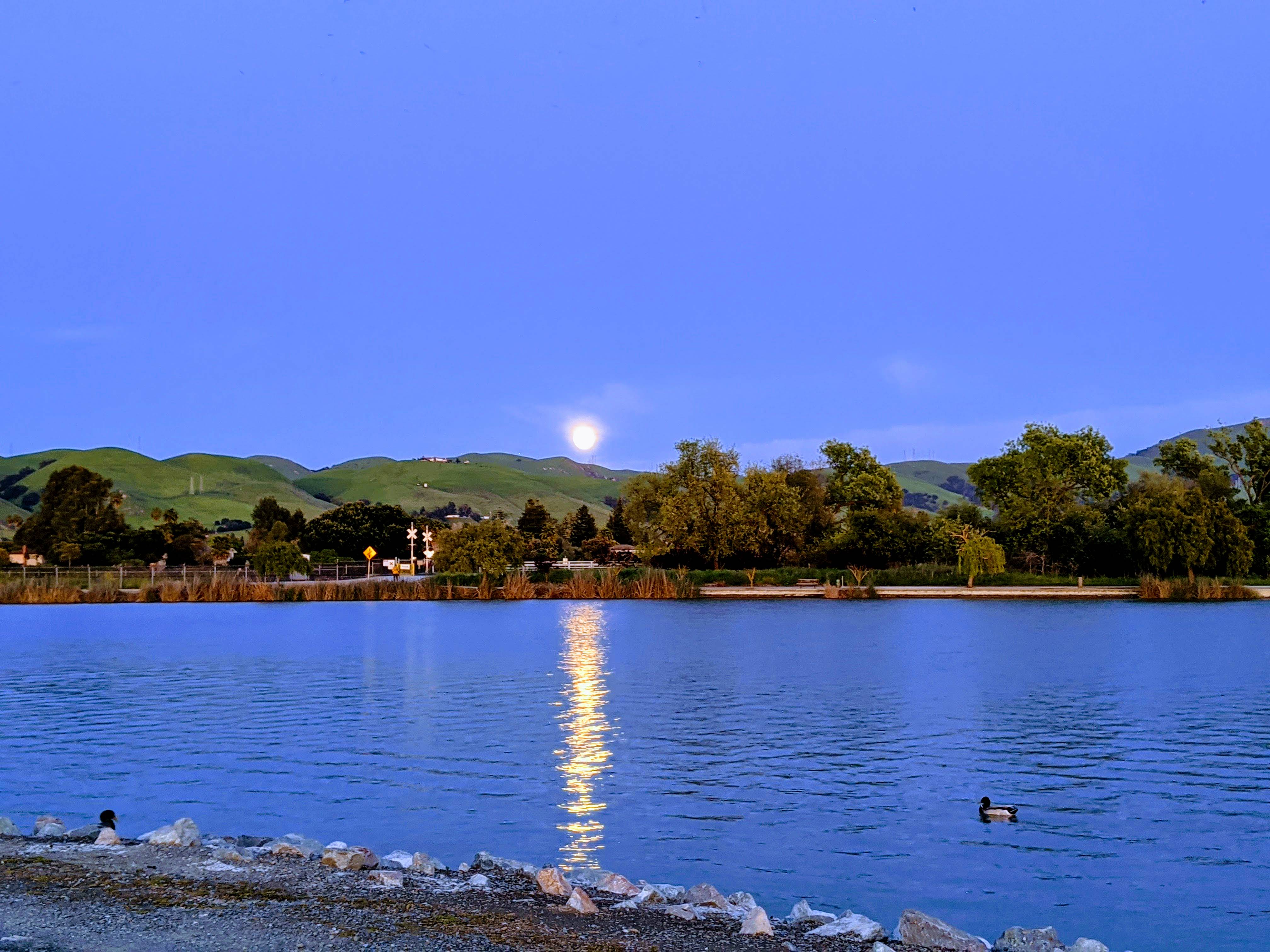
Sometimes, of course, his questions chip away at the stoutest of theories. For instance, a few years ago, as we mooned about the hills overlooking the bay at sunset and taking in the shades of pinks, oranges, blues, grays, purples and reds, he said, “Why is the sunset never green?

img_0631

Now, that is a perfectly valid question with a perfectly scientific answer. However, it had me stumped, for it never occurred to me to ask that particular question.  I remember being awed a few years ago, when the children had drawn rust and pink colored skies when asked to imagine a sky for their imaginary world. 

How often do we take the time to question things that just are? 

This is why when I read the Pale Blue Dot by Carl Sagan, and he comes up with a marvelous chapter based on determining the planetary world one is in simply based on the color of the sky, I shone with girlish delight. Here, was the kind of leap in imagination where only deep thought and research can take you, and here he was, simply giving it away in a book. All his marvelous thought processes, his wonder of the world, his eternal curiosity and scientific rigor just laid out on a page so we could embrace it in one simple reading. 

“The color of the sky characterizes the world. Plop me down on any planet in the Solar System, without seeing the gravity, without glimpsing the ground, let me take a look at the sun and the sky, and I can, I think, pretty well tell you where I am, That familiar shade of blue, interrupted here and there by fleecy white clouds, is a signature of our world. “ – Carl Sagan, Pale Blue Dot

46cb7740-195d-41f7-985d-38de5514ec27

The whimsical side of me wants to ask whether he will recognize Earth at sunrise, sunset, during wildfires and what-not. 

The essay, Sacred Black , in the book, Pale Blue Dot is well worth reading. He explains the reasoning behind the colors of the planets as we see them. He deduces the color of the sky based on the elements found in their atmospheres. 

  1. Venus, he says, probably has a red sky.
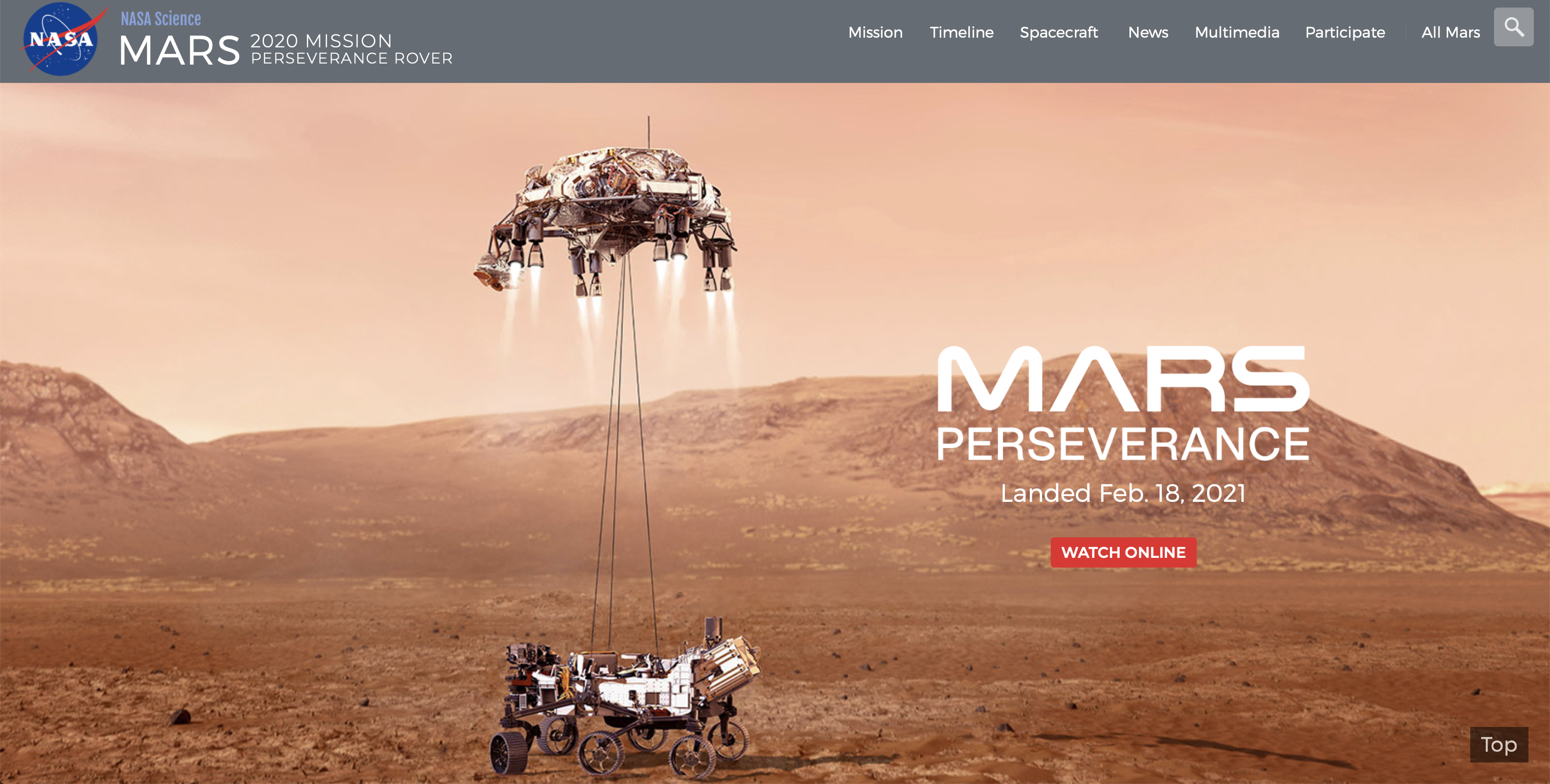
  2. Mars has a sky that is between ochre and pink much like the colors of the desert.
  3. Jupiter, Saturn – worlds with such giant atmospheres such that sunlight hardly penetrates it, have black skies. He talks about this bleak expanse of a sky being interrupted here and there by strokes of lightning in the thick mop of clouds surrounding the planets. This image does make for a sober shiver for someone who loves the sky and its myriad attractions. Imagine, not being able to the stars, the sun, or anything beyond the clouds – brrrr.
  4. Uranus & Neptune – uncanny, austere blue color. The distant sunlight reaches a comparatively clean atmosphere of hydrogen, helium and methane in these planets. The skies may be blue or green at a certain depth resulting in an aquamarine or an ‘unearthly blue’.

pale_blue_dot_pichttps://commons.wikimedia.org/wiki/File:PIA23645-Earth-PaleBlueDot-6Bkm-Voyager1-orig19900214-upd20200212.jpg

He shows us how in the absence of an atmosphere, an inky deep purple is all there is. How, our planet is only a pale blue dot floating in an inky void illumined by a ray of light from the sun. Our eyes may not show us green colors in the sky at sunset, but it does detect plenty of green in the flora around us.

What would you like to see in a sky?

Clouds & Rain

Rain Rain Go Away

Come Again An-other Day

The son was plucking away at the notes on the keyboard. I recognized the nursery rhyme and said, Let’s sing it as :

“Rain Rain Come Again

We have had none To-day”

He gave me a quizzical look, and started laughing. “Is this your words have meaning thing-y?”

“Well…yes! I mean everyday the forecast starts out as 100% rain, and then by the time the day rolls over, it is down 80% and then 40%, and then a tiny squirt like the clouds are having unitary tract issues. “ I said. 

Once their guffaws subsided, I sang along 

“Rain Rain Come Ag-ain 

We have had none To-day”.

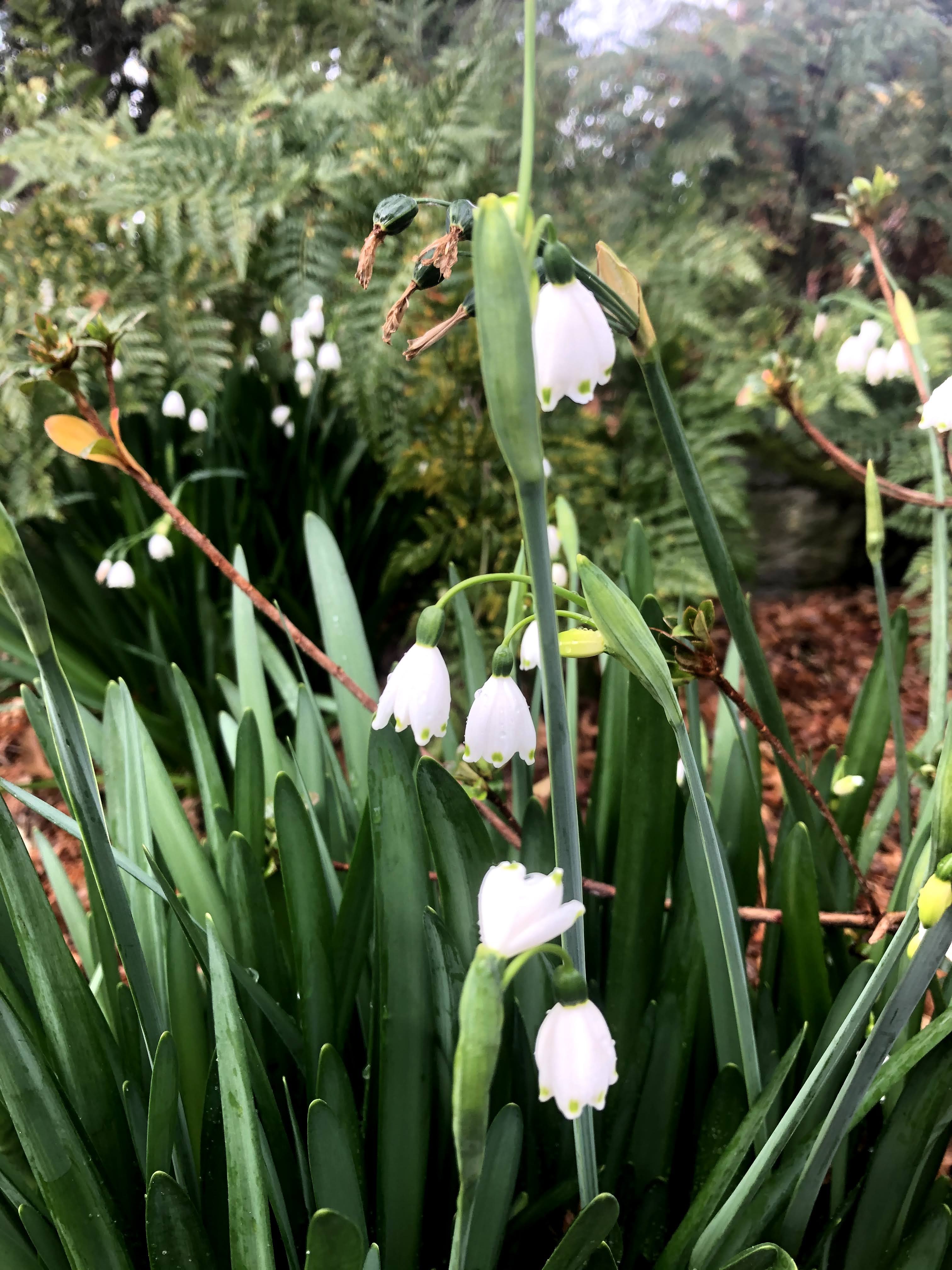
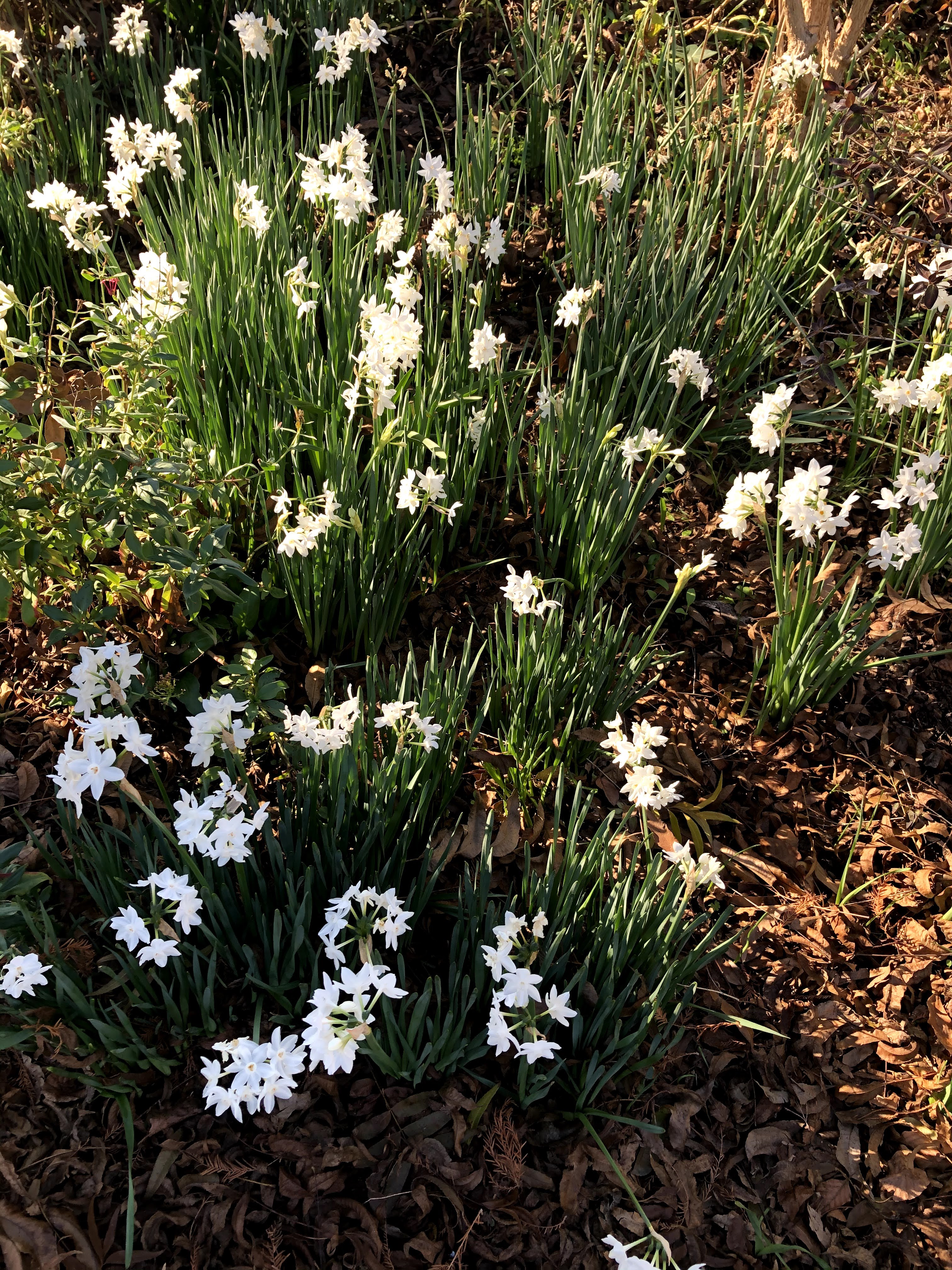
I pondered about the garden-beds knowing that they should be bursting forth with clovers right about now, and the daughter would tell me not go about removing them, as they are so pretty. I mock-sigh, but enjoy this exchange every year all the same. I love the clovers too. The three-headed beauties remind me of the resilience of life, and the sweet and sour nature of life itself. When all the world is waiting for a spring, the snowdrops and clovers are the only ones brave enough to poke their head out and take into that leap of life.

img_1162

I am so glad to say that the first proper rains of the season descended on us this week. The sounds of the rain provided a beautiful back-drop as we went about our days. At nights, I relished the sounds of the gentle pattering rain, and the smooth whishing of the trees in the backyard. 

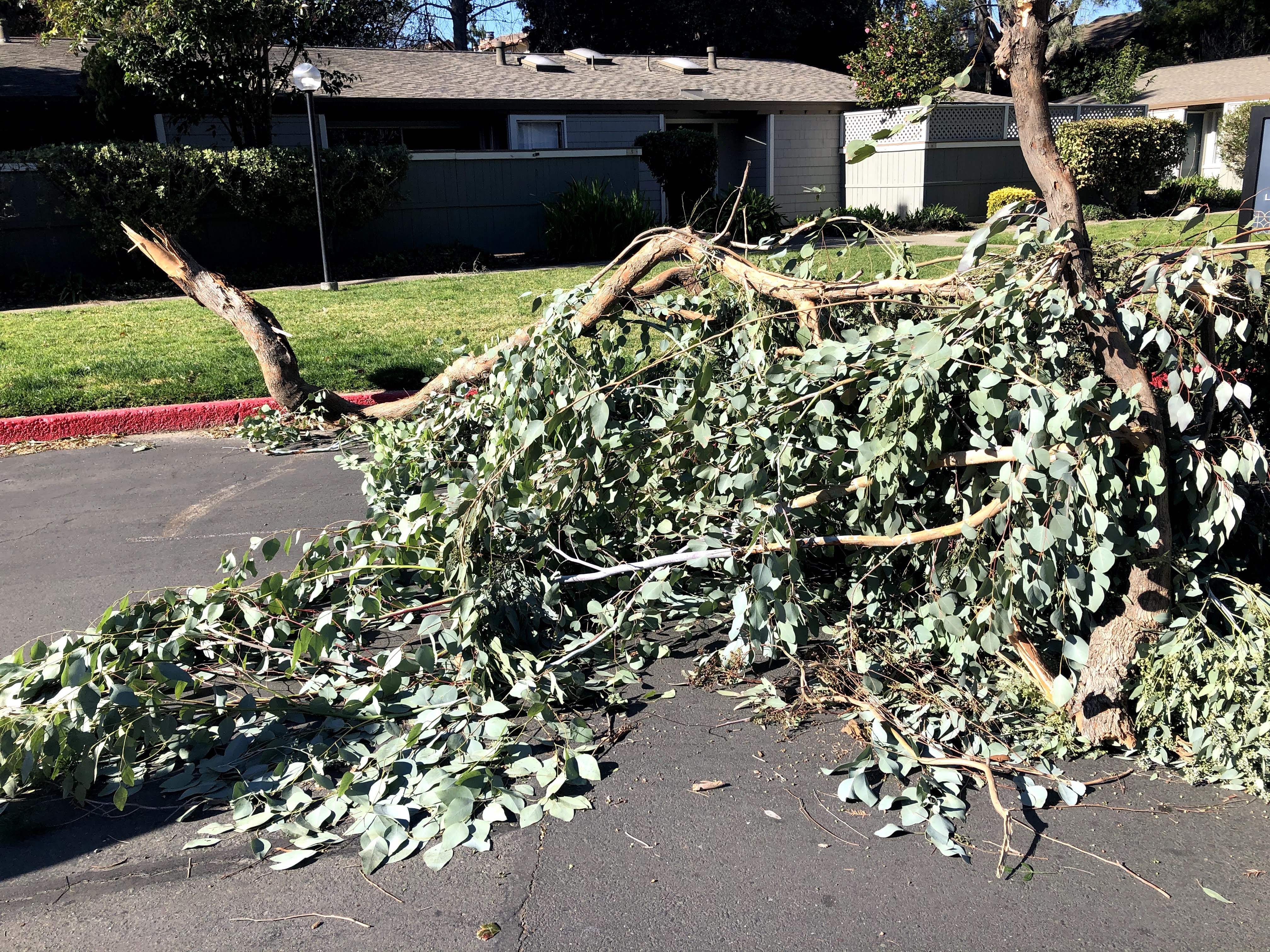
How beautiful gentle-ness is and how different from the gale-force winds that had ripped branches off a few days earlier? 

img_1149

I took a proper walk relishing the solitude of the fresh Earth two days after the heavy rains yesterday. Clouds were everywhere and there is nothing at all that nudges the philosopher awake like clouds and the smells of clean Earth. Thousands of seeds seem to have taken the leap of faith with the waters that descended over them in the past week, and the hills were green with possibilities. The poignancy of the writing in the book, Lab Girl, By Hope Jahren, nudged me. I stood there, admiring the fresh shoots, and relishing what she wrote:

“Each beginning is the end of a waiting. We are each given exactly one chance to be. Each of us is both impossible and inevitable. Every replete tree was first a seed that waited.” – Hope Jahren, Lab Girl

The possibilities of beginning and waiting play out endlessly in our lives. Sometimes, it is with the need for action, the time to spurt forth. At others, it is in the waiting. The time for things to play out so we can gain clarity. For those of us who favor action, the waiting of the seed is an important lesson. At others, the spurting of life itself is the nudge to take the leap of faith.

I came back with that look of contentment that the family recognized: there was no denying it, I had photographs to show them, and though I recognized the medium could hardly capture the magnificence of Being There, I still reveled in showing them pictures of all the wonders I had seen. 

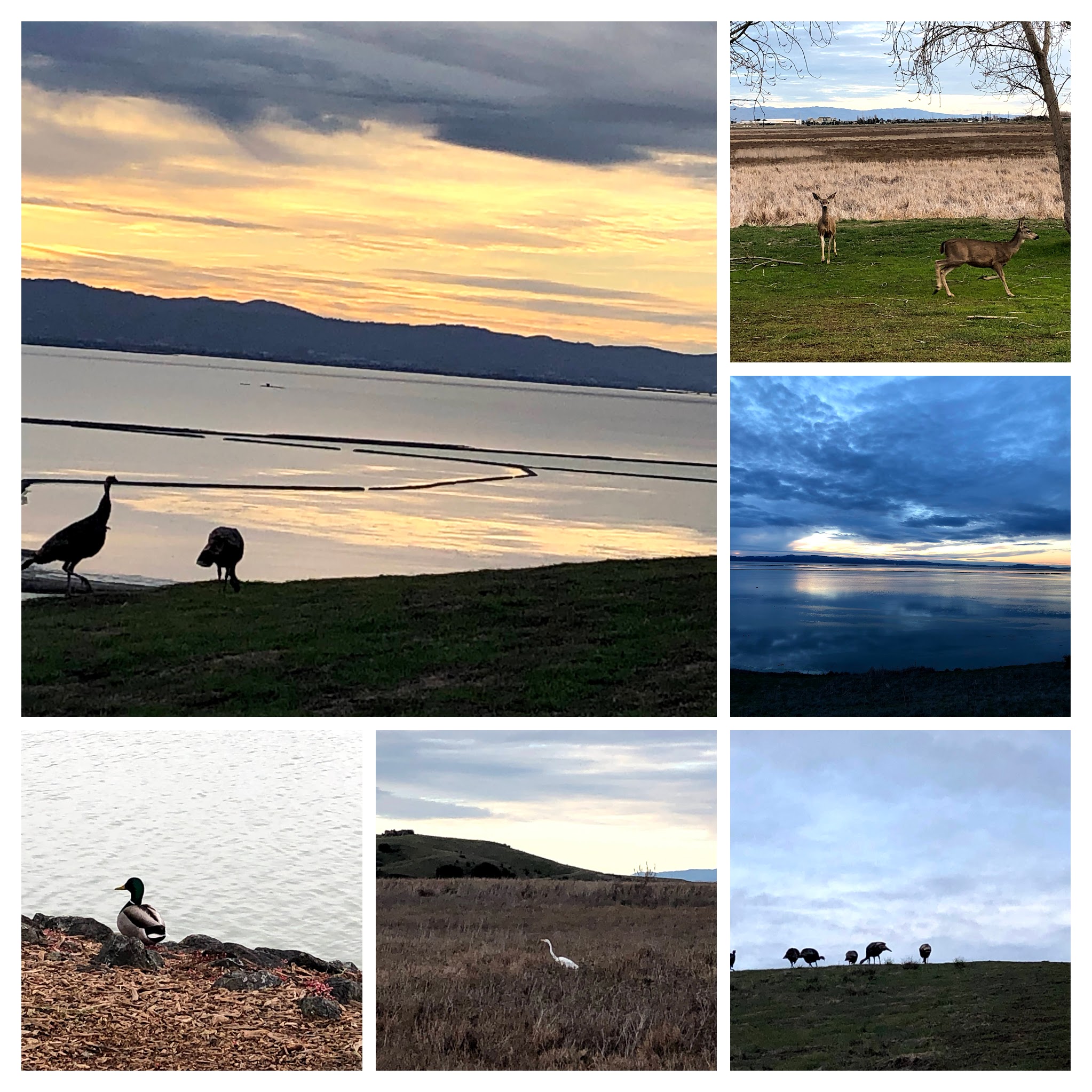
Sometimes, nature astounds me with variety: In one day out with nature I saw hawks, wildcats, squirrels, turkeys, deer, herons, grebes, fresh shoots of all sort of flora and fauna, not to mention the play of the light through the clouds at sunset. A friend of mine feels that animals cross our paths to send us a message. I think the menagerie I encountered was trying to send me the message that life is beautiful, if we take the time to live it fully, creatively and wholly.

img_1168-collage

Some of the books in January had already set the message :

  • A Walk in the Woods – Bill Bryson
  • The River Bank and other stories from the Wind in the Willows – Graham Greene
  • Friends at Thrush Green – Miss Read
  • The Girl Who Drank the Moon – By Kelly Barnhill
  • The Water Princess – Susan Verde (Childhood experience of Georgie Badiel)
  • Emily Writes – Emily Dickinson and her Poetic Beginnings – Jane Yolen, Christine Davanier

That evening, the son plucked at the notes for Clouds on his keyboard, and the clouds flitted above:

See the Clouds, in the sky

Wonder how they, Fly so high!

A Celebration Of … 🌏

The afternoon was a mild, sunny one. Quite unusual for wintry January. The grass has turned green enough, the birds were chirping, and every now and then, the son and I stopped to admire a willow tree. How different each tree looks, and yet how soothing they all are together?  One doesn’t need a leap of the fanciful to liken the willows to beautiful damsels letting their hair down to dip ever so slightly into the waters below. What is remarkable is these damsels don’t seem to mind us watching. 

img_1119

I do not remember the first willow tree I saw, although I am sure I would have admired it long before knowing its name.  These are times I feel remiss. 

Why do we not make a celebration

of smelling the first sprig of lavender

and falling in love with the scent of it? 

Why do we not celebrate the perfect clovers,

the first feel of moss against a damp earth 

the taste of the first wild berry, 

the first sniff of eucalyptus after a fresh rain, 

the first time we touched a petal, 

the first time we sat and watched a butterfly, 

the first time we heard the name of someone who would go on to become kindred spirits 

and brighten our lives forever more?

While at this, why not also celebrate 

the times, we can watch a tree upside down,

The moon rise, or the sun set?

The times we spot the shape of a fluffy dog in the clouds,

the times we are mesmerized by a rainbow,

the times we can watch the world flit by with nary a worry?

summer-collage

Anyway, where was I before I went off on my little celebration-of-life poetic trail? Yes yes. It all comes back now: I cannot quite resist the charm of a willow tree. It’s true. There is a generosity to its form. The tree just seems to give itself. The long tresses weigh down as they reach into the waters below.  When you walk along a river, you can be fairly certain that if there is one willow by the banks, nature would have given us a few more beautiful ones just further downstream. It was while reading Lab Girl, by Hope Jahren that I learnt many of these willow trees are identical genetically. Apparently, all it takes is for a branch to break off by a riverside, float down the banks, a little joyful eddy to push it near the banks, and voila: it can take root. An identical, genetically mapped tree, though it looks different on the outside – the trunks bulge differently, the branches fan out differently, but essentially the same. Hope Jahren’s lyrical writing is as beautiful as the willows themselves. 

“It is easy to become besotted with a willow. The Rapunzel of the plant world, this tree appears as a graceful princess bowed down by her lush tresses, waiting on the riverbank for someone just like you to come along and keep her company.” 

We walked on for some time on this beautiful day, before I plonked myself on the grass. I tugged the little fellow’s arm to sit on the grass next to me. After the initial reluctance of getting his clothes dirty, this suburban child gave in to the pleasures almost completely.  There we were, lying down on the grass, the willow trees drooped into the waters nearby while winter’s afternoon sun gently glowed upon us, and the clouds drifted above.

I told him about the willow trees and how most of the ones we saw may have originated from the same one. He looked awed. 

“Science has taught me that everything is more complicated than we first assume, and that being able to derive happiness from discovery is a recipe for a beautiful life. It has also convinced me that carefully writing everything down is the only real defense we have against forgetting something important that once was and is no more,” 

Hope Jahren, Lab Girl

Will he remember the first time he learnt that willow trees reproduce with just a branch flowing downstream? I hope he does, but if not, here it is written down: It was a golden day in early winter on a walk with his loving mother: when all the world was green and filled with possibility.

Rajma on Titan or Mars

“Yeah! Rajma!” The little fellow slurped in mock exaggeration throwing his hands up into the air. I smiled. I wondered yet again how genetics seems to work in odd ways. My brother as a child had the same expression or at least sentiment every time rajma was made. How could my children who are growing up on the opposite side of the earth from my rajma-loving brother have the same expressions of delight and exaggerated lip-smacking responses to this simple dish?

I can hear my brother mimicking Tamil movie comedians and saying,  “அனுபவிக்கனும் ஆராய கூடாது”. Loosely translated, this means, it is better to not analyze these things too much, but just enjoy them.

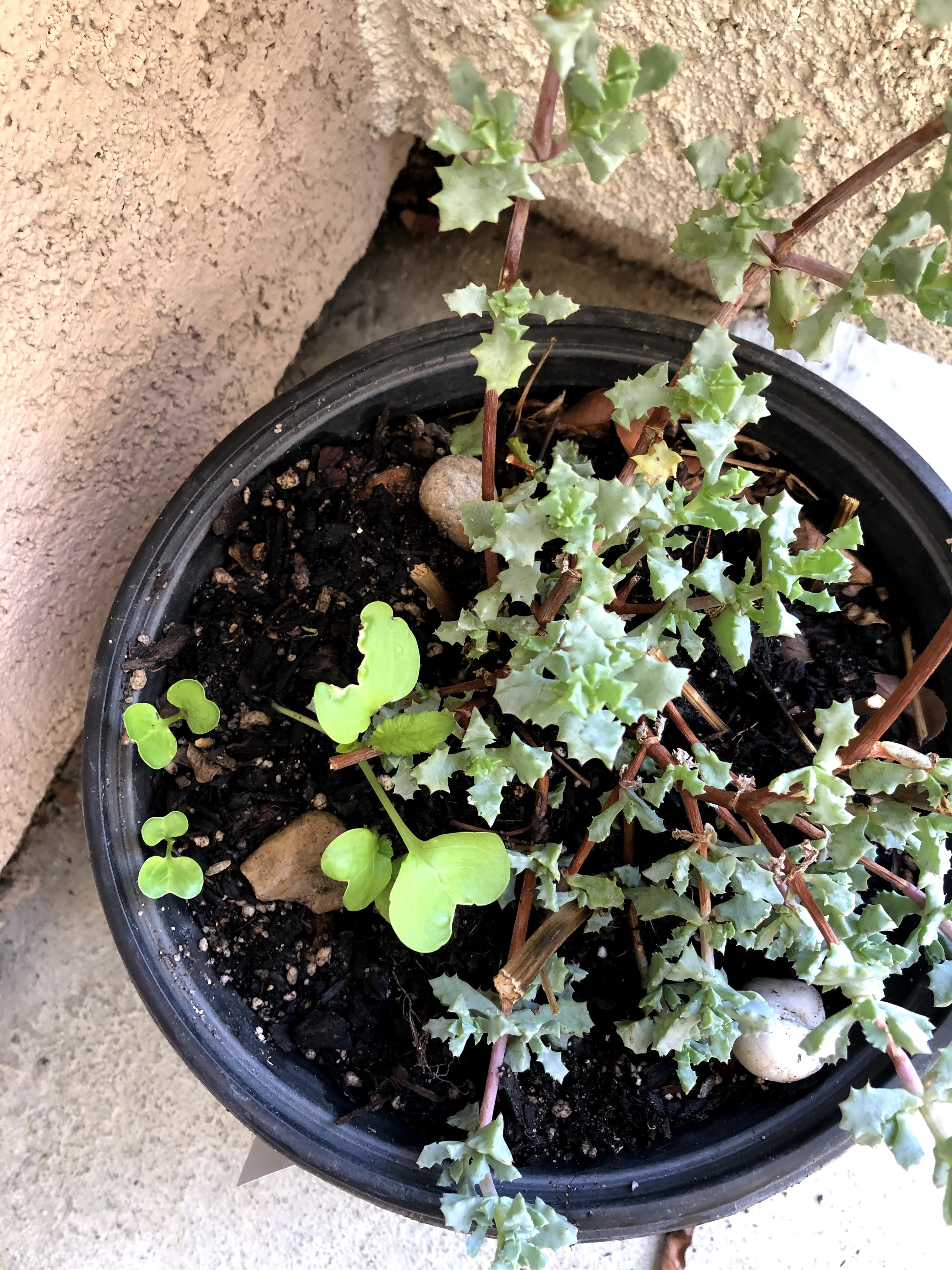
I turned the little red kidney beans over in my hands, and in a moment of impulse planted a few of them into the soil in a little pot where the winter colds had stripped the plants bare. 

Screen Shot 2021-01-15 at 1.58.03 PM

I started the year reading The Pale Blue Dot by Carl Sagan. Much of Carl Sagan’s writing celebrates the accident of life on this beautiful planet, and how incredibly lucky we are to be blessed with sentience to try and make sense of it all.

Pale Blue Dot: A Vision of the Human Future in Space by [Carl Sagan, Ann Druyan]

A sentiment that I agree with wholeheartedly. It is one of the reasons I love Thanksgiving and Pongal or Makara Sankranthi. The fact that we actually set aside our myriad problems to take a moment to express gratitude to the cosmos and this planet for nurturing life is special enough, but this year it feels extra special and even necessary. The planet has united human destiny with a virus, reminded us of the pettiness of grandiose ambition, and helped us appreciate the delights of the ordinary. No small feat. 

In the book, Carl Sagan talks at length about what all can revealed about a celestial object by a mere photograph. Our own pale blue dot – the picture of Earth he says can actually reveal existence of life on this planet. The combination of gases in the atmosphere, not to mention the presence of methane in the atmosphere. However, in the very next chapter, he examines the methane in Titan ( one of the moons of Saturn), and quickly debunks existence of life there as yet because of the temperatures and the concentration of the gas. However, he still holds out on its potential :  the moon has the conditions necessary for the accident of life to happen at some point in the future. 

Screen Shot 2021-01-15 at 1.55.15 PM

As he painstakingly examines one world after another, there is so much to marvel at, and also appreciate the only home known to our particular kind of life. There is nothing as yet discovered that can harbor our particular chemical compositions, our requirements for this particular combination of atmosphere, water and foliage. 

For all the marvels we surround ourselves with I still think the joy of seeing things sprout from a seed into a plant has to be the most wondrous of all. Every time I walk in a forest or a meadow, I wonder how many seedlings lie around us, waiting to take that leap into their chance of life. 

img_1112

I walk around my little strip of a garden that has been kindly putting up with my well-intentioned, but often laughable, attempts at horticulture. I stand marveling at the tulip bulbs shooting up through the soil. This year’s rains have been woefully low, and I hope it changes for I know what it portends for a fire season later in the year. 

A few days ago, I went to water the potted plants and I cannot tell you the joy of seeing little kidney bean plants sprouting up. To think of all that wondrous work happening quietly in the soil while we spend our days with our concerns of our human imprints on this one tiny planet of ours is truly humbling. This is the real work isn’t it? 

img_1113

“So can we really eat the rajma beans now?” Asked the son, his eyes gleaming with excitement. I found, I didn’t know the answer. How does one transform legumes to rajma beans that little fellows in kitchens go on to associate with warmth and love? 

I fumbled and told the little fellow honestly that I didn’t know, but that we’d find out together. We will spend a pleasurable evening looking through the process of legumes to kidney beans. Whether Mars or Titan ever gets to growing rajma beans, we do not know, but I did promise him a dish of rajma from our very own plants. I think my brother would give his approving nod half an earth away. 

Science as an Art

I caught sight of an artist one day, sitting in the garden and painting the profusion of life around her.  I stood there drinking the contentment of the scene in. Here was beauty, poetry, art and the science behind it all in one grand stroke. How marvelous it is to stop and observe someone paying attention to the world around them?

I remembered the piece in a book recommended to me by a writer friend, Lab Girl, by Hope Jahren. The book is an example to show how each one of our stories is different in its own way. This memoir is written by a dedicated scientist, and covers among other things a rare friendship, her bipolar disorder, and her journey of a life with trees. 

In the book, Dr Jahren writes about the science and its demands on its lovers. Her writing is lyrical, and when she writes of her research and her little moments of leap, it is nothing short of poetic. For instance, she writes of studying the structure of the seeds of  hackberry trees. It is the kind of research that is, as she says, ‘curiosity-driven research’.  Dr Hope Jahren is a paleobotanist, and she goes on to say that her research is the kind of work that “will never result in a marketable product, a useful machine, a prescribable pill, a formidable weapon, or any direct material gain – or if it does indirectly lead to one of those things, this would be figured out at some much later date by someone who is not me. “ 

I have always admired the tenacity and perseverance of endeavors such as these. In the world of instant gratification, working on fields where the gratification may not arrive in your lifetime is nothing short of phenomenal. It is the work of an artist: working on something solely for their interest, because they have the aptitude to understand life around them, and to persevere in the face of odds.

In the book, she captures some moments along the path of a scientist’s life that are magical. For instance, she writes of the time she was studying the structural makeup of the seeds of hackberry trees, and she unmistakably finds traces of Opal in the seeds:

“It was opal and this was something I could draw a circle around and testify to as being true. While looking at the graph, I thought about how I now knew something for certain that only an hour ago had been an absolute unknown, and I slowly began to appreciate how my life had just changed.

I was the only person in an infinite exploding universe who knew that this powder was made of opal. In a wide, wide world full of unimaginable numbers of people, I was – in addition to being small and insufficient—special. I was not only a quirky bundle of genes, but I was also unique existentially because of the tiny detail that I knew about Creation,…Until I phoned someone, the concrete knowledge that opal was the mineral that fortified each seed on each hackberry tree was mine alone.”

How could one not smile at this? How beautifully she marvels at understanding the ecstasy of life. Walking along a forest path, I’ve often wondered how, that of the millions of seeds dropped in there, a few decide to take the leap and sprout into sapling, clawing their way up towards the light, while digging deep and finding their roots. It turns out there may be no definitive answer to that. If you were a seed, what are the parameters you would use to sprout your wings and decide where to put down your roots, knowing fully well that from then on, movement is out of the question?

There is more to the miracle of our ecosystems than we can imagine. The ones who study this profundity – astrophysicists, anthropologists, scientists, ecologists, geologists – and then, go on to share their journey with us is marvelous. #Shoshin.

Who was it who said that – when you read a book you live a thousand lives, but if you don’t read, you only live once, yours?! 

“A reader lives a thousand lives before he dies. The man who never reads lives only one.” – George R R Martin in A Dance with Dragons

What would we do without the internet to give the answer right away?!

Complement with:

How to Master the Ancient Art of Walking Meditation in Modern Life: A Field Guide from the Pioneering Buddhist Teacher Sylvia Boorstein

The Fine Art of Baloney Detection

I feel like a separate dedicated post to Baloney Detection Kits are useful right about now. It has been a disturbing 6 – 7 years – ever since the presidential election started heating up for the 2016 cycle, we have been living in a state of dubiety (The state or quality of being doubtful; uncertainty).

We have grown used to being lied to, we are more divided than ever before, and the versions of the truth fluctuate wildly depending on which network or newspaper reports it, it is increasingly hard to determine what the truth is. 

Just a simple search for ‘Media Bias Charts 2020’ is enough to drive home the point:

media bias chart 2020

These problems have always been there. 2000 years ago, the world’s greatest democracy of the times, modern day Italy, then the Roman Empire, witnessed turmoil and breaking of the largest democracy. But with accelerated advances in technology linking us faster than ever to ‘breaking news’ and social media amplifiers for everyone, the waters have become noisier and murkier.

The book, Science as a Candle in the Dark by Carl Sagan, has an essay on the Fine Art of Baloney Detection.

Read also: Candles in the Dark

The essay starts off empathising with the human condition. Why are we, as humans, willing to believe in things whether or not ‘there is any sober evidence for it.’? 

It isn’t unheard of to believe in things supernatural, or falling for false advertising campaigns with exaggerated claims, or believing models wearing Doctor’s coats, or blindly believing religious zealots who spout hypotheses with confidence. As human beings we have been doing this for centuries, and in most probability will continue to fall for some sort of questionable practices. 

As long as there are those who are willing to take advantage of the vulnerable with little or no consequence, these will persist.

For those who wish to read the whole essay, it is here. Or it can be found in the book, Science as a Candle in the Dark – By Carl Sagan

While we enjoy the occasional myth or fib, it is important to know the difference. For an adult to attack Harry Potter for instilling witchcraft is worrisome for this very reason. As part of growing up, we want children to outgrow the myth of Santa Claus. Knowing to distinguish fantasies from reality is a necessary tool for survival. 

Which brings us to why we must have a version of Carl Sagan’s Baloney Detection Kit for us to use. 

The complete essay can be found here:

It has been a saddening realization to find that Science has not been embraced when it is needed the most. I was reading a book on the Greatest inventions of mankind in the past 2000 years. It is a book collating the answers from philosophers, researchers, and professors from various fields. One of the answers given was the framework of Science. I could not agree more. The ability to think, weigh, design experiments with control and test groups, and sift empirical evidence has resulted in the very least at :

  • Saving millions of lives, that in previous generations, succumbed to disease
  • Figuring out how to feed a planet that grew from 1 billion to over 7 billion within a generation

For those who would prefer a straight jump to the Baloney Detection Kit, here it is:

  • Wherever possible there must be independent confirmation of the “facts.
  • Encourage substantive debate on the evidence by knowledgeable proponents of all points of view.
  • Arguments from authority carry little weight—“authorities” have made mistakes in the past. They will do so again in the future. Perhaps a better way to say it is that in science there are no authorities; at most, there are experts.
  • Spin more than one hypothesis. If there’s something to be explained, think of all the different ways in which it could be explained. Then think of tests by which you might systematically disprove each of the alternatives. What survives, the hypothesis that resists disproof in this Darwinian selection among “multiple working hypotheses,” has a much better chance of being the right answer than if you had simply run with the first idea that caught your fancy.*
  • Try not to get overly attached to a hypothesis just because it’s yours. It’s only a way station in the pursuit of knowledge. Ask yourself why you like the idea. Compare it fairly with the alternatives. See if you can find reasons for rejecting it. If you don’t, others will.
  • Quantify. If whatever it is you’re explaining has some measure, some numerical quantity attached to it, you’ll be much better able to discriminate among competing hypotheses. What is vague and qualitative is open to many explanations. Of course there are truths to be sought in the many qualitative issues we are obliged to confront, but finding them is more challenging.
  • If there’s a chain of argument, every link in the chain must work (including the premise)—not just most of them.
  • Occam’s Razor. This convenient rule-of-thumb urges us when faced with two hypotheses that explain the data equally well to choose the simpler.
  • Always ask whether the hypothesis can be, at least in principle, falsified. Propositions that are untestable, unfalsifiable, are not worth much. Consider the grand idea that our Universe and everything in it is just an elementary particle—an electron, say—in a much bigger Cosmos. But if we can never acquire information from outside our Universe, is not the idea incapable of disproof? You must be able to check assertions out. Inveterate skeptics must be given the chance to follow your reasoning, to duplicate your experiments and see if they get the same result.

The Kaleidoscope of Life on Earth 🌏

“Hmm…how Covid has changed things right Amma?” said the daughter when I walked into her room one day, and spotted ‘Greece’ sprawled across the whiteboard. She has been spending her summer making minor changes to the decorations in her room. As most teens do, she has a fond attraction to her room, and one day I found her looking at the pictures she had printed out to make a sort of picture collage. Her teenage eye-roll and monosyllabic answers fell away as soon as I showed an interest in the choice of pictures she had laid out on the floor arranging and rearranging them to see the best patterns.

How do you see the best patterns in a kaleidoscope? Everything seems beautiful, everything seems fine, and yet the artistic piece of her fussed with the layout and order of the pictures. There were pictures of happy people, little cafes, books, beaches, forests, city lights, quotations, rainbows, flowers, and small towns. The collage was eclectic enough to interest me. She gurgled and burst forth with the thought that went into them. I listened amused. 

By then, her excited voice had attracted her little brother and fond father into the room. Her brother painstakingly wrote ‘Mars’ below ‘Greece’.

“Mars! Seriously dude- next thing we know you will be lugging us into black holes and having us all burst into all the tiny starry bits like your Avengers or Star Wars superhero dudes in their adventures! No! No space travel!”

“Just yet”. I added and she gave me a look that indicated that this idiocy with space is because I indulge him with this stuff. I laughed out loud, and the children joined in too.

“And while we are at it,  no fictional or mythical places either. Only places that we can locate on a known map of the world.”

“Sheesh – she is so strict!” said the young explorer of the cosmos.

Travel_dreams

Cautiously, like deer in a prairie, we approached the topic of places we’d like to visit, ready to scurry back to Covid restrictions. Slowly, the name scrawled on a whiteboard set the stage. In the safe company of just the four of us, it felt good to take a peek into travel dreams again. It was done at first soberly – how happily we had taken international travel for granted? How happily we had taken good health for granted? Disconcerting as the Covid situation has been, it has also made us sit up and take notice of the beautiful things surrounding us on Earth. 

Once we started talking of lands beyond our day-to-day, a different energy gripped the room. Within moments, distances melted away, and the globe-trotters threw names on the board with no thought to distance or expense. Exactly how dreams should be.

Looking at the list on the board reminded us, however, that our lifetimes were not enough for this sort of ambition. How does one fit in a hike in the Himalayas for a zen feel, with a sort of Darwin-esque trip to the Galapagos? How can one fit the journey of civilization in Greece and Peru, to the pure sounds of nature as yet untouched by mankind? I suppose travel still has a lot to teach us, and post-covid, the world will start to cautiously explore once more.

We started, therefore, with a couple of day trips taken mostly on a week-day taken off from work, so we could avoid crowds. We looked for wide trails on which to get our dose of nature and exercise in. While for the first time thinking of a 2-3 day trip, we looked for godforsaken places. Places people do not usually go to for a vacation. But the house was a good one, pitched atop a hill with the nearest neighbor miles away. There was a  Jane Austen-esque feel to the whole thing. It reminded me of the poem by Wendell Berry: The Beauty of Wild Things.

On Being: The Beauty of Wild Things – By Wendell Berry

I set about the evening meal after the long drive there, while the children ran to find board games to be played that night. I cradled a cup of tea in my hands, as I set the water to boil, and rummaged the contents I had packed with me so as to minimize exposure to the outside world.  Slowly, the kitchen’s essence wafted around the room – smells, heat, textures all dancing together in an exquisite symphony of the senses. A symphony was playing as I cooked, and talked to the children. Here was a lively room packed with energy, activity, witty comments, and chaos that strangely translates to calm.

Inside this house overlooking a river valley, I felt the kaleidoscope of our life on Earth lap at me in waves. Watching the objects in the room around me evoked a strange sense of living  on this earth: the telescope, the books ,the music, the keyboard that promises the best music to those willing to invest in it, the creature comforts of a well-built house with the furnishings about us, the deer grazing in the hillside by us, the beautiful moon, the thousands of stars visible because of the distance from populated areas.

Life_On_Earth

The Peace of Wild Things: By Wendell Berry

I come into the peace of wild things

And I feel above me the day-blind stars waiting with their light.

The daughter’s pictures had indeed done a good job of capturing life on earth.

Star 🌟 Stuff?!

I don’t know if you have tried comet chasing every night for a week. A week in which photographers from the world over posted photographs that suggested a flaming, brilliant torch tearing past our heavens with an urgency that made you realize life was short, our journeys spectacular, and a whole lot of poetic asides.

The husband, the bright matter energy source in the household, if anything, shored up even more bright matter to counteract all the dark matter in the universe. His resolve only wiggled a bit when he saw these brilliant flaming pictures of the comet as though it was an olympic torch blazing through the heavens, when in reality, the comet looked like a Pluto after a good cry. (After the astronomer’s good cry, not Pluto’s!)

The son, kept his running commentary on photons, light years, superclusters, cosmic addresses, and the pair of us dreamt on.

The daughter, pragmatic as ever, squashed The Poetic Outlook like a bug under a hippo’s knee. Some teenagers may find it cool to tag along with their parents on adventures chasing 💫 comets: ours rolled her eyes, and the drag of the eye roll did resemble a comet’s tail.

I’d like to think that I was the calm influence that steered the boat into the cosmic oceans. The husband turned to give me an amused look, the son’s laughing rattled the comet to go back into hiding, and the daughter pulled her coolest teenage look of scorn and said the all-encompassing word, “kook!”.

“You know? I don’t see why people are wasting so much  time with the skies. I mean, if you  do see  the comet, I suppose it is nice and all, but  what’s the point of sitting there for hours on end and trying to find something hurtling through space. Huh-hmm!” she said, her lips thinning just the way her grandmother’s would.  I love it when the mannerisms of her grandmothers slip into her speech in unguarded moments like these, and couldn’t help smiling.

“I  mean – what sort of career is that? And what use is it?!” she cried, clearly asking for it.

The son & I, inferior debate  companions as we are to her sharp tongue, rose up to the occasion.

“Hey  hey hey! Going at the rate we are, scanning the skies may give us an opportunity to find another habitable planet to expand into. The same can be said of all kinds of research – the actual research does not immediately yield results, but every little bit of understanding advances us  a little bit further.”

“Yeah – also we need to know where we are in the universe! Are we in Milky  Way, Virgo Supercluster, Observable Universe:  what is our address?” said the son.

Location_of_Earth

Andrew Z. Colvin / CC BY-SA (https://creativecommons.org/licenses/by-sa/4.0)

The daughter’s tongue could have  sliced an apple in an instant as she rattled off our home address and said, “Why do we need to know huh? I mean, here we are. This is it. Live here, what is all this knowing where-we-are stuff? Waste of time. What is it going to do for us?”

The son & I blanched. You see: the pair of us are dreamers, standing beneath the stars, and endlessly wondering whether we belong to the Lainakea supercluster (is it the same as the Virgo supercluster?)  After the observable universe, then what? What if all the observable universe in inside a massive black hole, and time is only  something in this space? 

“But we are made of star stuff – isn’t that magical? Star stuff!” said the son wistfully.

“Yeah – duck poop is is also star stuff – deal with it!” said the daughter. The son wilted under this argument. The daughter caught sight of my eye looking like an angry comet, and mollified the little poetic fellow. “But duck poop is good star stuff! Heh??!!”

I cannot say the debate went anywhere. It was a disappointing bunch of evenings after all, and the teenager felt it keenly. I mean, when one has posted  to one’s friends that they are going comet gazing, and then come back after hours, having  grazed on half a luna-bar, there is bound to be a dearth of the poetic. 

“You know young lady, I have just the book to cure you of this disappointment.” I said and gave her the book, The Stuff of Stars by Marion Dane Bauer Illustrated by Ekua Holmes

The illustrations in this book make it an absolute treasure. In the past few days, after a clearly disappointing  comet gazing experience, I found myself gazing at the marvelous pictures in the book instead. 

stuff_of_stars

The 💫 Comet 💫 Life

The past few days have been a flurry of activity with tiny little bursts of stardust and magic spun into the day.

We traipsed home tired, sleepy but triumphant. This was a Sunday morning well spent: we had finally sighted the elusive comet, 💫  Neowise. The previous morning, we had run outside at a similar time, and stood pinching our eyes, squinting at a resplendent Venus and thinking that if you cocked your head to one angle, and yawned loudly enough to get tears in your eyes, you could spot the tail. This technique made for some hilarious moments, but comets don’t seem to care much for sentient beings on some transient planet trying to catch sight of them in the wee hours of their morning, and we had to accept defeat and head home.

The next morning, however, we had managed a grainy sighting of the comet and we were jubilant. When the chocolate drink was gulped, and the little fellow was tucked into bed again, I lay in bed thinking of the comet 💫 . I could not shake the beautiful image from my mind’s eye.

img_8934

To the naked eye, it looked nothing like the images taken by setting one’s camera to a long exposure, but it was there alright. The burning star with a yearning, a lone star shining its torch as it scorched its way by numerous stars treading a path it had set for itself. An unconventional celestial object. Compared to the systemic order of the rest of the universe, there was a object that was definitely unconventional , a trail blazer (get it, get it?) Why an elliptical shape, and why 6800 years?

I went about the days after the comet sighting with a faint gasp in my demeanor. Imagine, as we are holding all these important meetings, combating pandemics, and trying to protest against all things unjust, here was an icy blob just spinning away on its own elliptical. 6800 years before it can peek at us again. Often as I went about my day, I wondered whether there was a possibility of sentient life evolving on comets. Comets and asteroids have been known to be microbe transporters, seeding the possibilities of life as they hurtle through the vast dark emptiness.

Do extremophiles have what it takes to feel?

I mean, if we were to have evolved on a comet rather than a planet, would we have had such success in determining the nature of physics and the laws that holds the cosmos and the universe within which we thrive? How would time be measured on a comet? If rhythms helped us discern music, what would music have been in a comet-ic life? Our own days on Earth are neatly sliced into hours, minutes, and these days blend into weeks, months and years. Before we know it, we have made one full circle around the sun, and the seasons have changed along the way in predictable ways.

But none of that would be true if sentient life such as ours had evolved on a comet instead. There would be no days, no seasons, no predictable cyclical rhythm to our days. The sense of adventure as we drew near other stars and planets would probably fill the time. But time itself may have no more meaning, or much more meaning depending on how one perceived it.

These musings were sources of mild amusement, while life itself marched on with a comforting rhythm down here on Earth – dawns, days, dusks, nights, weeks.

Did the seagulls, deer and ducks think of such things?

Ahh! Comet life!

Comet Chasing * Chocolate Charms

The children have a shared liking for Calvin  & Hobbes. The adorable pair have been the source of many hysterical giggles between the siblings in our home. In the son’s room, there is a cartoon clip of Calvin & Hobbes that seems to tickle both his whimsy and his innate rapture and curiosity of the universe we live in.

calvin-gif

If people sat outside and looked at the stars each night, I bet they would live a lot differently  ✨- Calvin & Hobbes

A few weeks ago, I was typing out an email with the ounces of concentration I could muster at the end of a 12 meeting day, and I wasn’t exactly thinking  about 💫 comets, stars, pulsars, neutron stars, black holes, and parallel universes, when the little fellow shot into the room bursting about comets. I turned around , and my face probably looked like some of the spreadsheets I was looking at, for the son gave me a pitying look that seemed to indicate, “What good is a day when you haven’t thought of these important things?”

I laughed at the incredulity on his face: Stars, superclusters, muons traveling the speed of light, quirky  quarks are all thriving right beside his world of super-powers for super-heroes, who are incidentally gifted with important sounding superpowers such as gamma-rays and electromagneto-muon-transporters and what-not. 

“Did you  know Halley’s comet is going to come again in 40 years?” said the son still bouncing and glowing from the stash of chocolate chips he has been chipping into while reading his little books on Physics.

img_8953

“Yep! Sounds about right. I was around your age when I saw Halley’s Comet. So once in 76 years means …” and I trailed off.

“What?! You’ve seen Halley’s comet? Aww…..so lucky!” said he, and I had to laugh at his yearning. I did remember the cold nights awaiting the turn at the telescope to catch a grainy sight of the Halley’s comet. I must say that the whole experience felt worth a lot more given the rapture with which he listened to the comet sighting. I seem to remember the hot chocolate provided to the young astronomers more than the telescope and the grainy image itself.

Maybe the universe really did hear his yearnings that day, for within a few weeks, another comet came our way: the Neowise 360 comet sighting was supposedly possible from where we lived. I was so happy for the little fellow. He could barely contain the excitement in his system when his father said at the lunch table that the comet would be visible at 4:30 a.m. He got up and ran upstairs to his room. We were exchanging quizzical glances at this when he tumbled downstairs and said, “Yes! I set the alarm for 4:30 – I cannot wait to see it!”

I had to admit; the young astronomer’s enthusiasm put us to shame. So, for the next few nights, we bundled up and comedically traipsed from location to location in the wee hours of the morning looking for a comet sighting. The clouds were there in one place, some low mountains in another, and then, finally, we managed to find a plain spot in which we caught a grainy sighting.

img_8934

Knowing that we caught a fleeting glimpse of something that is not going to come by to see us for another 6800 years is strangely moving. I have to tell you though, that similar to the Halley’s comet sighting, the hot chocolate after coming back, and the the long tail of wishes accompanying the comet sighting, definitely made the hustle worthwhile. 

That morning, the rest of the comet chasers had no problem falling back to sleep, but I did – the comet had kindled dreams of long ago: dreams born of comet chasing and chocolate charms; dreams woven with the magic of stardust 💫 and comet trails – bright, shiny, sparkling, path-breaking and aspirational.

Bill Watterson was absolutely right: People who spend time looking up at the night sky do live life differently!