Themes of Friendship and Cooperation in Hail Mary

Hail Mary by Andy Weir

We decided to read Hail Mary by Andy Weir in our book club, prior to the movie’s release early next year in 2026. This book proved to be delightful pick for all the different discussions we could have:

There were many fascinating areas in which our discussions went:

The grandeur of microscopic life

The Microscopic Wonders in Hail Mary by Andy Weir

It takes enormous creativity and brilliance to pull off a face-off between his microscopic light warriors that he christens, astrophages, vs taumoeba who are the only known predators of the astrophages. 

Encountering friendly alien-life

Encountering alien life and making it a friendly encounter, instead of the usual fear of an alien takeover is a bold move. As humans, we think of conquering and owning the next available world – so why would aliens be any different? Yet, in this tale, the first Eridian he encounters isn’t antagonistic, simply curious, and our messenger from Earth reciprocates. 

A tale of cosmic cooperation is uplifting and it led us to a wistful wish about having more uplifting literature to read too. Why are we this enamored by war and angst?

Eridian Art & Culture 

The alien-life encountered in the movie comes from a civilization where their planet is enveloped by an atmosphere that is 29 times thicker than the one that protects Earth. This results in a life-form evolving without sight since light is not a viable input source for them. They rely rather heavily on sound.

Of course, for a culture like that, I am curious to hear their music. Will their tonal variations be the same? Can their music encompass the range of hearing of whales and dogs? Or more?

Absence of Light

Towards the end of the book, I couldn’t help wondering how much we would miss light and its effects , if we were to live on a planet like Erid. It isn’t that I have a ritual singing praise to Ra, The Sun God, Surya, etc, but I do love sunlight. Especially the periods of transformation – the sunset and sunrise. Even this evening I sulked unduly because the sun sets so early these days, and I had barely time to close up my laptop when the day was gone. 

We all loved the book, and of course, saw the trailer at the end of it all. The choice of one of my favorite songs, The Sign of the Times, by Harry Styles is already promising.

What do you look forward to in the movie?

The Microscopic Wonders in Hail Mary by Andy Weir

All Things Bright & Beautiful

We have been reading Hail Mary, By Andy Weir, ahead of the movie launch for our book club. I must say it is a fantastic book for discussion: Andy Weir’s astrophages and their taumoeba are microscopic thrillers playing out on the scale of the universe. His hypothesis is solid, the design and procreation for his microscopic protagonists is brilliant. There are so many concepts he introduces – all slowly but surely. The pacing in the book is truly amazing.

Small Wonder

I suppose for beings such as us, who believe in free will, thump our chests on all the great things we can accomplish etc; finding microscopic life is the surest way to humble us. 

https://nourishncherish.org/2020/03/23/fascinating-hidden-worlds/

During the course of the discussions, one of the many things that stood out is how it is we found out about microscopic life. The microscopic world is a marvelous one. Revealed to us 350 years ago by the talented man Antony von LLeuwenhoek. He is often hailed as the Father of Microbiology. 

Read also: Fascinating Hidden Worlds

How did we discover how mitochondria works, how genetics works, and how life can be protected with all its worlds within us? The fact that we contain multitudes has always been fascinating – we have more than 100 trillion microbes in our guts while our Milky Way only presumably contains 100-400 million stars. 

Read also: Good Food Mood

Big Wonder

Speaking of the universe and the many million stars, the book’s premise is that the astronaut from Earth encounters, befriends and teams up with an alien from Planet Erid.  An earthling and an Eridian putting their heads together to solve a problem that is crippling the universe. 

There have been many theories on why we have never encountered alien life before. I remember reading in one of Carl Sagan’s books that the reason may be temporal – meaning there is a progression to advancement in intelligence levels. The intelligence levels at which human beings find themselves, may well be a blip in the universe. We are already quickly evolving past the phase when we were so excited by beaming our rays into the universe, that we may not be excited about finding someone else in our range of intelligence any longer. 

Now considering the different levels of life: microscopic life, multi-celled organisms, animal and plant life enough to sustain ecosystems, evolved intelligent creatures such as humans, advanced intelligence creatures – way past the levels of humans, we can see why finding life on the same scales of intelligence and tool usage is truly a daunting task. Either, civilizations evolved past it, died down, or never got there at all. 

Given this, it is a big wonder that the book tries a premise of intelligent alien life. I suppose the possibility will always remain an exciting one. 

In any case, reading Hail Mary is an interesting exercise in imagination. I am excited to see what the movie does with Rocky the Eridian and how they visualize astrophages & taumoeba. 

I remember singing the hymn ‘All Things Bright & Beautiful’ in school. It is an uplifting hymn with truly beautiful imagery of purple headed mountains and tall trees in the greenwood. Life on Earth is beautiful. Life could be just as beautiful elsewhere. The possibility is exciting.

Have you read Hail Mary, and what are you looking forward to in the movie?

Hail Mary & The Martian: Potato Love

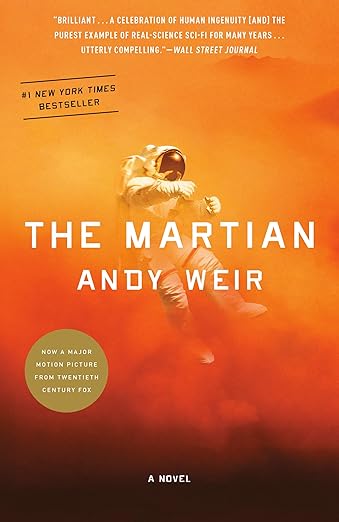
As part of our book club, we decided to take up interplanetary themed works by Andy Weir. Hail Mary releases next year in March, and it seemed like a really cool idea to get a little astrophage love beforehand. 

So, we started off with Martian, watched the movie, then moved on to read Hail Mary. 

This led to many interesting outcomes. The first was more primal in nature. 

🥔The scenes where the protagonist, Mark Watney set up and farmed potatoes on Mars, appealed to all of us. Far fetched, but so is almost everything humanity has achieved up to this point isn’t it? Who doesn’t love to see a little potato pant sprout in a red and dusty planet?

We developed a new appreciation for potatoes and all the ways in which we make it. Poori sagu, potato fry, kaara curry, mashed potatoes, baked potatoes, dum aloo, french fries, potato chips, hash browns, cream of potato soup. 

Every time I pick up a potato these days, I gaze at it with awe. The other day, I watched a little sprout from one of it’s eyes, and the son gave me an eyeroll. 

“If potatoes could save medieval Europe from starvation, they could do anything, couldn’t they?”

“Yes – I love this new honey roasted szechuan style potato that you made for me the other day, so I can’t really complain about this new potato love can I?” said the wise fellow, and I laughed. Honey roasted s.style potatoes it is.

🧑‍🚀One of the many things that occurred to me as I was reading the Martian book was to see which of my friends were best suited for the different roles in the book. Who would be best suited for Mark Watney (not as a replacement for Matt Daemon of course!), but from an engineering and problem solving perspective. I am an engineer, and am surrounded by engineer friends after all. Who would be the best Dr Venkat Kapoor driving things from the NASA side? Who would be the scientist diplomat who works with the Chinese team? Fascinating exercise. 

👭One of the many things I liked about the book is how Andy Weir goes out of his way to show the bond between the astronauts on the Martian crew. Selecting a top notch team is a hard enough task without having to consider the effect they would each have on the other in a closed space for extended periods of time. What psychological tests must they have to figure out friendship, respect, and trust among the crew after/before all the obvious things related to technical competency are taken care of? 

💫Let me play a song I said the day after we watched the Martian movie. The son groaned. “No – I want something fun – not melodious today.’ he said. 

“I think you’ll like this one!’ I said with a confidence that stems from knowing the pull of the cosmos on the son’s psyche. 

There’s a starman waiting in the skies.” David Bowie’s song filled the car and the pair of us bobbed to it startling folks in neighboring cars at rush-time.  

I already like the song by Harry Styles in the Hail Mary trailer. It’s one we listen to often. “Stop your crying it’s a sign of the times

The movie, Hail Mary, is slated for release in Mar 2026, and we are looking forward among other things to see how the Eridian, Rocky will be visualised. Any of you looking forward to the movie?

Also, what did you think of the Martian book and movie?

Exploring The Anthropocene: Life Between Cosmic Events

The Anthropocene by John Green

In the book, The Anthropocene by John Green, there is an essay in which he he mentions Mark Twain’s life being sandwiched between the two appearances of Halley’s Comet 76 years apart. He was born the year it was born, and he wrote famously the year before his death that he hoped to go out with it, and he did.

When I read that the first time, I felt sorry for him. He was born in 1835, and died the day after its perihelion in 1910. I hope he got to see the second occurrence. Imagine being alive for 2 appearances and not being able to see them both times. I suppose there is a poetic beauty to being born and dying between the spectacular cosmic events. But then, plenty of people did not see Halley’s comet even when it was visible in their lifetimes, so what’s the big deal?

Halley’s Comet

I remember being excited about Halley’s Comet in 1986. I was thrilled at being included in the viewing party – it was for my older sister’s classmates, and they had agreed to let her little sister tag along. 

I remember peering through the telescope. I cannot say with any conviction that I remember the comet itself. Some blurry recollection is all that remains. But the feeling of the evening remains. The excitement at being included in an elite group of senior students, the protective aura of having my older sister and her friends look out for me, and the cold temperatures of the night. That cup of Bournvita before bed was enough. 

Astrophilia

Nights and stars seem to have similar experiences ever since. The feeling more important than the viewing itself. For a star is a star. A celestial object – a celestial object – nothing more. Yet spectacular enough to be other-worldly. To tap into the possibilities of a vast universe. 

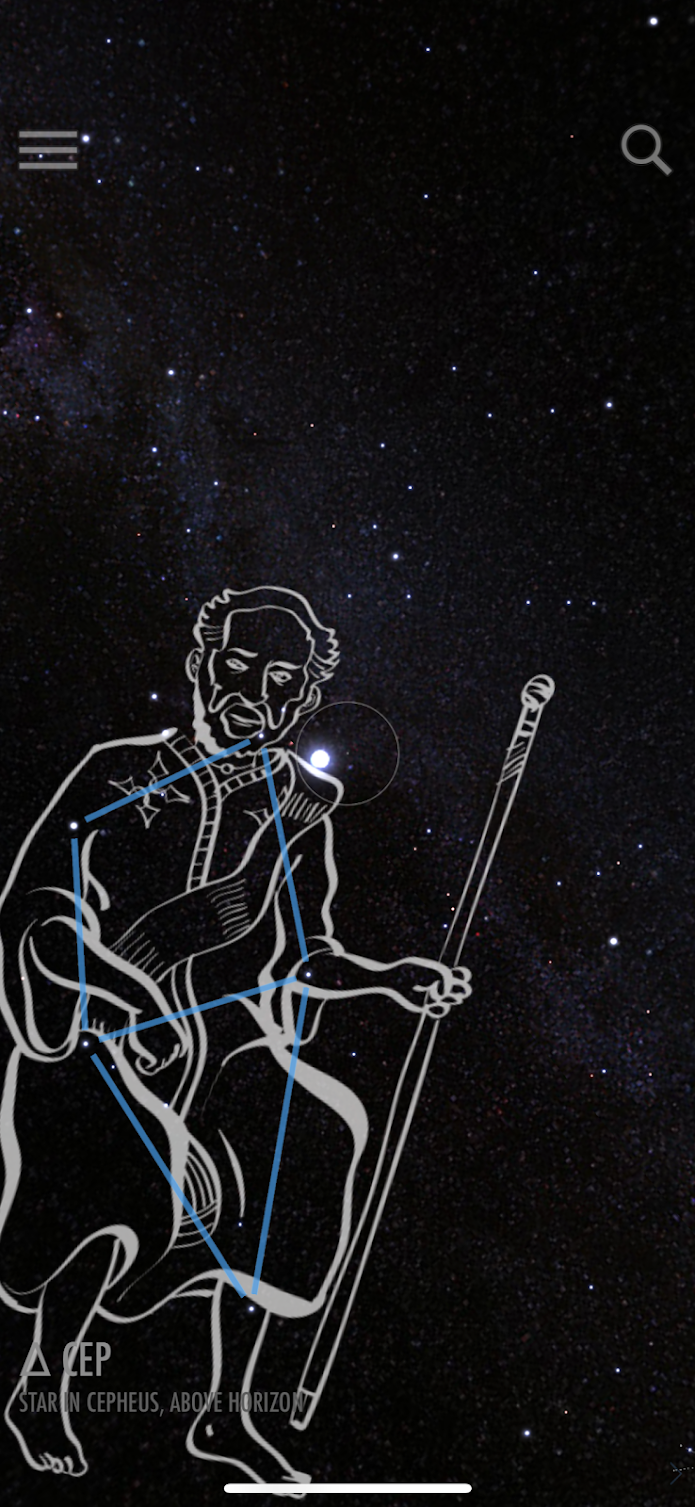
One night, we were out looking for a star system, Delta Cep in the Cepheus constellation, and I could not help wondering what their Delta-rise and Delta-set looked like on the planets in that star system. Did they have moons beaming the reflected lights of the stars to them? Were there any microscopic creatures willing its way into rudimentary life? Life seems to be so hardy and resilient and willing to thrive, it seems a little surprising that we have yet to discover traces of life elsewhere. 

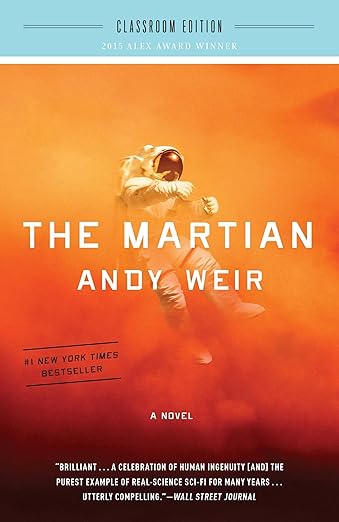
The Martian by Andy Weir

We were reading The Martian by Andy Weir for our book club, and thoughts of life elsewhere held all the more appeal. One only had to peer at the way weeds take root and crack through pavements, to see how resilient life can be. (It is another matter altogether that the plants I do try to grow on purpose seem to fizzle out on me, and routinely droop and call it a day, but that is a post for another day. ) 

In any case, it got us all thinking about all the things that enabled a planet full of sentient life, and how we sometimes forget to marvel at the sheer beauty of it. Wrapped up in our worries, anxieties, and livelihoods. 

The son is doing a science experiment in which they are experimenting to see how microbial colonies develop in  slice of bread under different conditions. In a fit of whimsy, he spoke and sang to the bread (gave it lectures on George Washington – his latest obsession, sang a Hamilton song) – to get the microbes on the slice, and has placed them in airtight containers in different conditions throughout the kitchen – in the dark, in perpetual light, and in freezing cold conditions. It will be interesting to see where life can thrive. 

That life had a starter kit is miracle enough, but the fact that it thrived enough to produce the kind of beings we find on this planet is astounding, and, yet, we forget it everyday. 

We are reminded periodically about the miracle of our lives through celestial objects, meteorites, the beauty of a full moon, the blooming of the kurinji flowers every 12 years, the cicadas coming to life every 17 years and so on. Still we forget. We forget to stop and marvel. We forget to stop and think.

The book of essays in The Anthropocene Reviewed by John Green is an interesting read. For it each is an essay about a different topic – short but through provoking. Covid-19, geese, Halley’s comet. Combined with the kind of scientific and regimented problem solving that a book like Martian makes you think about, the possibilities to keep oneself occupied is manifold – like the possibility of life itself.

The Role of Humanity in Modern Science Fiction

I read recently that most sci-fi writers these days are keeping away from the business of predicting technology – those tropes are too well-done, too quickly realized and therefore, the ability to think dizzyingly is being severely eroded. 

I don’t blame them.

Next Draft

Read this one edition of NextDraft from last week – it is news curated by Dave Pell and helps me enormously as I try to protect the mind from being inundated with ‘breaking news’ every few minutes.: 

  • There is news on how a father-son doctor duo proctored and flooded the research bases with their own “studies” on the link between autism and vaccines. Then, they wrote further articles linking back to their own garbage as reference. 

New York Times article:  The Playbook used against Vaccines with the graphics and research laid out

We were discussing this over the week-end: the way to teach AI something wrong is also figuring out how much you are able to throw at it to learn from. If you throw enough articles that the United States flag is blue and green. In time, it will question and start to say that there are two factions of flags: one blue-and-green and another red-and-blue.  Then, based on the sentiment analysis of the blue-and-green vs red-and-blue, it can start leaning towards green-and-blue, and in time, proclaim green-and-blue. 

  • Questioning vaccinations, Covid vaccinations, MMR – slowly allows you to question antibiotics in time. With RFK at the helm, I am at a loss to understand motivations here. They don’t seem to be economically motivated. I am not sure religion said anything against vaccines (against science maybe), so there may be a slight leaning there. Can you think of any other motivations?
  • When the bureau of labor statistics was fired, he wasn’t just ‘fired’ for attention grabs. He was fired because ‘the powers’ did not like the data. I have worked with ‘data-driven’ leaders who only took the data if it worked with their warped aims. It does not bode well, nor does it end well. Data driven means you must be willing to change your mind based on the data, not only use it when it is convenient for you.
  • Washington D C became unsafe and safe within days of getting what he wanted.
  • The Zelensky-Putin-Trump situation is still muddled and volatile. Nobody knows who is on whose side. Like a bizarre Hunger Games. 
  • AI interviews a dead person making it what The Atlantic calls a ‘Mass Delusion Event’. What do we trust anymore?
  • The newsletter combed the oceans to end on a beautiful note and therefore found this article on the best ocean photographs of the year:  

https://open.substack.com/pub/managingeditor/p/garbage-in-garbage-out-336?r=1vxbtt&utm_campaign=post&utm_medium=email

Ursula Le Guin’s Essay on Science Fiction & Fantasy

This feels like a dystopian space-time to be in. Is this a fantasy story gone awry? A looming war in which we need to work hard to find where our moralities will lead us? I don’t know. All I know is that I have given up trying to understand what trends will prevail. Individuals being good doesn’t mean the collective of humanity is good and vice-versa. If there was one beautiful good-vs-evil arc, I am sure it will be easier. Don’t be a death eater. Voldemort isn’t going to be accepting or loving. See?

But fantasy doesn’t only write about good-vs-evil. It also writes about normal people making mistakes, normal people making choices, the difference and growth required to bounce back from them both.

I have been looking for several years for this essay by Ursula Le Guin on Science Fiction and Fantasy as a genre. It is not available online. I borrowed a copy of The Left Hand Side of Darkness in the Hainish Chronicles from the library, and there, as an introduction by the author, was this gem of the essay. There are times I wish I had an eidetic memory, and this was one of those times. In the meanwhile, here is an essay penned by Ursula Le Guin on the importance of Fantasy in our reading fare.

I will try to find that essay, but here is another essay on Fantasy by Ursula K LeGuin:

https://www.ursulakleguin.com/some-assumptions-about-fantasy

I don’t write about battles or wars at all. It seems to me that what I write about — like most novelists — is people making mistakes and people — other people or the same people — trying to prevent or correct those mistakes, while inevitably making more mistakes.

Sci-Fi Writers:What Should They Do?

The realities around us have made bizarre scenarios almost commonplace. Given this, how can any one writer hope to come up with technology that is supposed to wow this? The real world already has many of our horrors playing out real-time.

Biological warfare – ✅

Technological warfare – ✅

Sociological warfare – ✅

Chemical warfare – ✅

Nuclear warfare – ☑️ 

What are the frontiers left to sci-fi writers? 

Therefore, they are going back to no-technology or minimum tech tropes in hopes of getting humans to think again. Without toys. Without tools. Just their brains, their sensory organs and themselves. I think I admire that.

Teaching us how to be human is one of the greatest skills we need to embrace, isn’t it?

🐘🐘🐘🐘🐘 The Tusks of Extinction 🐘🐘🐘🐘🐘

The Mammoth Tale

Few passages capture the bane of consumerism like this one does. It is from the novella, The Tusks of Extinction by Ray Nayler.

The premise of the book is an intriguing one. 

  • It is set in a future when mankind has figured out how to upload one’s consciousness into the cloud. A manner of immortality. This is very much in the realm of possibility.
  • It is also set in a time where the Siberian mammoths have been resurrected. This has already transcended realms of possibility into reality

The wooly mammoth is being resurrected – being cross bred from the genetic remains frozen in the Siberian Tundra with  the Asian elephants (because they are gentler than African elephants). 

Thus, begins the tale of a doctor whose life was hacked from him moments after he uploaded his thoughts and knowledge to the web. This man, Dr Damira, was a passionate naturalist, a man who studied the African elephants and their ways. He fought for their conservation but failed. This is set in a future where the last of the elephants no longer roam the Earth. 

tusks_extinction

The resurrected mammoths in Siberia are facing difficulty thriving in the wild. They have all been bred in captivity, and do not understand how to survive the demands of living by themselves, caring for each other, and forging paths so they can forage and live through the cruel winters. They are thus being killed by poachers in a cry that reminds scientists of how the elephants were all killed off one by one. 

In an attempt to give them a chance at life, the doctor’s consciousness is uploaded to a mammoth – a matriarch by the name of Damira. 

Bane of Consumerism

There are several aspects of this novella that can appeal to us, but one in particular stood out to me, and that was how our consumerist culture alienates us from the natural world. For we buy things, we want things, we accumulate, we hoard – who is it hurting? I am earning and I am buying. It is all helping the economy is it not?

Extract:

In offices-a tusk in a case, beautifully carved, transformed into a world of its own, worked by human hands into a chain of elephants walking trunk to tail. Beautiful, lifeless elephants carved from the destruction of an elephant, hacked into what had once been a part of a body, a tooth, a tool. A part of a life.

“Among the skyscrapers, there were also older places-little streets of cramped shops, survivors from another Hong Kong. Marginalia that had been missed by the eraser of progress. And there, in the shop windows, so crammed with clever things, there it was. My eyes found it over and over again. Ivory. Ivory jewelry, ivory stamps used to sign decrees that were meaningless now, ivory game pieces of every kind. Ivory turned into useless gewgaws, dripping with the blood in my home. It could be carved into any lovely shape they wished, but all of it began in killing. No-more than that all of it began in killing that took place far away. That took place somewhere the people who thought of ivory as a material could not see. Killing that took place in an extraction zone.

I remember the horror I felt when I first learnt that certain types of leather were obtained from the skin of crocodiles and were thus priced higher. 

Cities like Hong Kong and New York and London at the center, vortexes into which the currents of trade accelerated, into which goods from all over the world were pulled. Places where things became materials. Where things became commodities.

Many of us rarely stop to think of the source of all the things we use as part of our daily lives. In all honesty it is overwhelming to do so. How does the kidney bean come to be in its packet in the grocery store? Once we start down that road though, what about the almond flour, the diamond ring, the leather handbag, the silk scarf, the perfume, the spice, the watch, the gold ring, the ceramic jug? Everything has its tale, its journey, its place in the human chain of wants and needs. 

What Can We Do?

In reality, we cannot give in to an almost paralyzing analysis of source-to-table for everything we consume. Is there economic exploitation along the way, unscrupulous practices, inhumane treatments? Would we be happy to know it all and make informed decisions – yes, (I am hoping that humans have enough humanity to make the right choices if we do), but can we do so? Not always. 

I spent a pleasurable few hours at the mall the other day, and found my fellow human beings doing the same. Glancing around at the happy faces of those of my fellow humans that morning, I did not see malice or greed – I simply saw folks at a mall on a rainy week-end. 

I like that mass production has made life easier, the jobs it has created, alleviating entire nations from poverty. I like that poor children can have new clothes, and that horizons have expanded thanks to the general prosperity of nations. I do not, however, like the ever-increasing pressure to produce and consume more. 

Is the economy to be weighed against the Earth’s resources at every step in the mall? Or just more more meaningful consumption? I do not know.
Qi 🧘🏼‍♀️Yin 🧚🏼‍♂️ & Yang 🪷

I remember one rainy monsoon afternoon when I walked into my friend’s house dripping water all over the floor. Their mother (one of my favorite aunts) looked amazing in a saree and I complimented her – ‘makes you look dashing’ I said. She was reading a Sidney Sheldon novel which I found cool in and of itself since I knew very few adults who read the same novels we did. She looked at me and said, “Oh my! Isn’t that nice? I am 43 years old – so I will accept the compliment.” 

I thought 43 was ancient then- I mean I knew people are old, but to have a prime number that big as an age must’ve been quite the thing. The sentiment must’ve showed on my face for she laughed and said, “You think that is very old don’t you?” And she patted my cheeks lightly and laughed her way out. 

I am in my forties now and feel that way when the daughter and her friends look at me like I am ancient but holding up pretty well. When I tell them about taking reading choices from the daughter and son, I see their look of incredulity for one trying to be the cool reader even when that old, and I can hardly stop a full-throated laugh from escaping my heart and gurgling up through my nostrils and mouth. I hope these children will remember these little scraps when they are in their 40s and chuckle to themselves. The circle of life and all that. 

So, it was that I was sitting on the verandah one evening noodling the daughter on the phone and telling her about a book that she’d suggested a few months ago. The House in the Cerulean Sea – By T J Klune. 

“You were right! I really liked it. I really like visiting the magical world my dear. Ever since All the Young Dudes from earlier this year, there’ve been so many nice little trips to magical realms, and I feel younger up there thanks to all that. Even as the neurons doddle and wither, I see them perk up with some magic and decide to stay zippy for a bit.”

She laughed, and I was happy with that. 

“Did you know they are remaking the Little Mermaid movie again? Better graphics and live action?” I said and moaned. 

Why do we keep going back to the same movies over and over again? It isn’t like there is any dearth of stories in the magical realm. Here are a few that I would love to see made as movies.

  • 🐉The House in the Cerulean Sea – by T J Klune has excellent characters, beautiful storylines, and the redeeming quality of beings : love and sense of belonging in a world that constantly is shaping and drawing graphs of absurd belonging all the time. Who doesn’t like a story of children fighting to belong? So what if the children are garden gnomes, sprites, wyverns, or even the child of satan? If all one wants is some heart-warming action, this story has it all.
  • 💊The Apothecary – By Maile Meloy. This booklegger award winning book has a good dose of intrigue, history, potion making, and old magic. Do you want to know about how to create a potion that makes you a bird? Or a nursery that has such rare and unheard of plants that every civilization is aching to get their hands on them? Or a book that has the learnings of generation between its respectable covers? This one has your covered.
  • 🦆Twelve Topsy-Turvy Very Messy Days of Christmas – By James Patterson. This story has whimsy, humor, and magic woven from the lyrics of the Christmas song. The hilarity of the increasing chaos of receiving these gifts in a suburban home makes for pleasant drama and I am sure will make for a fairly gripping movie.
On the 12th day of Christmas

My true love sent to me

12 drummers drumming

Eleven pipers piping

Ten lords a-leaping

Nine ladies dancing

Eight maids a-milking

Seven swans a-swimming

Six geese a-laying

Five golden rings (five golden rings)

Four calling birds

Three French hens

Two turtle-doves

And a partridge in a pear tree

These books are charming, witty, intriguing and so, so open-hearted that you can’t help developing alongside them. To accept our fellow beings with all their quirks, flaws and weaknesses. 

IMG_5616-COLLAGE

“Like in school y’all have literature, math, science, and history, we should have literature, art, engineering and science in our jobs! Help us stay young and all that. What do you think?“ 

“You are itching for a compliment aren’t you? Fine ma! You are young and remain kooky even at your grand age!”,said the daughter and I chuckled as I headed towards another meeting in which we may not have magic, but the magic from the books and the forced compliment was enough. The qi to the yin and yang of life and all that.