
The son and I had been on a quick trip to see my family in India. The brother, the shining Galahad of our family, said he would be there to pick the little fellow and self at the airport. I nestled into the journey comfortably equipped with books.
I was midway through Reading Lolita In Tehran, a book that has languished on my to-read list for far too long. The journey was comfortable enough, and I found myself pulled into the period from the overthrow of the Shah of Iran to the early 2000s when the author finally decided to leave the country and move to the United States. The author is a professor of English Literature and her upbringing in an intellectual family and world make it very hard for her to digest the increasingly repressive practices the regime imposed on them.
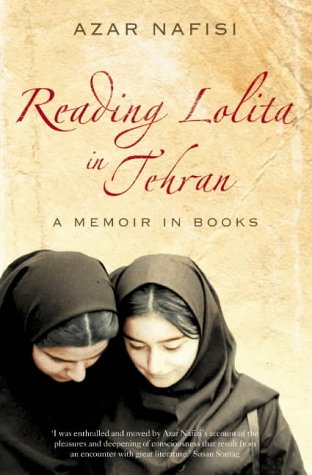
In the book, she writes of how many of her students were categorically rigid in their views. Some boys (or young men) were vociferous and rigid in their condemnations and swallowed all the rhetoric that had been fed to them by the repressive regime. Men could be punished for not sporting beards, women flogged for not wearing purdahs. One time she finds herself cautioning a young man who followed her to her office parroting things about the West after a class on Pride & Prejudice by Jane Austen, that he may well end up like Elizabeth changing her mind about Mr Darcy one slur at a time.
It is astonishing how many young minds could be made to think a certain way. As I moodily prodded a potato on the flight’s lunch, I looked to the son sitting next to me – he was avidly watching Cars and pulling my attention to particular scenes.
“See? See? Lightning is going to blow a tire now. Now Amma.” he said far too loudly, for he had the headsets on, and was excited. How did innocent boys like him grow to young men like I was reading about?
You ready to meet Maama (Uncle)? I asked the son as he sat up after he finished watching the movie for the n-th time. Yes! he beamed and I thought how much he resembled my brother when he was a child. He had the same beam like a full moon.
I got down at the airport and scoured the crowds gathered outside. I looked out for the beaming face of my brother, couldn’t see him and stepped back inside to get wifi access so I could message him. It was then that I noticed a man of palm tree height, swinging his branches at us. There was no reason to single us out. It was 3 am and the throng outside was not waving at us. It was minding its own business. Plus this tree was employing that windmill action that is characteristic of the Bala family. But this could not be him.
What I saw wasn’t the smooth face of a full moon, but a moon that slipped and muddied itself in the nearest marsh. Apart from a beak and two eyes, everything else as I said was scoured. I peered closely and he leaped forward startling some of the crowd with his “HIIII”. The voice was his, but I could not understand why he looked like Ayatollah Khomeini , and I said so with some asperity.
“Reading a book on Iran I see?” he said shrewdly as he pulled me in for a hug.
“Reading Lolita In Tehran”, I said bemusedly. “What’s with the beard – like a louse rug on a biscuit.”
The beard affected me strongly, and I set aside sisterly tones of affection and reached for the tug – “It looks ghastly.” The brother looked pleased that I was taking the facial hay like this, and he clung to it looking more like three billy goats gruff, every minute.

“Keep with the times! The latest fashion – all the dudes have them.” At this point, he stopped to reel off the names of cricket stars and film actors, the best of whom I could not recognize if I had coffee with them beardless. If they were beardless I mean. I don’t have a beard. Estrogen and all that.
I sighed and quoted Azar Nafisi’s husband from Reading Lolita in Tehran:
None of us can avoid being contaminated by the world’s evils; it’s all a matter of what attitude you take towards them.
The son was peering at his loving uncle in that keen manner that children have. “Maama – how come your hair is coming out of your face? Mine only grows on my head!” said the fellow who has been under the influence of the clean shaven thus far.
“Magic!” murmured the brother and chuckled softly at his awe. The moon beamed down at us from the sky above, and a gentle breeze rustled the palm trees, as we made our way home.
 Nourish-n-Cherish