The Poochandi: Fear, Eunoia, and Allodoxaphobia

The Poochandi

“Acchichoo – Poochaandi varum!” 

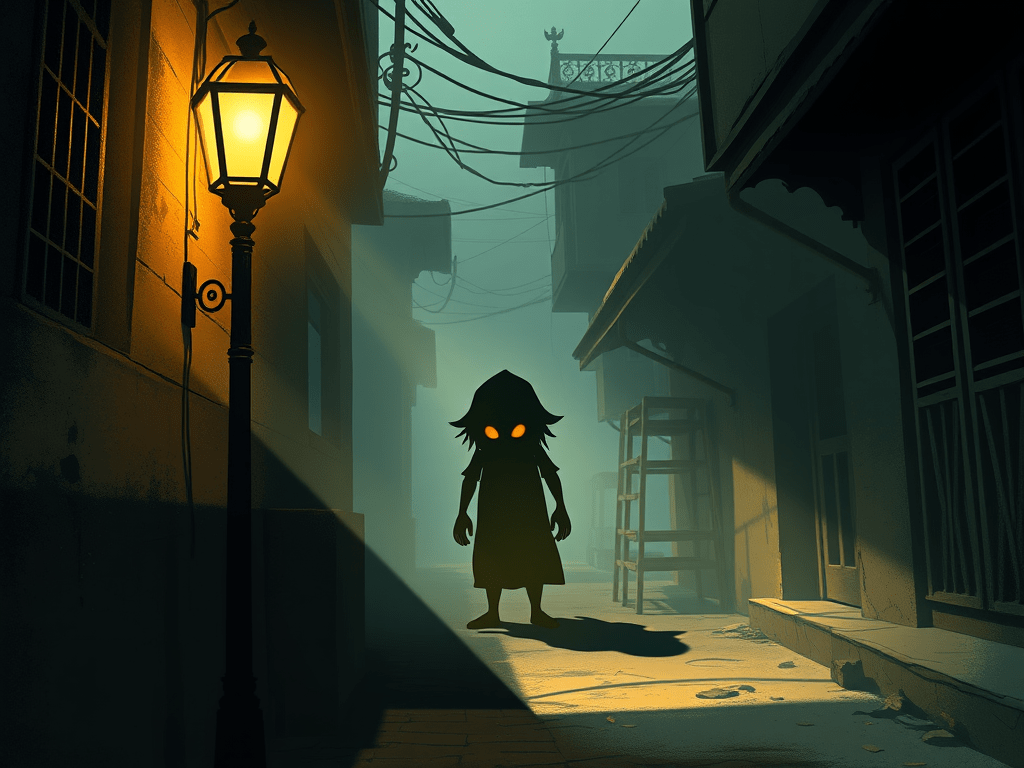
Many of us growing up must’ve heard of the famed poochandi. He is ominous and omnipresent. The poochandi is the South Indian version of the bogeyman

In one of R K Narayan’s stories in the Grandmother’s Tales or Malgudi Days, I forget which one, he writes about this vague poochandi. The poochandi is a ghost or nefarious persona, whose purpose in life seems to vary: Frighten children into swallowing the next morsel of rice, or getting the slightly older ones to come home soon, or the daughter-in-law of the house to light the lamps on time every time. 

I remember thinking that the poochandi seemed like a busy, if slightly jobless character.

As we grew older, the poochandi was replaced by ‘They’ as in Society. 
What would They say? 

🫠 You aren’t making a 5 course meal in between the 3 course meals that are each 4 hours apart? What would They say?

🫠You aren’t wearing a 9 yard saree so you can pour water droplets on a coconut? What would They say?

🫠You aren’t making murukkus as well as halwa for Diwali? What would They say?

They were all-knowing & all-judging. 

If you were perfect, They knew all the ways in which you were not. 

So imagine finding out that fear of what They would say actually has a word? 

Allodoxaphobia & Eunoia

Allodoxaphobia: fear of what other people think of you. 

I first read the word in the book, Build the life you want – by Oprah Winfrey, Arthur C Brooks

Allodoxaphobia can work in strange ways – sometimes, it can make us function in ways that enhance our positive qualities. Other times, it can burden us with a mindset that we neither grow out of, nor discard easily. 

They and the Poochandi worked full-time to keep you pliant.

In the face of this, what can we do to retain and maintain our eunoia?

Eunoia? You ask. I am glad you asked. You didn’t? Well, here I go anyway.

Eunoia – is a beautiful word that signifies a positive and kind disposition. The kind of personality that develops out of cultivating beautiful thinking or a well-balanced mind. 

The ability to choose without spurning, live without hurting (others or ourselves), etc are extraordinarily hard things to do. It is why philosophers set great store by it and acknowledged this to be a great thing.

Sometimes what They say, and what the poochandi threatens aligns with our inner sense of eunoia. But when they don’t align, how do we balance the cultivation of eunoia against what They will say?

Eunoia means doing the hard work of finding our morality, and sticking by it regardless of what They say, even if the Poochandi will find you for it. Eunoia means being personable and helpful without giving yourself over to Them and Their demands. 

Sometimes, just sometimes, I’d like to find the poochandi and work with them to change what They say. A Poochandi who will give you a nod or a pat on your back when you clip unkindness in the face. A Poochandi who will not turn a blind eye to cruelty,  and arrogance, say? 

Here is a two-part question to you?

  • What would you like your Poochandi to do?
  • How do you cultivate Eunoia?

A Lament for Short Stories

Give me short stories over real news or fake news any day

The clouds are wondering whether or not to drizzle. It is the perfect weather for musing and meandering thoughts.

I wonder how I meander to the thoughts on short stories – maybe a recent conversation. But I feel the short story is one of the most poignant losses of literary fiction. As children, magazines were filled with short stories and the thrill of finding a short piece contained in and of itself providing the nourishment of the soul was brilliant. What happened to short stories these days?

Give me short stories over real news or fake news any day. Please.

Stories in their natural length: stream, or rivulet, or tributary, or river

I’ve read stories stuffed into tweets – threatening to spill over, and bulging in all the wrong places.

And Then.

I’ve read stories watered down and stretched into novels. The original essence there, somewhere perhaps, but too watered down like homeopathic medicine.

What I’d like is a story – at its length. No fluff. No dilution. Just essence.

If a story is meant to dance and spurt joyously like a stream, let it. If it settles in, and flows like a river, let it. If it is a tributary and wants to join the main river, let it. If it is vast and encompasses depth adn breadth and expands into an ocean, let it.

Kindle Singles came up with the idea – I wonder what happened to it. They fizzled out.

There are anthologies – but they are few.

Reading the first half of The Overstory by Richard Powers made me yearn for short stories again. I think it is time to revisit Golf stories by P G Wodehouse or a little visit to Malgudi to reacquaint myself with all the characters. Tales from a Village School would be welcome too, wouldn’t it? Miss Clare Remembers is a wonderful book of short stories all woven around the fallen giant – the elegant, thin, straight-backed kind teacher, Dolly Clare.

Give me short stories when my attention is wandering. Enough to keep me stimulated, and wanting more.

Recommendations Please

Are we losing another art-form altogether? What would Somerset Maugham say, what would Alice Munro say? I remember the thrill of liking an author’s story, and then finding a whole book written by them. How marvelous it would be to crack open any magazine and find short stories there?

If you do read short stories, which magazines do you get your source from? Apart from The New Yorker I mean.

P.S: I have written a collection of short stories of my own too – both singles & themed collections. Written to its natural length, and savored from time to time by Yours Truly, but otherwise waiting – wondering where they can be published. So, if you have any recommendations of publications for short stories, please let me know.

⌘ The Essence of Life ⌘

The Fabric of the Indian household

One of my half written posts from one of my earlier trips to India touches upon the heroines of the Indian upper middle-class  household – the cooks and maids. The fabric of the Indian household is maintained through a network of maids – 3 or 4 of them, who swish through the house at various points in time, professionally taking care of the household chores, and keeping a human touch to those who crave for it. I know the aged parents looked forward to a few words with them: a smile, a question, or a comment.

As much as I savored the solitude, and quiet of nature back home in the United States, I understood the tug and pull of humanity in the fast-paced life of the Indian subcontinent, as well. You were never truly alone, even for a few hours, in India. There were maids, delivery men, sweepers, cleaners, neighbors in close proximity, cooks, who were all as much part of one’s routine as the immediate family themselves. 

“Did Appa like the avial?” the cook would ask as she entered the house, to which the father-in-law would reply cheekily that it was nothing compared to his sister’s avial. We all know, there is no point talking when his sister’s avial is raised, and she does too. “Ask your sister to make it then – look at him!” she’ll say looking to the mother-in-law for support and she would jump in with glee.

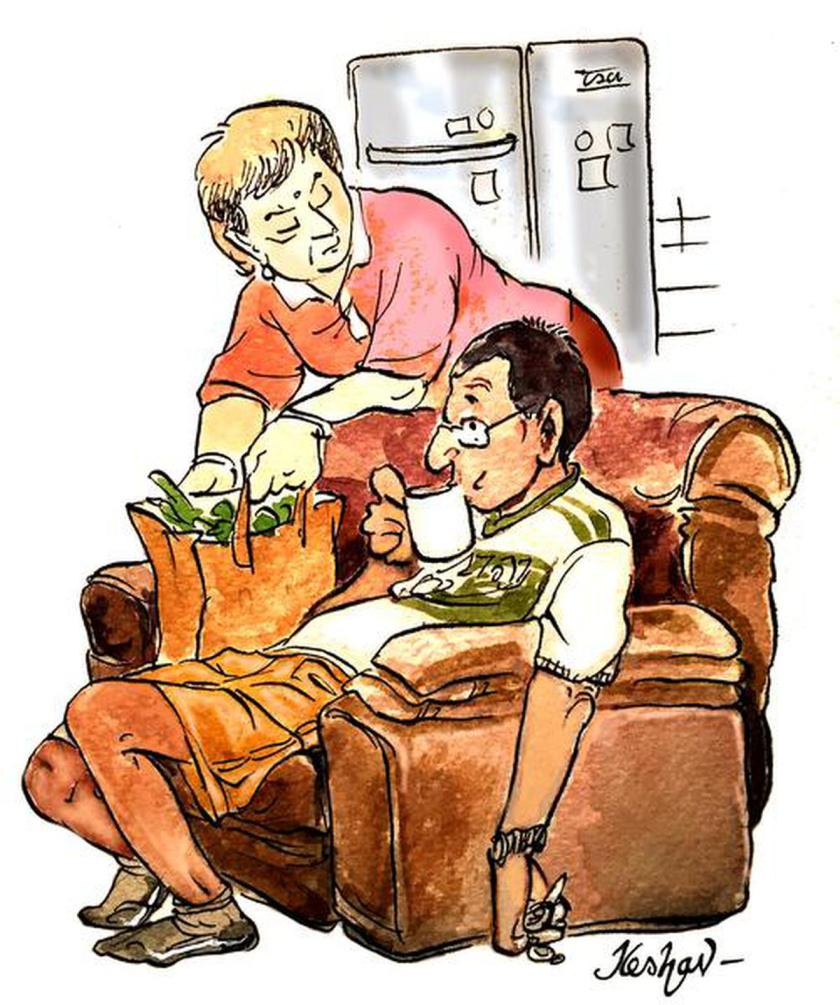
Read also: The Simple Grocery List

MrKeshav- Open Page - Groceries

Picture Credit: Mr Keshav, The Hindu, Open Page, on the article, A Simple grocery list

The whole thing would last maybe a few minutes from start to finish but this sort of camaraderie punctuated the day at regular intervals, and it provided them with much needed human contact. 

A few days before he began losing consciousness, he pestered his wife to buy their maid (their maid from a few years ago)a cell-phone, as she had told him hers was broken, when she’d called to see how he was doing.  

The Essence of Life

He was not a perfect man, and yet he managed to get people to only remember his loving side, his gentle humor, and his willingness to help. I cannot find the exact quote now, but when asked how he produced such marvelous tales of Malgudi, the eminent writer, R K Narayan, said that he only needed to look out the window, or sit in his front-porch observing life, and they gave him all the material and inspiration he needed. 

As the cooks and maids cried uncontrollably at his funeral, and told us how much they would miss him I was reminded of that interview by R K Narayan on the nature of humanity, and their human foibles being the gentle essence of life itself.

After all, we are who we are, and never is that more apparent than in the small, everyday interactions.

The Magic of Malgudi

Maybe it was the fact that we visited the home of R K Narayan after the opulence of the Mysore Palace, or the fact that while all of rural Karnataka seemed to have decided on Mysore Palace, nobody had thought of R K Narayan’s abode, but the author’s bungalow on a quiet residential street was like a little cocoon of quiet and peace. A lovely setting in which to imagine the most magical tales of small-town Malgudi.

It isn’t a humble abode – it is a beautiful house set in an upper middle class neighborhood. White and two-storeyed, it is a lovely home and while inside, I couldn’t help remembering his own notes on how he had acquired the piece of land on which it was built. 

rknarayan

Book: The Grandmother’s Tale – By R K Narayan.

Far away from the town center as it was then, the realtor had promised him that it would be the bustling center of town one day. He left his noisy abode in Vinayak Street, and moved to this one – with the railway tracks to one side, the lilting hills and the then empty lands stretching between the home and the Mysore Palace.

img_7457

With his characteristic wit, he wrote of his gardener, Annamalai, who helped maintain the land around his house. Annamalai, like most men of the soil, intuitively knew how to clean and maintain lands.

I stooped to look at the plants for a brief moment before entering the home and remembered Annamalai’s classification: “This is a poon-chedi” (flowering plant) and chuckled to myself. 

“If he liked a plant, he called it poon-chedi and allowed it to flourish. The ones he did not like, he called “poondu” (weed), and threw over the fence.”

  • R K Narayan –  The Grandmother’s Tale (Story: Annamalai)

Annamalai was no horticulturist but seems to have taken care of the great man’s lands well enough.

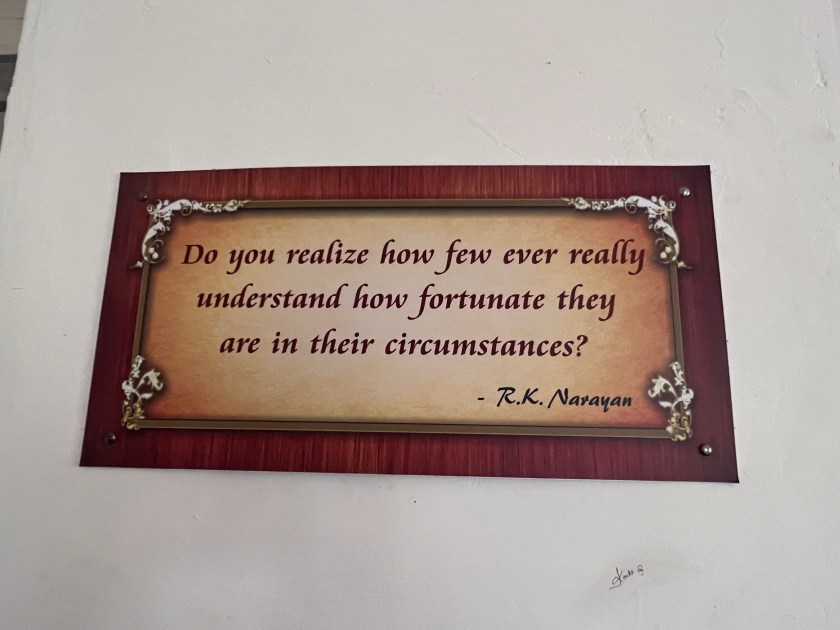
Inside the house, it was largely quiet and the lady who stood at the entrance was happy enough to receive us. She was diminutive, and oddly neither welcoming nor dismissive. She surveyed us as if mildly annoyed with herself for being interested in us. She sometimes followed us as we entered the household and read the quotes off the walls. When it was obvious that we were in awe, and really happy to be in the place where R K Narayan wrote his gentle tales of Malgudi, she turned into a hesitant hostess and urged us to explore the rest of the house too. “Go upstairs and see the bedrooms. That’s where he slept.” she said, and I had to resist chuckling. 

I wondered what the master literary giant would have to say about her. It would be an insightful description no doubt and one tinged with the gentility and charm that he saw humanity with. That much was certain. 

The thing is: going to this quiet house tucked away in a residential locality in Mysore was comforting, and I thanked the brother profusely for showing me this gentle giant’s house. 

“Do you realise how few ever really understand how fortunate they are in their circumstances?”

– R K Narayan

img_7473

Rasipuram Krishnaswami Iyer Narayanaswami, the author and Rasipuram Krishnaswami Iyer Laxman, the cartoonist together enthralled the world with the spontaneity, humor and joy of Indian life. 

img_7468

Also read: 

The Laughing Life

The son tumbled out of his room with yet another joke. His teachers apparently tell them a joke every now and then, and he repeats them to me if he finds them really funny, or remembers to. One of the many gifts of the Covid lifestyle are little snippets like this.

I stood there waiting and wondering what today’s j would be about.

“Why did the skeleton not go to the party?”

“I don’t know – because it had too many bones to pick?”

“Ha! Good one. But no.”

“Umm…don’t know. Why didn’t the skeleton go to the party?” I said a little impatience in the tone. I had to get to that next meeting.

“Because it had nobody to go with. Get it? Get it? No Body to go with?!”

I moaned and laughed at the same time. A lovely feeling of warmth spread through the being as I headed off. 

Later that day, I sat musing about humor and how marvelous a gift it is to humankind.

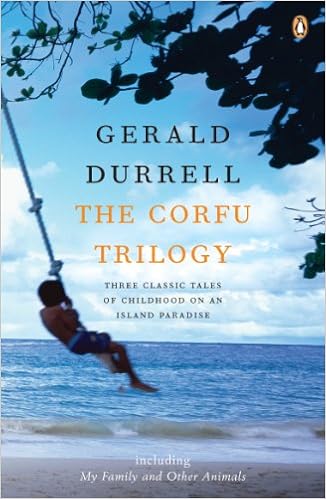
My Family and Other Animals is a marvelous book by Gerald Durrell. This book has the distinction of being the first book that I read belonging to the Humor genre. I remember it as though it was yesterday. Sitting in class 8-B, the sun was shining outside, there was a butterfly in the lawns outside, but our English teacher seemed to prefer the miracle of the written word to the fluttering butterflies outside. She put on her glasses and whipped the book out of her handbag in one elegant motion and said we were going to read the book.

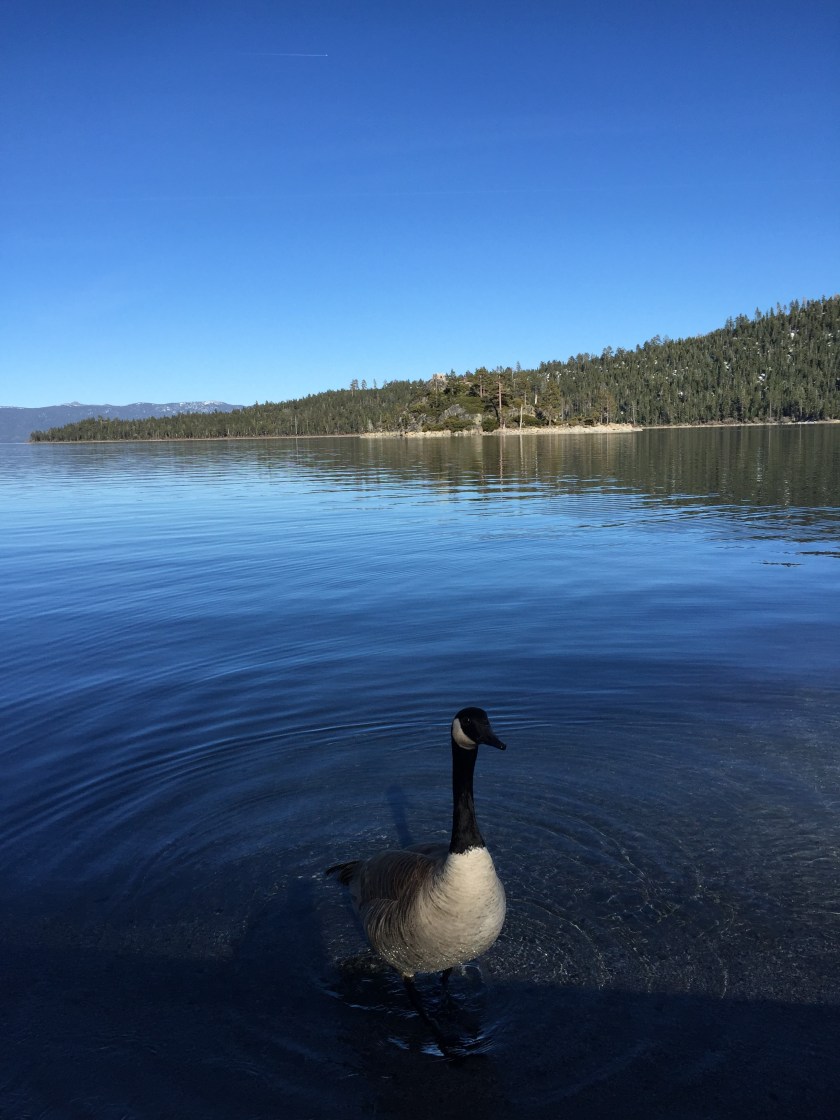
My Family And Other Animals: See how the author makes you laugh when you read the title itself? she said. We must have looked like Canadian geese being tickled for the first time, for she proceeded to explain the humor in the title. I don’t know whether you have tried tickling a Canadian Goose. I haven’t, but I think they would react the same way. Stern looking creatures Canadian Geese.

IMG_2223

Anyway, I hope for my teacher’s sake that we loosened up as the reading progressed. But, now that I look back, it was one of the first books that made me look for humor in daily situations. Mark Twain – especially the little story of Tom Sawyer painting the wicket gate was another. Swami and Friends by R K Narayan was equally memorable. I remember reading somewhere that R K Narayan when asked about his inspiration for Malgudi – that eternally inviting town that beckons you every now and then, said, he just watched life pass him by and that was all there was to Malgudi.

Pickwick Papers was slow going initially, but the humor in the book was unmistakable. These are the times I am thankful for growing up in a pre-Internet, pre-on-demand television era. I might not have stuck with Pickwick Papers otherwise. 

The ultimate guide was of course P G Wodehouse. When in high school, I changed upon P G Wodehouse, I did not immediately appreciate it. It took a few readings, but oh! What a gift?! What a gift! 

The father, of course, was and remains a constant reminder to find joy in every day life. His jokes were not always appreciated by the mater, but he could take a the rough with the smooth. Life was funny, curious, interesting and not always serious if only we stopped to admire the humor in them. The husband, the daughter and the son all joined the bandwagon too. My Family and Other Animals was taking shape in the Nourish-N-Cherish household.

Where am I going with all of this?! Oh yes! The blog itself. Nourish & Cherish started as an act of whimsy 16 years ago. It is a place that I regularly choose to don the sunny side up mentality in life.  As I started to write down this little skeleton joke, I mused on the thousands of little jokes that did not make it to the blog. For of course, I am guilty of thinking about writing and reading about writing far more than writing itself. But I am glad for the ones that did make it.

In over 900 posts over the past 16 years, life has taught me time and again, that you can choose the sunny side up.

To infinity and beyond!

How the Library (Not the Prince) Saved Rapunzel

When the Covid lockdowns started, many folks went on a buying spree (we all know the toilet paper jokes). Ever the dutiful one, off I went too. I was feeling rather pleased with myself when I got an extra bag of rice, and headed onto the library (to get books to tide us over during the lockdown).  When the husband called to ask where I’d gone, I sheepishly said that I was at the library just in case we were unable to get books during lockdown. I could hear a sound like a paper bag bursting – his version of a cross between a snort, and the urge to laugh. I bragged about the extra bag of rice, and I could see his face wondering why he had to be landed with someone, who in P G Wodehouse’s language, ‘must’ve been bumped on the head as a baby’. 

Well, I must say that when we staggered home with books for the children and self, I felt better. The local library has been one of my favorite spots to visit of course, but over the Covid period, I felt like Rapunzel in the book: How the Library Saved Rapunzel (Not the Prince). The library allowed us to schedule an appointment and arrange to pickup books on hold. What was more, they were kind enough to include a few picture books of their choice if you requested them to do so. I am eternally grateful to have access to libraries.

I felt almost an irresistible urge to increase my Science based reading this year (maybe this is a tiny rebellion for the disturbing anti-Science strain emerging with the 45th POTUS office). Starting the year off by re-reading Carl Sagan’s Cosmos set the stage for the year ahead. The following books gave me no end of pleasure and learning over the year. (My Science writing class for children)

trees_komerabi

2020 was the 50th anniversary of Earth Day

  • Unbowed – Wangari Maathai (in progress)
  • On Looking  – Alexandra  Horowitz
  • Losing  Earth  A Recent History – Nathaniel Rich
  • This is the Earth – Diane Z Shore & Jessica Alexander, Paintings by Wendell Minor

Bill Anders said: “We came all this way to explore the moon, and the most important thing is that we discovered the Earth.”

What a lovely statement that is, and together with his Earth Rising image, contributed to the concerns around Planet Earth that led to founding of Earth Day in 1970.

1200px-NASA-Apollo8-Dec24-Earthrise

It was also a wonderful year to take in poetry. Mary Oliver & Margarita Engle were always welcome in a year when poets alone seemed to know the right turn of phrase for the bizarre. Dr Seuss & Jackl Prelutsky always know to turn one’s frown into a smile. 

  • Blue Iris – Mary Oliver
  • Enchanted Air – By Margarita Engle
  • Dog Songs – Mary Oliver
  • Owls and other fantasies – Mary Oliver (Yes! no!)
  • Be Glad your nose is in your face – Jack Prelutsky
  • Dr Seuss books (always worth reads and re-reads). I found a few gems that truly tickled the mind and got out some belly laughs.
    • Horton hears a Who
    • Horton Hatches an Egg
    • Sleep book
    • Oh the Thinks you can Think
    • How Lucky You Are
    • Thidwick the Big Hearted Moose

summer-collage

With the Black Lives Matter movement, the year was ripe for educating oneself on the inequities of society and civil disobedience. The local library, news media, and friends all helped with an excellent array of reading material. Notable among the works read then were:

  • Becoming – By Michelle Obama
  • Black Panther – by Ta Nehisi Coates
  • Sneetches and other stories – Dr Seuss
  • A Long Walk to Freedom – Nelson Mandela‘s children’s book version
  • My Many Colored Days – Dr Seuss

img_8883

With uplifting books and humour, life can be truly marvelous. My all-time favorites kept me company, and I am eternally grateful to their influence of course but a few others were added to the list this year.

The world isn’t such a good place either, and reading books such as these helps to remind us about the many problems that still beset society

The lure of power, and how we are seeing it all play out in real life

  • The Fate of Fausto – Oliver Jeffers
  • Louis I – The King of Sheep – Oliver Tallec
  • Yertle the Turtle and other Stories – Dr Seuss
  • Harry Potter and the Order of the Phoenix (pieces relating to the Minister of Magic refusing to acknowledge Voldemort’s return so he could stay in power)

Of course the true magic of life is never complete without children’s books. There are so many of them in this genre, that I did not even note half of them. But a few of them lit up my life

  • My Grandma is a Ninja – By Todd Tarpley, Illustrated by Danny Chatzikonstantinou (When I become a grandma – though it is a few decades off, that is how I wish to be 🙂 )
  • Gondra’s Treasure – By Linda Sue Park
  • Enchanted Wood – by Enid Blyton (old Saucepan Man, Silky and Moonface with the lands above the enchanted tree – though it doesn’t hold the same level of magic it did as a child, it still has its charm)
  • The Red Pyramid – By Rick Riordan (this was the son’s recommendation, and thoroughly enjoyable it turned out to be romping down the Egyptian myths!)
  • The Quiet Book – by Deborah Underwood
  • A Fun Day with Lewis Carroll – Kathleen Krull & Julia Sarda
  • Peter Rabbit’s Tales – Beatrix Potter
  • Why is my Hair Curly – By Lakshmi Iyer
  • A History of Magic – Based on Harry Potter Universe
  • Tintin Comics (a fair few)
  • Calvin & Hobbes
  • The Velocity of Being – Maria Popova & Claudia Bedrick

velocity_being

On that magical high note, here is wishing everyone a healthy, happy new year in 2021. Things are already turning around, and looking hopeful. Keep reading, and sharing 🙂

img_0851

Eye of the Pumpkin

“What?! Dancing in the kitchen?!”, said the son smiling his dignified smile of indulgence. “I haven’t seen you this happy for a long, long time!”
 
 
“Yes! I am dancing 💃 young man! You dance 💃 in the kitchen when you have a dignified President! You dance 💃 when a woman’s ambition is finally rewarded. You dance 💃 in the kitchen, you dance 💃 in the streets, you dance 💃 in the woods, you just dance 💃!” I said kicking my feet up in the air.
 
 
The men smiled at each other exchanging significant glances.
 
 
“We are going to throw the drishti pumpkin 🎃 out! Oooh yeah! ”
 
 
“What?!”
 
 
“Well!” I said, catching my breath after the dance💃 routine and proceeded to talk about pumpkins, evil eyes and the evil eyes of the pumpkin.
 
 
It isn’t uncommon to see a pumpkin out on the street: During Halloween, 🎃👻, in the United States, but anytime on the streets in India.
 
 
I remember being shocked the first time I saw a pumpkin being flung out on the streets as a young girl. I was less than a decade old, and had wrestled my little brother, and then out-debated him in a secret language to get to the window seat as we travelled from the Nilgiris to my grandmother’s village near Trichy. The entire 8 hour journey is a picturesque one. As the bus winds its way down the Nilgiris, and then slowly descends into the plains, the air gets warmer and warmer, and the scenery changes from misty hillsides to lush green plains with the final stretch of road between Karur & Trichy by the river Cauvery. For several hours, the trees on either side of the road tip their branches together and whisper little messages to each other across the road as the buses, trucks, jeeps, cars, motorcycles and cycles rustle by underneath trying to get a wisp of the whispers above. The river flows on murmuring at places, serenely flowing along at others, but always providing a pleasing backdrop to life in these South Indian plains. The little villages along the way, could be Malgudi, and just peeking out is enough to provide a R K Narayan-ish story.
TH10_Nilgiris-COLLAGE
 
I was daydreaming in the bus looking out and imagining a myriad things when I saw a sizable pumpkin lying squashed outside a house. Coming from a family that frowned upon wasting food of any form, I wondered what they would say about this great waste of a large pumpkin?
 
 
It turns out, that certain pumpkins are meant to be thrown out. That particular pumpkin, I was surprised to learn, was there to ward off the evil eye, and needed to be thrown out. The ‘evil eye’ or drishti is one of those things of folklore in India. There are many rules, laws, workarounds and theories at work here – it is dubious, but entertaining nevertheless:


  • When something bad happens, it may be a good thing, for it offsets the evil eye.
  • When something good happens, then one must remember to throw out a pumpkin to ward off the evil eye. (#Prevention better than #1?!)
  • When nothing happens, you squash a lemon or a smaller pumpkin to ward off the evil eye that slowly accumulates – like dental plaque I suppose.
  • When lots of things happen at once, and one cannot figure out whether it is good or bad, you trash a pumpkin just in case.


Now, many times in the past few years, I have referenced the pumpkin used to ward off the evil eye. If the United States has spent so much time being the world leader, championing climate change, leading scientific research and helping democracy thrive in different parts of the world, it must’ve accumulated oodles of drishti mustn’t it? When the 45th President, Donald Trump won in 2016, I cried. I cried not because I am particularly close to any policies or any such thing. But because such a great country would elect a boorish bumpkin like Donald Trump: a man hellbent on thwarting democracy.


This must be our drishti, I thought. Well, how does one know that? Refer to rule #1.
 
“The gods grow jealous of too much contentment anywhere, and they show their displeasure all of a sudden.”
― R.K. Narayan, Malgudi Days
 
 
Today, it is time to throw the drishti pumpkins, carved with those evil eyes, out.
 
 
Today, it is time to dance 💃 like no one is watching for the whole world is watching us reclaim our dignity.
 
halloween_ij_fm_page
Continue reading “Eye of the Pumpkin”

Teachable Moments

I was telling the husband casually about a friend of mine. “She is thinking of taking up primary school teaching.”

“Huh?! Really?” said the son, his ears twiddling, for the news interested him. He loved this particular aunt.

“Well – maybe I should tell her the best grades to teach then!” said he.

“What do you mean the best grades to teach? ” I said cautiously for I felt a moment to savor coming on in my bones, but acted as nonchalant as possible. “Elementary school teaching – doesn’t that mean kids in your school?”

“Well, you know how it is? We aren’t all just cute kids like you think Amma! There are some grades you want to be careful with.” he said with a meaningful look in his eyes.

“What do you mean? I’ve seen you children in Elementary School – so sweet you all are!” I said – knowing fully well the reaction this would elicit.

“Ha! Okay, okay – I’ll tell you. Kindergarteners are naughty, 1st graders are okay, 2nd graders are rowdy, 3rd graders are sassy, 4th graders think everything is lame, and 5th graders are okay.”

I stifled a hearty laugh for the moment, and asked him, “So only 1st and 5th grades are okay to teach huh?!”

“Yep! Pretty much! ” he said.

I gave into a full throated laugh, not for the first time admiring and thanking all the stellar teachers of the Naughty, Sassy, Rowdy, and Think-Everything-Is-Lame children. Somehow, these magicians strive to make students of them all.

teachers

Later that evening, the daughter came moaning into the kitchen – “Gosh! There is just so much homework! I mean – these teachers think we are awesome, but we really aren’t!”

Coming hot on the wheels of the Elementary School analysis, this seemed to be something to be milked for its true worth. So I tried.

“Are you saying your teachers are poor things for trying to uplift you and so on?”

“Of course they are!” said she.

“Remember they were teenagers too once, and probably realize that teen potential is high. They do want to give you the best opportunity to attain your true potential!” I said, thinking of the stalwart teachers of the folks who make the 30-under-30 and 20-under-20 lists.

Yeeaaarrcccchhh!” she said. I am quite sure Yeeaaarrcccchhh isn’t a real word, but a guttural sound open to interpretation. After a moment she said, “I sometimes think to myself what my teachers must be like if they were teenagers today. ”

There was silence for a moment. A silence I did not break while she gathered her thoughts. This was going to be something, I knew. When the daughter thinks of smart-aleck moments, it is best for the waiting populace to take cover.
“My Chem teacher would probably be obnoxious, but not a super smart version of Sheldon. My Math teacher would be a shy but sweet kid. My history teacher would have been the low key popular kid who is friends with everybody.”

I laughed enjoying this analysis as she went down the list of teachers. And then, I asked looking as innocent as it was possible to be. “What would you think of me as a teenager?”

“HA! Not falling for that one – better luck next time Mother! Mother, who is long past her teenage years!” she said, ruffling my head like I was a cute dog, and made off for her room to tackle the oodles of homework her stellar teachers had set out for her.

As a child I was keenly aware of both sides of the coin. Both my parents were teachers, but that did not stop me from becoming a dab hand at imitating my teachers, and giving them fond pet-names when required. The father and I enjoyed the creativity there.

All in all, I know in the name of professionalism and growing up, we lose this marvelous trait of making light of things, but I wish we didn’t.

For those who enjoy light tales of children in their schools, these are all good reads and worth chuckling anytime one feels the weight of the years settling in on them.

Some whimsical poems here:

We-Are-Teachers.Com

Do-Nothing Cooking

It was a mild and breezy week-end morning. “Yeah! We are going to work in the garden today! In the garden! In the garden!” I heard the song gain in strength as the gardeners thumped upstairs. “Get up amma!”, they called. I was lingering on in bed, savoring the warmth of the summer quilt.

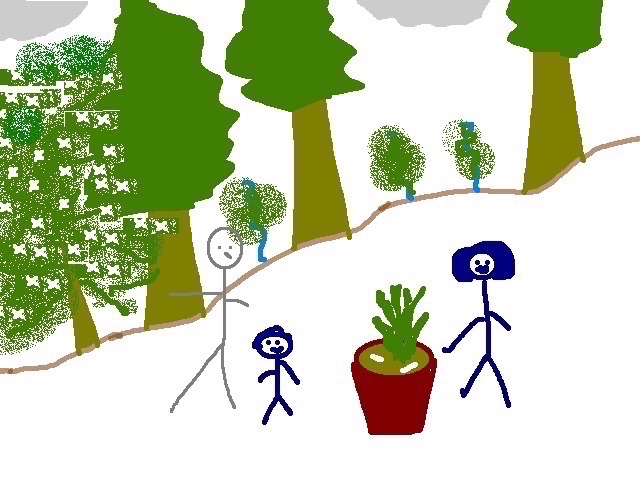
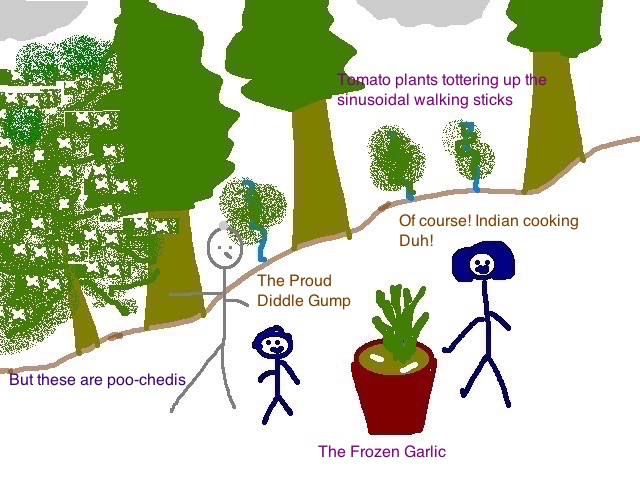
“What is this?” I asked a little later. The husband was back from somewhere brandishing several sinusoidal wave-like sticks of blue. Could they be fancy walking sticks?

“No – silly. These are for the tomatoes.”

“Yes – don’t you want large tomatoes from the plants? Look, they are already sagging outside.”, said the father-in-law pointing to his pride and joy in the garden. “The rasam can be even tastier with these tomatoes.”, he said with a sly grin on his face.

“Can you make rasam without tomatoes? I just don’t like tomatoes but I like the rasam otherwise.” said the daughter.

This I-Don’t-Like-Tomatoes theme was getting a bit tiring. I rolled my eyes, and stamped my foot in exasperation. “I do not know how to make tomato rasam without tomatoes! Let me know when you make it. ”

“Okay okay! Sheesh kababs! No need to get all cranky if you don’t know how to cook something.” she said and made off to the garden dragging her little brother with her to help her grandfather.

“Make rasam without tomatoes indeed!” I muttered to myself as I gathered the garlic, cumin, pepper, tamarind and tomatoes for rasam. Once the rasam was comfortably simmering, I went back and forth from the kitchen to the garden. Every now and then I was beset upon to give directions and suggestions for the garden. I asked for an old rose plant and the star jasmine creeper to be pruned.

do-nothing-garden

“But they are poonchedis ” said the father-in-law reluctant to cut flowering plants. South Indians have this strange, but endearing affection with flowering plants. I assured him pruning was good.

The children were busy discussing how to plant the other little flowers and herbs in the garden. The son was looking mighty impressed with himself for he was patted with admiration by his elder sister on the gardening tip he had provided.

“If you put a garlic in the herb garden, then nothing will happen – you know? Nothing. Yes. Ms Lara told us that. No insects will come.”

“Really? We can do that.”

“What?! Do we have garlic in the house? I didn’t know that!”

“Of course we have garlic in the house! How else do you think we can do any Indian cooking you little diddle gump?”, said the chef, who wanted to make tomato rasam without tomatoes.

The little brother was suitably impressed and a few frozen cloves of garlic made its way to the patch containing the Thai basil leaves.

do-nothing-garden_1

I looked at the father-in-law. He was tackling the unruly star jasmine creeper with energy. The jasmine had crept up the adjoining fir and cherry trees and was busy making its way past the garden fence. I saw the intense concentration on his face, and surveyed the garden. He must have taken lessons from the barber in the best army in a past life, for the trees had an efficient crewcut demeanor when he was done with them.

The whole scene reminded me of a short story, Annamalai, by R.K.Narayan in The Grandmother’s Tales. The story is about a gardener who had stopped on with him. The gardeners horticultural knowledge and classifications are simple. All flowering plants were ‘poonchedis’ while non-flowering plants were ‘not poonchedis’. The story writes of his taking charge of the garden and how sometimes he would go on a rampage and prune everything in sight, and the garden wore a threadbare, forlorn look for a few days afterward. At other times, he let things be, and the garden flourished anyway. It is a beautiful story that transports you to a little garden in South India almost instantly.

Screen Shot 2017-06-15 at 11.47.51 AM.png

I smiled thinking of the story. My horticultural knowledge is as woeful as that gardener’s, and my father-in-law’s botanical classification was equally simple. However, I hope our garden too thrives. Maybe we will become the best advocates of the Do-Nothing farming that Farmer Fukuoka speaks so highly of in the Biomimicry book by Janine Benyus.

Screen Shot 2017-06-02 at 9.37.17 AM

Quote from Biomimicry book:

A young man named Masonobu Fukuouka took a walk that would change his life. As he strolled along a rural road, he spotted a rice plant in a ditch, a volunteer growing not from a clean slate of soil but from a tangle of fallen rice stalks.

This proved an inspiration for the young boy : how a grain thrived without the need for coddling and soaking in water canals and so on.

Over the years Fukuoka would turn this secret into a system called Do-Nothing farming because it requires almost no labor on his part and yet his yields are among the highest in Japan. His recipe, fine tuned through trial and error, mimics nature’s trick of succession and soil covering . “It took me 30 years to develop such simplicity” says Fukuoka.

Instead of working harder, he whittled away unnecessary agricultural practices one by one, asking what he could stop doing rather than what he could do.

A sizzling sound alerted me to the rasam simmering over its sides. I charged into the kitchen wondering how to better the Do-Nothing cooking technique.

AF1QipPRTkiTkyjfsh8vHWiHJZkN-rBHzBnw9wR_wMua=I-U.jpg