Development of Morality & Value Systems

Going back to a high school reunion after 3 decades is nothing short of illuminating. We had planned to meet regularly while leaving school. Then somehow, we all scattered into our various little lanes and holes, only to resurface like eager bunny rabbits after all these years. 

As far as social experiments go, this has to be one of the most interesting. 
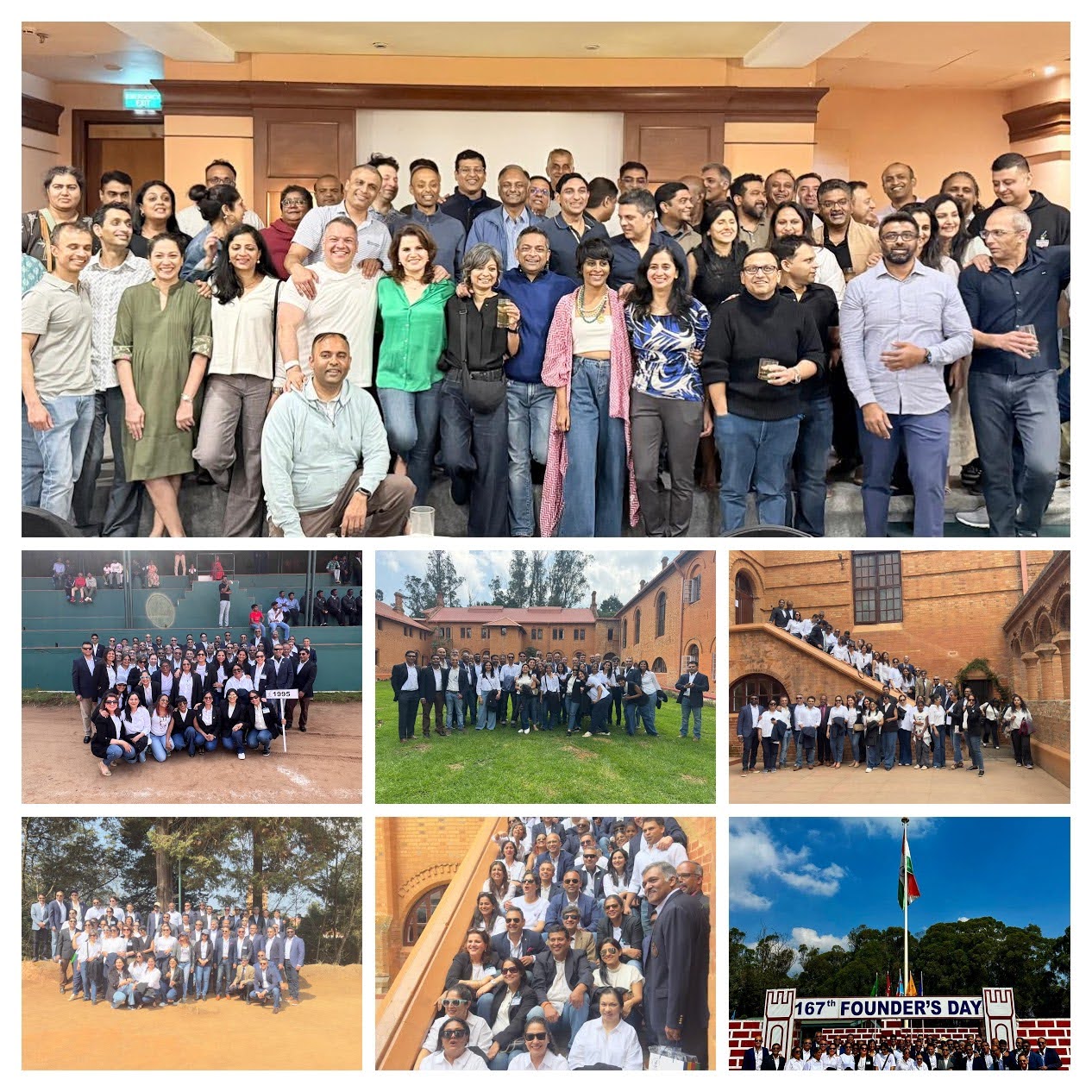
Life seems to have been inventive, unique and predictable at the same time in all the ways it presented us with trials and tribulations. As we walked through the hallways of our school – it was curious to see how we fell back into familiar patterns of who we navigate towards. In 3 days time, it seems we fell back to familiar patterns and the intervening decades might not have happened at all. 

This fascinating behavior led to an interesting discussion on the subject and development of morality and values. At what point in time do we actually develop values, and our internal moral compasses?

I was shocked to find out that morality can start to form under the age of 1, and can easily be noticed between the ages of 2-5. Of course, morality and value systems continue to develop in noticeable leaps and bounds – till we are 10 years of age, then as teens shaped by societal and peer pressure, and as adults. But are they largely shaped by our early childhood? If there are any psychologists or anthropologists who have studied this, please let me know your thoughts. I would be interested to know.

Morality & Values

Childhood friends, when met after decades apart, can resurface memories good and bad. It was interesting to see how friendships played out over all these years. Sometimes, geographic proximity helped shape adult bonds. Sometimes, the bonds of friendships survived geographic distances. 

However, when gathered back in such a large group of classmates, it was interesting to note all the ways in which we fell back to familiar patterns in a matter of 3 days. The ones who were friends in school seemed to fall back into their familiar groups, even while a few new friendships were forged. 

A friend and I fell into a stimulating discussion on morality and values. It is obvious that we are drawn to people with values we admire. So, when looking back at our childhood selves, when was the inner moral compass formed? How did we know whether to be attracted to kindness or the lack of it? Were we drawn towards lightness of being and joy?

Could we be trained into ways of coping – I am sure we can. Pavlov’s experiment is proof of that. Our own behavioral patterns formed so early in childhood help shape how we navigate through life. Some of us are conflict avoiders, some conflict seekers, others do not seek conflict, but do not flinch when it comes to them. 

Is there an Inherent Moral Compass

I remember having a subject called Moral Science in primary and elementary school. It was a lovely class if only because the stories were always interesting, but how much did that help shape our inner compass, I wonder. It is true that reading about myths, and relatable struggles help us through our own. Hopefully, for most of us, our inner compass is strong in good times. It becomes tougher in times of stress and strife, and somehow life only makes these situations more and more complex.

Given that some of us had become friends when we were 5 years old, it was curious indeed. A quick google search reveals that moral based behaviors can be observed in children as early as 2 years old. So, is there such a thing as an inherent moral compass, and can we change ourselves enough and embrace growth through our learned experiences quite as much? Which brings us neatly to the nurture vs nature debate, and we could go on all day and all night.

https://www.mentalhealth.com/library/understanding-moral-development#:~:text=Between%20the%20ages%20of%202,when%20they%20break%20the%20rules.

There are values and morals shaped when we begin to question authority as teenagers, and then as adults when we learn a little bit more about all  the shades of grey, character motivations, and the like.

What are your thoughts? 

  • Do you think that our moral choices begin to be shaped in infancy, and if so, can they be changed over time (not just in small increments but in polar ways) 
  • When that young, do we consciously migrate towards value systems that appeal to us, or not?

https://www.betterhelp.com/advice/morality/morality-quotes-to-help-us-better-understand-ourselves/

Exploring Happiness: Is It in Our Genes?

In what was an intriguing chat with the son last evening, we poked around the ethics of genetic modification. Apparently, that had been an area of discussion in their classroom, and the son was keen – the novelty of a discussion with multiple viewpoints at that age is amazing. I smiled and listened to him talk offering a question here, a hum there, an insight elsewhere.

“What do you want to do with human-beings if we are smarter?” I asked him.

“We could fly.”

“Cool! But then what?”

I took a deep breath and said as casually as I could. “Everyone wants to be smarter, for things to come more easily to them. So we wouldn’t have to spend so much time figuring things out. But – the thing is, if everything came easily, we would not know what to do with all the time we have on our hands. What do they say? An empty mind is a devil’s workshop? I don’t know – I think it could lead to more mental health issues – what do you think?”

He pondered this for a while, and said it was an intriguing thought. 

Who Survives?

It reminded me of another chat the husband and I had a few months ago – on the larger theme of the future of humanity. With smarter, faster, stronger, what would happen to humans? The husband took a moment to gather his thoughts, and said, “Well – it will come back to good old basics then, wouldn’t it? Survival of the fittest. Those humans who can learn to be peaceful with themselves will ultimately win out – that is the strain that will survive.”

I was impressed – yes, no matter what we had, it ultimately came down to temperament, attitude, and the ability to be happy, didn’t it?

Generosity by Richard Powers: The Happiness Gene

Incidentally the book I am currently reading: Generosity by Richard Powers, talks about a variation of this: The Happiness Gene.

The story tries to figure out the reason for Thassa’s happiness. Thassadit Amswar is a refugee who has fled the Algiers region. Her brother is still under house arrest in a totalitarian regime, her parents are dead after years in which they were stuck in the midst of a civil war that raged around them, and any which way you look at it, she should be morose, sad – not chirpy, cheerful, and full of light.

The whole set up reminded me of one of Rumi’s sayings that have been making its way around the instagram world: something to the effect of:

When the world around you is dark, you could very well be the light.

Rumi

In any case, somehow Thassa’s ability to be happy attracts attention – first from local friends, then a policeman, a local news report diagnoses her as having ‘Hyperthymia’ – a condition of overwhelming happiness, and goes on to attract those who want to auction and buy her eggs, decode her DNA, figure out the happiness gene. She finds herself unmoored by how people feel bad because she is happy, and having to navigate the horrors of fame.

In Essence

  • Is there a genetic component to being happy?
  • If so, can that be picked and chosen for our offspring in the not-so-distant future?
  • What issues would that create for mankind? For just as sure as we are of creating solutions, so too can we be sure for creating problems for ourselves, isn’t it?

The Mystery of Human Potential

The Undoing Project, By Michael Lewis, started off with a baseball team’s challenges in picking the next star. I might’ve appreciated this chapter more had I known baseball ⚾️ I suppose. As things rest, I know it is a lot of activity, running, a bat with a ball and two teams. However, I appreciated the gist of it i.e the ability to spot human potential. Now, that, I can identify with. 

The Undoing Project: A Friendship That Changed Our Minds by [Michael Lewis]

As the book moves on to introduce us to Danny Kahneman and how as a single psychologist in the Israeli Army, he was tasked with the humongous task of trying to identify army recruits and figure out which positions they would be best suited for. Which ones would make good tank operators, which ones are better suited to quick guerilla warfare, which ones will fare better as aerial surveyors etc. 

The fact that this was not only attempted and done, but still stands in its rudimentary form is amazing. 

Unlocking and identifying human potential is one of the toughest problems in the world. There are indicators, yes, but no sure way of knowing who has the ability to self-motivate and stay in the game. As a technology leader, it is often a baffling experience for me. People who fared exceedingly well in well-thought out structured interviews come onboard and don’t sparkle in their roles at all. Some others who were doubtful in the screening process, come through as diligent, hard workers, willing to put in their all to learn and be happy about it. 

Recruiting sites, AI/ML models all have only limited success in the true test of human capabilities. The fact that there is a lot happening that just cannot be captured is a well-known fact. The field of psychology and mathematical models using statistics to better understand human mystique is fascinating. 

I am only halfway through the book, but the collaboration of the great minds of Daniel Kahneman and Amos Tversky is already a pleasure to read. 

Psychology – as is termed by Academia as a bin for all things unsorted is a great place to be. The combination of mathematical intuition with the brains functions, and how to design experiments for these are fascinating by themselves.

How come some of us are optimists, others pessimists and so many of us in all the areas of gray between these two extremes?

How come we make large decisions without as much agonizing as the smaller ones?

How come some of us embrace humor?

I am only about halfway through – I am fascinated, but not enamored by the book.

A Nefelibata’s Santa Claus Myth

I rarely save the works of art that my children produce. For one, there are so many, and for another, while some of them are hilarious, they are no masterpieces (yet! – I read somewhere that good parents don’t say things like this and always leave the doors open for whatever the future might bring. If the future springs the brilliant artist, I don’t want to be the lousy mother thwarting the Sotheby’s auction, do I?)  So, I have no way of comparing the drawings of the six year old daughter to see what hidden psychological messages were in there. According to this news article, deciphering a six year old’s drawings can give us remarkable insight into their minds.

http://www.npr.org/blogs/ed/2014/12/08/368693069/kids-drawings-speak-volumes-about-home

I tried analyzing the work of the 3 year old son, and I could make out nothing. He asked me to guess what the picture he was holding up was, and I told him it looked like a very shiny pig or a jellyfish. He cackled loudly and said that he tried to make a pink christmas tree. I don’t mind tapping Freud from his grave and asking him to interpret that, but I am pretty sure, he’d choose to remain dead.

Jellyfish or Pig or Pink Christmas Tree?
This is my drawing of course, because I did not save the original one – but you get the gist.

Anyway, this brought an interesting question to mind. What if I interpreted my own drawings? I had in a recent drawing placed a house on a dog’s tail (which was kindly brought to my attention by a reader later on)

See house on dog's tail?
See house on dog’s tail?

What would that mean in the light of the latest letter to Santa? The daughter had asked for a dog. She very well knows there is no Santa for the past few years at least, but just plays along to see what she can get.

Regular readers of the blog know that the request for a dog in the household rears its head every now and then. It is usually silenced by me (a trifle vehemently at times) or in a more wishy-washy sort of manner by the husband, who then looks sorry when confronted by me on what he meant by saying, “Maybe we will think about one in a few month’s time.”

“How many months?” asks the daughter expectantly

“What do you mean by months?” I say pushing a couple of daggers out of my eye sockets, and the husband scurries for safety.

Hitherto while asking for a dog, she had relied on techniques such as “You don’t have to do anything. We will look after the dog.”  (By saying ‘we’, she includes the toddler brother who stands around nodding enthusiastically without having the least idea as to what it takes to have a dog in the household. The few occasions he has been in the presence of one has been spent like a monkey on a tree with a lion prowling down below) The matter gained traction again a few months ago and I wondered where the renewed vigor was coming from. Now, I was getting the old oil, “Oh! Don’t you miss not having someone to cuddle up with, now that we are all grown-up? Hey! You know what might help? A dog!”

It was only when I went to talk to her teacher a few weeks ago that the mystery was unraveled. Her teacher had told them how to form a convincing case, say, on how to get a dog, and she assures us that she had never held a class in such rapturous attention. Apparently, she had told them to come up with points that will help their cause, for example: come up with what the other party will gain out of the proposition. The daughter, having racked her brains, could easily see how I would poke holes in the We-will-look-after-dog theory, and went in for the psychological wringing.

Well, I was not buying it (yet). Let me explain why. There are some images that cannot be easily wiped from one’s brain. Two vicious specimens come to mind. Both of them were not more than 5 inches in height, long and had tempers like vipers about to be curdled in whatever-vipers-are-curdled-in and bites like adders. To their considerable repertoire of talents was the fact that they could smell like hounds ( which they were), and ornamental nose though I had, it was completely useless in detecting dogs hidden behind bushes. The results had been extremely disturbing. A physical education teacher of mine, once saw me leg it up 67 stairs at one go in the pouring rain and opined that the best way to train me for the forthcoming Athletics Championships was to set a couple of dogs after me. Not pleasant I tell you. Not pleasant.

Now, I know that dogs in the United States are extremely docile beings and rarely bite. But I am not sure I can move past the canine horrors of my past and embrace a dog in the household.

More than any of that,  I am not sure I need another living being to look after, I have 4 large fir trees, 3 fishes, 2 children, 1 husband, 1 apricot tree , 1 cherry tree, many plants to nurture and often have visiting parents. Maybe the Myth of Santa has to be officially busted this year, I thought to myself and peered at the letter below the tree and saw amendments.

There, in brackets it said: (I know my mom will not like a dog, so can I have some king doh if not a dog?)

I like this pragmatism even though she is lost in the clouds of her imagination, an imagination liberally spotted with unicorns and dogs sometimes. (I found an interesting word that means just that by the way – Nefelibata)