River Valley Civilizations -> Digital Valley Civilizations

The History of the United States

I just finished listening to a Great Courses Lecture Series on American History. Over 48 hours of listening content aside, it meant I have been wondering and trying to piece together the deeper veins running through our history and why they are still relevant today.

Why is a leader still able to rouse such high levels of divisiveness around certain issues? Like immigration? I truly wanted to understand it.

I am no  political analyst. I am no historian. But even I know that immigration is an old wound. A scar tissue. A festering topic that never really leaves the American psyche. 

River Valley Civilizations to Digital Valley Civilizations

The strain of every bigoted immigration movement seems rooted in ‘Go-back-to-where-you-came-from’. This is an interesting perspective. Because if we go far back enough, that would mean all of humanity would still be clustering around the river valleys and deltas practicing agriculture with the annual flooding cycles.

The Egyptians eyeing the invading Greek with suspicion.

But here is the thing. We moved past that. We are no longer river-valley civilizations. We took to the open oceans. We found every nook and corner of land available for us to live on. We are now living in or moving towards digital valley civilizations.

We do not cluster around the primary vocation of those times – growing food. We cluster around the primary vocation of these times. Which is to earn livelihoods in increasingly complex domains using increasingly complex technologies. The prosperous have always attracted people from outside – whether as conquering hordes, or as people who simply were welcomed and came in to be assimilated.

So what seems to be the antidote?

Given this, two aspects occur to me. 

  1. Enable prosperity so high and peace so high in other parts of the world too, so that the immigrants who are flocking to America do not flock to America alone. This is harder, yes, but also the best path forward. It is what happened with the rise of the computer industry in countries like India and China. #EnableProsperity #EnablePeace.
  2. Immigrant workers have usually (willingly or otherwise) answered a call from America itself when human-power was limited. The Golden Triangle all those centuries ago, meant that America sought slave-labor from Africa and forcibly bought them to the United States to help with their cash crops and raising their families. When the railways needed building, America sought to bring in Chinese workers to do the work. When technical jobs needed doing, America legislated to have tech workers come in.
    So, the solution seems to be to raise the skillsets of what we need in our next generation. Prioritize science education, encourage research. Not the opposite. #EnableScience #EnableResearch

America took its time getting here to be the melting pot of civilizations. It has always dealt with changing demographics, but has also proved to be be best model for assimilation in the world. So why this turbulence?

What do you think? What are some of the solutions you can think of?

Bosco Ramos: The Dog Who Became a Mayor

The Stress & Strife of Political Life

Political life has never held much sway for me. Too many pitfalls, crests and troughs. I think there are far too many people wanting their own agendas taken care of, that makes it hard to sail straight. If everything someone does for you has an ulterior motive, it must endlessly exhausting for one wanting to live a quiet and straight sort of life.

Of course, there are those who enjoy navigating those very waters and are good at them too. More power to them. Then, there are those who do none of this and enjoy the arm-twisting and the power-trips. The more unscrupulous the better: for those this pursuit would probably be invigorating rather than draining.

What I am saying is this, and it is profound – the kind of thing that when given up as a truth from a crowd-wooing politician gets standing ovations: It takes all sorts to make up the world.

So, imagine my surprise, when I really wanted to meet the mayor, but could only take a picture with his statue.

Meet Bosco Ramos.

He served as the Mayor of Sunol for 13 years – from 1981 – 1994.

He won by a landslide raking in over 62% of the votes.

https://localnewsmatters.org/2020/12/14/how-a-dog-bosco-ramos-became-the-most-loved-mayor-of-sunol-in-the-80s/

If you had a bone to pick with him, he was there mingling among the residents in local pubs and restaurants almost every evening. For a political career to be scandal-free, it takes an enormous strength of character, which Bosco Ramos obviously had.

It is too bad that he died 13 years into his career.

Bosco Ramos in Calafia

I might’ve thought this was an article worthy of The Onion, but it’s true. One serendipitous day, we found ourselves meandering in the small town of Sunol, and there, right outside the Sunol Post Office is a statue of Mayor Bosco Ramos. He was a black labrador-rottweiler mix, and defeated two human-beings in the race for Mayor. 

You should’ve seen the son’s face when he found out more about this dog-mayor. His penchant for History is unsatiable: He is forever coming up to Yours Truly with fun-facts, and trivia such as: “Amma, did you know? California was named after a character called Calafia from the book written by <some long name>” (Garci Rodríguez de Montalvo) 

He transformed into an enthusiastic puppy himself, yipping and yapping to have his photograph taken with the former mayor.

Image Courtesy: By Pedro Xing – Own work, CC0, https://commons.wikimedia.org/w/index.php?curid=24008072

An Ode to Roger

I’d like to read more about Bosco Ramos. Was he a good companion when one was out on a nature walk? Did he hurry things along when the conversation started to get belligerent, or was he quite ready to bark an order or two?

I was reminded of Gerald Durrell’s companion, Roger:

In those early days of exploration Roger was my constant companion. He was the perfect companion for an adventure, affectionate without exuberance, brave without being belligerent, intelligent and full of good humored tolerance for my eccentricities.

family_other_animals

He goes on to say about Roger – who sounds like the ideal companion anyone could wish for, that:
If I slipped when climbing a dew shiny bank, Roger appeared suddenly, gave a snort that sounded like suppressed laughter, a quick look over, a rapid lick of commiseration, shook herself, sneezed and gave me his lopsided grin. If I found something that interested me – an ant’s nest, a caterpillar on a leaf, a spider wrapping up a fly in swaddling clothes of silk – Roger sat down and waited until I had finished examining it.

Now – what is preventing similar miracles from happening on a larger scale? Why can we not aspire to having more loyal, loving, patient leaders in all the important places?

On Tyranny: Power and Compliance

On Tyranny

This book is a required reading for what’s coming.

on_tyranny

The book restricts itself to Twenty Lessons from the Twentieth Century, which is even better. For power hungry dictators have been there throughout human history, and the book may well turn out to be a treatise of its own, if not time-capped. Recent events are usefully analyzed from a technological and sociological view. After all, many of the fascists of the past century found themselves propped up through a democratic process, even if they refused to give up power democratically later on. 

One of the first topics in the book, On Tyranny – By Timothy Snyder Illustrated by Nora Krug caught my attention.

It talks about compliance without being asked to. 

“Do not obey in advance”

“A citizen who adapts in this way  is teaching power what it can do.”

  • On Tyranny – By Timothy Snyder

I found myself nodding along several times during the examples given from the Hitler regime, or sociological experiments conducted since, and was quite shocked to see it all play out again in recent times. 

For instance, the past week itself gave us examples of ‘Do not obey in advance’. It was in the flurry of news items about Meta – the mega social network bending over and showing what it is capable of doing for Donald Trump’s regime. The company removed the fact checking team, and essentially stopped DEI efforts.

Quote from article on removing the fact-checking intiative:

“Everyone is entitled to his own opinion, but not his own facts,” the late New York Sen. Daniel Patrick Moynihan memorably wrote four decades ago.

As far as DEI efforts go, to get to a point where a DEI team was necessary took many decades of work, mindset changes and progressive ideas. To remove it all in one stroke sets us back by at least two decades, does it not?

Now slowly think of all the programs and places in which progress has been painstakingly achieved through education, forward thinking initiatives etc, and the mind boggles on what lies ahead of us.

In the past few weeks, there were several discussions in which we wondered:

  • How do we know when a leader is likely to become a fascist ruler?
  • How do we know whether our systems designed to survive democracy will do so?
  • Which of the very institutions that help towards justice will be disbanded or at least thwarted in their efforts to do so?
  • And many more. 

The questions will answer themselves soon, shall they not?

Eye of the Pumpkin

“What?! Dancing in the kitchen?!”, said the son smiling his dignified smile of indulgence. “I haven’t seen you this happy for a long, long time!”
 
 
“Yes! I am dancing 💃 young man! You dance 💃 in the kitchen when you have a dignified President! You dance 💃 when a woman’s ambition is finally rewarded. You dance 💃 in the kitchen, you dance 💃 in the streets, you dance 💃 in the woods, you just dance 💃!” I said kicking my feet up in the air.
 
 
The men smiled at each other exchanging significant glances.
 
 
“We are going to throw the drishti pumpkin 🎃 out! Oooh yeah! ”
 
 
“What?!”
 
 
“Well!” I said, catching my breath after the dance💃 routine and proceeded to talk about pumpkins, evil eyes and the evil eyes of the pumpkin.
 
 
It isn’t uncommon to see a pumpkin out on the street: During Halloween, 🎃👻, in the United States, but anytime on the streets in India.
 
 
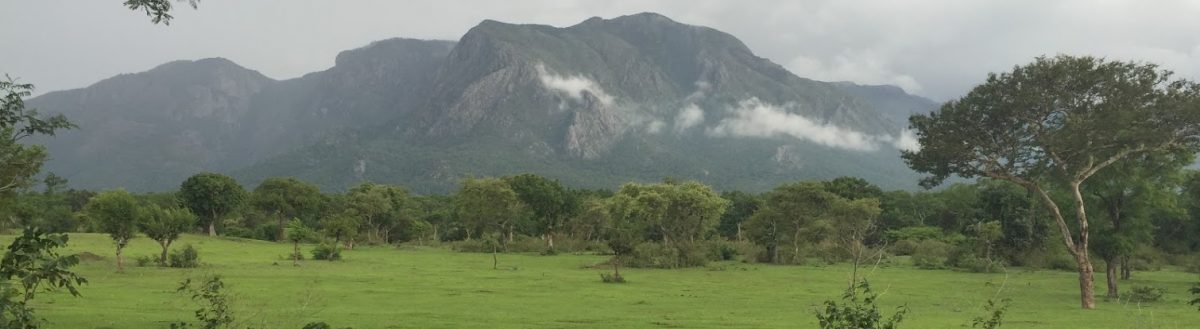
I remember being shocked the first time I saw a pumpkin being flung out on the streets as a young girl. I was less than a decade old, and had wrestled my little brother, and then out-debated him in a secret language to get to the window seat as we travelled from the Nilgiris to my grandmother’s village near Trichy. The entire 8 hour journey is a picturesque one. As the bus winds its way down the Nilgiris, and then slowly descends into the plains, the air gets warmer and warmer, and the scenery changes from misty hillsides to lush green plains with the final stretch of road between Karur & Trichy by the river Cauvery. For several hours, the trees on either side of the road tip their branches together and whisper little messages to each other across the road as the buses, trucks, jeeps, cars, motorcycles and cycles rustle by underneath trying to get a wisp of the whispers above. The river flows on murmuring at places, serenely flowing along at others, but always providing a pleasing backdrop to life in these South Indian plains. The little villages along the way, could be Malgudi, and just peeking out is enough to provide a R K Narayan-ish story.
TH10_Nilgiris-COLLAGE
 
I was daydreaming in the bus looking out and imagining a myriad things when I saw a sizable pumpkin lying squashed outside a house. Coming from a family that frowned upon wasting food of any form, I wondered what they would say about this great waste of a large pumpkin?
 
 
It turns out, that certain pumpkins are meant to be thrown out. That particular pumpkin, I was surprised to learn, was there to ward off the evil eye, and needed to be thrown out. The ‘evil eye’ or drishti is one of those things of folklore in India. There are many rules, laws, workarounds and theories at work here – it is dubious, but entertaining nevertheless:


  • When something bad happens, it may be a good thing, for it offsets the evil eye.
  • When something good happens, then one must remember to throw out a pumpkin to ward off the evil eye. (#Prevention better than #1?!)
  • When nothing happens, you squash a lemon or a smaller pumpkin to ward off the evil eye that slowly accumulates – like dental plaque I suppose.
  • When lots of things happen at once, and one cannot figure out whether it is good or bad, you trash a pumpkin just in case.


Now, many times in the past few years, I have referenced the pumpkin used to ward off the evil eye. If the United States has spent so much time being the world leader, championing climate change, leading scientific research and helping democracy thrive in different parts of the world, it must’ve accumulated oodles of drishti mustn’t it? When the 45th President, Donald Trump won in 2016, I cried. I cried not because I am particularly close to any policies or any such thing. But because such a great country would elect a boorish bumpkin like Donald Trump: a man hellbent on thwarting democracy.


This must be our drishti, I thought. Well, how does one know that? Refer to rule #1.
 
“The gods grow jealous of too much contentment anywhere, and they show their displeasure all of a sudden.”
― R.K. Narayan, Malgudi Days
 
 
Today, it is time to throw the drishti pumpkins, carved with those evil eyes, out.
 
 
Today, it is time to dance 💃 like no one is watching for the whole world is watching us reclaim our dignity.
 
halloween_ij_fm_page
Continue reading “Eye of the Pumpkin”

Hero-Worship, Nicomacean Ethics & Baloney Detection Kits

I have heard friends rave about Dune by Frank Herbert many times over the past few years. I finally got to read the book, and I feel richer in mind and thought for it. The book was long and at times hard to keep track of (especially in the beginning). This is one of those times when I realize how my mind flutters with attention spans that drive calm butterflies to frenzy. But slowly, steadily, I settled into the book, and there were multiple moments when I felt like I must grab a pen and start writing (but that stern butterfly gave me a look, and kept me at my the task of reading). This, is probably the reason I have forgotten half the things I wanted to write about (This is where I glare back at the butterfly guardian who kept me reading)

Dune-Frank_Herbert_(1965)_First_edition
First Edition Cover – Image from Wikipedia

One of the many things that appealed to me in the Dune was the fact though there were vague references made to technology and the number of technological devices used by those living at the time, it is not a mainstay.

The book is a multi-layered piece of literature with over-arching themes of ecology, the art of war, religion, philosophy and politics. There is a particular quote that stuck with me in the Prologue written by Brian Herbert, Frank Herbert’s son, about the dangers of hero worship.

Quote:

As Liet Kynes lay dying in the desert, he remembered the long ago words of his own father: “No more terrible disaster could befall your people than for them to fall into the hands of a Hero.”

Having studied politics carefully, my father believed that heroes made mistakes…mistakes that were simplified by the number of people who followed such leaders slavishly.

In many ways, hero worship is what leads people to choose leaders who then turn into despots and dictators. Adulation affects everyone, and those with fragile egos are the most prone to its lure.

Towards the end of the book, Paul Atreides recognizes that he is being hailed as the Messiah and regardless of his acceptance of the title, there is a holy jihad in his future. He can either lead to the best of his abilities like his able and excellent father, Duke Leto or simply be the mascot of a movement that has already gathered momentum – a force that is much larger than him. This sort of trusting faith in one human being is never a good sign, and is a malady that has affected us for centuries. 

I quite agree with how Aristotle describes the nobility required of politicians: he opines that politicians should take an oath, almost as sacred as a Hippocratic oath, to remain fair and mete out justice. From the Nicomachean Ethics – By Aristotle. 

The lecture on Aristotle and Socrates on How Does One Live The Good Life? From 36 Books That Changed The World (Chapter 8) is an excellent listen.


There are no initiation courses for politicians. No training. Though, I have a suggestion to have every politician complete the Butter Battle Course, it is unheeded. (The Butter Battle Course is an excellent course consisting of childrens’ books not more than a few pages each, and should only take a few moments of every leader’s time):

butter_battle

However, till politicians start taking their careers to truly be in service of humanity, we need to equip ourselves with Carl Sagan’s excellent Baloney Detection Kit from the book: The varieties of scientific experience : a personal view of the search for God / Carl Sagan ; edited by Ann Druyan. This book contains the Gifford lectures given by Carl Sagan in 1985.

The_Varieties_of_Scientific_Experience
By Source, Fair use, https://en.wikipedia.org/w/index.php?curid=28513011

When someone asked Carl Sagan after his lecture what we can do when the governments do not act in our best interests, he advised us to have Baloney Detection Kits handy.

Quote:

“I would say that the first thing to do is realize that governments, all governments, at least on occasion, lie. And some of them do it all the time – some of them do it only every second statement-but, by and large, governments distort the facts in order to remain in office.

And if we are ignorant of what the issues are and can’t even ask the critical questions, then we’re not going to make much of a difference. If we can understand the issues, if we can pose the right questions, if we can point out the contradictions, then we can make some progress. There are many other things that can done, but it seems to me that those two, the baloney detection kit and use of the democratic process where available are at least two things to consider.”

This seems to be age old wisdom: our oldest myths write about flaws in heroes, what brings about the downfall of the most powerful tyrants  etc; and yet, the reminder for our own Baloney Detection Kits is a timely one.

Books:

  • Dune – Frank Herbert
  • Varieties of Scientific Evidence  – Carl Sagan 
  • Nicomachean Ethics – Aristotle
  • 36 Books That Changed The World – Lectures on Great Courses
  • Butter Battle Book – Dr Seuss

The Butter Battle Course

When you look up the definition for religion, it states among other things that it is “a pursuit or interest to which someone ascribes supreme importance”

How many conflicts has the world endured, is enduring, and will continue to endure because of this belief to which one ascribes supreme importance? I had written about it here (religion).

Who was it who said that every good kind of learning  can be obtained from Childrens’ books?  I whole heartedly agree.

The latest book that I am babbling about is the Butter Battle book, by Dr Seuss.

The Yooks and the Zooks live on either side of a long, meandering wall. The Yooks wear blue, the Zooks wear orange.
butter_battle

The Yooks think the Zooks silly for buttering their bread with the butter side down, while the Zooks think the Yooks are somewhat dim-witted for buttering their bread with the butter side facing up. The flags of the Yooks and Zooks represent the belief in buttering bread, and the animosity builds from this bread-butter-theory to which they attach supreme importance.

IMG_6227 (1).JPG

One day, the Yook patrolman is prowling the place with his Tough-Tufted Prickly Snick-Berry Switch, when a Zook pelts him with a slingshot. This sets in motion an escalating conflict, with both sides coming up with more and more exotic and dangerous arms with which to fight each other.

The Triple Sling Jigger, the Jigger Rock Snatchem, the Blue Goo-er, the Kick-a-poo kid operated by a cocker spaniel – Daniel, the Eight-Nozzled Elephant-Toted Boom Blitz.

butter_battle_2.jpg

The last page has the Yook patrolman sitting atop the wall with a Zook warrior. Both of them have in their hands a Bitsy Big-Boy Boomeroo – a small bomb that can annihilate life as we know it, signifying the nuclear threat.

I know we ask of no formal training as a politician: there are no politician licenses, no courses one has to complete to take up public office, but I really think there should be a set of children’s books that they all have to read and re-read as refreshers every year in order to stay in office. We could call it the Butter Battle Course.

The Butter Battle Book has of course given rise to great hilarity in the house. “Do you want to be a Yook or a Zook?”, we ask taking out the butter and the bread. We now butter our bread on both sides so we can be Yooky-Zooks, and sometimes Zooky-Yooks.

The next time any two nations start warring, I suggest thrusting bread buttered on both sides to both parties.

Complement with:
Kahlil Gibran on the Absurdity of Self righteousness
The Colander Religion
Bertrand Russell’s Teapot Religion