The Cave of Quietude

In Quietness the Soul Expands

I sat watching the water flow, feeling the sweet caress of the gentle breeze at night, and had this strange urge to just sit there and enjoy time flowing by. It had been an exceptionally hot and dry day filled with activities and emotions. 

“These are the times in life — when nothing happens — but in quietness the soul expands.”

Kent

As we grow older, I find we need to fight for those moments in life. Find those quiet moments in which to let the soul expand. My mind wandered to what I had read about Keats and his Cave of Quietude as he calls the quiet and expansive moments of our lives. 

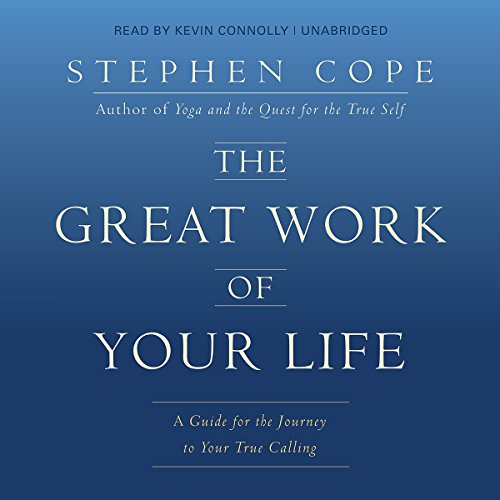
They say of books, that each book appears at a particular moment in your life. I was reading the book, The Great Work of our Lives – By Stephen Cope, recommended to me by a good friend. I shall be ever grateful – it was marvelous and precisely the sort of book I required to read.

Version 1.0.0
Version 1.0.0

The Great Work of Our Lives – Our Dharma

I see this is the sort of book that I shall be giving to people who find themselves at the cross-roads. I have always thought that concepts like Dharma have a certain weighty interpretation. But to have them handled in the skillful hands of a writer like Stephen Cope makes all the difference. In a lucid style, he talks about the important concepts of the Gita and compares and contrasts them against the life of well-known poets, naturalists, and writers. He also draws parallels of the teachings against real-life people (with their names changed of course) 

Excerpt:

Keats, in a brilliant intuitive move, now attempted to work out the problem of grasping through the protagonist of the poem he was writing.”

“How does Endymoin work it out? He enters what Keats called “The Cave of Quietude’, a retreat into the depths of consciousness. In quiet retreat and contemplation, Endymion realizes that success and failure are not the measure of life. He sees the way in which both light and shade, success and failure, and praise and blame, are all parts of life.”

When you wonder which pieces to highlight in the book, and think you shall have to re-read multiple sections because it resonates with you, it is a good book, wouldn’t you agree?

May we all find our Caves of Quietude and find moments of calm and peace in which nothing happens, and the soul expands.

War & Peace, Love & Power

“You need to have either love or war; those are the only ones that can sustain a long running saga!” the daughter said as an off-hand comment one day when we were discussing the art and craft of world building, and she was convincing me to read another series – one with a female protagonist. I was hesitant to start reading a series that not only had 7 books but all seemed to be progressively bigger in size too. She guffawed at this and said,  “You’ll enjoy it, so what’s the problem?”

The problem with wars is that nothing makes sense as time goes on. Even if there is justification in the original act of going to war, the long-running losses and frustrations often eclipse the original intent. It becomes a cascading pile of losses that fuel more losses.

I was reading Haruki Murakami’s book, Novelist as a Vocation. There was one particular section when with the book still open in my hand, the mind started to meander, trying to make sense of what was said, and trying to piece things together as they might have been.

He writes about the time he witnessed civil unrest as a student in college long before he decided to become a writer. Coming from a stable family, and not having endured any significant challenges or wars in his lifetime, he writes about the period in his life when he witnessed strife. He confesses that he felt drawn to the cause originally, but gradually could see cracks beginning to appear. Slowly, he saw how words lost their integrity, and he felt he could not identify with any of it anymore.

“As time passed,.., and internecine warfare between the student factions grew more and more violent and senseless – an apolitical student was murdered in the classroom we often used, for example-many of us became disenchanted. Something criminally wrong had wormed its way into the movement. The positive power of imagination had been lost. I felt this strongly. ….Uplifting slogans and beautiful messages might stir the soul, but if they were not accompanied by moral power they amounted to no more than a litany of empty words…..Words have power. Yet that power must be rooted in truth and justice.”

I felt a heavy sadness settle over me as I finished reading that section of the passage again. Thus it has always been. With war, with power, with long-running angst. It sometimes seems to me that human beings are remarkable for still allowing light to seep through – to be hopeful, happy, joyous, friendly, loyal, trusting, loving and giving. But I am glad of this tug-of-war too, for without one, we may never learn to fully appreciate the other. 

News of war and conflict have always plagued humanity, and exactly a century ago, the whole world reeled from wars back to back that sent the world careening into madness. The insanity of it, the dreariness of it, we hoped would be deterrent enough for at least a few centuries – but I doubt it. For just as ubiquitous as love seems to be conflict. 

In centuries of warfare, there have been gains and losses. All things fragile to begin with (egos, lives, trust, careers), they all seem to shatter in the eternal quest for what? Seldom in war do people win. Maybe countries do, armies do, but never the individual. And yet without collective action, where would we be?

In our very contradictions lies our greatness. 

I eyed the book series on war & love the daughter had given me, and wondered whether to start another saga.

It seems so simple to say: All we need to do is figure out a way to value Peace over War, and Love over Power. Oh well! That is the saga of the human life, isn’t it?

Ma With Fahrenheit 451

As I took a walk one morning, I tried to identify the flowers and trees in the neighborhood, and found myself humbled by my meagre botanical knowledge. A bird or two chirped nearby, and I tried my best to enjoy the quiet by zoning out the drone of the constant hum of traffic from the main road. I looked up at a tree that I loved, a Gingko tree, and sat myself down nearby watching the suns life giving rays upon a garden just watered. The tiny water droplets refracted the suns rays, and the world around me felt magical.

As if to complete this picture of serenity, two butterflies danced into view. Their dance around the flowers on that sunlit morning with the rays of the sun coming in through the Gingko trees leaves was enough to mesmerize anyone, and I found myself smiling and lapsing into a contented silence. It is not often that I get to slow life down enough to sit and watch butterflies in the garden. In those few blissful moments, I experienced the beautiful concept of Ma. Ma is the Japanese concept signifying the space between moments, and is a practice in the Zen art of being present in the moment. Ma is the pause between sounds.

Ma is beautifully explained in the children’s book written by Katrina Goldsaito and Illustrated by Julia Kao titled, The Sound of Silence.

IMG_6954

In the book, Little Yoshio looks for the sound of silence after he hears an old koto player on the street tell him that her favorite sound is the sound of ma, of silence. Intrigued, Yoshio looks for the sound of silence in the streets of the city around him, he looks for it in the bamboo garden, but finds other noises are constantly present, and is wondering whether he can ever find Ma.

Then one morning, he enters his school earlier than usual and immerses himself in a book, he experiences it for the first time. “Suddenly in the middle of a page, he heard it. No sounds of footsteps, no people chattering, no radios, no bamboo, no kotos being tuned. In that short moment, Yoshio couldn’t even hear the sound of his own breath. Everything felt still inside him. Peaceful, like the garden after it snowed.

The butterflies cavorted higher and higher and then swooped down with joy to the lavender patch. I let my mind flitter about like the creatures I was watching. Reflecting upon life is increasingly becoming a luxury, I thought to myself. I had just finished reading Fahrenheit 451, and could not help thinking of some of the things in the book that Ray Bradbury had the foresight of seeing 50-60 years ago, long before we were addicted to technology and lured by the concept of busyness. Fahrenheit 451 talks about a future in which all books are burned by firemen. (451 F is the temperature at which book paper burns. )

Screen Shot 2017-09-28 at 10.44.29 AM

People live in homes where the Televisor is on all 4 walls, signifying constant stimulation. One fireman is curious to see what is there in the books that those who love it so much are even willing to die to keep them. He steals a random book here and a book there with every burning, and he tries his best to make sense of it, but is unable to grasp the beauty of random poetry. He tracks down one person whose books he had burned and asks him to explain. Excerpt from the book below:

“Books were only one type of receptacle where we stored a lot of things we were afraid we may forget. There is nothing magical in them at all. The magic is only in what books say, how they stitched patches of the universe together into one garment for us. 3 things are missing

Number one: Quality, texture of information. They show the pores in the face of life

Number Two: Leisure”

“Oh, but we have plenty of off hours.”

“Off hours yes. But time to think? If you’re not driving a 100 miles an hour, at a clip where you can’t think of anything else but the danger, then you’re playing some game or sitting i some room where you can’t argue with the four wall televisor. Why? The televisor is real. It in immediate, it has dimension. It tells you what to think and blasts it in. It must be right. It seems so right. It rushes you on so quickly to its own conclusions your mind hasn’t time to protest, ‘What nonsense?’

Summing up, he says the books give you three things:

Number one: quality of information.

Number two: leisure to digest it.

And number three: the right to carry out actions based on what we learn from the interaction of the first two.

Complement with Dandelion Wine by Ray Bradbury

From Botany to Ma and Fahrenheit 451, I was flitting about like a butterfly myself, and could not have asked for a more pleasurable show in my head had I planned the thing.


The Joy of Quiet

2011 seems like a blur. An important blur on the timeline of my life. The year my Tucky was born. I savour the beauty of my pregnancy, the occasional impatience to see my little one while pregnant. Then, the beautiful moment of seeing his face. I shall always remember my daughter traipsing into the delivery room dressed in a fine party dress. When I quizzed her about the choice of clothes, she gave me an exasperated look and said, “Amma, Tucky is seeing me for the first time today. Of course, I have to wear my best clothes!” She quickly added that she knew I couldn’t help being shoddily dressed for the occasion since I was in hospital (Always considerate for my feelings, my little one is!). Oh! The innocence and beauty of it all. The essence of all I admire about life.

We get but one life and what we choose to do with it is our choice. There are so many venues competing for your time and attention that if one is to become a decent success at anything and make the commitment of time, we feel it had better be worth it. But how does one determine what draws the lottery of the limited time available?

I think this is the best past-time and the one that is most prized. Enjoying the maze of our own thoughts, a calm in the chaos.

http://www.nytimes.com/2012/01/01/opinion/sunday/the-joy-of-quiet.html?pagewanted=2&_r=2&nl=opinion&emc=tya3

I quote:

Nothing makes me feel better — calmer, clearer and happier — than being in one place, absorbed in a book, a conversation, a piece of music. It’s actually something deeper than mere happiness: it’s joy, which the monk David Steindl-Rast describes as “that kind of happiness that doesn’t depend on what happens.”

Here is to finding that calm and that peace in us in 2012.

Happy New Year all!

What’s a Bloke to do for some Peace?

I try to slumber through without a post. But the tantalizing world just wouldn’t allow me to go on about the important task of twiddling and spinning my pen on the desk. I mean the Dorothys** of the world have to call and discuss something. Forget the Dorothys, I say. I have discovered the joys of spinning a pen, and nothing is going to distract me from my noble pursuit today.


See how it spins?!

pen

Then, there is the important twitter about Obama winning the Nobel Peace Prize. What is that all about? Let the man breathe, let him take his dog for a spin. You can’t straddle a fellow with responsibility like this. Now, he has to go about talking to Taslama Bin Laddoo Boondi about peace, because he won the Peace Prize! I mean, when can he do his job as a President?


The man, for better or for worse, I can’t say which, proved to be an excellent orator. Now, grocers want him making speeches on organic produce, islands want him making a discourse on the prudent use of tidal waves. Add to that the strain of making the Peace speeches, what’s the speech writer to do?

I like to imagine that in the past, there were drawings to see the most strenuous jobs in the White House. The chef competed with the Chief Gardener, who competed with the Building Security. In this draw, I would have to vote for Speech Writer. He is already nose down into writing the finest speeches, and now, he is clobbered with peace?

Ah well…spin the pens on your desk for inspiration I say. It is a tough world with tough demands. Mental faculties have to be preserved.  I mean: What’s a Bloke to do for some Peace? Win the Nobel Peace Prize of course.

Let there be Peace!

** For you sticklers, Dorothy is a figment of my imagination, with whom I have interacted in my dreams, if ever.