
This article was published in The Hindu (Open Page) dated 14th October 2018.
There is a beautiful park that is frequented by many in our suburban area. The geese, gulls, squirrels, grebes, mallards and pelicans are a constant source of joy, and I feel much refreshed when I spend an evening there. One day over the week-end, off I went to the park for a brisk workout. It was particularly crowded as people were enjoying the last few weeks of sunshine before the fall and winter cold set in.

I found myself in several places having to slow down and take it easy, thus enabling me to listen to what people were saying from time to time. One time I found myself listening to a couple of women talk about the malady of modern times – the over-scheduled child’s life. The women were discussing the schedules of their 5th grade children.
“As soon as he comes back from school, he has to go for Taek-wondo for 2 hours, then, violin class, and then his Math or English classes. I also want him to play basket-ball, so, the week-ends, he has Bala Vihar (the equivalent of Sunday school), swimming and basket ball. He asks me, – Amma, when can I do my homework? Poor fellow! I told him to skip his recess times, and just finish his homework during recess so that he need not be stressed about finishing it.”
I turned around to see if they were joking, but they weren’t. They were genuinely worried about the children’s activities and wanted to solve the problem of finding homework time.
My heart went out to both the worried mothers and the harried children.
I thought of how much I loved recess as child, and how much the children love recess now. I love listening to the recess games, and recess tales. I like to watch the elementary school children at play while dropping off the son to school in the mornings. It is a heartening sight to see the children find their friends, their faces breaking out into slow, wide smiles, and a spring in their step as they bound off to play.
A few girls play the jump-rope. They stand on either side of the jump rope and swish the rope up and down while the person in the middle tries to jump as the rope comes under their feet. Every time one child trips, she smiles and good-humoredly lets go, while her friends cheer her on with their own smiles.
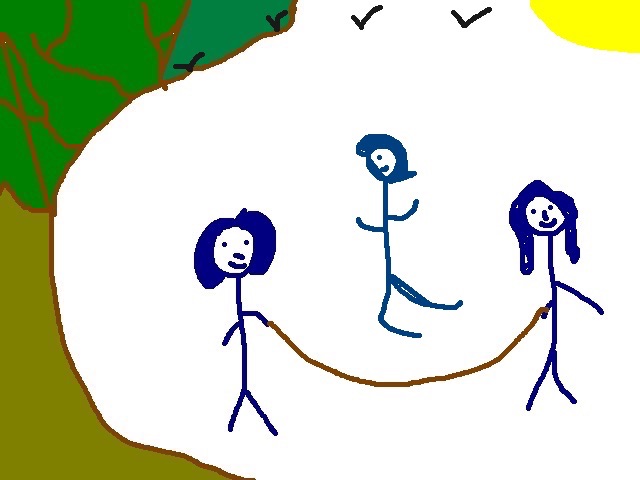
In just a few weeks, I see the children have gotten much better at the game too.
The days I am able to see the children play the jump-rope I feel as though a lovely light permeated my soul, and whispered to me that all would be well. These children will be the new leaders in a few years after all. If they know how to encourage each other and work together to lift everyone up, we will be fine, won’t we?
Most days when I ask about school, I get recess-tales. The best lessons in life are those imparted at recess: The strength of companionship, the solidarity of friendship, the simple choice of being present for one another, and so much more.
Read here about a German philosopher who said Leisure is the basis of culture – from Brain Pickings
The daughter, I remember, used to describe in marvelous detail about how they transformed the playground into an underwater coral reef, and played a game called Sharks & Minnows. (That child should have been born a mermaid!) The son shows me his callused hands from attempting the monkey bars and the various shenanigans possible with this simple play structure.

I pondered on the solution the mother gave her child to skip recess and finish homework instead. Often we find ourselves in spots like this, where we are trying to solve a problem without changing any of the variables. But it was an important lesson to me, maybe sometimes we need to see what variable can be changed – in this case, what activity can be let go. Or schedule in a Magical Do-Nothing Day Or Magical Do-Nothing hours.
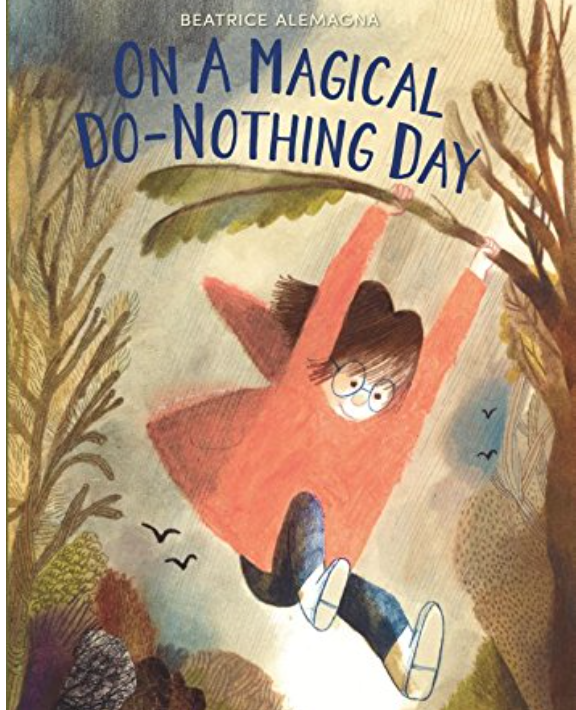
After all, like Socrates said, “Beware the barrenness of a busy life.”



 Nourish-n-Cherish