Exploring Happiness: Is It in Our Genes?

In what was an intriguing chat with the son last evening, we poked around the ethics of genetic modification. Apparently, that had been an area of discussion in their classroom, and the son was keen – the novelty of a discussion with multiple viewpoints at that age is amazing. I smiled and listened to him talk offering a question here, a hum there, an insight elsewhere.

“What do you want to do with human-beings if we are smarter?” I asked him.

“We could fly.”

“Cool! But then what?”

I took a deep breath and said as casually as I could. “Everyone wants to be smarter, for things to come more easily to them. So we wouldn’t have to spend so much time figuring things out. But – the thing is, if everything came easily, we would not know what to do with all the time we have on our hands. What do they say? An empty mind is a devil’s workshop? I don’t know – I think it could lead to more mental health issues – what do you think?”

He pondered this for a while, and said it was an intriguing thought. 

Who Survives?

It reminded me of another chat the husband and I had a few months ago – on the larger theme of the future of humanity. With smarter, faster, stronger, what would happen to humans? The husband took a moment to gather his thoughts, and said, “Well – it will come back to good old basics then, wouldn’t it? Survival of the fittest. Those humans who can learn to be peaceful with themselves will ultimately win out – that is the strain that will survive.”

I was impressed – yes, no matter what we had, it ultimately came down to temperament, attitude, and the ability to be happy, didn’t it?

Generosity by Richard Powers: The Happiness Gene

Incidentally the book I am currently reading: Generosity by Richard Powers, talks about a variation of this: The Happiness Gene.

The story tries to figure out the reason for Thassa’s happiness. Thassadit Amswar is a refugee who has fled the Algiers region. Her brother is still under house arrest in a totalitarian regime, her parents are dead after years in which they were stuck in the midst of a civil war that raged around them, and any which way you look at it, she should be morose, sad – not chirpy, cheerful, and full of light.

The whole set up reminded me of one of Rumi’s sayings that have been making its way around the instagram world: something to the effect of:

When the world around you is dark, you could very well be the light.

Rumi

In any case, somehow Thassa’s ability to be happy attracts attention – first from local friends, then a policeman, a local news report diagnoses her as having ‘Hyperthymia’ – a condition of overwhelming happiness, and goes on to attract those who want to auction and buy her eggs, decode her DNA, figure out the happiness gene. She finds herself unmoored by how people feel bad because she is happy, and having to navigate the horrors of fame.

In Essence

  • Is there a genetic component to being happy?
  • If so, can that be picked and chosen for our offspring in the not-so-distant future?
  • What issues would that create for mankind? For just as sure as we are of creating solutions, so too can we be sure for creating problems for ourselves, isn’t it?

🌍🌠 The Happiest Planet 🌍 in the Universe 🌠🌍

Disney Land

Talking of bold visions, I think Walt Disney nailed it with his: The Happiest Place on Earth.

How do you take up a vision like that, and work relentlessly towards making it a marvelous destination for all involved? After all, humanity comprises of pesky pixies, grateful gnomes, angry birds, peaceful piranhas, dutiful doxies, irritated iguanas, snappy turtles, hungry caterpillars, buzzing bees, flighty feathered friends, and the list really goes on. No two humans are exactly alike in temperament or ability after all.

Standing around in queue surrounded by children, I was in awe of Disney again. There we all were, waiting to enter the happiest place on earth, some still sleepy, others smiling and bright. 

Throughout the day, whenever I could, I stopped to pay attention to the people around me. The eager children, cranky children, enthusiastic children, meek children, energetic children, dull children, frail children, hesitant children, entitled children, rich children, not-so-rich children, able children, disabled children, they all had a place at Disneyland. I noticed the adults accompanying the younger children too – parents, aunts, uncles, grandparents, guardians, teachers, and tried picking up a tip or two from their interactions. For instance, one obviously famished grandfather sat himself down and created a tower of French fries for his 5 year old grand-daughter, and caught himself a break.

Weeks, days prior to our week-end visit, I prepared the children for it. Remember, we need to sleep on time the previous night and remember, we need to get up before the lark thinks of singing in the morning, and on and on. 

I must admit, Disney Land as chaperones for tween boys who consider it a ride’s worth only if they have had their intestines taken out, shaken vigorously inside out, and then stuffed back inside, is a bit much. As I looked at the grandfather with his tower of fries, I sighed, and the son caught my eye, “What is it?”, he said. His adrenaline was still pumping from the last roller-coaster in the dark, speeding through the cosmos, while I yearned for a nicer ride. Something calm, and soothing: give my innards a chance to settle.

“Well – as much fun as it was to knot my large intestine with the small intestine, using the gall bladder to bind it together and all, I want a lovely ride down a tame stream – I want to get that smile that lingers with a ride like ‘Its a Small World’!” I said.

Disney’s It’s a Small World After All ride.

Magic is a beautiful thing even when you are prepared for it. DisneyLand’s It’s A Small World worked its magic as it usually does – I couldn’t help smiling as we stood in line. The son caught my face, and said, “Hmm…now that you know the show was designed by a woman, it makes it that much more special huh?!”

small_world

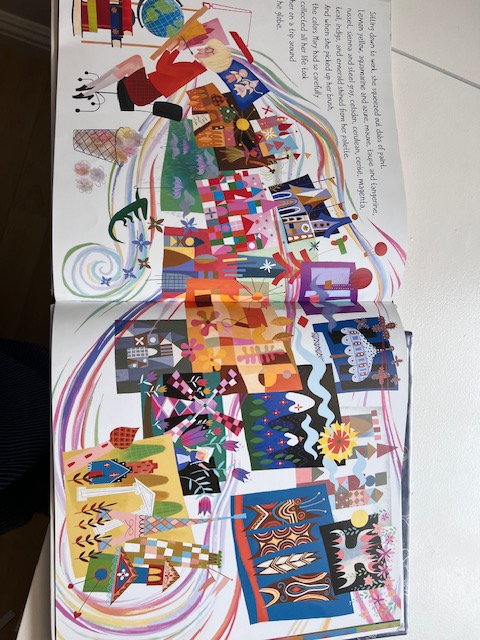
Pocket full of colors : the magical world of Mary Blair, by Amy Guglielmo & Jacqueline Tourville, Illustrated by Brigette Barrager

I laughed, and said, “Well – reading the book makes you think of so many things: things other than the lovely ride. I mean : The color schemes, the preferred movements of the characters, and the theme, the conception, the unity.” 

I could feel myself grow happier, cheerier, and a tad smug as our line snaked towards the empty boats up ahead, Really, catching any of these rides well before they all getting to hour long waits is a form of magic. 

I whipped out my phone, but the son caught my hand, and said, “Remember, you want to enjoy the actual ride, and that means … ? ….” He gave me that look that I give him when his homework isn’t quite done yet. I meekly put it away though I could not resist taking a photo or two along the way.

The special ride around the world felt just as special as always – the music, the lights, the cultures, the joy. How can one not enjoy it when for those 5 minutes, adulting is forgotten and childrening is embraced?

Mary Blair & Walt Disney

This time, we also knew who exactly to thank for the ride: the chief artist and designer, Mary Blair, whose vision translated into one of the most beautiful rides of all time, and Walt Disney who believed in her, and supported her through it. Obviously, it has since been improved upon by the teams, and continues to charm magic-seekers through the ages.
8D484D23-5322-457F-B886-DBBA77D00FDB

Mary Blair’s travel through the world, and the distinct ways in which we perceived the colors of the Earth is so evident in the artwork. Not all of us are lucky enough to catch the ethereal colors of sunset in a desert, or the tropical colors of an island, or see the cultures of different countries. This little ride shows it all in a vibrant display of artwork bursting at its seams with colors, themes and music. Subtle variations in music as the boat moves from American Wild West to Asia, and from there to Russia. Continue reading “🌍🌠 The Happiest Planet 🌍 in the Universe 🌠🌍”
🐘🐘🐘🐘🐘 The Tusks of Extinction 🐘🐘🐘🐘🐘

The Mammoth Tale

Few passages capture the bane of consumerism like this one does. It is from the novella, The Tusks of Extinction by Ray Nayler.

The premise of the book is an intriguing one. 

  • It is set in a future when mankind has figured out how to upload one’s consciousness into the cloud. A manner of immortality. This is very much in the realm of possibility.
  • It is also set in a time where the Siberian mammoths have been resurrected. This has already transcended realms of possibility into reality

The wooly mammoth is being resurrected – being cross bred from the genetic remains frozen in the Siberian Tundra with  the Asian elephants (because they are gentler than African elephants). 

Thus, begins the tale of a doctor whose life was hacked from him moments after he uploaded his thoughts and knowledge to the web. This man, Dr Damira, was a passionate naturalist, a man who studied the African elephants and their ways. He fought for their conservation but failed. This is set in a future where the last of the elephants no longer roam the Earth. 

tusks_extinction

The resurrected mammoths in Siberia are facing difficulty thriving in the wild. They have all been bred in captivity, and do not understand how to survive the demands of living by themselves, caring for each other, and forging paths so they can forage and live through the cruel winters. They are thus being killed by poachers in a cry that reminds scientists of how the elephants were all killed off one by one. 

In an attempt to give them a chance at life, the doctor’s consciousness is uploaded to a mammoth – a matriarch by the name of Damira. 

Bane of Consumerism

There are several aspects of this novella that can appeal to us, but one in particular stood out to me, and that was how our consumerist culture alienates us from the natural world. For we buy things, we want things, we accumulate, we hoard – who is it hurting? I am earning and I am buying. It is all helping the economy is it not?

Extract:

In offices-a tusk in a case, beautifully carved, transformed into a world of its own, worked by human hands into a chain of elephants walking trunk to tail. Beautiful, lifeless elephants carved from the destruction of an elephant, hacked into what had once been a part of a body, a tooth, a tool. A part of a life.

“Among the skyscrapers, there were also older places-little streets of cramped shops, survivors from another Hong Kong. Marginalia that had been missed by the eraser of progress. And there, in the shop windows, so crammed with clever things, there it was. My eyes found it over and over again. Ivory. Ivory jewelry, ivory stamps used to sign decrees that were meaningless now, ivory game pieces of every kind. Ivory turned into useless gewgaws, dripping with the blood in my home. It could be carved into any lovely shape they wished, but all of it began in killing. No-more than that all of it began in killing that took place far away. That took place somewhere the people who thought of ivory as a material could not see. Killing that took place in an extraction zone.

I remember the horror I felt when I first learnt that certain types of leather were obtained from the skin of crocodiles and were thus priced higher. 

Cities like Hong Kong and New York and London at the center, vortexes into which the currents of trade accelerated, into which goods from all over the world were pulled. Places where things became materials. Where things became commodities.

Many of us rarely stop to think of the source of all the things we use as part of our daily lives. In all honesty it is overwhelming to do so. How does the kidney bean come to be in its packet in the grocery store? Once we start down that road though, what about the almond flour, the diamond ring, the leather handbag, the silk scarf, the perfume, the spice, the watch, the gold ring, the ceramic jug? Everything has its tale, its journey, its place in the human chain of wants and needs. 

What Can We Do?

In reality, we cannot give in to an almost paralyzing analysis of source-to-table for everything we consume. Is there economic exploitation along the way, unscrupulous practices, inhumane treatments? Would we be happy to know it all and make informed decisions – yes, (I am hoping that humans have enough humanity to make the right choices if we do), but can we do so? Not always. 

I spent a pleasurable few hours at the mall the other day, and found my fellow human beings doing the same. Glancing around at the happy faces of those of my fellow humans that morning, I did not see malice or greed – I simply saw folks at a mall on a rainy week-end. 

I like that mass production has made life easier, the jobs it has created, alleviating entire nations from poverty. I like that poor children can have new clothes, and that horizons have expanded thanks to the general prosperity of nations. I do not, however, like the ever-increasing pressure to produce and consume more. 

Is the economy to be weighed against the Earth’s resources at every step in the mall? Or just more more meaningful consumption? I do not know.

War & Peace, Love & Power

“You need to have either love or war; those are the only ones that can sustain a long running saga!” the daughter said as an off-hand comment one day when we were discussing the art and craft of world building, and she was convincing me to read another series – one with a female protagonist. I was hesitant to start reading a series that not only had 7 books but all seemed to be progressively bigger in size too. She guffawed at this and said,  “You’ll enjoy it, so what’s the problem?”

The problem with wars is that nothing makes sense as time goes on. Even if there is justification in the original act of going to war, the long-running losses and frustrations often eclipse the original intent. It becomes a cascading pile of losses that fuel more losses.

I was reading Haruki Murakami’s book, Novelist as a Vocation. There was one particular section when with the book still open in my hand, the mind started to meander, trying to make sense of what was said, and trying to piece things together as they might have been.

He writes about the time he witnessed civil unrest as a student in college long before he decided to become a writer. Coming from a stable family, and not having endured any significant challenges or wars in his lifetime, he writes about the period in his life when he witnessed strife. He confesses that he felt drawn to the cause originally, but gradually could see cracks beginning to appear. Slowly, he saw how words lost their integrity, and he felt he could not identify with any of it anymore.

“As time passed,.., and internecine warfare between the student factions grew more and more violent and senseless – an apolitical student was murdered in the classroom we often used, for example-many of us became disenchanted. Something criminally wrong had wormed its way into the movement. The positive power of imagination had been lost. I felt this strongly. ….Uplifting slogans and beautiful messages might stir the soul, but if they were not accompanied by moral power they amounted to no more than a litany of empty words…..Words have power. Yet that power must be rooted in truth and justice.”

I felt a heavy sadness settle over me as I finished reading that section of the passage again. Thus it has always been. With war, with power, with long-running angst. It sometimes seems to me that human beings are remarkable for still allowing light to seep through – to be hopeful, happy, joyous, friendly, loyal, trusting, loving and giving. But I am glad of this tug-of-war too, for without one, we may never learn to fully appreciate the other. 

News of war and conflict have always plagued humanity, and exactly a century ago, the whole world reeled from wars back to back that sent the world careening into madness. The insanity of it, the dreariness of it, we hoped would be deterrent enough for at least a few centuries – but I doubt it. For just as ubiquitous as love seems to be conflict. 

In centuries of warfare, there have been gains and losses. All things fragile to begin with (egos, lives, trust, careers), they all seem to shatter in the eternal quest for what? Seldom in war do people win. Maybe countries do, armies do, but never the individual. And yet without collective action, where would we be?

In our very contradictions lies our greatness. 

I eyed the book series on war & love the daughter had given me, and wondered whether to start another saga.

It seems so simple to say: All we need to do is figure out a way to value Peace over War, and Love over Power. Oh well! That is the saga of the human life, isn’t it?

The Past, Present and Future of Jobs

“So, you work at a job that essentially takes away your own job?”, said the son.This is the kind of meta stuff that he finds exciting.

The Thanksgiving week-end was rife with conversations about the corporate drama that in yester years could be equated to the coups of thrones. Would the CEO go? Would the Board of Governors go? Would they both go? Who would be their replacement?

Last year the world popped their popcorns and watched the unfolding drama of an unraveling Twitter with Elon Musk and his hostile takeover of the company, now rechristened X, though the URL still points to twitter.com because the TFE team was probably let go.

This year, it seems much of the dramatic action came from OpenAI CEO, Sam Altman. In modern day Wall Street wars, CEOs, (or C-Staff) and the Boards of companies provide for much of the action. Will the market hold? Will the Sensex drop?

What happens to the interest rates?

One of our friends was explaining to the children about their own roles – technical roles in which they enable AI to be utilized intelligently. One was working on images, another on code frameworks itself. A niece who was majoring in biology told me how they were already being encouraged to use ChatGPT to generate code for them. They only needed to see the results of the datasets fed into the model.

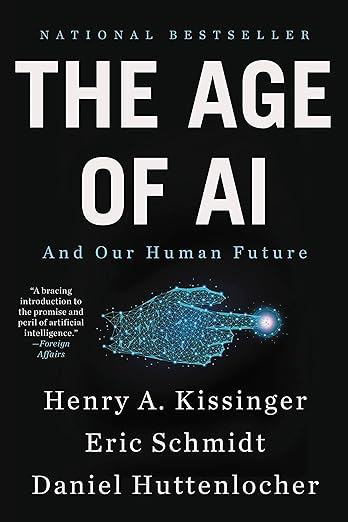
age_of_ai

Fascinating as it all was, I was left musing on the future of work. It seems a rather recurring theme of late. There are image generators to replace artists, code generators for software engineers, of course plenty of writing that can be replaced with intelligent prompting. So, why not the design and maintenance of these systems too?

I picked up the book from my recent library pile:

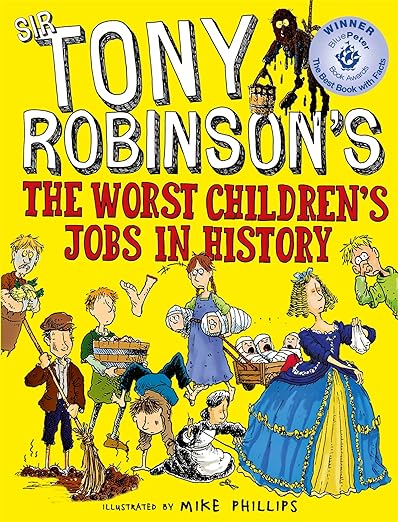
The Worst Children’s Job in History – Sir Tony Robinson

worst_jobs

The book was truly horrific and true. If anyone was wondering about the future of jobs and feeling glum, they could actually be grateful that the past nature of our jobs are well behind us.

Every job not only held misery, but a generous helping of walloping, not enough food, abysmal conditions, no thought for safety etc. Compared to those jobs, the present day conditions of occupying ourselves and our children seems fantastic. I only hope this trend continues for, our current nature of jobs is about to upended again.

It seems with the speed of technological challenges, the cycles with which our jobs are upended seems to be quicker and quicker.

A couple of generations ago, seamstresses, tailors, knitters, bat makers, ball makers, farmers, equipment handlers all saw their jobs upended by mechanization.

Then the next generation saw people’s fortunes needing more specialized skillsets such as coding, scientific knowledge etc.

Recently, call center jobs, desk phones, phones that were in the family room all went away, to be replaced by cell phones. Those of us who remember having to take a friend’s call in the living room with three uncles, five aunts, three cousins of varying age and maturity levels, two grandparents and a maid, will forever envy the children of today who quietly buzz out of vicinity taking their phone calls mysteriously with them. 

The next wave of AI seems to be disrupting industries that I’d hoped would not be. Creative industries that are already hard to make a living in: storytelling, image generation, writing, etc

Will our grandchildren read books about us in this era and feel sorry for us that we had to slave in front of our computers all day long to accomplish certain things, spend days getting tests done in medical labs to determine what was the matter with us?

What would the future of our jobs look like?

More importantly, in this quest for bettering the use of our time, do we hope to become at peace with who we are without being defined by what occupies our time? If so, maybe we should start equipping ourselves towards that, shouldn’t we?

Let me know your thoughts.

Books:

  • The Worst Children’s Jobs in History – Sir Tony Robinson
  • The Age of AI – Henry Kissinger

☀️ Energy Sources 🗺️

The son and I were discussing this and that when we hit upon one of our favorite topics of discussion: energy sources. The fellow has been very happy that we now have a solar roof.

“And now – we generate more solar power than we use. Isn’t that awesome?!” he piped up as we were out on a walk one evening after a particularly hot October day. (I wondered if the solar energy could be bounced off our heads too, and that earned a weak chuckle and an eye-roll.) Of course, this led to an interesting discussion on energy sources and we got talking on the recent articles or books we’d read.

“There is one place where they take your steps and convert that into energy. Like you step on the floor and that becomes stored energy. Cool right?”

“Cool!” I agreed, and screwed up my face at the nearby freeway noise. “I am sure if we can just figure out a way to take all that wasted energy from all the fast and noisy cars on the freeway, and use it to power the cars behind them, that would be even better – you know get off gasoline altogether? ”

“They are already working on it somewhere. Life is so exciting in these energy fields!”. he said.

Later that night, he bellowed that he’d left me an interesting article to read on my bedside table on Energy Sources. 

August 2023 Issue of OYLA – Energy All Around Us- Generating Electricity from Dance Floors, JellyFish and more

#33 AUGUST 2023

If I haven’t raved about OYLA before, allow me to. The magazine is a gem of science and mathematical tidbits . I was enthralled by the article and read it all agog, exclaiming at the right intervals. It pleased the son.

  • A thoroughly fascinating article in which the different types of energy sources are briefly touched upon. Piezoelectricity – the technique of using our movements to power energy. 
  • The many ways in which sound vibrations can be turned into electricity (apparently a new generation of architects are working on powering skyscrapers powered with noise energy – so the hustle and bustle of the city, the blaring sirens, freeway noise everything is actually used to power the building – isn’t that brilliant?)
  • In another section, it says nanoantennas are more efficient than conventional solar cells and they have a ‘good chance of displacing conventional solar panels’.

All highly exciting possibilities. I was especially thrilled to read this bit about jellyfish and their green fluorescent proteins. 

Quote: (from the Bioelectricity section) 

“Some jellyfish glow in the dark. This is due to the green fluorescent proteins (GFP) that are present in their cells. Such an element may not need sunlight at all and could instead “feed” on bioluminescent radiation (like in fireflies) and ultimately they might be used in nanodevices.”

It must be wonderful being a jellyfish or a firefly. Were there some jellyfishes who glowed more than others, the same way some human beings are more energetic than others? 

Individual energy levels is a common topic of discussion in our household as we are surrounded by friends and family who seem to be made up of inexhaustible sources of energy and positivity. ‘How do they manage it?’ we say as we admire these folks, but it is something I’d love to gain an understanding about.

Would it make the difference between glowing, glowing less, or glowing more?

Also Read : Life’s Determinants

Source: August 2023 Issue of the OYLA Magazine. Article: Every Volt Counts 

\

Our Invisible World Made Visible

I pulled Atlas of the Invisible from the library shelves looking pleased. Here was another book straight from the dream shelf. As I thumbed through the pages, I felt a familiar flutter of anticipation. I could already visualize the happy hours spent looking into the different maps and visualizations to help understand the world around us better. 

Many of us have heard of the map Dr John Snow drew up of the cholera epidemic in London as he went about his duties as a doctor. With the aid of his map, he was able to isolate and identify the contaminated water pump from which the water-borne disease was spreading. 127 people died in 3 days and over 600 people died within a month. Here was a groundbreaking example of multiple skill sets coming together to identify and problem solve. 

Of course, data and its importance has only increased in the intervening century and a half since. In Dr Hans Rosling, Anna Rosling & Ola Rosling’s book, Factfulness: Ten Reasons We’re Wrong About the World–and Why Things Are Better Than You Think , examples of data collection, sampling, analysis and visualizations help us think of the world in eye-opening ways. The progression of populations from under-developed to developing to developing is fascinating and gives hope for a future that has solved many of mankind’s problems. 

life-on-4-levels

<Infographic from Factfulness book mentioned above.>

Now, several leading newspapers such as the New York Times commission data analysts to present their findings and even have visualization teams to help with the most succinct presentation of data. 

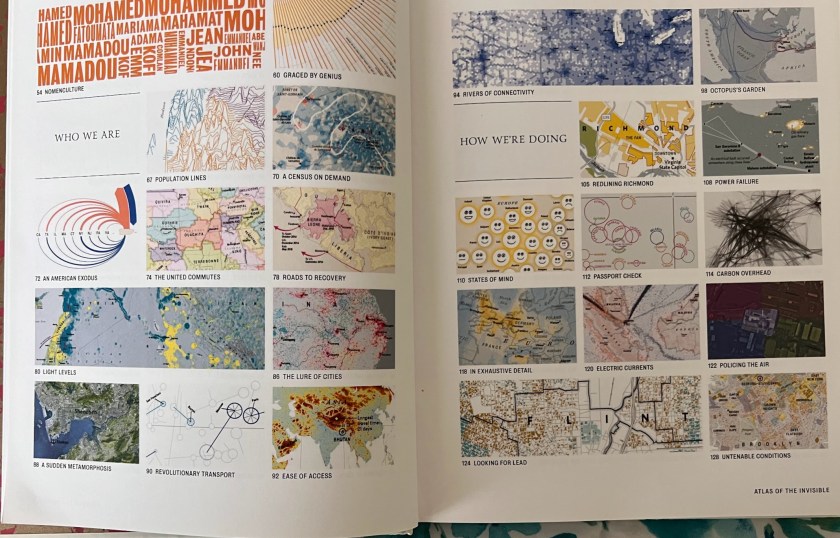
Atlas of the Invisible – By James Cheshire and Oliver Uberti is a treat for those who enjoy analytics. 

atlas_invisible

Example charts – to see if you like the book:

IMG_8034

We are all data points in this world. I chuckled as I read about the folks who revealed a high security defense location in the middle of the desert simply by turning on Strava to keep track of their daily activities. A good reminder that like many of our inventions, this penchant for data tracking and analysis too will bite us in unexpected ways.

I hope you enjoy the books as much as I did.

Recommended Reading on this subject:

Mysore Palace

In what was a whirlwind trip to India, I was fortunate to fit in a day to visit Mysore, or Mysuru as it is now known. The Mysore Palace was bursting at its seams. I don’t know whether the Wadiyar family was that popular even at the peak of its glory, but that Sunday morning, we had the distinct feeling that the entire populace around Mysuru had woken up with the singular thought of having a nice picnic day out at the palace. Crowds bustled, feet shifted, and more importantly, the sun rose in the skies above Mysuru. 

Image source: Wikimedia Commons: Photographer: (Muhammad Mahdi Karim/www.micro2macro.net)

We shuffled our way through the palace taking in the art work and the opulence. Every palace designer and acquirer of artifacts has this to contend with: in opulence lies plenty, and in plenty, even the rare loses its lustre. How often have we been to art galleries and been too awed by the hundreds or thousands of art pieces, to notice the subtlety that would otherwise be studied with awe?

For instance, I am quite sure that if I’d seen any one of those doors by itself, I’d have been bowled over. After all, how often does one see ivory inlays in teak doors, and entire pictures carved out in the ivory?

img_7453

How often do we see the portraits of South Indian royal princesses from 100 years ago? But when one passes through 50 stately doors, and 500 paintings, surrounded by 5000 people, it suddenly becomes overwhelming. 

Even so, we couldn’t help admiring the artwork, the beautiful portraits, the marvelous turquoise green and blue themes, and the beautiful cultural themes of South India. 

I remember visiting Mysore Palace as a young girl – maybe around the age the daughter is now, and while I remember the night lights at the palace with awe, the rest of it seems to have mushed in with plenty of other palaces – I may have confused the Buckingham Palace,the Jaipur Ajmer Fort Palace, and Fatepur Sikri in one grand ballroom in the head.  

The Mysore Royal Family

Like every royal family across the globe, the Mysore Royal Family also has seen its share of news mongers, myth propellers and the like. Apparently, the Mysore Royal Family was cursed so that naturally born heirs could not beget their own heirs and would have to be adopted. They were also rumoured to be the descendants of Lord Krishna. If that is not pressure, I don’t know what is.

It must be exhausting to live in the public eye for generations. 

Royalty is completely different than celebrity. Royalty has a magic all its own.

Philip Treacy

As we bustled out of the palace, I found myself grateful for our quiet, ordinary  lives, but also appreciative of the art that the rich had a taste for. Thank goodness for patrons of art over the years. 

Imagine what our lives would be without Art?

Earth’s Eyes

Canadian summers are generous. 

The week we were there, we were blessed with ample sunshine, full rivers gushing waterfalls, millions of evergreen trees, tiny pinecones, open skies, harsh rock faces, long days and every hue of blue in the waters of the land. 

IMG_6497-COLLAGE

When we told anyone that we were planning to visit Banff, Canada, we heard about the Blues. In gushing tones, awed expressions, faraway looks as if transplanting themselves momentarily to a place with blue waters, and peace. I liked that. It must have been something if everyone had the same things to say, shouldn’t it? I have been to several lakes, and am always in awe of them. I remember somebody saying something to the effect of a lake being a planet’s eye, or something like that. Awfully poetic I thought then. Must find the quote.

Ah – here it is. It is our reliable ol’ Henry David Thoreau on Walden Pond. 

“A lake is a landscape’s most beautiful and expressive feature. It is Earth’s eye; looking into which the beholder measures the depth of his own nature.” 

Henry David Thoreau, Walden

Anyway, so off we went expecting to see blue lakes. Emerald green waters, turquoise waters, and all the hues in between. Pictures do not prepare you for the surreality of it all, we knew that. We were hiking around the famous Lake Louise when the daughter piped up with her usual candor. “It looks pretty and all, but I don’t want to swim in it. It doesn’t feel right. Do you think it has some kind of algae, in it?”

lake_louise

I looked at her and then nodded. I understood that feeling. I had not been able to express quite that way yet, but there it was. It didn’t help that I was reading The Three Body Problem by Cixin Liu, Translated by Ken Liu, and somewhat agitated by the other worlds mentioned in the book. 

51pHYR3yHaL

But when we stopped to take breath a few meters on, I sucked in a deep breath. It was beautiful especially from our current vantage point. We were at least a thousand feet above and hiking around it in an elaborate trail that allowed us glimpses of the turquoise blue waters in between. So, what did make these waters this unnatural shade of blue? Why didn’t lakes in Iceland, Switzerland, Philippines, New Zealand, or the United States have the same color? 

Professor Google says it is because of the particular kinds of glacial silt that is deposited in the waters with glacial melt, and not algae. Up close, the waters looks transparent near the shores, and the canoes seem to enjoy the peace and quiet of it all. 

We canoed in ‘a lake that looks like more like an earthly lake’ as we delicately put it. But this lake too had spots of emerald green waters turquoise spots and the transparent blues. I took photos that I thought would wow the world. Of course, they looked like I shook my hands and poured tea into the lens instead.

IMG_6722

I was nervous about the canoeing. I was nervous about the hues of the waters. But as the daughter and I shared a canoe, I was somewhat heartened. She is calm, reliable and more capable than Yours Truly at steering canoes towards shores as she demonstrated to me that day. We stopped mid lake, peering into the depths below. The calm beautiful waters holding the promise of the winter snow in its depths.

IMG_6727

Earth’s eye that day assured me that to imagine yourself in a different world, if only a moment, is fascinating and necessary. We couldn’t really see the Loch Ness monster, or the myriad fishes in the beautiful waters even as sunlight pierced through to the bottom maybe a hundred feet deep. But I am sure these lakes were home to plenty of lifeforms – how could they not be?

Sometimes, humans are so caught up in our own trivialities in this universe, I wonder whether our fellow habitants are the same. Maybe. Maybe not. We would never know. 

Write an ode to my wife, my life

“So, will I be getting my romantic poem then?!” I teased the husband who was looking sheepish. I giggled at his obvious discomfort. He is the sort of fellow who relishes the sentiment behind  P G Wodehouse’s statement:

I once stayed at the residence of a newly-married pal of mine, and his bride had had carved in large letters over the fireplace in the drawing-room the legend: ‘Two Lovers Built This Nest’, and I can still recall the look of dumb anguish in the other half of the sketch’s eyes, every time he came in and saw it.

  • P G Wodehouse

We had been gurgling on about some rom-com movie, a rather touching spot of sentimentality that clinched the deal between the love-birds and all the rest of it. Which led to me to ask for my romantic poem. It is an old joke between us: we both know he is no poet, I am no queen, and so it goes. 

I needn’t have worried though. If ever the man is discomfited, it is but a fleeting sensation. For he leaps into problem solving mode almost instantly. A few minutes later, the cocky fellow strode into the room looking pleased with himself. 

“Check your WhatsApp messages!”, he said. 

I did, and burst out laughing. He had done it. He had sent me a horrendous poem full of lines from 1980’s Hallmark cards, all culled together.

“Oh my goodness! Did you search up the first “romantic poem for my wife” and send it? I asked. I was laughing now, and he disappeared again looking even more pleased, and a sentence thrown to the winds, “The poem doesn’t speak of your particular gifts you are right. One minute.”

Then. A few minutes of deep thinking could be heard – the brain whirring probably and he said: “Check now!” 

I must say it was much more than I expected. After seeing the previous attempt, I braced for a cheesy omelet. 

My love, my life, my wife,

You are a woman of many talents

You are funny and witty.

And your writing is wonderful

The “poem “ went on in this vein for 3 more paragraphs.“Really?! You wrote this? I didn’t quite slot you as a loquacious poet, but good job! “ I said. The husband puffed out his chest and looked proud of himself. Too proud in fact, and that gave me pause. I narrowed my eyes x-raying the man’s soul and saw all. The twitching of the smile that gave it away, the hearty thanks, and I said incredulous, “Oh my goodness! Did you use ChatGPT for these?”

He nodded looking so proud of himself that I clutched my sides laughing barely able to breathe.

“Pretty good right? I asked it to write a poem for a loving wife who is also a funny writer.”, he said.

I beamed at the problem solver. I suppose all poetically challenged lovers can now relax. They can get help. 

We had been talking about the ways in which this new technology can change things for us. Just as with every new piece of technology, there are pros and cons. I had been reading two books simultaneously :

  1. The Age of AI and Our Human Future: By Eric Schmidt, Henry Kissinger and Daniel Huttenlocher 
  2. Impromptu: Amplifying Our Humanity Through AI : By Reid Hoffman

Excerpt from Impromptu:

“Mintz immediately integrated the new tool into his decades-old teaching methods. Within months of ChatGPT becoming public, Mintz started requiring his seminar students to write their essays collaboratively with the new tool. As homework, they bring the ChatGPT prompts they tried and the responses they received for class discussion. They must turn in their final papers with a log of changes to the machine’s output.

As a great teacher, Mintz chose to use ChatGPT not as a source of answers and authority, nor as a replacement of his or his students’ work, but as a tool to help his students learn individually and together.”

ChatGPT: Threat or Menace?: By Prof Steven Mintz

Steven Mintz is professor of history at the University of Texas at Austin.

The book goes on to compare the use of calculators in Mathematics teaching a few decades ago:

“In 1970, the typical calculator was too pricey for wide- spread use in schools, but they hit a tipping point in the mid- 1970s. Many parents and teachers were alarmed at the influx of new tools; they worried that math skills would atrophy and students would simply cheat. 

By 1980, however, the National Council of Teachers of Mathematics recommended that “mathematics programs [should] take full advantage of calculators . . . at all grade levels.” Today, most math instructors consider calculators to be a critical part of math instruction, and many states mandate calculator use with certain tests. “

It is curious to see how human intellect is ever ready to thrive and adapt and hopefully stay abreast of these. There are now jobs being created for Prompters for those who can get the ChatGPT/ OpenAI platforms to coax the AI platform into  answering particular queries.

There are cautionary stances to be taken and our laws may not always evolve fast enough to keep abreast of technology. The buzz of AI is the most fascinating challenge thus far, and I am rooting for our species to master its use as humanely as is possible. Use it for the good of the world – climate, healthcare  (physical and mental), food production, education and so much more.

But now, I am going to savor the husband’s poem. After all, it did say:

Thank you for being you.
You make the world a better place.

Professor Mintz would’ve been proud of the poem 🙄