Beauty in the Eyes of the Beholder

This was an idea for a children’s book and also a pair of creature glasses that I wanted to make: You could choose the animal in your app settings, wear your glasses, and voila! You would see the world around you as the animal does:  an ocular device that transported you into the alternate reality of that creature. But as most good ideas of mine, they festered in a document of Potential Ideas.

So, I was intrigued when I saw this book in the library. 

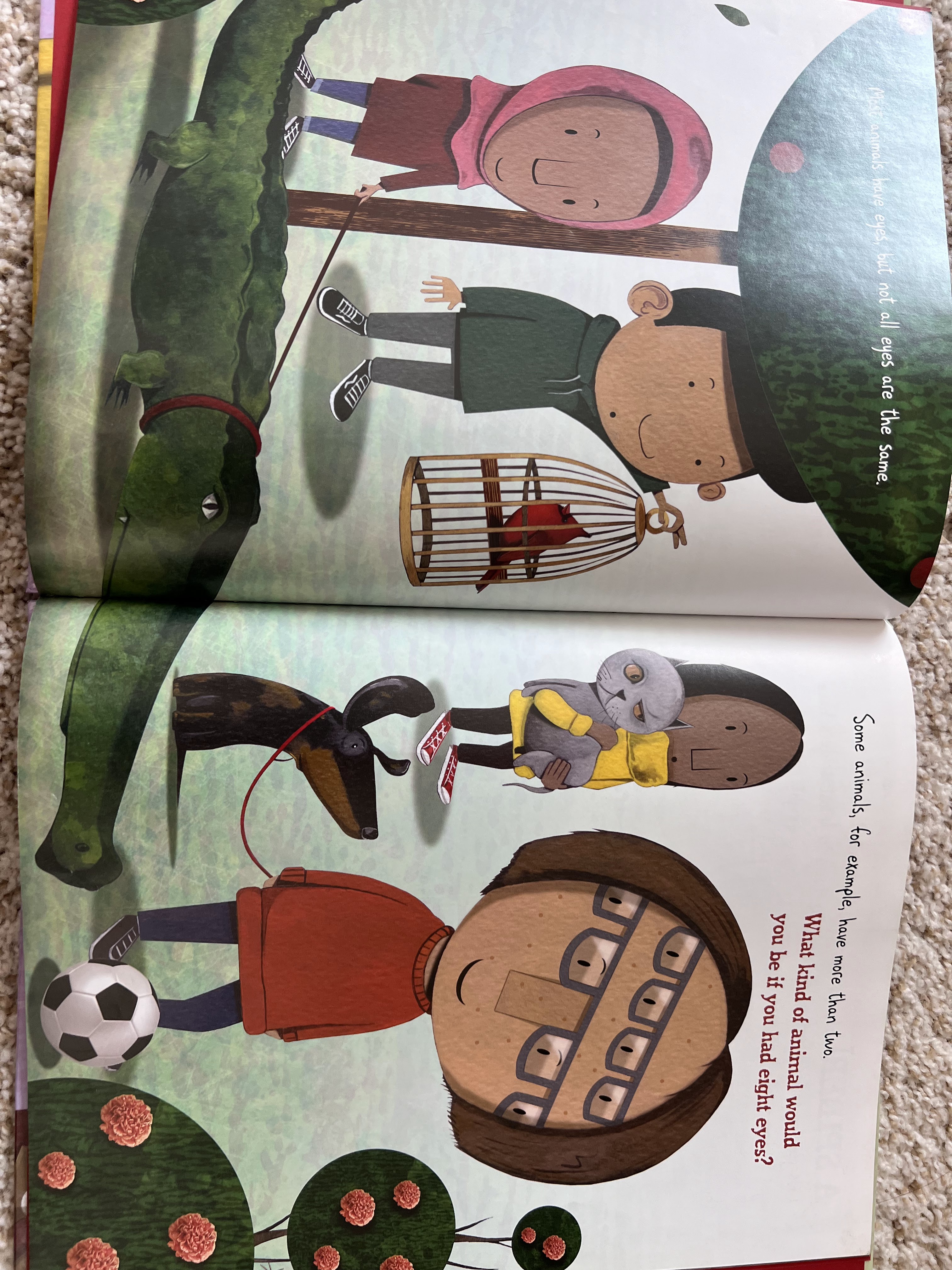
Eye By Eye – Comparing How Animals See – By Sara Levine, illustrated by T S SpookyTooth

img_2088

Even as you open this whimsical book, you realize that seeing the world like we do can be a unique gift. That is not even considering perspective, personality and all the rest of it: just the ocular aspect of it. 

How would an animal with eight animals see the world? 

img_2090

A Spider’s Vision

The illustration of a woman bespectacled in all 8 eyes is endearing, but it does make you think of a spider.

A Spider’s Vision

I noticed a spider has really taken a liking to our car’s external rear-view mirror. Everyday, there is a fine web spun there – I wonder whether the little creature sees itself spinning its beautiful web, and admires itself for it. 

What if you had six eyes, one located at the end of each of your six arms?

Shapes & Colors

The book not only considers creatures with differing number of eyes, but differing eye shapes as well: like that of an owl.

Pupil shapes matter – goats have rectangular pupils. ( I confess I have looked into the eyes of plenty of goats and never noticed this.)  Cuttlefish’s pupils are W-shaped.

img_2066

Small hexagon shapes in an eyeball ( like in a bee hive?) Well, flies have that.

Then we come to colors, but we can have colorful differences in our outlooks as well. Butterflies and hummingbirds, we have known for some time, see the world very differently than we do. As do dogs, and cats.

So, whether or not I make those creature glasses or some company comes up with such ubiquitous VR that it seems like it was always there, it is a fascinating world out there. Go outside and imagine life as a hummingbird, or a jellyfish. Glasses or not, your thoughts will transform your mood.

Embracing the Tranquility of a Summer Evening

The day could have been better. My to-do list gave me reproachful looks all day long as I took care of many different things and accomplished nothing. It was time for this and time for that, not yet time for this-and-that, and oh-so-past-the-time for this-or-that. Finally, I wrapped up for the moment and headed out. It was a beautiful summer evening after all, and moping about not doing the work was not going to get it done. 

That’s how I found myself that beautiful summer evening, doing yoga in a friend’s garden that she had kindly invited us to. The sun’s rays danced through the maple leaves in the west, the mild breeze provided much required respite and made the italian cypress trees in the east look like they were dancing and swaying to the breeze too. 

The pink bougainvillea in the south leapt from fence to tree with such freedom of spirit, that I couldn’t help feeling a bit wistful at not being able to boldly leap and catch hold the way those plants did. How did creepers know whether they’d make it to the next branch? There must be a bold vision and a willingness to let go of safe harnesses that we never really stop to think about. I wonder how that feels – it certainly seems to be something we struggle with as adults more than as children. 

To complete the bucolic yogic scene, was the neighborhood black cat. Well-fed, preening its coat, gleaming in the evening sun and stretching every now and then to show us what a good stretch looks like, she lay there looking perfectly happy with the way her evening was going (or her days were going) by the looks of it. 

I told my friends about the state of to-do-ness that had ailed me that evening, and how the evening completely transformed it. My friends seem to have been in similar states of mind – and it all came spilling out the moment I said so. 

We smiled and drank in the scene: The cat did not care, the trees continued to sway, the leaves shone and the parched earth settled down to a cooler evening, the birds above made their way home. The purpose of life was right there, for those willing to take it.

The best part of the evening was the various angles from which we took in the garden – upside down, sideways. While breathing hard, while taking deep breaths. I tried taking the picture of the garden upside down, but of course all our tools seem to want to correct all our ‘mistakes’ and would not allow me to. So, I rotated the pic manually to retain the beauty of the world seen upside down.

upside_down_garden

Dancing in the wind, with the sun on my face.

Playing hide-and-seek and eating a treat.

It reminded me of Dr Seuss’s quote on looking at life

Fantasy is a necessary ingredient in living, it’s a way of looking at life through the wrong end of a telescope, and that enables you to laugh at life’s realities.

Dr. Seuss

Not Pristine, Prim, & Proper!

The week-end was marvelous. The 4th of July week-end usually is. Summer is in full swing which means long days, and flowers bursting forth everywhere. This time, it also meant waterfronts and beaches with the children in tow. 

One day, as we walked on the beach, playing with the little waves against our feet, stopping to pick a shell here, and a conch there, I reveled in the ordinary happiness that a simple day like that gives. 

beach_surfers

We saw teenage boys play spike ball for hours on end, little children squeal and run to and from the waves, sand castles being built, and surfers ride the waves again and again.

One child was picking up wet sand to return to the ocean, and squealed when the sand squirmed in his hands, and went running  back to his mother.

An inflatable giraffe that did not look happy out in the ocean. The ridiculousness of finding a giraffe bobbing in the waves was enough to get people to laugh.

beach_giraffe

I usually am not in favor of crowded beaches, but that day, it felt good. People watching felt lovely. 

The son and husband were covered in sand building their little sand castle with a moat around it, tunnels through them etc. I had taken several walks letting the waves splash around me, and the sea looked amazing. The day was not too hot, and the waters were not too cold. The beach was noisy, but not too loud. The people themselves were in various states of imperfection – In other words, it was perfect.

It all felt all the more special because I had an excellent book to read at the beach. The daughter had her trusted ‘The Summer I Turned Pretty’ trilogy with her. It was a bit dog-eared, but she looked at it fondly and said, “That is exactly how a beach book is supposed to be. Not pristine, prim and proper.” 

I threw my head back and laughed so hard at that. “That should be the theme of our day here, huh? Not pristine, prim and proper.”

beach_waves

As we made our way out of the beach, we looked like a good hosing down would do us all good. “But before that – some gelato!” said the husband, and we all hailed our hero as we made our way to the little gelato store with brilliant flavors and fantastic names for gelato explorers.

What are some of your favorite beach reads, and beach activities?

The Birds of Paradise

The World Around Us

I don’t remember when exactly we start noticing birds and animals around us as being separate from human-beings. If there is a conscious point in time when we say:

This is us, that is a bird.

Don’t eat those – they’re mosquitoes &

Keep away from man-eating tigers – they want to eat us. 

Keeping the neuroscience behind it all aside, the world around us is fascinating. Even if you see a bird everyday, the little chirp, and the flutter of its wings cannot help but take us out of ourselves for a bit can it? 

What is it about this diversity of life that is so appealing? 

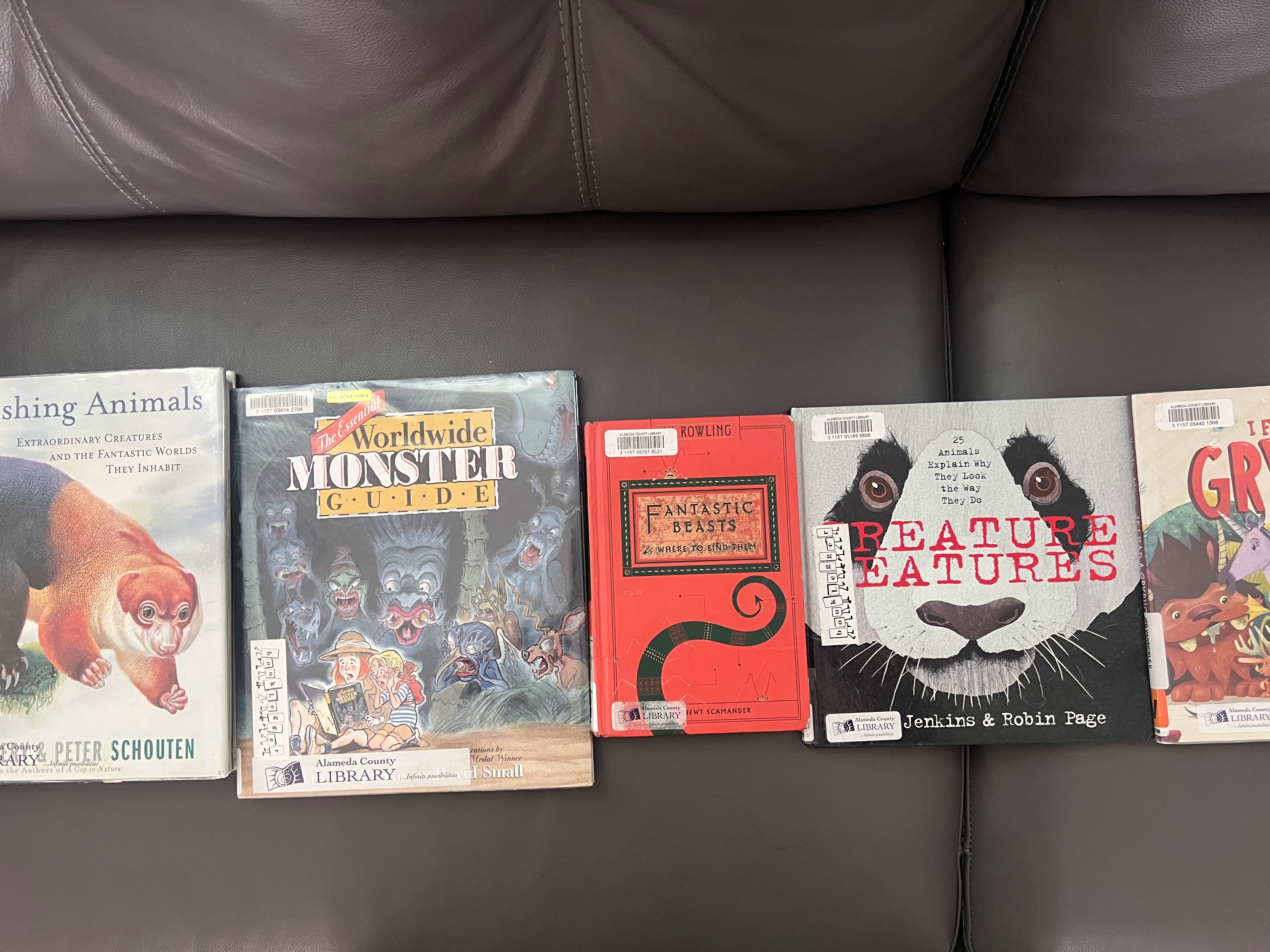
I was sitting one afternoon engrossed in books. Books on beautiful beasts and fantastic features of the creatures we share our planet with.

img_1575

As I flipped through the colorful pictures and the accompanying text in the book, Astonishing Animals – Extraordinary Creatures and the Fantastic Worlds They Inhabit. – By Tim Flannery & Peter Schouten, I couldn’t help being drawn to the birds of paradise in the book.

Rarely do we stop and just admire the beauty and precision of a bird’s structure. The birds themselves are flighty. Our attention spans are even more so. Plus, these birds are all in exotic places. But it made me wonder – even the less exotic birds around us, how long and how often do we study them? Ornithologists do. Bird photographers do. But otherwise? Those of us who love nature stop to notice them. The rest of us are too busy to notice. 

Birds of Paradise

I was admiring the different birds of paradise illustrations in the book, and I felt myself drawn to the Himalayan Satyr as much as the blue bird of paradise.

The blue bird of paradise is illustrated beautifully in the book – long side up taking up two pages and you can see why:

blue_bop

he dances upside down, hanging from a branch. As he begins his display, he flexes, sending waves of blue and violet shimmering through his feathers. At the center of his chest is a dark oval patch lined on its lower margin with red. This is rhythmically expanded and contracted so that it resembles a huge, slowly expanding eye whose effect, even on humans, is hypnotic. All the while the performer’s own eyes are closed, revealing white eyelids, which lend him an unearthly air.

Like a little opera singer, dancing on the stage. How marvelous!

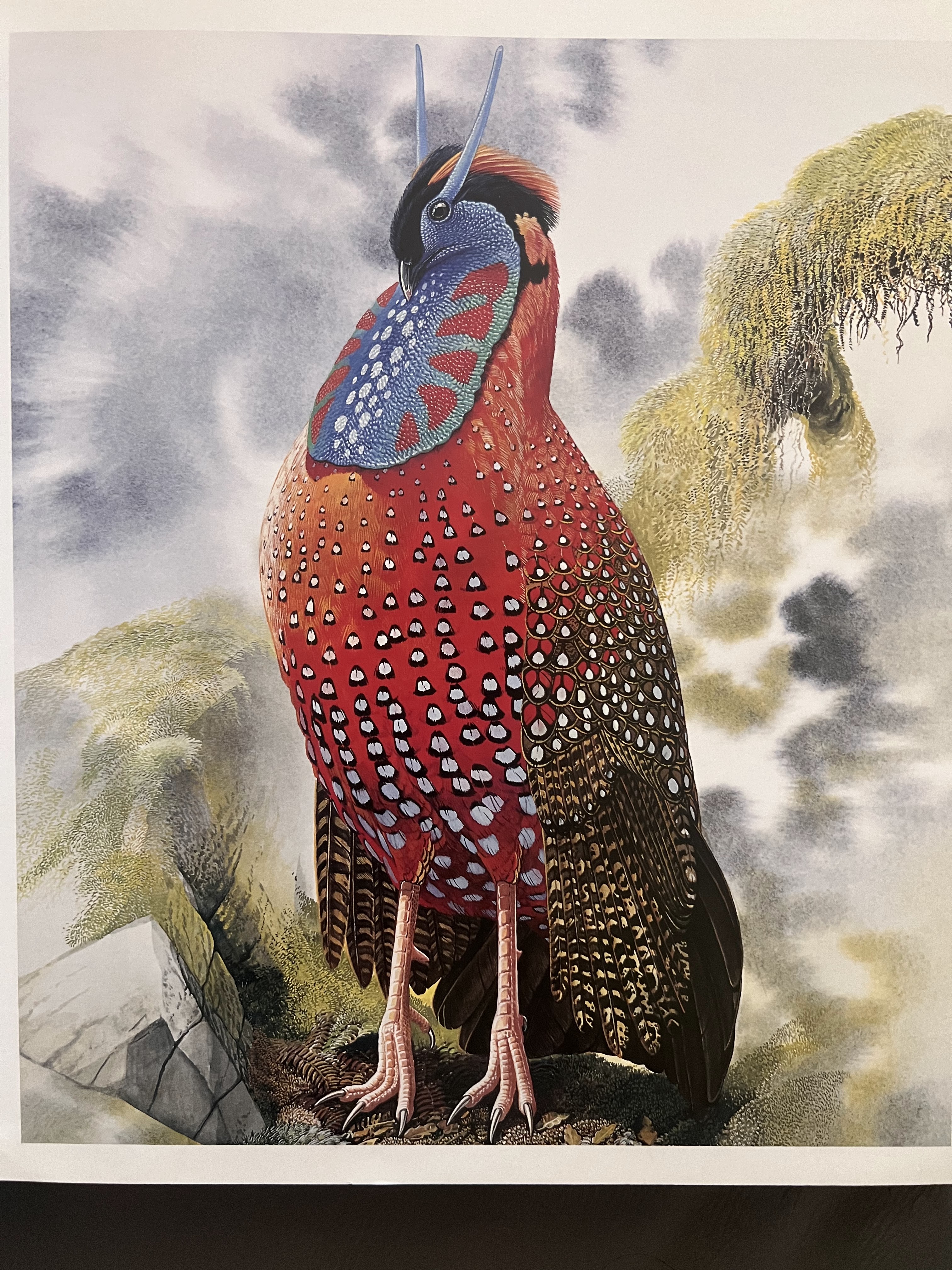
The Satyr Tragopan, another beautiful Himalayan bird, drew me for another reason.

img_1563

It is often the case among birds that a gorgeous cock is a poor provider. Beautifully adorned males may put on a wonderful courtship, but all too often contribute nothing to the raising of the chicks, leaving that duty to the dull hen-birds. The satyr tragopan is a stand-out exception here, for not only is he dashingly handsome but he seems to be monogamous and a dutiful father as well. … The father contributes equally to the upbringing and care of the young.

The Himalayan Monal, and other birds of paradise are equally dashing.

Split into beautiful sections about creatures who live in the ocean, tree dwellers, mountains dwellers, the book journeys across continents, landscapes, ocean surfaces and deep surfaces. The artwork, though, is spell-binding. 

One cannot help feeling like the world is beautified and expanded just a little after an hour just looking at these beautiful creatures and reading about their curious lives.

Recommended Books:

Gazanias in the Garden

Time Paradox

There is a continuous time paradox that we run into in our lives.

My generous friends offered to help me plant my newly acquired gazanias in a small garden patch. You see, several times in the pasts, they’ve tried helping me with different plants with the cheery confidence that gardeners have:

“You cannot go wrong with these – they will definitely grow.”

“You don’t have to do anything, they will grow by themselves.”

“See those – they just spread without doing anything!”

To these optimistic statements, I say, “Challenge accepted!” and go ahead to botch the poor plants with the bumbling blistering competence of a dancing octopus with a shovel. (generated by Gemini AI)

octopus_shovel

So, they took pity on me, and came by with their shovels, hats, and laughter. The patch itself was a tiny one, but as we tried to turn the earth over, it was apparent to them why nothing grows there, and how I was making such a killing with their plants and bulbs. The patch was full of pebbles. So, instead of doing a half-baked job, they all pitched in till we were all shoveling, digging and plodding the earth along. We removed pebbles by the dozen, and by the time the patch was turned over, and the new gazanias were in place, we felt like proper earth movers, ready for some tea and biscuits.

Things take the time they take

As I sipped the tea though, I realized how much work goes into gardens that beam at us everywhere in suburban areas. If this small patch of land took us around 2 hours to do, how do people manage large yards, and sprawling garden spaces?

These things made me think of time itself. We did not realize that it took us 2 hours to plant the gazanias.  That night when I went to bed, I had a wholesome ache in my arms, and dreams filled with fresh soil and flowers. 

All this pondering on gardens made me realize how impatient I am with myself for things to develop into fruition: that garden patch, that novel, that myth, those short stories, those children’s books. Things take the time they take. Sometimes more than one thinks is necessary, but if we keep at it, removing one pebble at a time, moving one ounce of earth at a time, that is all that should matter.

I used my best philosophical insight voice and said so to the husband who chuckled and said “Pesu!” (Talk!) .

Ursula K. LeGuin’s Influence: Embracing the Passage of Time

This impatience towards results: Could it have something to do with the pace of modern life? After all, we spend a monumental amount of time flipping through videos on fast-forward mode showing us how cakes are baked, iced and decorated in less than 15 seconds. In reality, the whole process could easily take 2-3 hours. Do we really feel a sense of participation in the cake-making process by scrolling and consuming it? I think not. 

It reminded me of the interview by Ursula Le Guin in which she talks about time. 

“I lived when simply waiting was a large part of ordinary life: when we waited, gathered around a crackling radio, to hear the infinitely far-away voice of the king of England… I live now when we fuss if our computer can’t bring us everything we want instantly. We deny time. 

We don’t want to do anything with it, we want to erase it, deny that it passes. What is time in cyberspace? And if you deny time you deny space. After all, it’s a continuum—which separates us. 

So we talk on a cell phone to people in Indiana while jogging on the beach without seeing the beach, and gather on social media into huge separation-denying disembodied groups while ignoring the people around us.

​I find this virtual existence weird, and as a way of life, absurd. This could be because I am eighty-four years old. It could also be because it is weird, an absurd way to live.”

~ Ursula K. LeGuin, Interview by Heather Davis

I remembered one remark made by a mother of an elementary school going child who had helped her child out with an art project, and put it up as a reel on her feed: “That reel took more than 4 hours!” she said wistfully. 

I grinned, swiped, and sent a quick ‘like’ before parting ways. That was that. 

I have often wanted to see a flower bloom, or a berry ripen – but the real magic happens so slowly, you barely realize it is magic at all. Maybe, that is the real magic – work with a good intention, do your best, let things take the time they take, and develop into what they need to. In the meantime, I head out everyday to gaze at my gazanias – so lovingly planted. Surely, they heard the chatter and the laughs as they took root. In time, I hope they laugh too.

img_1524-effects

Summer Serenity: Embracing Being Over Doing

Being Vs Doing

Summer’s beautifully long days are here. The other day, I came upon a saying by Thich Nhat Hanh, and decided that embracing his wise words may be the making of our summer. 

“We have a tendency to think in terms of doing and not in terms of being. We think that when we are not doing anything, we are wasting our time. But that is not true. Our time is first of all for us to be. To be what? To be alive, to be peaceful, to be joyful, to be loving. And that is what the world needs most.”

  • Thich Nhat Hanh 

School holidays have started, and in the spirit of being, the son and I lounged under a maple tree in the afternoon. The deep green of the leaves above with the sun shining piercing through the leaves above making us pleasantly drowsy. Hmm, “We should do this once in a while huh? Lie under a tree on the green grass and read a book!” I said, and he agreed.  

Komerabi

The Japanese have a beautiful word that captures this feeling, Komerabi. (木漏れ日 ) To see the blues, greens, yellows and browns merge together in that trick of light (Komerabi : the phenomenon of sunlight through filtering through the leaves above) is to experience luminescence.

木漏れ日: tree (木), shine through (漏れ), and sun (日): Komerabi

img_1471

We weren’t there long. But it was long enough to notice life around us. We saw the little wrens hiding place amidst the flowering bushes as it hopped in and out between breaks during the day, the lazy dragonfly whose shimmering blues in the hazy afternoon was strangely soporific, and the brisk yellow butterflies who were showing the other two how it’s done.

That evening we took out our bikes on a longish ride along the river. Watching the curlews, avocets, harriers enjoying the evening was surreal. The avocets spend hours pirouetting in the winds, and dipping into the waters, the curlews, cranes and herons wait patiently for their food. We didn’t hear them moan – not once. We listened to the blackbirds trilling symphonically, shrilly and still sounding soothing somehow.

Later at night, we sat companionably together – each doing our little things as darkness fell around us. We were acutely aware that the feeling of night is short lived, and therefore the cocoon of darkness created by the warm lights in the home seemed doubly welcome. 

The post would, I hope, remind us of the simple joys of being in the summer, and the pics would show up every now and then as memories. But that feeling of peace – how does one capture that? How does one find the words for saying, “The world’s worries are all still there, they shall still be there tomorrow, and the day after that. For now, let them be.”

The Powerful Epiphanies

The Power of Spring

As epiphanies often go, it was unexpected, and oh so satisfying. This spring season has been particularly fantastic – there are bumblebees, butterflies, dandelions, ducklings – all tripping over themselves to give you epiphanies of life, miracles, hope and so on.

One such day, we sat watching lazy waves rippling through a large pine tree. The previous day had been a cold, and windy day, we had scuttled inside for warmth. The next day was warm, pleasant and entirely suited to lounging around watching wind waving through pines, firs, and gingkos. 

The house was filled with noises of spring – young children exclaiming at blueberries, standing on tiptoes and peering up at the oranges on the tree, running through the house in a mad scramble looking for juice packets and snacks while playing freeze tag or mock-cricket. 

When the next stampede grew closer, I wondered whether to move aside from the herd of stampeding rhinos, or sit my ground and continue gazing at the roses in bud, and the pine in the wind. I continued to sit, and luckily, the fellows stopped, and one-by-one they all flapped around, and flopped on the grasses. 

“What are you thinking about?”

The Ginkgo’s Wisdom

I told them, and they sat pondering for a moment, sipping their juice. I couldn’t resist the pull of a quiet moment, and an uncharacteristically pliant audience. “Did you know about the ginkgo trees?” I asked my young fellow admirers of wind and trees.

ginkgo-COLLAGE

Thrilled that they didn’t all know, I launched on the ginkgo train – telling them about how they were around from the days of the dinosaur, and how they all communicated to each other, and decided when to shed their leaves. The son said that one of the trees will slow down if it is going too fast in the color changing race, waiting for its fellow ginkgos to catch up.

“Like friends are supposed to be!” piped up another. 

I beamed appreciatively. “Yes – exactly like friends – all helping each other get there. Together.”

Read also: The night of the Gingko : By Oliver Sacks in the New Yorker magazine.

The day’s epiphany done, the playgrounds beckoned, and I let them all run off their sugar highs before expecting them to quieten down for the night. I wonder how the birds manage to quiet their brood when they’ve had a little too much nectar. That epiphany can’t wait for another day.

“A real artist is the one who has learned to recognize and to render the ‘radiance’ of all things as an epiphany or showing forth of the truth.” ~ Joseph Campbell

The Problem of Perspective

It was one of those clear, cloudless days. The temperature was just right, when we stepped out of the house. A lazy dragonfly and a helicopter flying overhead got young minds and old talking about the similarities between them, and of course biomimicry-based inspiration between them.

Even as ubiquitous as air travel has become, that sense of aerial adventure still kindles something special and adventurous in us. I remember telling my friends the other while reading When Women Were Dragons book by Kelly Barnhill that I hoped to become a dragon – if not for anything, but for the soaring power of flight, and the perspective such an act affords us.

Seeing the world around us in different perspectives is an endless fascination is it not? It is why the artist painstakingly sketches that wart on the nose, or that dimpled chin, or that shadow of the leaf with so much love and attention. Perspective.

Perspectives in Art

So what is it about our day-to-day lives that we can apply the same principle to? We have been trained or naturally possess the ability to view a problem from another person’s perspective, in order to see their perspective. It all helps of course -it is what makes us human.

That morning as we watched the dragonfly flit and the helicopter fly lazily overhead – probably on a routine patrol, I felt the urge to see things from both their perspectives. What would they see? A young boy and a lady out on a walk, certainly, but what else? The helicopter certainly would not have seen the dragonfly, but could the dragonfly have seen or sensed the helicopter? I think so.

Watching the skies is endless fascinating especially if you live near fairly busy airport zones. A few hours later, I sat on the porch with a toddler, and peered up again – the child had spotted an aircraft and wanted to know whether it was a plane. “It is a 747!” piped a voice – older and wiser than the toddler, and he looked with awe at the plane overhead.

With my neck craned at the sky above, I felt a rush of gratitude for being able to relish these everyday joys with young minds. How often we don’t notice the planes, helicopters, and dragonflies overhead? How often we miss the perspective from above when solving the problems of our lives? If only, we could take our minds for a whirl of perspective, how marvelous that would be?

🌸🌸🌸 Oubaitori in Spring Time 🌸🌸🌸

Spring is here, and with it, the delightful uncertainties of the weather. 

Would it be a cold, bright, cloudless day, or a cold, cloudy day, or a warm sunny day? The possibilities are endless. Sometimes, I feel like a lamb in spring-time ready for a spot of prancing and rollicking in the hills, other times, like a caterpillar not yet ready to shed the cocoon.

Springtime is a fantastic excuse to wear a silly hat and chase after unicorns, wouldn’t you agree?

– Uncle Fred in the Spring Time – By P G Wodehouse

With the increasing length of our days, it is a beautiful feeling to step out into the sunset at the end of the day, The golden hour seems more radiant, and seems to even linger more, though that just may be due to the fact that the body has had the time to sip a cup of tea at the end of the day before sunset. 

One evening, I stopped to savor a fat plop of a raindrop on my face, and saw that the cherry trees had leaves on them. The flowers had all but gone. They were there two days ago. I peered at another tree not far away, still resplendent in its floral beauty, and another one that had a good smattering of brown leaves along with their pinkish blossoms. Once again, that longing to capture the blooming and blossoming in slow-motion came over me. How lovely it would be to sit and watch for the leaves to come in? 

Ah! What little things give us pause?! 

I read about a beautiful Japanese concept, Oubaitori

The ancient Japanese idiom, Oubaitori, comes from the kanji for the four trees that bloom in spring: cherry blossoms, plum, peach, and apricot. Each flower blooms in its own time, and the meaning behind the idiom is that we all grow and bloom at our own pace.

img_0119

A few days later, I went on another walk, this time peering up at a clear blue sky, and no jacket, only to notice the young gingko trees in the neighborhood beginning to sprout their light green leaves of beauty. I remembered the large gingko tree we’d long admired. That large tree, over a century old, fell in the winter storms this year, and I felt a pang. The patch on which it stood was overgrown with fresh grass, and a meadow full of yellow flowers. Nature’s lessons and epiphanies are rarely novel, but always welcome. 

Making a mental note to go for a short hike in the beautiful green hills nearby, I reluctantly headed home. 

Spring time is nature’s way of saying, ‘Let’s Party’!

– Uncle Fred in the Spring Time – By P G Wodehouse

Maybe it is time for a spot of springtime laughter with the maestro, P G Wodehouse himself.

🌈Irisophiles?🌈

February is really the month of Love. Not just because of Valentine’s Day, but the rainbows!

img_9718

February has been the month of rainbows – at least here in the Bay Area. Even if we know the Science behind rainbows, they are special. We’d glance outside, and see the sun peeking out after the rains, and I’d run to see if the magic is there. That in itself is surely magical.

While there are many words to describe the love of sunsets, clouds, starry skies, the sun, the moon, eclipses, forests, rain, thunder and lightning, there isn’t really a word to describe the love of rainbows. No one word to capture the soaring of the heart when it spots the multi colored ring of the Earth’s horizons. The squealing of the young and the old as they charge outside to catch the magical light of this beautiful universe. Imagining how marvelous it must look to hummingbirds and those who can see a larger spectrum of light.

Rainbow Tales

Of course rainbows have enamored humankind for centuries. 

🌈I can’t help thinking of the silly fable about the fox marrying the crow and throwing the garland up in the sky, and that is how a rainbow is formed, every time we spot one. 

👰Greek myths have a goddess, Iris, who is both a messenger of the gods and a personification of the rainbow. In Rick Riordan’s Percy Jackson series, the demigods are able to use drachmas to communicate with the gods through a rainbow.

🍀The Irish, of course, have a quirky tale about finding gold at the end of the rainbow.

That is why I was this surprised at not being able to easily find a word for a lover of rainbows in a world filled with them.

Should we call ourselves Irisophiles?

🌇Opacarophile: lover of sunset

🎨Chromatophile – a lover of colors

⚡Ceraunophile – a lover of thunder and lightning

🌩️Nephophile – a lover of clouds

☀️Heliophile – a lover of the sun

🌜Selenophile – a lover of the moon

🤽Limnophile – a lover of lakes

🕯️Photophile – a lover of natural light

🌧️Pluviophile – a lover of rain

🌊Thalassophile -a lover of the sea and oceans

🌳Nemophile – a lover of forests

💛Xanthophile – a lover of the color yellow

Here are a list of words to engage any nature-o-philes:

Words for lover of Nature and Weather

img_9556

What do you think? Should the lover of rainbows be called an Irisophile. Or what other words would you suggest?