Blame The Toxos

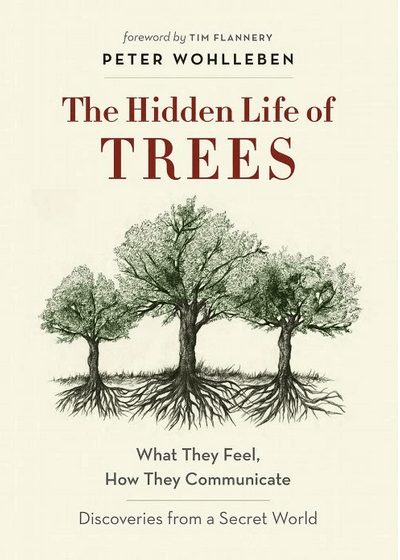
Every once in a while a book comes along that changes the way you fundamentally view things. I Contain Multitudes by Ed Yong is one such. In the book, the author covers various types of microbes, bacteria and pathogens that we carry within ourselves or encounter in the world. A fascinating adventure awaits the reader on this microscopic journey.

The book shows us how each being is a complex symbiosis unto itself. A concept we know vaguely but appreciate deeply when we read the book.

screen-shot-2017-02-20-at-1-04-57-am

We have heard of parasitic infections that control the minds of hosts like rabies. Rabies makes its carriers aggressive and the only way for it to spread is by biting and scratching another being. ( Rabies is probably the basis for the myth of the werewolf.)

There is one particular type of parasite that is chilling in its tale. Toxoplasma Gondii or Toxo is a single celled organism that latches itself onto brains. It is also referred to in the TED talk linked below for further information.

Quote : Toxoplasma Gondii is a brain parasite otherwise known as Toxo. It can only sexually reproduce in a cat; if it gets into a rat, it suppresses the rodents natural fear of cats and replaces it with something more like sexual attraction. The rodent scurries towards the cats with fatal results, and T.gondii gets to complete its life cycle.

Toxo has been known to manipulate mammals. It makes rats run towards cats and offer themselves as prey just so toxo can reproduce. Classic tale of self destructive behavior, wouldn’t you agree? It is also proven that many humans play host to Toxo.

TED Talk by Ed Yong

The book led to many happy, wild conjectures such as:
(a) Could that be the reason Cat videos are so popular on You-tube? I mean, I have always wondered: Why Cat Videos? Why not hippo videos?

(b) Humans affected with Toxo also fare differently on personality tests, showing different trajectories when it comes to risk taking and pleasure seeking behaviors. Could a combination of Toxo and Dopamine releasing behaviors such as increased reliance on social media have engineered the elections?

It sounds like a weird sci-fi scenario: Toxo encourages self-destruction, dopamine clamors for fake news, and the world falls prey to single celled organisms manipulating mammals (us), while we run around like zombies thinking we have free will.

The understanding of human biology has fascinated mankind for centuries. But advances in microbiology itself is less than 200 hundred years old. Even then, our narrative surrounding the understanding has been harsh: Bacterial infections, germs, plagues, survival of the fittest. While there are numerous examples of these, the truth is that we also play host to a large number of helpful microbes and bacteria.

Theodore Rosebury, a microbiologist, wrote in 1928, during his research that:

“The knowledge that micro organisms can be helpful to man has never had much popular appeal, for men as a rule are more preoccupied with the danger that threatens their life than in the biological forces on which they depend. The history of warfare always proves more glamorous than accounts of co-operation.”

A fact so timeless that we ought to have it framed in halls of learning if it isn’t already.

P.S: Please watch the TED Talk by Ed Yong – it is only 13 minutes long.

The Wind, The Snow & The Rain – Part 1

Saying goodbye to Inyo canyon area is hard. One, it is a long drive back and heading back early is a must. Two, it is very hard to pluck oneself away and just leave. After innumerable selfies that could have been taken in our backyard, we started off towards home.  (The bulbous noses obstruct the grand mountain at the back. )

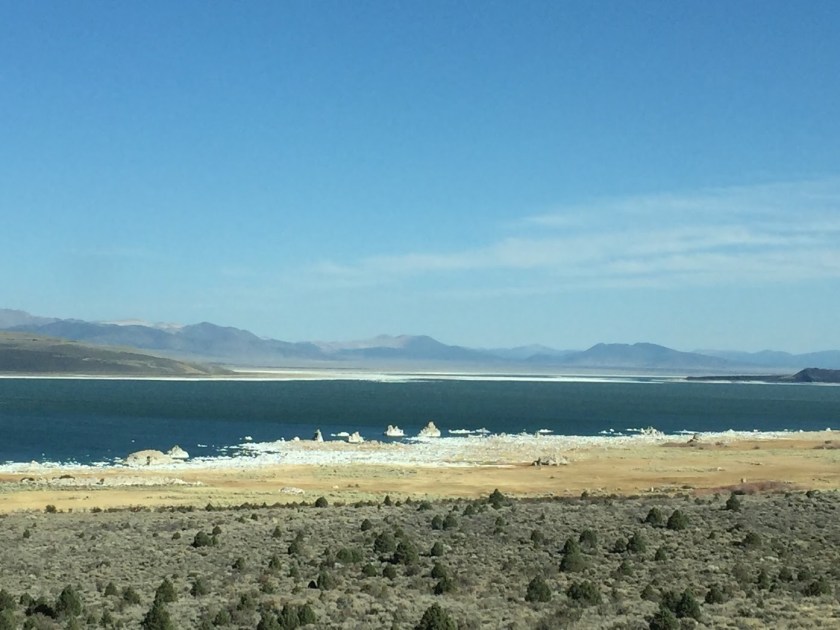
As we started driving, it was a clear day with blue skies, a few cumulus clouds specked the skies lazily.  The winds were gusty as flashed to us by the rustic freeway signs. The slight shudder of the car as it navigated the bends in the mountainous roads was indicative of the conditions outside. (As shown in the ripples in the lake below)

inyo_wind

All in all, it seemed like a marvelous end to wonderful trip with ghost towns, ancient forests and star gazing. We were pleased with ourselves too for another reason. There was a storm warning for 4 p.m. that evening in the Sierra Nevada mountains, and we were slated to cross by 2 p.m. – ha! Looking at the bright blue skies, one wondered whether the geological department had gotten things wrong. Could a snow storm really be on its way? Maybe in a day or two, not today.

inyo_lake.JPG

You needn’t doubt the geol. fellows ever again. It was as we were driving through one of the mountain passes that it started to snow mildly. Now, I am sure people who live in the snowy reaches of the earth will pooh and bah at us, but the mood in the car turned to euphoria. Watching the snow flakes drift past is a heady experience, and nothing really prepares you for the magic of it. They say every snowflake is shaped differently, but how they managed to detect and study that, I would never know. Our instinct was to stick our hands out the window and whoop with every brush of snow.

Here is the rummy thing though: If you were to take the quarter of an hour sliver in which the situation changed, you would find the first 5 minutes completely different from the second five and the third five minutes radically different from the first five.

One minute we were ooh-la-la-ing through the mountain pass wondering about the shapes of snowflakes and singing songs, the husband slightly nodding off and taking a well deserved doze in the sunny passenger seat, while I drove like a heroine in the old Indian movies singing and whooping with an inherent happiness that made the singing bearable.

The next 5-minute slot found the blue skies being masked behind fast moving clouds and the winds whipped up a flurry of snowflakes, visibility was definitely waning, and I was telling the children about the Fury of Nature, while clutching the steering wheel and leaning ahead as if clutching the steering w. in a firmer grip would somehow ground the vehicle on the slippery roads.   

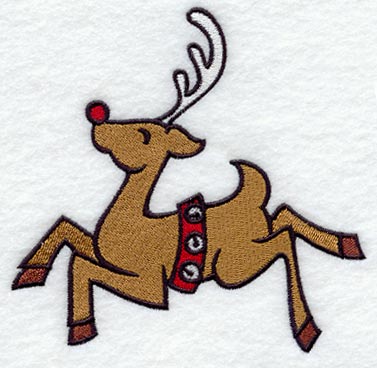
The last 5 minutes slot found me unstrung: the visibility had dropped significantly, and I was prodding the husband awake. Just keep driving he said in his taking-command-of-the-situ voice. Maybe my worked up face indicated that I was planning to get out the tea kettle and find some bricks to get a fire going in the snowy lands, I don’t know. So, I nodded, ever the obedient wife, and kept going. I was a bit unnerved too that no matter how hard I clutched the steering wheel, the vehicle was behaving like reindeer after a couple of magic mushrooms: slipping, sliding, and even trying to jump every once in a while.

jumping_reindeer
reindeer jumping and sliding

Image source: http://stylingstitches.com/jolly_christmas.htm

When the car tried to jump over a piece of ice, I jammed the brakes and found that the car went sliding beautifully onward, but refused to stop. Gulp. Hit brake. Stop. All my years of driving I had been doing that, but it did not work. Positively alarmed now, I was at a loss. What were we to do? I spotted a car ahead of me pull up in the slight ascent, and I gingerly did the same. I managed to let the thing in easily and let out a loud whistle – I now understand the pressure cooker psyche. PHHHHHEEEWWWEEE helps.

I stopped my hands from shaking and looked up to find a large vehicle stop on the opposite side of the road. A bunch of folks dressed in yellow tights and matching snow boots, jumped off. Half expecting to see Curious George, I saw them manually flip a sign on the side of highway to ‘Snow Chains Required’. I had not realized up until that point that that was how the rustic highway signs worked. Illuminating, but also, how do we get the snow chains on now? We had them, and I supposed they worked.

We headed out into the harsh world with the snowflakes doing a pretty dance around us and within seconds, our coats were full of snow, our toes seemed to be missing in action, the nose turned blue, and our hands were doing something when the brain was telling it to do something else. If this was not a pickle or a jam, I don’t know what is.

Continued in Part 2

The Curious Curvy Trees

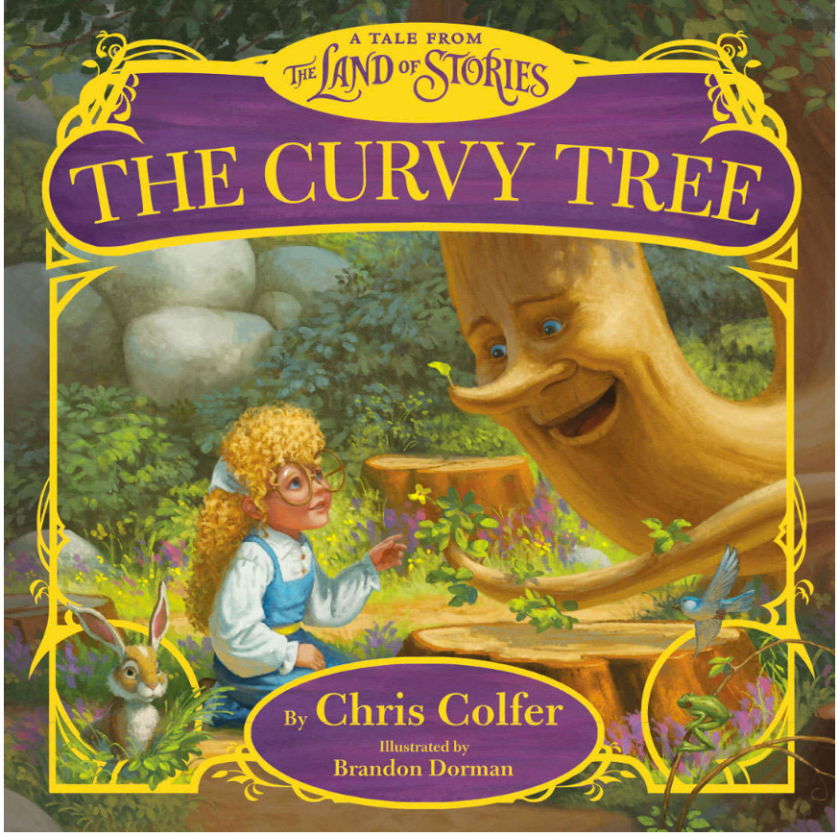
Regular readers know that I enjoy reading children’s books. Recently, I read one called, A Curvy Tree, that examines the problems of being different and lonely. In the book, a curvy tree soothes the feeling of a lonely child being teased for being different by taking its own example, and how being different saved its life, for loggers could not find a use for twisted wood, and therefore left it alone. When the girl asked whether the tree felt lonely, the curvy tree lifted her up high on its branches to show her other curvy trees in the distance all left alone by loggers, and on top of these trees were other children probably equally lonely who only need to find each other for company.

Screen Shot 2016-12-06 at 1.49.20 PM.png

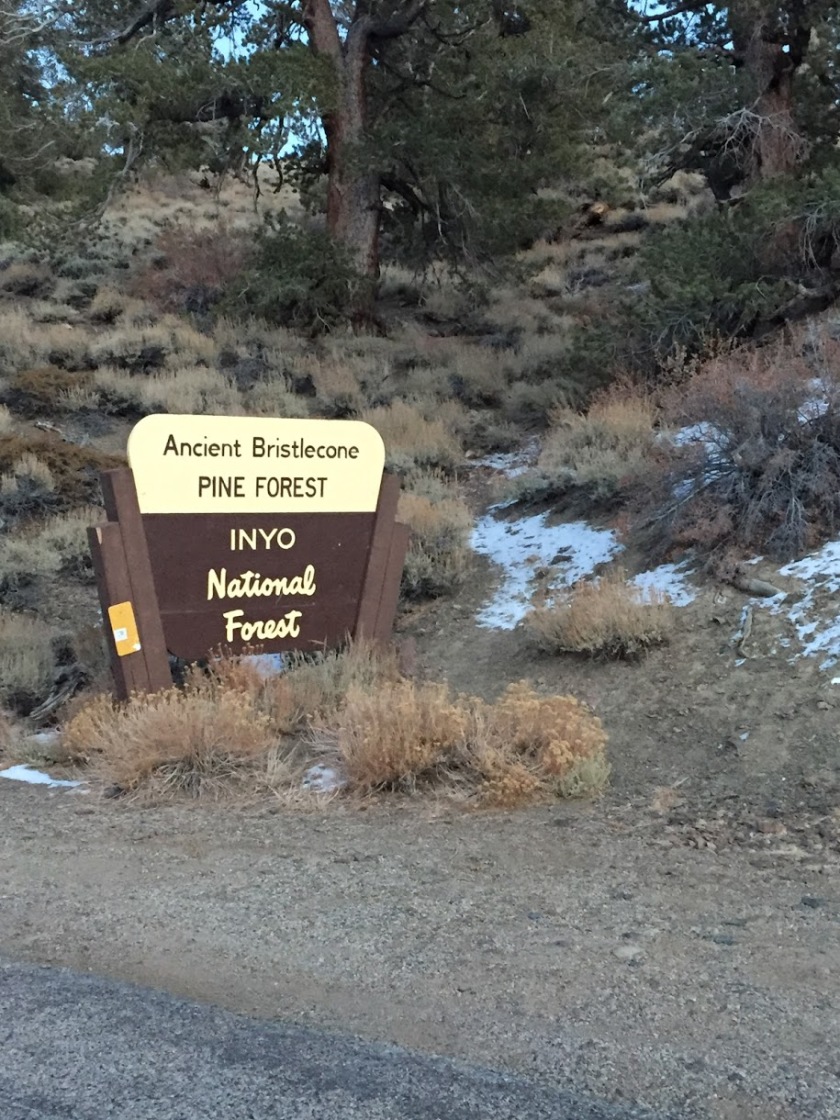
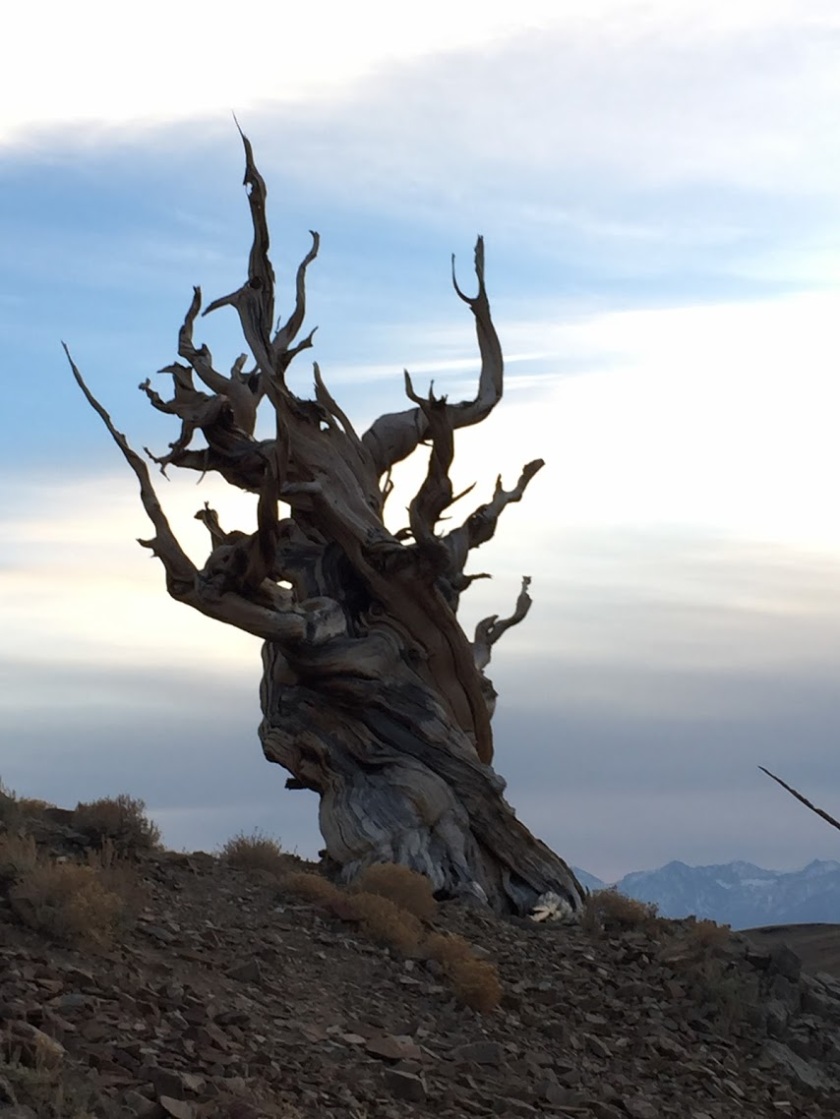
Looking at the bristlecone forest, it seems that the Bristlecone trees, followed a similar path for survival. Hardy beings that only thrive in harsh climatic conditions, there is yet another lesson from nature in these forests: It is okay to be different.

https://en.wikipedia.org/wiki/Bristlecone_pine

As the car nosed its way up to the Bristlecone National Forest, I was peeking into a copy of ‘Into Thin Air’. It was snug inside the car, though the temperatures outside were steadily climbing down as the car climbed up. Reading about the Himalayan expedition to climb the Mount Everest that went awry was humbling and an apt read at high altitude.

inyo_bristlecone.JPG

No amount of pictures or descriptive writing can do justice to the feeling of being among the oldest known living beings in the World.  Looking at the shapes of each of these trees, it was easy to let our imaginations run in wild directions. Each tree was shaped like a fantastic creature and one could well imagine them lending support to each other and sustaining their lives through the fury of nature and the upheavals of time. Each one probably gets themselves up every now and then and transforms their shapes, and each has a spirit of their own that lends a character to their surroundings. Maybe these are the hieroglyphics of the universe that hold answers to the questions deeper than mankind can ever think off, and we don’t yet know. Even in our wildest imaginations, we are constrained by our limited intelligence and the expanses of our problems, including those we manage to create for ourselves.

curvy_bristlecone.JPG

The walk amidst the ancient bristlecone forest was our first high altitude hike as a family – The toddler son was wearing his new snow boots, and was behaving like John Muir in them. He thumped up and down exploring the hauntingly beautiful bristlecone trees, looking curious and wondering how they could be older than his grandfather. “Not just your grandfather little Dobucles, “, said his older sister in a tone of voice she uses to enlighten her lil brother of the ways of the world, “but your grandfather’s grandfather’s grandfather’s grandfather’s grandfather’s grandfather’s….”

I let him wander on looking amused, till some gusts of wind buffeted us.  On a high mountainside, a gush of wind is enough to topple toddlers as I well know from experience. I was not even a toddler when I was blown off by the wind, I was in a respectable third grade when that happened. I injected a note of caution into the proceedings by reigning the toddler in only to have the daughter scoff that adults are paranoid. This is where ‘Into Thin Air’ helped me. I told her about how many people have gone within 300 m of the great Himalayan peak only to return because the elements would not allow them to proceed. I tried my best to describe how nature can be awe-inspiring but how in one moment we can be reduced from arrogant, competent, self sufficient humans to ones thrown about at the behest of nature. I don’t think I succeeded very much, and so nature decided on showing us herself the very next day.

Somehow, with the sun throwing brilliant purple, orange and pink patterns into the sky, the wind gently rustling the hair peeking out from under our caps, and the bristlecone trees lending an almost immutable background, the scenario of a snow storm seemed far-fetched, almost ludicrous. If this is high altitude, how bad can Everest be? seemed to be the general consensus.  That night, we bravely attempted hikes at 21,000 feet, safe in the comforts of modern housing while eating hot biriyani.

The Salons of Bodie

During our trip to the Inyo Canyon area, we got truly lucky.  Not just because of the weather (which I need to write about in a later post), but because we got to see many places that are usually closed this time of the year due to heavy snow conditions. Bodie State Park is one such. I have only visited the Inyo canyons twice so far and both times, they woke the spiritual in me. Maybe it was the sheer magnificence of nature in the area, I don’t know. Spiritual Mysticism or Spiritual Naturalism

Bodie State Park is a ghost town. A bustling, mining town a century ago, there are no more than a few hundred shacks left in a dilapidated condition in the town now. If ever one needs a humbling lesson in the ephemeral nature of our existence, the bristlecone pine forest and Bodie ghost town have it covered between themselves.

As I peered into the dust covered windows of the various buildings, a dozen observations flitted through my mind.

The apothecary seems to have catered to similar problems judging by the bottles still on display there. There was a house with dusty furnishings – a rattled bath-tub, an old kitchen. A picture on the wall said, ‘Nothing endures but change’. The school house with a steeple on its roof looked remarkably like schools do today: with wooden chairs and desks all facing the teacher up in the front. Some things don’t change even in a century, I mused.

As we meandered up and down the ghost town, we stopped to listen to the park ranger. He was giving details of life in the town at the height of its glory, and we stood there enthralled, each of us contorting a story and an image of life in those times in our head.

Bodie was a town of maybe 8,000 or 10,000 people, and they seemed to have had quite a good life. Traveling caravans had theatrical performances here, fresh octopus and seafood supplies arrived regularly from San Francisco on iced wagons. People from nearby hills trudged up to this town for a day out or for market supplies. It certainly sounded like a bustling, happening place and looking at the town in the present age was a disconcerting sensation. Hundred or two hundred years from now, would people be taking a cruise out to where we live, and saying that this used to be a bustling place too? Given the current rate of global warming, it is a very plausible scenario.

http://ocean.nationalgeographic.com/ocean/critical-issues-sea-level-rise/

http://environment.nationalgeographic.com/environment/global-warming/gw-impacts-interactive/

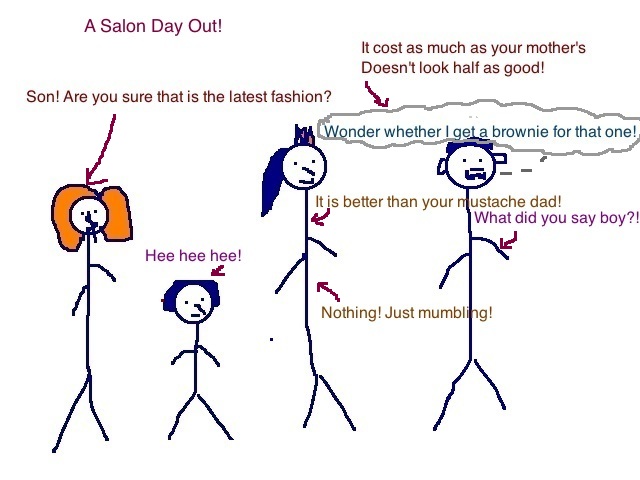
Standing there in the town with the vastness of the Sierra Nevadas engulfing us on all sides, it seemed surreal to imagine that this very place was witness to human drama, tragedy, hope, love affairs and scandals. There was family life, culture, entertainment, education, sickness and health here. One could imagine the barber’s son eloping with the mine owners daughter or some such thing. As if the ranger had read my thoughts he said pointing down the hill to the right – this part of town had 50-60 salons too.

My mind buzzed and I asked him – “Really for a town of 10,000 people, they needed 50-60 salons? They must have been a pretty well groomed lot. And everyone had to trudge down to one part of town too.“

The ranger gave me a quizzical look, and thought of saying something but decided to let it go. “Beyond that, were the jails – you know so that area was not very respectable back in the day.”

My! I thought, not only did people have to cut across town to get a haircut, but also scout near the jails? Assuming 50% of the population were males, that is approximately 1 salon for every 100 males, and considering they probably needed a haircut once a month …. I could imagine the mothers giving out the money to the little fellows with dire warnings as to what happens if they strayed near the jails, and how they were to get a hair cut and head straight back home.

I don’t know whether pedicures and manicures were popular during the day for the women or whether their hair styles were demanding ones or simple ones.

inyo_salon

What about pet grooming salons? Did folks a century ago groom their pets as dearly as they do today?

It struck me how keenly these authors of historical fiction have to think. For instance, were there razors and portable blades 100 years ago, or did people have to go to the salon for everything?

I mentioned these profound revelations to the husband and he gave me a look similar to the one the ranger had given and said with a smile playing at the tip of lips, “You realize that by salon, he did not mean hair cutting salons like today, right?”

“What do you mean? Oh! “ I said my eyes widening and the husband laughed.

“Oh! You are naive!”, he said laughing, “Why else would they be clustered together like that?”

Looking around at the ghost town around me, suddenly made me realize that half the world’s cares, worries and problems were just as man-made a century ago as they are today. Some things at least don’t change.

Dodo, Dragon, Dinosaur Dis-apparitions

We just got back from the Inyo Forests nestled in the Sierra Nevada mountains. This time, the mountains were explored by the children with a friend who was just the right companion for both of them. He is aged smack in between the daughter’s age and the toddler’s age, and is an amiable, interesting fellow, thereby providing ample company to both of them. The toddler son thought him a hero and the daughter found in him another quirky little brother. He was obviously pleased with this state of things, and settled down to the hero-slash-honorary-little-brother role with aplomb.

It was quiet, and the darkness in the mountains was unreal. We could see Venus glowing brightly like a torch up in the sky. Inside the car,  it was toasty and warm, and the game of Twenty Questions was thriving: it is a sophisticated game in which you think of an animal and everyone can ask questions to guess the animal you thought of.  Animals were chosen and guessed at with hilarity.

“Amma! This little bobbicles knows nothing about his animal and expects us to guess it. How can you not know whether it is a carnivore or not?” The toddler said something like, maybe it likes to eat meat, but maybe it doesn’t, I don’t know. He then laughed raucously at his sister’s disbelief. He seemed to think that these trivial things should not stop a zoo-linguist-to-be from guessing the animal. (That reminds me that I have to get down to writing a blog on how the toddler plays games.)

Inyo_20Q.jpg

His friend-slash-hero agreed and took the car for a spin with mythical creatures from shows we had never seen. As the going got tough, the rules got tougher – “Hey! Mythical creatures only restricted to Greek mythology or Harry Potter or till level 10 of Pokemon Go!”. The hero-slash-lil-bro was something of a Pokemon expert and went on about zilletoes and monekchoes or things that sounded like them, with glee.

“How about Hanuman?” asked the toddler in a matter-of-fact tone.

Before Spiderman and Batman were added to the mix, the husband and I swooped in with some impressive peacekeeping efforts that folks in the United Nations could learn from.

After several minutes of quiet, the conversation started up again with the daughter asking a question: If you could bring one animal back from extinction, which one would it be and why?

As the conversation gathered fervor, the surrounding Inyo Forests resounded with the spirits of animals long gone. Sabre tooth tigers romped along side mammoths, T-rexes chased Brontosauruses. A short pause later, dragons and phoenixes joined them too. If the conversation were being animated real-time, I’d have liked to see the reactions of the various spirits as they made their mystical apparitions from the dead.

“You do know that phoenixes and dragons are mythical creatures right? They aren’t exactly extinct because we don’t know whether they really existed, “, said the daughter laughing to split.

“Okay – then Pidgeot”

“No! pidgies and pidgeottos! Before you ask, chargats don’t count either. Pokemon Go is not the real world you know?”

I could hear the gears spinning in the boys’ brains. This was one tough game, they thought.

After an intense argument that examined the merit of mythical creatures in the extinct category, and the virtual creatures in the ethereal category, the conversation slowed down again and landed softly near the dawdling dodo birds. We waddled by them, and the daughter explained that she felt the dodo birds deserved to be back because those poor creatures were extinct purely because of man’s greed.  The children smiled as though her goodwill towards the dodo could truly summon it back from the extinct category.

inyo_canyon

“Anyway, which animal would you bring back?”, asked the daughter.

“I want to bring back the Titanis bird.”  said the hero-slash-hon-b.

We exchanged glances. It was difficult to figure out whether there really was a bird  called Titanis which was extinct, or one that appeared in the fellow’s video games.

“Really, there is a bird called Titanis. They are so beautiful. I want to bring them back. “ He sounded so sincere that the daughter’s heart melted. It often happens this way. The daughter is a softie underneath the bossy exterior and coo-ed.

“Oh! That is so sweet. Why do you want them back?”

“So, I can take a gun and shoot them! “, said the h-s-h-b.

I wonder whether you have played ping-pong. Just when you think the ball went, back it comes to you again. Right at your face. It was a bit like that. Just when you got the sweet daughter version, an outraged cry left her lips. The sweet dodo apparitions were gone. The dragons poof-ed themselves out, and titanis was gone too.

“Oh! How could you? “ she cried, the animal activist in her flaring up.

“Why? They have beautiful feathers. “

“Exactly! So admire the birds with their feathers!”

“But if we shoot them, we can collect their feathers.”

“Why bring them back if you want to shoot them?”

“How else will we get those beautiful feathers?”

The three of them played in our car till the toddler son fell asleep in the gathering darkness as we drove up to our destination.

I am not sure whether the dodo or the titanis will want to come back if it means holding a conversation with the specimens in our car.  Maybe we should give them a choice, what do you think?

The Cry of Natural Symphonies

Regular readers of this blog know what a pesky cricket I can be when it comes to babbling about nature. If I see one of those news articles about hippos dwindling in number, I grieve.  The day I saw a ninety foot tree logged in our neighborhood, I grieved. I had seen the number of birds that roosted in the tree every evening as dusk fell, and I felt that we lost out on all that natural chitter for no good reason.

I moon about hills and flop around pictures of beautiful Mother Earth and all that in spite of negligible botanical and zoological knowledge. Ducks and Canadian Geese I will bucket as one, hippos and rhinos I draw about the same (one with a horn and one without).

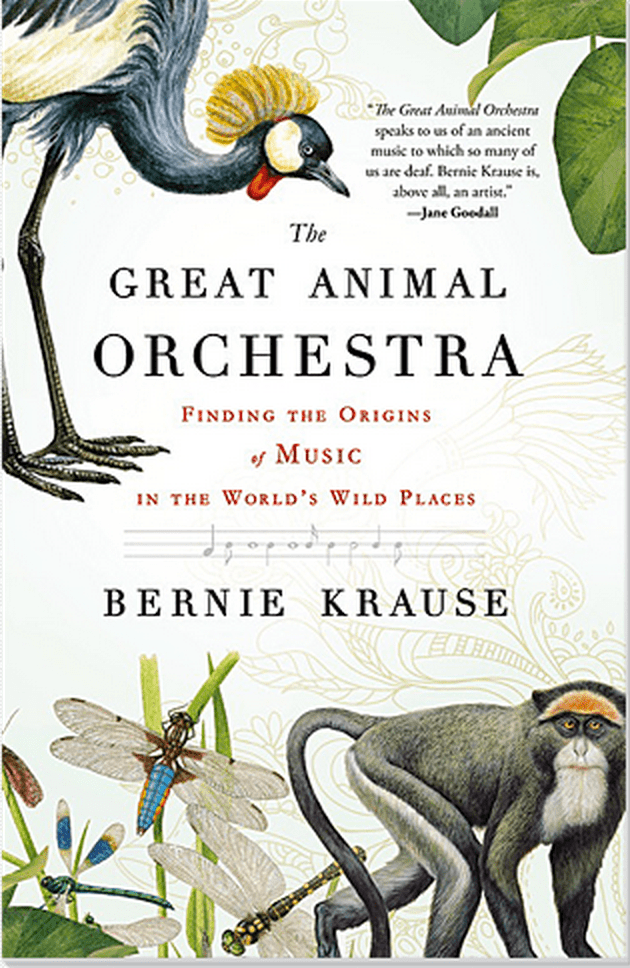
I am also one for natural sounds – I like to listen to the cascading brook or the patter of the rain. I like to be able to say, “Coo! Did you hear that blue kingfisher? Easily distinguishable by that rich guttural sonic burst.” So, one can readily imagine why I picked up a book called ‘The Animal Orchestra’ by Bernie Krause. I must say the book was a revelation of sorts.

screen-shot-2016-10-06-at-8-48-46-am

Most of us have an idea about the damage we are wreaking on Earth. We are aware of over population, we are aware of shocking deforestation and we are aware of global warming. What this book gives us is another perspective to the problems that face Earth.

Bernie Krause is a musician who has since turned to recording the natural sounds around him. He has recorded the forest areas before and after selective logging operations, he has dipped his receivers into a coral reef to hear the natural sounds, he has recorded in the depths of the rain forest, and the great barren deserts and the frozen tundra.

I have written about Biophony before with a link to Bernie Krause’s recording on NPR before: https://nourishncherish.wordpress.com/2015/01/14/cacophony-for-biophony-socialization-for/

Recording:listen-as-a-california-forest-grows-quiet-over-time/

Birds
Birds

What Bernie Krause finds with his recordings is that the human touch affects biophony in unimaginable ways. You can hear some of his recordings at thegreatanimalorchestra.com. Even if unable to read the book, please try to listen to some of the sound tracks on the site. It makes for an enriching experience.

There are a number of passages in the book that I can go back to re-read any number of times. One such passage is the one where he refers to a beaver recording. In a remote lake in Minnesota, some wardens of the preserve, blew up a beaver dam killing most of the beaver young and females. The recording was taken later that evening, and describes the sounds of the grieving beaver male. He says that to date it is the most heart-rending sound he has ever heard made. A poignant sadness to it that the most heart-rending human music cannot even come close to.

Or of the time he describes the sonic variances between the sounds of orcas in captivity and the sounds of the pod from which the orcas were captured in the wild. The ones in the wild were always “filled with energy and vitality”. While the captive vocalizations were “palpably lethargic and slow”.

He talks off a recording he took where a logging company resorted to selective logging i.e. deliberately taking a few trees here and there so as to not disturb the ecosystem much. However, the sounds recorded before the logging operation and after have perceptibly changed. The pictures taken later show a fairly decent rebound of the wilderness, but the biophonic recordings  give us a different perspective – the more disturbing and truthful perspective. Though the area looked wild enough, the great natural symphony never bounced back.

From a BBC program titled ‘A Small Slice of Tranquillity‘: There were certain sounds such as breathing, footsteps, a heartbeat, birdsong, crickets, lapping waves, and flowing streams that people described as tranquil. Researchers demonstrated that such sounds stimulate the limbic system in the brain, resulting in the release of endorphins and a feeling of serenity. The program says that tranquillity is an elemental acoustic foundation upon which we can rest our mental processes.

By definition a tranquil area is one that is this many miles from the nearest road, away from the sonic boom of aircraft etc. In the 1960s UK had more than 40 tranquil areas, now there are less than 5.

Bernie Krause concluded that  the book on a note that I cannot help agreeing with. He says that he is asked almost at the end of every lecture what we can do to help preserve our remaining natural environments. He says: “It’s easy: leave them alone and stop the inveterate consumption of useless products that none of us need.”

Nature’s Adventures

The son and I read a chapter book together. Hitherto, we watered gardens with Liam in The Curious Garden, or ate cookies out of a tin with Frog and Toad. This time we decided to spend several days with Edward and Avon in ‘The End of the Beginning‘. Avon, the snail wants an adventure and he seeks it with the help of his friend, the ant Edward. Over the next twenty odd chapters, the pair of them meet salamanders and have perilous snail crossings on narrow bridges. The beauty of the whole thing is that they had never really left their tree branch. At the end of their long and arduous journey, the pair of them find themselves facing the end of the branch and turn back. The Beginning of the End. Or does the end signal a new beginning?

The book had many philosophical sayings, and the next time the son and I observe a snail, we shall wonder what goes on in that animal’s brain.  Adventures do not need exotic settings or the need to traverse large oceans. It is all right there on the tree branch.

a447d33d-4ce1-48e8-b5f9-e437cc08e6de

It also brought back some of the best adventures I had had as a child in the Nilgiri Hills growing up in those wonderful surroundings cradled by Mother Nature. Everyday from our Elementary school a few kilometers away, we took a different route walking home. One day we stuck to the narrow roads laid out by the municipality as an occasional vehicle passed us. Another day, we slid down the hills, picked some berries at the bottom of the hill and found another narrow footpath leading home. There were days when the walk took us twenty minutes, and days when it took us an hour. The whole place was tiny enough to not merit a marking on the map of the state, but it held adventures enough for a lifetime for us.

sultan's life

The toddler son and I enjoy taking a walk in our neighborhood and finding little by lanes within our neighborhood. For us, it is a revelation of sorts. One path leads you to the shaded path with oleander trees sagging with the weight of the summer flowers.

img_3410

Another path in the neighborhood has an plum tree that shows you how squirrels thrive near that tree. We see clusters of plums flung to the ground with nothing but a bite taken off of them. Every time I see those little eaten plums, I think back to one glorious summer afternoon spent in a friend’s garden. We had a blue quilted comforter laid out on the lawn and were watching the breeze gently ruffle the grass and skim the trees  as the children played. The son was then a baby and sat up in that adorable fashion that made him look and sway like a bowling pin used to prop open a door. Pretty soon, the topic turned to squirrels and fruit trees. Our host then set about plucking plums from his tree before the squirrels got them. We sauntered over to inspect, suggest and generally hinder the fruit picking process when I heard a slurp. Turning around we saw we’d saved the plums from the squirrels, but the baby human squirrel in our midst was looking triumphant: red-lipped, red-cheeked and red-chinned having bitten into the plums himself. Talk about being caught red-handed .

Night Life

There are wonders galore in our own little branch, if only we set out to find them.

The Exciting Night Life of Plum & Polly

“What do you do in the evenings?”, asked a young colleague after telling me about the exciting things that city life has to offer. Maybe my twenty year old could have stood the revels. Hectic – yes, that is the word I am looking for.  I myself prefer the quiet lifestyle. I suppose everybody wonders from time to time what everybody else does. I told him I take a walk around the neighborhood in the evenings.  He gave me a withered look. I must have sounded like a septuagenarian to his young mind.

“Err … any night life where you live? “, he quizzed, clearly not willing to give up on me just yet.

I felt it best to keep away from the domestic angle of things and spared him the details of my many culinary adventures to feed the family, and instead went for the wild flora-and-fauna angle. You know, give him the exciting side of things and so on. I told him that I recently found that a rather fat mouse comes along to the garden every night and scratches around near the fence for some food. Whether he finds it, I don’t know, but he makes enough of a noise to attract the fat black cat, and I sometimes fear for his safety, but as he(the mouse) himself seems happy enough, I cannot do much. He looked astounded. Impressed at having impressed the fellow, I plunged on. I told him that the birds coming home to their nests is a welcome sight at dusk. He thought I was cuckoo.

Night Life

So walk huh? he said circling back to what he thought was safe ground again.

The delights of an evening walk, are free, and one either likes it or has not tried it often enough to enjoy it. The seasonal delights are there for the taking, and the mind is happy enough to disassociate itself from the cares and wont’s of the corporate world for that period.

As I take a walk down in the summer evenings, I am always amazed at the flower laden trees and plants. The Oleander trees are heavy with summer flowers of various colors, the rose bushes are thriving scenting the air, the rhododendron and bougainvillea overflow, even late daffodils peek out here and there. I just learnt the name of another flowering tree:  Crepe Myrtle.  That sounds like the name that can spark a thousand songs.

A peek of yellow hibiscus flowers is a welcome sight. I have seen red ones, they are common enough, but white and yellow ones are another treat altogether. It took me back to the days when we plucked hibiscus leaves, soaked them in hot water and then made a fine paste to use as a hair conditioner. To date, no commercial conditioner comes close. Yet, I feel I cannot walk to Mr. Chin Cho’s lawn and ask him to pluck some hibiscus leaves from his tree to condition my hair. It just wouldn’t do. Plus Mr Chin Cho doesn’t look like the kind of man who cares about the texture of my hair.

I learnt recently that I had spent vast amounts of time near Aloe, and knew nothing of it. I could have just cut a stalk and rubbed my face, instead of taking the car and dashing off to Traders Joe to buy their cream with nourishing aloe vera. (The gardener was instructed to remove the plant about a year ago. In my defense, ‘Instructed’ is strictly not the right term to use here. I asked him what plant it was in Spanish, and he looked sad, and waved his hand about quite a bit. The next thing I knew the plant was gone. )

Summer also means fruits. Apricots, peaches, and plums jostle on the fruit trees, and the squirrel, Polly, is very busy.

I thought about how much the little things in life matter.  A friend of mine shared her plum produce with me, generously giving me more than I could competently handle on my own. In her home, we tasted plum chutneys and plum jams, and I came home inspired.  Last night, I was the paragon of domestic efficiency and made plum pickle. The thing is looking very proud and beetroot-pink in the refrigerator.

Maybe I shall tell the young fellow about the exciting night life in my kitchen and seal my reputation.

An Email About Plants On Mars

Weekday nights, apart from startling Californian flora and fauna out of their wits with the chaos and noise in the home, also means that the old father is busy. A note about the pater’s emailing habits. He settles down with a serious look on his face, a glass of warm water by his side, and corresponds with his trader in the Indian Stock Exchange. From 10 p.m to well past midnight, he is the paragon of efficiency. He painstakingly types out instructions, his tongue peeking out with concentration, leaning forward in his chair, his browser tabs opened to Gmail & Economic Times. His mind composes the shortest possible sentence before he starts typing, since he has to spend some time finding the right alphabets on the keyboard. Once a teacher, always a teacher, and he insists on using the right punctuation: commas, spaces, periods and semi-colons. Sometimes, he hits tabs for the extra space, and that lands up sending the email instead of moving the cursor, and then he starts over. The wonderful lady on the other side turns an indulgent eye on the septuagenarian’s emails, and sends him trade notifications and acknowledgements to the correct email.

Friday nights are different. The Indian Stock Market is closed, schools and offices in the USA are closed on Saturday. So the couch is cluttered with cushions, throws and comforters from the bedrooms, and the old television settles down to air a movie or television show down to the audience. Friday nights at the home always contain a general air of excitement. One would think that through the week, the children work 16 hours a day, with sparse meals and little fun, the way they whoop at the Friday evening fun. Entertainment choices are always a bit tricky given the age groups the television has to cater to at once. The son and daughter want different things. Throw the grandparents into the mix and it becomes a telling lesson in democracy. Sometimes, the choices made by popular votes turn out to be so bad that the voting audience clamors for a change midway through and the process begins again.One does not need to follow #Brexit and #Bremain for democratic ulcers.

One night we settled on The Martian. The budding toddler astronomer in our family agreed that he liked to go to Mars one day as a Space Racer, and helpfully showed us a rocket lift-off. (Space Racers is an animated television series. The main characters—Eagle, Hawk, Robyn, Starling and Raven—are cadets at the Stardust Bay Space Academy. The cadets spend each episode traveling through outer space) The old pater shelved his urgent emailing needs and settled in to watch. The rocket made a spectacular landing on the grandfather-tummy-airfield, and the audience quietened down to watch the movie.

Every time I watch a movie, I am amazed how clipped and to the point people speak. No rambling on the way we do, no unnecessary smiles. Maybe if we edited our speech thus, we would be as impressive. Meaningful glances that seal the decision of landing, curt nods that signal victory,  measured smiles that indicate tension. Waah Waah!

For those of you who have not watched The Martian, it involves an expedition to Mars going awry and people having to take off from Mars earlier than planned, thus clipping their mission short. One of the crew, Matt Damon, is left behind on Mars, and the story revolves around what he does on Mars instead of twiddling his thumbs and waiting for a slow, painful death.

Communication channels are broken, Mars looks unforgiving. Matt Damon is very sad, wondering what to do, when the pater piped up,  “If I was there, I would send an email to NASA and go to bed. “

A few scenes on, Matt Damon is growing potatoes on Mars. I know.

Martian

“What do you think happened to those organic vegetables that we planted ma? “ asked the father showing off rare horticultural curiosity.

The garden looks ready for a visit by the gardener every few months. That sturdy son of the soil comes over, sets the place to rights in an hour, and leaves after a tooth-ful smile. Last time in preparation for the gardener, the father and husband had picked up from Costco, some oddly shaped packets that looked like seed bombs to be dropped into the ground. Lo and behold, we were told, we should soon be playing host to some luscious, organic vegetables.

Anyway, it had been a few weeks since the planting of the seeds, and though the summer flowers were thriving, there did not seem to be much happening on the vegetable front. I looked forlorn: We seem incapable of growing potatoes on Earth, imagine doing it on Mars?

The toddler piped up and said he knew how to grow vegetables on Mars, since he had seen a program in which the Space Racers grew them on Mars. If I am stranded on Mars with these two, one can grow food, and the other can email NASA. It was a comforting thought to head to bed with.

Mockery Bird In Zenkali

I sat in the garden in my backyard, relishing the mild breeze after a hot day. I looked up to see that my fruit trees looked green, and played host to plenty of animals still, but the fruits were no longer there. Could the trees have lived past their prime? I do not know. My botanical knowledge is excruciatingly narrow for one who enjoys nature so much. I watched squirrels scurry up and down on the very trees I was looking at, with a sense of purpose. How sincere, how single minded in their pursuit and yet, how completely at ease on the trees they were and how beautifully they fit into the complex pattern of life and their place in the food chain?

Colors

As I looked at the little creature who was mildly peeved at finding me in my own backyard, I realized with a shock that in spirit he knows and accesses the fruit trees far more than I do, and he probably helps the trees in my backyard by seeding them elsewhere.  Then I think about how little I do know about the complex interdependencies of species. We all learn, while young, about the food chain and all that, but we need something to remind us about these marvels every now and then.

Sometimes that gentle reminder comes in the form of a marvelous book. Every once in a while you stumble upon a book that you wish you can thrust upon everybody and have them read it. But they don’t.  Do you give up? No! You write about it, you read snippets out to them in the hope that they will relent and read the book.

TheMockeryBird

Image: First Edition Cover Art by Hanife Hassan

There is nothing quite so lovely as observing nature and seeing how we are all interdependent species within this planet. Mockery Bird by Gerald Durrell is one of the most endearing books I have ever read. It is a beautiful tale of man’s ignorance and greed. Set in the picturesque fictional island of Zenkali, the book is humorous and satirical to the point of wanting to read it back to back again. It shows us how we are all part of an ecosystem – trees, flowers, insects, birds and man.

In The Mockery Bird, I sat amongst the Ombu & Amela trees, and took in the exotic scents of the tropical island, immersed in the world of Kingy, Peter Foxglove, the tribes, the side sweeps at religion, the absurdity of greed, and the twisted aims and means of the media. The book sparkled with laugh out loud moments. Like the one and only newspaper of the Island run by Damiens, that contains so many typesetting errors, it is a beauty it functions at all.

“Poor old Damiens is like that. he threw the nursing fraternity into a rare state of confusion some time ago with his article on Florence Nightingale entitled ‘The Lady with the Lump’.”

The Mockery Bird, became extinct due to the culinary prowess of the invading French colonies some years prior. The Mockery Bird is the God to one of the tribes on the island, and obviously they were not happy with the extinction of the bird. It turns out that the Ombu trees survived only because the Mockery Birds ate the fruit of the Ombu tree and not being able to digest the seed, germinated them elsewhere. Now with the Mockery Birds gone, there was only one surviving Ombu tree on the island. Plans to have an ugly airstrip through the dense forests in the island are thwarted when Peter and Damien’s daughter accidentally see that 30 Mockery birds are still alive deep in the forest amongst a long lost patch of Ombu trees. This throws the island into a state of chaos, and the ruler, Kingy, is stretched to find a solution that satisfies the international community, the locals and the environment.

Zenkali

Does anyone remember Lorax? Written by Dr Seuss, in which he shows us what greed and ignorance can do, and made into a lovely movie? Now imagine a similar theme, written with endearing characters, a brilliant sense of humor and an exceptional setting? That is Mockery Bird.

It is a pity this book was not made into a movie. If you can read the book, please do.