Apollo 11 & Artemis II : Selenophilia

Selenophilia

I moped around one evening. The thing is, as much as I love cloudy days and rainy days, I don’t like them to intersect with full-moon days. It feels like the waxing-full-moon is meant to bathe all of the Earth in its glow, and encourage mooning-about. It is not meant for sighing and trying to see if the moon can finally peek out of the clouds.
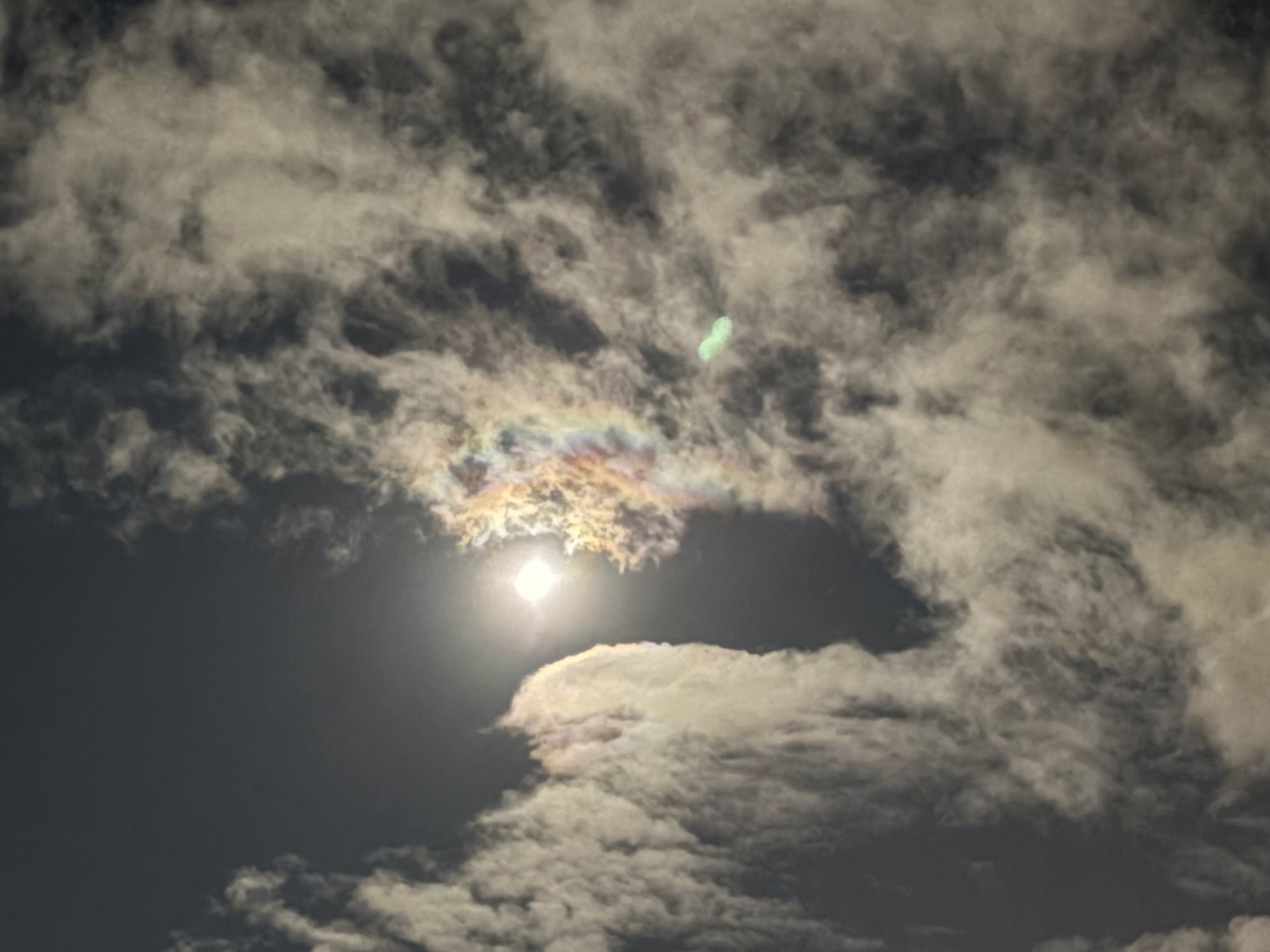
I had not quite realized the thing that was keeping me up that night. I blamed it on the ill-timed coffee, but it could not have been that. Not when I fell asleep moments after the near-full-moon peeked out of the clouds, and I sighed happily at it.

The day after, the moon looked full in the sky, bathing the Earth with its luminous glow. The clouds flitted, but never enough to hide the moon. I took off – after the eternally present tasks that even robots and AI-based beings do not consider worth doing: clearing up and the cleaning up.

“Where’re you going?” “Out!” I said, and ignored the chuckle that followed me out. The golden moon was waiting, and I wanted nothing more than to gaze at it. The word unblemished came to mind, but that does not quite describe the moon, does it? The pockmarks and craters on the moon looked plenty blemished, yet the feeling it invokes in one is unblemished.
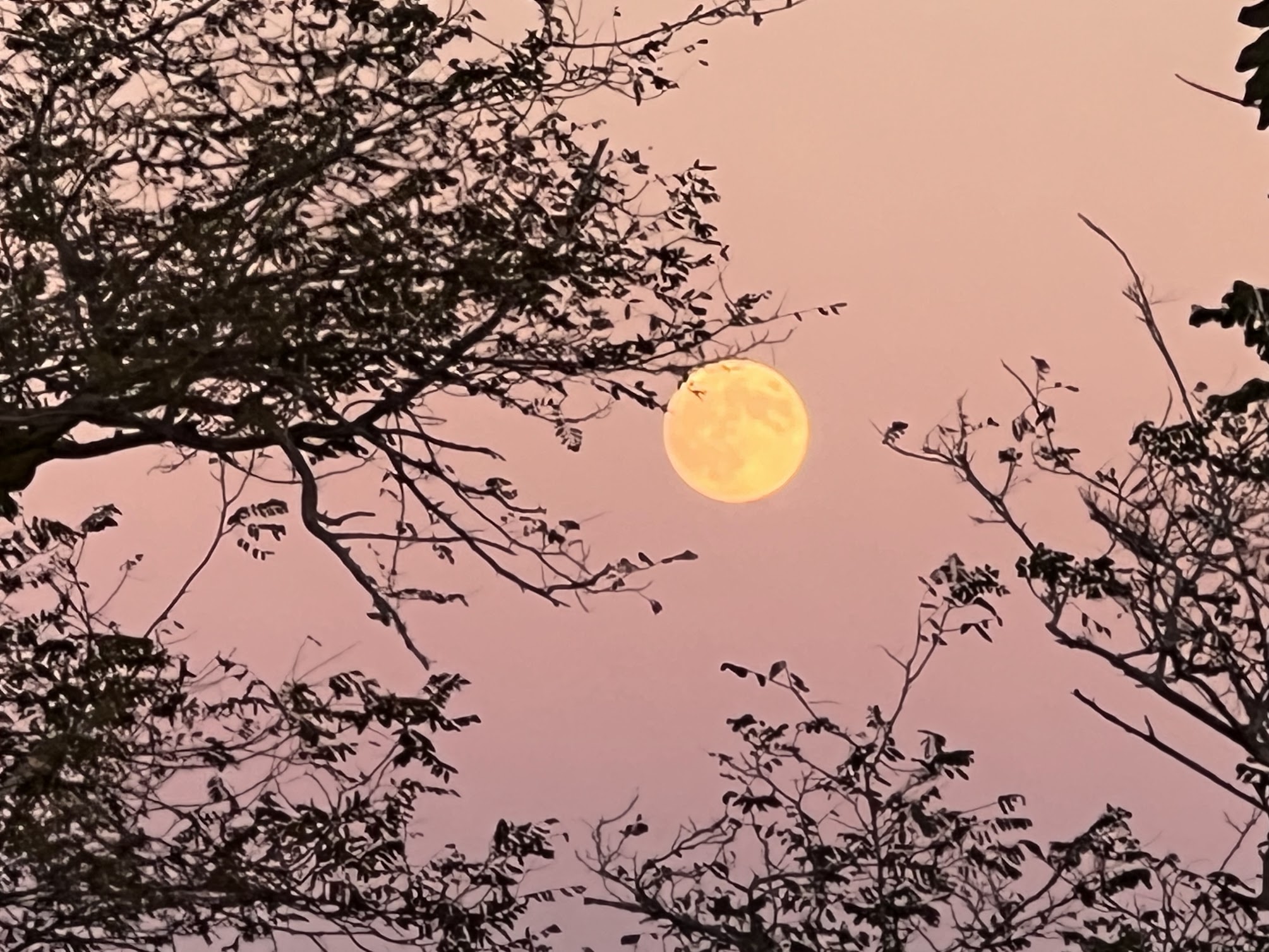
This fascination for our celestial neighbor, Selenophilia, is a beautiful term that is derived from the Greek language, denoting a love of the moon. Meaning for centuries, folks have finished up their chores and headed out to the admire the moon. Hopefully, for centuries more, they will continue to do so.

Apollo & Artemis

The previous day, Artemis II had taken flight into the skies with 3 astronauts aboard: to the other side of the moon. I was in an elementary school classroom introducing books about space travel that day, and I remembered the excitement the discussion about Artemis II had generated. The class sent all the astronauts a fond good luck as they listened to the brief loss in communication with the spaceship. 

That night as I sat gazing at the moon, I thought of the planet watching and praying: united in its excitement as Artemis II left the Earth. Did the Artemis II crew ( Reid WisemanVictor Glover, and Christina Koch, along with Canadian Space Agency astronaut Jeremy Hansen) feel the good vibes? I hope they did. 

Then, I thought of Apollo 11.  The astronauts: Neil Armstrong, Buzz Aldrin, and Michael Collins making the trip almost 3 decades ago. The entire planet fascinated, and enthralled.  Did they feel the companionship of the planet even as they left? The moon itself was in its waxing moon phase that day, and thousands must’ve gazed up that day abuzz with excitement.

Magic of the Moon

There are a few things that humanize us, and the magic of the moon is, I believe firmly, one of them. Something that can evoke wonder, awe, a yearning to attempt great things, set difficult targets, and above all, work together to achieve it, is Magic, isn’t it? 
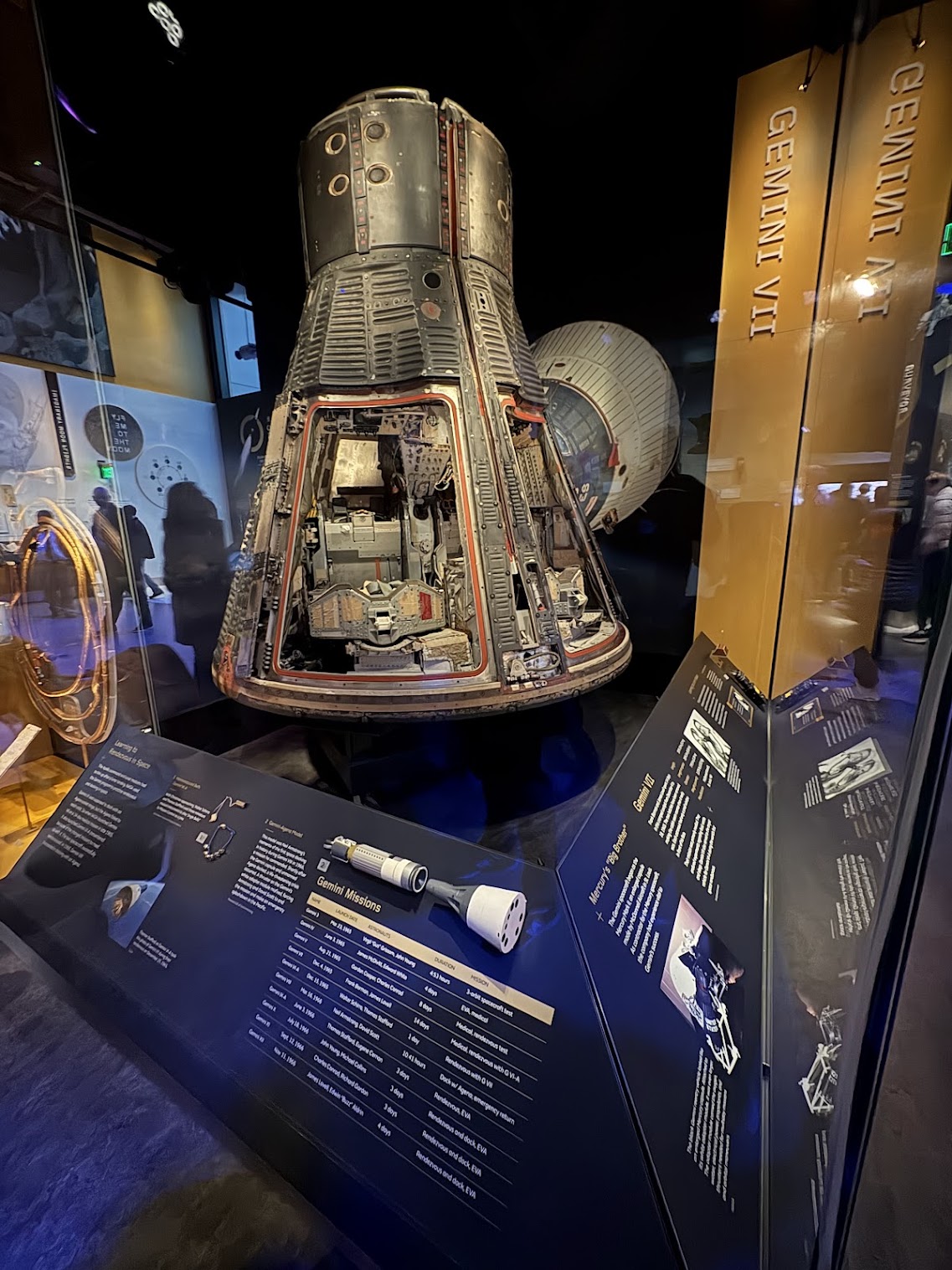
What Would You Miss Most from Earth If You Went to Space?

Claustrophobia & Agoraphobia

The Smithsonian National Air & Space museum in Washington D C had us wrapped in its wings. The son was thrilled. We’d started off at the original model of Wright brothers’ air glider, and then steadily moved on from one exhibit to another. When finally, we stood in the moon (‘Destination Moon’) exhibit, I glanced over at the son to see that familiar look of awe in his face – it had been flitting in and out at almost every section in the museum. 

I peered into the Apollo 11 Mission Control capsule on display and wondered yet again, how is it that astronauts deal with the immensely crushing feeling of cramped space in a space capsule. It seems alright, manageable even for a short day or two. But nothing these astronauts undertake seems to be in days – they all seem to stretch on and on. Weeks, months, years – when everything you want to get to, is measured in light years, how can we hope for short travels? Peering into the capsule again, it seems like it could give the most robust of us, claustrophobia.

Then again, I peeked out into the simulated views from the spacecraft. Light years of nothingness with little sparkling diamonds interspersing the views for miles and miles. Charming and beautiful as it looks. After a few days, weeks, months, years, it is enough to give the most optimistic of us agoraphobia.

How must their psyche work with this constant tidal forces of agoraphobia and claustrophobia pushing and pulling all the time?

The Orbital Sunrise – By John Green

I was reminded of the essay, The Orbital Sunrise by John Green in the book,  The Anthropocene Reviewed. It really is a wonderful collection of essays by a nimble, curious mind on a wide range of topics.

He writes of astronaut Scott Kelly’s 342 days spent in space where he experienced approximately 11,000 sunrises. The International Space Station orbits the Earth every 90 minutes. Even in the famous book by Antoine Saint de Exupery, The Little Prince, the imaginary soul occupant of the planet he came from, only enjoyed 44 sunrises a day. Take that, Little Prince!

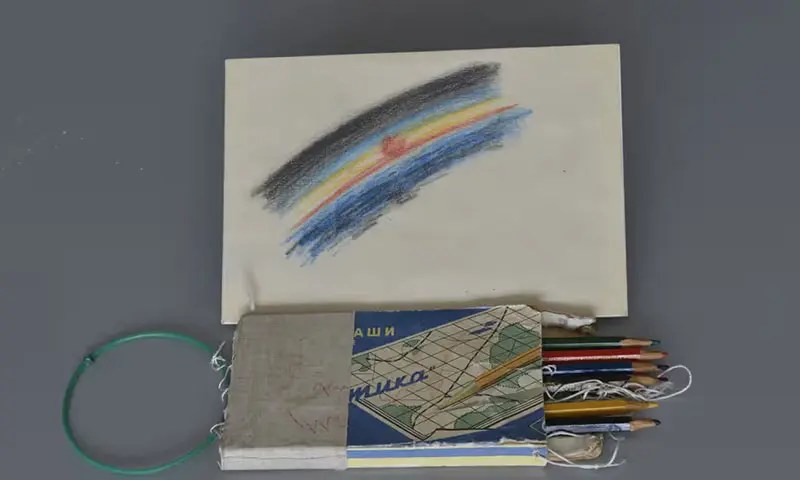
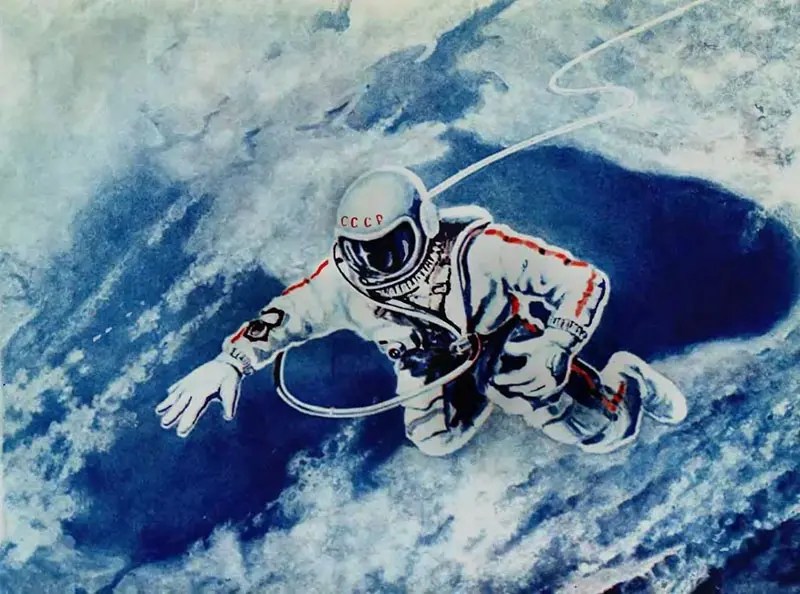
In the same essay he goes onto tell us a little about the misfortunes and luck that enabled us to view the first works of art from space. Alexie Leonov’s space mission aboard the Voskhov 2 holds the record for the first space walk in 1965. The mission itself went woefully wrong, and in a desperate attempt to calm himself, he drew some simple images as they overwhelmed him in space. They can be viewed here.

https://www.lindahall.org/about/news/scientist-of-the-day/alexei-leonov/

“Sunrise” sketched by Alexei Leonov on the Voskhod 2 mission, Mar. 18, 1965, the first work of art made in space, Museum of the Yuri Gagarin Cosmonaut Training Center, Moscow Oblast, Russia, exhibited, with the original pencils used by Leonov, at the Science Museum, London, 2015-16 (theguardian.com)

The sunrise looks like a child’s drawing – a rainbow of colors sandwiched between layers of space’s black, and that right there, for me is the beauty of the piece. Even in that moment of awe, a person with an art pedigree, tapped into his childlike sense of wonder and drew something that miraculously survived a desperate landing that nearly destroyed the space capsule and the astronauts in it.

What would you miss on Earth?

“What would you miss most on this Earth, if you were to leave Earth and live elsewhere?” The son asked me, bringing me back to the Earth, as I mused on this and that. I saw him peering up at the question flashing in front of him as he gazed up at the question on the screen in the Air & Space museum. “My family & friends first, followed by nature itself, I think. But I suppose there will be a different sense of nature on whichever planet we go to.” I said.

“Over the Black Sea,” painting by Alexei Leonov, date and present location unknown (thestatussymbol.com)

He nodded. “Yes – looks like the majority feel that way too.”, he said pointing to the survey results on the screen.

“What about you?” I asked him.

He took his time answering. Then he said, “I think I would like to take you all with me. Then, I will miss Earth’s nature.” I smiled at this response. I distinctly remember the feeling of wanting to take my family & friends if I went very far away, so I wouldn’t miss them. Life did not always work out like our childish wishes, does it?

I knew too that there would be no orbital sunrises in my lifetime for me witness. “I am past the age of astronaut training to go to space and all that. “, I laughed, “But if you do get to see it, remember me for a moment, and I will have the satisfaction of seeing it too.”

He smiled indulgently. “No you won’t! But okay – I’ll think of you.”

With that, we meandered through the exhibit, each wrapped in our own fantasies and thought capsules. How beautiful and marvelous an experience to go to a museum far away and glimpse at a spacecraft that first enabled humankind to fly, and then took mankind to space?

I pondered on the question a lot more. I realized agoraphobia and claustrophobia of space travel aside,  there is so much more to life on this Earth that I would miss:

Art, music, dance, literature, math, science, history, geography, philosophy
Friendship, the exalting and exasperating aspects of the human spirit
Oceans, rivers, lakes, streams
Creatures large and small – manta rays, lions, giraffes, geese, ducks, woodpeckers, wrens, deer
Forests, trees, flowers, vegetables, fruits, canyons, volcanoes 

Most of all: Laughter, Love and all that makes up Life itself.

What about you? What would you miss most about Earth?

The Joys of Hygge & Fernweh

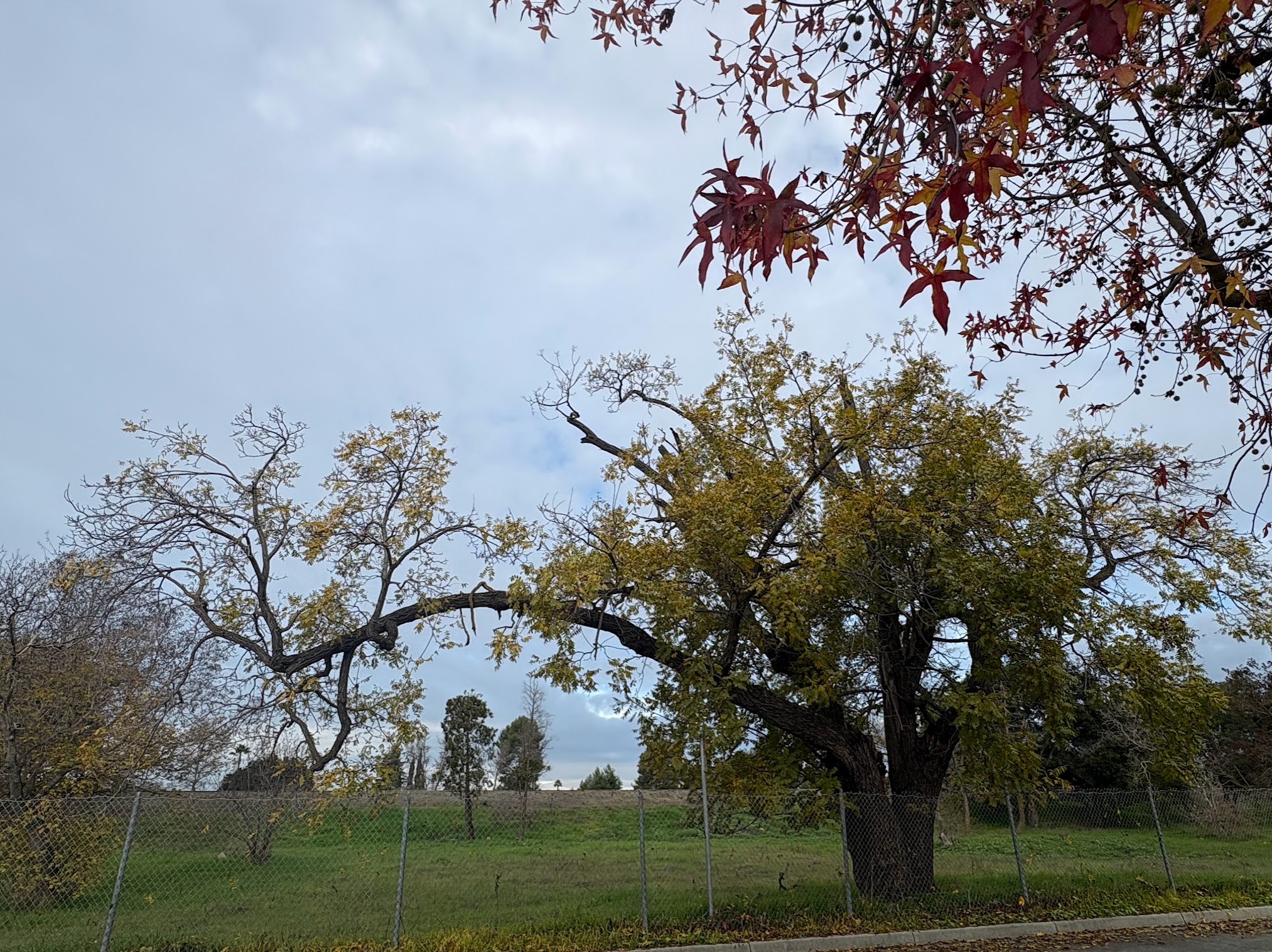
We have all felt the pull of the universe against the warmth of ourselves. At times, the expectations of the outer world seem to be in sync with our inner worlds, and at other times almost discordant. Like the tree whose branches wildly throw themselves into the air – without shape or form, nor any apparent laws of Physics – skewed right, skewed left, center of gravity tilted.

Wild, and yet ensconced safely behind a fence. 

Could that be the human spirit on some days? The pull of society vs solitude. The pull of adventure vs comfort. The pull of this vs that. Here Vs There. 

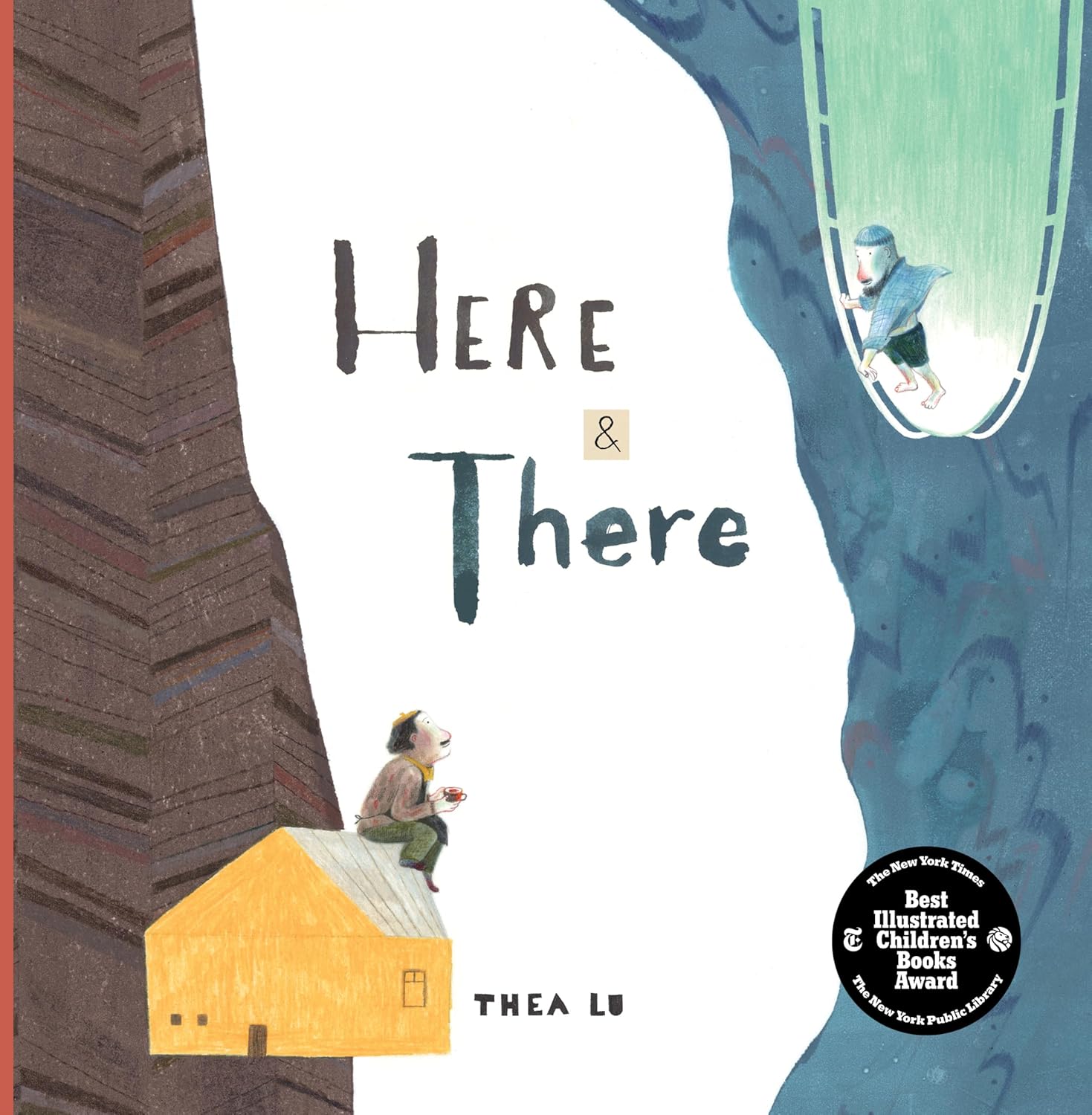
Here & There – By Thea Lu

I read this children’s book, Here & There, written by Thea Lu the other day that seemed to encapsulate all these feelings through two different characters who experienced and belonged to this wild Earth in their own contradictory ways bringing home the fact that both our domestic and wild spirits need a home within us. Or maybe that was the interpretation I came up with. Regardless, it addressed a certain yearning for Fernweh – a lure for distant lands – that the holidays seems to awaken in us. A contrast from the cozy comforts of the home and reading by the Christmas tree that the very same holidays beckon one towards.

The book compares and contrasts the lives of Dan and Aki. Dan owns a cafe in a seaside town. He stays there – always welcoming new friends and visitors into his cafe, but firmly rooted in his space. His perspective widening, and mind broadening with every interaction with a stranger. Never once leaving his place of belonging.

Aki, on the other hand, craves travel and adventure. His life is colorful – he meets many people who have become friends during his travels. He has seen volcanoes erupt in the oceans, made friends with migrating whales, and shared a drink with fellow travelers in sea-side cafes. 

It is a beautiful meditation of all the different ways in which we belong. How we can broaden our horizons whether we leave a place or spend all our lives in it. After all, perspective, imagination, empathy are all fantastic human capabilities.

In Praise of Mystery – By Ada Limon, Illustrated by Peter Sis

Another book that I read in the cozy light of the Christmas tree also evoked similar feelings. This book, In Praise of Mystery – by Ada Limon, Illustrated by Peter Sis is a beautiful book about the poem that left Earth in 2024 aboard NASA’s spacecraft, Europa Clipper. Europa is Jupiter’s second moon and is believed to be full of water, similar to our own. So, this probe is meant to investigate the possibility of life on Europa. 

Ada Limon is a poet laureate and it is her poem that is inscribed on Europa Clipper. The book is illustrated by an equally illustrious illustrator. Peter Sis – is a MacArthur Fellow, Hans Christian Anderson prize-winning etc etc.

How it will be read is another question altogether.

This isn’t the first time we have sent our presence out into the universe either. Voyager’s Golden Record contains as many snippets of life as could be managed on the capsule – images, songs, and greetings in 55 languages are on it. Whale song, folk songs from Bulgaria etc.

Hygge Vs Fernweh

The message and book, In Praise of Mystery, speaks to that human yearning to find life outside our own planet. We have been sending probes to see if there is life outside, but here, right here on this beautiful planet, we can spend so much more time appreciating and protecting what we have. Sitting by the twinkling Christmas tree lights, warmed by the hot cocoa that is essential on such occasions, I thought of the world in Europa. It could be thriving or desolate. Cold or warm. The thrill of that extraterrestrial adventure is all very nice, but I was happy to be in my little home by the tree, enjoying the warmths of winter –  Hygge

The human yearning for Hygge & Fernweh can both be there, can’t it?

The Oceans As Soul Refreshers

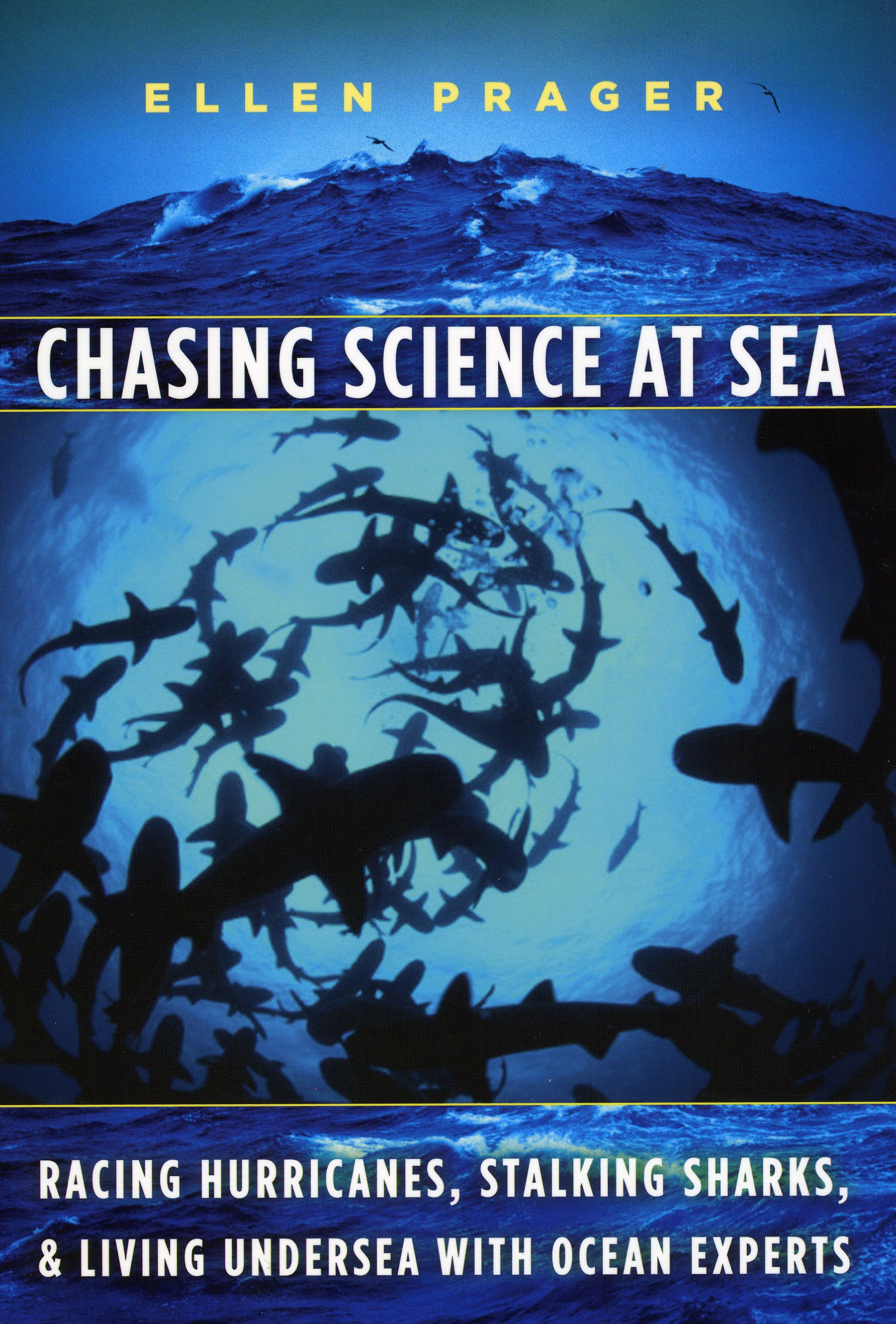
Explorers arriving at the nourishncherish home would have found the chronicler walking around with one book more often than others, Chasing Science at Sea – Racing Hurricanes, Stalking Sharks, and Living Undersea with Ocean Experts by Ellen Prager.

You see, I wanted to finish reading the book before World Environment Day World Oceans Day on June 5th. Then, I thought I will somehow make it to World Oceans Day on June 8th. Now both days have come and gone, many marvelous meals have been tucked into, many laughs shared with friends and family, many meetings sat through, many hikes and bikes to appreciate the world around us, but the book is still in my hand.

The book is engaging at a fundamental level – a subject and set of anecdotes so absorbing and amusing that despite all the demands on my time, I do not want to set it down unfinished. Every time I have gone to the edge of the land overlooking the waters, the lure of understanding the world is beyond me. How would it be if we had evolved under water instead of on land. How would our technologies have taken shape? Then, there is a gratitude that we are land dwellers and 3/4ths of the Earth is uninhabitable by us.

The pressure of living under the sea must be enormous and I wonder about how the various creatures of the sea manage. A friend of mine had taken a picture of a chips bag at high altitude. Imagine that bag 10,000 feet under the ocean. Apparently, every 33 feet the pressure increases by another atmosphere. With what ease these dolphins and whales navigate the pressure differences as they come up to gulp air and go back into the depths of the oceans?

One evening I stood watching the magnificent waxing gibbous moon over the bay waters one one side, and the setting sun on the opposite side. I remember reading that the creatures of the ocean have their own lunar cycles to follow. The little turtles that come ashore on full moon nights to lay their eggs, the fish orienting themselves by the direction of the stars, the birds using their innate gifts of navigation to traverse the Earth on there impressive migratory journeys – everything ebbed and flowed into the mind’s eye much as the gentle waves lapping nearby.

“To stand at the edge of the sea, to sense the ebb and flow of the tides, to feel the breath of a mist, is to have knowledge of things that are as nearly eternal as any earthly life can be.” –

Rachel Carson

There were pelicans bobbing elegantly in a uniform motion a distance away, seagulls, avocets and blackbirds flying energetically, while the herons stood stoic as ever apparently gazing at the moon and waiting for the fish in the waters below.

The edge of the sea

How must it be to live under the sea? How I wished to be a little mermaid just then to glimpse into the ocean worlds? Imagine my surprise when I sat with the Chasing Science at Sea book that evening to read about Aquarius – the under sea research station that allows marine biologists and oceanographers to research the oceans. They spend hours at these deep pressure stations after which they need to be carefully acclimatized to the surface atmosphere before returning to the surface. While inside Aquarius, they can stay for as long as their mission takes, but:

At the end of a mission, aquanauts undergo a 17-hour decompression that is conducted within Aquarius itself, while on the bottom. At the end of decompression, aquanauts exit Aquarius and scuba-dive back to the surface.

NASA site on Aquarius

The truth is that the oceans are still an enigma. Despite underwater diving equipment, the ability to scuba dive, submarines, and remote access vehicles, the oceans are vast, and full of an alluring mystery. 

A few years ago, I read a book on marine farming and was enthralled at the possibilities of seaweed farming and kelp forests, but not a little afraid as we start taming the seas. We have not shown ourselves to be good custodians of the lands and the atmosphere.

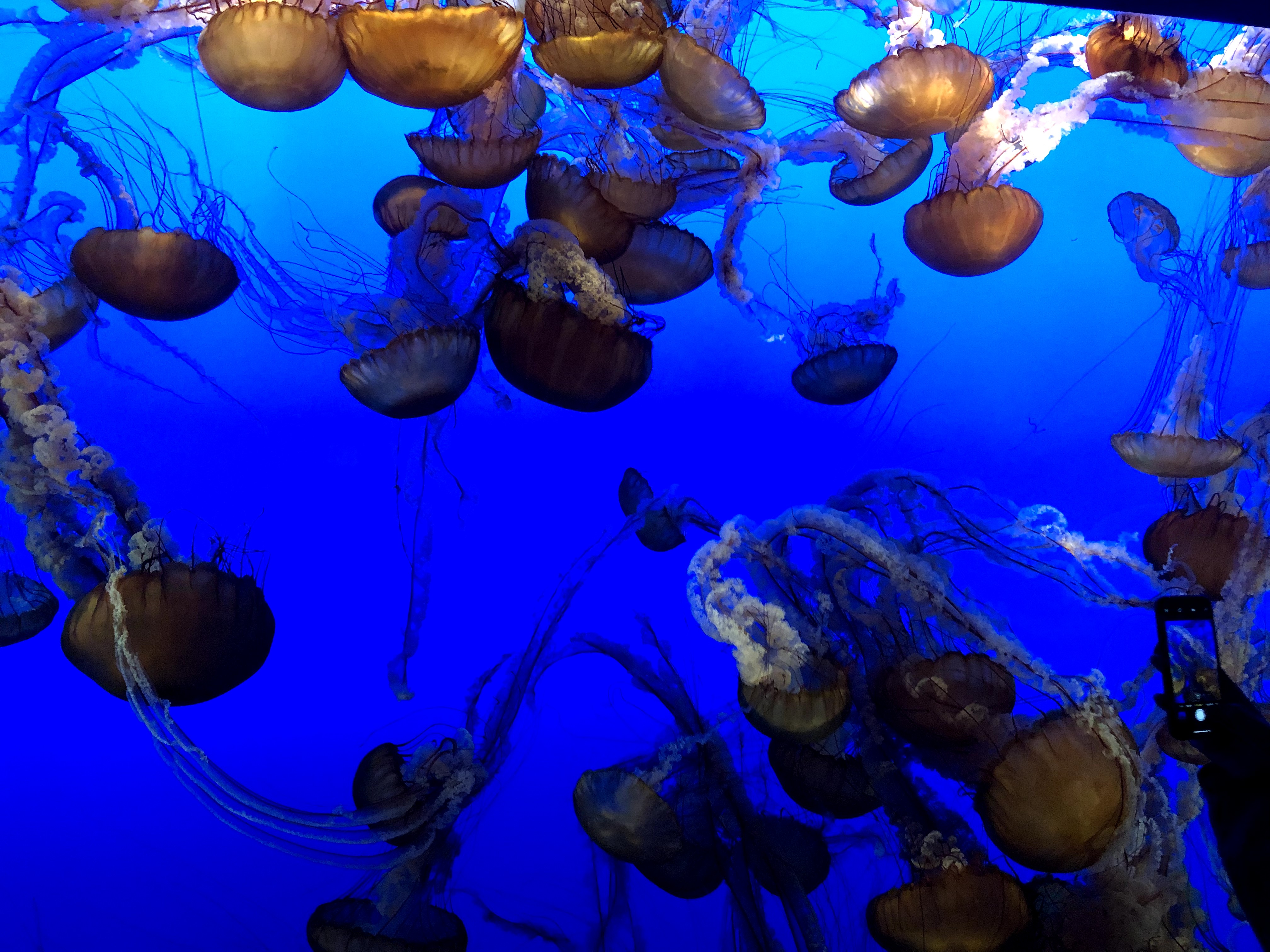
Kelp Forest – Monterey Bay Aquarium

As I determinedly read about the adventures or the scientists, a strange calm engulfed the soul. Water and water-related imagery often does this. I slipped into bed with beautiful thoughts of the oceans and how little we really think of them in our day-to-day problems. What amazing soul refreshers the waters are?