Celebrate International Dance Day: A Journey Through Dance Dramas

International Dance Day is coming. 

One of the best things about my dance teacher was how she helped transform the world on the stage with mere mortals. Children of varying interest levels, abilities and time. We somehow knew each other’s pieces, and the rehearsals became a place of camaraderie and belonging like nothing I have known since.  Friendships formed in the orbit of practice, each of us helping or being helped as the D-day drew near. The energy of practice was always enough to bring a smile. No matter how hard or terrible a day you’d been having, if you have to smile and dance when it is your turn, it does something to you, and you find yourself in a better frame of mind without even trying. 

How I wish dancing, singing, art, literature, creative writing, team and adventure sports are all a part and parcel of everyone’s life on a regular basis. Without having to carve time for it, without yearning for it, without having to take the car or public transit to plan for it. What a luxury that would be?

As we spend time working, we spend time in our creative pursuits – intellectual, or physical. 

As the children grew up, I had the chance to attend many dance programs, arangetrams and productions over the years. As soul-nourishing as they all were/are, I still yearn for the dance dramas that my childhood teacher was so good at conceptualizing, choreographing, composing, teaching and performing. Who cannot be caught up in the climax of Mohini skillfully directing Bhasmasura towards annihilating himself through dance, or Mahishasura Mardini, or any other epic being played out on stage?

While I yearned for multi-dancer theatrical dramas played out on stage, I was also keenly aware of why they were difficult to pull off. In a society where the number of hours were optimized, did you dedicate time for learning your margam of items – the standard pushpanjali/kowthwam, alarippu, jasthiswaram, shabdam, varnam, keerthanais and thillana so that you can prepare for an arangetram in that time, or spend a part of that time with a dance drama production? It is a tricky situation complicated by expectations of society – individual performances merited standardized margams, dance dramas demand a different format.

So, whenever I get the chance to go to a dance drama, I practically dance into the auditorium myself. 

Nirupama Vaidyanathan’s Journeys of Faith based on Shoba Narayan’s book, Food & Faith

In recent years, I have had the pleasure of attending a few of these theatrical productions. Nirupama Vaidyanathan’s Journeys of Faith based on Shoba Narayan’s book, Food & Faith was one such. Nirupama is always skilled at having multiple dancers quickly move together, seamlessly, in beautiful patterns on stage. She managed to incorporate standard thillana-style formats etc into this production which I thought was a very clever way to balance the needs of the student and the theatrical dance drama format.

That dance performance was amazing. Nirupama is a clear orator, and in this production, her voice overs, where she was narrating pieces from the book as she set the stage for the Palani Murugan temple or the Udipi Srikrishna Temple were amazingly done. She had the music pieces composed, and stitched together for the dance drama. I just have to close my eyes to see the way all her senior students came together on stage at the very end to show how the prasadam in a big temple kitchen is prepared. Who cannot be filled by a performance like that, followed by an excellent prasadam at the Livermore Temple afterwards?

She combined literature, theatre, dance and music in such a satisfying and eloquent manner that a year after the actual performance, I am able to recall the transformation of the stage in her skilled and capable hands.

Meenakshi Sundareshwarar Dance Drama

I had a similar feeling with the Meenakshi Sundareswarar dance performance by Sharanya Ganesan. It has been a few months since her dance school staged the dance drama to which I was invited. But, was it a transformative experience?! She managed to fill the stage with students of every stage in their dancing journey. 

There was the child Meenakshi, the young-adult Meenakshi, and the adult Meenakshi – with all the dancers accompanying the stories filling the stage with their rhythmic jathis, their quick and coordinated movements. The stage ebbed and flowed with the dancers themselves. The costumes – oh the costumes! Bharatanatyam costumes are always a joy to behold, but on that stage, they took on a fantastic life of their own. Except for the main characters of the story – Meenakshmi, her parents, Sundareshwarar etc, everyone was clothed in combinations of cream and (red, pink, violet, or green). I have always loved the cream colored combinations, and on that stage housing over 50 dancers, they all stood out and merged together. 
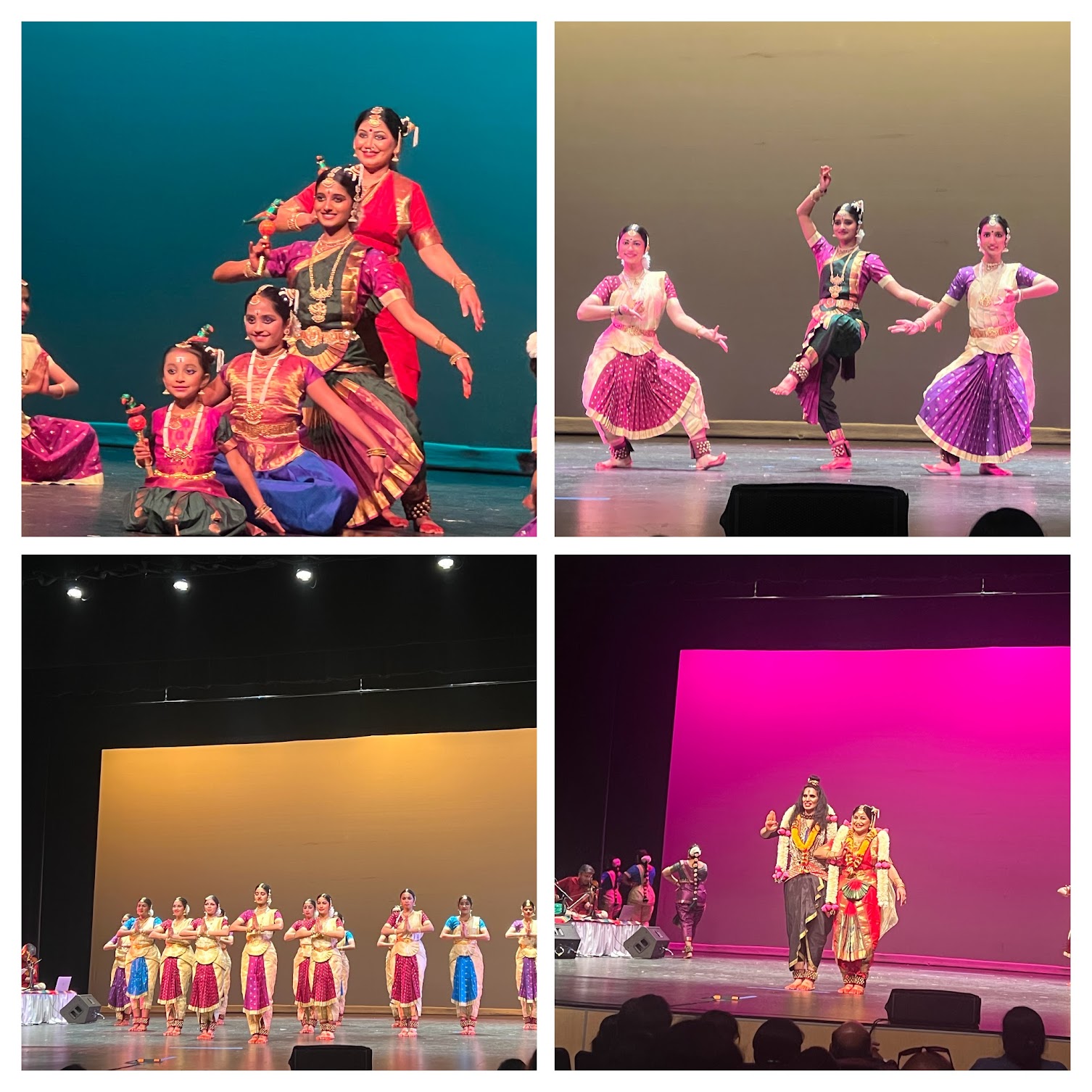
The dance performance itself co-ordinated across all the batches of children she teaches must have been both a joy and a huge project in and of itself. Every group knew of the pieces they needed to perform, but according to her senior students who spoke to the audience afterwards, the whole thing was a concept weaved together into the magic it transformed into only in Sharanya Ganesan’s head. 

On YouTube Please!

Every time I look for entertainment to watch, I yearn to see if these dance dramas would be on YouTube or Netflix. I wish they were. For I love to watch a good dance drama on a cold evening – I end up watching some dance pieces, but a good dance drama choreographed, executed with such talent, beauty and grace would be something that I would love to see every now and then, or even on a flight. 

There are always good ones we miss out on because of conflicts – how marvelous it would be, if we could manage to fill our souls with the performances later? I am on a flight to South India – thumbing through the entertainment available on the flight, I thought to myself that  I would love to see The Whispers of the Kaveri when I am traveling to the very lands of the Kaveri river – Tamil Nadu & Karnataka. 
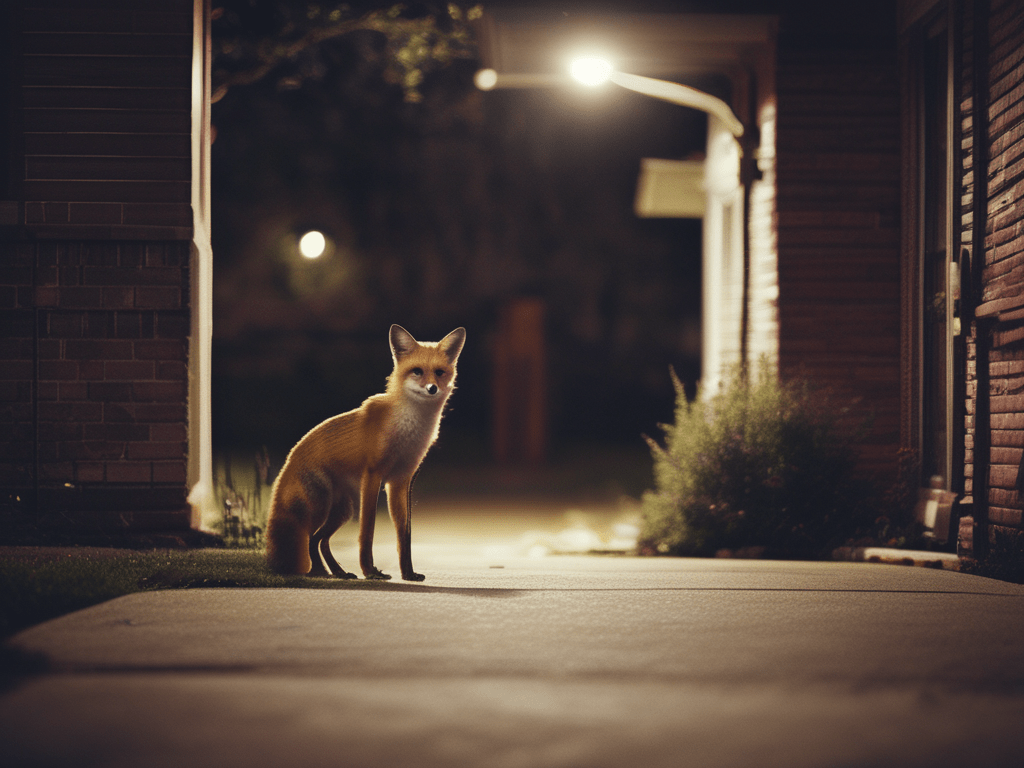
Meeting ‘Loki’: An Enchanting Encounter with a Mysterious Fox

What was That?

The other night, I was out on a walk around the neighborhood, reveling in the fact that I could. The neighborhood was quiet for a week-end evening, and the stars were twinkling just so. The waning moon would not be rising for a while, and the sound of crickets had been replaced with the occasional croak of a toad.

I was thinking of all the laughter and camaraderie of the evening spent amidst friends, and was cackling to myself reminded of this or that. 

That’s when, I saw a fox running really fast. The back of my mind knew I ought to turn back, or at least be more scared. But I couldn’t do any of that whole-heartedly, for I was in a flippant mood – an evening laughing with friends does that to one.

But for another, it was a surreal experience. A glimpse into a magical realism – there was a spring in the step. Like its feet only used the ground beneath to provide the bounce required to leap and bound away. I stood there stunned at this movement. It must also have been quite young – for it’s size was not large. Rather frisky.

Usually, night time naturalist explorers in our neighborhood might find a cat scratching itself and yawning.  I was prepared for not much else. 

It was Scared!

It ran away from me at first, and then towards me with the same frenzied gait. That’s when I realized I would be in trouble if it did try to attack me. For you see? The fox’s run was brisk. If we were both to compete in a 100 metre dash, I have no doubt it would leave me in the dust well after the 5 meter mark. This one already had a head start too. Me? I had three plates of excellent biriyani, naan, kofta curry, etc followed by equally sumptuous helpings of dessert tumbling about in the old stomach. Stuffed, in other words. I was dragging my feet so I could soothe the old digestive system to start digesting and I could sleep. 

Thats when I caught sight of the animal’s face. 

It had clearly taken a risk leaving the river trail nearby venturing to the nieghborhoods nearby, only to find a pesky woman out on a walk. What was more, the thing that made it jump and start running was the sound of me cackling to myself about some inane joke. Probably thought it had a nutcracker on the loose. This creature was clearly alone and figuring out a way out of this mess. So, I stood still, and acted like a GPS to it. “Go away! That way! Off you go!” 

The fox (or could it have been a coyote cub?) gave me a terrified glance, and I continued heartened. “That’s right – after about 100 meters toward the ursa minor constellation, turn right – you’ll be on the river trail again.”

Loki

It turned swiftly and gave me a look that said, “If foxes could certify people, I would!” and took off into the night. That flighty temptress of the night might’ve looked like Wily E Coyote, but it did have a Loki-like look on its face.

I shall call you ‘Loki’ I said in its general direction,  and continued with my walk – but prudently decided to head homewards.

I wonder what Loki thought of the interaction.

I was glad – I had a glimpse into the life of a fox. Seeing the creature’s nimble gait had energized me. There was something immensely laughable in the way it turned and gave me a look too. All too often we are weighed down by the worries of the world (or in this case, good food satiated with good memories), and forget to prance about the world. “You must prance!” is what Loki seemed to have been saying to me that night, and I did try.

🌈Irisophiles?🌈

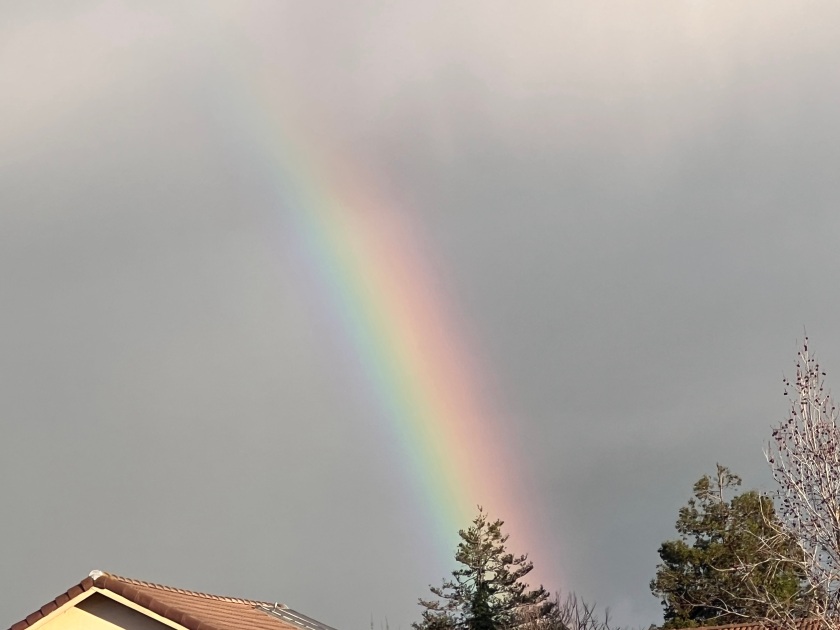
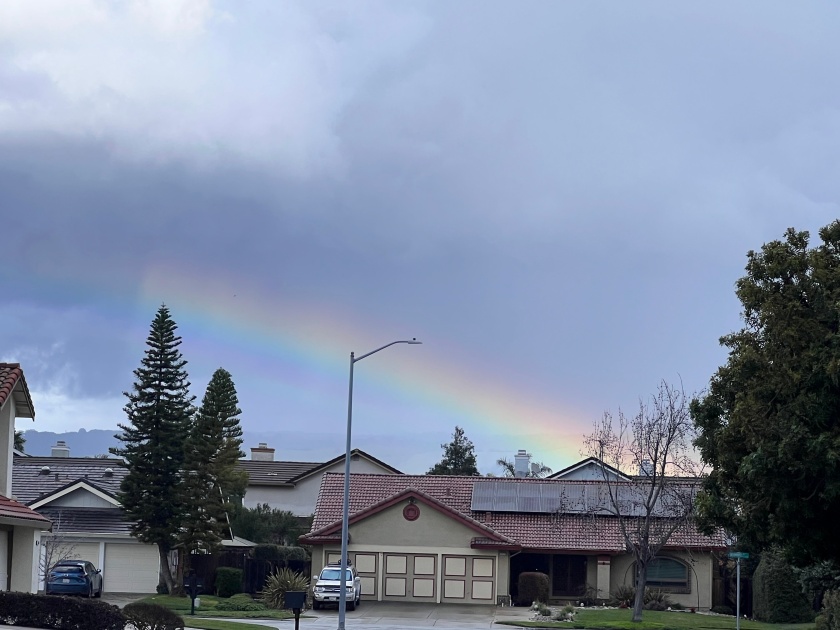
February is really the month of Love. Not just because of Valentine’s Day, but the rainbows!

img_9718

February has been the month of rainbows – at least here in the Bay Area. Even if we know the Science behind rainbows, they are special. We’d glance outside, and see the sun peeking out after the rains, and I’d run to see if the magic is there. That in itself is surely magical.

While there are many words to describe the love of sunsets, clouds, starry skies, the sun, the moon, eclipses, forests, rain, thunder and lightning, there isn’t really a word to describe the love of rainbows. No one word to capture the soaring of the heart when it spots the multi colored ring of the Earth’s horizons. The squealing of the young and the old as they charge outside to catch the magical light of this beautiful universe. Imagining how marvelous it must look to hummingbirds and those who can see a larger spectrum of light.

Rainbow Tales

Of course rainbows have enamored humankind for centuries. 

🌈I can’t help thinking of the silly fable about the fox marrying the crow and throwing the garland up in the sky, and that is how a rainbow is formed, every time we spot one. 

👰Greek myths have a goddess, Iris, who is both a messenger of the gods and a personification of the rainbow. In Rick Riordan’s Percy Jackson series, the demigods are able to use drachmas to communicate with the gods through a rainbow.

🍀The Irish, of course, have a quirky tale about finding gold at the end of the rainbow.

That is why I was this surprised at not being able to easily find a word for a lover of rainbows in a world filled with them.

Should we call ourselves Irisophiles?

🌇Opacarophile: lover of sunset

🎨Chromatophile – a lover of colors

⚡Ceraunophile – a lover of thunder and lightning

🌩️Nephophile – a lover of clouds

☀️Heliophile – a lover of the sun

🌜Selenophile – a lover of the moon

🤽Limnophile – a lover of lakes

🕯️Photophile – a lover of natural light

🌧️Pluviophile – a lover of rain

🌊Thalassophile -a lover of the sea and oceans

🌳Nemophile – a lover of forests

💛Xanthophile – a lover of the color yellow

Here are a list of words to engage any nature-o-philes:

Words for lover of Nature and Weather

img_9556

What do you think? Should the lover of rainbows be called an Irisophile. Or what other words would you suggest?

How the Library (Not the Prince) Saved Rapunzel

When the Covid lockdowns started, many folks went on a buying spree (we all know the toilet paper jokes). Ever the dutiful one, off I went too. I was feeling rather pleased with myself when I got an extra bag of rice, and headed onto the library (to get books to tide us over during the lockdown).  When the husband called to ask where I’d gone, I sheepishly said that I was at the library just in case we were unable to get books during lockdown. I could hear a sound like a paper bag bursting – his version of a cross between a snort, and the urge to laugh. I bragged about the extra bag of rice, and I could see his face wondering why he had to be landed with someone, who in P G Wodehouse’s language, ‘must’ve been bumped on the head as a baby’. 

Well, I must say that when we staggered home with books for the children and self, I felt better. The local library has been one of my favorite spots to visit of course, but over the Covid period, I felt like Rapunzel in the book: How the Library Saved Rapunzel (Not the Prince). The library allowed us to schedule an appointment and arrange to pickup books on hold. What was more, they were kind enough to include a few picture books of their choice if you requested them to do so. I am eternally grateful to have access to libraries.

I felt almost an irresistible urge to increase my Science based reading this year (maybe this is a tiny rebellion for the disturbing anti-Science strain emerging with the 45th POTUS office). Starting the year off by re-reading Carl Sagan’s Cosmos set the stage for the year ahead. The following books gave me no end of pleasure and learning over the year. (My Science writing class for children)

trees_komerabi

2020 was the 50th anniversary of Earth Day

  • Unbowed – Wangari Maathai (in progress)
  • On Looking  – Alexandra  Horowitz
  • Losing  Earth  A Recent History – Nathaniel Rich
  • This is the Earth – Diane Z Shore & Jessica Alexander, Paintings by Wendell Minor

Bill Anders said: “We came all this way to explore the moon, and the most important thing is that we discovered the Earth.”

What a lovely statement that is, and together with his Earth Rising image, contributed to the concerns around Planet Earth that led to founding of Earth Day in 1970.

1200px-NASA-Apollo8-Dec24-Earthrise

It was also a wonderful year to take in poetry. Mary Oliver & Margarita Engle were always welcome in a year when poets alone seemed to know the right turn of phrase for the bizarre. Dr Seuss & Jackl Prelutsky always know to turn one’s frown into a smile. 

  • Blue Iris – Mary Oliver
  • Enchanted Air – By Margarita Engle
  • Dog Songs – Mary Oliver
  • Owls and other fantasies – Mary Oliver (Yes! no!)
  • Be Glad your nose is in your face – Jack Prelutsky
  • Dr Seuss books (always worth reads and re-reads). I found a few gems that truly tickled the mind and got out some belly laughs.
    • Horton hears a Who
    • Horton Hatches an Egg
    • Sleep book
    • Oh the Thinks you can Think
    • How Lucky You Are
    • Thidwick the Big Hearted Moose

summer-collage

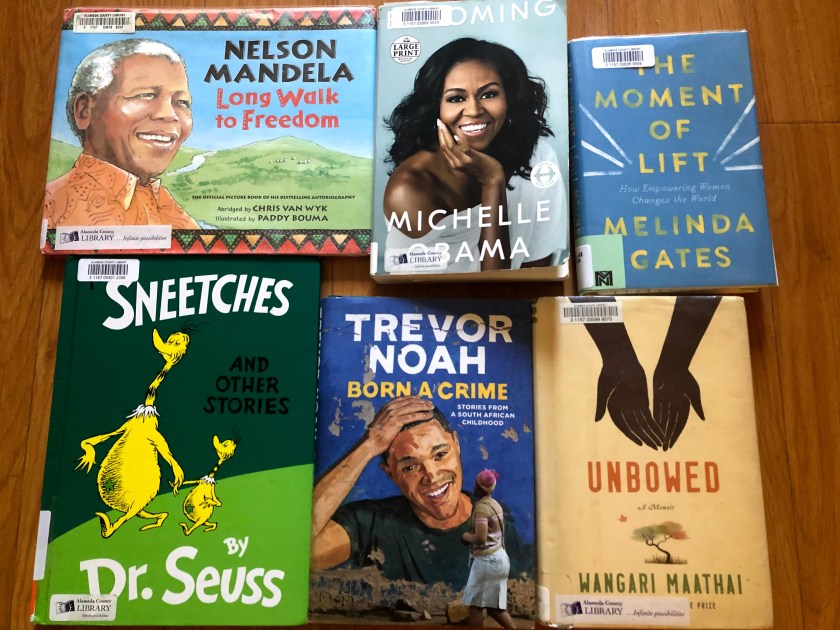
With the Black Lives Matter movement, the year was ripe for educating oneself on the inequities of society and civil disobedience. The local library, news media, and friends all helped with an excellent array of reading material. Notable among the works read then were:

  • Becoming – By Michelle Obama
  • Black Panther – by Ta Nehisi Coates
  • Sneetches and other stories – Dr Seuss
  • A Long Walk to Freedom – Nelson Mandela‘s children’s book version
  • My Many Colored Days – Dr Seuss

img_8883

With uplifting books and humour, life can be truly marvelous. My all-time favorites kept me company, and I am eternally grateful to their influence of course but a few others were added to the list this year.

The world isn’t such a good place either, and reading books such as these helps to remind us about the many problems that still beset society

The lure of power, and how we are seeing it all play out in real life

  • The Fate of Fausto – Oliver Jeffers
  • Louis I – The King of Sheep – Oliver Tallec
  • Yertle the Turtle and other Stories – Dr Seuss
  • Harry Potter and the Order of the Phoenix (pieces relating to the Minister of Magic refusing to acknowledge Voldemort’s return so he could stay in power)

Of course the true magic of life is never complete without children’s books. There are so many of them in this genre, that I did not even note half of them. But a few of them lit up my life

  • My Grandma is a Ninja – By Todd Tarpley, Illustrated by Danny Chatzikonstantinou (When I become a grandma – though it is a few decades off, that is how I wish to be 🙂 )
  • Gondra’s Treasure – By Linda Sue Park
  • Enchanted Wood – by Enid Blyton (old Saucepan Man, Silky and Moonface with the lands above the enchanted tree – though it doesn’t hold the same level of magic it did as a child, it still has its charm)
  • The Red Pyramid – By Rick Riordan (this was the son’s recommendation, and thoroughly enjoyable it turned out to be romping down the Egyptian myths!)
  • The Quiet Book – by Deborah Underwood
  • A Fun Day with Lewis Carroll – Kathleen Krull & Julia Sarda
  • Peter Rabbit’s Tales – Beatrix Potter
  • Why is my Hair Curly – By Lakshmi Iyer
  • A History of Magic – Based on Harry Potter Universe
  • Tintin Comics (a fair few)
  • Calvin & Hobbes
  • The Velocity of Being – Maria Popova & Claudia Bedrick

velocity_being

On that magical high note, here is wishing everyone a healthy, happy new year in 2021. Things are already turning around, and looking hopeful. Keep reading, and sharing 🙂

img_0851

Rainbow 🌈 Conscience

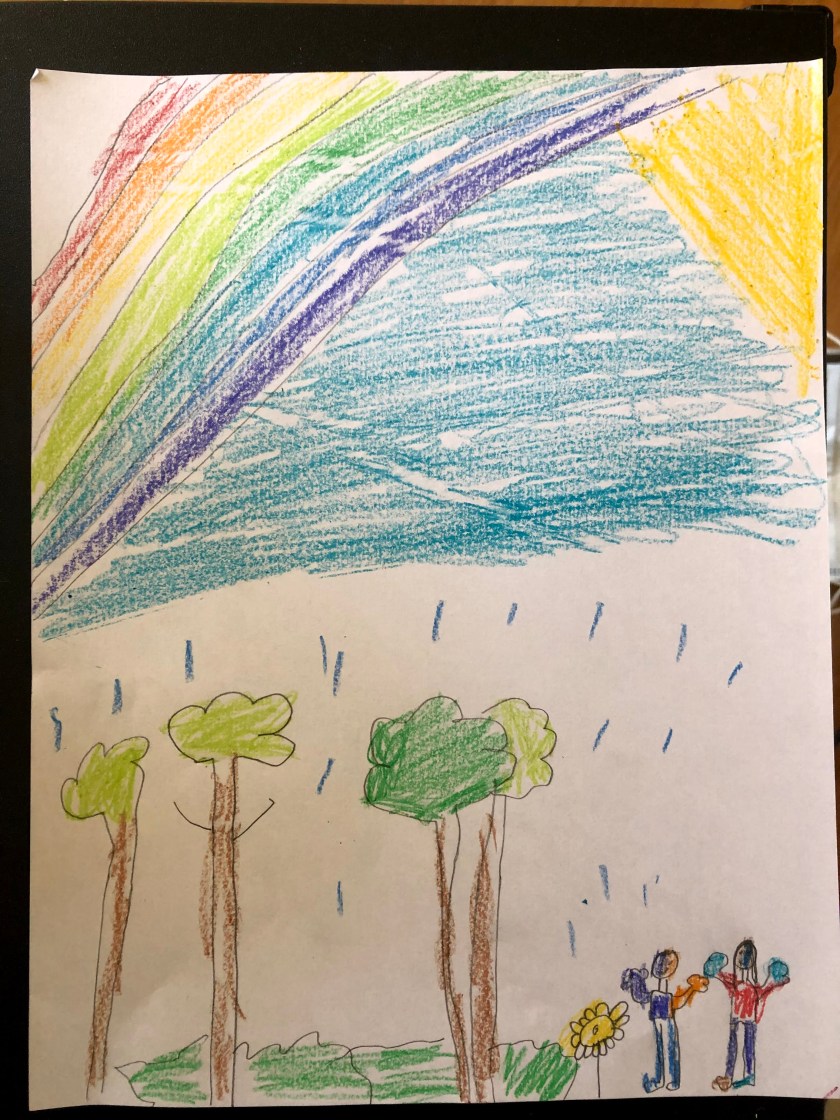
A few years ago when the son was in kindergarten, I attended a class room show-and-tell in which their works of art were displayed. Endearing pictures of zebras, horses and assorted flora and fauna painstakingly done, were being showed off brilliantly by the children. When I drew up close to the son’s painting, I paused. There in the corner of his painting were several people with rainbow colored faces. I loved the idea, and asked him why they had rainbow colored faces, to which he said, “Our teacher said to put colored people in our drawings.”

I turned to his teacher, and she nodded smiling, “Yes, I did for diversity, but I didn’t expect this!” My heart warmed at his interpretation.

I loved it! How beautiful and void of prejudice we are as children.

“No one is born hating another person because of the color of his skin, or his background, or his religion. People must learn to hate, and if they can learn to hate, they can be taught to love, for love comes more naturally to the human heart than its opposite.”

― Nelson Mandela, Long Walk to Freedom

I started reading Henry Thoreau’s book, Civil Disobedience, last week, and I must say the first chapter itself has me drawn in.  “The mass of men live lives of quiet desperation. What is called resignation is confirmed desperation.

A few sentences later he says again, “It is never too late to give up our prejudices. No way of thinking or doing however ancient can be trusted without proof.”

Savoring the sentences and thinking of the rainbow colored faces in the son’s drawing made me think. What would it take for us to learn what it is to be human? It seems to me like to understand deeper, we need to rely on Science: Science as a Candle in the Dark. Any phenomenon not readily understood suffers from the same problems. Could there be a better way to gauge our human-ness?

Structurally, we are containers for cells, possess neurons for consciousness, and use language for communication between one another. But this puts us in no different a category than octopus, dogs, elephants, whales or dolphins. Most marvelous creatures on Earth have evolved from the same set of conditions the planet has been subjected to, and are hence remarkably similar in these aspects. In fact, we are limited in so many abilities than our far-more abled canine friends or bird friends when it comes to smell, colors and noise frequencies.

Here is a fun game to be played by all age groups:
The High Frequency Hearing Game

Quoted from The Soul of an Octopus by Sy Montgomery:

Cambridge Declaration on Consciousness asserts that “humans are not unique in possessing the neurological substrates that generate consciousness”, and that “nonhuman animals, including all birds and mammals and many other creatures, including octopuses also possess these neurological substrates.”

Chemically speaking, I suppose we can attribute Oxygen, Nitrogen, Carbon etc as major components of the human body. But this too, is not unique to us on Earth. Many lifeforms use the same structural elements for life.
Composition of the Human Body

600px-201_Elements_of_the_Human_Body.02.svg
Image from WikiLink: OpenStax College / CC BY (https://creativecommons.org/licenses/by/3.0)

Culturally, we have ideologies so different, yet so similar. Most religions have stories of a big flood (starting from the epic of Gilgamesh, to the Matsya avatar in Hinduism, to Noah’s Ark), our mythologies have similar creatures (how then could we have dragons in Chinese mythology and Norse mythology?) The fossils found in each region seem to have contributed to the myths (Sankhu / Chakra myths originate from nautilus fossils found in the Himalayas). Is myth-making then the only human identifying factor (I don’t think so, for whales songs have tonal informational bits having the same length of an Iliad or Odyssey – some whale songs have been known to be taught from generation to generation and last over an hour long).

wind-in-the-reef

The differences in skin colors too, are no more than an evolutionary necessity – the UV light in different areas of the earth, and ability of the skin to absorb Vitamin D in areas of high or low sunlight is primarily the factors that determine these.

The Biology of Skin Color (The link between human evolution over time; the ability to adapt to different levels of UV  radiation in the tropics vs the poles; and its correlation with absorption of Vitamin D is explained in this video)

I come back to the question of what does it mean to be human? What is our unifying factor? On this globally unified Earth, can we all just find a way to get rainbow colored skin?

How Kindness Became Our Pleasure – By Maria Popova on Brain Pickings

P.S: The son touchingly drew this drawing again when he saw me writing this post:

img_8613

Fox 🦊  & Pan 🐐 ⛰

“You know? Most of my morality comes from Percy Jackson and Harry Potter?” said the teenage daughter one day. 

“Gee! Thanks for that speech on wonderful parenting my dear, No clasping mother and father to heart and tears of joys on helping you navigate a messy world and all that?!”

She had the grace to laugh. 

She had been holed up in her room all morning, and I had hollered to her to come and help me with the chores. She stumped downstairs, unable as a teenager, to let on that she was probably enjoying the interlude of putting away the dishes with music in the background. 

As the dishes clattered, the kitchen was enveloped yet again in a mythological whirl. The daughter was always fond of Rick Riordan’s Greek and Roman mythological tales. The son, who has now started to read the series with gusto is thrilled at being included in the club of discussing these important works of literature with his sister. The warring factions of the Gods Vs the Titans has been analyzed from teenage, pre-teenage and elementary child angles. Myths have an alluring charm and when you find the similarity between Cerberus and Fluffy the three-headed dogs in Percy Jackson and Harry Potter series, it is always worth doing a little dance jig, and discussing with the teenaged sister. 

3-head-dog

The husband and I have been made to read the books too, and I must say they make for entertaining reading. I still prefer the Harry Potter series, but I see the lure of Rick Riordan’s work. He has perfected the rhythm of adventure with the right mix of modernity set against Greek gods in our world. 

“Which God would you be if you had an option?” the daughter asked, and the answers flowed forth. When it came to me, I paused for a moment and said, “Probably a nature god. Who was she? Hera?”

“Nah…You are thinking of Persephone. She is the Goddess of spring – you’ll like her too”, looking like a doctor arriving at a tricky diagnosis, “but I think Pan is more suited to you,” said she.

img_1993

“Fine then. I will be Pan. Pan is the strongest God if he is the Nature God right?” I said knowing fully well that my answer would be met with an uproar: 

Zeus is the most powerful. 

The top three are Zeus, Poseidon and Hades. 

“Well you know what happened to Pan?”, and then the pair stopped mid-sentence and exchanged meaningful glances. 

“We must not spoil the suspense for you, Amma, but it is very sad what happened to Pan.” said she.

“What happened?”

“NO! Don’t – let Amma read it!” said the most recent reader of the books.

“Just tell me!”, I said, deftly catching a cup from cracking as I caught it from the dishwasher.

A dramatic sigh followed, and the sad prognosis was delivered.  “Pan is fading Amma. He is no longer a force that he was on Gaia now. It is up to us now to save Earth!”

I looked at their faces and felt a surge of pride, alongside a wave of gratitude to writers like Rick Riordan who so beautifully captured the essence of conservation in a manner that so many young children can relate to. Where would we be without the gifts of imagination and creativity?

I read another short story, Fox 8 , by George Saunders, who captured my attention, in a similar manner. Written from the viewpoint of a fox, Fox 8, it outlines the sad outcome of a mall being developed in Fox View Commons ( an area that was home to many animals, forests and trees). Fox 8 learns how to “speek yuman”, at the window of children being read to by their parents at bedtime. Fox 8 loves the stories, their morals and their imagination. Even though, the stories get things wrong about animals all the time, he is fascinated. Fox 8 is a huge fan of yumans and their ingenuity even when the mall development essentially drives their pack to hunger and death. The story ends on a sad note, with Fox 8 wondering how yumans can be cruel and unfeeling towards fellow beings with life, when their stories promise to teach differently.

I have said this once and I say it again – if only we could learn to live like the stories we weave for our children – with wonder, empathy, bravery and curiosity, wouldn’t our lives be more whole-hearted and content? Maybe our greed could be in check and Pan would not have to fade away so much.

Philosophers & Tinkerers

I picked up the book Black Hole Blues by Janna Levin partly because I was intrigued by the poetic title, and partly because I like reading about our dear Cosmos, and its many mysteries. The skies have given me endless joy, peace and continue to do so, even though light pollution in our suburban areas mean that we cannot see the stars, planets and stars as clearly.

black_hole_blues

Excuse me for a while, while I meander to a black hole of my own for a moment: I was appalled to note that a Russian startup intends to sell advertisements that can only be visible in the night sky. Are our products so important that we have to dwarf the shows the Cosmos puts up every night to sell toothpaste and whatever gawd-awful thing we contrive in our numerous factories? (I have a post clamoring and rattling in the brain waiting to get out on the number of contraptions that folks felt I must have, or I myself felt I must have, and now occupy valuable shelf-space in the home somewhere.)

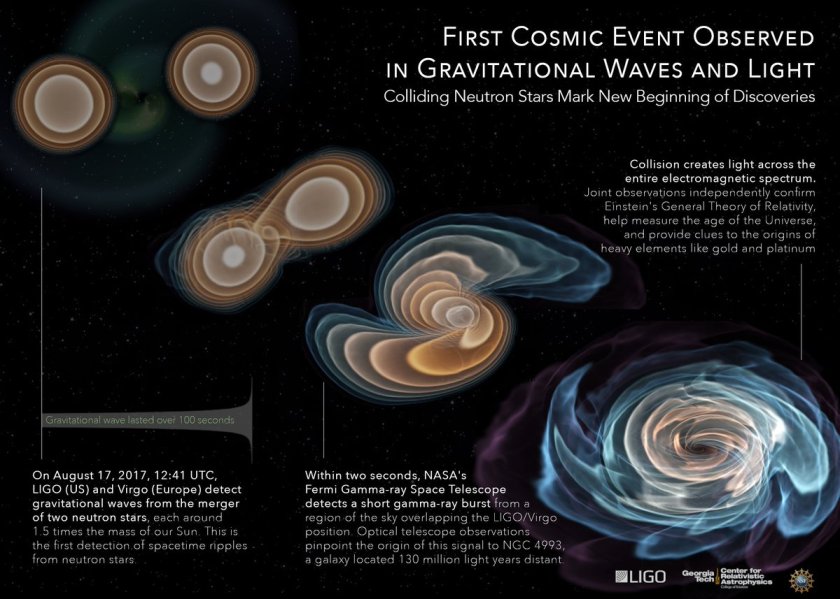
Climbing out of the black hole then, the cosmos has given me endless joy and I indulge in dipping into its mysteries every now and then. What surprised me about detecting gravitational waves is the immensity of human endeavors. Theorizing and coming up with the supporting Mathematics to validate the concept is in itself a phenomenal achievement, but conceptualizing an experiment of such magnitude as to detect a stirring as faint as gravitational waves emanating when two black holes collide millions of light years away is astonishing.

As Janna Levin says, it is a project to fulfill a fool’s ambition.

“An idea sparked in the 1960s, a thought experiment, an amusing haiku, is now a thing of metal and glass.”
― Janna Levin, Black Hole Blues and Other Songs from Outer Space

The LIGO (Laser Interferometer Gravitational-Wave Observatory ) is astronomical in scope and dimensions. Janna Levin’s book takes us into the human dramas and the corridors of Caltech and MIT where much of this played out. While I did feel the flow and structure of the book could have been more crisp, and less about the human politics that plague undertakings such as these, it was nevertheless interesting.

As I read, I was amused at how humans unfailingly bring drama into our existence. At the altar of Science, many have sacrificed their egos, had their egos bruised, and have propelled or obstructed the flow of Science, but like a river it flows on and hopefully propels our understanding forward, not always cognizant of the applications of Science (One of my favorite sayings of Ursula K Le Guin:

When you light a candle, you also cast a shadow).

After the monumental setbacks and roadblocks along the way, it is a satisfying end to the book that the experiment finally paid off. Twice, it detected Gravitational waves as they passed through the Earth from the collision of two massive black holes millions of light years away.

ligo.jpeg
(Image tweeted by @LIGO)

We do not yet know how this will change our understanding of the Universe, and its applications, but we can be rest assured that both are underway. We have come a long way from the Sun God riding the sky every morning on his chariot, though I am reading a fascinating book on this very myth at the moment.

Human-beings are philosophers and tinkerers at the very core, are we not?

Also read: Cranes of Hope (Essay of the Value of Science by Richard Feynman with A Thousand Paper Cranes by Eleanor Coerr).

https://www.youtube.com/watch?time_continue=1&v=kbh_6tQ6nm8

Jörð, Gaia, Bhoomi

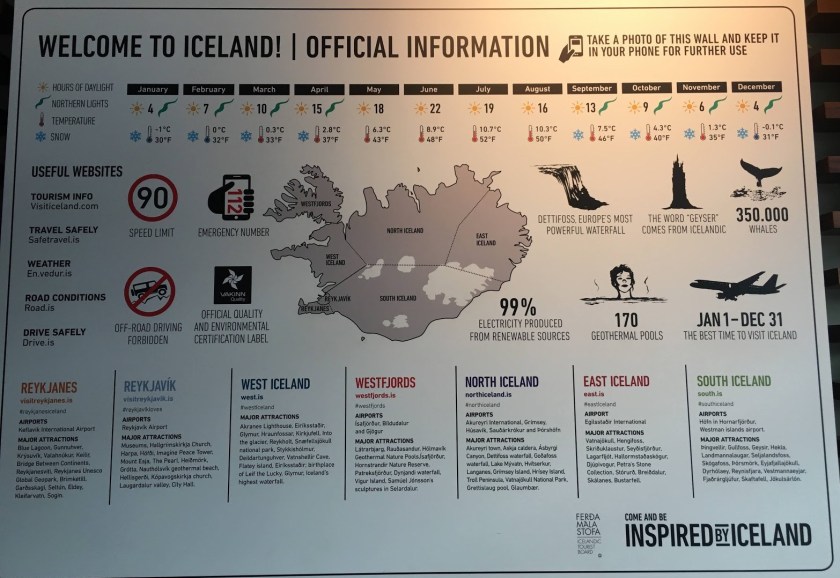
Fresh off the flight, and in our room, after loafing about during the day in Reykjavik, I was still groggy. I finally managed to sleep, happy to rest my tired frame on a good bed. The heart had already stirred in that nurturing soul mode, but was not in fully. A good night’s sleep is all I needed, I thought to myself.

It could not have been more than a couple of hours before I awoke to see the son looking cheerful, sitting on the bed alert, and tucking into Skyr, that delectable yogurt of Iceland that sustained our appetites anywhere. “Hi amma!” he said. The energy in his voice unfortunately was not echoed in my hollow moan.

The sun glowed outside, and I asked whether it was morning already. Tired or not, I was set on enjoying the holiday, and I tried to drag myself out, but the little fellow chuckled, “Nope! It is 2 o’clock amma. In the night. This is night!”

He was so enthusiastic and happy at this odd hour, that I smiled happily. (Smiled happily because he had the good sense to wake his father and not me for his night revels with Skyr)

I pointed at the window outside, and he said, “I know right?”

To be fair, I suppose that some of the clouds had a slight pink colouration indicating a sunset, but that was all. Within an hour, the sun had risen again without ever becoming dark or even dusky.

I goggled, the son giggled, and the sun cheerily ogled.

Our half baked theories are always fun, but this Khan Academy video of the Earth’s tilt is much better.

This infographic was useful to see how we would have to change our perception of a new day starting. Our minds are conditioned to the concept of dusk, the sun setting, and darkness enveloping our consciousness signaling the end of the day. But what if the Earth never signaled the end of the day. Would melatonin still be released?


IMG_6156

The long days, coupled with a sunny countenance made for action-packed days in which we had to force ourselves to sleep and take breaks. Nevertheless, it is truly wonderful when the earth offers its bounty to you the way Iceland does.

There were days when we saw fresh meadows filled with flowers that had sprouted afresh in the spring after the long winters, lava beds with thousands of years of moss growing on it, rivers gurgling with fresh snow melt winding their way across canyons and meadows, waterfalls thundering their way down as though their restive energy would not and cannot be contained, volcanoes and glaciers, all on the same day.


A country that blessed with natural beauty obviously tapped the imaginative strain in us. There was one particular place that looked like time had stood still in the middle of an epic battle in which a monster crocodile had pulled off a troll’s leg, and a bear was crossing the river.


If this sort of thing appealed to us within a few days of Iceland, it is only to be expected that the Viking myths and sagas are rich and bountiful. I am now reading Icelandic Myths, so I can continue to savor the experiences of that beautiful island.

viking


Years ago, when my dance teacher explained the poetic significance of the elements necessary for our very being, Panchabhutam – Earth, water, fire, air and space, I was thrilled with the poetic beauty of it.

My Icelandic experiences, I think, shall therefore be split into these elemental joys – this one of Earth(Jörð, Gaia or Bhoomi), followed by water, fire, air and space.

How Squids Shaped Our Myths

We are familiar with the Pangea theory (large hulk of a landmass floating together, and breaking apart into the continents of today, current day India going and joining up with the Eurasian chunk and creating the Himalayas in the process etc). Supporting evidence for this theory has been largely in the form of marine fossils found in the Himalayas, a region that is landlocked today.

Pangea_animation_03
Pangea animation from Wikipedia

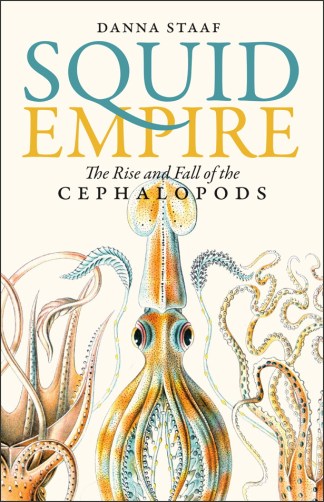
It was while reading Squid Empire by Danna Staaf that I realized how intertwined the evolution of the world, our myths, theories and culture are.

SquidEmpireCover

Culture is a funny word. It is supposed to capture the intellectual and sociological elements of a group of people living at a certain point in time in a certain place. The clothes, the food, the music and drama, the myths, the beliefs, the societal graces etc are what loosely constitute culture. It always amazes me how a word that is essentially an observation of life can be taken by the self righteous and used to noisily monger about the manger (but that is another post for another day.)

It is not surprising that our myths reflect our surroundings. Some cultures where myths have intertwined with religion are also reflective of the evolution of mankind over time in these places.

Indian myths, for instance, say that the Himalayas are home to the Gods. At the time when the myths originated, the Himalayas were probably looked on with awe (they still are, but probably more so 5000 years ago), and the only beings capable of living and scaling the mountains were attributed to having god-like capabilities. (Lord Shiva, the destroyer of the universe, apparently could be reached at Mt Kailas, Himadri Range, Himalayas. )

Lord Vishnu (The preserver), was always depicted with a conch and a shell. I have often wondered why Vishnu had a conch and a shell. Why not a sword and scythe?

Vishnu_shiva
Shiva-Vishnu: Image from Google Search

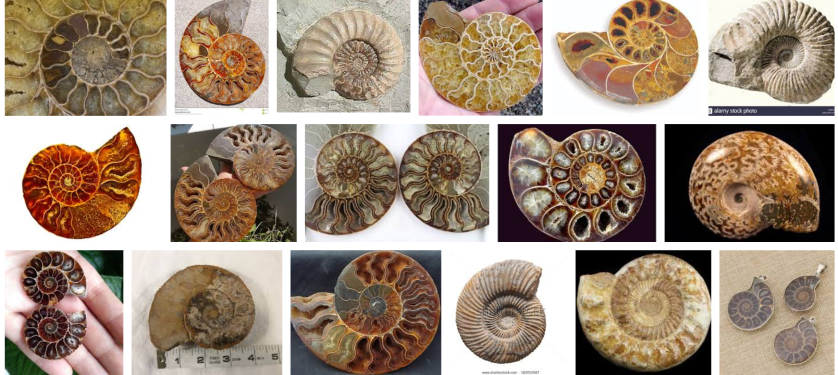
But like a minute puzzle piece waiting to chink into place, I realize that these were the fossils found in the Himalayas at the time. Nautilus shells, and ammonoid shells. They are shaped like conches and shells. Of course, they became the accessories for the popular gods. <Pictures of ammonoid shell fossils below>

Screen Shot 2018-03-22 at 9.10.28 AM

Quote from The Squid Empire by Danna Staaf:
Just on the other side of the Himalayas in India, certain coiled ammonoids fossils are named saligrams, symbols of the god Vishnu, and are believed to offer spiritual rather than physical healing.

Quote from: Adrienne Mayor’s paper on  (Fossil Appropriations Past and Present), (Classics and History of Science, Stanford University)

A current popular exhibit called “Mythic Creatures” at the American Museum of Natural History (May – Dec 2007) demonstrates how some stories of fantastic creatures, such as griffins, unicorns, and water monsters, arose from observations of extinct animal fossils around the world.

There is always a beauty to observing the natural phenomena around us. We are minute in a large throbbing cosmos, occupying a still thriving ecosystem on Earth for minuscule specks in time.

When you think about life that way, it seems beautiful:  a gift meant to be nourished and cherished. Did the squid think they would influence homo-sapiens millennia later, and help shape their culture? Probably not. But they did, just by existing.


The Physics Of Myth

“Which is your favorite tree?” asked the children one day.

I am often asked questions like this, especially by the elementary school going son. Your favorite color, your favorite food, your favorite flower and on and on till I shriek in agony, at which point he flips to – when was the first time you ate with a spoon, when was the first time you touched a frog, when did you first climb a tree?

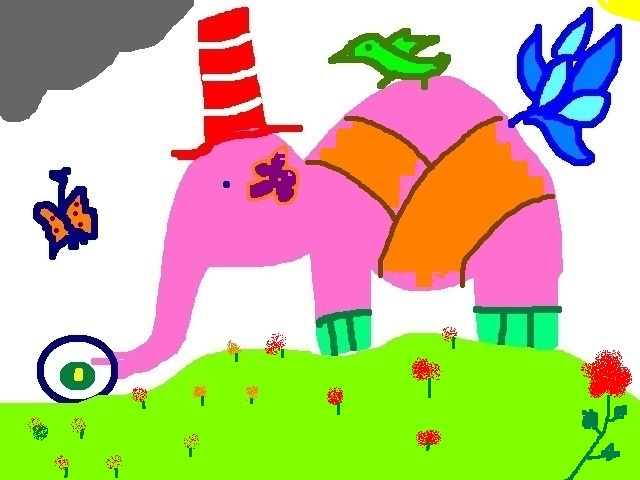
I thought about the favorite tree one though: which one was my favorite tree? Is it the oak tree that I plonked my satchel under every day in school, or the flowering jacaranda trees under which we had steaming hot cups of tea with friends, or the tall eucalyptus tree that edged our street towering majestically against the skies signaling home was nearby, or the fir & pine trees that contributed to many an amateur flower arrangement lending beauty and joy to the surroundings, or the willow that made one want to relax just by its shape and allure, or the gingko tree that makes me smile on a evening walk, or the oleander trees that sag with flowers in the summer, or the fruit trees in my backyard that are so hospitable to squirrels ,or the redwood trees that urge me to be like them: strong, resilient and upright, or the curious, curvy bristlecone trees that remind me they are older than our oldest myths, or the pine tree with an elephant head that reminds me of the time the son as a toddler tried to fit his understanding of Physics into Myth?


It was a tough question and I told them so. The son scenting a ‘wild’ story from his childhood asked for the story, and I mock-sighed before telling him:

“One day a couple of years ago, when you were very much a toddler, and had just started attending a preschool, you picked up a book from the library about Lord Ganesha. You were thrilled with the find because Indian mythology is hardly found in the libraries in America, right? Lord Ganesha Curses The Moon – was the title. Appa and you settled down to read together at night.

Anyway, so, remember the story? It went something like this:

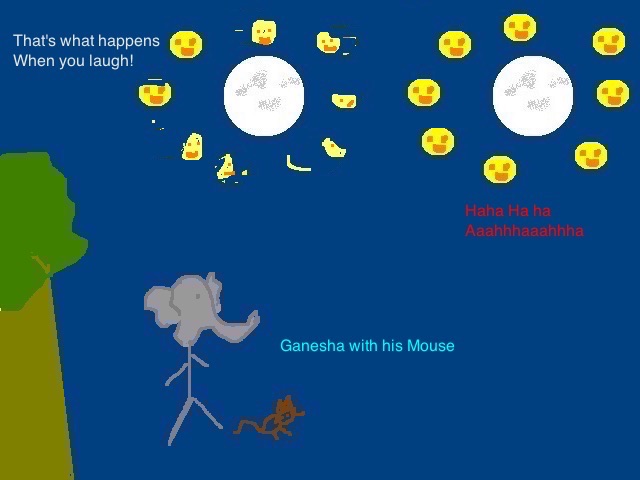
The moon used to beam as a full moon every night. One day, the moon laughed at Lord Ganesha when he tripped and fell in the forest.  Ganesha promptly got angry at the moon, and cursed it into oblivion.The whole world plunged into darkness (this was before electric lights remember?). At this, the book painted some gory pictures of the problems faced by the population because it was completely dark. People fell, people bumped into each other, people were robbed. Soon, everyone begged Ganesha to take back his curse. But he couldn’t. His word being law and all that. 

So.

An impasse was reached, and soon the king of Gods, Indra, came to him and asked him to do something about it. Ganesha thought and thought, and finally reached a compromise. He said the moon could grow from no moon to the full moon, and then shrink back again to no moon. That ought to teach him not to laugh at people. The moon agreed, and that is how it remains to this day.

ganesha_moon

After the story, Appa asked you, “What do you think of the story? Do you really think that is what happened?”

You had that serious look on your face as you thought about it, and you said, “Yes, of course. That’s when the moon must have started going around the Earth, and the Earth started spinning, so the moon could grow bigger and smaller.”

“Appa told me what you said later, and ever since I think of that story and remember how you fit your understanding of Physics into that mythological story when I see that fir tree with an elephant head.”

“Did I really do that?” asked the son laughing heartily, and I smiled.

It was true of course. His response had us flabbergasted, for we hardly ever consciously think about how we continually shape our worldly views and understanding. We subtly and subconsciously incorporate the stories we hear, choosing to consider which ones to digest and which ones to leave.

“So, as you see, I cannot only name one favorite tree. I love them all. Just like…”

“We know…. we know! Just like you love us both!”, said the children, and I smiled my favorite smile.