Apollo 11 & Artemis II : Selenophilia

Selenophilia

I moped around one evening. The thing is, as much as I love cloudy days and rainy days, I don’t like them to intersect with full-moon days. It feels like the waxing-full-moon is meant to bathe all of the Earth in its glow, and encourage mooning-about. It is not meant for sighing and trying to see if the moon can finally peek out of the clouds.
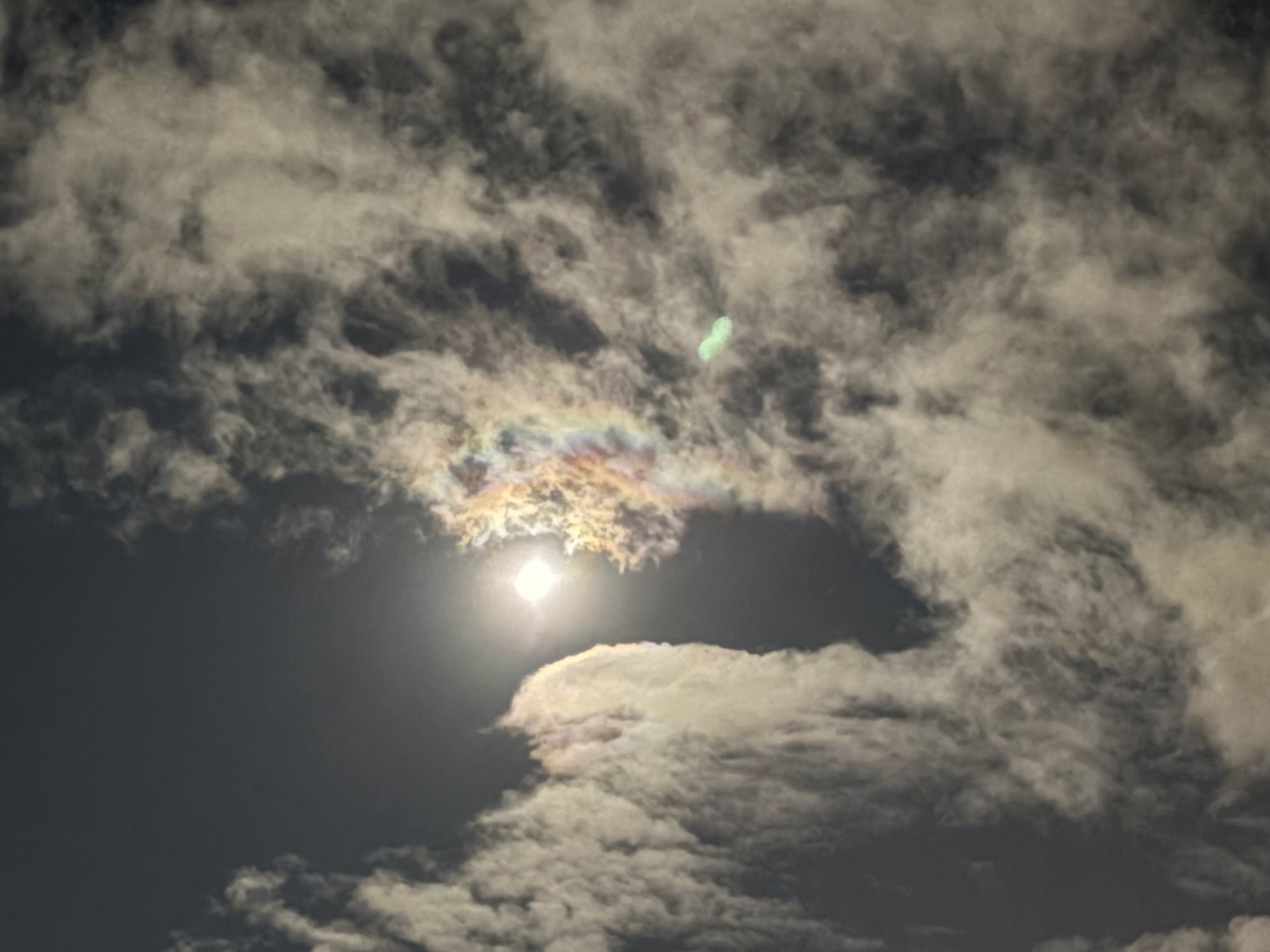
I had not quite realized the thing that was keeping me up that night. I blamed it on the ill-timed coffee, but it could not have been that. Not when I fell asleep moments after the near-full-moon peeked out of the clouds, and I sighed happily at it.

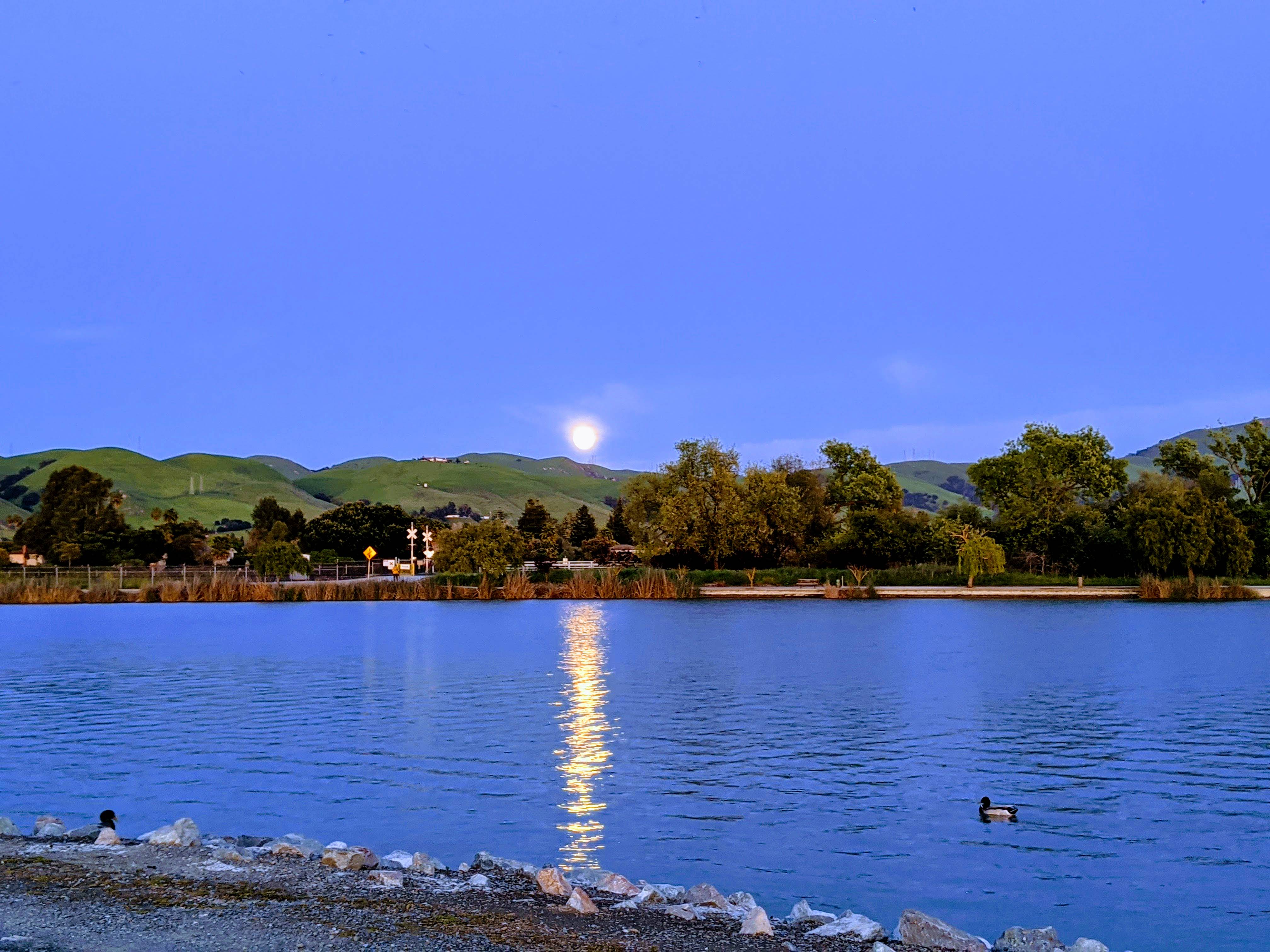
The day after, the moon looked full in the sky, bathing the Earth with its luminous glow. The clouds flitted, but never enough to hide the moon. I took off – after the eternally present tasks that even robots and AI-based beings do not consider worth doing: clearing up and the cleaning up.

“Where’re you going?” “Out!” I said, and ignored the chuckle that followed me out. The golden moon was waiting, and I wanted nothing more than to gaze at it. The word unblemished came to mind, but that does not quite describe the moon, does it? The pockmarks and craters on the moon looked plenty blemished, yet the feeling it invokes in one is unblemished.
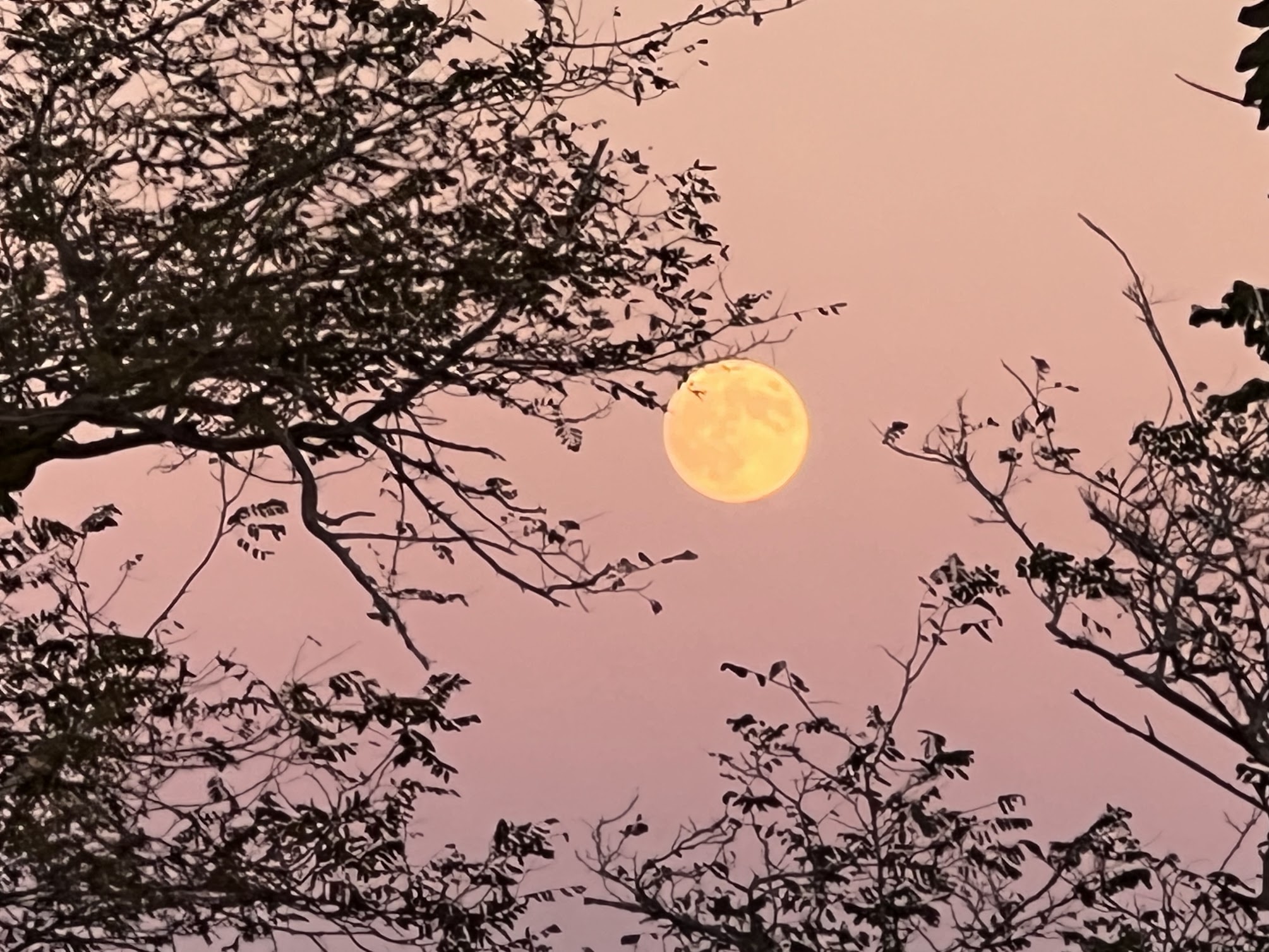
This fascination for our celestial neighbor, Selenophilia, is a beautiful term that is derived from the Greek language, denoting a love of the moon. Meaning for centuries, folks have finished up their chores and headed out to the admire the moon. Hopefully, for centuries more, they will continue to do so.

Apollo & Artemis

The previous day, Artemis II had taken flight into the skies with 3 astronauts aboard: to the other side of the moon. I was in an elementary school classroom introducing books about space travel that day, and I remembered the excitement the discussion about Artemis II had generated. The class sent all the astronauts a fond good luck as they listened to the brief loss in communication with the spaceship. 

That night as I sat gazing at the moon, I thought of the planet watching and praying: united in its excitement as Artemis II left the Earth. Did the Artemis II crew ( Reid WisemanVictor Glover, and Christina Koch, along with Canadian Space Agency astronaut Jeremy Hansen) feel the good vibes? I hope they did. 

Then, I thought of Apollo 11.  The astronauts: Neil Armstrong, Buzz Aldrin, and Michael Collins making the trip almost 3 decades ago. The entire planet fascinated, and enthralled.  Did they feel the companionship of the planet even as they left? The moon itself was in its waxing moon phase that day, and thousands must’ve gazed up that day abuzz with excitement.

Magic of the Moon

There are a few things that humanize us, and the magic of the moon is, I believe firmly, one of them. Something that can evoke wonder, awe, a yearning to attempt great things, set difficult targets, and above all, work together to achieve it, is Magic, isn’t it? 
What Would You Miss Most from Earth If You Went to Space?

Claustrophobia & Agoraphobia

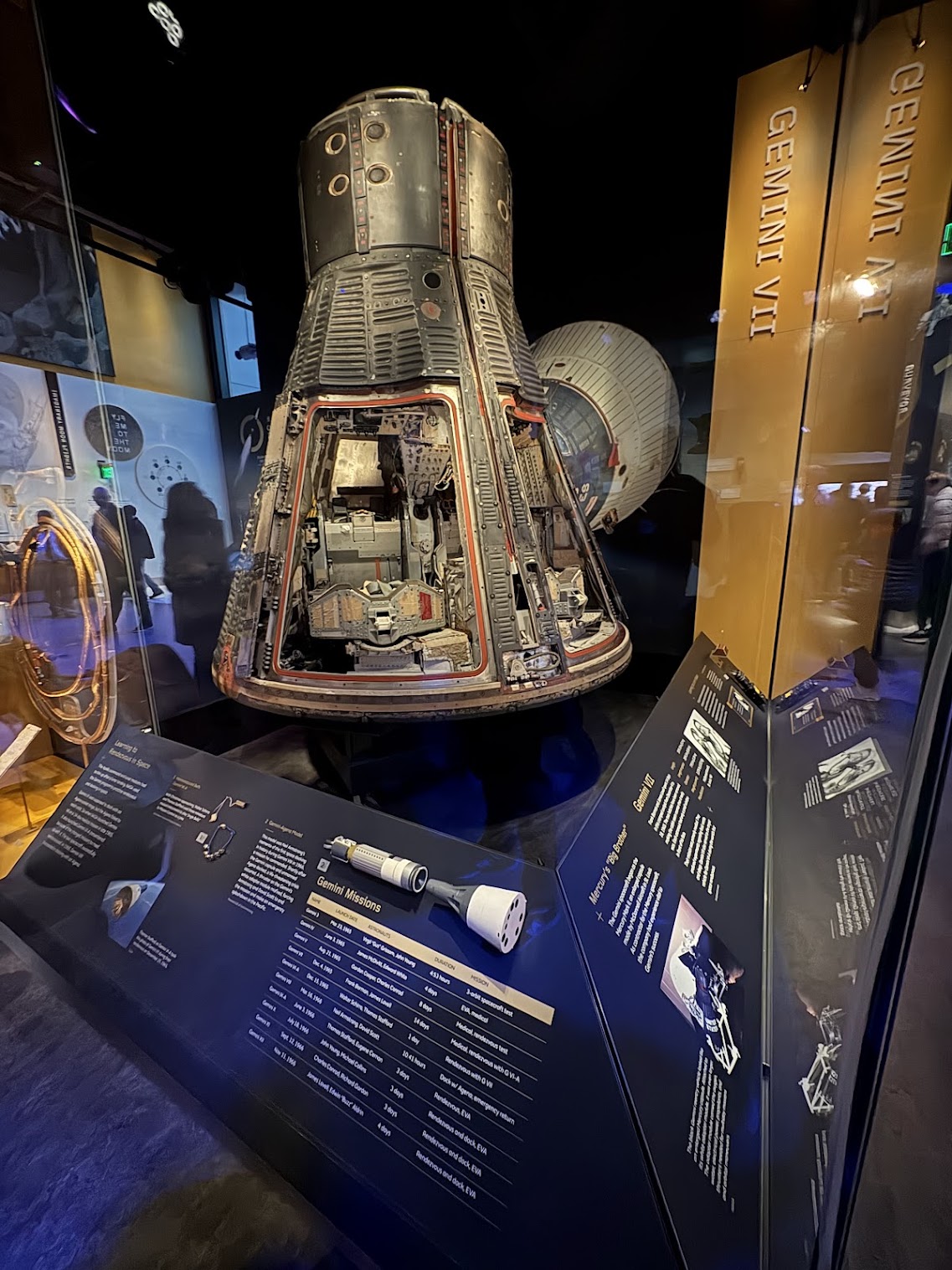
The Smithsonian National Air & Space museum in Washington D C had us wrapped in its wings. The son was thrilled. We’d started off at the original model of Wright brothers’ air glider, and then steadily moved on from one exhibit to another. When finally, we stood in the moon (‘Destination Moon’) exhibit, I glanced over at the son to see that familiar look of awe in his face – it had been flitting in and out at almost every section in the museum. 

I peered into the Apollo 11 Mission Control capsule on display and wondered yet again, how is it that astronauts deal with the immensely crushing feeling of cramped space in a space capsule. It seems alright, manageable even for a short day or two. But nothing these astronauts undertake seems to be in days – they all seem to stretch on and on. Weeks, months, years – when everything you want to get to, is measured in light years, how can we hope for short travels? Peering into the capsule again, it seems like it could give the most robust of us, claustrophobia.

Then again, I peeked out into the simulated views from the spacecraft. Light years of nothingness with little sparkling diamonds interspersing the views for miles and miles. Charming and beautiful as it looks. After a few days, weeks, months, years, it is enough to give the most optimistic of us agoraphobia.

How must their psyche work with this constant tidal forces of agoraphobia and claustrophobia pushing and pulling all the time?

The Orbital Sunrise – By John Green

I was reminded of the essay, The Orbital Sunrise by John Green in the book,  The Anthropocene Reviewed. It really is a wonderful collection of essays by a nimble, curious mind on a wide range of topics.

He writes of astronaut Scott Kelly’s 342 days spent in space where he experienced approximately 11,000 sunrises. The International Space Station orbits the Earth every 90 minutes. Even in the famous book by Antoine Saint de Exupery, The Little Prince, the imaginary soul occupant of the planet he came from, only enjoyed 44 sunrises a day. Take that, Little Prince!

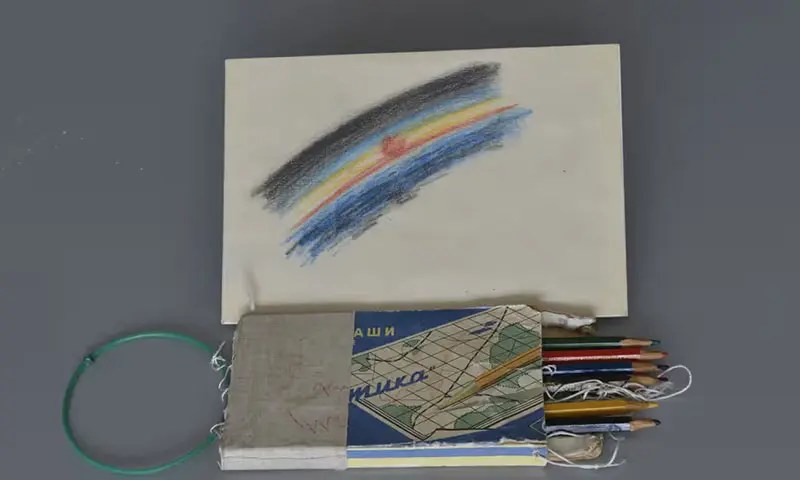
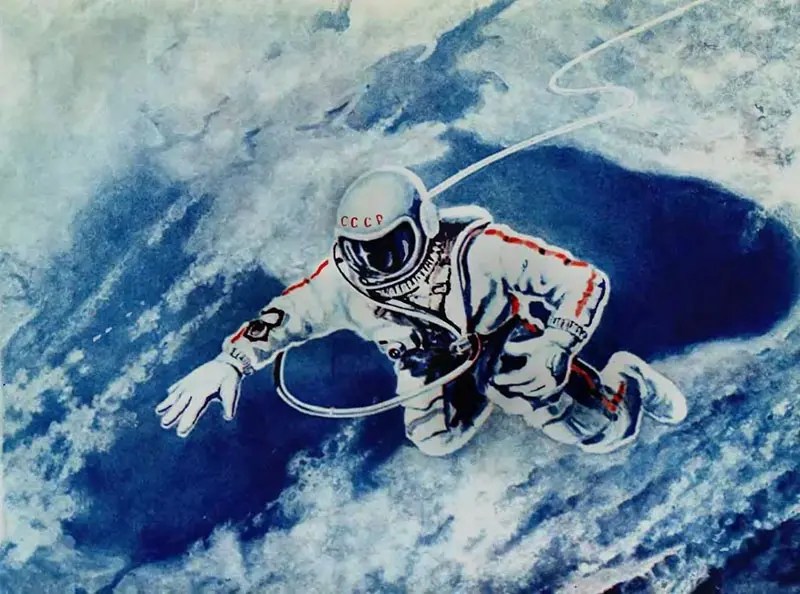
In the same essay he goes onto tell us a little about the misfortunes and luck that enabled us to view the first works of art from space. Alexie Leonov’s space mission aboard the Voskhov 2 holds the record for the first space walk in 1965. The mission itself went woefully wrong, and in a desperate attempt to calm himself, he drew some simple images as they overwhelmed him in space. They can be viewed here.

https://www.lindahall.org/about/news/scientist-of-the-day/alexei-leonov/

“Sunrise” sketched by Alexei Leonov on the Voskhod 2 mission, Mar. 18, 1965, the first work of art made in space, Museum of the Yuri Gagarin Cosmonaut Training Center, Moscow Oblast, Russia, exhibited, with the original pencils used by Leonov, at the Science Museum, London, 2015-16 (theguardian.com)

The sunrise looks like a child’s drawing – a rainbow of colors sandwiched between layers of space’s black, and that right there, for me is the beauty of the piece. Even in that moment of awe, a person with an art pedigree, tapped into his childlike sense of wonder and drew something that miraculously survived a desperate landing that nearly destroyed the space capsule and the astronauts in it.

What would you miss on Earth?

“What would you miss most on this Earth, if you were to leave Earth and live elsewhere?” The son asked me, bringing me back to the Earth, as I mused on this and that. I saw him peering up at the question flashing in front of him as he gazed up at the question on the screen in the Air & Space museum. “My family & friends first, followed by nature itself, I think. But I suppose there will be a different sense of nature on whichever planet we go to.” I said.

“Over the Black Sea,” painting by Alexei Leonov, date and present location unknown (thestatussymbol.com)

He nodded. “Yes – looks like the majority feel that way too.”, he said pointing to the survey results on the screen.

“What about you?” I asked him.

He took his time answering. Then he said, “I think I would like to take you all with me. Then, I will miss Earth’s nature.” I smiled at this response. I distinctly remember the feeling of wanting to take my family & friends if I went very far away, so I wouldn’t miss them. Life did not always work out like our childish wishes, does it?

I knew too that there would be no orbital sunrises in my lifetime for me witness. “I am past the age of astronaut training to go to space and all that. “, I laughed, “But if you do get to see it, remember me for a moment, and I will have the satisfaction of seeing it too.”

He smiled indulgently. “No you won’t! But okay – I’ll think of you.”

With that, we meandered through the exhibit, each wrapped in our own fantasies and thought capsules. How beautiful and marvelous an experience to go to a museum far away and glimpse at a spacecraft that first enabled humankind to fly, and then took mankind to space?

I pondered on the question a lot more. I realized agoraphobia and claustrophobia of space travel aside,  there is so much more to life on this Earth that I would miss:

Art, music, dance, literature, math, science, history, geography, philosophy
Friendship, the exalting and exasperating aspects of the human spirit
Oceans, rivers, lakes, streams
Creatures large and small – manta rays, lions, giraffes, geese, ducks, woodpeckers, wrens, deer
Forests, trees, flowers, vegetables, fruits, canyons, volcanoes 

Most of all: Laughter, Love and all that makes up Life itself.

What about you? What would you miss most about Earth?

Mellow Joys: Strolls in the Moonlight

Mellow Joys

The week-end evening was pleasant after a hot week, I sat relishing the quiet: the especially large magnolia blossom on a tree, the clouds in their pinks, lilacs and greys before they embraced the inky blues of the night, and the gentle breeze through the leaves and waters nearby. It truly was idyllic. 

The long summer days always make me yearn for the different colors of dusk and night. Our home is bright and filled with natural light which is a blessing, but it also means that late risers like Yours Truly do not get to the see the colors of dawn. The days start with light and then go on burning bright with every passing hour. 

Last night, I had time on my hands. I watched the dusk turn to night. A slow stroll through the moonlit streets of our neighborhood made for a different rhythm. There was a mellow joy to it – not boisterous, but buoyant. Moonlight can be tender, but it also can throw everyday objects into harsh contrast. 

Not just our homes but our heavens too

Maybe it was the lackadaisical nature of the stroll – one I rarely permitted myself to do. Brisk walks, phone calls while walking, chatting – they were all absent. I watched a cloud flit over a sinister looking tree, and looked on passively as an owl flew past and perched itself on the very tip of the tree-top. We stood there each surveying the other, and finally, of course, I lost. Can we ever win out against the stillness of predators? 

I heard the sounds of animals scurrying outside – every sense accentuated by the lack of electric light. Even the olfactory senses seemed to be enjoying this – Some flowers that wafted their fragrance only into the night, and I stopped to sniff and smile every so often. 

Out of the corner of my eye, I saw the owl swoop. 

“Our village of Fairacre is no lovelier than many others. We have rats as well as roses in our back gardens…. But at times it is not only home to us but heaven too; and this was just such an occasion.”

Miss Read, Over the Gate: A Novel

Asrais magical in the moonlight

Reluctantly, I headed back into the home, and insisted on switching off all the lights for the rest of the evening. Even when I watched a movie with the windows open, I kept sneaking glances at the moonlight pouring in through the slats in the window. 

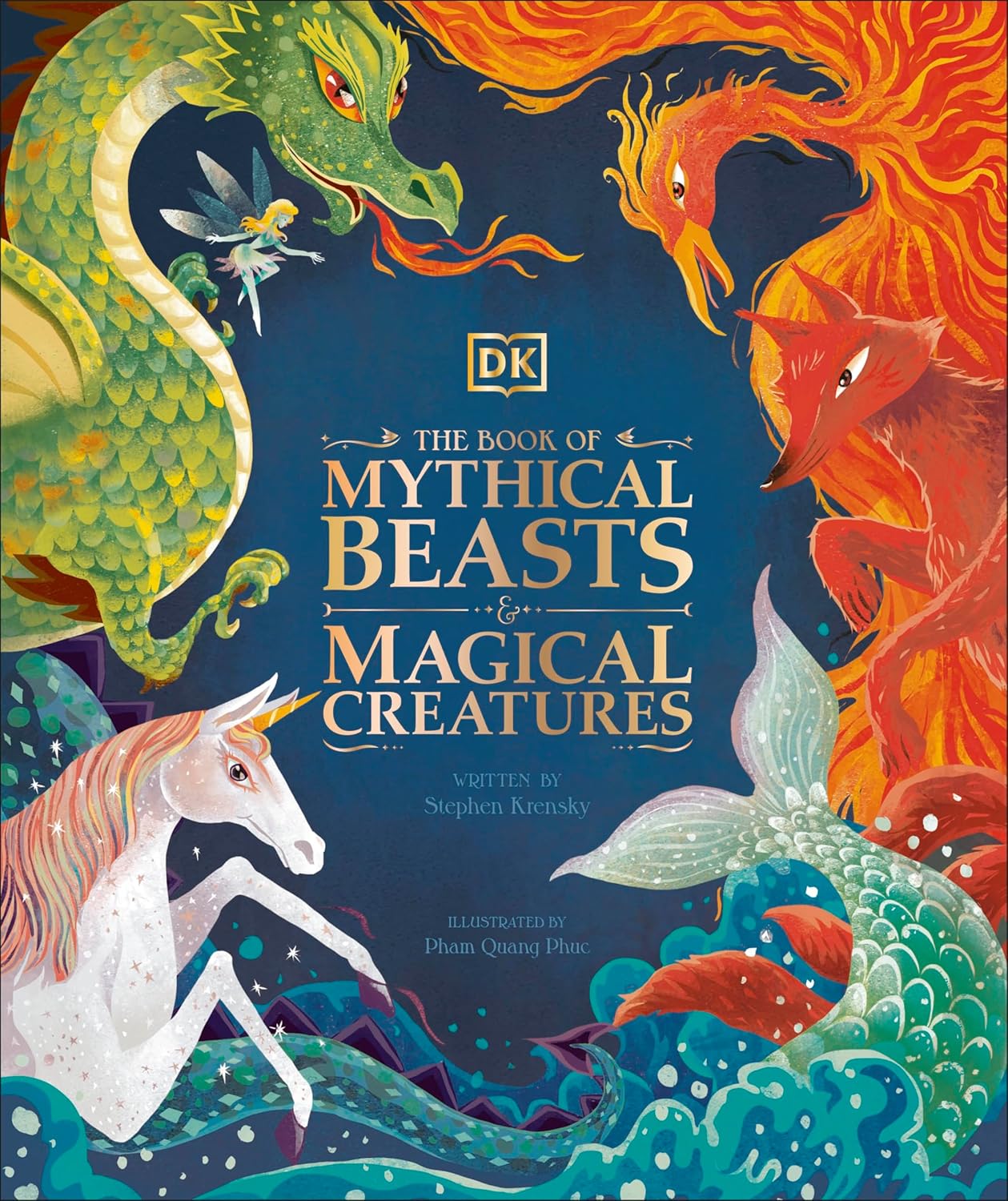
The evening reading fare was equally marvelous. A magical book with fantastic beasts, beautiful illustrations, and oh so much imagination! What a book, Stephen Krensky!

The Book of Mythical Beasts & Magical Creatures – By Stephen Krensky

On the different kinds of fairies, Stephen Krensky has this to say on the Asrai:

Asrai are rare creatures that live in the water and only come to the surface once every hundred years. Asrai grow only by the light of the moon, and if exposed to sunlight, dissolve into the water and are never seen again.

-Stephen Krensky on the Asrai Fairies

When I read about the magical Asrais, I felt it was time now to go to bed and continue the beauty of simply watching the moonlight through the windows. Maybe it had been an evening when an Asrai had come out to the bless the lands. Who knew?

The Significance of Full Moon Names

Mooning About

“Come on! You need a light jacket, but we aren’t going very far.”

“I know we are going to see the moon! But can’t we just for a few minutes and then we can see it from here? Instead of going around the bend, and behind the trees, and through the gap in the houses on that lane?” 

“Yes I know. But if you wait a bit, you’ll see the silver moon, if you come now and dance through everything you just said, we’ll see a golden moon!” I shivered a bit at what was waiting for us at the end of the street. Even though I had just seen it.

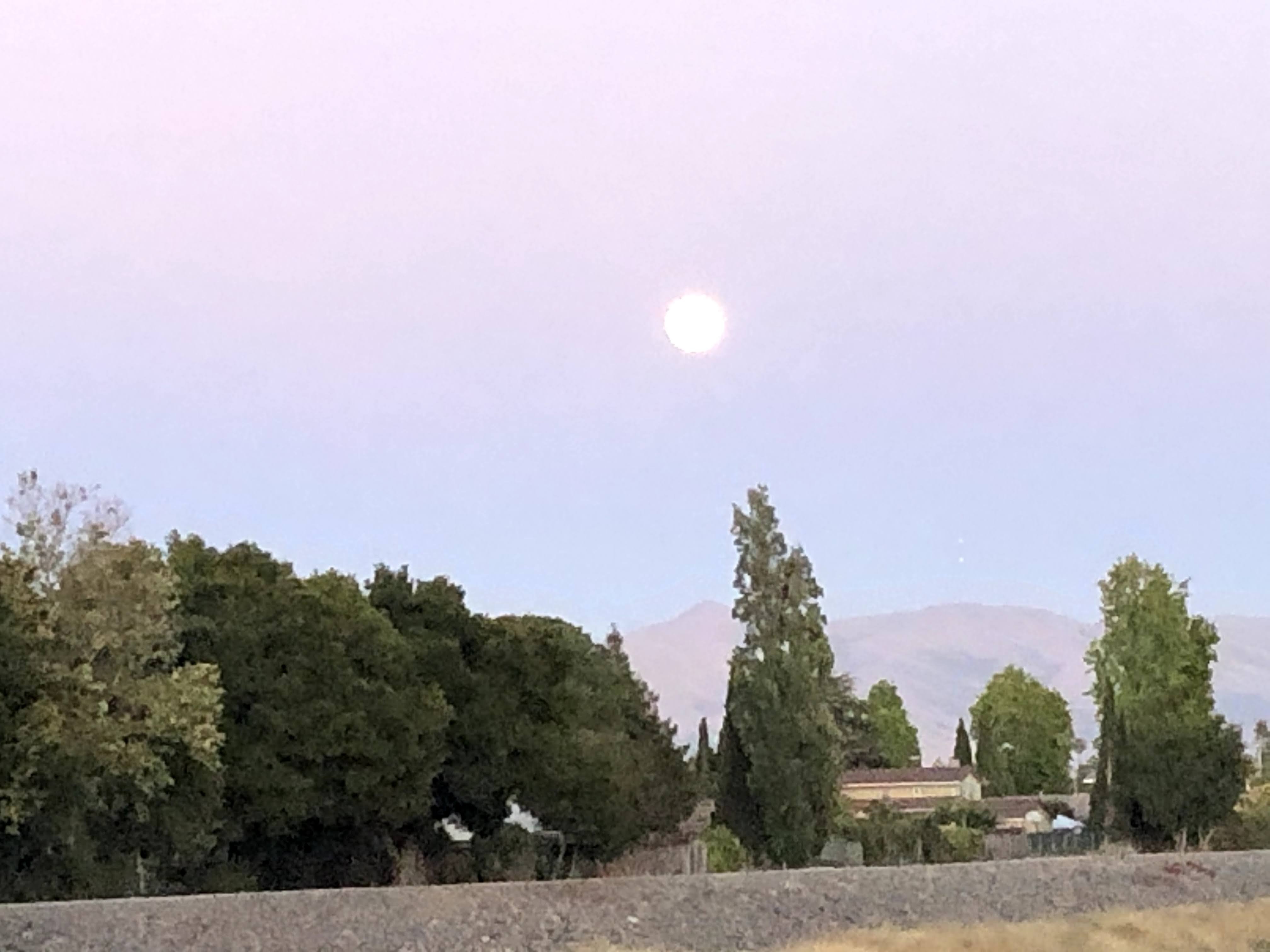
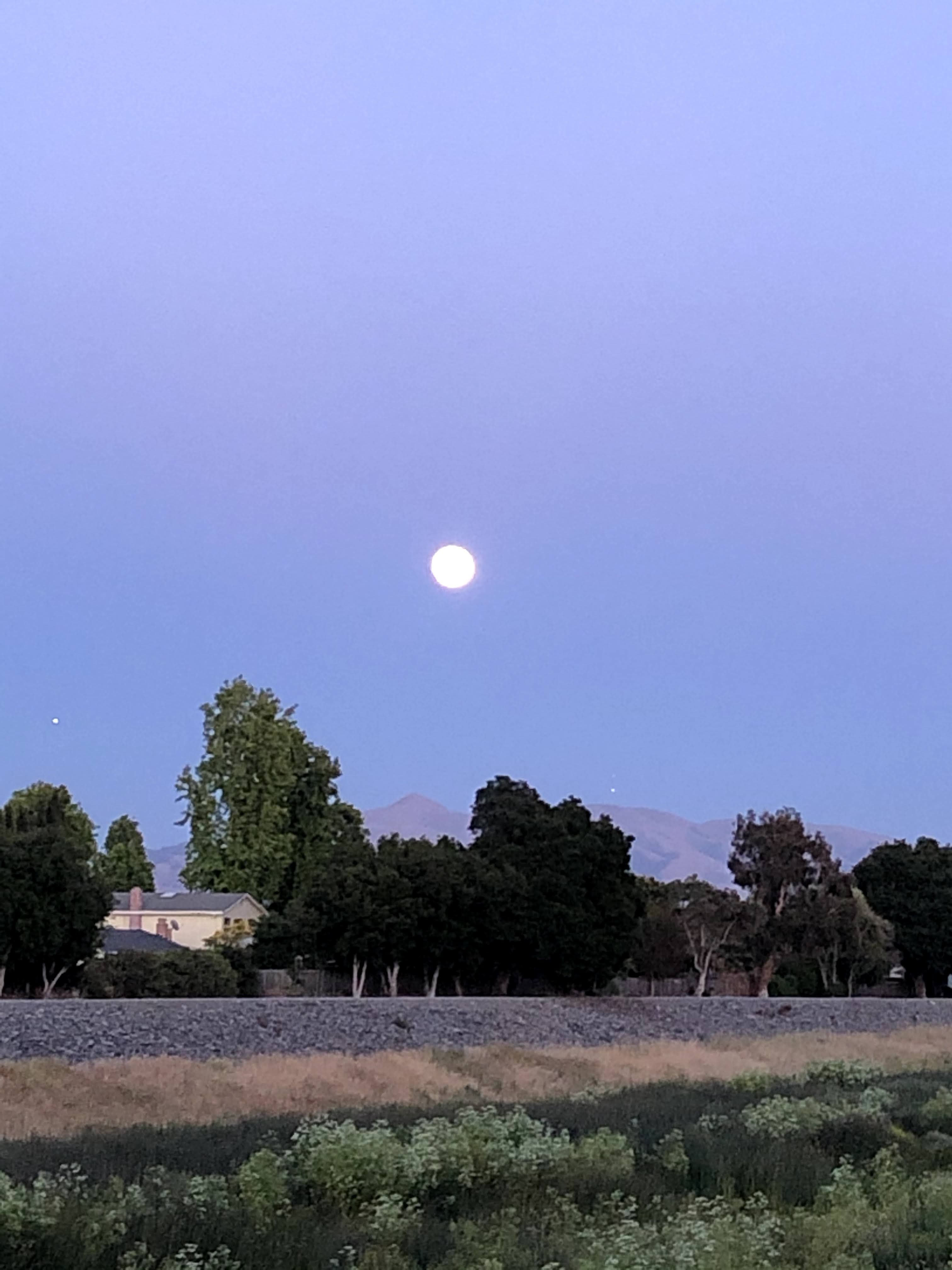
“Oh wow!” the words were yanked out of the son’s mouth before he could stop himself. I understood that feeling. A golden full moon on a cool summer evening is truly mesmerizing. 

We stood there for a few moments just drinking in the magic from the golden moonlight. “Want to go for a short walk just looking at the moon?” I asked, and he nodded, not willing to pull his gaze away from the mystical golden orb. So, we meandered through the streets, our necks upturned towards the magic of the skies instead of looking where we were going. 

We entered the house, shining like full moons ourselves, a few minutes later,  flushed with the cool air and the luminous light of the full moon.

“We’ve been mooning about outside. Get it? Get it?” I said to the husband who had a slightly exasperated look on his face.

Oooo wwww ooooo!

“Oooo wwww ooooo!” Werewolf! Full moon tonight!” I said, and the pair of them rolled their eyes.

But that got me thinking, why was the January full moon called the Wolf Moon and the July full moon called the Buck Moon?

It turns out Gemini is just the thing to ask. So, here you go, fellow selenophiles!

Full Moon Trivia

  • January: Wolf Moon, named for the howling of wolves often heard during this cold month.
  • February: Snow Moon, reflecting the heavy snowfall often associated with this month. 
  • March: Worm Moon, named for the earthworms that emerge as the ground thaws.
  • April: Pink Moon, named for the pink wildflowers that bloom in North America.
  • May: Flower Moon, celebrating the blooming of flowers. 
  • June: Strawberry Moon, marking the time of strawberry harvest. 
  • July: Buck Moon, named for the new antlers that begin to grow on male deer. 
  • August: Sturgeon Moon, named for the sturgeon fish that are most readily caught in the Great Lakes. 
  • September: Corn Moon or Harvest Moon, marking the time of corn harvest and the start of the fall harvest season. 
  • October: Hunter’s Moon, a time for hunting before winter sets in. 
  • November: Beaver Moon, when beavers begin to prepare for winter by building dams.
  • December: Cold Moon, reflecting the cold winter temperatures.

Moons : Worlds of Mystery

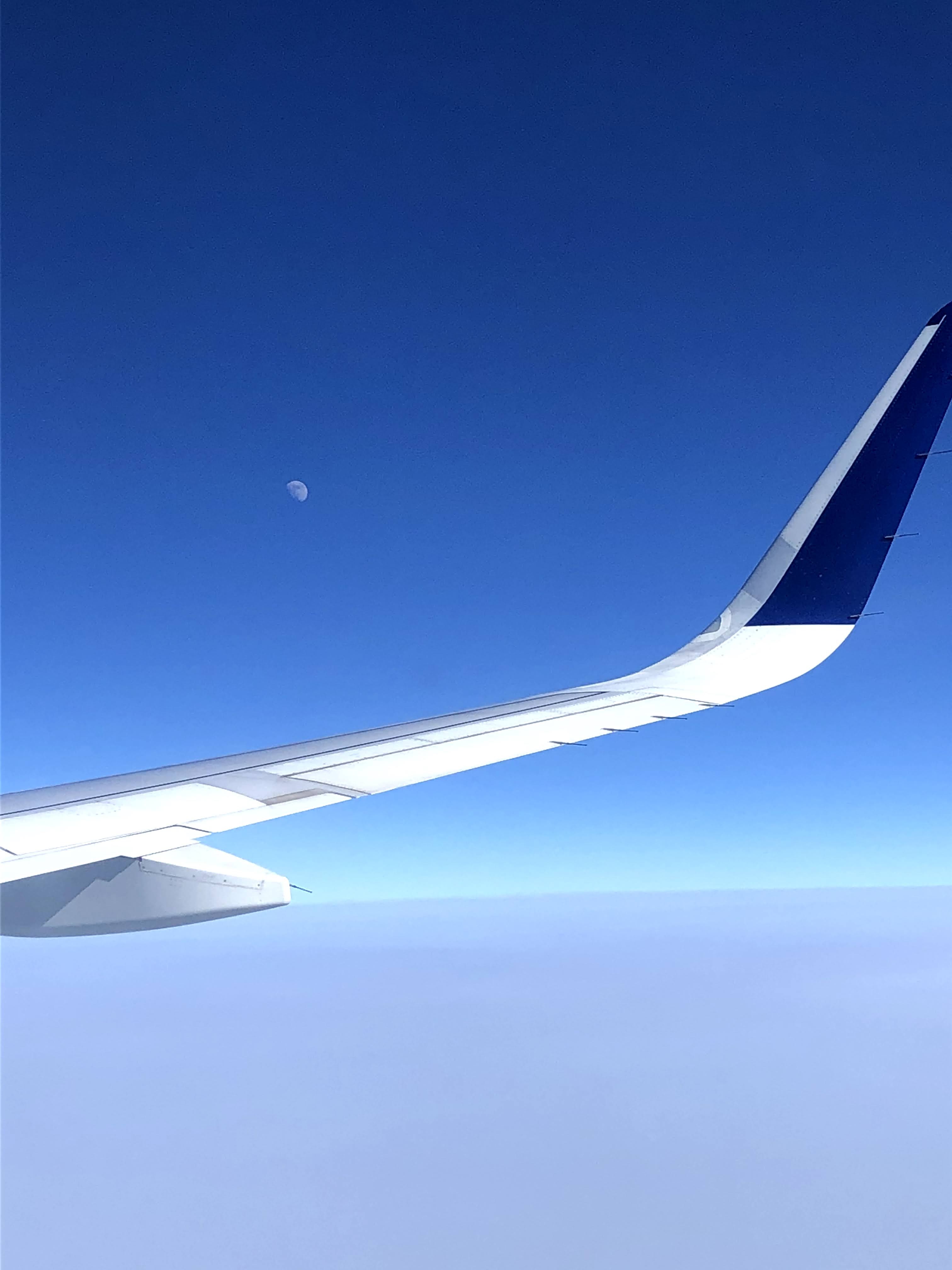
“Aah…..see…see the moon!” I said. The moon had risen alongside our flight wing on the way to Boston, and the son and I were enamored by it. We usually are. The daughter ensconced on a different row from us on the flight gave me a carefully controlled eye-roll. Love for her mother tussled against the desire to show that the crazy moon lady was her mother, and she went in for a I-may-know-her-vaguely-as-an-acquaintance stance. I beamed and smiled as only a mother could. Luckily, the mask hid the genuine full-moon nature of the smile for the time-being.

The moon has long fascinated all creatures I think. I take long walks by the river and lake in our hometown during the waxing moon season, and wonder about how the beautiful creatures of the land perceive it. The deer, coyotes, water-rats, pelicans, fish, manta-rays, octopi, geese, ravens and hawks. Do they notice and set their little rituals by it, or is it something human-beings rave over?

It wasn’t till the pandemic that I noticed the timing of the moon rising and setting. The waxing season giving us unexpectedly delightful glances of our lovely sole cosmic neighbor, while the waning cycle going for days without seeing our delightful companion. No wonder, songs have been written about, the magic of moon-drops milked by fantastical thinkers, and lovers for centuries gazing and strolling in the moonlight.

The next day, I was pointing to the pale gibbous moon that was visible between the towering buildings of Boston downtown. 

“Ma! Would you stop it with the moon? The moon comes everyday, and is the same!” Said the teenaged daughter, who despite (or may be because of) my nature-kookiness remains cautiously apathetic to it. Could have been Toni Morrison’s best pal the way she ignores the phenomenon. 

“How many ways can you describe the sky and the moon?” —Toni Morrison

The son, like me, though, raves and pulsates with the cosmos – the moon, stars and planets excite him to no end. The next day, the husband had a surprise in store for him. We had planned a day at the Boston Science Museum, but the crowning glory came with the planetarium show focusing on the Moons of the Solar System – Moons – Worlds of Mystery

The show was spectacular. Starting with our very own Moon, it goes on to explore the moons of Jupiter, Saturn, Mars and Pluto. How every planets close cosmic neighbors were formed to the exciting possibility that some of them could harbor life in its watery oceans, and icy surfaces, it was a show that appealed to his every being. If ever a being was made of stars, there he was! When the camera plunged into Enceladus and Titan, he quavered, and the seat shook.

The pair of us headed out after the show, subconsciously scanning the skies for the near full-moon over the Bostonian skies, while the daughter conceded the magic of the moon and its strange pull on us. If it was a tonic to us, then so be it.

Books:

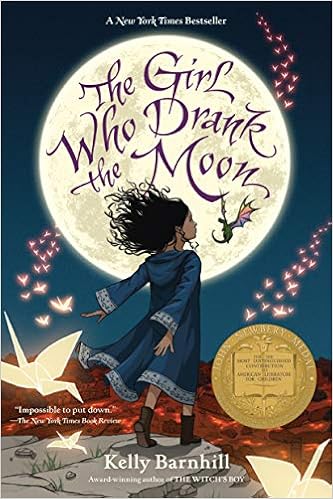
  • The Girl Who Drank the Moon – By Kelly Barnhill
  • The Edge of the Sea – by Rachel Carson
  • Cosmos – shows by Neil DeGrasse Tyson & Carl Sagan

The Moon Periodically Enchants Us

It was only fitting that the full lunar eclipse of Wednesday was best visible from the little cosmologist’s room window.

I walked into the son’s room to wish him good night. There he was, lying down on his tummy in his pajamas, his face cupped in both his hands staring at the periodic table poster and glancing at the moonlight shining outside. 

He looked up at me, and said, “Isn’t it amazing how many elements there are? I think I can sing the periodic table song till the second row.” And then, of course, he proceeded to sing it. We talked about the elements and how they found each one. 

The periodic table game is an enchanting one. Which letters don’t have an element? Are there many more elements in the universe that we didn’t yet know about. I mean they found Lawrencium etc pretty recently didn’t they? 

Reminded me of the book, Uncle Tungsten by Oliver Sacks in which he talks of his obsession with the periodic table. 

“The periodic table was incredibly beautiful, the most beautiful thing I had ever seen. I could never adequately analyze what I meant here by beauty – simplicity? coherence? rhythm? inevitability? Or perhaps it was the symmetry, the comprehensiveness of every element firmly locked into its place, with no gaps, no exceptions, everything implying everything else.” 

Oliver Sacks, Uncle Tungsten, Memories of a Chemical Boyhood
Uncle Tungsten: Memories of a Chemical Boyhood by [Oliver  Sacks]

We sat there wondering whether our beautiful moon itself has other elements, or essentially those of the Earth. Fascinating questions to engage the mind on a beautiful full moon night. 

I knew he would be equally thrilled about an adventure in space that was to take place early the next morning, and told him about it. A full lunar eclipse my boy! Can you imagine that?

“…We ourselves were made of the very same elements as composed the sun and stars, that some of my atoms might once have been in a distant star. But it frightened me too, made me feel that my atoms were only on loan and might fly apart at any time, fly away like the fine talcum powder I saw in the bathroom.” 

Oliver Sacks, Uncle Tungsten

Almost immediately, he said, “Okay Google! Set an alarm for 4 a.m.”

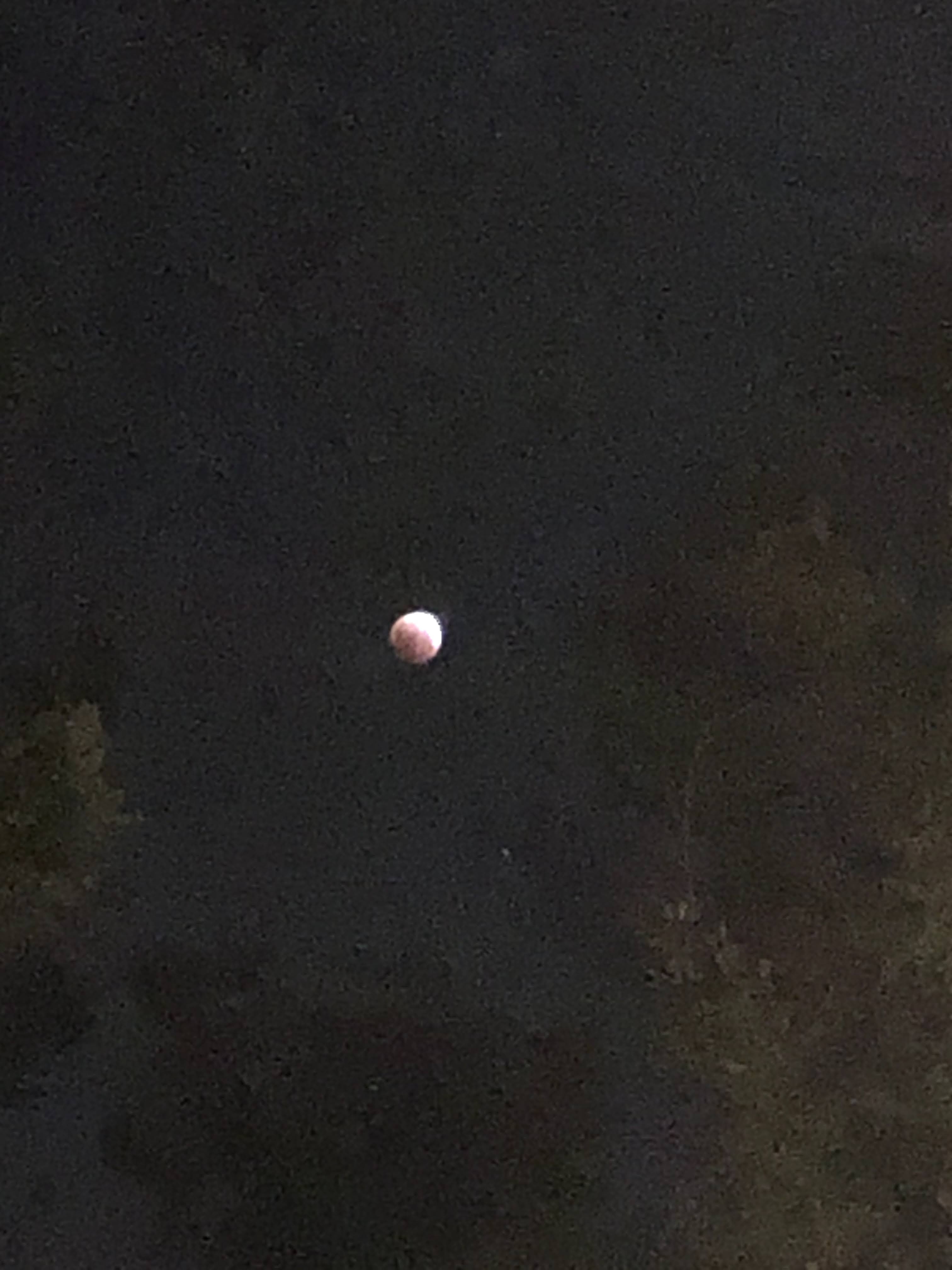
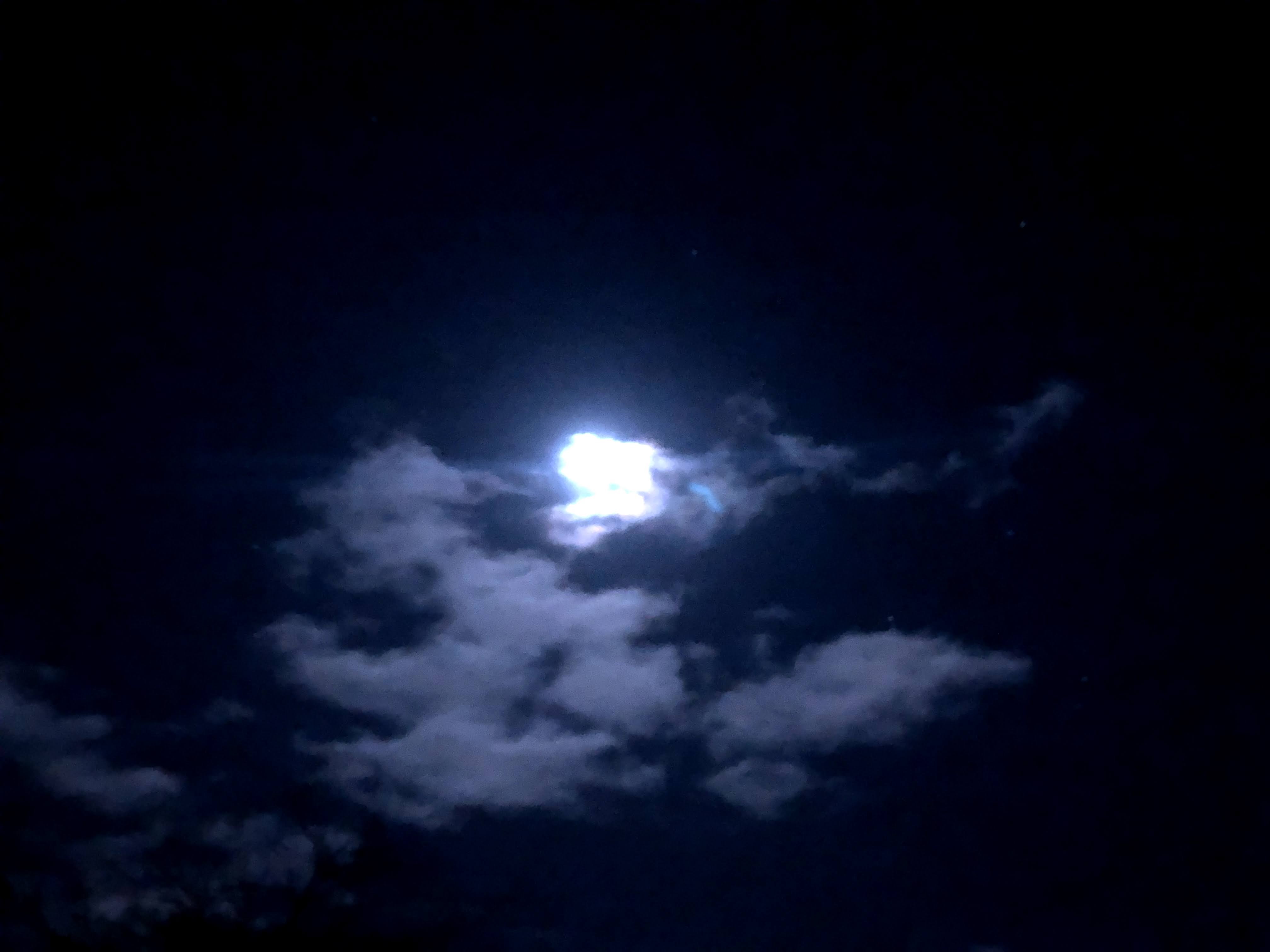
The next morning, I snoozed my alarm titled ‘Moon Magic’ at 4 a.m., and was wondering whether to pull myself out of bed, when I heard the son bustling about. He tugged us all downstairs and we stood there in the courtyard in front of our home gazing at the beautiful red moon – a giant golden orb that huge low in the sky had morphed into a silver ball of luminescence and was now a red rock suspended in mid-air. If this wasn’t magic, I don’t know what is.

The husband went into the home after a few moments – we were slightly cold, but stood mesmerized by the slow show being put up for us by the cosmos. The husband called in a few seconds, and said to the son, “By the way, the best view is from your room!” We raced up to his room, and gazed outside the window. True enough. It was the best view. Snuggled up in his warm comforter, sipping hot cocoa, I left the fellow to gaze and dream on as the silvery moon emerged from earth’s shadow. 

The eternal magic of light combining with the structural elements of the earth and moon make for a magical night indeed. 

Worries & Worm Moons

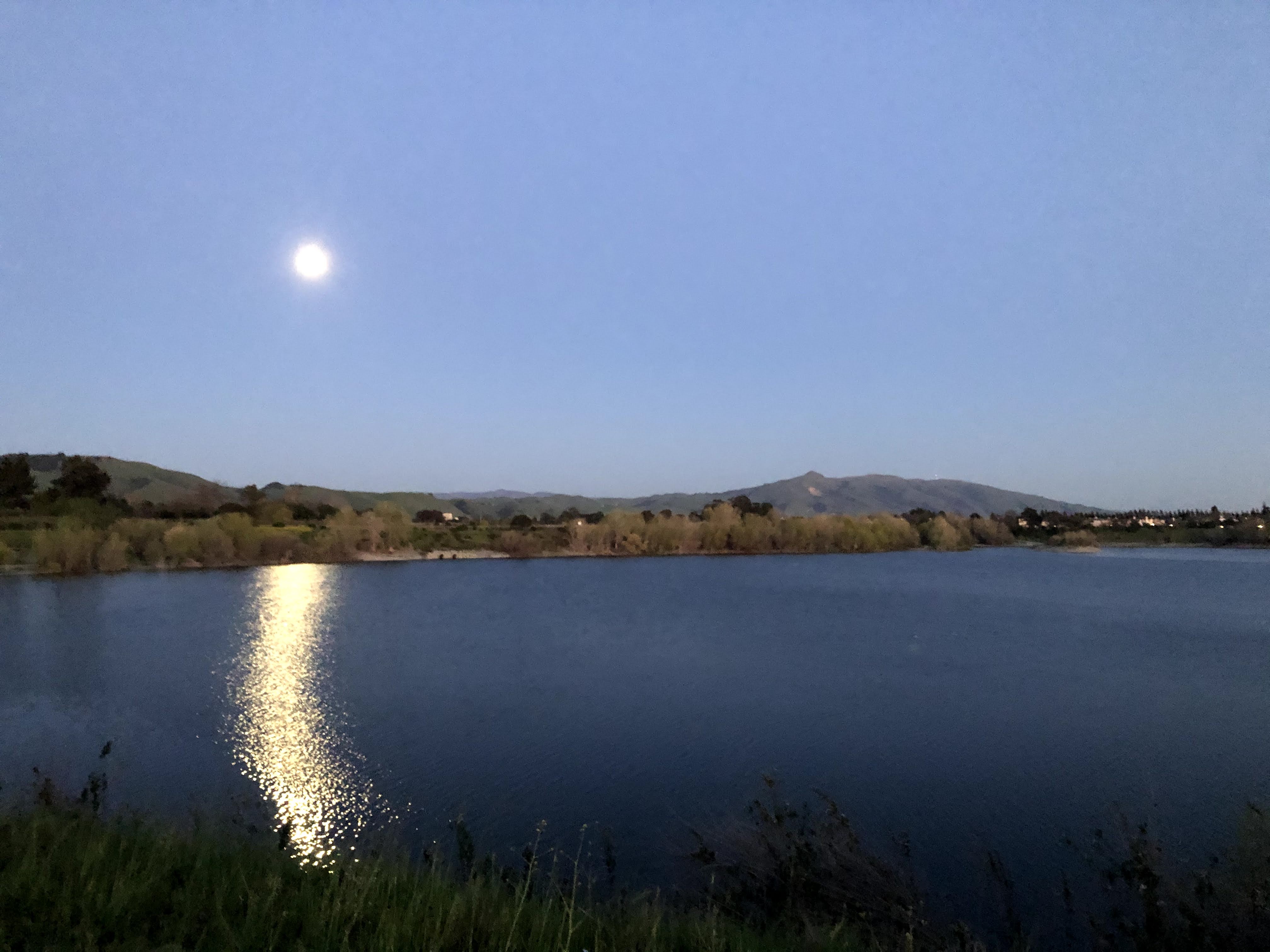
The evening was a gentle spring one. My friends and I walked on into the evening, as the full moon rose in splendor on one side, while the sun set with elegance on the opposite side. The Worm Moon, as the full moon in March is called, was exceedingly beautiful against the spring evening as we walked on.

Though this time of year seems to signal that all is well with the world, there are spots in the trying world as we make our way through it. Life is full and with a full life comes a good helping of worries. We walked on swapping tales and confiding the worries of life that seem ubiquitous.

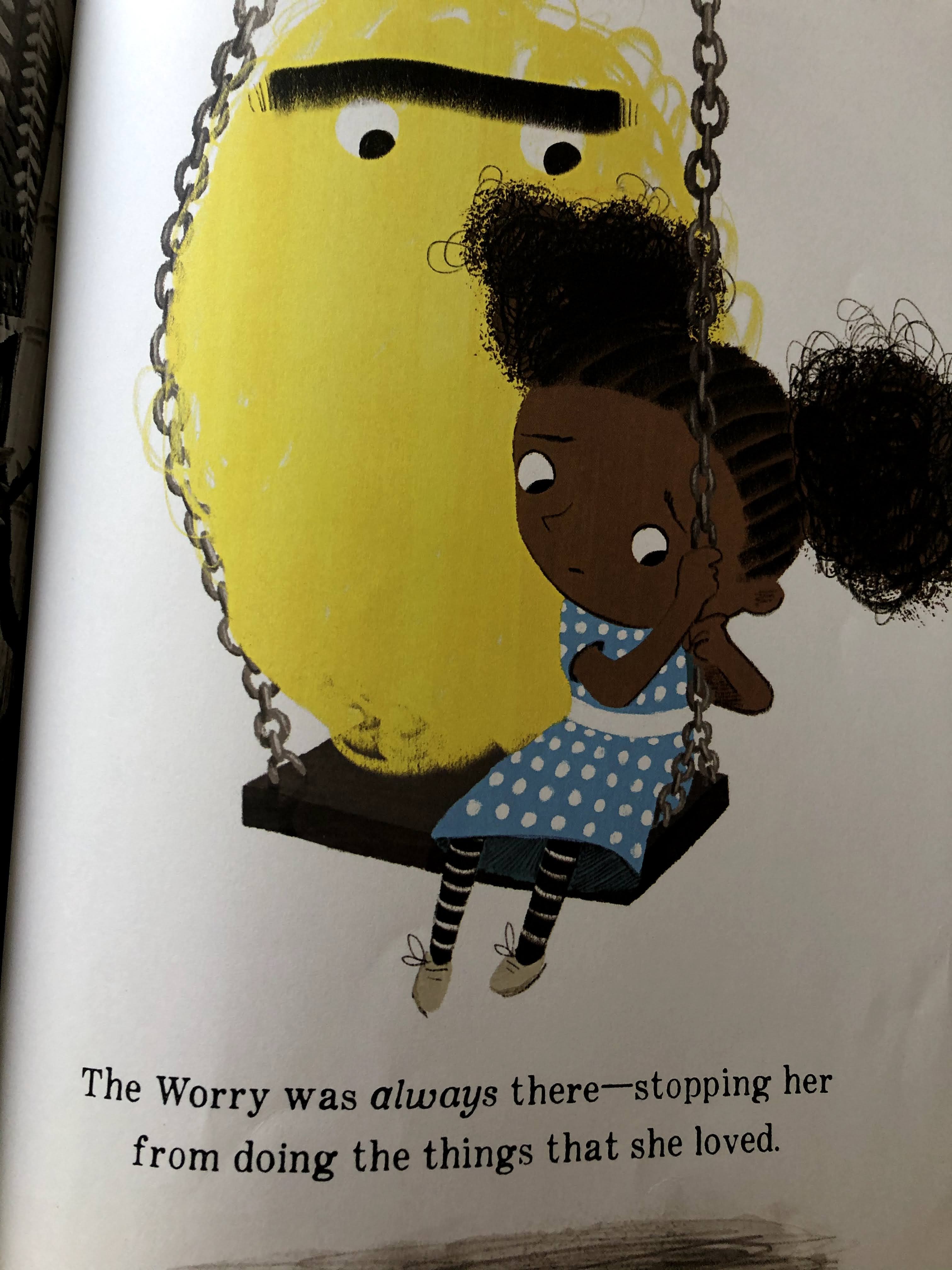
Somehow, the worries seem to reduce in size in the shared experience of it all. Just in the acknowledgement of it. It reminded me of the marvelous children’s book, Ruby Finds a Worry by Tom Percival.

In the book, Ruby is a happy child who loved to explore and be herself. 

Until one day when she finds a worry. 

img_1727

The book talks beautifully about the concept. How the worry stays with her, and seems to grow in presence and size though no one was able to see it. It was there with her in the classroom, on the swing, and even occupied half the school bus. 

img_1728

It is a beautifully pictured concept with the worry inching in everywhere till poor Ruby is unable to be happy at all.

Then, one evening at the park, she finds a boy sitting alone and a worry looming over him. She goes over and they share their worries and talk about it.

“As the words tumbled out, Ruby’s Worry began to shrink until it was barely there at all.

Soon, both of their Worries were gone!”

It is a simple tale of friendship and worries shared, and yet the book captures it all in so beautiful a manner. You wonder and marvel yet again at the profundity of childrens’ books. 

img_1730

That evening as the worm moon rose and sprinkled its silvery little sparkles over the lakeside, the same thing seemed to be happening to us in real life too. To nature, peace and friendship whispered the evening.

P.S: March Moon is also known by various names: Eagle Moon, Sugar Moon, Wind Strong Moon or even the Lenten Moon.

Article here: Full Moon in March

img_1711

The Pandemic Year

“Why don’t you pick out a children’s book from the ones stacked there?” I said nodding at the pile from the library.

The son picked out Our Great Big Backyard for us to read together. Written by Laura Bush and Jenna Bush Hager, and illustrated by Jaqueline Rogers, the book extols the beauty of the natural world around us. It is about a girl, Jane whose family takes a wonderful road trip across the United States making several stops along the way at the magnificent national parks. Jane is very reluctant at first, and fights with her brother missing her friends back home initially. But as the family makes their way from Everglades National Park in Florida to Yosemite National Park in California, Jane’s appreciation of the natural world expands.  She cannot wait to share the wonders of the natural world with her friends back home in their own backyard.

“Can you imagine last year this time, we were traveling all over the world?” I said, expressing shock at how soon our world changed for the n-th time since Covid-19 started

It was true. I had made several trips back to back in December 2019, and early January 2020. I remember feeling unmoored from Earth, somewhat dizzy in my speed of movement around the globe, and had felt a strange sense of being connected to the earth when I saw the spider’s web glinting in the winter dewdrops after the hours of flying. (I call it Tao)

It is a whole year since the World Health Organization declared Covid-19 a pandemic. A year in which some people adjusted admirably to their changed circumstances, while many others found it much harder.  Life everywhere was shaken out of its steady state. 

The past year was the year in which we morbidly looked at the death rates on a daily basis, and adjusted to losses of family members, and friends to Covid-19. It was also the year in which humanity astounded us by developing a vaccine before the year was out

The vaccines are being rolled out to older populations and front-line workers, teachers etc. While there are variants of the virus, there is already talk of returning to work, normal functioning etc. Many schools have resumed in-person instructions. 

This past year, Covid-19 has made everyone take pause and tread slower. Travel plans are seldom made, and even then, hopefully, are made considering crowds, infection and exposure. Most folks I know have turned an appreciative eye to what lies close by though. How many years the trees near us have had the same flowering in spring and fall, only to be barely noticed by us? Yet these past few months, the enjoyment of it has been greater. 

I feel like a renewed appreciation for Thoreau as he observed the intricacies of nature in Walden Pond. For this long, I hadn’t noticed how the moon rises later and later during the waning period, and earlier and earlier during the waxing period. (Or just the changes in when we see the moon) 

Full Moon Rising – March 2020

The Spring equinox means the days are getting longer, the cherry blossoms are in full bloom, and the leaves are sprouting everywhere. I remember one night when I was wakened by the sound of the pelting rain. I watched the rain for sometime, but wascompletely awed the next day, for the rains had ushered in the leaves on the trees overnight. I swayed around the trees wondering how  it would have been to watch the leaves grow overnight. 

Like Jane, the protagonist in Our Great Big Backyard , many of us realized, maybe for the first time, the many wonders of the natural world around us. 

As the vaccines are rolled out, and life limps back to normal, I hope we put the trying period behind us, but also remember the good things of this phase. The CDC announced that those who have been vaccinated can now gather indoors safely.

The Girl Who Drank The Moon

I was dawdling one evening. Quite uncharacteristically I might add. For the evening walks I go on are brisk and filled with purpose: I focus on getting the day’s stresses out of my head and to appreciate the larger world around us. I arrive after these walks, therefore, a trifle breathless maybe, but mostly refreshed in mind and spirit. 

“Are you tired?”, asked a solicitous neighbor. 

I smiled and said truthfully that I had been very tired when I set out on the walk, and after briskly taking in the sights, was now rejuvenating myself in the magic of the moonlight. “Moon-Bathing!” I called it, and she gave me an indulgent smile knowing my leaning towards nature.

Sometimes, all it takes is a peek of the waxing moon, or the brilliant hues of the setting sun, or the clouds in the skies painting a thousand pictures for us, or a hummingbird flying in the light of dusk, or geese flying overhead with the light of the moon on their wings never failing to remind me of the beautiful song in The Sound of Music : These are a few of my favorite things.

All good things are wild and free. – Thoreau

IMG_1157-COLLAGE

Other times, it is inordinately hard. I find it very hard to leave the village behind as Thoreau says. 

“I am alarmed when it happens that I have walked a mile into the woods bodily, without getting there in spirit.”  – Henry David Thoreau

I feel the Earth works doubly hard at these times. Always granting a little something extra by the end of it all to make up for the time lost in thought and worry. The wintry evenings of the past few days have been working hard at setting my mind at ease and helping the stresses of the day take flight into the unknown tendrils of the night. Lost in space, till I can grab newer positive strands from the cosmos and replace them consciously.

That evening that I was dawdling, had been one of these evenings. The light of the full moon shone through the clear dark skies, and I felt the strength of its benign light seep into my very being. The wintry skies have the magic of starlight, but the days when the moon is also at play, the nights feel vibrant with possibilities and magic.

img_1175

Maybe I was feeling poetic because of all the beautiful poetry in the book I had just finished reading. For those of you wanting a strong dose of magic, I strongly recommend The Girl Who Drank The Moon by Kelly Barnhill.  

“The heart is built of starlight 

And time.

A pinprick of longing lost in the dark.

An unbroken chord linking the Infinite to the Infinite.

My heart wishes upon your heart and the wish is granted.

Meanwhile the world spins.

Meanwhile the universe expands.

Meanwhile the mystery of love reveals itself,

again and again, in the mystery of you.

I have gone.

I will return.

Glerk” 

Kelly Barnhill, The Girl Who Drank the Moon

It maybe because of the waxing and waning of the moon, and the fact that we have only one moon, the sheer delight of catching a glimpse of its benign light in the evening skies is magic enough. The son, as regular readers knows, is a cosmologist and a curious wonderer at heart. One night, when he was a toddler, he asked me, “Imagine how it must be to take a walk on Jupiter, and you look up and see 64 moons in the sky.

Note: Jupiter has 79 known moons, and more are being discovered.

I suppose the magic of that sort of walk must be exemplified, but for now, I am grateful for a peaceful Earthly existence, with the ability to gaze and gain peace with the one moon we do have.

The Secret of the Wings

So many days in the past few weeks, I have tried desperately to snatch a moment here, and a moment there, in the midst of hectic, crowding days of meetings, expectations and deadlines. Sometimes, I peek out of the window in the precious moments between ‘Leave meeting’ and ‘Join meeting’ to catch a glimpse of the beautiful November days with its soft sunshine through the yellowing leaves, each leaf 🍁🍃🍂 taking its chance to show its beauty to the world in a grand flourish before it lets go. The evenings are dark by the time the little tiles on my meetings are gone, and I clutch my coat about me as I stare at the tiny ✨ dots lighting up the night sky instead. 

So, we went:  before the crowds hit the mountain resort for the Thanksgiving holidays, the husband worked his magic and found us a little house that was free for a couple of days only. 

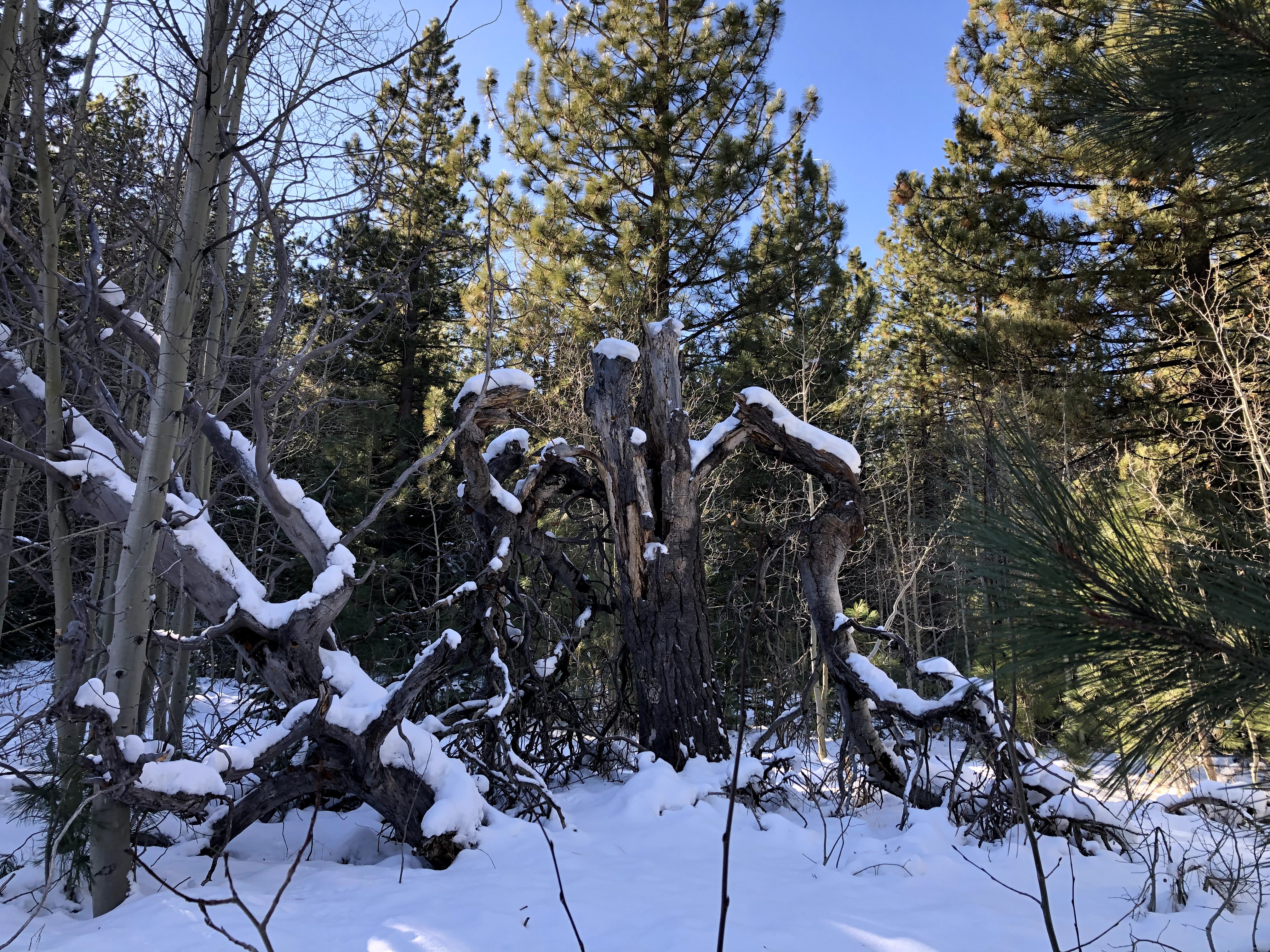
All of the Californian plains that we traversed for the 100 odd miles was bursting forth with fall colors. The reds were particularly fetching against the browning hills. Traffic was very light, and as we started climbing the Sierra Nevada mountains, a nippiness crept into the air. It is the lunar waxing phase, and the moon was out early in the afternoon keeping us company as we climbed the mountains. The fall colors gave way to the snowy reaches, and soon, it was apparent that here, it was no longer Fall. Here it was Winter.

tink_periwinkle

The journey reminded me of the scene in the Tinker Bell movie where the warm fairies peek into the winter lands. The orange, yellow and the brilliant reds slowly gave way to evergreens and a world blanketed in snow. There is nothing half as marvelous as a sunny day with wispy clouds against the azure skies and a snowy backdrop. This was winter wonderland alright. 

Mulish as I was, I took off on a walk as soon as we reached our destination. I huffed and puffed up the steep hills, my lack of exercise clearly showing in the panting under the mask. I was grateful for the mask for it held the warmth of my breath in as I walked on towards the snowy reaches affording a view of the vast Lake Tahoe from up above. The moon twinkled its milky light on the snowy  reaches below, and I stopped here and there to take a picture. I remembered reading in The Sea Around Us that some of our ancestors thought the moon was made up of ice (it was a much older notion of course). It was an appealing theory – standing there in the light of the moon, with the thin glint of the snow light all about me, I could imagine how our ancestors came up with that one. 

I like to see how we made leaps in understanding, and I feel the joy of every discovery almost anew as I gain even a little understanding deeper than before. One of the things that still astounds me is the spatial intelligence required to figure out our position in the cosmos. I watch the constellations change their positions in the sky every night, I notice the moon at a different place and time, and yet, every time, I marvel at the leap of understanding for mankind. 

Read: The Man Who Deciphered the Heavens – a post on Nicholas Copernicus

That evening, the movie of choice was Tinker Bell’s Secret of the Wings. The daughter and the son overruled all the action packed thrillers suggested by the hardworking man who found us the cabin in the first place, and we settled in to watch the feisty fairy instead. Tinker Bell, the impulsive little thing that she is, is curious to see what the winter wonderland is like. Since the fairies of the warm lands are banned from going over to the winter side, of course she wants to go. It only seemed fitting to sit and watch the little movie together. 

Closeted in what looked like an adventurer’s cabin, with the soft light of the snow reflecting against the moonlight outside, a fun movie, and the warmth of food and beverage created the magic that Tinker Bell and her friends were creating up in Pixie Hollow. The pixie dust swirled and poured out in to the world, and we did the same with our comments. 

img_0398

We sought peace in the less popular trails. It was a trip meant to process the year, and say thanks to the world in spite of all that has happened during the year, or because of all that has happened during the year. I feel most like Anne of Green Gables when she says she does not know how to pray, but when out in the woods, looking up at the great gifts of nature, she can just feel a prayer and let it out into the universe. 

Isn’t it magical when our most positive thoughts take on wings and soar?

img_0318

“I’d go out into a great big field all alone or into the deep, deep, woods, and I’d look up into the sky–up–up–up–into that lovely blue sky that looks as if there was no end to its blueness. And then I’d just feel a prayer. …” Anne of Green Gables, By L M Montgomery