The Microscopic Wonders in Hail Mary by Andy Weir

All Things Bright & Beautiful

We have been reading Hail Mary, By Andy Weir, ahead of the movie launch for our book club. I must say it is a fantastic book for discussion: Andy Weir’s astrophages and their taumoeba are microscopic thrillers playing out on the scale of the universe. His hypothesis is solid, the design and procreation for his microscopic protagonists is brilliant. There are so many concepts he introduces – all slowly but surely. The pacing in the book is truly amazing.

Small Wonder

I suppose for beings such as us, who believe in free will, thump our chests on all the great things we can accomplish etc; finding microscopic life is the surest way to humble us. 

https://nourishncherish.org/2020/03/23/fascinating-hidden-worlds/

During the course of the discussions, one of the many things that stood out is how it is we found out about microscopic life. The microscopic world is a marvelous one. Revealed to us 350 years ago by the talented man Antony von LLeuwenhoek. He is often hailed as the Father of Microbiology. 

Read also: Fascinating Hidden Worlds
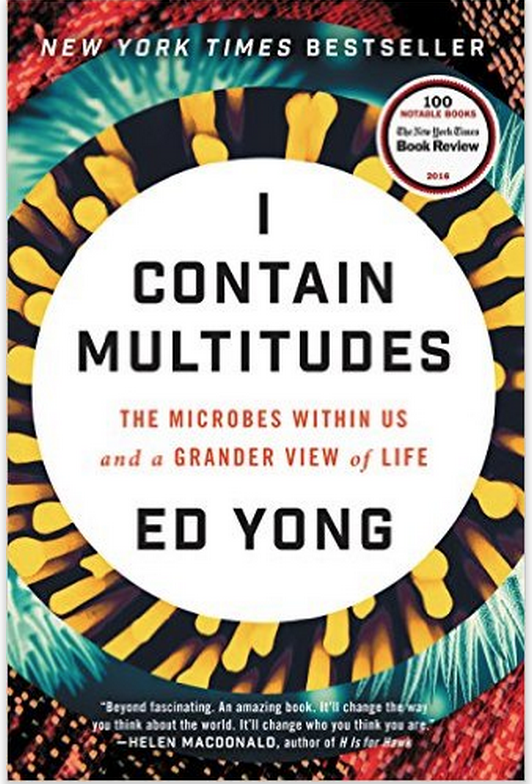
How did we discover how mitochondria works, how genetics works, and how life can be protected with all its worlds within us? The fact that we contain multitudes has always been fascinating – we have more than 100 trillion microbes in our guts while our Milky Way only presumably contains 100-400 million stars. 

Read also: Good Food Mood

Big Wonder

Speaking of the universe and the many million stars, the book’s premise is that the astronaut from Earth encounters, befriends and teams up with an alien from Planet Erid.  An earthling and an Eridian putting their heads together to solve a problem that is crippling the universe. 

There have been many theories on why we have never encountered alien life before. I remember reading in one of Carl Sagan’s books that the reason may be temporal – meaning there is a progression to advancement in intelligence levels. The intelligence levels at which human beings find themselves, may well be a blip in the universe. We are already quickly evolving past the phase when we were so excited by beaming our rays into the universe, that we may not be excited about finding someone else in our range of intelligence any longer. 

Now considering the different levels of life: microscopic life, multi-celled organisms, animal and plant life enough to sustain ecosystems, evolved intelligent creatures such as humans, advanced intelligence creatures – way past the levels of humans, we can see why finding life on the same scales of intelligence and tool usage is truly a daunting task. Either, civilizations evolved past it, died down, or never got there at all. 

Given this, it is a big wonder that the book tries a premise of intelligent alien life. I suppose the possibility will always remain an exciting one. 

In any case, reading Hail Mary is an interesting exercise in imagination. I am excited to see what the movie does with Rocky the Eridian and how they visualize astrophages & taumoeba. 

I remember singing the hymn ‘All Things Bright & Beautiful’ in school. It is an uplifting hymn with truly beautiful imagery of purple headed mountains and tall trees in the greenwood. Life on Earth is beautiful. Life could be just as beautiful elsewhere. The possibility is exciting.

Have you read Hail Mary, and what are you looking forward to in the movie?
Fascinating Hidden Worlds

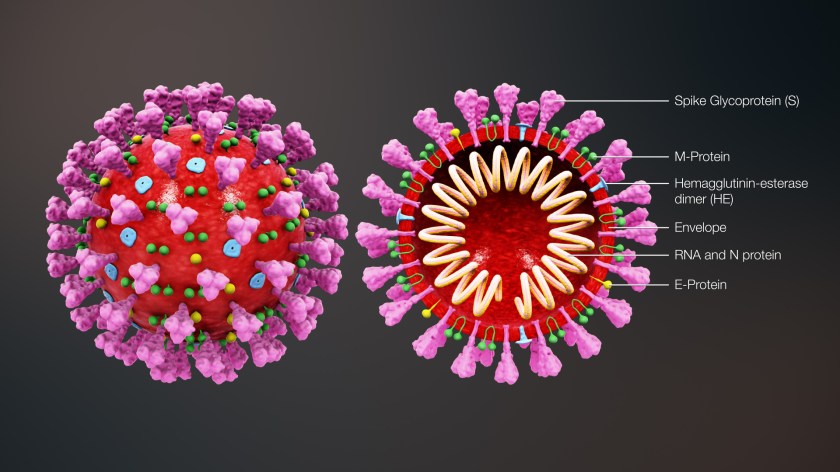
The son sat next to me one evening as I was typing out this article and looking up the picture of the Corona Virus.

3D_medical_animation_coronavirus_structure

Image By https://www.scientificanimations.comhttps://www.scientificanimations.com/wiki-images/, CC BY-SA 4.0, https://commons.wikimedia.org/w/index.php?curid=86436446

We both sat looking at the image that showed up and he said, “Wow! Is this really the virus? It looks so lovely, doesn’t it?” I had to agree.

The unimaginable beauty of the microscopic world is so rarely stopped and admired. Who knew a blade of grass could be this spell-binding?

img_7653

This particular virus has caused such unimaginable disruption world over, it is humbling to see the world buckle on its knees against the onslaught of this virus. While, viruses and bacteria often come to the spotlight in scenarios such as these, the truth is that we need a multitude of them to survive on a daily basis. There are studies linking gut bacteria  to mental well-being for instance.

Theodor Rosebury, a microbiologist, wrote in 1928, during his research that:

“The knowledge that micro organisms can be helpful to man has never had much popular appeal, for men as a rule are more preoccupied with the danger that threatens their life than in the biological forces on which they depend. The history of warfare always proves more glamorous than accounts of co-operation.”

The Corona Virus has brought the rich world of microbes to the forefront for the world. To give us an appreciation of how many microbes we regularly thrive on for our living, consider these figures: There are an estimated 100 Trillion microbes in our bodies. The estimated number of stars in our galaxy is around 100 billion.

Many children growing up in these times may well be awed by the power microbes, bacteria and viruses exert on us, and go on to study Microbiology and change our understanding of the worlds within us in unimaginable ways.

The microscopic world is a marvelous one. Revealed to us 350 years ago by the talented man often hailed as the Father of Microbiology, Antony von LLeuwenhoek, his letter about animalcules was published by the Royal Society in London. As Ed Yong says in his book, I Contain Multitudes, his letters were published by the Royal Society in “an extraordinary monument to the open-minded skepticism of science“. LLeuwenhoek had no background as a scientist, yet he applied the scientific method to sampling and studying the world around him. In 1680, the draper cum businessman, whose curious mind and hobby led to the revelation of Microbiology was elected a Fellow of the Royal Society.

I Contain Multitudes – Ed Yong – Article from Brain Pickings

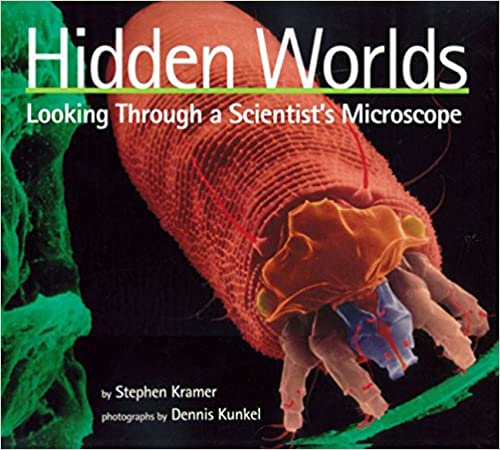
For those of you wanting a quick, fascinating glimpse into a Universe within our Universe, please check out the book, Hidden Worlds by Stephen Kramer with photographs by Dennis Kunkel.

hidden_worlds
Hidden Worlds

While Lleuwekhoeks early microscopes could only magnify upto 260 times, the images revealed in the book, Hidden Worlds magnify images by upto 1000,000 times. The resulting images are breath-taking.

The images revealed are only black-and-white by the microscopes. Scientists then use computer modeling to color in the images and the stunning pictures are better than works of Art. For instance, the picture below shows some common allergens and pollens that cause so many to sneeze all Spring.

The book briefly explains about SEM and TEM microscopes, the work that scientists typically do to prepare their specimens.

  • Transmission Electron Microscopes: TEM can magnify images by 1000,000 times
  • Scanning Electron Microscopes : SEM can magnify images by 10 – 300,000 times

Looking through the pictures in the book, we realize how marvelous life is, and what a fragile ecosystem we have to thrive in.

Covid-19 has also made us realize the importance of our normal lives. The gratitude to be alive and healthy, to be able to do the work that interests and moves the world forward, to be able to revel in the beautiful companionship of our friends and family.

“As the years pass, I am coming more and more to understand that it is the common, everyday blessings of our common everyday lives for which we should be particularly grateful. They are the things that fill our lives with comfort and our hearts with gladness — just the pure air to breathe and the strength to breath it; just warmth and shelter and home folks; just plain food that gives us strength; the bright sunshine on a cold day; and a cool breeze when the day is warm.” 
― Laura Ingalls Wilder, Writings On Wisdom and Virtues

References:

Blame The Toxos

Every once in a while a book comes along that changes the way you fundamentally view things. I Contain Multitudes by Ed Yong is one such. In the book, the author covers various types of microbes, bacteria and pathogens that we carry within ourselves or encounter in the world. A fascinating adventure awaits the reader on this microscopic journey.

The book shows us how each being is a complex symbiosis unto itself. A concept we know vaguely but appreciate deeply when we read the book.

screen-shot-2017-02-20-at-1-04-57-am

We have heard of parasitic infections that control the minds of hosts like rabies. Rabies makes its carriers aggressive and the only way for it to spread is by biting and scratching another being. ( Rabies is probably the basis for the myth of the werewolf.)

There is one particular type of parasite that is chilling in its tale. Toxoplasma Gondii or Toxo is a single celled organism that latches itself onto brains. It is also referred to in the TED talk linked below for further information.

Quote : Toxoplasma Gondii is a brain parasite otherwise known as Toxo. It can only sexually reproduce in a cat; if it gets into a rat, it suppresses the rodents natural fear of cats and replaces it with something more like sexual attraction. The rodent scurries towards the cats with fatal results, and T.gondii gets to complete its life cycle.

Toxo has been known to manipulate mammals. It makes rats run towards cats and offer themselves as prey just so toxo can reproduce. Classic tale of self destructive behavior, wouldn’t you agree? It is also proven that many humans play host to Toxo.

TED Talk by Ed Yong

The book led to many happy, wild conjectures such as:
(a) Could that be the reason Cat videos are so popular on You-tube? I mean, I have always wondered: Why Cat Videos? Why not hippo videos?

(b) Humans affected with Toxo also fare differently on personality tests, showing different trajectories when it comes to risk taking and pleasure seeking behaviors. Could a combination of Toxo and Dopamine releasing behaviors such as increased reliance on social media have engineered the elections?

It sounds like a weird sci-fi scenario: Toxo encourages self-destruction, dopamine clamors for fake news, and the world falls prey to single celled organisms manipulating mammals (us), while we run around like zombies thinking we have free will.

The understanding of human biology has fascinated mankind for centuries. But advances in microbiology itself is less than 200 hundred years old. Even then, our narrative surrounding the understanding has been harsh: Bacterial infections, germs, plagues, survival of the fittest. While there are numerous examples of these, the truth is that we also play host to a large number of helpful microbes and bacteria.

Theodore Rosebury, a microbiologist, wrote in 1928, during his research that:

“The knowledge that micro organisms can be helpful to man has never had much popular appeal, for men as a rule are more preoccupied with the danger that threatens their life than in the biological forces on which they depend. The history of warfare always proves more glamorous than accounts of co-operation.”

A fact so timeless that we ought to have it framed in halls of learning if it isn’t already.

P.S: Please watch the TED Talk by Ed Yong – it is only 13 minutes long.