Why is it all Political?

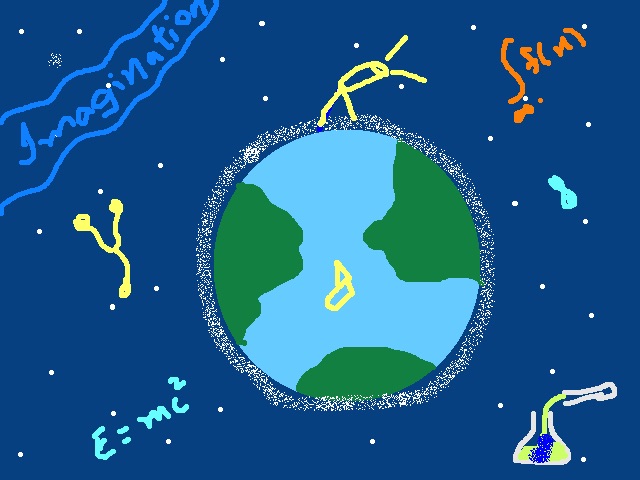
I was listening to an author, Sayantani Dasgupta, speak the other day, and she said, “Imagination is a political act.”

I jotted down the phrase. Several times during the next few days, the phrase would peek out at me as I went about my work. I mused and smiled when it unexpectedly caught my eye.

Four years ago, I had traveled to Pittsburg, Pennsylvania the week prior to the elections after mailing in my ballot in anticipation of the journey. The day of the 2016 elections, I was at a conference in Texas. The day was busy enough. I moved from session to session assimilating, learning and wondering a little how the elections were going. But I was not overly concerned. My focus was on learning. The polls had shown that Hillary Clinton will be in power soon. There was nothing to fear. I was ready to join the Pantsuit Nation in celebrating our first ever woman president. 

That night, alone in the hotel room in Texas, I switched on the television, after a hot shower, though all I wanted to do was sleep. It had been a 14 hour day, and I found myself drifting off to sleep every now and then.  Finally, when the tides began to turn, I thought my over-tired brain was playing games. The next few days were indeed one of shock, and given that I was far from my family and friends, I held it in as best as I could. Racism and bigotry seem to have received an amplifier and I felt more vulnerable than ever. I was not white, not male, not a Christian, not this, not that, and certainly not anything. How could one individual suddenly make me, a being of flesh, blood and emotions,  into so many things I was not?

Since then, we have seen things happen that are indeed too strange for fiction. Divisive people have a way of polarizing the environment around them. Slowly, I noticed how the literature around me changed: Posts and books giving us hope, filling us with age old wisdom. Every blustery tweet or policy was analyzed and we have had the busiest most riled up period in recent memory. 

But it also helped us all grow in so many ways. To realize that we are all different. All different in our ideologies, all different in what is important to us, all different in what  affects us, and how it does. For all of the politics, and whether or not people supported the Democrats or the Republicans, I do not waver in one thing – people are inherently good. They do want the best for themselves, theirs and the larger community, and in that regard, we are the same despite our differences.

Some days, I think of the Dalai Lama, meditating on the state of the world for 3 hours every morning. I wonder how he does it, and I marvel at the compassionate view he takes of humanity. The 45th President has taught us that no matter how strongly we feel about somethings, we cannot change how others feel about the same things. He taught us grudging acceptance. He taught us to value competence. He showed us how everything could become a political act with a dictator. 
everything_is_political

Travel became a political act.

Health became a political act.

Climate Change became a political act.

Science became a political act.

Now, Imagination is a political act.

Today, the only political act I can think of in my power, is Voting. 

Before Being becomes a political act, it is time to act.
Continue reading “Why is it all Political?”

Music & Gardens

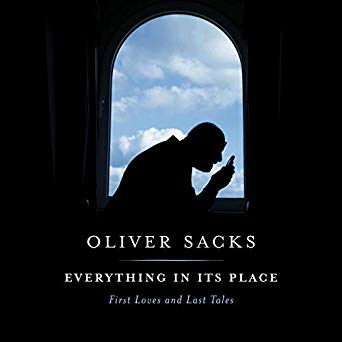
It is always a delight to pick up a set of essays written by prolific writers  who are also curious intellectuals. These authors make me feel like I am reading the perspective of polymaths, and that in itself makes for a wondrous experience. The latest book that had me thinking and reading about things I had not thought about for a long time was the book, Everything In Its Place by Oliver Sacks.

everything_place.jpg

Excerpt from Wikipedia:

Oliver Wolf Sacks, CBE FRCP (9 July 1933 – 30 August 2015) was a British neurologist, naturalist, historian of science, and author. He believed that the brain is the “most incredible thing in the universe.”[1] 

He reminds us in broad strokes of his pen, the number of areas in which we can be curious. He reminds us about the vast capabilities of the human brain, even while reflecting on this particular author’s exceptional one. Reading about the brains many failings and flaws is both fascinating and eye-opening. (Oliver Sacks was a Neurologist who specialized in many neurological disorders, and writes from a place of curiosity and compassion for his patients).

His description of Tourette’s syndrome, for instance, certainly makes me think less critically of people I encounter on the public transit who have the need to shock the whole compartment with their absurd, rude and obnoxious statements, every few minutes. Sufferers of Tourette’s syndrome often find themselves cursing and shouting loudly, without being to help themselves. The shocked attention they gather seems to be the reward for their impulses.

He writes about a certain individual who exhibited severe symptoms in Vietnam and would make shocking exclamations in Vietnamese every now and then. But when he moved to the United States, his Tourette’s calmed down because people did not react as much as he thought they would in a country where his language was not understood.

I can now learn to see the person different from their symptoms, and for that I am grateful.

How can I not be fascinated as I read his sure voice confess that as a neurologist the only therapies he knows to work surely are Music & Gardens? I read his meditations on Why We Need Gardens and the words Biophilia and Hortophilia leap out and grab my attention. Nature is my soother, has always been my favorite soother, and it is refreshing to hear his perspective on the effect of nature.

img_3991-effects

Clearly, nature calls to something very deep in us. Biophilia, the love of nature and living things, is an essential part of the human condition. Hortophilia, the desire to interact with, manage, and tend nature is also deeply instilled in us. The role that nature plays in health and healing becomes even more critical for people working long days in windowless offices, for those living in city neighborhoods without access to green spaces, for children in city schools…..

The effects if nature’s qualities on health are only spiritual and emotional but physical and neurological, I have no doubt that they reflect deep changes in the brains physiology, and perhaps even its structure.

As he says in one essay, his patients even in advanced states of dementia always look forward to an hour outside amidst nature, and not one of them has ever planted a sapling upside down when given a sapling. It is almost as if we intuitively know what to do and our learnings from time may fall away from us, but our affinity to nature will not. 

In fact, he writes of one of his close friends, Lowell, who suffered from Tourette’s syndrome, that while hiking in the deserts of Arizona, his ticks and urges almost completely disappeared.

https://www.brainpickings.org/2019/05/27/oliver-sacks-gardens/ : Oliver Sacks

In forty years of medical practice, I have found only two types of non-pharmaceutical “therapy” to be vitally important for patients with chronic neurological diseases: music and gardens