Hail Mary & The Martian: Potato Love

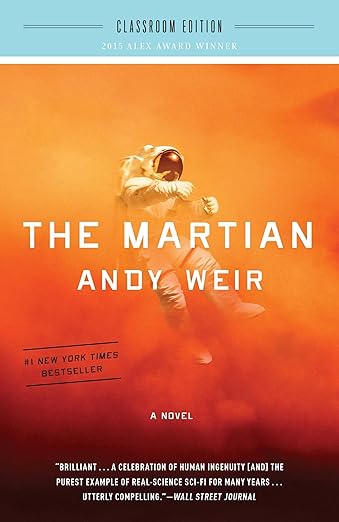
As part of our book club, we decided to take up interplanetary themed works by Andy Weir. Hail Mary releases next year in March, and it seemed like a really cool idea to get a little astrophage love beforehand. 

So, we started off with Martian, watched the movie, then moved on to read Hail Mary. 
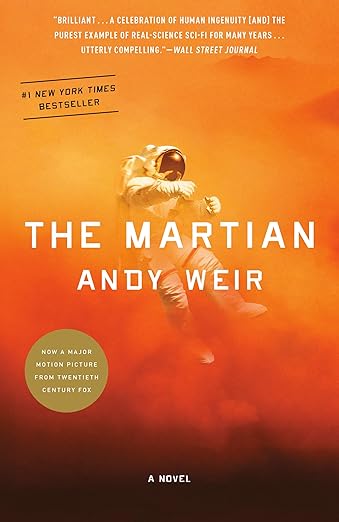
This led to many interesting outcomes. The first was more primal in nature. 

🥔The scenes where the protagonist, Mark Watney set up and farmed potatoes on Mars, appealed to all of us. Far fetched, but so is almost everything humanity has achieved up to this point isn’t it? Who doesn’t love to see a little potato pant sprout in a red and dusty planet?

We developed a new appreciation for potatoes and all the ways in which we make it. Poori sagu, potato fry, kaara curry, mashed potatoes, baked potatoes, dum aloo, french fries, potato chips, hash browns, cream of potato soup. 

Every time I pick up a potato these days, I gaze at it with awe. The other day, I watched a little sprout from one of it’s eyes, and the son gave me an eyeroll. 

“If potatoes could save medieval Europe from starvation, they could do anything, couldn’t they?”

“Yes – I love this new honey roasted szechuan style potato that you made for me the other day, so I can’t really complain about this new potato love can I?” said the wise fellow, and I laughed. Honey roasted s.style potatoes it is.

🧑‍🚀One of the many things that occurred to me as I was reading the Martian book was to see which of my friends were best suited for the different roles in the book. Who would be best suited for Mark Watney (not as a replacement for Matt Daemon of course!), but from an engineering and problem solving perspective. I am an engineer, and am surrounded by engineer friends after all. Who would be the best Dr Venkat Kapoor driving things from the NASA side? Who would be the scientist diplomat who works with the Chinese team? Fascinating exercise. 

👭One of the many things I liked about the book is how Andy Weir goes out of his way to show the bond between the astronauts on the Martian crew. Selecting a top notch team is a hard enough task without having to consider the effect they would each have on the other in a closed space for extended periods of time. What psychological tests must they have to figure out friendship, respect, and trust among the crew after/before all the obvious things related to technical competency are taken care of? 

💫Let me play a song I said the day after we watched the Martian movie. The son groaned. “No – I want something fun – not melodious today.’ he said. 

“I think you’ll like this one!’ I said with a confidence that stems from knowing the pull of the cosmos on the son’s psyche. 

There’s a starman waiting in the skies.” David Bowie’s song filled the car and the pair of us bobbed to it startling folks in neighboring cars at rush-time.  

I already like the song by Harry Styles in the Hail Mary trailer. It’s one we listen to often. “Stop your crying it’s a sign of the times

The movie, Hail Mary, is slated for release in Mar 2026, and we are looking forward among other things to see how the Eridian, Rocky will be visualised. Any of you looking forward to the movie?

Also, what did you think of the Martian book and movie?

Exploring The Anthropocene: Life Between Cosmic Events

The Anthropocene by John Green

In the book, The Anthropocene by John Green, there is an essay in which he he mentions Mark Twain’s life being sandwiched between the two appearances of Halley’s Comet 76 years apart. He was born the year it was born, and he wrote famously the year before his death that he hoped to go out with it, and he did.

When I read that the first time, I felt sorry for him. He was born in 1835, and died the day after its perihelion in 1910. I hope he got to see the second occurrence. Imagine being alive for 2 appearances and not being able to see them both times. I suppose there is a poetic beauty to being born and dying between the spectacular cosmic events. But then, plenty of people did not see Halley’s comet even when it was visible in their lifetimes, so what’s the big deal?

Halley’s Comet

I remember being excited about Halley’s Comet in 1986. I was thrilled at being included in the viewing party – it was for my older sister’s classmates, and they had agreed to let her little sister tag along. 

I remember peering through the telescope. I cannot say with any conviction that I remember the comet itself. Some blurry recollection is all that remains. But the feeling of the evening remains. The excitement at being included in an elite group of senior students, the protective aura of having my older sister and her friends look out for me, and the cold temperatures of the night. That cup of Bournvita before bed was enough. 

Astrophilia

Nights and stars seem to have similar experiences ever since. The feeling more important than the viewing itself. For a star is a star. A celestial object – a celestial object – nothing more. Yet spectacular enough to be other-worldly. To tap into the possibilities of a vast universe. 

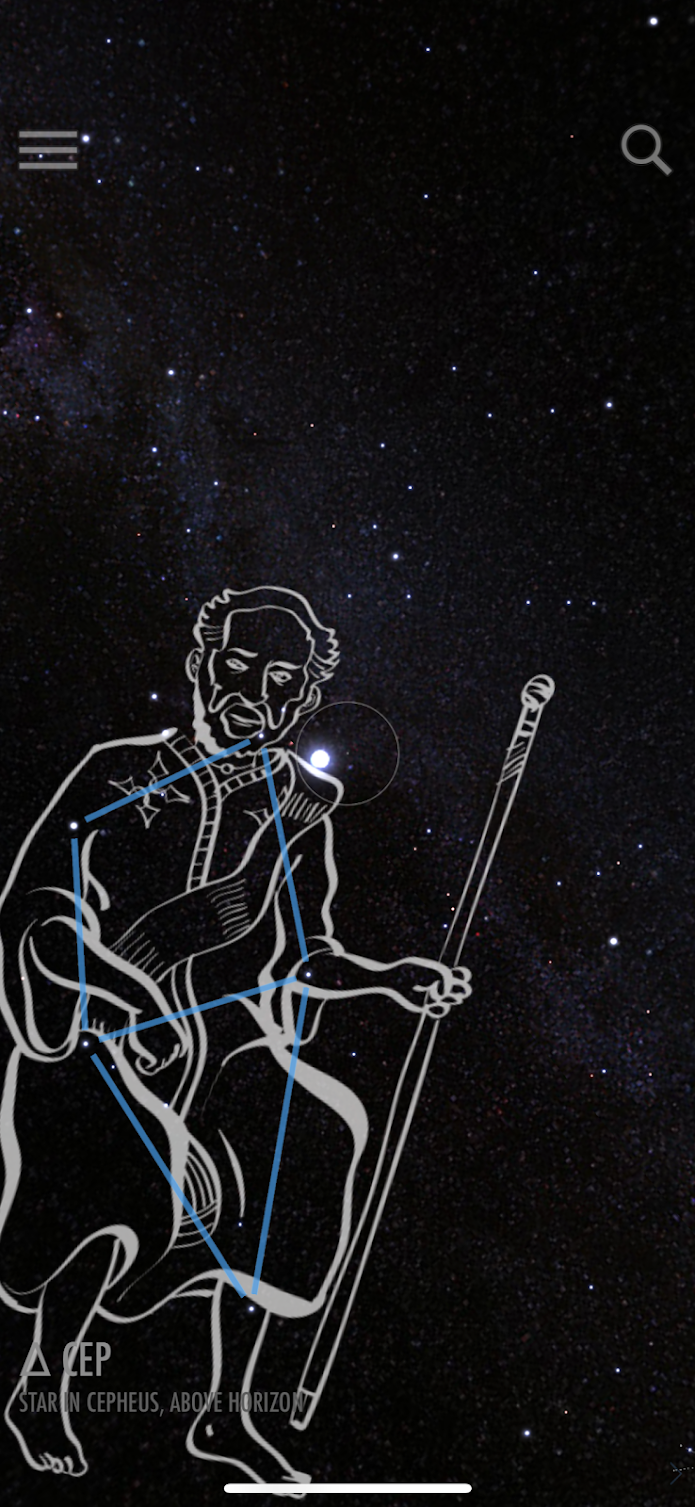
One night, we were out looking for a star system, Delta Cep in the Cepheus constellation, and I could not help wondering what their Delta-rise and Delta-set looked like on the planets in that star system. Did they have moons beaming the reflected lights of the stars to them? Were there any microscopic creatures willing its way into rudimentary life? Life seems to be so hardy and resilient and willing to thrive, it seems a little surprising that we have yet to discover traces of life elsewhere. 

The Martian by Andy Weir

We were reading The Martian by Andy Weir for our book club, and thoughts of life elsewhere held all the more appeal. One only had to peer at the way weeds take root and crack through pavements, to see how resilient life can be. (It is another matter altogether that the plants I do try to grow on purpose seem to fizzle out on me, and routinely droop and call it a day, but that is a post for another day. ) 

In any case, it got us all thinking about all the things that enabled a planet full of sentient life, and how we sometimes forget to marvel at the sheer beauty of it. Wrapped up in our worries, anxieties, and livelihoods. 

The son is doing a science experiment in which they are experimenting to see how microbial colonies develop in  slice of bread under different conditions. In a fit of whimsy, he spoke and sang to the bread (gave it lectures on George Washington – his latest obsession, sang a Hamilton song) – to get the microbes on the slice, and has placed them in airtight containers in different conditions throughout the kitchen – in the dark, in perpetual light, and in freezing cold conditions. It will be interesting to see where life can thrive. 

That life had a starter kit is miracle enough, but the fact that it thrived enough to produce the kind of beings we find on this planet is astounding, and, yet, we forget it everyday. 

We are reminded periodically about the miracle of our lives through celestial objects, meteorites, the beauty of a full moon, the blooming of the kurinji flowers every 12 years, the cicadas coming to life every 17 years and so on. Still we forget. We forget to stop and marvel. We forget to stop and think.

The book of essays in The Anthropocene Reviewed by John Green is an interesting read. For it each is an essay about a different topic – short but through provoking. Covid-19, geese, Halley’s comet. Combined with the kind of scientific and regimented problem solving that a book like Martian makes you think about, the possibilities to keep oneself occupied is manifold – like the possibility of life itself.

Roving on Planets

Standing outside by the curbside of our home one night, my eyes were drawn to the beautifully illumined Sirius shining bright in the night sky. Sirius has been looking brighter than usual in the winter skies, and I have often stared at the blinking star wondering what was happening that far away in the Universe.  Every dot in the night sky suggesting a universe of possibilities. The space between dots showing the emptiness, the dots themselves, bright and important only because of the surrounding darkness

Almost subconsciously, my eyes moved over to the red spot Mars. For here, in our own solar neighborhood, we know that something is happening. Something of human interest, and intent. To think that on that distant reddish spot in the sky, 3 generations of rovers have spent the time taking photographs and trying to determine the existence of life on the planet, is surreal. Not to mention the fact that they have been able to transmit the pictures back to Earth for analysis. 

Screen Shot 2021-02-21 at 2.46.02 PM

The planet has long beckoned us with its allure. All those Science Fiction writers, who used the planet as the home for their fertile imagination, paved the way for these missions. 

Fiction on Mars isn’t new. In fact, the red planet invited writers as early as mid-1800’s to set their stories there. Long before knowing anything about the sounds on Mars, the temperatures, or the atmospheres; worlds were set in it. War of the Worlds had the strangest creatures that human imagination could think of (cephalopod like creatures), who could overpower humans. (This quest for dominance vs courteous co-existence is a pet peeve – why must we turn everything into a conquest? But then, do ants wonder the same about us?) 

martian-ray

Throughout the week, the little cosmologist in the house interspersed our Earthly life with Mars-ly anecdotes and clips. 

Do you know? If we want to live on Mars, we have to have high metal barrier suits. If you go out on an adventure without a suit, there is so much radiation that it could kill you. “ (He had read a novel set in Mars)

Wonder what happened to all water on Mars. The video said there really was water there.” (He has been watching the NASA  videos with interest)

One evening, we sat together huddled up, watching pictures stitched together from the 3 Mars rovers: Opportunity, Curiosity, Perseverance. Barren desert landscapes, not unlike those in the Sahara desert or the Arizonian deserts, are all the rovers could see. In some shots, the commentator says the NASA team stitched thousands of individual images together to gain a clearer view. In some pictures, a blue sky is visible  (the commentator says that NASA colored the skies blue, so as to be able to see the images better, and I thought about how pretty blue skies are and how blue is a very rare color in nature. )

Curiosity and Perseverance will help us find answers. Till then, we have the opportunity to ponder and puzzle about these things. More than any of these curious wanderings, the one thing that the Martian landscape reinforces to me, is that our Earth is a beautiful planet – so vast in its diversity, and lifeforms. The Martian pictures make me want to go out and sigh and fall in love, look after, and cherish the one planet we can thrive on. To admire the miracle that is every tree, every lake, every cloud, every blade of grass, and every flower. 

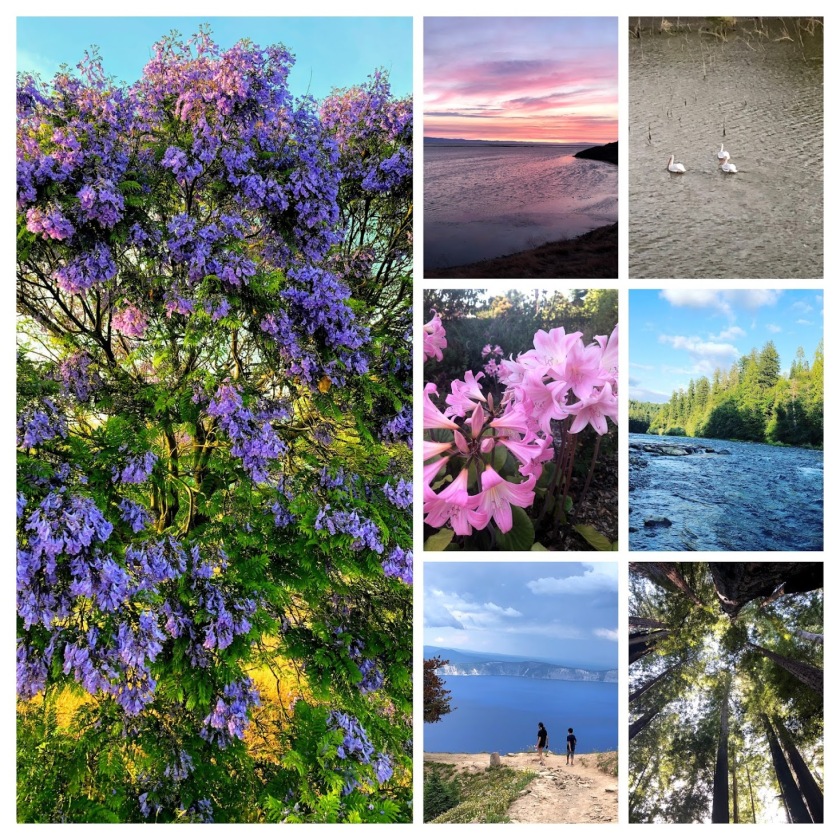
summer-collage

Not to mention the great miracle of life in the form of marine creatures, land based creatures and those that are able to aerially survey our beautiful planet. 

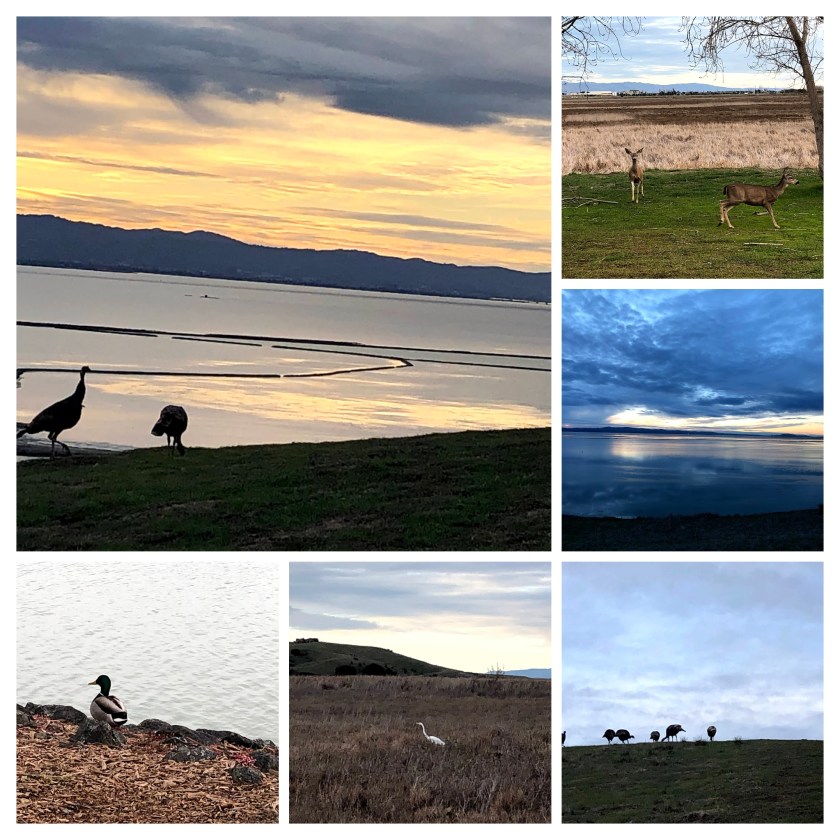
img_1168-collage

If Martian 4K resolution images have taught me anything, it is to buckle down and look after the one planet we do have. If I am to be roving on planets, why not this beautiful one that has so much to offer?

“I walk in the world to love it.” – Mary Oliver

Mars Marvels

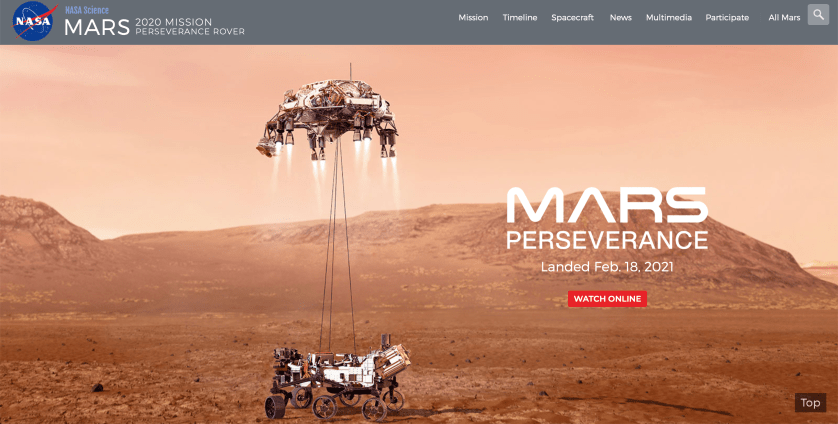
There is something special in being able to watch the Mars Perseverance Rover land on Mars during the day with your fellow explorer. 

Mars.Nasa.Gov

A work day was in bustling progress.  Many meetings, many projects, many interruptions, and many more deadlines were jostling about in the ether, when the son came charging into the room. It was the middle of his school day (one of the many high points of the corona lifestyle), “Amma! Amma! You will like this. I just came to tell you this! The Mars landing just happened!”

I plucked myself away from the myriad day-to-day happenings of my world, and looked up at his excited face. Luckily, it was one of those rare ½ hour slots that was meeting-free. “Do you want to see the landing? “ I asked, and he nodded. There is something special in being able to watch the Mars Perseverance Rover land on Mars during the day with your fellow explorer. 

Mars.Nasa.Gov

Screen Shot 2021-02-21 at 2.46.02 PM

The video attests to Carl Sagan’s deductions in the book, Pale Blue Dot (essay: Sacred Black). The Martian atmosphere does look pinkish red with heavily desert hues. The son & I looked outside at the beautiful blue sky with reassuringly white clouds flitting by. 

The Mars Perseverance Rover is tasked with looking for evidence for extraterrestrial life.

Excerpt from Wikipedia:

The Perseverance rover has four science objectives that support the Mars Exploration Program‘s science goals:[8]

  1. Looking for habitability: identify past environments capable of supporting microbial life.
  2. Seeking biosignatures: seek signs of possible past microbial life in those habitable environments, particularly in specific rock types known to preserve signs over time.
  3. Caching samples: collect core rock and regolith (“soil”) samples and store them on the Martian surface.
  4. Preparing for humans: test oxygen production from the Martian atmosphere.

Mars has, it seems, been a most fertile planet for the imagination through the centuries. From harboring questions about life on its surface to envisioning warfare between worlds. As rich as lifeforms on Earth are, even in our imaginings, we are somewhat limited by how life has evolved on Earth. Cephalopods, trees, giraffes, humans – but what else is possible? What sensory powers are we not even considering?

https://en.wikipedia.org/wiki/Mars_in_fiction

The War of the Worlds (1898) by H. G. Wells. Features an attack on England by cephalopod-like Martians and their advanced technology to employ fighting machines to decimate the world.

Even as early as the 16th and 17th century, writers made bold attempts at imagining life on its surface. The canal like squiggles on its surface, led to intriguing theories on an advanced civilization running advanced colonies etc. 

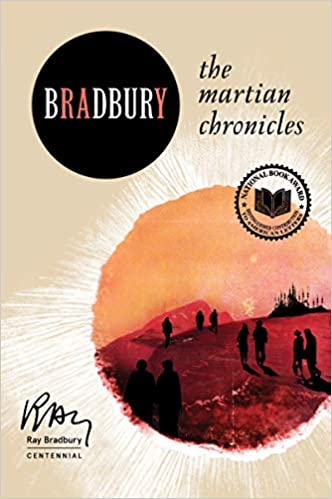
Now, seems like a good time for me to read The Martian Chronicles by Ray Bradbury. Given what we know about the Martian atmosphere now, there are places where the writing seems awkward. For instance, Ray Bradbury writes of a blue Martian sky – an example that it is hard for us to un-imagine what is. 

martian-ray

The Martian Chronicles (1950) by Ray Bradbury. Features human-like Martians with copper-colored skin, human emotions, and telepathic abilities. They have an advanced culture, but the human explorers are greeted with incomprehension. 

Science took us to Mars with the reddish sky, but it was the blue sky with white clouds that enabled us to dream. The hunter gatherer is us out to explore the cosmic ocean, as Carl Sagan would say.

An Email About Plants On Mars

Weekday nights, apart from startling Californian flora and fauna out of their wits with the chaos and noise in the home, also means that the old father is busy. A note about the pater’s emailing habits. He settles down with a serious look on his face, a glass of warm water by his side, and corresponds with his trader in the Indian Stock Exchange. From 10 p.m to well past midnight, he is the paragon of efficiency. He painstakingly types out instructions, his tongue peeking out with concentration, leaning forward in his chair, his browser tabs opened to Gmail & Economic Times. His mind composes the shortest possible sentence before he starts typing, since he has to spend some time finding the right alphabets on the keyboard. Once a teacher, always a teacher, and he insists on using the right punctuation: commas, spaces, periods and semi-colons. Sometimes, he hits tabs for the extra space, and that lands up sending the email instead of moving the cursor, and then he starts over. The wonderful lady on the other side turns an indulgent eye on the septuagenarian’s emails, and sends him trade notifications and acknowledgements to the correct email.

Friday nights are different. The Indian Stock Market is closed, schools and offices in the USA are closed on Saturday. So the couch is cluttered with cushions, throws and comforters from the bedrooms, and the old television settles down to air a movie or television show down to the audience. Friday nights at the home always contain a general air of excitement. One would think that through the week, the children work 16 hours a day, with sparse meals and little fun, the way they whoop at the Friday evening fun. Entertainment choices are always a bit tricky given the age groups the television has to cater to at once. The son and daughter want different things. Throw the grandparents into the mix and it becomes a telling lesson in democracy. Sometimes, the choices made by popular votes turn out to be so bad that the voting audience clamors for a change midway through and the process begins again.One does not need to follow #Brexit and #Bremain for democratic ulcers.

One night we settled on The Martian. The budding toddler astronomer in our family agreed that he liked to go to Mars one day as a Space Racer, and helpfully showed us a rocket lift-off. (Space Racers is an animated television series. The main characters—Eagle, Hawk, Robyn, Starling and Raven—are cadets at the Stardust Bay Space Academy. The cadets spend each episode traveling through outer space) The old pater shelved his urgent emailing needs and settled in to watch. The rocket made a spectacular landing on the grandfather-tummy-airfield, and the audience quietened down to watch the movie.

Every time I watch a movie, I am amazed how clipped and to the point people speak. No rambling on the way we do, no unnecessary smiles. Maybe if we edited our speech thus, we would be as impressive. Meaningful glances that seal the decision of landing, curt nods that signal victory,  measured smiles that indicate tension. Waah Waah!

For those of you who have not watched The Martian, it involves an expedition to Mars going awry and people having to take off from Mars earlier than planned, thus clipping their mission short. One of the crew, Matt Damon, is left behind on Mars, and the story revolves around what he does on Mars instead of twiddling his thumbs and waiting for a slow, painful death.

Communication channels are broken, Mars looks unforgiving. Matt Damon is very sad, wondering what to do, when the pater piped up,  “If I was there, I would send an email to NASA and go to bed. “

A few scenes on, Matt Damon is growing potatoes on Mars. I know.

Martian

“What do you think happened to those organic vegetables that we planted ma? “ asked the father showing off rare horticultural curiosity.

The garden looks ready for a visit by the gardener every few months. That sturdy son of the soil comes over, sets the place to rights in an hour, and leaves after a tooth-ful smile. Last time in preparation for the gardener, the father and husband had picked up from Costco, some oddly shaped packets that looked like seed bombs to be dropped into the ground. Lo and behold, we were told, we should soon be playing host to some luscious, organic vegetables.

Anyway, it had been a few weeks since the planting of the seeds, and though the summer flowers were thriving, there did not seem to be much happening on the vegetable front. I looked forlorn: We seem incapable of growing potatoes on Earth, imagine doing it on Mars?

The toddler piped up and said he knew how to grow vegetables on Mars, since he had seen a program in which the Space Racers grew them on Mars. If I am stranded on Mars with these two, one can grow food, and the other can email NASA. It was a comforting thought to head to bed with.