The Whole 9 Yards

The whole 9 yards

We lost my father-in-law (henceforth referred to as Appa) earlier this month. He had a wonderful life, was loving and was loved by almost everyone who knew him.

When we reached home and awaited the body from the mortuary, bizarre things began happening. We were supposed to be sending the father-in-law’s soul to a different realm, but I found myself transported to a different realm instead.

Suddenly, one is surrounded by a society that morphs into layers of irrational. I was overpowered by a mob of conservatives who draped me in a 9 yards saree before I could breathe.

For reasons beyond me, the society of people I was born into, sets great store by a garment that is wholly undeserving of the praise bestowed on it. It is the 9 yards saree. I abhor the garment for several reasons: apart from the casteism it symbolizes, it is also an extremely uncomfortable garment.

The 9 yards saree makes one look like a roadroller, impedes motion, and rouses an instinct in all females who see you to ‘fix’ the saree. One thinks, the folding pleat behind the legs is too long, another thinks the tugging back is too long. So, they all attempt to fix it — all completely well-intentioned of course. Only this gives you a strange sense of being disrobed – for like one of these sailors knots, if you pull one place, the whole thing can unravel. One time, an aunt, tugged something while I was descending the stairs and I almost fell headlong down the stairs. After the initial flare of annoyance, I started to laugh trying to envision myself like a rolled up carpet at the bottom of the stairs, and all good hands trying to extricate me from a 9 yard mess.

I have never liked it – but as luck would have it, society is enamored by it.

As I moved numbly to see the mortal remains of my dear father-in-law, about 50 different women and 10 men told me that the important thing to remember is that I wear this particular 9 yards saree everyday – to be washed, dried and worn again for the next 13 days. “Remember – the same saree only.”

I stared at them too speechless to say anything. Could they not see I was grieving – why was this same-9-yard-everyday thing so important?

It made no sense – until you realized that religion loves giving dictums for everything starting from how a woman should dress to how she should grieve. This one was apparently to ensure that we did not accidentally attempt to feel good by dressing well.

I’ll let you all roll your eyes at that one.

Dear Appa

A few years ago, when we had moved into our new home, everyone was pressurizing me to wear a 9 yards saree for the house warming ceremony. I was sipping my tea looking glum one evening after another aunt insisted that it was a critical garment for the success of the ceremony. Appa asked me “Yenna ma?” (What is it, ma?) in his typical calm voice sensing my disquiet.

I told him that I didn’t like the 9 yards saree but everyone wanted me to wear it.

He looked at me and said, “Don’t wear it!”

I looked up, and saw him looking at me sincerely. He continued, “This ceremony is supposed to ensure that you are happy in your new home – wear something that you will be happy in!”

I didn’t wear a 9 yards saree that day. I wore something I was comfortable in.  When I came down the stairs, he saw me and gave me a glorious smile.

Dear Society, Can you change?

I thought of this little interaction every day that I was miserable in the 9 yards saree during his long drawn out death ceremonies that everyone insisted had to be done in 9 yards (for the departed soul you know?)

saree_potter

(Saree Potter – caption by the brother)

Actually, this seemed to be a theme through many of the ceremonies. There were a lot of things that I am sure Appa would not even have considered – but religion seemed to dictate it all necessary to his soul. There were hours of mantrams and ceremonies everyday that we little understood.

What I would have liked is for people to let us know the little and big ways in which he impacted them. For it was apparent, that he was loved by everyone who had the fortune of interacting with him. He was a dedicated brother, brother-in-law, husband, father, father-in-law, uncle, grandfather, and friend. As it was, there was precious time left for personal anecdotes and reflections after the long-drawn out ceremonies that Appa, when alive, had little patience for.

“Man is kind enough when he is not excited by religion.”

– Mark Twain

Talking about the Weather

I have no idea what people mean when they say talking about the weather is mundane. The disdain of, “Just talking about the weather!”, “I mean why not talk about the weather to kill time?” 

Apparently, Oscar Wilde said: “conversation about the weather is the last refuge of the unimaginative.”

It isn’t. It is marvelous. 

No two days are exactly the same, see? 

In any case, I would much rather talk about the sunsets and moonrises, fluffy happy cirrus clouds and stormy heavy cumulonimbus clouds, than about any other foul thing wracking humanity. 

In the Spring, I have counted 136 different kinds of weather inside of 24 hours.

– Mark Twain

It’s been a curious winter for those of us spoilt by our usually mild Californian winters. This winter saw us receive unusually large amounts of rain, our mountains are swollen with snowcaps, and our rivers are welling up and rushing into our oceans, the winds, when they came, ripped treetops, and crashed onto roads & homes and showed us how powerful nature is. One house on my regular commute route had a 100 ft tree crashed straight through – I can only hope the inhabitants weren’t present in the house when the tree fell, for it would most certainly have caused injury or worse.

Having grown up in the mountains where extreme weathers were not unheard of, and blackouts a way of life, I would’ve thought recent weather events would not have surprised me so much. But I suppose it still did. My heart leaped as a huge tree branch crashed right behind my car as I drove home through a particularly windy day. I think I held my heart in in my mouth to keep it from leaping out and flying off with the gale for a full 5 minutes. 

The quickly changing weather has us all philosophising too. More than we usually do.

Do the weather related moods signify something as drastic as the impermanence of our existence? Or is it just that – vagaries of nature to be borne, witnessed and experienced? Could it signify our emotions flitting in and out of our systems, lapping like little waves against our psyche, shaping, reshaping and muddling our coastlines ever so subtly, the cumulative effect of what we allow to feel weighing in?  Like weather patterns, we could change. After all, like one of our favorite songs often reminds us: Behind the clouds, the sun is shining. We can only appreciate a good day when we have days in which stepping outside is hard. 

For those of us spoilt by the consistency of the sun and the brilliance of our days and the glows of our sunsets and sunrises, this is a time for philosophy. Unabashed but lovely philosophizing. 

IMG_3920-COLLAGE

I quite agree with this quote that I found attributed to John Ruskin:

Sunshine is delicious, rain is refreshing, wind braces us up, snow is exhilarating; there is really no such thing as bad weather, only different kinds of good weather.

John Ruskin

The Wonder of Sonder

“Travel is fatal to prejudice, bigotry, and narrow-mindedness, and many of our people need it sorely on these accounts. Broad, wholesome, charitable views of men and things cannot be acquired by vegetating in one little corner of the earth all one’s lifetime.”

 Mark Twain, The Innocents Abroad / Roughing It

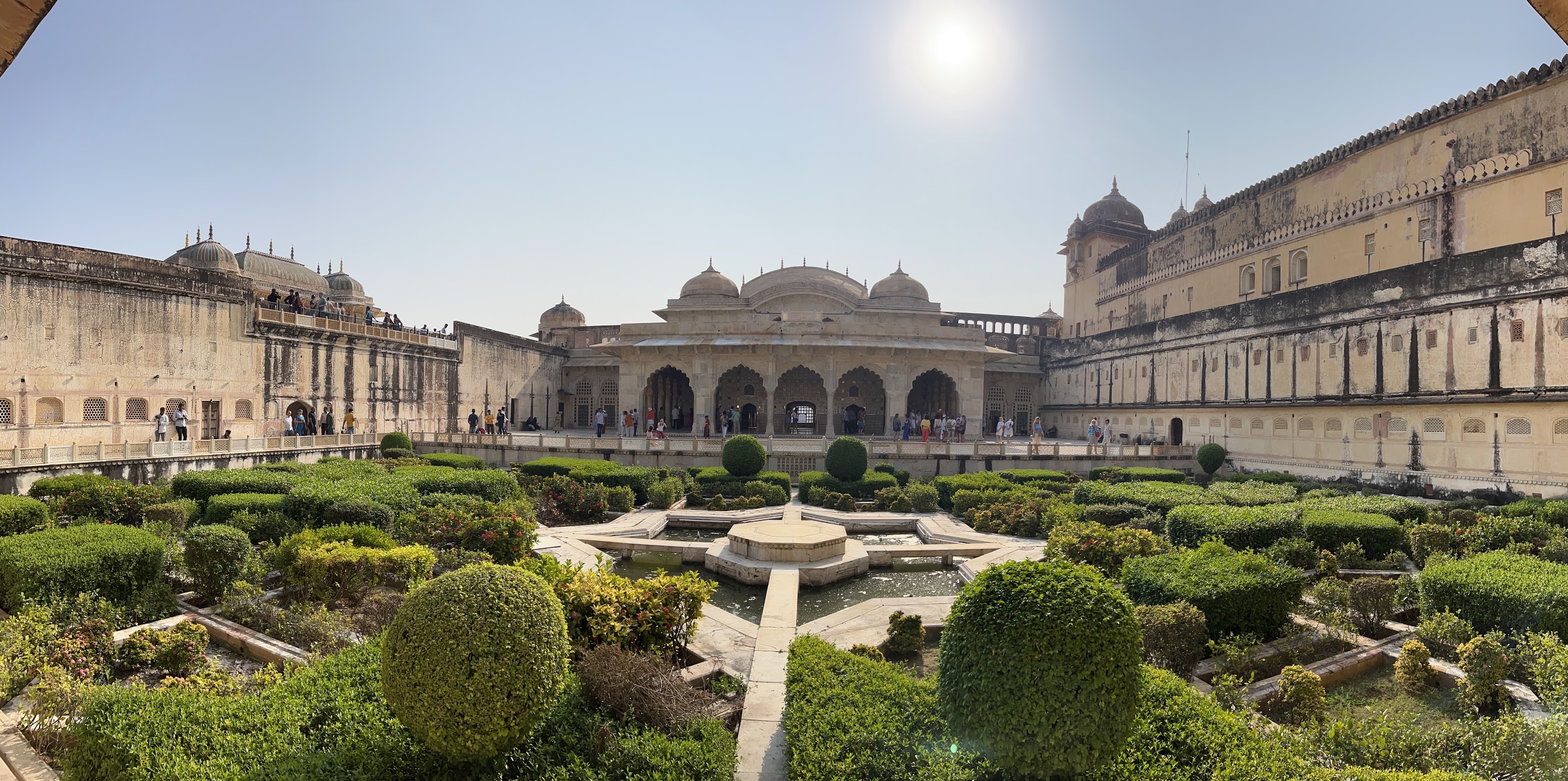
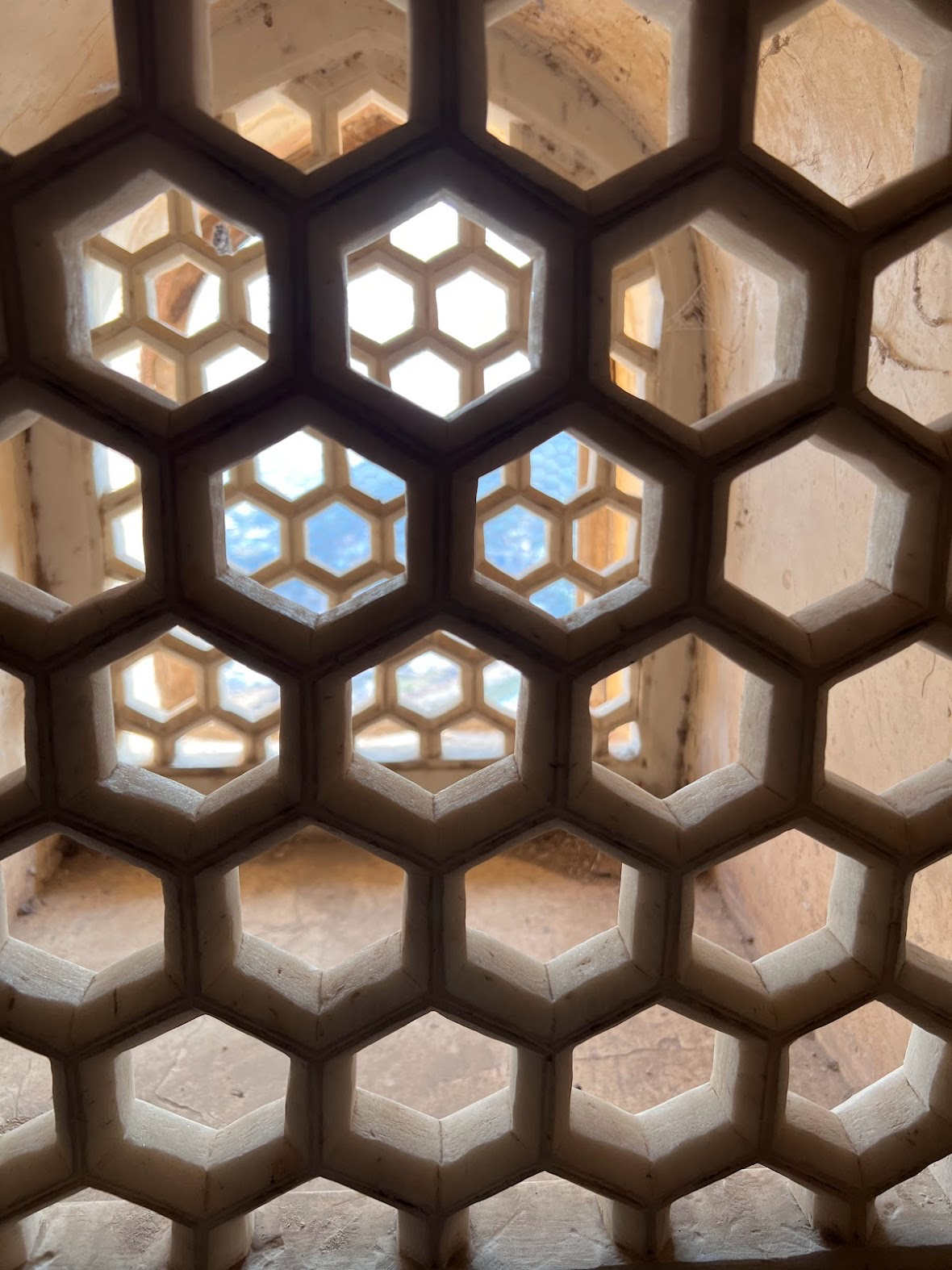
I found myself reveling in this quote as I traveled recently to the opposite side of the globe.  I had been to Jaipur, India. It was a part of India that we normally do not visit on our little family trips, and was thus a novel, beautiful experience for me. Truly, Incredible India has many surprises up its sleeve. UNESCO sites dotted the place, the vibrant active city co-mingling easily amidst centuries of history was more heartwarming than ever. 

We had visited the Amer Fort near Jaipur and our guide’s narrative views on the socio-economic views of those who had lived in the fort were well worth mulling over.

It was while we were discussing the flow of information that I got to musing on the nature of truth. There was a version of events presented to us over time. There was a version of these events that people lived through. The victors and the vanquished of all those battles, I am sure there were spies, untruths, noise, and chatter back in the days of royalty as well. Human beings have always been a complicated species, and the abilities to sort through what is right, what is factual and what needs benefit-of-doubt and so on have been questions that have wracked generations. More so, in ours, thanks to the speed and efficiency of information spread. 

To have a conversation about Twitter in the palace of the Maharaja of Jaipur, Sawai Jai Singh, was both amusing and exotic.

While, ancient ruins do have an appeal of its own, a thriving populace right alongside all of these historical sights makes for an even more interesting narrative in our heads. Just imagine the number of people who’d walked past this very strip of land: kings, queens, princesses, princes, soldiers, charioteers, jutka-pullers, robe-makers, royal jewelers, sculptors, artists, musicians, dancers, ministers, priests, philosophers, poets, maids, chefs, dhobis, plumbers, architects, animal trainers, army generals, court jesters, astrologers, astronomers, physicians, scientists, software engineers, surgeons, guides, shopkeepers, memorabilia makers and sellers, mobile phone operators, tuk-tuk drivers, bus drivers, journalists, advertisers, local influencers, and social media influencers.

How many more new professions would get to traipse along these very sands as they try to take in the long and incredibly short history of homosapiens? It is all highly fascinating when we stop to think of these things amidst all the noise and chaos that surrounds us. That is what I did that day:  imagined one of those fast-forward sequences with all the different folks who make up our society as they navigated life in this city over the past 295 years. 

Not unlike one of those sudden disorienting sensations that the persons we see going past us are just the same as we are: All people with bursts and spurts of emotions surging, thoughts swirling, ambitions burning, life calling, livelihood beckoning, creativity surging, peace loving, adventure liking, love yearning souls straddling the demands of life on the sands of time. 

There is a word for that.

Sonder — noun. the realization that each random passerby is living a life as vivid and complex as your own.”

So, there you have it. I had a moment of sonder on the other side of the globe that really we are one, and the wonder of that unifying feeling was one of the many many revelations of travel.

The Laughing Life

The son tumbled out of his room with yet another joke. His teachers apparently tell them a joke every now and then, and he repeats them to me if he finds them really funny, or remembers to. One of the many gifts of the Covid lifestyle are little snippets like this.

I stood there waiting and wondering what today’s j would be about.

“Why did the skeleton not go to the party?”

“I don’t know – because it had too many bones to pick?”

“Ha! Good one. But no.”

“Umm…don’t know. Why didn’t the skeleton go to the party?” I said a little impatience in the tone. I had to get to that next meeting.

“Because it had nobody to go with. Get it? Get it? No Body to go with?!”

I moaned and laughed at the same time. A lovely feeling of warmth spread through the being as I headed off. 

Later that day, I sat musing about humor and how marvelous a gift it is to humankind.

My Family and Other Animals is a marvelous book by Gerald Durrell. This book has the distinction of being the first book that I read belonging to the Humor genre. I remember it as though it was yesterday. Sitting in class 8-B, the sun was shining outside, there was a butterfly in the lawns outside, but our English teacher seemed to prefer the miracle of the written word to the fluttering butterflies outside. She put on her glasses and whipped the book out of her handbag in one elegant motion and said we were going to read the book.

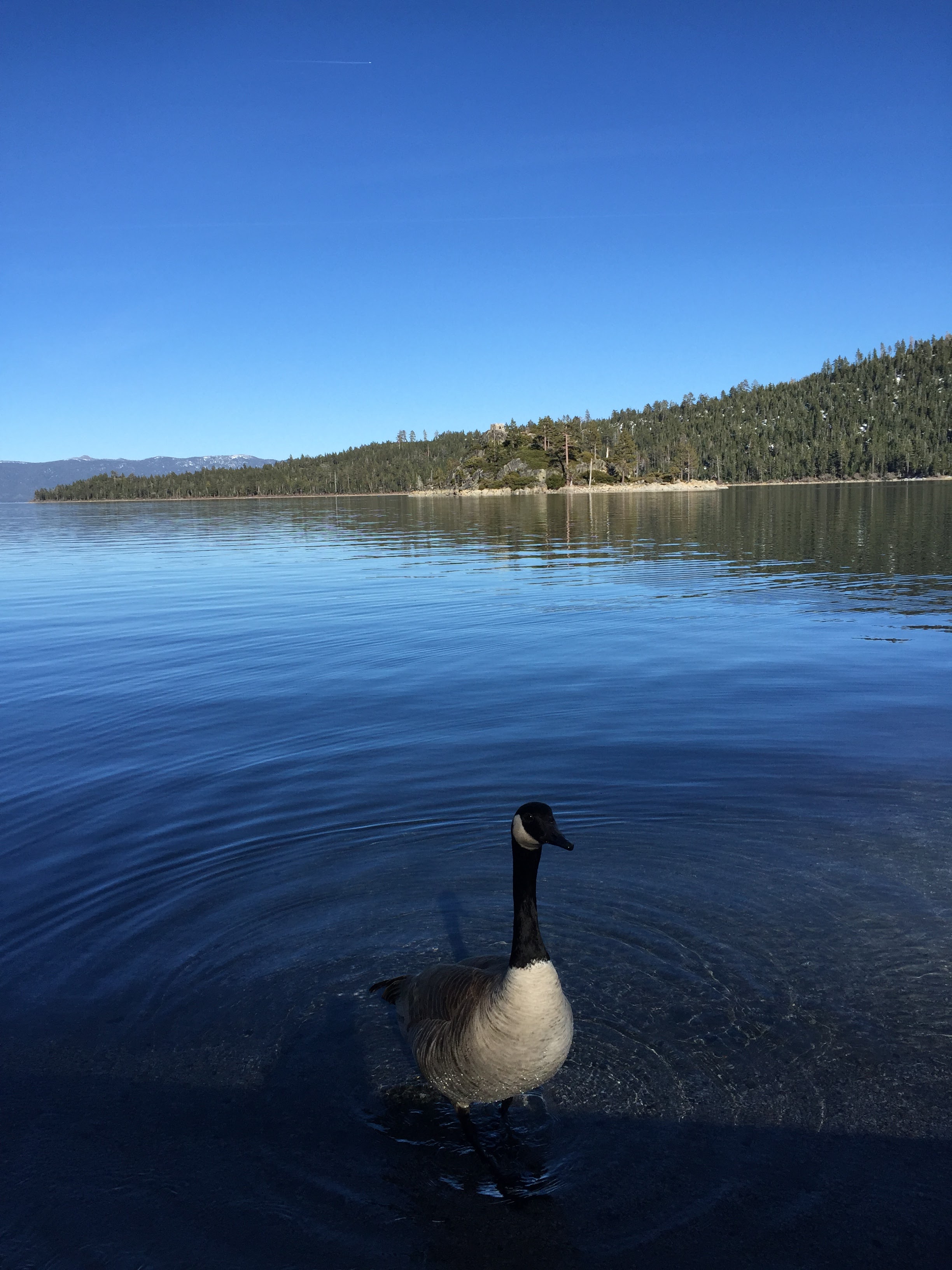
My Family And Other Animals: See how the author makes you laugh when you read the title itself? she said. We must have looked like Canadian geese being tickled for the first time, for she proceeded to explain the humor in the title. I don’t know whether you have tried tickling a Canadian Goose. I haven’t, but I think they would react the same way. Stern looking creatures Canadian Geese.

IMG_2223

Anyway, I hope for my teacher’s sake that we loosened up as the reading progressed. But, now that I look back, it was one of the first books that made me look for humor in daily situations. Mark Twain – especially the little story of Tom Sawyer painting the wicket gate was another. Swami and Friends by R K Narayan was equally memorable. I remember reading somewhere that R K Narayan when asked about his inspiration for Malgudi – that eternally inviting town that beckons you every now and then, said, he just watched life pass him by and that was all there was to Malgudi.

Pickwick Papers was slow going initially, but the humor in the book was unmistakable. These are the times I am thankful for growing up in a pre-Internet, pre-on-demand television era. I might not have stuck with Pickwick Papers otherwise. 

The ultimate guide was of course P G Wodehouse. When in high school, I changed upon P G Wodehouse, I did not immediately appreciate it. It took a few readings, but oh! What a gift?! What a gift! 

The father, of course, was and remains a constant reminder to find joy in every day life. His jokes were not always appreciated by the mater, but he could take a the rough with the smooth. Life was funny, curious, interesting and not always serious if only we stopped to admire the humor in them. The husband, the daughter and the son all joined the bandwagon too. My Family and Other Animals was taking shape in the Nourish-N-Cherish household.

Where am I going with all of this?! Oh yes! The blog itself. Nourish & Cherish started as an act of whimsy 16 years ago. It is a place that I regularly choose to don the sunny side up mentality in life.  As I started to write down this little skeleton joke, I mused on the thousands of little jokes that did not make it to the blog. For of course, I am guilty of thinking about writing and reading about writing far more than writing itself. But I am glad for the ones that did make it.

In over 900 posts over the past 16 years, life has taught me time and again, that you can choose the sunny side up.

To infinity and beyond!

The Purloining of Prince Oleomargarine

Days were blurring into weeks, and I had a flustered feeling. When days like these rear their heads, I reach for a children’s book to read. I’ve said it before, and I shall say it again, and again: Children’s book authors and illustrators are the true custodians of the human spirit. 

I had picked up a book left unwritten by Mark Twain, and finished by another author of today, Philip Stead. The book’s title is a mouthful, and its contents a mindful:  The Purloining of Prince Oleomargarine: By Mark Twain & Philip Stead (Illustrated by Erin Stead)

IMG_7473.jpg
The Purloining of Prince Oleomargarine

Apparently, Mark Twain, after a long day’s work, was asked by his children for a story using a picture as a prompt everyday, and this story was told to the little girls in France. He liked it enough to jot it down, but did not quite finish it.

When a book like that comes along, it feels like perfect cure for the cold winds whipping the Californian hairlines. The narrative voice makes you sit up and wonder how brilliant it is, and brilliance in simplicity is rare indeed. The book suffuses you with enough warmth to get you going through the windy, cold days.

The story starts off with a simple note from the Author explaining the circumstances and getting us to believe that Mark Twain told him the story about our hero, Johnny, while sipping tea and coffee overlooking a lake on Beaver Island. This simple note then sets the tone for two unreliable narrators in the story, and the book chugs on towards the hinterlands of imagination giving us a healthy dose of incredulity, hilarity and thought.

IMG_7487.jpg

Our Hero, Johnny, lives a miserable life on a farm with his miserable grandfather and hen named, Pestilence & Famine.  One day, he is sent off by his grandfather to sell the hen, and off goes Johnny with Pestilence & Famine. 

IMG_7489.jpg

A Jack & Beanstalk-y bit later, Johnny finds himself with an kind, old lady who trades him the hen for some old blue seeds, with the promise that if tended to properly, a plant will rise, and “when a flower comes up, eat it, It will make you full and you will never feel emptiness again –

“I tell you this”, Twain said to me, raising his teacup in the air, “there are more chickens than a man can know in this world, but an unprovoked kindness is the rarest of birds.

“So, did the hen die?” asks the Author of today, and Mark Twain says yes, while the author today believes that the hen and old woman are living happily.

“Your version lacks credibility”, said Twain. “Surely the old woman is dead. “

“And it should be noted”, he added, “that if Charles Darwin taught us anything, it is this: The chicken is dead too. And, lucky for her, because there are many unflattering ways to leave this world, but none quite so unflattering as being forced to live in it.

The blue seeds turn out to yield the Juju flower, and Johnny finds himself hungry and desperate even after eating the Juju flower. He walks to the edge of the forest, and falls feint only to look up and find a skunk, Susy. After nearly losing his mind Johnny says to Suzy, the skunk: “How is it that you can talk?”

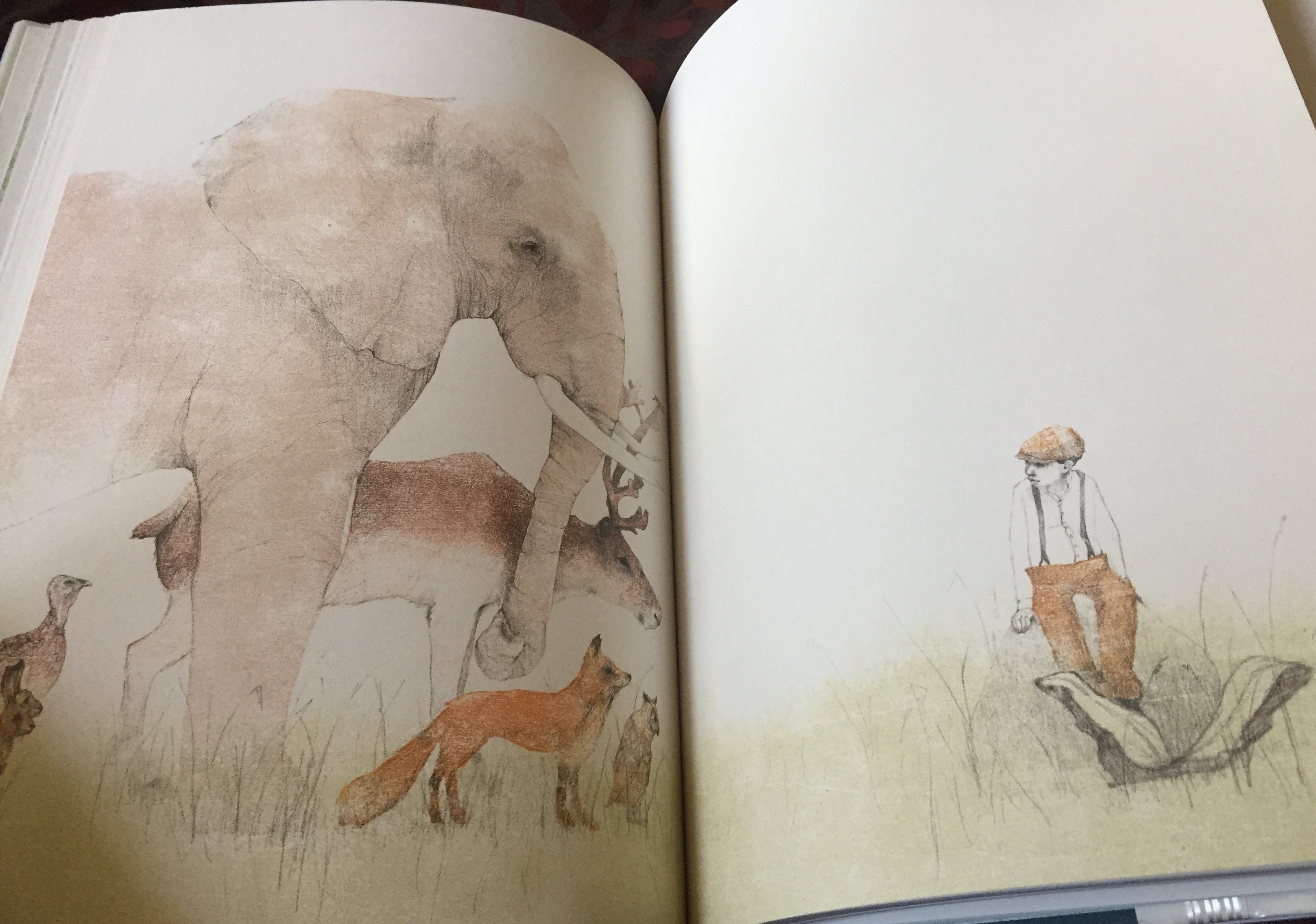
“All animals can talk! … A lion can speak to a squirrel can speak to an owl can speak to a mouse. A camel can spend to a pig who can speak to an elk can speak to an elephant. A whale can talk to a gull. A giraffe can speak to a hermit crab. It is only humans that no one can understand. It is why they are so ignorant and backward and lonely and sad – they have so few creatures to talk to” Susy added. “But I do not mean to offend, You do not seem ignorant or backward.”

“But you understand me?” asked Johnny.

“Yes”, answered Susy, “for evidently you have eaten the Juju flower. It is rarely given to anybody.”

img_7486.jpg

Please read the rest of the book to see what happens to Johnny and how he finds himself going to the King of the land.

Mark Twain’s words are still prescient:

“Terrible things are always happening to Kings. It makes you wonder why anyone would want the job at all.”