Upanayanam: Insights into a Traditional Ceremony

Upanayanam – Thread Ceremony

The husband and I found ourselves stupendously stumped. You see? We celebrated the son’s thread ceremony. We had managed to get in the middle of organizing and executing a function that smacked of our curious mixture of naïveté and fun. 

So much so that a lot of people were very happy, a few people held their tongues with pursed lips and stiff jaws (some even graciously told us that it is indeed what they were doing), and a precious few reveled in their self-glorified role of saying things-as-it-is (any politically savvy person knows what this means. But seeing as Yours Truly is particularly poorly suited to this, took some getting used to).

Summoned like a Woman!

Like all religious functions, this one excluded women, but insisted they were there for all the work. The organizing, the decorating, the gift-giving, the hosting. Just nothing religious. Every time I looked particularly bored on that stage, the priest would give me something to do.

 “Take that drop of water, and drip it on the coconut, amma!”

“Hold this bunch of dried grass against the shoulder, amma!” 

Then, a chuckle. “Not that shoulder amma, this shoulder!”

While all of these tasks weren’t exactly skillful, they ensured it kept me there. Otherwise, the poor priest found me wandering off the stage to talk to people. 

Then, summons were sent. Summoning the lady of the house on stage at a religious function is a curious case study of sonar technology and people movements. Every one calls out for you, and nobody realizes or remembers why I was summoned. Like a wave gathering in intensity before crashing on the shores.

Summoned!

Smiles to go before I sleep!

“How come you are smiling in all the pics, while I…”

“Look like you’re having your tooth extracted?” I finished smugly.

The husband paused to frown and then smiled, “Yes – like that!” 

“Easy! I had absolutely nothing to do but smile at people. Also, I looked for the phones and smiled pointedly. There’s a lot of time for not understanding a thing, and being dressed to the nines up there.” I said. 

“Talk about unfair – look how I looked in all the pics: confused, concentrating on getting the words right, while you…”

“Pranced and fluttered about the room? There are advantages to being a butterfly.”

So, that is how we survived a thread ceremony, without storm warnings.

Nilgiris: Nature’s Abundance on an Early Drive

“We need to leave by 4:30 a.m. if we are to beat the traffic!” the brother said. 

There were enthusiastic nods. I kept the alarm for 3:30 a.m, confident in our abilities to get going that early in the morning. After all, there is nothing as pleasant as a drive up to the Nilgiris from Bangalore. 

The route passes through two beautiful national forest reserve areas – Bandipur and Mudhumalai. The hills are usually green and welcoming at this time of year. Early summer in the Nilgiris is a joy – there are flowers blooming everywhere, the rivers and streams are flowing with healthy levels of water, and all of life seems like it should be: Full of beauty and abundance. 

I had quite forgotten the true splendor of a gulmohar tree in full bloom, but oh! What a joy to see these resplendent looking trees! 

You can spend all day gazing up at the branches – all the different ways in which the light dances and trickles through the very orange blossoms, all the different shapes the branches have spread themselves – no two trees the same, yet distinctive enough that they cannot be misunderstood for another tree.

The brother who is always in his element when he is driving anywhere other than city roads, shook his head as he saw me bouncing in my seat. He pulled over by a side road, and if you were to ask me the previous evening to imagine this road, I would not have been able to do it justice. I grew up in the Nilgiris, and have visited many times in the past two decades, but every time the hills surprise me (mostly good ways, but the increasing population and traffic snarls contribute to the bad ways) 

I tumbled out of the car, my heart bursting with song. Luckily it was just my heart that was singing, for who wants to frighten a bunch of elephants taking a calm dip in the Moyar River? 

The peacocks cooing in the distance provided a musical backdrop.

As we headed back to the winding road of 36 hairpin bends, all of the forest seemed to have risen. There were peacocks, sambar deer and spotted deer, iguana-like creatures, monkeys, langurs, and elephants. I cannot think of another experience where the soul feels as nourished or sated. 

By the time we had passed through the forests, we had been filled with the beautiful imagery of flora and fauna of the Nilgiri Hills. It is always so humbling to call this marvelous place home along with the thousands of creatures who live more unobtrusively in these parts.

The cheeky road signs only added to the allure of the morning forest scenes.

“Watch for deer crossing the road, remember the road is crossing their home!”

“Attention: Crocodiles in the River – do not swim. Survivors will be prosecuted.”

Development of Morality & Value Systems

Going back to a high school reunion after 3 decades is nothing short of illuminating. We had planned to meet regularly while leaving school. Then somehow, we all scattered into our various little lanes and holes, only to resurface like eager bunny rabbits after all these years. 

As far as social experiments go, this has to be one of the most interesting. 

Life seems to have been inventive, unique and predictable at the same time in all the ways it presented us with trials and tribulations. As we walked through the hallways of our school – it was curious to see how we fell back into familiar patterns of who we navigate towards. In 3 days time, it seems we fell back to familiar patterns and the intervening decades might not have happened at all. 

This fascinating behavior led to an interesting discussion on the subject and development of morality and values. At what point in time do we actually develop values, and our internal moral compasses?

I was shocked to find out that morality can start to form under the age of 1, and can easily be noticed between the ages of 2-5. Of course, morality and value systems continue to develop in noticeable leaps and bounds – till we are 10 years of age, then as teens shaped by societal and peer pressure, and as adults. But are they largely shaped by our early childhood? If there are any psychologists or anthropologists who have studied this, please let me know your thoughts. I would be interested to know.

Morality & Values

Childhood friends, when met after decades apart, can resurface memories good and bad. It was interesting to see how friendships played out over all these years. Sometimes, geographic proximity helped shape adult bonds. Sometimes, the bonds of friendships survived geographic distances. 

However, when gathered back in such a large group of classmates, it was interesting to note all the ways in which we fell back to familiar patterns in a matter of 3 days. The ones who were friends in school seemed to fall back into their familiar groups, even while a few new friendships were forged. 

A friend and I fell into a stimulating discussion on morality and values. It is obvious that we are drawn to people with values we admire. So, when looking back at our childhood selves, when was the inner moral compass formed? How did we know whether to be attracted to kindness or the lack of it? Were we drawn towards lightness of being and joy?

Could we be trained into ways of coping – I am sure we can. Pavlov’s experiment is proof of that. Our own behavioral patterns formed so early in childhood help shape how we navigate through life. Some of us are conflict avoiders, some conflict seekers, others do not seek conflict, but do not flinch when it comes to them. 

Is there an Inherent Moral Compass

I remember having a subject called Moral Science in primary and elementary school. It was a lovely class if only because the stories were always interesting, but how much did that help shape our inner compass, I wonder. It is true that reading about myths, and relatable struggles help us through our own. Hopefully, for most of us, our inner compass is strong in good times. It becomes tougher in times of stress and strife, and somehow life only makes these situations more and more complex.

Given that some of us had become friends when we were 5 years old, it was curious indeed. A quick google search reveals that moral based behaviors can be observed in children as early as 2 years old. So, is there such a thing as an inherent moral compass, and can we change ourselves enough and embrace growth through our learned experiences quite as much? Which brings us neatly to the nurture vs nature debate, and we could go on all day and all night.

https://www.mentalhealth.com/library/understanding-moral-development#:~:text=Between%20the%20ages%20of%202,when%20they%20break%20the%20rules.

There are values and morals shaped when we begin to question authority as teenagers, and then as adults when we learn a little bit more about all  the shades of grey, character motivations, and the like.

What are your thoughts? 

  • Do you think that our moral choices begin to be shaped in infancy, and if so, can they be changed over time (not just in small increments but in polar ways) 
  • When that young, do we consciously migrate towards value systems that appeal to us, or not?

https://www.betterhelp.com/advice/morality/morality-quotes-to-help-us-better-understand-ourselves/

The Magic of Shared Success

I am grateful I went to school for our high school reunion after all these years.

I have always loved the military traditions the school is steeped in, but seeing it all come together in such a spectacular fashion as a spectator was magical. 

The band was spectacular as ever, and after coming back to ‘normal life’, I miss the background music of the school band at all times of day. The band room was always full of enthusiasts – drummers, sax players, buglers, bagpipers, and a whole bunch of noises unrelated to music too. There was band practice in the mornings, band classes during the day, beating the retreat practice in the evenings, so there was music wafting in and around our lives at all times when school was in session.

There were sports, parade practices, and PT displays in our day too. But seeing the levels to which these shows have risen in their execution and creativity was enough to make my heart sing.

There were morning shows, evening shows and late night ones. Shows in which the children and staff had worked tirelessly all year long to pull off a brilliant endeavor. Sunset sensations featuring Yoga shows, laser shows, band displays etc were brilliantly done.

The Parade was a huge success as well. The Beating Retreat signaling the close of all the festivities was just as a marvelous. 

There is something about these programs involving hundreds of children that always gives me goosebumps. The strain of collaborative success running through all of these, is nothing but inspirational. Everybody has to ensure that they and everybody else is up to the mark, and work towards making it so. Or the whole troop/band/display fails. 

Why do more schools, or corporates for that matter, have activities like these?

Years later, when we reflect on these experiences, there is nothing but affection for those of us who worked and excelled together, and what better outcome in life is there to achieve?

 “We cannot seek achievement for ourselves and forget about progress and prosperity for our community…Our ambitions must be broad enough to include the aspirations and needs of others, for their sakes and for our own.”

— Cesar Chavez

Reflecting on 30 Years at a High School Reunion

30 years 30 minutes

When we look back on life – what do you tell those who knew you when you were but a little girl? Some had grown into more distinguished versions of themselves, few were hardly recognizable (especially those who had embraced facial hair – mustaches, beards, and the like), and a rare few looked far younger than their biological age.

There was a strange moment when I asked a fellow classmate, “I am sorry, I am unable to recognize you – can you remind me who you are?”

“Oh come on Saumya!” He said, and I felt a flush creep up my cheek.

“Not the right response man!” I said laughing, as he reminded me with a helpful anecdote to place him. 

In 30 years, a lifetime has passed, and yet felt like a heartbeat.

Sounds cliched I know. Probably the thing that everyone who has attended a high school reunion feels. 

As I gazed fondly around the room taking in the whirlwind of activity and the people who were at school with me, I felt gratitude first for all the memories. Even the bitter ones seemed to have attained a bitter-sweet tinge to it, which did not quite seem possible at the time. 

When we left school 3 decades ago, everything felt sharp – in a way that teenagers can feel. The angst, the turbulence, the weight of expectations, the sense of trepidation for what lies ahead. And then somehow, life happened in those moments of angst. The years rolled by. Careers were made, lives were built, children were birthed and raised, and through it all, our families and friends bore the thrum of Lawrence School almost like background music. 

It was fantastic to see where life had led us all in the three decades since. Many had embraced growth, some had endured it, and a few had denied it. But we were all swimming across the river and continuing to brave the currents. Some of us were still in the whirlwinds of the swift currents, some were looking forward to the quiet moments of water lapping around the shores on the opposite side. Regardless of where we were in life though, there was an enormous affection.

I remember thinking as a girl why the Old Lawrencians made such a fuss about their reunions decades later – they all seemed to be so happy to be there with their hair greying and limbic nimbility dwindling. I understand now. 

People Currents

It was curious to see the patterns emerging after all these years. How we sought out the people we liked, had a polite curiosity about the people we didn’t, and found out about the ones we respected after all these years. Finding out about those who had exceeded expectations, those who braved life’s storms with equanimity and grace, and those who had simply let themselves go in the intervening years.

As we traded our life stories, it was humbling to see all the different and varied ways in which the world had tested and tried us over the past few decades. Love makes us endure horrendous things just as much as it makes us do inspiring things. It is no wonder there is a Love door in the Department of Mysteries in the Harry Potter Universe!

Life truly is a mystic game. I was reminded several times of the quote by Leo Tolstoy:

All happy families are alike; each unhappy family is unhappy in its own way

Leo Tolstoy, Anna Karenina

As we took several walks down the memory lane, each one had recollections of their life in boarding school that was unique: sometimes traumatic, other times funny, many times reflections on moments of personal growth and realization. I don’t think I’ve laughed this much over inane things since adulthood. 

Just for that, it was all worth it.

April Highlights: Poetry Month and Stress Awareness

April is a beautiful month of Spring. It also is Poetry Month, Stress Awareness Month, and plays host to several days such as Earth Day, World Reading Day, International Dance Day, and we found out quite recently, World Quantum Day.

Trying to accommodate all these different aspects into reading and experiences can be quite the adventure if you let it.

For Stress Awareness Month, we released the fourth episode of Sitare Spotlight. This time, our guest was Salima Banu Iezzey. Salima is a fitness coach, adventurer and nutritionist. The conversations with her were a good reminder for all the tenets of good living. Simple things we can do for daily well-being, bigger adventure goals and healthy eating. Please check it out here:

Sitare Spotlight Ep.4: Salima Banu Iezzey on Fitness, Adventure & Wellbeing

https://youtu.be/Tpirxjy_u8U?si=2-3P_Q7ltAgjpChA

For Poetry Month, apart from dipping into poetry collections from time to time, this time I also read about the life and times of Emily Dickinson. It was fascinating to see how the few poems of hers that did make it to publication during her lifetime were published anonymously by her friends and family members.

Book: Becoming Emily – the life of Emily Dickinson – Krystyna Poray Goddu (what a fascinating way to  spell Krystyna?) 

It was only after her death that her friend and niece got her poems published – a little tug of war between them to see who had access to more poems. It is also interesting to note that like Jane Austen, Emily Dickinson too hailed from a family that valued education, and somehow, even during those times of limited financial independence for women, were unmarried. That probably explains the prodigious work they were able to turn out in their lifetimes.

On Earth Day I gazed down upon Earth as we took off and flew over arid deserts, lush green forests, snowy stretches, oceans brimming with life, on my travels. All the time marveling at humankind and our ability to create a safe mode of transport in the air when we neither have the wings nor the air-borne buoyancy required to pull it off. Our innovation helping us gaze over the beautiful planet and peer into the maps being flashed on the screens”

Flying over Deer Lake, Cat Lake, Big Trout Lake, Sam Lake, Kingfisher lake, Wunnumin Lake – past Saskatchewan and Ontario

Quaktaq – Past Hudson Bay – where I remembered reading about the Great Bear Sea and the Arctic Unicorns (Narwhals) 

Then I zoomed and chuckled over whimsical, interesting and beautiful names: Pikangikum, Quaktaq, Akulivik Puvirnituk.

One of the many futures of AI innovations may whisper in my head the meanings or origins of each of these names, but for now, it was enough for me to muse. Imagine nonsensical little things about their etymology, the languages, or the peoples who named them. I wonder why we don’t spend more time as amateur cartographers, naming the little nooks and corners of our daily walks. I remember telling someone to meet me at Reflection Pond, and then remembering that there was no Reflection Pond on the map. It was simply a name the children and I had come up for the dear pond on one of our many strolls. It was the time of sunset, the pink and orange hues above our heads were beautifully reflected in the serene waters below, and we sat there, each of us lost in our own reflections.

Read also:

https://nourishncherish.org/2025/04/17/%f0%9f%8c%8e-happy-earth-day-%f0%9f%8c%8e/

World Quantum Day

2025 is also the International Year of Quantum as designated by the United Nations. 100 years since Quantum Mechanics became a part of higher education science and research. 

Maybe there will be a day n the future dedicated to World AI Day.

Ahh…hold on: There already is: July 16th is declared as Artificial Intelligence Appreciation Day

Read also:

https://nourishncherish.org/2025/04/15/celebrating-world-quantum-day-history-and-fun-facts/

International Dance Day:

Those for whom Dance is a joy, there is a day on which to think about its many obvious advantages. The little spring in the step, the little hum in the brain, the little smile on your lips.

Read also:

https://nourishncherish.org/2025/04/24/celebrate-international-dance-day-a-journey-through-dance-dramas/

What are your favorite aspects of April?

Celebrate International Dance Day: A Journey Through Dance Dramas

International Dance Day is coming. 

One of the best things about my dance teacher was how she helped transform the world on the stage with mere mortals. Children of varying interest levels, abilities and time. We somehow knew each other’s pieces, and the rehearsals became a place of camaraderie and belonging like nothing I have known since.  Friendships formed in the orbit of practice, each of us helping or being helped as the D-day drew near. The energy of practice was always enough to bring a smile. No matter how hard or terrible a day you’d been having, if you have to smile and dance when it is your turn, it does something to you, and you find yourself in a better frame of mind without even trying. 

How I wish dancing, singing, art, literature, creative writing, team and adventure sports are all a part and parcel of everyone’s life on a regular basis. Without having to carve time for it, without yearning for it, without having to take the car or public transit to plan for it. What a luxury that would be?

As we spend time working, we spend time in our creative pursuits – intellectual, or physical. 

As the children grew up, I had the chance to attend many dance programs, arangetrams and productions over the years. As soul-nourishing as they all were/are, I still yearn for the dance dramas that my childhood teacher was so good at conceptualizing, choreographing, composing, teaching and performing. Who cannot be caught up in the climax of Mohini skillfully directing Bhasmasura towards annihilating himself through dance, or Mahishasura Mardini, or any other epic being played out on stage?

While I yearned for multi-dancer theatrical dramas played out on stage, I was also keenly aware of why they were difficult to pull off. In a society where the number of hours were optimized, did you dedicate time for learning your margam of items – the standard pushpanjali/kowthwam, alarippu, jasthiswaram, shabdam, varnam, keerthanais and thillana so that you can prepare for an arangetram in that time, or spend a part of that time with a dance drama production? It is a tricky situation complicated by expectations of society – individual performances merited standardized margams, dance dramas demand a different format.

So, whenever I get the chance to go to a dance drama, I practically dance into the auditorium myself. 

Nirupama Vaidyanathan’s Journeys of Faith based on Shoba Narayan’s book, Food & Faith

In recent years, I have had the pleasure of attending a few of these theatrical productions. Nirupama Vaidyanathan’s Journeys of Faith based on Shoba Narayan’s book, Food & Faith was one such. Nirupama is always skilled at having multiple dancers quickly move together, seamlessly, in beautiful patterns on stage. She managed to incorporate standard thillana-style formats etc into this production which I thought was a very clever way to balance the needs of the student and the theatrical dance drama format.

That dance performance was amazing. Nirupama is a clear orator, and in this production, her voice overs, where she was narrating pieces from the book as she set the stage for the Palani Murugan temple or the Udipi Srikrishna Temple were amazingly done. She had the music pieces composed, and stitched together for the dance drama. I just have to close my eyes to see the way all her senior students came together on stage at the very end to show how the prasadam in a big temple kitchen is prepared. Who cannot be filled by a performance like that, followed by an excellent prasadam at the Livermore Temple afterwards?

She combined literature, theatre, dance and music in such a satisfying and eloquent manner that a year after the actual performance, I am able to recall the transformation of the stage in her skilled and capable hands.

Meenakshi Sundareshwarar Dance Drama

I had a similar feeling with the Meenakshi Sundareswarar dance performance by Sharanya Ganesan. It has been a few months since her dance school staged the dance drama to which I was invited. But, was it a transformative experience?! She managed to fill the stage with students of every stage in their dancing journey. 

There was the child Meenakshi, the young-adult Meenakshi, and the adult Meenakshi – with all the dancers accompanying the stories filling the stage with their rhythmic jathis, their quick and coordinated movements. The stage ebbed and flowed with the dancers themselves. The costumes – oh the costumes! Bharatanatyam costumes are always a joy to behold, but on that stage, they took on a fantastic life of their own. Except for the main characters of the story – Meenakshmi, her parents, Sundareshwarar etc, everyone was clothed in combinations of cream and (red, pink, violet, or green). I have always loved the cream colored combinations, and on that stage housing over 50 dancers, they all stood out and merged together. 

The dance performance itself co-ordinated across all the batches of children she teaches must have been both a joy and a huge project in and of itself. Every group knew of the pieces they needed to perform, but according to her senior students who spoke to the audience afterwards, the whole thing was a concept weaved together into the magic it transformed into only in Sharanya Ganesan’s head. 

On YouTube Please!

Every time I look for entertainment to watch, I yearn to see if these dance dramas would be on YouTube or Netflix. I wish they were. For I love to watch a good dance drama on a cold evening – I end up watching some dance pieces, but a good dance drama choreographed, executed with such talent, beauty and grace would be something that I would love to see every now and then, or even on a flight. 

There are always good ones we miss out on because of conflicts – how marvelous it would be, if we could manage to fill our souls with the performances later? I am on a flight to South India – thumbing through the entertainment available on the flight, I thought to myself that  I would love to see The Whispers of the Kaveri when I am traveling to the very lands of the Kaveri river – Tamil Nadu & Karnataka. 

🌎 Happy Earth Day 🌎

🌎 Earth Day 🌎

Earth Day is coming up, and I feel the familiar flutter of gratitude for our planetary home.

It is the time Spring is in full bloom in the countryside around us. When Earth’s bounty surrounds us, it is hard to not feel like we really must be foolish to ravage Mother Earth the way we do with our greed and pointless consumption.

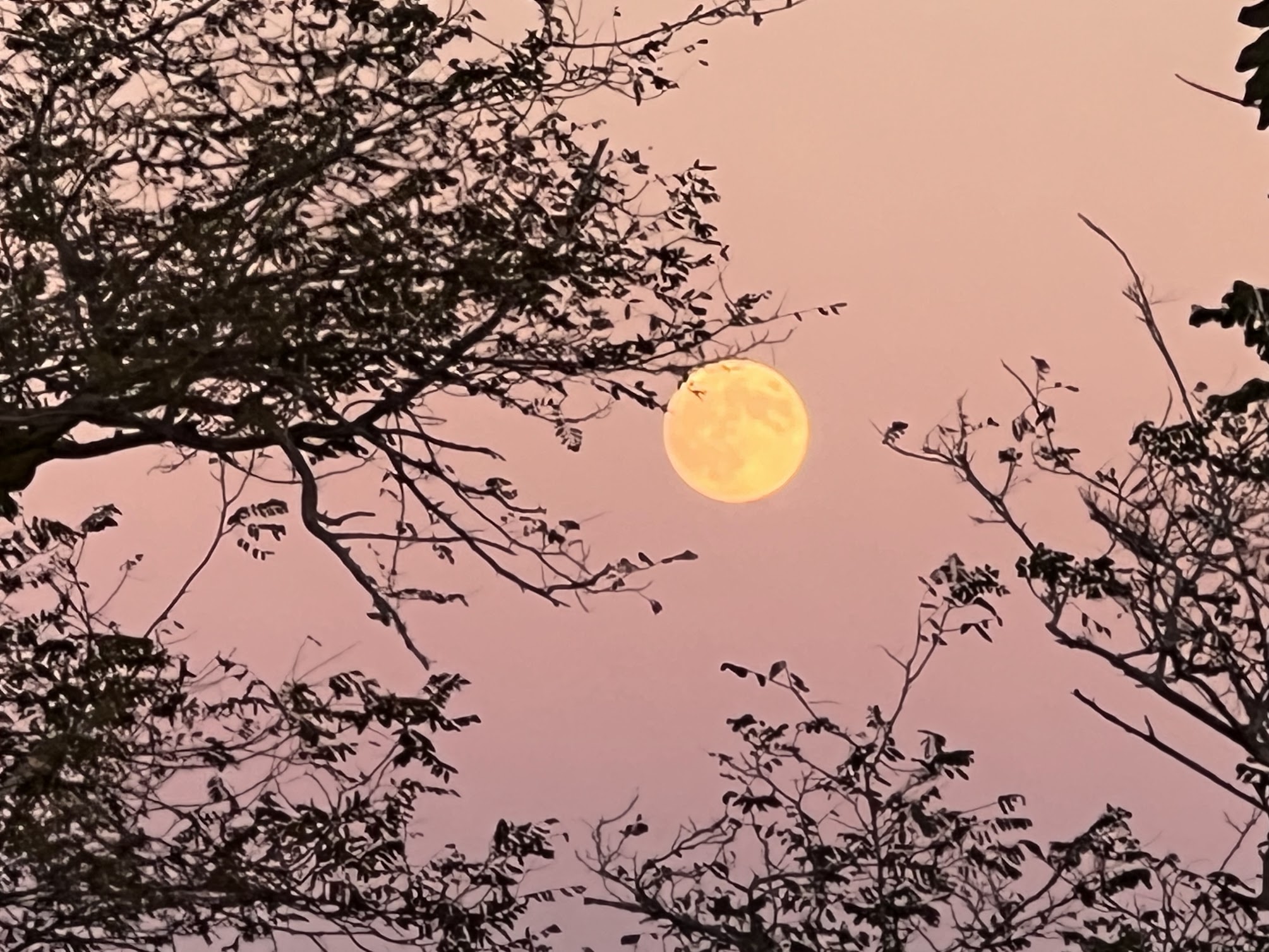
It is the time I moon about outside, reveling in the lengthening days of spring, and watching the stars peep outside. A couple of days ago when the full moon rose a- beautiful golden orb in the sky, I gasped, and thought of the image taken from there that led to the creation of Earth Day as a concept.

https://en.wikipedia.org/wiki/Earthrise
The picture was taken by an astronaut, Bill Anders, aboard the Apollo 8 spacecraft in 1968.

Books Celebrating Our Life on Earth

Children’s books are one of the best resources for celebrating our marvelous planet. Authors like Oliver Jeffers seem to know the knack of grounding us while making us soar high above the Earth to see our home.

These two, in recent times, have had me humming. 

If you come to Earth – by Sophie Blackall

The premise of the book is not unheard of. It is narrated by a boy named Quinn who introduces a visiting alien to Planet Earth. The pictures are a delight, and the book is charming in itself. The narrator show the esteemed visitor all the places

  • Where we live – towns, cottages, villages, towns, cities, high-rise buildings.
  • What we do – the range of occupations was truly fascinating to see. (I also had a little doubting-deborah contest trying to see which of these jobs would be around in a decade and in a century) 
  • How we read, speak, and communicate – languages, written alphabet, morse code, braille

And so many more aspects of life. 

The best part of the book to me was the note by the author at the very end. I always seem to relish notes by the author, and this one went on to delight.

Excerpt from the Author’s Note:

Continue reading “🌎 Happy Earth Day 🌎”

Celebrating World Quantum Day: History and Fun Facts

World ⚛️ Quantum ⚛️ Day – April 14th

“Oh wow, ma! Today is Quantum Day!” said the son. Actually yelped the fellow, like the words were yanked out of him by the excitement coursing through him. For some weird reason, even as a young toddler, he loved the word, ‘Quantum’.

Maybe it was Iron Man or Ant-Man – that movie in which they use the word ‘Quantum’ every time they did not want to explain something. Or maybe it was the fact that we all liked watching The Big Bang Theory television series in the house so much when he was a child, or maybe the Cosmos shows by Carl Sagan, or the fact that I like reading about Physics

In any case, Quantum. He lights up when you mention Quantum-This or Quantum-That. 

I smiled at him, and said, “Wow! I didn’t know they had a day for that!”

2025 is also the International Year of Quantum as designated by the United Nations. 100 years since Quantum Mechanics became a part of higher education science and research. 

From Book: My First Book of Quantum Physics – by Sheddad Kaid-Salah Ferron & Eduard Altarriba

⚛️  My First Book of Quantum Physics ⚛️

This seemed to call for a little nostalgia. I opened a favorite book of ours – as a child, I remember getting this for him and he spent hours looking through the pictures. 

My First Book of Quantum Physics – by Sheddad Kaid-Salah Ferron & Eduard Altarriba

It really is a beautiful book. Sheddad Kaid-Salah Feroon & Eduard Altarriba do a fantastic job of the illustrations, explanations of difficult concepts and providing a general feel for the subjects.

It is why we were excited to visit the CERN supercollider in Switzerland.

Sheddad Kaid-Salah Feroon & Eduard Altarriba have a series of books covering topics such as: 

  • Quantum Physics
  • Relativity
  • Electromagnetism
  • Cosmos
  • Microbes
  • Evolution

Please check these books out if you get the chance. It is always fascinating. Especially, when in our everyday lives, even if we are professionals with science backgrounds, we hardly set aside the time for this type of shoshin (the wonder of the beginner’s mind)

In one time and place, when not observed, if we can find that joy of wonder, that would be Quantum, wouldn’t it?! Get it? Get it?!

Taming the Ego: Embracing Irrelevance

Taming the Ego

One of the biggest achievements of growing old has to be the achievement of realizing our own diminishing importance in the world, and gracefully succumbing to a life that is finally galloping past us. This can be a phenomenally difficult thing to do. I am well aware that I may have this very article picked up, printed and taped to my bedside as an octagenarian or a nonagenarian by the younger ones in my life. (I shall have a laugh then!)  

But right now, writing this in my forties, I feel that day is far away and can therefore hope to lord my philosophies of life over everyone.

I suppose Taming the Ego is a theme that these Zen and Buddhist teachings harp on quite a bit. Confused with humility, this often manifests as a tool for diminishing our accomplishments. What I think it means is letting go of our perceived importance in the world, and seeking irrelevance.

The world of work is already changing quickly enough to ensure that senior citizens feel a bit frazzled by the nature of it all. So the work world is quite easy to relinquish our control over. The harder aspects to relinquish control are over the other aspects of our daily life.

The promise of the future vs the nostalgia of the past.

I was reading a fascinating children’s book, If You Come to Earth – By Sophie Blackall, that deserves a post all on its own about how you’d feel if you were an alien visiting Earth. Not exactly a new theme, but the book is engaging enough to introduce us to Earth with all its quirks and attractions. 

There was a page in there that quite neatly summed up aging. 

Older people are good at telling stories about the world when they were young. Kids are good at making up stories that haven’t happened yet.

– Sophie Blackall, If You Come to Earth

What a marvelous way to sum up humanity’s youth against the aging process? The promise of the future vs the nostalgia of the past.

The Tyranny of Technology

I remember an incident a couple of decades ago when I took the just-retired father into the ATM with me. It was a swanky little ATM – all polished floors and gleaming surfaces, the cameras concealed in the false ceilings etc. The pater came in gaping at the wonder of it all. Thus far, he had walked into the State Bank of India office in our little residential town, wished all the staff a good day, asked about the teller’s son’s progress after his recent surgery, withdrawn money from his account and scurried home to put it in the locker in the Godrej cupboard.

Suddenly, here he was, no teller in question. No human in question. With a machine that gave money. He said, all agog, “Kondhai (child) – can you take out 1000 rupees at a time 5 times so I can see what is happening?” 

I laughed and complied.

But it was just the beginning.

Where previously, our parents’ generation dealt with money, now they too have to contend with credit cards, ATMs and electronic banking. The few banks that continue to offer in-person services are heavily sought after. It is also becoming easier than ever for scams to take place. After all, the teller no longer knows that you already withdrew cash for your grand-daughter’s wedding a year ago. 

The Tides of Time

So, how to stay relevant in a time when the ground is shifting so rapidly beneath you? 

What can one do but to embrace those rascals of emotions that sidle up the moment they find a sliver of chance to get in: insecurity, anxiety, fear? How can one not parrot the beliefs and rituals of the past when it is all that seems to make sense to you?

The enormous pressures of technological advances mean that life expectancy has increased, and the tyranny of these advances means that you have to try and stay relevant. Our parents’ generation learnt to use electricity, radios, television, internet, mobile phones, social media – all in a race to stay relevant.

So, when does it all get too much? 

I don’t know. 

Is the journey to realization of our diminishing importance in the world the ultimate test of spirituality? 

After all the tides never stop coming in and going out – they just don’t seem to care about the fish in them.