Star 🌟 Stuff?!

I don’t know if you have tried comet chasing every night for a week. A week in which photographers from the world over posted photographs that suggested a flaming, brilliant torch tearing past our heavens with an urgency that made you realize life was short, our journeys spectacular, and a whole lot of poetic asides.

The husband, the bright matter energy source in the household, if anything, shored up even more bright matter to counteract all the dark matter in the universe. His resolve only wiggled a bit when he saw these brilliant flaming pictures of the comet as though it was an olympic torch blazing through the heavens, when in reality, the comet looked like a Pluto after a good cry. (After the astronomer’s good cry, not Pluto’s!)

The son, kept his running commentary on photons, light years, superclusters, cosmic addresses, and the pair of us dreamt on.

The daughter, pragmatic as ever, squashed The Poetic Outlook like a bug under a hippo’s knee. Some teenagers may find it cool to tag along with their parents on adventures chasing 💫 comets: ours rolled her eyes, and the drag of the eye roll did resemble a comet’s tail.

I’d like to think that I was the calm influence that steered the boat into the cosmic oceans. The husband turned to give me an amused look, the son’s laughing rattled the comet to go back into hiding, and the daughter pulled her coolest teenage look of scorn and said the all-encompassing word, “kook!”.

“You know? I don’t see why people are wasting so much  time with the skies. I mean, if you  do see  the comet, I suppose it is nice and all, but  what’s the point of sitting there for hours on end and trying to find something hurtling through space. Huh-hmm!” she said, her lips thinning just the way her grandmother’s would.  I love it when the mannerisms of her grandmothers slip into her speech in unguarded moments like these, and couldn’t help smiling.

“I  mean – what sort of career is that? And what use is it?!” she cried, clearly asking for it.

The son & I, inferior debate  companions as we are to her sharp tongue, rose up to the occasion.

“Hey  hey hey! Going at the rate we are, scanning the skies may give us an opportunity to find another habitable planet to expand into. The same can be said of all kinds of research – the actual research does not immediately yield results, but every little bit of understanding advances us  a little bit further.”

“Yeah – also we need to know where we are in the universe! Are we in Milky  Way, Virgo Supercluster, Observable Universe:  what is our address?” said the son.

Location_of_Earth

Andrew Z. Colvin / CC BY-SA (https://creativecommons.org/licenses/by-sa/4.0)

The daughter’s tongue could have  sliced an apple in an instant as she rattled off our home address and said, “Why do we need to know huh? I mean, here we are. This is it. Live here, what is all this knowing where-we-are stuff? Waste of time. What is it going to do for us?”

The son & I blanched. You see: the pair of us are dreamers, standing beneath the stars, and endlessly wondering whether we belong to the Lainakea supercluster (is it the same as the Virgo supercluster?)  After the observable universe, then what? What if all the observable universe in inside a massive black hole, and time is only  something in this space? 

“But we are made of star stuff – isn’t that magical? Star stuff!” said the son wistfully.

“Yeah – duck poop is is also star stuff – deal with it!” said the daughter. The son wilted under this argument. The daughter caught sight of my eye looking like an angry comet, and mollified the little poetic fellow. “But duck poop is good star stuff! Heh??!!”

I cannot say the debate went anywhere. It was a disappointing bunch of evenings after all, and the teenager felt it keenly. I mean, when one has posted  to one’s friends that they are going comet gazing, and then come back after hours, having  grazed on half a luna-bar, there is bound to be a dearth of the poetic. 

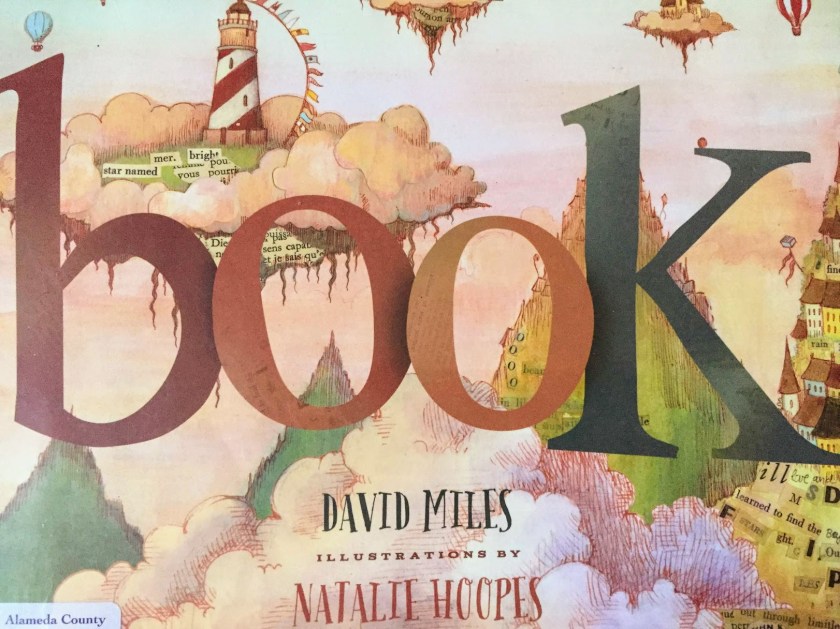
“You know young lady, I have just the book to cure you of this disappointment.” I said and gave her the book, The Stuff of Stars by Marion Dane Bauer Illustrated by Ekua Holmes

The illustrations in this book make it an absolute treasure. In the past few days, after a clearly disappointing  comet gazing experience, I found myself gazing at the marvelous pictures in the book instead. 

stuff_of_stars

The 💫 Comet 💫 Life

The past few days have been a flurry of activity with tiny little bursts of stardust and magic spun into the day.

We traipsed home tired, sleepy but triumphant. This was a Sunday morning well spent: we had finally sighted the elusive comet, 💫  Neowise. The previous morning, we had run outside at a similar time, and stood pinching our eyes, squinting at a resplendent Venus and thinking that if you cocked your head to one angle, and yawned loudly enough to get tears in your eyes, you could spot the tail. This technique made for some hilarious moments, but comets don’t seem to care much for sentient beings on some transient planet trying to catch sight of them in the wee hours of their morning, and we had to accept defeat and head home.

The next morning, however, we had managed a grainy sighting of the comet and we were jubilant. When the chocolate drink was gulped, and the little fellow was tucked into bed again, I lay in bed thinking of the comet 💫 . I could not shake the beautiful image from my mind’s eye.

img_8934

To the naked eye, it looked nothing like the images taken by setting one’s camera to a long exposure, but it was there alright. The burning star with a yearning, a lone star shining its torch as it scorched its way by numerous stars treading a path it had set for itself. An unconventional celestial object. Compared to the systemic order of the rest of the universe, there was a object that was definitely unconventional , a trail blazer (get it, get it?) Why an elliptical shape, and why 6800 years?

I went about the days after the comet sighting with a faint gasp in my demeanor. Imagine, as we are holding all these important meetings, combating pandemics, and trying to protest against all things unjust, here was an icy blob just spinning away on its own elliptical. 6800 years before it can peek at us again. Often as I went about my day, I wondered whether there was a possibility of sentient life evolving on comets. Comets and asteroids have been known to be microbe transporters, seeding the possibilities of life as they hurtle through the vast dark emptiness.

Do extremophiles have what it takes to feel?

I mean, if we were to have evolved on a comet rather than a planet, would we have had such success in determining the nature of physics and the laws that holds the cosmos and the universe within which we thrive? How would time be measured on a comet? If rhythms helped us discern music, what would music have been in a comet-ic life? Our own days on Earth are neatly sliced into hours, minutes, and these days blend into weeks, months and years. Before we know it, we have made one full circle around the sun, and the seasons have changed along the way in predictable ways.

But none of that would be true if sentient life such as ours had evolved on a comet instead. There would be no days, no seasons, no predictable cyclical rhythm to our days. The sense of adventure as we drew near other stars and planets would probably fill the time. But time itself may have no more meaning, or much more meaning depending on how one perceived it.

These musings were sources of mild amusement, while life itself marched on with a comforting rhythm down here on Earth – dawns, days, dusks, nights, weeks.

Did the seagulls, deer and ducks think of such things?

Ahh! Comet life!

Comet Chasing * Chocolate Charms

The children have a shared liking for Calvin  & Hobbes. The adorable pair have been the source of many hysterical giggles between the siblings in our home. In the son’s room, there is a cartoon clip of Calvin & Hobbes that seems to tickle both his whimsy and his innate rapture and curiosity of the universe we live in.

calvin-gif

If people sat outside and looked at the stars each night, I bet they would live a lot differently  ✨- Calvin & Hobbes

A few weeks ago, I was typing out an email with the ounces of concentration I could muster at the end of a 12 meeting day, and I wasn’t exactly thinking  about 💫 comets, stars, pulsars, neutron stars, black holes, and parallel universes, when the little fellow shot into the room bursting about comets. I turned around , and my face probably looked like some of the spreadsheets I was looking at, for the son gave me a pitying look that seemed to indicate, “What good is a day when you haven’t thought of these important things?”

I laughed at the incredulity on his face: Stars, superclusters, muons traveling the speed of light, quirky  quarks are all thriving right beside his world of super-powers for super-heroes, who are incidentally gifted with important sounding superpowers such as gamma-rays and electromagneto-muon-transporters and what-not. 

“Did you  know Halley’s comet is going to come again in 40 years?” said the son still bouncing and glowing from the stash of chocolate chips he has been chipping into while reading his little books on Physics.

img_8953

“Yep! Sounds about right. I was around your age when I saw Halley’s Comet. So once in 76 years means …” and I trailed off.

“What?! You’ve seen Halley’s comet? Aww…..so lucky!” said he, and I had to laugh at his yearning. I did remember the cold nights awaiting the turn at the telescope to catch a grainy sight of the Halley’s comet. I must say that the whole experience felt worth a lot more given the rapture with which he listened to the comet sighting. I seem to remember the hot chocolate provided to the young astronomers more than the telescope and the grainy image itself.

Maybe the universe really did hear his yearnings that day, for within a few weeks, another comet came our way: the Neowise 360 comet sighting was supposedly possible from where we lived. I was so happy for the little fellow. He could barely contain the excitement in his system when his father said at the lunch table that the comet would be visible at 4:30 a.m. He got up and ran upstairs to his room. We were exchanging quizzical glances at this when he tumbled downstairs and said, “Yes! I set the alarm for 4:30 – I cannot wait to see it!”

I had to admit; the young astronomer’s enthusiasm put us to shame. So, for the next few nights, we bundled up and comedically traipsed from location to location in the wee hours of the morning looking for a comet sighting. The clouds were there in one place, some low mountains in another, and then, finally, we managed to find a plain spot in which we caught a grainy sighting.

img_8934

Knowing that we caught a fleeting glimpse of something that is not going to come by to see us for another 6800 years is strangely moving. I have to tell you though, that similar to the Halley’s comet sighting, the hot chocolate after coming back, and the the long tail of wishes accompanying the comet sighting, definitely made the hustle worthwhile. 

That morning, the rest of the comet chasers had no problem falling back to sleep, but I did – the comet had kindled dreams of long ago: dreams born of comet chasing and chocolate charms; dreams woven with the magic of stardust 💫 and comet trails – bright, shiny, sparkling, path-breaking and aspirational.

Bill Watterson was absolutely right: People who spend time looking up at the night sky do live life differently!


Shoshin Seeking & Science Writing

Shoshin is a concept dear to me as regular readers know. Shoshin is the Zen Buddhist word for ‘beginner’s mind’, denoting the capacity to bring wonder and open-mindedness to learning anything.

To continue the quest in Shoshin seeking,  I volunteered to take an online writing class with a focus on Science for elementary school children. 

img_1763

The idea for the class was inspired by multiple factors:

(1) A sense of wanting to be useful while doing the socially responsible thing of staying home during the Corona-virus shelter-in-place. 

(2) My brain after years of running around from Place A to Place B found a method to calm down from the frenzied lifestyle that modern man prides himself on (The Virus is a reminder of something lost long ago – an essay by Alan Lightman – a writer and physicist at MIT) 

(3) Combining the marvels of Science and keeping the wonder of Shoshin alive is pretty much what my writing has been about (at least in the past 1/2 a decade). An area of passion that I was happy to share with the children, from whom I learn Shoshin in spades.

(4) A love for children and young minds has me yearning to be like them on multiple levels. I live precariously through this yearning by reading children’s books, squabbling childishly with my own children, and much more.

The result of this was a marvelous month in which I went about reading topics that had long since been pushed to the back of the brain. I wondered as I prepared for the classes, how we wasted those marvelous moments of youth with all these fascinating subjects. I understood as the class went on:  sometimes the children were enthusiastic and wanted to write all about the topic under discussion. Other times, they liked the sound of music-like science lilting in their ears, and they nodded along sagely. The rays of the afternoon sun filtering in through the window made for warm, cozy sessions in which one saw one’s friends on the zoom call, and answered when one felt like being a part of the discussion. This was nothing close to the normal they knew, but they adapted with ease and their customary good sense. All in all, it made for a marvelous time, and with the children happy, so was I, their teacher. 

If post-Covid, some children recall sunny afternoons with thrilling science to a background of their classmates trilling in the background, while taking a leap of imagination, it is time well spent, in my opinion. 

I remember distinct moments when something piqued the children’s attention. The time I told them about giraffes in the savannah, or when we played the little game of hearing frequencies, or when we spun off pretending to be whales using sonographic techniques to unearth something really unexpected.

I am going to sign up for another 4 week session in which I hope to have as much fun, learn as much and enjoy the companionship of younger authors, who are by  virtue of their youth also leaps ahead in imagination and spirits.  Wish me luck!

The Glimmer of Hope

I sat in my backyard reading on a hot Saturday afternoon. It was the 4th of July week-end, and I had pages to go before I slept. During the peak of the Black Lives Matter movement, I resolved to read more about the life of minorities, racism, civil disobedience and much more. The son & I had painstakingly collated a list after reading several lists online, suggestions from friends, teachers, colleagues, and the companies we worked for. If there are any other recommendations, please let me know in the comments section. (Thank you 😊 )

  • Becoming – by  Michelle Obama
  • Civil Disobedience – by Henry  David Thoreau
  • Sneetches and other Stories – By  Dr Seuss
  • A Long Walk to Freedom – Nelson Mandela – Abridged by Chris Van Wyk
  • Black Panther – by Ta-Nehisi Coates
  • XVIII – 13th Netflix Documentary
  • Hidden Figures movie

img_8883

While I sat reading, there was a faint niggling guilt to the apparent normalcy of it all. Was it alright to be sitting calmly and reading in one’s backyard while the world around us was still reeling?  

I read as the sun overhead appeared to move towards the west, and finally got up to take a long walk. If anything, I had several things to think about in the book. There was a section in the book where she writes about failure being a feeling that sets in long before failure itself does. She writes about this in the context of the South Side in Chicago, and how the ghetto label slowly portended its decline long before it did. Families fled the place in search of upwardly mobile suburbs, the neighborhood changed in small, but perceptible ways at first, and then at an accelerated pace. Doubt is a potent potion, and when fed in small portions can quickly shadow everything.

The limitations of dreams are seeds planted in our sub-conscious slowly and surely so that we may fulfill what society thinks we ought to do, no more and no less. Minorities the world over know the feeling well enough.

Trevor Noah, in his book, Born a Crime, writes about the ability to dream being limited to what a person knows. If all people know is the ghetto, they can truly not think beyond that.

“We tell people to follow their dreams, but you can only dream of what you can imagine, and, depending on where you come from, your imagination can be quite limited.” – Trevor Noah – Born a Crime

The largest section of population to know these limitations must be women.

In the Moment of Lift, Melinda Gates writes in her very first introductory chapter, “All we need to uplift women is to stop pulling them down.” 

It was, therefore, in sombre mood that I set out for the walk, little knowing that Serendipity, that most mysterious of forces will work its magic by the end of the night. 

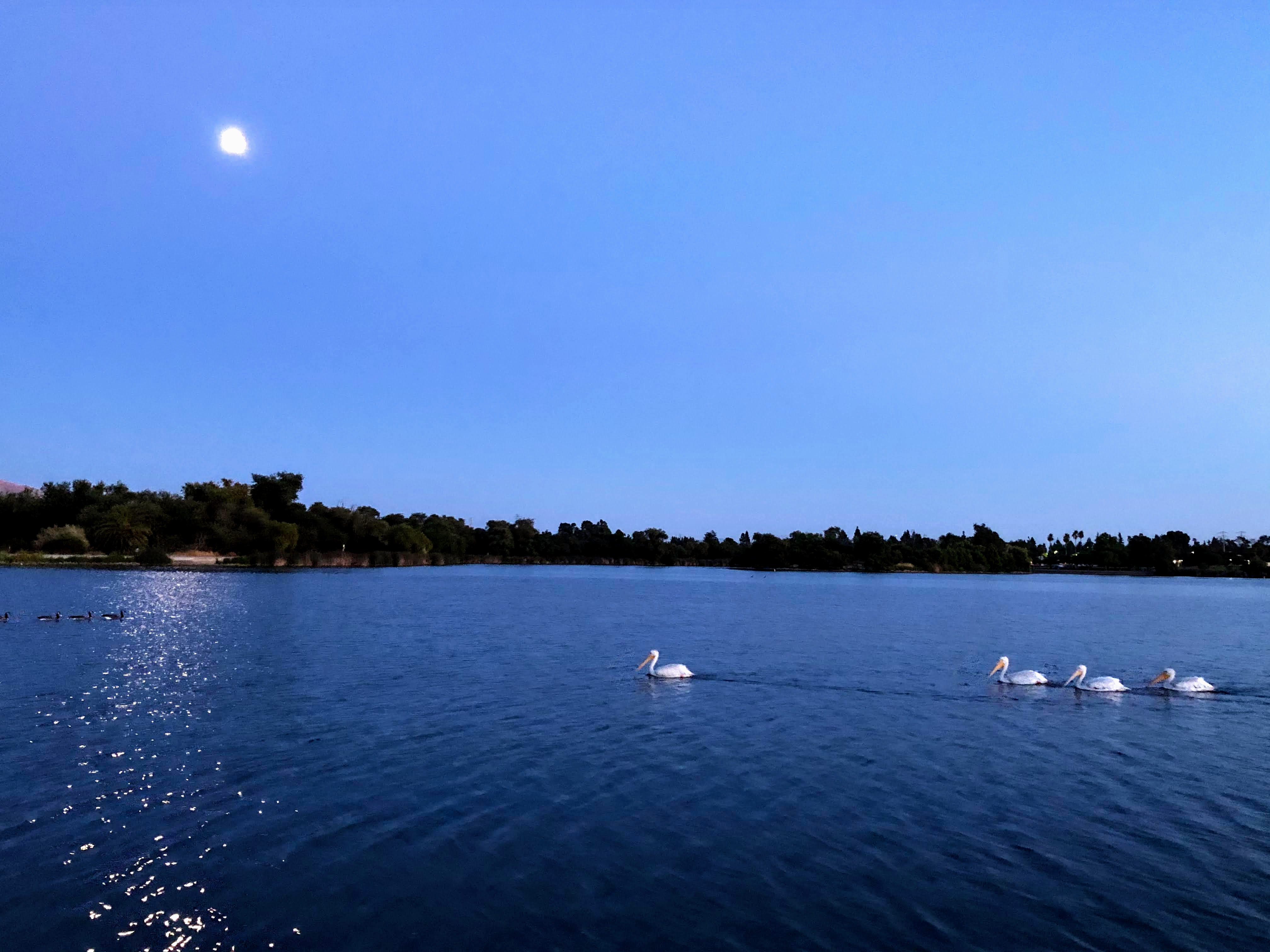
I walked on taking in the setting sun at a fast pace. My mask hoisted on the face was sweaty, and every now and then on the trail when there weren’t people nearby, I slipped it down to take a deep breath of the summer air. I was walking by the waterside, and slowly  feeling the calm strength of the waters. My thoughts were slowly lifting as the sun was setting, and the full moon rose in the opposite direction. Out in the distance, the sound of Fourth of July fireworks was providing an orchestra of sorts to the accompanying bird sounds, and the sound of water sloshing gently against the shores of the lake. 

img_20200407_195324-effects

“Bring the kids – sunset and moonrise marvelous and fireworks everywhere!” I texted the husband, and off we went in the approximate direction of the fireworks. We parked on a side road to take in the revels of the night. To stand there with the full moon behind us, and an array  of fireworks going off in front of us in a largely residential neighborhood was marvelous. 

Later, as we drove on, we listened to songs chosen with a special regard to the 4th of July. The children had aced the  list, and we drove on through the moonlight, lilting and dancing to the tunes.

“Behind the Clouds, the sun is shi—ii—ning. “ – What has to be one of our favorite Disney songs rent the car as we pulled into the garage. 

As I read the final section of Michelle Obama’s Becoming later that night, I found the audacity of hope (pun intended) stirring and this too felt different; worth examining. Politics is a dirty game, but Barack &  Michelle Obama had shown us what was possible. Dare we hope?  

P.S: I was blissfully unaware of (yet another) divisive speech by Donald Trump, and the announcement of Kanye West to run for President that night. I like to hold on to that glimmer of hope that permeated my heart as 4th of July ticked on steadily into the 5th of July.

Maybe hopes can translate to positive outcomes long  before they  happen.


Becoming – What a Title!

One would think that a book written by the former First  Lady  of the United States would not be relatable to a middle class couple living all the way in California. Not to mention that the husband and I hail from India from very middle-class  backgrounds. And  yet, that is the beauty  of the human condition I suppose, for I felt many places in the book where I could nod along and think, “Lord! How often I have felt that way!” 

becoming

The need to question whether one is good enough, and wanting  to over-achieve believing that to be the only antidote to counter that feeling of not belonging for instance. The keen angst of youth as you overcome every  small and large bump along the way is so beautifully written.

Or the very real struggles of raising children while holding down a full-time job and constantly feeling a bandwidth issue; tugged at by the veneer of the formerly ambitious career-oriented young woman who is now slightly at odds wondering why the career years, child-bearing and rearing years, all coincide in one large tug and pull. To read that sentiment written by a former first lady is both marvelous and what makes our country great.

Or the place where she writes about her young husband and his eternal optimism. I can so readily identify with that. While it is the wind of the husband’s optimism that sets our boat to sail, it is the cause of many veering off-courses as well. For instance, I laughed out loud and read out the following paragraph to the children who chuckled and said, “Appa!”

Becoming – By  Michelle Obama

“On my way, I was learning, was he product of Barack’s eternal optimism, and indication of his eagerness to be home that did nothing to signify when he would actually arrive. Almost home was not a geo-locator but rather a state of mind. Sometimes he was on his way but needed to stop in to have one last forty-five minute conversation with a colleague before he got into the car.”

The children all laughed out loud at this, and the husband grinned sheepishly for there have been countless times when the good man has been so caught  up in whatever  he is doing, or talking to one colleague who caught him on the way out, that he lost track of time. It is now a well worn thread in our household. The good natured ribbing has taken multiple paths- “We know you are almost here Appa, and we believe  you, but when does Google say you will get here?”

Michelle Obama’s keen intellect, solid grounding, and sturdy family values shine through in her writing. 

There are passages that bring across the feeling of being African American in Chicago’s Southside that made me want to read these places again. I am sure there are plenty of good books dealing with these aspects of life in the United States. She writes about her husband – portraying him in a pragmatic human light (but again, after the 45th President, the 44th President  with his middle class upbringing, scholarly attitude, and high sense of integrity seems like a dream.) 

The book makes us realize that greatness while destined for some, the need to be motivated, live the best possible lives we can, while holding true to our intellectual and moral integrity, is something we can all choose for ourselves. 

Of course, the identify-with portions of the book ended with Becoming Me, and Becoming Us sections of the book. The final section of the Becoming More is something that only 45 families can relate to: Life in one of the world’s most famous addresses, The White House. Where life has parts of fairy-tale, power, ambition, noble intentions, inspirations, horror story, emotional wringing, the ugly and beautiful humanity of it all.

What a marvelous title : Becoming.

It captures the time-space continuum, and life’s journeys in one word. 

Unrelated, but also a good read: Ta Nehisi Coates essay: here

Qi to the Yin & Yang

Fact and Fiction were swirling and creating waves and patterns inside the old eggshell. Harry Potter – A History of Magic was entertaining in ways I did not quite expect. Regular readers and friends know how much I love the Harry Potter series. The sheer brilliance and richness of the world, and the marvelous ways in which J K Rowling examines our world has been written about in far greater depth and width and by far greater minds than my own. (Leaky Cauldron site for instance)

I know I enjoyed reading  this in The Prisoner of Azkaban

“Witch Burning in the Fourteenth Century Was Completely Pointless — discuss” – Holiday homework set to Harry Potter and his classmates in the Prisoner of Azkaban.

“Non-magic people (more commonly known as Muggles) were particularly afraid of magic in medieval times, but not very good at recognizing it. On the rare occasion that they did catch a real witch or wizard, burning had no effect whatsoever. The witch or wizard would perform a basic Flame Freezing Charm and then pretend to shriek with pain while enjoying a gentle, tickling sensation. Indeed, Wendelin the Weird enjoyed being burned so much that she allowed herself to be caught no less than forty-seven times in various disguises.”
—Bathilda Bagshot, A History of Magic

Harry Potter – A History of Magic book was amazing – Firstly, it contained little tidbits of deleted sections, some planning sketches etc. Secondly, it was organized by subject area: Herbology, Charms, Astronomy, Divination, Care of Magical Creatures, & Transfiguration. In each section were glimpses into humankind’s long fascination with magic. It is astounding to see the vast repertoire of knowledge that the author herself had to be able to synthesize all this and to create another world based on anthropological details, myths from various cultures and her own dose of fantastic imagination.

history_magic

The mind was reveling in the fact and admiring the fiction therein. Our cosmic dance of fact and fiction as a species is almost necessary to examine and understand the world around us. We are story tellers, and we are curious to understand and infer. The Qi to the Yin and Yang of understanding the world around us.

The Astronomy section of the book contained a drawing of the Rudolphine Tables, which helped the reader locate the planets amidst the stars. Containing the locations of 1000+ stars, this was probably the most comprehensive study at the time.

Beside the picture of the Rudophine Tables was a note by Alexander Lock, the Curator
“In 1617, Kepler’s mother was suspected of witchcraft, a crime punishable by death. The accused spent over a year in prison but was eventually released when her son intervened. Kepler was an official astronomer to the Holy Roman Emperor – this family intrigue must have been very difficult for him.”

489px-Johannes-kepler-tabulae-rudolphinae-google-arts-culture

I could not help linking this with some of the things I read in Carl Sagan’s Science as a Candle in the Dark, especially a chapter titled the Demon Haunted World, in which he talks about the grotesque practice of witch hunts and how it became an increasingly profit driven model as well.

Pope Innocent VIII (if ever there was a name that was totally out of sorts with the meaning, this must be it). Pope Innocent was singularly responsible for starting and popularizing the witch hunts in the 15th and 16th centuries leading to millions of people losing their lives and millions more living in a state of constant fear.

There are demon-haunted worlds, regions of utter darkness. – The Isa Upanishad (India ca 600 BC).

With a single proclamation in 1484, Pope Innocent VIII “initiated the systematic accusation, torture and execution of countless “witches” all over Europe.

While we know of the barbaric practices, little did I realize how pervasive the evil was – The Demon Haunted World -By  Carl Sagan:
It quickly became an expense account scam. All costs of investigation, trial, and execution were borne by the accused or her relatives down to per diems for the private detectives hired to spy on her, wine for her guards, banquets for her judges the travel expenses of a messenger set to fetch a more experienced torturer from another city, and faggots, tar and hangman’s rope. Then there was a bonus to the members of the tribunal for each witch burned. The convicted witch ‘s remaining property, if any, was divided between Church and State.

While I am enormously glad to see that we have evolved past this especially cruel phase of mankind’s history it does make me feel terrible about the state of things in the world today. Conspiracy theories, choosing which version of the truth to believe in etc have been problems for a long time, but now it seems these problems have occupied center stage because the leader of the free world seems to spend enormous amounts of time ingesting and spewing conspiracy theories himself.

Maybe it is time for all of us to equip ourselves with Carl Sagan’s famous Baloney Detection Kits.

But there is hope, we have moved past the atrocities of witch-burning to the point that we are now not only able to have witches and wizards in our stories, but also have a clear distinction between fact and fiction.

The yin and yang are sturdily holding their own, and I hope our qi (understanding) will remain unclouded and clear.


A Hopeful Future

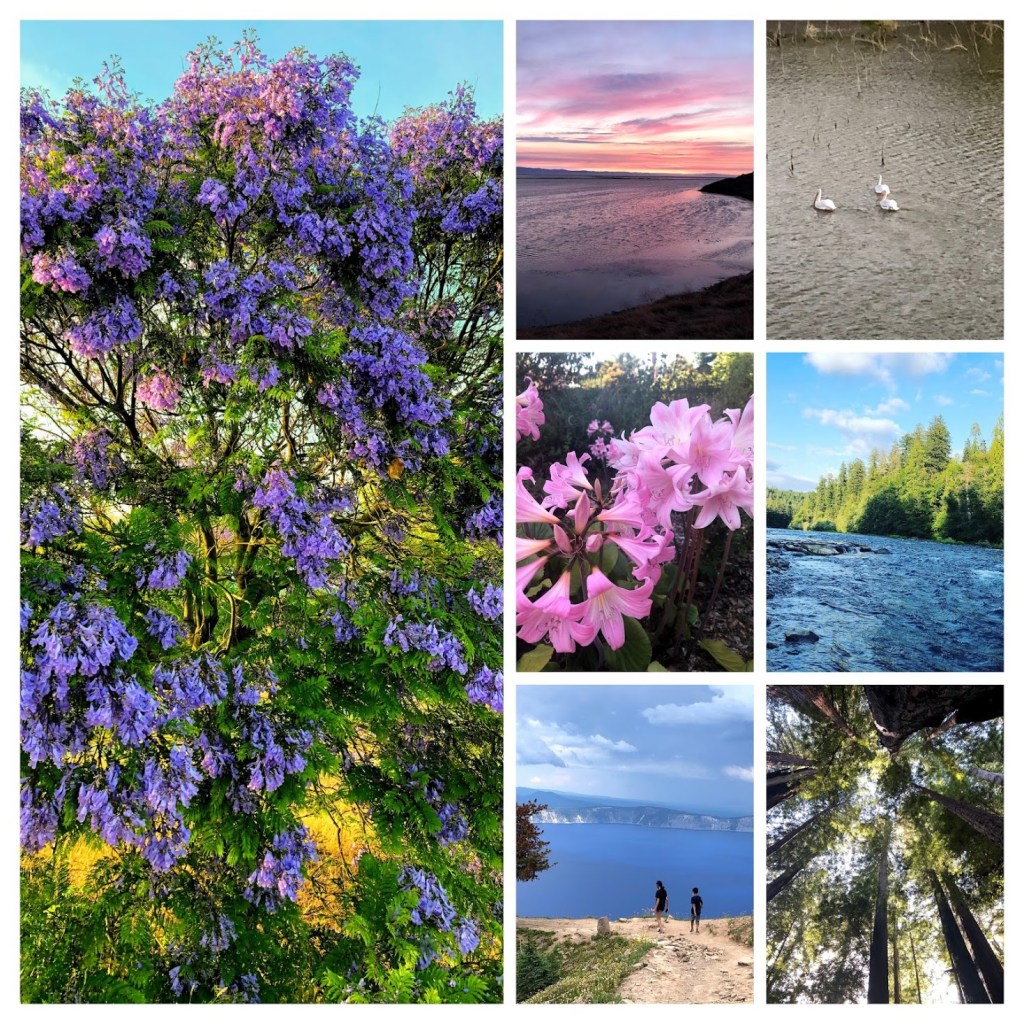
There is nothing quite as special as walking in nature after a long day or week. Every step seems to take one tiny bit of stress away, and replace them with happy endorphins  dancing to a beat in the body. As the eyes lift their gaze towards the skies, the clouds, trees, and birds seem to join in on one harmonious orchestra together welcoming the soul to relax and rejoice in the moment of being, and participate in the steady march of time. Hummingbirds, bluebirds and the occasional butterflies flit overhead, while the ravens and geese noisily make their way home.

Summer is creeping in, the jacaranda trees are in bloom in the neighborhood, the gingko leaves have come in fully, and though the world around us is in shambles, confused, anxious and worried, Mother Nature seems to have no such problems. She brought on Summer just in time.

The park near where we live has a steady smattering of high school students social distancing as best as they can and taking graduation pictures. In little knots of 2s & 3s, they cluster around giggling and looking hopeful. I stop at a distance admiring the high schoolers celebrating their graduation day with pictures in gowns. The smiles of confident youth look just as marvelous as the summer blooms they stand amidst, and their perfumes amidst the heady scent of the flowers is heaven itself. There is no doubt about it: The summer evenings seem doubly enjoyable and bright because of the young talent making their way out into the world.

These children did not get the graduation party like their seniors did, or their juniors will, but they seem to be coping with grace. A few photographs with their best friends would have to do. I hear loud peals of laughter puncture the evenings as they decide on how to take their pictures. I hope every child in these uncertain times has good friends. The laughter rings in the obvious: everything seems to be manageable with the right set of friends.

“Hope” is the thing with feathers –
That perches in the soul –
And sings the tune without the words –
And never stops – at all –

Emily Dickinson

In other news,
Trump Rally Registered Million Attendees but Actual Count 6000!

Thousands of teens registered for Trump’s rally , after his initial Juneteeth rally was moved to Sunday, and then didn’t show up. What’s more? They deleted their tik-toks soon after!

Standing there that evening with the world on pause from the Corona virus, and the city’s curfew just ended due to the Black Lives Matter movement, I felt hope stir again. The angst and idealism of youth was intact. These young adults saw us flounder at a critical moment in their lives, and the exuberance with which they are eager to take the torch makes me hopeful.

“For life goes not backward nor tarries with yesterday.” Kahlil Gibran

Rainbow 🌈 Conscience

A few years ago when the son was in kindergarten, I attended a class room show-and-tell in which their works of art were displayed. Endearing pictures of zebras, horses and assorted flora and fauna painstakingly done, were being showed off brilliantly by the children. When I drew up close to the son’s painting, I paused. There in the corner of his painting were several people with rainbow colored faces. I loved the idea, and asked him why they had rainbow colored faces, to which he said, “Our teacher said to put colored people in our drawings.”

I turned to his teacher, and she nodded smiling, “Yes, I did for diversity, but I didn’t expect this!” My heart warmed at his interpretation.

I loved it! How beautiful and void of prejudice we are as children.

“No one is born hating another person because of the color of his skin, or his background, or his religion. People must learn to hate, and if they can learn to hate, they can be taught to love, for love comes more naturally to the human heart than its opposite.”

― Nelson Mandela, Long Walk to Freedom

I started reading Henry Thoreau’s book, Civil Disobedience, last week, and I must say the first chapter itself has me drawn in.  “The mass of men live lives of quiet desperation. What is called resignation is confirmed desperation.

A few sentences later he says again, “It is never too late to give up our prejudices. No way of thinking or doing however ancient can be trusted without proof.”

Savoring the sentences and thinking of the rainbow colored faces in the son’s drawing made me think. What would it take for us to learn what it is to be human? It seems to me like to understand deeper, we need to rely on Science: Science as a Candle in the Dark. Any phenomenon not readily understood suffers from the same problems. Could there be a better way to gauge our human-ness?

Structurally, we are containers for cells, possess neurons for consciousness, and use language for communication between one another. But this puts us in no different a category than octopus, dogs, elephants, whales or dolphins. Most marvelous creatures on Earth have evolved from the same set of conditions the planet has been subjected to, and are hence remarkably similar in these aspects. In fact, we are limited in so many abilities than our far-more abled canine friends or bird friends when it comes to smell, colors and noise frequencies.

Here is a fun game to be played by all age groups:
The High Frequency Hearing Game

Quoted from The Soul of an Octopus by Sy Montgomery:

Cambridge Declaration on Consciousness asserts that “humans are not unique in possessing the neurological substrates that generate consciousness”, and that “nonhuman animals, including all birds and mammals and many other creatures, including octopuses also possess these neurological substrates.”

Chemically speaking, I suppose we can attribute Oxygen, Nitrogen, Carbon etc as major components of the human body. But this too, is not unique to us on Earth. Many lifeforms use the same structural elements for life.
Composition of the Human Body

600px-201_Elements_of_the_Human_Body.02.svg
Image from WikiLink: OpenStax College / CC BY (https://creativecommons.org/licenses/by/3.0)

Culturally, we have ideologies so different, yet so similar. Most religions have stories of a big flood (starting from the epic of Gilgamesh, to the Matsya avatar in Hinduism, to Noah’s Ark), our mythologies have similar creatures (how then could we have dragons in Chinese mythology and Norse mythology?) The fossils found in each region seem to have contributed to the myths (Sankhu / Chakra myths originate from nautilus fossils found in the Himalayas). Is myth-making then the only human identifying factor (I don’t think so, for whales songs have tonal informational bits having the same length of an Iliad or Odyssey – some whale songs have been known to be taught from generation to generation and last over an hour long).

wind-in-the-reef

The differences in skin colors too, are no more than an evolutionary necessity – the UV light in different areas of the earth, and ability of the skin to absorb Vitamin D in areas of high or low sunlight is primarily the factors that determine these.

The Biology of Skin Color (The link between human evolution over time; the ability to adapt to different levels of UV  radiation in the tropics vs the poles; and its correlation with absorption of Vitamin D is explained in this video)

I come back to the question of what does it mean to be human? What is our unifying factor? On this globally unified Earth, can we all just find a way to get rainbow colored skin?

How Kindness Became Our Pleasure – By Maria Popova on Brain Pickings

P.S: The son touchingly drew this drawing again when he saw me writing this post:

img_8613

How do we exist?

It had been another long day, and as the clock ticked towards midnight, the body yearned for sleep, but the mind looked longingly at the tsundoku pile, and craved for some quiet moments of solitude. I peeked out of the window, and the moon sailing high through the skies tugged at my heart. There is something so intensely beautiful about catching sight of our  lovely cosmic neighbor sending its mellow moonbeams through the leaves at night.

I looked for a word that captures the phenomenon, but there isn’t one.

There are two words in Japanese that come close (the Japanese language has such amazing words for admiring wondrous nature around us.)

Kawaakari ( 川明かり – a word depicting the evening reflection of light on water, or in some cases can refer to the reflection of the moonlight off flowing water.

img_20200407_195324-effects

Komorebi (木漏れ日): Sunshine filtering through the trees.

trees_komerabi

I had just started reading The Sea Around Us by Rachel Carson. In the first chapter, Rachel Carson takes us with her steady voice into a time on Earth before the seas were created. When the planet was still heaving and churning its metallic ores, hot searing waves of liquid settling into a semi-liquid state in its outer cores. She wonders then about the question, how were the oceans formed?
“So if I tell here the story of how the young planet Earth acquired an ocean, it must be a story pieced together from many sources and containing whole chapters the details of which we can only imagine.
For although no man was there to witness this cosmic birth, the stars and moon and the rocks were there, and indeed, had much to do with the fact that there is an ocean.”

Then, she leads us from this fiery place in the cosmos with the sun heaving its solar flares, the earth itself arranging itself into concentric spheres with hot, molten iron at its core, and an intermediate sphere of semiplastic basalt , the outer layers of granite and basalt. And then gently she lures us into the possibility of the moon and the ocean being related to each other.

The next time you stand on a beach at night, watching the moon’s bright path across the water, and conscious of the moon drawn tides, remember that the moon itself may have been born of a great tidal wave of earthly substance, torn off into space.

How can one not be mesmerized by the creation of the moon? Was it truly hewn from the surface of the earth (The moon’s density does match the density of the outer crust). The hypothesis that the moon was hewn away after massive solar tides exerting a pull on semi-molten Earth is based on the theory that the large portion thus hewn away left such a large scar on the surface of the Earth. A scar that would continue to shape Earth and its lifeforms for millions of years afterward: The Pacific Ocean.

Later, as the Earth cooled and clouds formed from the steam rising, the rains started. Pouring onto the hot earth for years – initially almost immediately evaporating into steam, but eventually collecting as water – forming the first oceans.

It is, of course, fascinating that we still do not know for sure how the moon was created. There are several theories – theories of violent impacts, random objects being attracted by gravity, and young earth managing to keep one satellite, while heftier ones like Jupiter acquiring 67 etc. This is a topic still under discussion.

https://www.space.com/19275-moon-formation.html

Nevertheless, the very first chapter had me wowed. I would never be able to look at our closest cosmic neighbor with the same eyes ever again. How often I have stood marveling at the moon? Out on walks, my heart always skips a beat when I catch sight of the beautiful, faithful satellite accompanying Earth as she tears through space. To think that there is a possibility that the very creation of our cosmic neighbor was crucial to our oceans is awe inspiring. I live on the Pacific Coast, and never can I see the bays, the ocean or the moon without reminding me of this book.

The Sea Around Us by Rachel Carson

sea_around_us

The skies hold the answers to our most philosophical stirrings. Why do we exist?

The seas, it seems, holds the answers to our most existential stirrings. How do we exist?