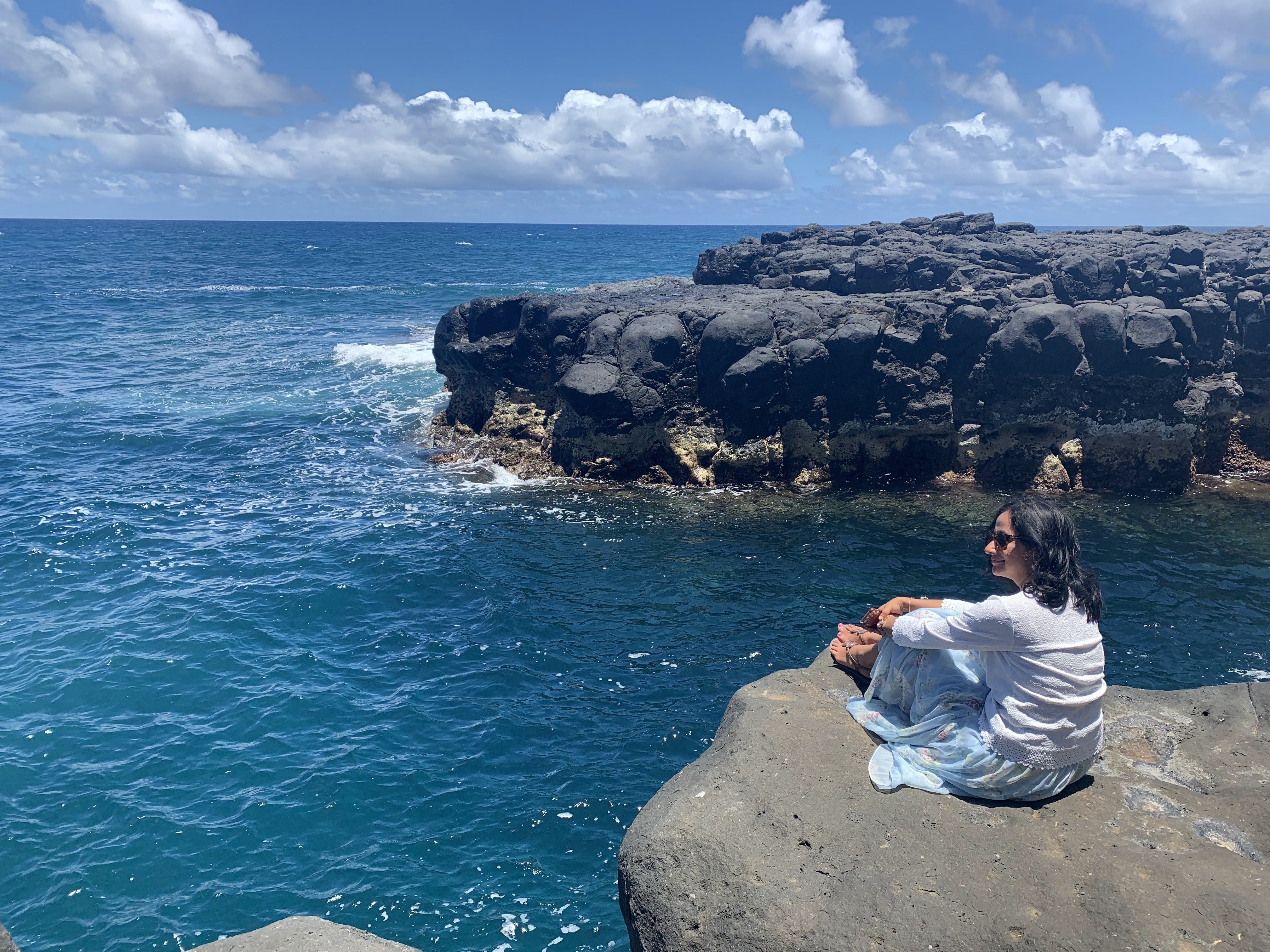
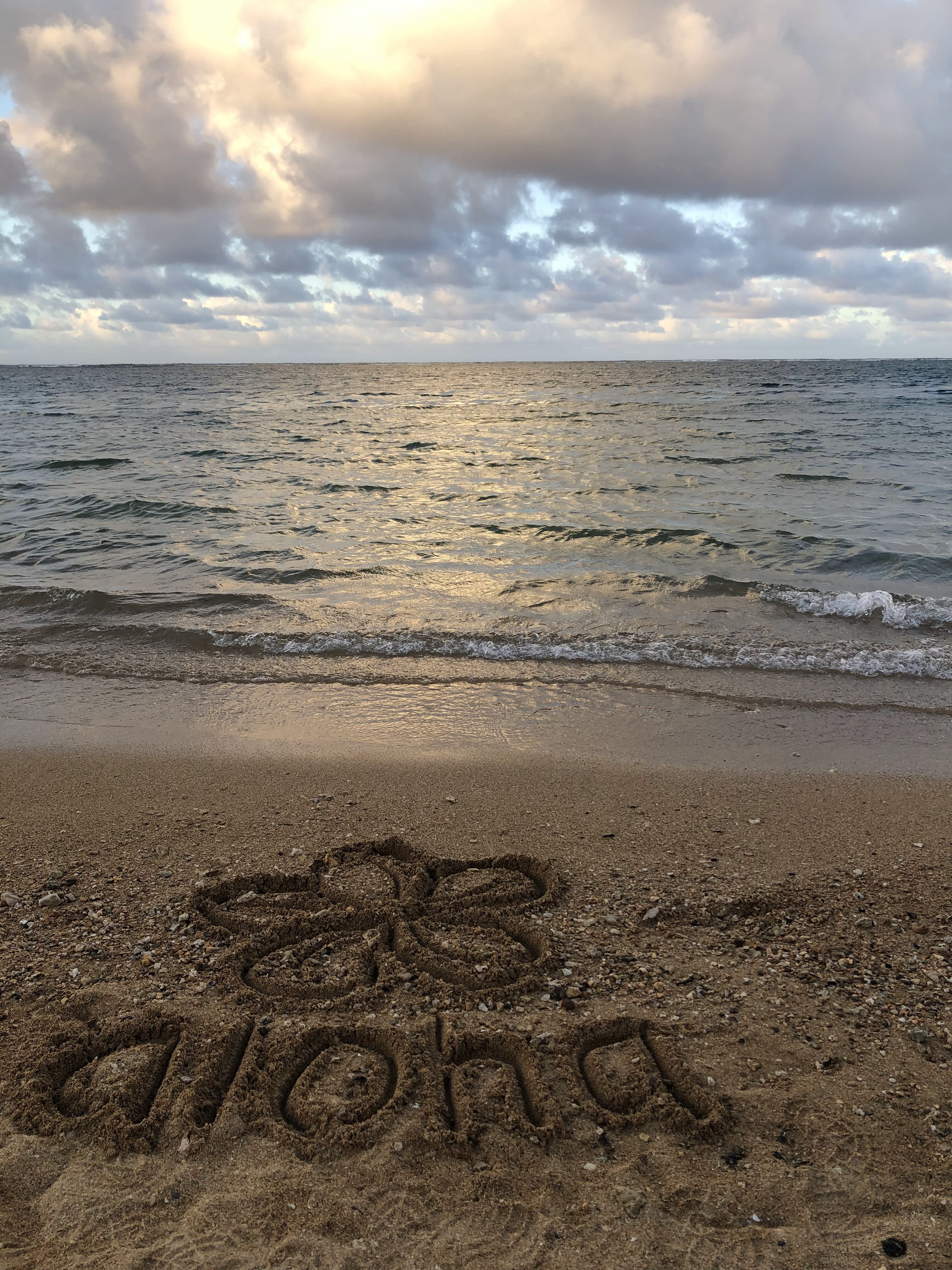
The week at Kauai in Hawaii was beautiful. During the days afterward, the little island images would flit in and out like waves on a beach. Sometimes the imagery so powerful that they would refresh and restore from afar. The turtles would swirl in the ocean waves, the turquoise waters would gently lap the golden sands, or splash against the rocky beaches, the birds would chirp merrily, and every now and then the school of fish or that large turtle- would flash up an image from the reefs below.
The flowers of the island, Leilani pua would gently sway in the ocean breeze, the sounds of the rains that were difficult to predict and never long to endure would patter into one’s consciousness.
The general light of the island would be suffused into the surroundings.
As life settles into its usual routines, there is a rose-tinted tinge to the world that is slowly but steadily fading. I now have to recall the turtles, as opposed to them showing up unannounced. I cling on though.
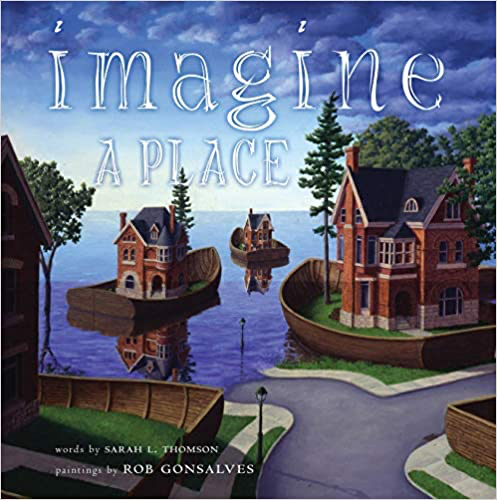
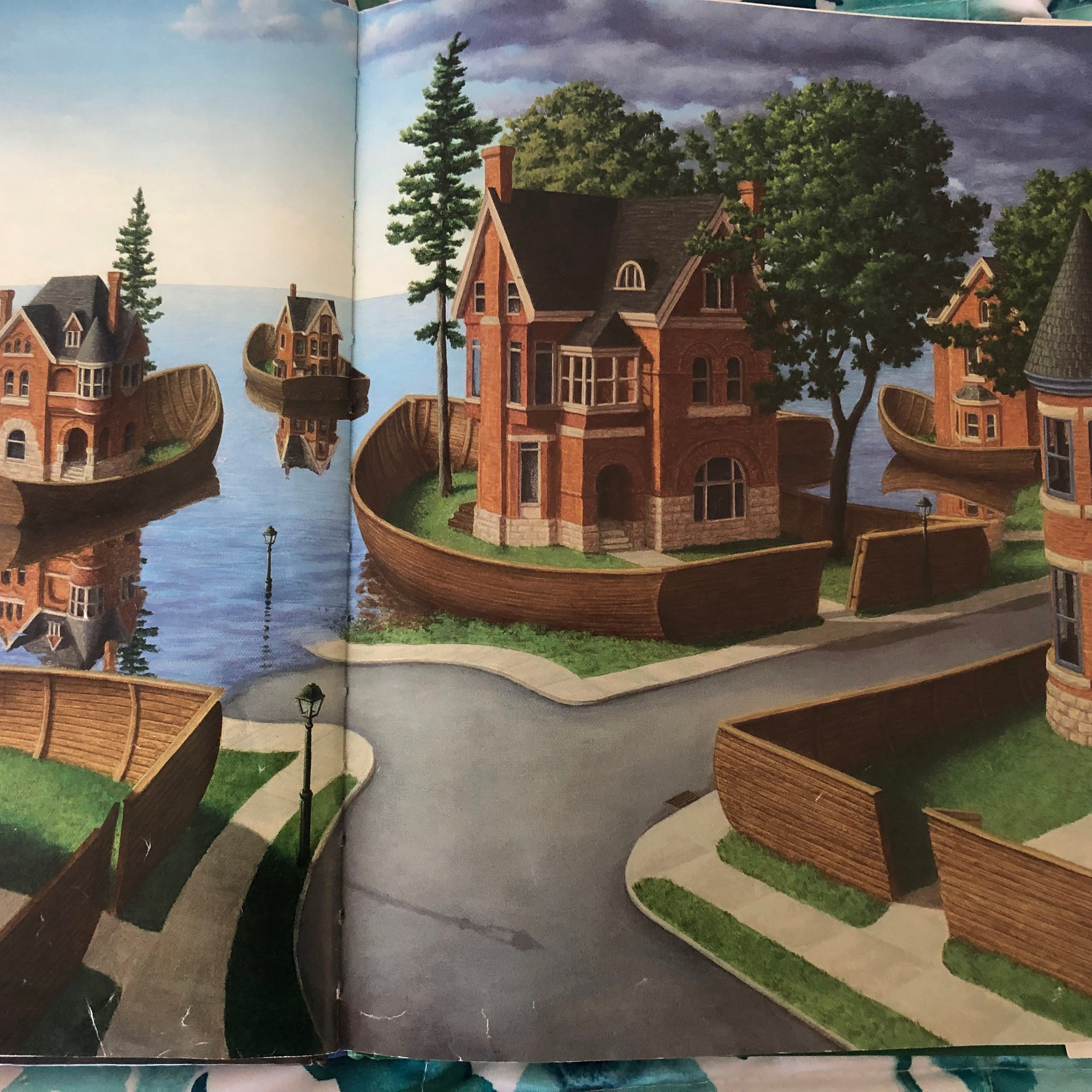
Looking back at the pictures from the vacation, I realize that tropical island vacations have a timbre and light that is wholly separate from the rest of the world. Who was that who said that No man was an island? Imagine a world where each of us is an island.
(Words from the book, Imagine A Place – Words By Sarah L Thomson, Images by Rob Gonsalves)
Imagine a Place – by Rob Gonsalves, words by Sarah Thomson
I stop to admire the roses, and compare and contrast their multi-layered rose-scented beauty with the elegant and highly simple-structured plumerias in the Hawaiian islands.
How complicated and simple life can be – and how beauty to be found in both aspects of life.
The island doesn’t leave you, and it seems to remind me of the importance of the solitude and refreshing nature of this little island in oneself, to be pulled up at will when life tugs you in every which way.
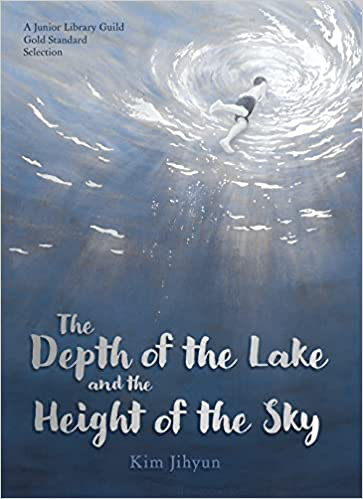
In the book, a child leaves the environs of the city to go and live with his grandparents in the countryside. The lake and forest nearby look inviting and the child starts exploring on his own.
Usually, when I take a color photograph of a luscious green forest or a beautiful waterbody, I prefer the picture in all its glory. Even if it does seem over-saturated at times. But in this book, the muted colors do nothing to diminish the relaxing feel of the book.
Image from Height of the sky & Depth of a Lake – Kim Jihyun
The author says that she wrote the book after a week back from a relaxing sojourn with nature and the moment I came back from a vacation in Hawaii I picked up the book. In the book, it is the lake the boy dives into. We dipped into the ocean, and the height of the skies we explored with a helicopter ride.
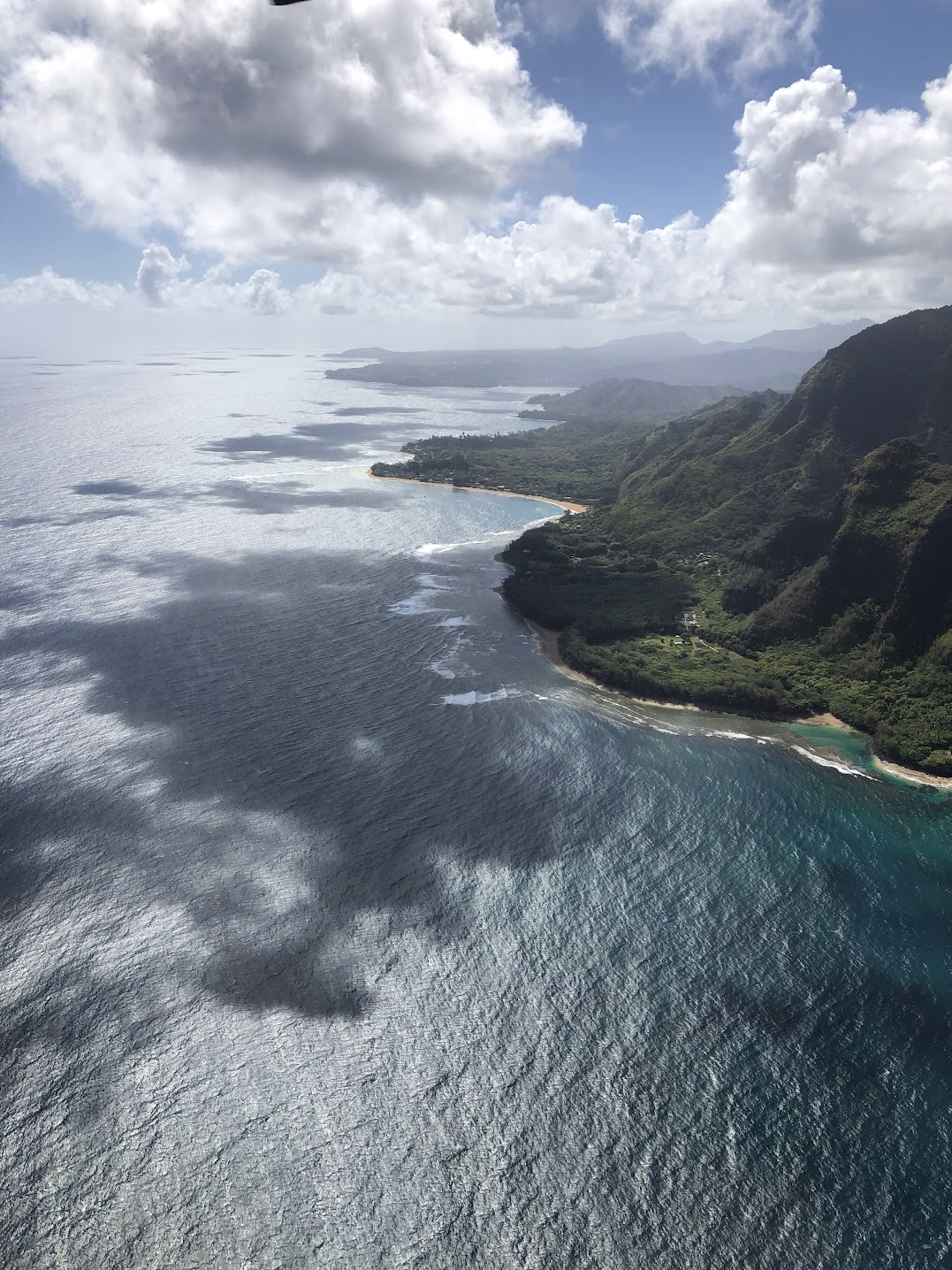
In one glorious day we soared to the skies and took in an aerial view of the beautiful island of Kauai – soaring over the cliffs of the Na Pali coast and diving into the rocky coral reefs for an afternoon of snorkeling.
Na Pali Coast – Kauai
Not all of us in our group were good swimmers. So, in order to experience the joys of the oceanic creatures, we learnt swimming everyday in the past month.
Was it worthwhile? Resounding yes! We swam in the sublime beaches of Hanalei Bay and during snorkeling were able to see schools of fish and a large sea turtle swim right by us, along with marvelous creatures such as parrotfish, sea cucumbers etc.
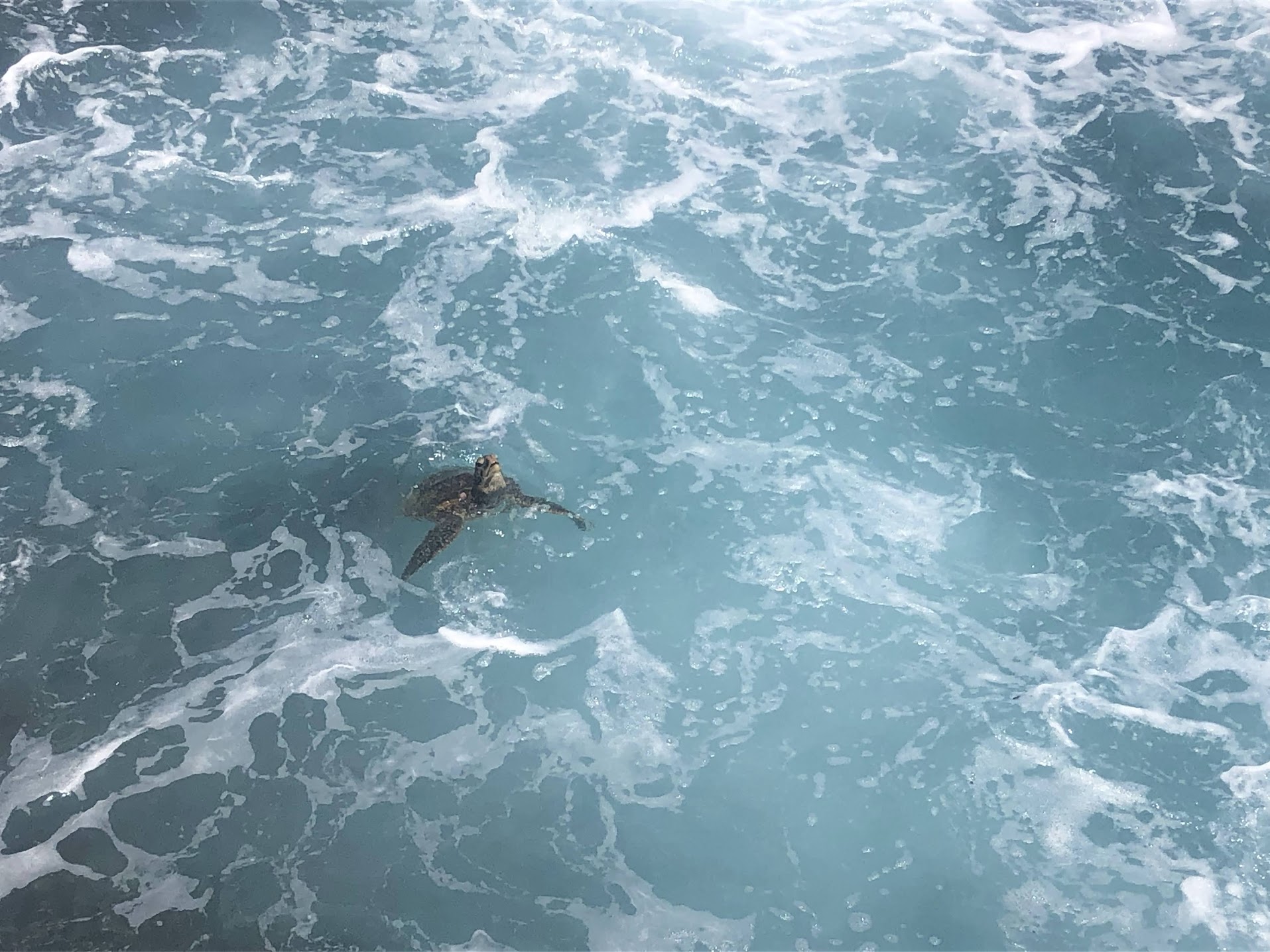
We could not take our phones while snorkeling, so this is a pic of a turtle while I sat on the rocks above.
The height of the sky and the depth of the oceans are both within us.
Almost as soon as one lands win the quaint island of Kauai, the unmistakable feeling of rural bliss welcomes you with the rooster crowing. As one fellow traveler put it, the roosters of Hawaii are like squirrels everywhere else. They are everywhere, and probably contribute to the seeding and flowering of the habitats near them in myriad ways.
They ducked and weaved through the airport traffic, just as surely as they waddled into the fragrant plumeria flowers flitting down from the trees above.
The roosters there sure have a comical element to them. Moana’s Hei-Hei could have been a real life characterization of any of these birds.
Hei-Hei of Moana Fame
The children sat inside the car cackling and laughing as I ran out into the parking lot ahead of me to shoo the birds away as the languid car trundled into its spot in the parking lots. Sound effects included: baaackk—buck-buck-buck….shoo-shoo-duck-duck-goose, nene-nene-nene with an inspiring arm flailing and running after the birds.
“Just one video of this ma! “ said the teenage daughter and niece to many enthusiastic nods from their little brother. I joined them in the laughter but refused to star in a video like this. One has one limits – even if it is to entertain our fellow human beings.
“I love birds too much and these birds seem to be so – I don’t know, bird-brained! Huh! Is that where the term comes from? Makes sense. These birds seem to think the roads belong to them and they sit there – pecking at whatever it is on the roads!” I said.
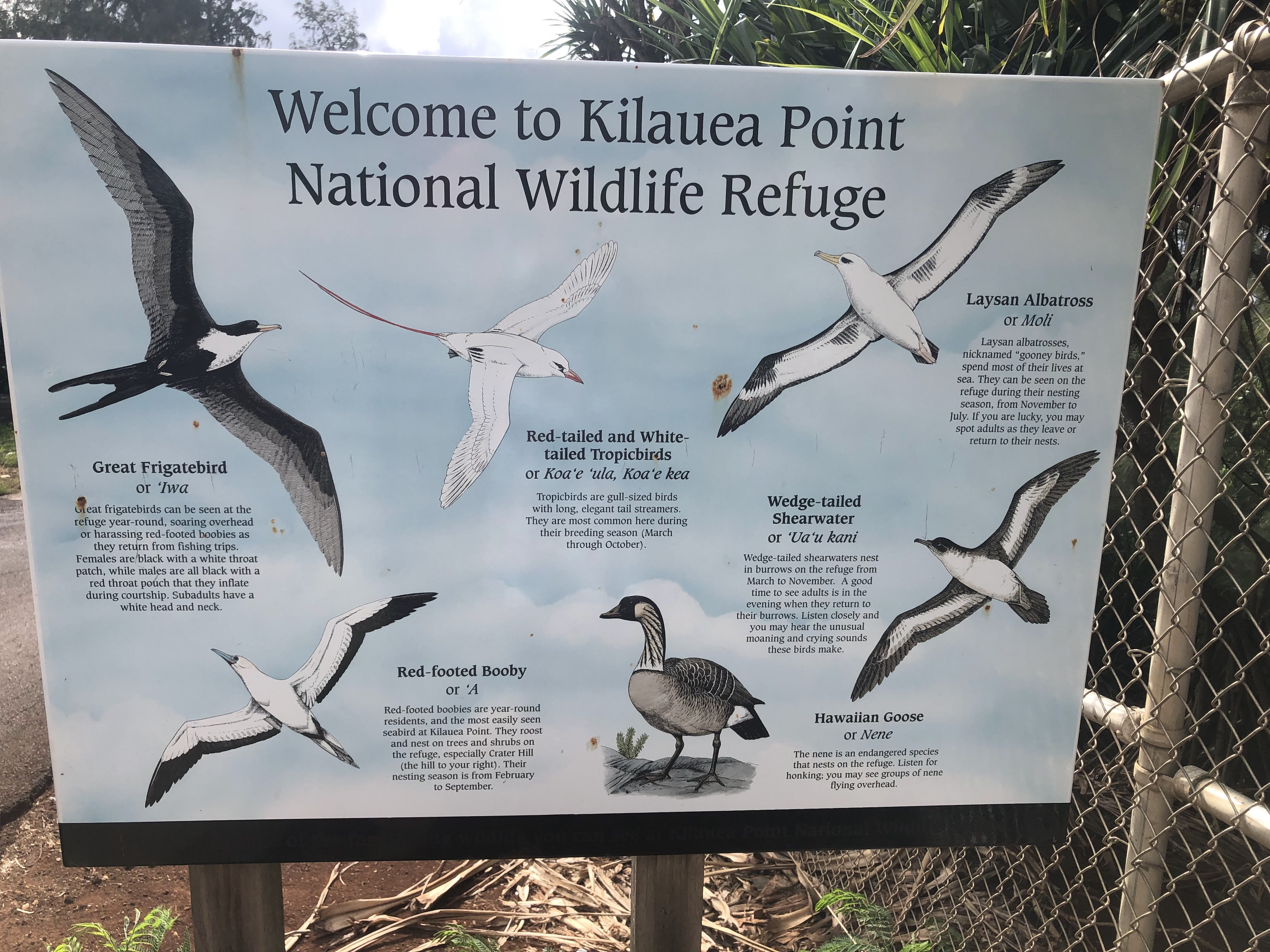
Just as engaging as the roosters are the red breasted cardinals, the nene (geese), cattle egrets, starlings, mockingbirds, plovers, sandpipers near the beaches , and the marvelously inspiring long-tailed tropicbirds.
Standing atop the viewpoints of the Waimea Canyon in Hawaii, the long tailed tropic birds gained our attention and admiration. Gracefully traversing the yawning canyon below them in swift smooth flights, these birds seem to fly in and out of rainbows 🌈 . If that isn’t magical I don’t know what is.
It is no wonder that Hawaiian folktales are so rich with their imagery of birds and ocean animals.
Every morning, as the sunlight crept in through the clouds, and ushered in another surreal day in the magical islands, The Hawaiian state birds, Nene as the geese there are called, did their bit and squawked their way into our consciousness as well.
Some nights I would wander outside to stand under the stars when I’d notice groups of nene sleeping under the stars. ✨ Seeing them under the stars like that made me slightly envious I must admit.
Whether it was the beautiful darting and elusive ‘i’iwi (hummingbird -like creatures that are endangered) or the common roosters, starlings, egrets, cardinals, and nene, the birds (Manu) of Kauai have a divinity (a certain Akua) about them that make you want to soar in spirits with them.
One morning I caught the daughter sounding very much like me and chastising her little brother who was watching Marvel on the television. “You come to Kauai and watch these super-hero fellows again – no! Nuh-uh! Out!”
“But there is nothing now – just eating breakfast and watching TV!” came the wounded reply from the budding naturalist. But his sister was firm and switched off the television.
The fellow came into the kitchen, and I shushed him, for out on the verandah was a small, and elegantly regal-looking red-breasted cardinal. We watched the bird in awe for several minutes before our spell was broken, and we sighed contentedly and went about the day.
If naturalists go to heaven (about which there is considerable ecclesiastical doubt), I hope that I will be furnished with a troop of kakapo to amuse me in the evening instead of television.
Almost as soon as one lands in the quaint island of Kauai, in the Hawaiian islands, the unmistakable feeling of rural bliss welcomes you with the rooster crowing and the colors of the flora.
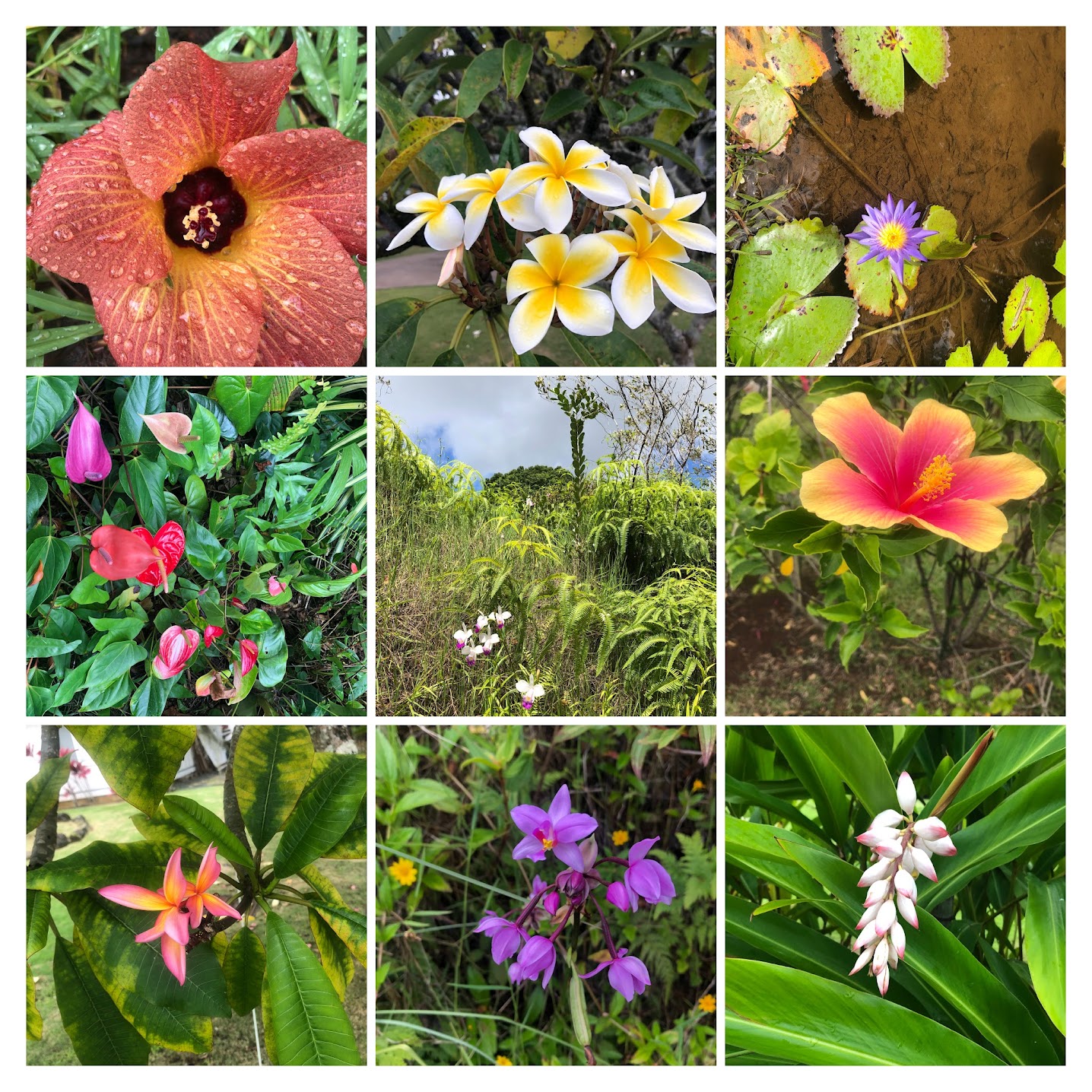
Within hours of being in the island, the phone yearned for some plumeria pictures and before we knew it, there were hundreds of pictures of plumerias, hibiscus and so many plants whose name we knew not, but contributed to the vibrant colors of the Hawaiian islands.
Really! How marvelous flowers are.
“Who was that poet who said something about ‘infinity in a flower’, or ‘universe in a grain of sand’ or something? I think he hit it spot on.” I said burying my beak into a fragrant multi-colored frangipani blossom and sniffing rapturously.
A flower elegantly floated down from the tree above into the grass below and I ran to catch it with open arms. I proposed to adorn my hair with the beautiful blossoms. The children wondered whether to clip this behavior or indulge it when I picked up a blossom from the verdant green grasses below and gave it to the children. The perfect symmetry of the flowers won their hearts instantly, and they gave into my whimsy, with a smart quip instead.
‘The grain of sand is probably parrotfish poop, but whatever!’
As I looked into the photos of the particularly alluring flora of the fertile land, I fell in love with the flowers themselves as much with their names. I am not one for classifying and categorizing everything to within an inch of their existence. But even I couldn’t resist the poetic beauty of being classified as a Nymphaea Capensis (Egyptian water lotuses in brilliant colors) or Heliconia Bahai (false birds of paradise)
On hikes through the rain-forest like surroundings, the canopy above invited one to look up, but every now and then some beautiful wild orchids would attract the attention. A slender piece of purple or pink vibrance holding its own in a lush forest of greens, just as surely as the Moa (roosters) held their own on tricky rocky beaches, rainforests and parking lots alike.
Painter’s Palette, Laceleaf, bamboo orchids, purple wild orchids (spathoglottis plicata), milkworts, pink and purple colored thistles, crepe ginger, red frangipani, lance leaved coreopsis, Cooktown orchids, shell gingers, Egyptian lotuses (nymphaea capensis or pygmy water lilies) , birds of paradise (heliconia bahai – the red ones or the false birds of paradise)
Pua means flowers in Hawaiian
Leilani denotes heavenly flowers
The most beautiful surprise was the clumps of touch-me-nots (Mimosa Pudica) everywhere. All those warm afternoons of playing with these marvelous plants in the countryside in the Nilgiris as children came flooding back.
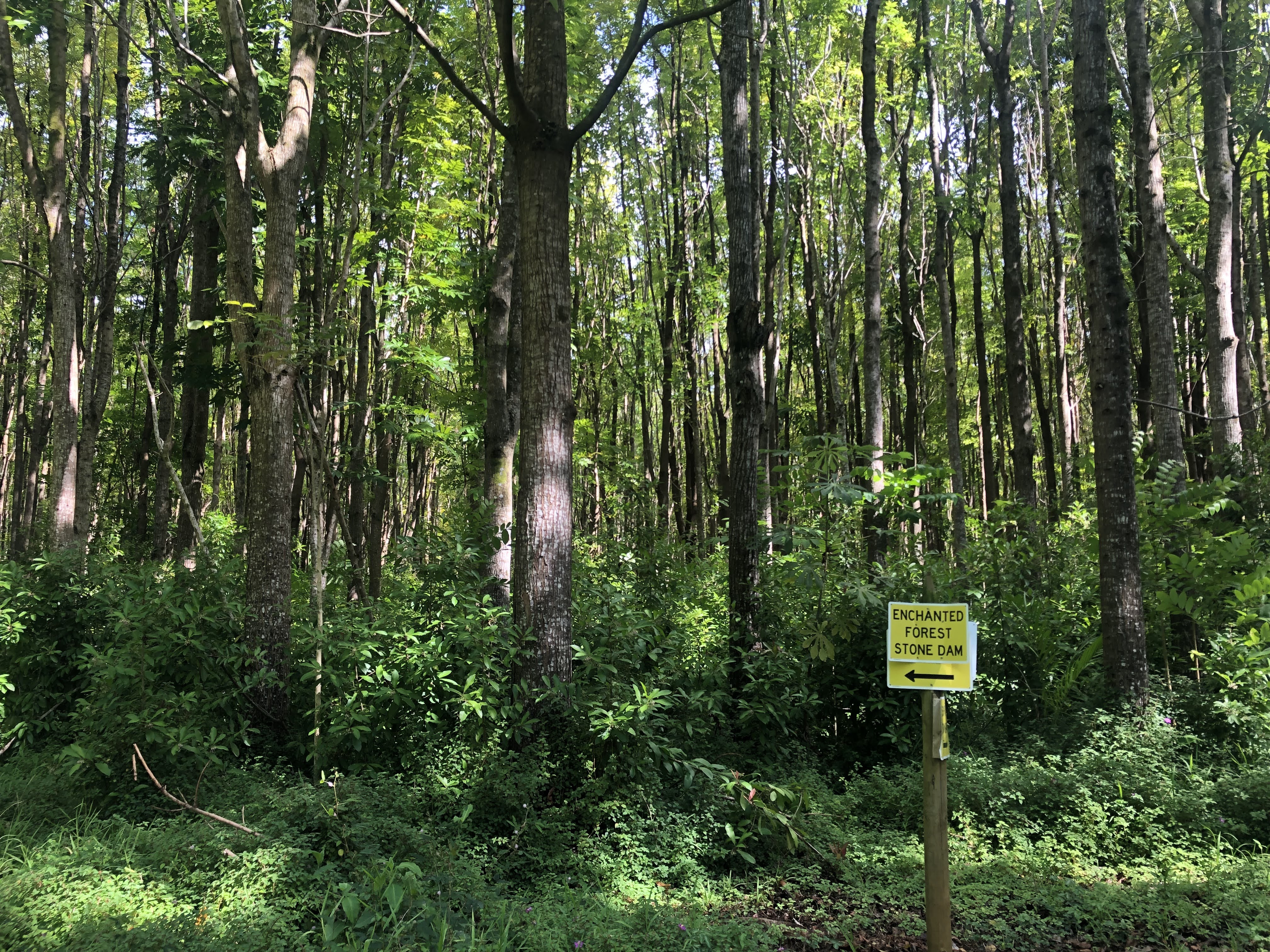
The son, who spent a whole hike through a mahogany forest endearingly called The Enchanted Forest, playing with the touch-me-nots said with a contented look on his face. “I think touch-me-nots are my favorite plants!”
If ever one needs to be intensely aware of all the things that need to co-exist for a beautiful ecosystem, a well preserved island would do the trick. Being there amidst nature’s bounties only reminds me of Mary Oliver’s quote on attention being our only task.
“To pay attention, this is our endless and proper work.”
We are back from a beautiful few days in Kauai, Hawaii.
There is something about the light and sights of an island paradise that always amaze me. Even the darkness seems to be scented by a different tint of light (could it be that the surrounding oceans make for darker skies and the magical stars spread their light more?)
As Gerald Durrell says about the island of Corfu in his writing:
“Gradually the magic of the island settled over us as gently and clingingly as pollen. Each day had a tranquillity, a timelessness, about it, so that you wished it would never end. But then the dark skin of night would peel off and there would be a fresh day waiting for us, glossy and colourful as a child’s transfer and with the same tinge of unreality.”
One morning, two days into our vacation in the Garden Island, Kauai, we decided to have a slower morning. We had been rushing and ticking sights off our list ever since we arrived. So, that morning, we lolled and strolled nearby. A tourist magnet like Hawaii doesn’t have too many hidden gems, but walking through the streets has gems enough. We strolled to a nearby lagoon or bay with some rough hidden spots. We sat on the rocks watching the waters slosh into the rocks below. There is something surprising every time we stop and still our senses.
10 minutes into sitting on the rocks and watching the waters below was enough. We spotted 3 large turtles almost all at once. The children and I squealed at the turtles 🐢 swimming and sloshing in the rough waters below. To see a large sea turtle in the ocean is a gift few get, and even fewer appreciate. As for us, we were thrilled.
The delight and serendipity of a sight like lit the world around us. Even now, when I close my eyes, I can see the magnificence of the sea turtles coming up, looking around and ducking back in with the waves.
That afternoon, a helpful lady at the resort told us about a hike in a mahogany forest, and off we went. Through the forest, with the sun light filtering though the green canopy overhead, there was a diversion marked ‘Enchanted Forest’. How could one resist a path marked thus? Off we tread into the enchanted forest then, and enchanted it was. There were clumps of touch-me-nots every few feet, and the quiet of the forest only interspersed with the chittering of the exotic Hawaiian birds was magical.
That evening, as I closed my eyes for the night, the turtles came unbidden to wish me good night – sloshing and rolling in the tumultuous waters of the bay. I clutched the firm bed, made probably of mahogany wood, and couldn’t help feeling a sense of gratitude for the enchanted turtles and forests that bless our days on Earth.
Everywhere on social media and news platforms were images from the James Webb telescope magnifying in glorious detail sections of the universe billions of light years away. The universe has enlightened us all and reminded us of our humble place in it once again. In the midst of all this chaos, and enormous gas clouds is a tiny planet where our particular kind of life evolved capable of acquiring these images.
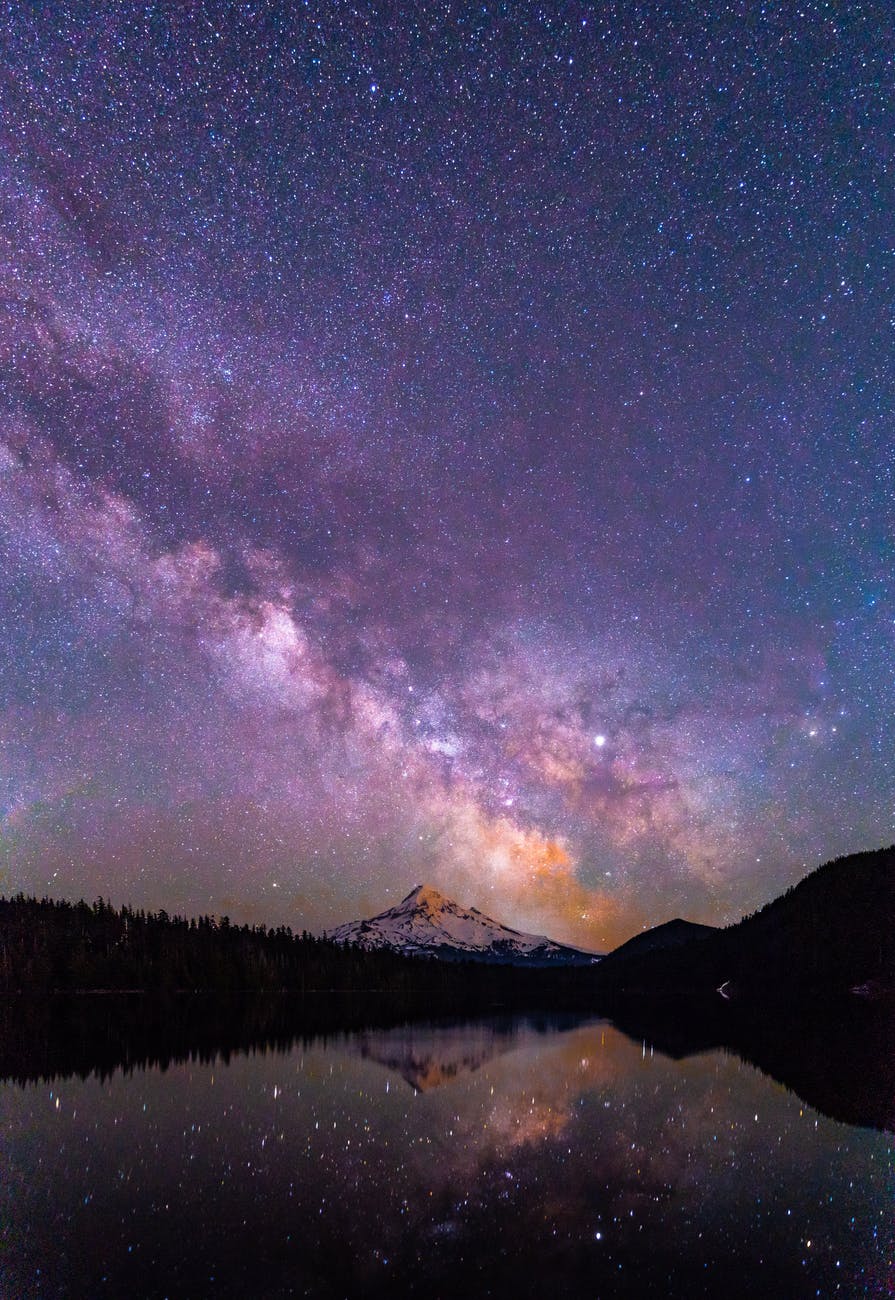
After a walk under the stars, our corner of the universe seems sanguine – the countryside of the cosmic arena. In our suburban areas, not too many stars are visible, and the gas clouds in the James Webb photographs seem surreal. The universe is a happening place – stars and galaxies being born every day, yet the rise of our faithful moon glowing rose-gold in the early evening makes for a satisfying adventure enough in the cosmos.
“The laws that govern the light from a firefly in my backyard as I write these words tonight also govern the light emitted from an exploding star one billion light-years away. Place changes nothing. Nor does time. One set of fixed rules runs the game, in all times and places. That’s as big a truth as we Earthlings have discovered, or ever will, in our brief run.”
The husband in a fit of enthusiasm started a vegetable patch. When the h starts a project, he goes at it with all the usual enthusiasm. Which is to say that he was coming home every other day with a different piece of equipment – a fascinating looking thing called a trellis, spades, a garden patch, large bags of compostable soil.
As much as I moaned about the necessary and unnecessary things in our midst, I was impressed with the work the man was putting in. He had the look of a man with a mission toiling to accomplish his vision.
“Here are some flower seeds. Plant them in the ground. “ said Frog, “and soon you will have a garden.”
“How soon?”, said Toad.
“Quite soon.”, said Frog.
He planted the flower seeds.
“Now seeds”, said Toad, “start growing.”
Toad walked up and down a few times.
The seeds did not start to grow.
Arnold Lobel, Frog & Toad
I wondered whether a spot of singing would help and all that. (there is research that suggests that music helps the plants) 🌱 🪴
I must’ve discussed the possibility in earshot of the plants, for I felt the earth shudder and the underground networks that these plants seem to have buzzed with coming disaster, and the very next day, they started to grow and flourish in the patch.
Once the shoots peeped into the ground above, two things happened. They benefitted from the hot Californian sun and the nurturing of the mother who is here a-visiting. She would fuss over the patch, spray tea leaves, crush dried vegetable droppings to the soil, and water the plants regularly twice a day when the plants were young.
The patch attracted butterflies and and the creepers looked for ways in which to latch onto the trees nearby and take root.
The vegetable patch is a daily joy – we had the first cucumber from the creepers today, and I must say: the raita (cucumber + yogurt) was tastier than anything I have eaten before. The vision and initial spade work was the husband’s, the mother’s was the subsequent tendering and nurturing of the patch.
I clapped the husband and mother on their backs in a congratulatory note. That cucumber was a marvel. Something that was produced by the hardworking plants on Planet Earth.
“People don’t know to make a leaf, but they know how to destroy one.” ― Hope Jahren, Lab Girl
Oh! How easily we go to the store and rip out one of those plastic bags and pay for the produce? It makes us appreciate all the agriculturists, farmers, and gardeners in our midst.
“It takes a long time to turn into what you’re supposed to be.” ― Hope Jahren, Lab Girl
A friend of mine teased me lovingly and perfectly validly that every time she looks at the stars she thinks of me looking up and wondering about the various kinds of worlds out there, the vastness of it, the beauty and grandeur. “You will become a star one day.” , she said, and we laughed.
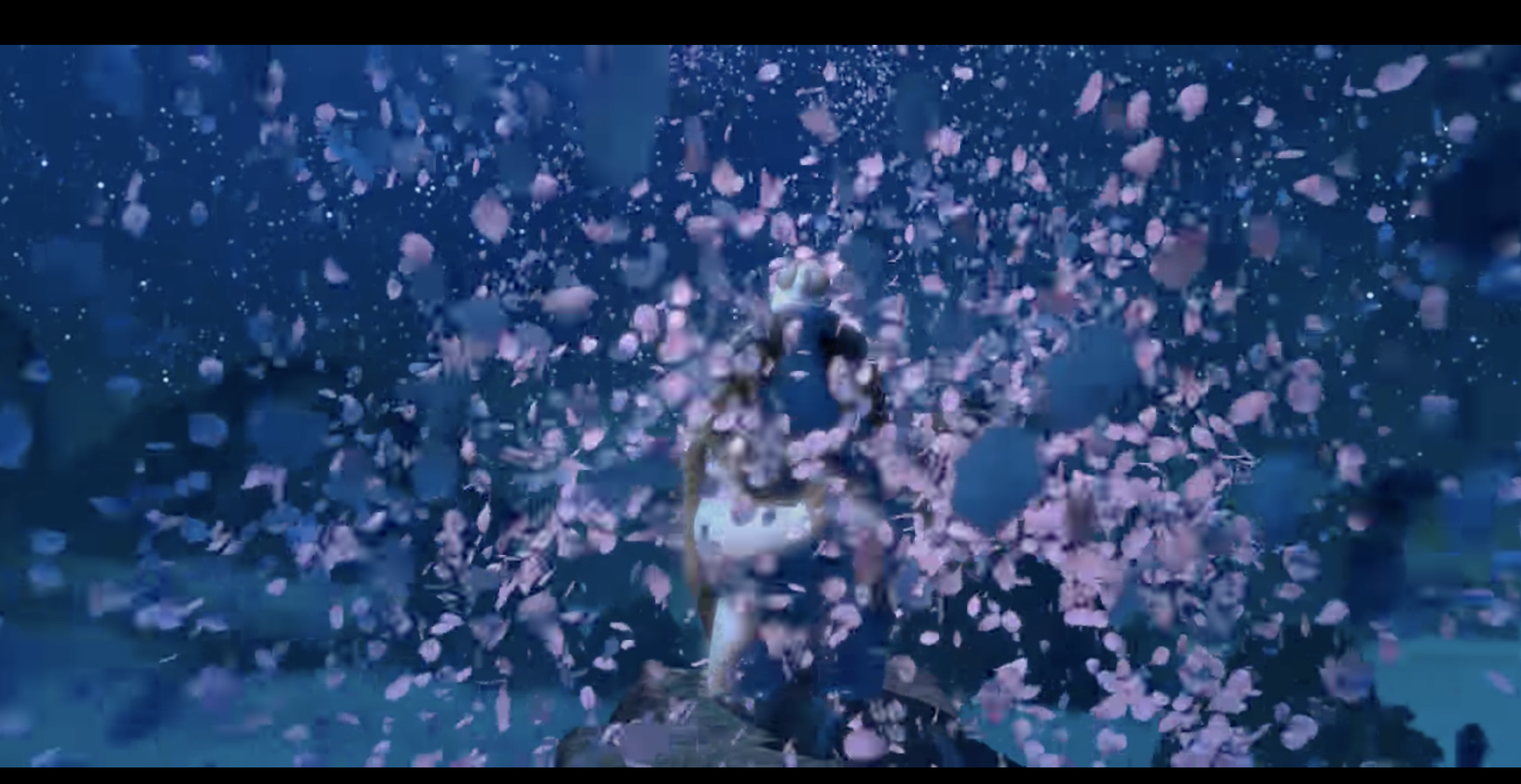
I would love to become like Oogway the Turtle master who, when the time came became one with the stars. That picturization is brilliant and so poignant.
It is true – after a long day, when most earthly duties of the day are done, I take myself off to ponder at the stars – the distant worlds and the beauty of sentience to appreciate the vastness of our presence in this universe. Truly, one of the biggest leaps of humankind is to have found our humble place in the cosmos – the worlds do not revolve around us, the gods were not thinking of us and our fates during the grand creation. We just are, and while here, we can make the best of it.
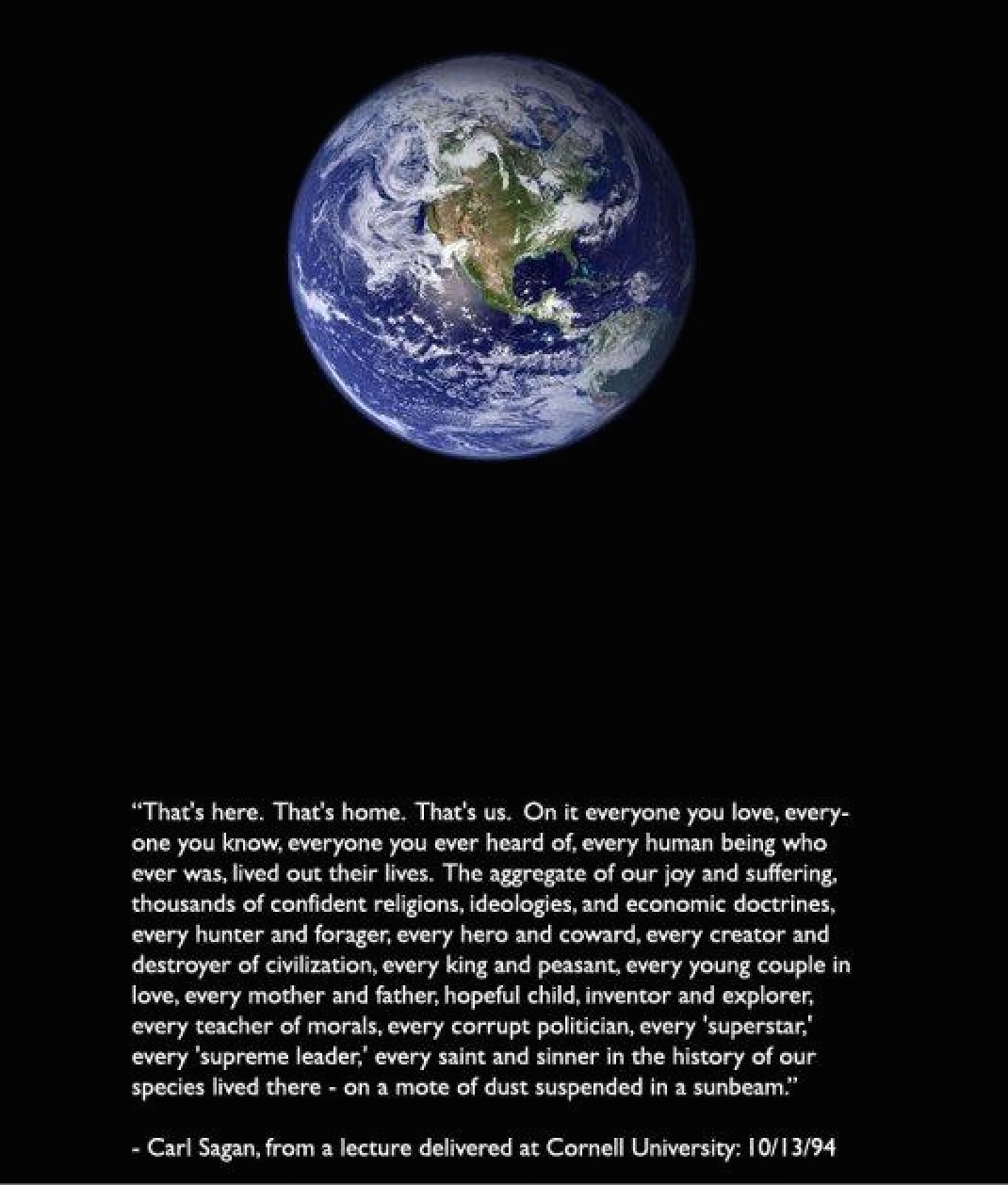
The more we discover earth-like planets, the more we realize that our planet is probably the only home we have for at least 10 (possibly much higher) light years in every direction. It should be a moment of awakening then for us to look after our one home.
Obviously, I was thrilled to read the book Bewilderment by Richard Powers. He writes about a dedicated, loving father who is raising his neuro-divergent son as a single father. He is also an astrobiologist whose job it is to model the worlds found depending on their atmospheric possibilities and constitution to simulate the kinds of life possible. (Even on Earth, the extremophiles found in sulphur vents deep inside the ocean were a revelation. If that was possible, what else and how many kinds of life were possible? ) The unique nature of their relationship, the steadfast and somewhat refreshing outlook of the possibilities of life outside Earth make for a fabulous read. A dip into the stars and beyond while being earth-bound.
Bewilderment – By Richard Powers
For those of you who wish to read the possibilities of worlds and the ability to dream past our current home and circumstances, I shall not spoil the end (but I wish it had not ended the way it did) .
Richard Powers is quickly becoming one of my favorite Science and nature based authors.
Snippet :
One night in mid-August, he asked for a planet before bed. I gave him the planet Chromat. It had nine moons and two suns, one small and red, the other large and blue. That made for three kinds of day of different lengths, four kinds of sunset and sunrise, scores of different eclipses, and countless flavors of disk and night,. Dust in the atmosphere turned the two kinds of sunlight into swirling watercolors. The languages of that world had as many as two hundred words for sadness and three hundred for joy, depending on the latitude and hemisphere.
He was thoughtful, at the story’s end. He lay back on his pillow, hands clasped behind his head, looking up at the idea of Chromat on his bedroom ceiling.
Bewilderment – Richard Powers
The book has rekindled the wonder of the universe, and the wondrous ponderings associated with them. How can one be bored by our narrow lives when the cosmos offers itself as a venue to ponder and more importantly, get a perspective on.
In P G Wodehouse novels, he often says that when people look at these sleepy country cottages they assume nothing happens. But come night, and it is a seething place of action. I felt the same in our sleepy quiet suburb. The lads and lasses in San Francisco, Los Angeles and New York had retired for the night at 12:30 a.m. but No Sir! Not in our neck of suburbia.
The house was filled with more plans than time or people to accomplish them. But the busy buzz of possibility was everywhere. Grandparents planned elaborate delicacies, aunts indulged the senior and junior citizens with games and food along with rigorous hiking plans, children made plans for movies and outings, older children made plans for hanging out with fellow teens.
The household functioned like an orchestra – high notes and low tones harmoniously blending into one and another. Sometimes the violinist was missing, other times the banjoist, but the orchestra went on anyway. T’was during those one of those evenings when the count for those who planned to stay for dinner was fluid, that plans were made for teen nephew #1 who sweetly told his mother to leave the keys in ‘the usual hiding place’ for him as he planned to be a ‘little late’.
So the fellow’s mother came to me knitting her hands and giving me meaningful looks. The pair of us before heading to bed hid the keys in ‘the usual place’, told the grandparents of all concerned and hit the sack. It was well past midnight.
The phone call came even later. Nephew #1 was trying to keep the accusatory note out of his voice when he said the usual place was devoid of keys or any metal really, or wood for that matter, or crowbars. #Mysterious
Filing the mystery of the missing keys for the morning, the fellow was let into the fortress.
Now, I don’t know what you’ve heard about senior citizens – the ones I’ve seen on television are sanguine, snoring by 10, and up at 7 am for their spot of coffee and hot water. Not that party bunch in our home however. The trio partied late into the night well after we went to bed.
It was after the seniors had switched off their hearing aids and started snoring that the phone call came. The nephew, the poor fellow who had asked for the keys so he would not be left out on the porch was standing out on the porch in the night, looking like he had eaten a bush or two, climbed a tree or two, and scoured off a raccoon or two, all in search of a good key.
After murmured sympathies, the fellow was let into the home, locked and padlocked like a fortress I might add. The next morning, I took it upon myself to solve the mystery of the missing keys.
It turned out that one of the hearing aid wearing grandparents had a malfunction when the information about the nephews arrival was broadcast. So, they dutifully went about locking, padlocking and triple locking the doors before going to bed. Forget the keys – they would have been no use in a case of locked doors such as this one. All the grandfather had refrained from doing was pushing an almirah against the door.
Hogwarts did a poor imitation of it when they secured the castle in The Prisoner of Azkaban.
“Who do you think is going to come and rob the place?” I asked taking my first sip of coffee for the day in.
A sputter of answers poured forth, none of them satisfactory.
I held up my hand, and stemmed the flow.
“Let me get this straight. You senior citizens partied well into the night – way past midnight seeing that we only went to bed at half past midnight.
Then, before heading to bed, you barricaded the doors and windows so that so much as a moth couldn’t enter the house.
And you were up at 6 a.m. to make coffee anyway.
So when do you think any fellow can rob the house?! They had a slim hour in which to make an entry and even that was thwarted by nephews arriving. No wonder the thieves are all moaning and talking of a change in profession!”
The household started laughing and all chagrin forgotten went about another day in which summer thrived in ‘leisured cosiness’.
The bike ride was a long one on a hot summer’s day. The sun was rising steadily and though it hadn’t reached its blazing glory across the Californian coasts, it was promising in its ascent. Even within the first 5 miles, we could feel the temperatures rise enough for us to be grateful for the mild breezes continuing to fan the body as we pumped through the trail.
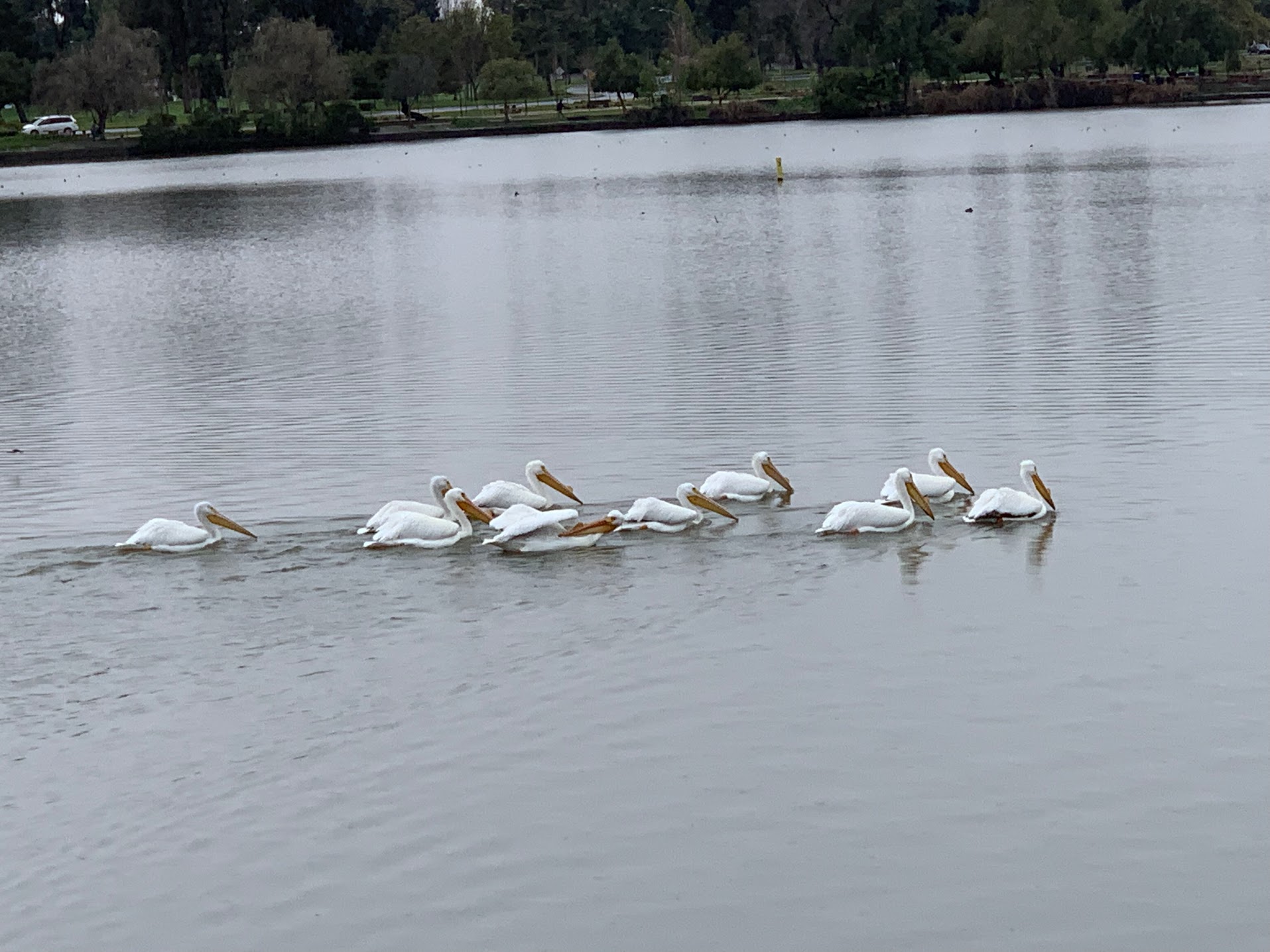
A little while later, we stopped for a quick peek at the pelicans lazing in the waters nearby. As the hot day wore on, our spirits only grew. All around us were the spritely images of life – birds swooped and flew in the mild breeze. As we stopped to see the pelicans lazing about in a patch of freshwater, a fellow biker and nature enthusiast stopped to share the calm of the pelicans with us. He asked the son whether he’d seen them fishing together like ballerinas. The son flashed a smile at me – a fellow nature lover using the same words to describe the pelicans?
The man told us how to identify harriers, hawks and bald eagles, and we biked on looking for the regulars as well for the new species he had told us about.
Right enough, in just a few miles, we spotted a harrier taking rest on a rock before scouring the fields for prey. There is something joyous in being to able to identify a newly learnt about species even if the species has existed far longer than we may have.
Harrier resting
But the ones that truly mesmerized us were the avocets. The avocets are a joy to behold on a hot day. They fly to a reasonable height, take a second to stabilize and then swoop down into the water below for a quick dip and fly out again. The smoothness of the breaking of the surface tension between the mediums is so flawlessly done. Their sharp beaks assisting them and reminding me of the little tidbit I had read in the book, Biomimicry by Jane Benyus.
Apparently, sonic boom was a big problem for the fast trains in Japan. The sonic booms were felt as far as a few hundred meters away as the trains emerged from the tunnels, and obviously this was a genuine problem that risked the success of the entire operation.
One of the engineers on the team, on his vacation, sat by the waterside watching a kingfisher swoop into the water and swoop out again with a smoothness of movement that inspired the engineer. How come the little bird was able to transition between mediums as different as water and air so sleekly? That is when the design of the sharp beak stood out. Eons of evolution may have shaped the beak in that particular long shape for a reason. The engineer went on to shape the train’s beak, and solved the problem for the fastest train of the day.
As the son & I stood there on the bay watching the avocets dive in and out, I told him that the collective noun for these lovely birds is an orchestra, and he beamed, and approved of the name. Their trilling, swooping, and pirouetting were apt.
Watching the little avocets on a hot day was a lovely little reminder of the designs of nature and its many wondrous ways. Not every saunter into nature is bound to solve a problem wracking humankind, but they very well might.










 Nourish-n-Cherish