Time as a Map of Reality?

Time in our Universe

I was reading about time, its paradoxes, black holes and white holes while awaiting our turn at the salon. It was a busy day, and luckily, the son and I had the foresight to take our books along to pass the time. 

Every time I looked up, I saw hairdressers concentrating on their craft, while making small talk and easing their customers to relax into their chairs. It is a gift, I realized, to get their customers to trust a stranger with scissors nipping at their heads. It is hair, and it does grow back. But it also does change your immediate appearance and the perception of yourself and those around you, even if only momentarily. For a species that is vain, visually conscious, it is a fine balance to get the right look. 

Time as a Map of Reality?

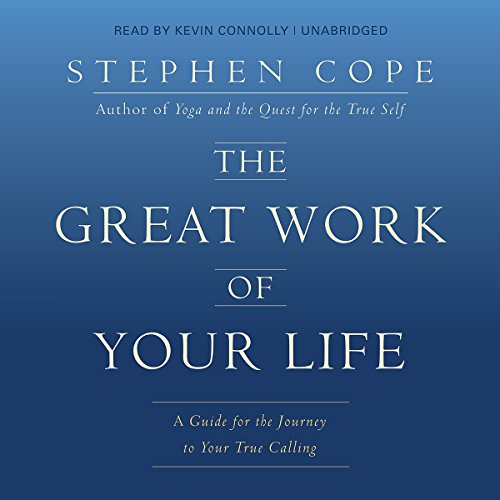
Back in my book on White Holes by Carlo Rovelli, the paradox of time was being explained:

white_holes

I can’t say I understood it all, but it was lovely to try:

“The reason we remember the past and not the future is entirely due to the fact that the universe was further from equilibrium at one point in the past than it is now.”

Whatever did that mean?

I read on about equilibrium, till I found something that I liked.

“The flow of reality is always more fluid than any of our frantic attempts to capture it might lead us to believe. Time is not a map of reality: it is a kind of memory storage device …”

I liked that. Time as a map of reality, or not?

No Trace Will Remain

I looked up trying to fix the concepts and the reality of my physical space at the same time. I noticed the many small ways in which we trust ourselves to those around us. It should all be organic, safe, slow, and yet in our quest for productivity everything has sped up. Watching barbers and hairdressers doing it all with confidence and aplomb in such a short span of time, was fascinating. 

Watching the people in the salon getting their hair cut with those cutting the n-th customers’ hair, while trying to understand the concepts of equilibrium and time is a strangely meditative experience. The son and I watched and read in turns. The annoyance of the long wait mitigated by the philosophies of being. 

“Sooner or later, every memory vanishes, canceled through the wear and tear of time. Sooner or later, of our proud civilizations, of everything that we have understood, of the words in books such as this one, of our controversies and of our desperate passions and loves…no trace will remain.”

“Would you come please?” It was our turn.

“Soon of our long locks of hair, no trace would remain!” I smirked to the son, and chin up, we made our way in.

At that moment where we are not in a black hole, or not reversing into white a hole, there is only the experience of time, and the trimming of hair.

127e22d1d2494032867770d78ef0335f_ComfyUI_20682_

Chance Encounters For a Magical Journey

🐕‍🦺🪷🦌🍀🐺❄️🐀🍁 The Deer Families 🐕‍🦺🪷🦌🍀🐺❄️🐀🍁

“Think we’ll see James and Lily today?”

“I don’t know! Hopefully. It has been raining, so the poor things may have moved away, ” I said. We’ve christened the deer family near our homes. The mother and father are called Lily & James (I know!). Sometimes, there are several families – we call them all James & Lily. 

img_9619

We caught sight of them – much closer than they usually are, that evening, and exchanged a look so close up, it was … revealing, deep? (hard to pin down in one word). It isn’t often one gets the chance to exchange a deep searching look with a deer. It is a marvelous experience – and one we wouldn’t forget soon. Those brown eyes seem endless, and so full, it somehow fills up your being too. When poets write of moments feeling like eternity etc, I suppose this is what they meant. It could not have been more than a few seconds, and yet, the eyes spoke a language of eyes. 

Whenever writers talk about pools of emotion showing in the eyes, and the shapes of their ghosts flitting through their characters’ eyes and all of that, I am never sure what to think of it. Sure, it sounds brilliant and poetic, but can we really show all of that in one glance? Looking into the deer’s eyes was oddly satiating, and it was definitely more than words can try. 

Clearly the son was moved too, for he said, as soon as it left, “Do you want to talk to animals sometimes?”

I nodded. “That would be nice.”, I said

“What do you think they’d talk about?”

🐕‍🦺🪷🦌🍀🐺❄️🐀🍁 Understanding Animals 🐕‍🦺🪷🦌🍀🐺❄️🐀🍁

“I suppose it depends on the animals. Elephants have different concerns than pangolins. Bees, squirrels and ants – being more community animals may have similar concerns. But I think I’d like to know the range of emotions they have. Do squirrels have greed? Do ants have jealousy? Pelicans have been known to sacrifice themselves for their pod. “

Are there some emotions or behaviors that are completely unknown to man that our creatures possess? We know many animals feel love, despair etc. 

If a wolf is kicked out of its pack, it never howls again. 

– From the book, Sad Animal Facts – by Brooke Barker

“For instance, and we all know whales have complex legends in song format that they pass down. With all the skills of navigation, survival, and protecting required, I am sure they all have different topics.”

image-1

“I think I’d also like to see what kinds of things they keep in long term memory. I mean we know elephants have long-term memories, but what does that constitute? Just routes to water during times of drought or also towards betrayals etc. They must have some extraordinary lives and stories to tell then, isn’t it?”

He was nodding along. We talked about the size of their brains in proportion to their sizes. Brain ratio requires a separate post in itself, but there are so many fascinating things once you start looking into it.

For instance:

“An alligator’s brain weighs less than an oreo. “

– Quote from the book, Sad Animal Facts – By Brooke Barker

The alligator literally has the smallest brain to body ratio. Only 0.2 % of its body mass is the brain.

🐘 🐊 ⌘ Gajendra Moksha & Vishnu Sahasranamam 🐘 🐊 ⌘

This led to research on a few things about body to brain ratios, and curiously, the myth of the crocodile vs the elephant in Hindu mythology, Gajendra Moksha. It is curious how the myth pitted the lowest brain ratio animal against one of the wild animals with the highest ratios (the elephant). It is supposed to be a reminder to keep our egos in check. Gajendra finally relinquished his ego, and required the great god, Vishnu, to come in avatar form and save the elephant. 

Gajendra’s plea to Lord Vishnu is called the Gajendra Stuti and is the first stanza of the Vishnu Sahasranamam (the 1000 names of Vishnu) 

Please read: Post by Krishna2 on the Vishnu Sahasranamam  – this post helps us comprehend us the depths of Vishnu Sahasranamam

शुक्लांबरधरं विष्णुं शशि वर्णं चतुर्भुजं
प्रसन्न वदनं ध्यायेत् सर्व विघ्नोपशान्तये

śuklāṃbaradharaṃ viṣṇuṃ śaśi varṇaṃ caturbhujaṃ |
prasanna vadanaṃ dhyāyēt sarva vighnōpaśāntayē ||

We came home fascinated by all the different things we usually do not pay attention to – filled with wonder, and awe. Many of us have forgotten what it is like to have encounters with our fellow beings – sometimes, exchanging a glance with a deer is all it takes to take on this incredible journey. 

The multiplicity of forms! The hummingbird, the fox, the raven, the sparrow hawk, the otter, the dragonfly, the water lily! And on and on. It must be a great disappointment to God if we are not dazzled at least ten times a day.

Good Morning – By Mary Oliver, Book: Blue Horses

References: 

Zinniga-Zanniga Tree – The Cure-It-All Tree

Dr Seuss Magic

“Isn’t it marvelous to leave such a legacy behind?” I asked sleepily. It was Dr Seuss’s birthday and typically marked as Read Across America week. I miss the fuss of the week in elementary schools. The middle schoolers and high schoolers get to have their fun, but we just get to hear about it a lot less, I guess. 

Lazily, I picked up a book written by Dr Seuss, that has been lying around for ages in the children’s bookshelves and had never read before. The Bippolo Seed and Other Stories.

bippolo

The stories, some of them at least, had predictable plot lines, but oh! How he presented them! I feel justified in the use of as many exclamation marks as necessary when writing about Dr Seuss. For instance, there is a story of a bear ready to pounce on a rabbit. The rabbit, doing some quick thinking, stalls the bear with an intriguing thought.

The Rabbit, the Bear, and the Zinniga-Zanniga

“I sure hate to tell you It isn’t too good.
I was counting the eyelashes 'round your eyes,
Your left eye…your right eye…and, to my surprise,
They weren’t the same number!

“I’m sorry…SO sorry.
But, sir, it is true.
Poor Bear! This is dreadful!
One eyelash too few!”

In typical Dr Seuss fashion, the rabbit takes it to ridiculous extremes. Could the bear’s spine be cracking, could his brain be lopsided, all those aches and pains, oh it all makes sense. By the end of the tale, the bear is sitting atop a zinniga-zanniga tree with a flower pressed to his eye so that the extra eyelash can grow and make him feel whole again, while the rabbit skips on his way, free from the bear’s claws.

Oh! 

I laughed so hard, I sputtered and sprayed my coffee, I put my phone in the refrigerator and looked for it all morning, and I almost walked straight into a zinniga-zanniga tree myself.

What a marvelous tale to encapsulate how our worries sometimes run away with our imagination, the hypochondriacs hidden in every one of us to a certain degree poking fun at itself, and the societal pressures on perfect eyelashes playing into the bear’s psyche?

Sometimes, we need entire tomes to discuss these themes, other times, a lost story of Dr Seuss would do.

The Leap Wish

If you see me just for a day, with my nose transformed into a beautiful horn, and roaming the skies or plumbing the depths of the ocean, I can explain:

A Leap Wish?

“So, what do you wish can exist for one day only on Feb 29th? “ the son asks one evening.

“Hmm?” I am taken aback from the question, though I really shouldn’t be. The skies know I have had my fair share of them. But it still surprises me. 

“It can’t be a person, but it can be a magical power, a creature that is long extinct etc. Like a leap year wish – a leap wish!” he says. 

That was an intriguing thought. Something to wish for that only exists on Feb 29th. I thought, and thought about it shamefully for so long. Why was this so hard?

What would each of us like?

🐋“Hmm..maybe a chance to see our world from different perspectives? Like being a unicorn filled with magic and a narwhal who can dive deep and long?” I said. “Let me think about this a bit more. What would you want?” I asked him. 

Screenshot 2024-02-28 at 8.40.47 PM

🦕Unsurprisingly, he came up with so many different things and versions, but finally settled on, “ I’d want dinosaurs to roam the Earth as they used to just for that one day, so we can see, how it all was for them.”

The husband said he would play the world to his advantage and ask to be able to teleport himself everywhere so he could experience a sampling of the world and make the most of 24 hours to make it 36 with the time differences.

“You and your can-do attitude. Can’t just take the 24 hours given to you – you have to optimize it to 36!” I chided him gently, though I admired him all the more for it, especially hearing what he had in mind.

🪸The coral reefs of the coast of Australia to the beaches in Brazil, a cold desert stop in the Gobi desert on the way to a hot one in the Thar desert or the Arabian one.

birthday

By the end of my conversation with him, I found myself thinking of longing and gratitude to live out our lives on this wondrous planet. 

What would you like?

What about you? What would you like to experience that one day? Remember, it only lasts a day. For all you financial magnates, if you want a billion dollars to experience life as a billionaire, remember you get to be yourself with your old bank account the next day. That may make the remaining days that much more normal – be warned!

I spent the walk back pondering on how our life would be if we each got our wishes. Would the leap day every four years be wondrous, exciting, nerve-wracking, frightful, beautiful, scary?

We’ve all heard of the gypsy’s curse: May you get what you wish for! In this case, would it be too much for us to handle? 

Time just slips away!

“So this is how it is,” I thought. “Time just slips away.”

Haruki Murakami, Novelist as a Vocation 

I can well understand this. He writes about how everyone has it in them to write a single piece of work – a book even, but to consistently get back to the paper and do this over and over again – that is the making of a writer. I found myself nodding and smiling at that. 

While writing sagas, and series isn’t the same as writing a novel, and writing a novel isn’t the same as a novella or short story, and a short story isn’t the same as writing an article, and all of this is different from writing short bursts of poetry, or a truly honest sentence, there is one thing binding it all together. It is the search for the right words, the right phrasing, the right emotions, the right concepts, and the right flow, that is everything.

That is where the time goes. It slips away in building a life with memories worth writing about. It slips while thinking about writing. And it goes in the process of writing.

Why do you write?

Many friends ask me why I write, and my answer has been – Because I want to, have to even sometimes – an idea lodges itself and rattles itself inside till it is released onto the paper, and once done, other ideas are able to take root. 

🦌 Sometimes writing is a catharsis, other times a pleasure. 

🦅 Sometimes it is inexplicably hard, and other times easy. 

🐿️ Sometimes it is creative and wild, other times banal and plodding.

🐦‍ Sometimes it is a thankless pursuit, other times it is rewarding.

🦢 But in its very paradoxes lies its appeal, and for that I am eternally grateful.

Writing through Time

There is also a strange comfort in knowing that writing has been all of these things for centuries – from the humans who inscribed their thoughts into clay tablets, scrolls, to those who could do the same on paper, to those of us who take to pages on the internet.  Scribes, quills, pens, typewriters, and keyboards all helping the human mind make sense of their limited time on this planet in wondrous ways.

I am constantly in awe of storytellers – the kind of writing that requires not just a fount of wisdom and ideas, but also an unrelenting combination of imagination and discipline.

The Three Selves

How people write series, overarching stories, sagas spanning multiple threads, years and characters is stupendously inspiring. The ability to imagine, craft and execute is nothing short of miraculous.  There are thousands of books being published every year, and that only means that many people are choosing to expand their energies in these constructive ways. How can there not be hope for humankind?

The time that slips away building all these fantastical works – is it not time savored by the writer, and then by the readers if they are able to immerse themselves in it? Is there a measure for that sort of time slipping by?

Close-up fountain pen writing notebook

🌈Irisophiles?🌈

February is really the month of Love. Not just because of Valentine’s Day, but the rainbows!

img_9718

February has been the month of rainbows – at least here in the Bay Area. Even if we know the Science behind rainbows, they are special. We’d glance outside, and see the sun peeking out after the rains, and I’d run to see if the magic is there. That in itself is surely magical.

While there are many words to describe the love of sunsets, clouds, starry skies, the sun, the moon, eclipses, forests, rain, thunder and lightning, there isn’t really a word to describe the love of rainbows. No one word to capture the soaring of the heart when it spots the multi colored ring of the Earth’s horizons. The squealing of the young and the old as they charge outside to catch the magical light of this beautiful universe. Imagining how marvelous it must look to hummingbirds and those who can see a larger spectrum of light.

Rainbow Tales

Of course rainbows have enamored humankind for centuries. 

🌈I can’t help thinking of the silly fable about the fox marrying the crow and throwing the garland up in the sky, and that is how a rainbow is formed, every time we spot one. 

👰Greek myths have a goddess, Iris, who is both a messenger of the gods and a personification of the rainbow. In Rick Riordan’s Percy Jackson series, the demigods are able to use drachmas to communicate with the gods through a rainbow.

🍀The Irish, of course, have a quirky tale about finding gold at the end of the rainbow.

That is why I was this surprised at not being able to easily find a word for a lover of rainbows in a world filled with them.

Should we call ourselves Irisophiles?

🌇Opacarophile: lover of sunset

🎨Chromatophile – a lover of colors

⚡Ceraunophile – a lover of thunder and lightning

🌩️Nephophile – a lover of clouds

☀️Heliophile – a lover of the sun

🌜Selenophile – a lover of the moon

🤽Limnophile – a lover of lakes

🕯️Photophile – a lover of natural light

🌧️Pluviophile – a lover of rain

🌊Thalassophile -a lover of the sea and oceans

🌳Nemophile – a lover of forests

💛Xanthophile – a lover of the color yellow

Here are a list of words to engage any nature-o-philes:

Words for lover of Nature and Weather

img_9556

What do you think? Should the lover of rainbows be called an Irisophile. Or what other words would you suggest?

🐲Imagine Dragons 🐉

There are sections of the book, Novelist as a Vocation by Haruki Murakami that I enjoyed. I did think he was self-deprecating, and unwilling to take a little credit for his successes as a writer though. While being published and being received favorably are a function of luck to a certain degree, there is the fact that a consistent writer has to keep themselves out there. They need to remain vulnerable and suffer acutely all the emotions that their characters do with a passion. It is a tough vocation, and not always a lucrative one.

“Writing novels is, to my way of thinking, basically a very uncool enterprise.”

Haruki Murakami, Novelist as a Vocation
Version 1.0.0

He goes on to tell the story he read as a child in which two men go to see and understand why Mt Fujiyama is revered thus, and what was special about it. The smarter of the two men apparently sized the mountain from various vantage points and decided he knew enough about it, and went on his way. Efficient, Fujiyama seen, and admired.

The other one, apparently, went on to climb the mountain by foot, agonizingly conquering the mountain. “Finally, he has understood it or perhaps grasped its essence at a less conscious level.”

Murakami equates the latter with a writer. In other words, the harder route. He calls the endeavor of novel writing as sometimes being thankless, other times laborious, and at times a strenuous job.

I think I agree with all of the above. Every good novel I read has me in awe. For it takes a different kind of empathy and a wholly different kind of perseverance to imagine a world, make sense of the characters, imagine what each of them will do, how they would react to a situation and so much more. 

So, when I finished reading When Women Were Dragons – By Kelly Barnhill, I took the story with me everywhere. I read the author’s note scribbled at the end. The vote of thanks piece. The credits when people leave the cinema theatre. I read this because of the enormous respect I have for a piece of creative work – fiction or non-fiction – and the universe that helped create the book that I had just enjoyed. 

I am sharing a bit of Kelly Barnhill’s note here:

“And, thank you to my wonderful family – … -who have to live with a person often hijacked by her own imagination, and wounded by the world. The work of storytelling requires a person to remain in a state of brutal vulnerability and punishing empathy. We feel everything. It tears us apart. We could not do this work without people in our lives to love us unceasingly, and to put us back together. “

Kelly Barnhill (Acknowledgement) When Women Were Dragons

The depths and capacity for creative work continues to astound me – blessed is an intellect that can imagine, and blessed indeed is a culture that promotes growth through imagination.

🌿Loud Walks in Quiet Places🌿

Walks : Loud & Quiet

There are quiet walks and there are loud walks in quiet places. 

Henry David Thoreau called it, “Taking the village with you.” or something to that effect. What he meant, I think, was that we took the problems occupying our minds and held onto them tightly, and a trifle obstinately, thereby making it harder for nature to soothe and calm. Really! The human mind is a strange thing. Sometimes, nothing sticks, and other times, nothing slides. 

“I am alarmed when it happens that I have walked a mile into the woods bodily, without getting there in spirit.”
― Henry David Thoreau, Walking

These walks are trying at best. I found myself fiddling with poetry to try and distract the mind from the village, and the people in it. It was a feeble attempt, and one that requires far more concentration to be approved by Bard/Gemini maybe, but it’ll do. It would have to do.  

Poetry: Balm to the Soul

Was poetry not the balm to the soul?

The trees are trying

The waters are waving


The swans are soothing

The squirrels are scampering


The deer are divine

The eagles are evocative


The vultures are volatile

The pelicans are pure


Yet the spirit

Remains dispirited


Some days are trying

For your mind is wavering

Just as I had managed to get nature to work its magic, I was summoned back to reality by three loud gentlemen discussing the virtues of housing all their data in the cloud, and how that reduced their costs. I found myself calculating storage costs and estimating budgets. 

I looked resolutely at the clouds overhead and said loudly, “Nope – look at the real clouds!”. I may have startled a little wren foraging for food in the bushes nearby, and it took flight in an alarming manner after throwing me a reproachful glance. 

Oh well! 

Nature did do its work!

But, I found, on getting into the car, nature had done its work. It may have had to try harder and send a few more butterflies my way, but it did. I was much refreshed in mind and spirit, clearer in what I needed done.

I chuckled remembering Thoreau’s quote on Walking, and spending at least 4 hours a day in nature – a luxury most of us can seldom afford, but we can afford smaller bursts of it:

“I think that I cannot preserve my health and spirits, unless I spend four hours a day at least—and it is commonly more than that—sauntering through the woods and over the hills and fields, absolutely free from all worldly engagements.”

🐲When Women Were Dragons 🐉

Intriguing beginnings:

There are powerful beginnings and there are intriguing beginnings to stories. It has been a while since I saw a beginning as brilliant as the one in the book, When Women Were Dragons – By Kelly Barnhill

women_dragons

Dragoning

Dragoning is the term that seemed to be used when some women turned permanently into dragons and left their human life aside – taking off to wherever dragons live. For those left behind, the phenomenon is bizarre, frightening, traumatic, and quite often fatal. 

This is how the book starts:

“Greetings, Mother- I do not have much time. This change (this wondrous, wondrous change) is at the very moment upon me.

I married a man who was petulant, volatile, weak-willed, and morally vile. 

But there were no babies, were there? My husband’s beatings saw to that. Tooth and claw. The downtrodden becomes the bearer of a heavenly, righteous flame.

I shall not miss you Mother. Perhaps I won’t even remember you. Does a flower remember its life as a seed? Does a phoenix recall itself as it burns anew? You will not see me again. I shall be but a shadow streaking across the sky-fleeting, speeding, and utterly gone.

– From a letter written by Marya Tilman, a housewife from Lincoln Nebraska, and the earliest scientifically confirmed case of spontaneous dragoning within the United States prior to the Mass Dragoning of 1955-also known as the Day of Missing Mothers”

I am midway through the book, and the story soars with the dragons – fiery tempests in teacups and how the placid bore it within themselves.

The book’s narrative voice is brilliant. Seamlessly moving between dragoning as a phenomenon and when it was first observed, slowly moving onto research of dragoning and its funding removed, to the whole topic becoming a taboo.

Society isn’t really mysterious once you understand the original intent. Cruel maybe, but not as mysterious. For instance, in this world, drawing or mentioning dragons could get children in serious trouble. Those who had lost a mother or a sister or a friend to dragoning don’t ever want to hear anything to do with it. They ignore it so it may never happen again. The news forgets to mention it, and society plows on.

For those looking for dystopian fiction or just a jolt from our current state, When Women Became Dragons, is worth a read.

⚡️💨⛈Cloud Kitchens ⚡️💨⛈

We were walking at a time when everything around us was glowing in a golden hue. The sun was setting, highlighting  the clouds in the horizon from within or behind, giving them a glorious gloriole. The recent storm had news channels talking of our favorite term in recent times – atmospheric rivers

img_9651img_9652

The actual river was flowing with muddy waters from the recent rains, the trail was still strewn with branches and twigs after the recent battering of the storms, the deer that usually had more space to graze were standing glumly off to the side for their favorite haunts were water-logged. Or at least I thought they stood glumly: they looked contented and happy with the fresh grass, and each other for company.

img_9619

“Look at those clouds and the lighting from behind them!” I squealed.

“Oh please amma! You talk of nothing but countertops and cabinets these days!” said the son.

“I do not!” I said, mock-offended and a trifle sheepish. Well – the fellow was not entirely wrong.  It was true, I was becoming one of those bores who go on and on about cabinets.  I am trying to switch out the cabinets in our kitchen, and it has proved to be a task that had hidden depths to its complexity. Regardless – just then, I was talking about clouds and the sunset, and said so with a haughty sniff.

“Don’t tell me you didn’t think of how the hidden lighting would look under the cabinets.!” he said, and I laughed. I had not actually thought of it, but if the poor fellow thought his usually cloud-and-sunset-loving mother saw cabinets in clouds, I had scarred him indeed. Feeling suitably chastened, I promised to shelve all talk of cabinets for the walk. “Get it? Get it? Shelve talk of cabinets! Huh?”

He rolled his eyes, and though the clouds reminded me of the subtle grays and whites in certain countertops I had seen, I kept the opinion to myself, and we walked on chatting amiably of this-and-that.

Kitchens could wait, sunsets could not.