Navarathri
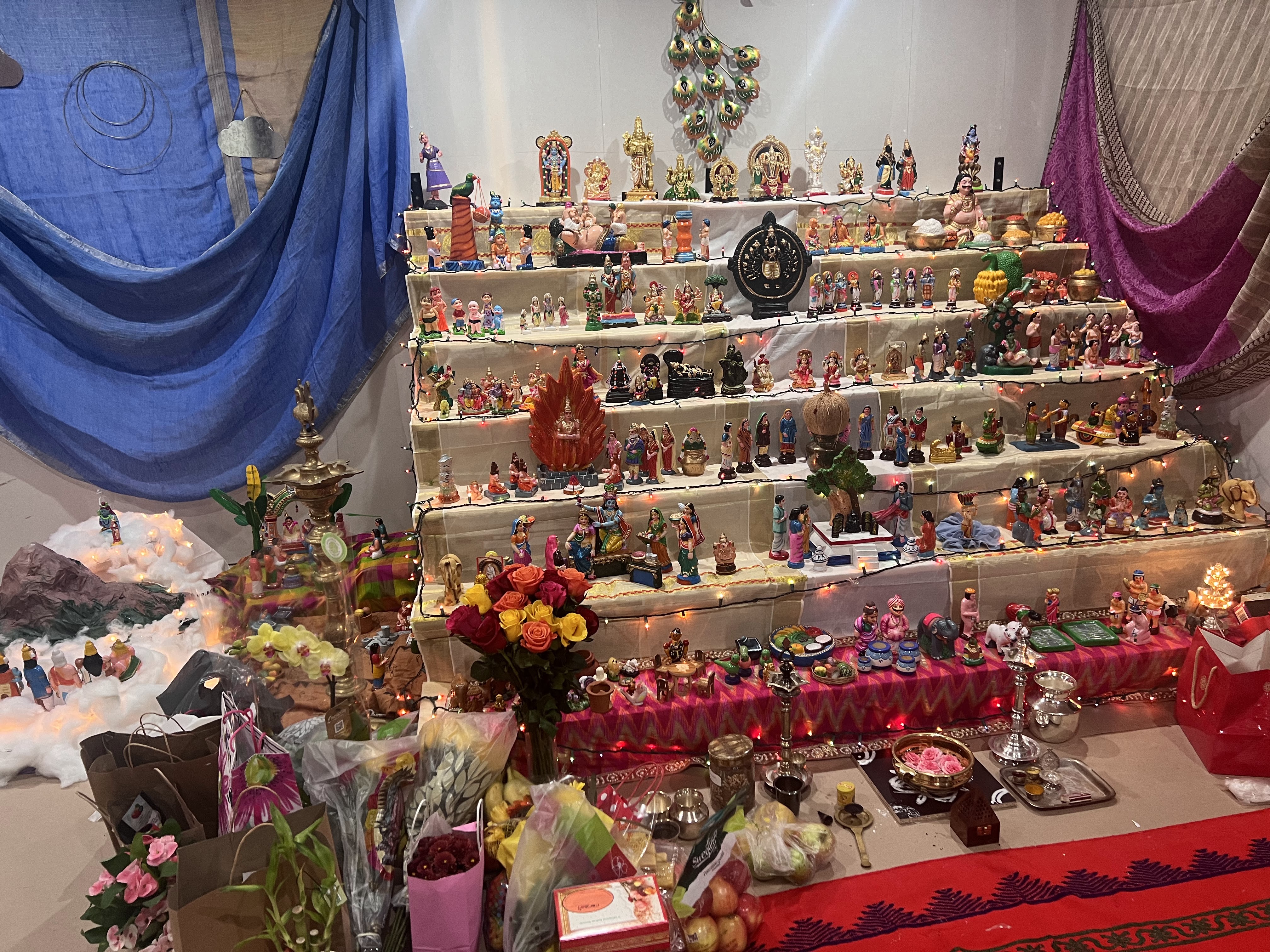
The Navarathri season is behind us. That is to say, the garba dances, the spontaneous bursting into carnatic music, classical dancers getting their Vijayadashami classes, the crowded shamiyana’s with pujo crowds, the golu hoppers, and the first wave of festive wear for the fall season is all behind us. The statues that got to come out and get put on display are all wrapped up, and put away in their cozy confines for another year.
There are many golu aspirants who raise the bar every time. One particular household we enjoy has a side-show gleaming with inventive playfulness. In every golu display there are stories jostling on the orderly steps waiting to be told, but skipped over – possibly waiting for the next year. For there is too much going on for dolls and their stories to be told and listened to. I can imagine and appreciate the whimsical nature of life wanting to be preserved as tradition. Then again, for a country such as India, there is rarely the time for slow pursuits such as mythical story telling sessions over long evenings these days. What was earmarked for that, has morphed into rushed sessions, oodles of food, music and dance bursting at every corner, and like life itself the dolls with the good stories sit quietly – watching, waiting their turn. Ready to amuse, educate and entertain if asked, but purely on stand-by.
The Golu Tradition
Golu – as the tradition of the display of dolls is known, is rumored to have started in the 14th Century during the height of the Vijayanagara empire. The royal families of the era particularly around the Thanjavur region were taken in by the opportunity to display their dolls, host gatherings, etc. Slowly, they had musicians and dancers from the local temples over for performances, and it became a time when children were initiated into the Arts. Vijayadashami became a day of artistic beginnings and blessings.
In many of the homes we visit, we hear stories of the dolls being passed down from generation to generation. One friend told me that her vegetable set came from her great grandmother – handed down to her grandmother, who brought it to the US in the 60’s, and then passed it to her mother and how she plans to give it to her own daughter one day. I peered at the misshapen vegetables and felt a stirring for why the tradition appeals to so many. There were no perfectly preserved, larger models there. The vegetables had warped surfaces much like the farmers of the time might have produced them, and an artist had rendered them with the best clays and paints available to them. The greens were greener than the vegetables could achieve, and the reds made them look like they were blushing. Very fetching.

Why tradition settled on 9 days for Navarathri, I am not sure. But I presume it had something to do with the agricultural cycles of the time. A lull in the work periods between harvest and planting cycles when the plants were at their strongest, and therefore a time for a bit of fun.
What I Wish It Could Be
As a child, I longed to take the golu dolls down from their shelves to play with. But of course, we weren’t allowed to do so. My own grandmother had given them to my mother. It seemed so pointless to have this many dolls all sitting there, waiting to be played with, but out of reach. This many stories waiting to be enacted. We were only ever to touch them the day they were taken out, or the day they were wrapped back in old newspaper and stowed away. A touch of pathos about the way they’d have to nestle back into the wooden crates in the old garden shed about them.
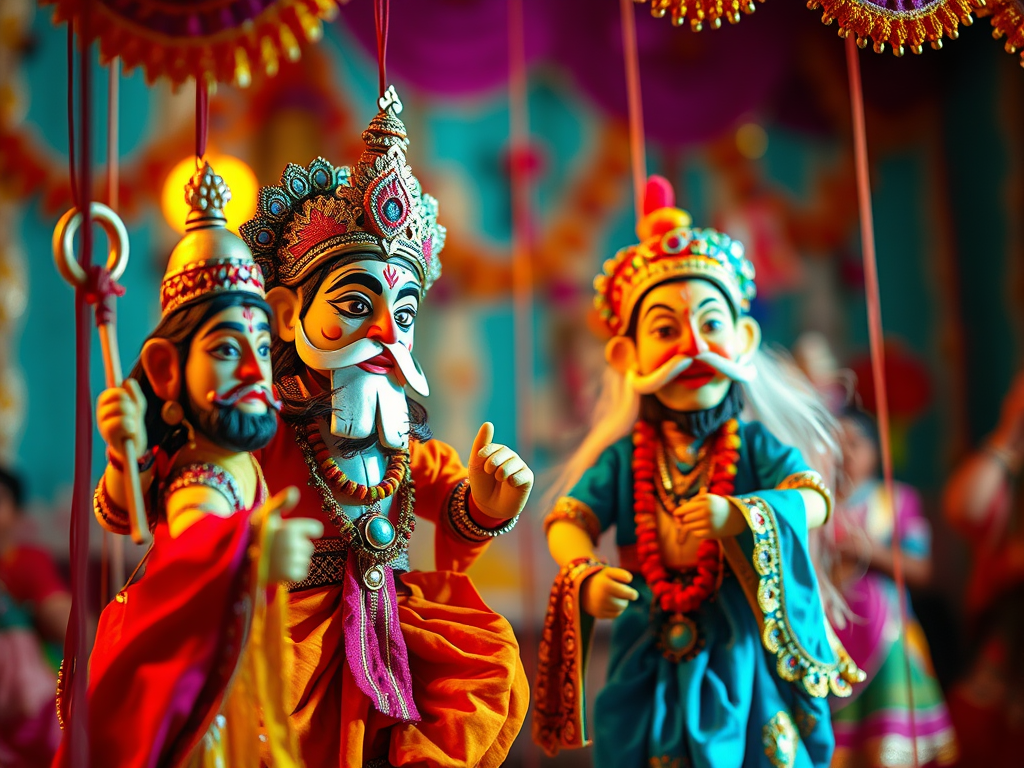
It has been a dear wish of mine to one day make a puppet based theatrical show of this. You know – properly make the dolls come alive, hop off their little shelves, and have them enact their stories. Vishnu’s avatars don’t need another year of standing there – they need to be out there telling you how much one ought to be doing in the face of evil vying and holding power. So what if you have to impersonate half a lion or a fish or turtle for noble purposes? That would be an apt election-time story wouldn’t it?
Make a funny skit or two about how the demon Ghatodgajjan ate his way through the season, or the din to wake Ravana’s brother, Kumbhakarna from his 6-month slumber to fight the war in the Ramayana. Enact the wars with paper mache swords, and bubblegum shaped missiles that could be eaten afterward. That would be cool.
A silly song about the cricket playing Ganesha statues maybe?
Wrap the session with all the Lakshmis being totally brave, daring, intelligent and charming. That would be brilliant.
 Nourish-n-Cherish