The Power of our Emotions

Patience is a Virtue

“She can be hot-tempered!” my mother would say with a damning tone, which I thought was pretty rich coming from someone who had always been a bit of a live wire. 

“Patience is a virtue!” the father would say, and sing a terrible song in an even more terrible voice:

பொறுமை எனும் நகை அணிந்து

பெருமை கொள்ள வேண்டும் பெண்கள்

Meaning: Women should wear the jewels of patience, and feel pride in it.

And I would just lose it.

Again, coming from the pair that bickered their life through, it was a bit much.  

From a young age, I was led to believe that impatience, anger, and hot-headedness are vices. So, every time I felt this way, it bothered me – less over time, but bothered me nonetheless. While anger is better wielded when in control, there is a necessity for righteous anger, and even anger to defend oneself, or someone else. There is also a necessity to wield it as a protective shield – especially as a woman. So, why do we continue to tell women it isn’t okay to be angry? 

Is Patience a Virtue or a Vice?

Even as recent as last month, I was told that a friend of mine never lost her temper, in glowing terms. I had a cold, and was coughing and sputtering through a phone-call.  

“Did you try boiling the water using the kettle?” the mother said, not listening to what I was saying at all, but telling me what to do in a voice that did a thin job of veiling her true thoughts of my competence in the kitchen.

“No mother! I took three bricks, broke a branch, and tried scraping firestones together to light a fire on which to boil water.”

Hence the : patience is a virtue refrain. 👀I could try being endlessly patient like this friend, could I not?

f3b72f837d0e4d7981fcbb98a519021c_ComfyUI_10079_

As though that was her most redeeming quality. It wasn’t – she was loving, kind, generous, and funny. She was also judgmental and stubborn (her patience actually helped her win her way in the long run, so far from it being a virtue, I saw it as sometimes being problematic), but there it was. 

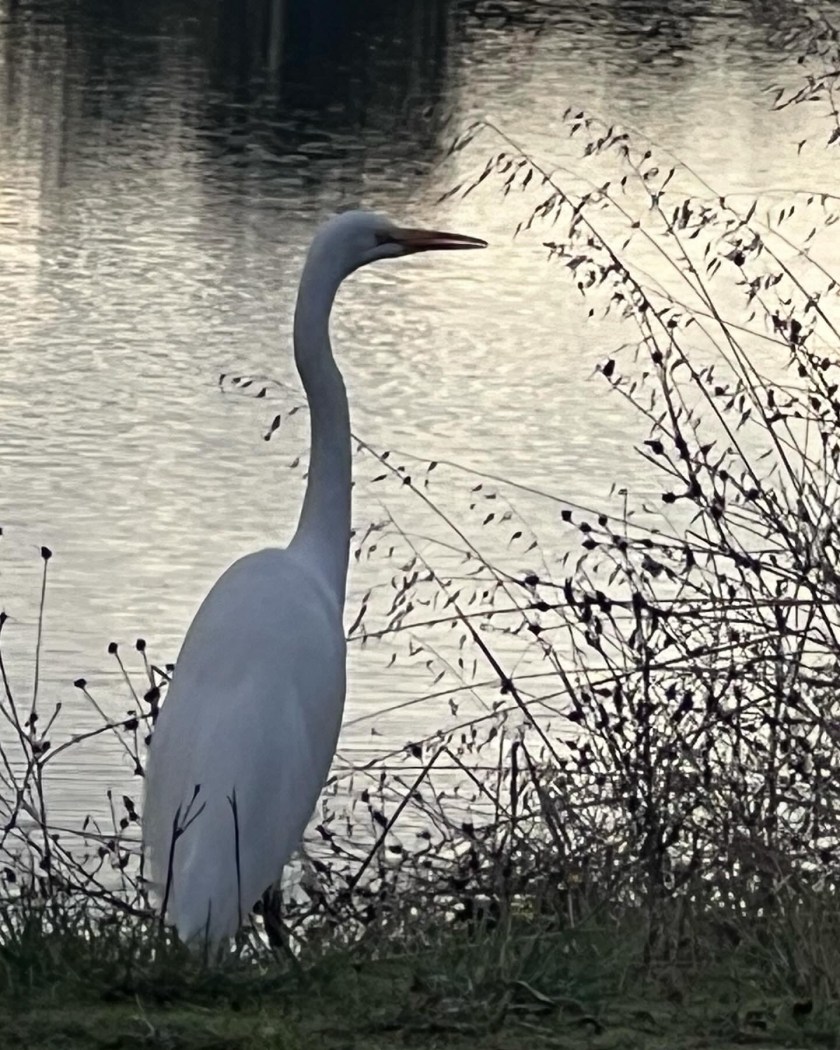
Cranes are endlessly patient, brutally so, in their quest for what they want, aren’t they? Ask the fish what they think of that.

cd3693d5-3eaa-4d3b-ab97-d7c865de8707

“Maybe, Buddha should have been a Bodhini and taught us the way”, I snapped and put the phone down. 

I did feel a twinge afterward – the poor lady was only trying to help, but really! She hadn’t even listened to what I was trying to say, which was somewhat time-critical. Too wound up to speak, and the timezones not contributing to the late hour, the crux of the communique had to be sent as a cryptic message on WhatsApp instead. This, of course,  resulted in tedious messages of varying hilarity, and interruptions. 

Sigh!

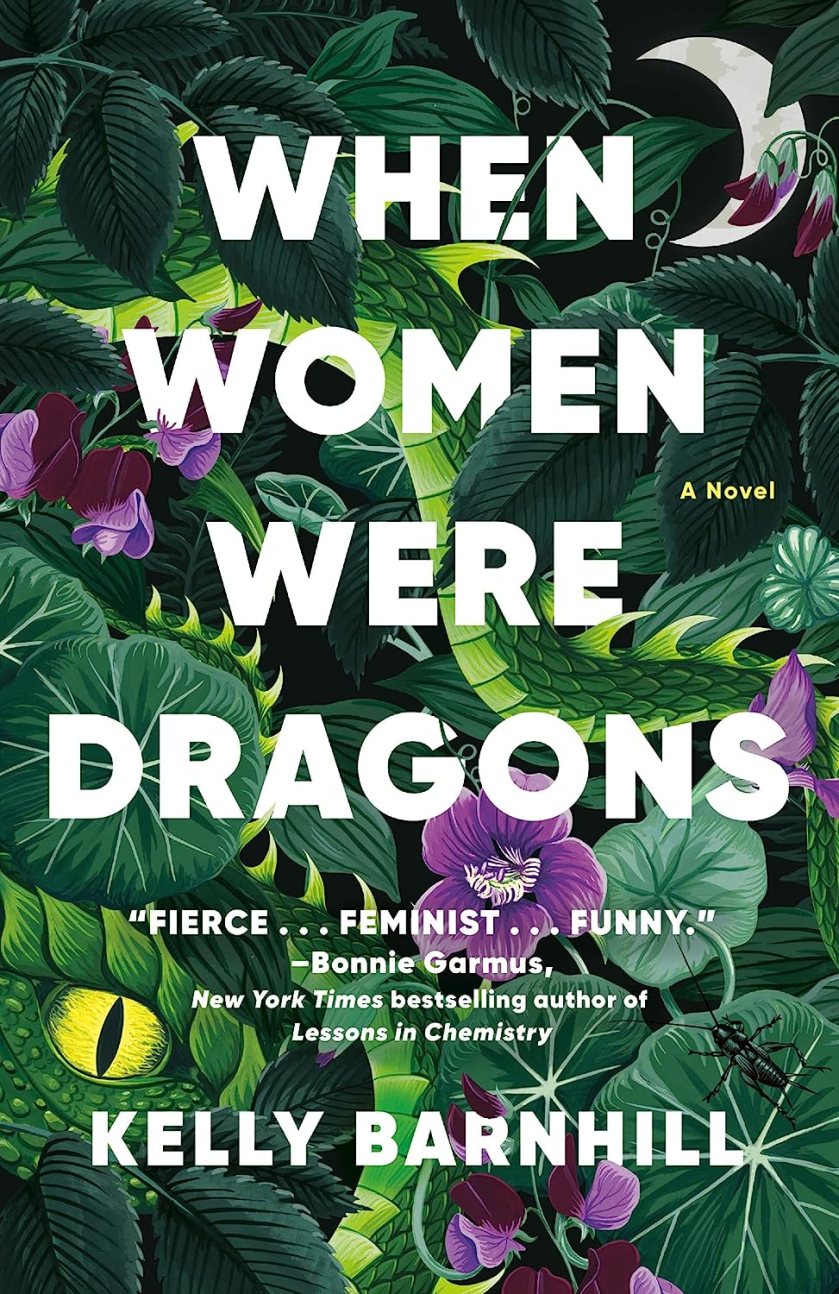
Anger from When Women Were Dragons – By Kelly Barnhill

women_dragons

A quote from When Women Were Dragons – By Kelly Barnhill swam to the forefront:

I am sorry. I said, I couldn't look at her face. “I .. I don’t get angry”. I shook my head. “I don’t usually get angry. But lately…”

Mrs Gyzinska gently cupped her hand against my cheek “Anger is a funny thing. And it does funny things to us if we keep it inside. I encourage you to consider a question. Who benefits, my dear, when you force yourself to not feel angry. Clearly not you.”

She glanced around the room. “Look at where you’re living. Think of what you’re being asked to do. You’re not angry? Hell. I’m angry on your behalf.”

I suppose, this is another of those things we need to stop telling our women. Instead stopping to think:

“Who benefits, my dear, when you force yourself to not feel angry?” – Kelly Barnhill, When Women Were Dragons

Just as much as we should stop telling our men to not cry, or feel vulnerable. 

Be A Man

Anger and vulnerability are human emotions capable of just as much as love and loyalty, so why do we deny ourselves the power of these emotions?

Happy Womens’ Day: May we allow ourselves to be angry for the right things in the right proportion at the right time, so that we may do the right thing!

🐲Imagine Dragons 🐉

There are sections of the book, Novelist as a Vocation by Haruki Murakami that I enjoyed. I did think he was self-deprecating, and unwilling to take a little credit for his successes as a writer though. While being published and being received favorably are a function of luck to a certain degree, there is the fact that a consistent writer has to keep themselves out there. They need to remain vulnerable and suffer acutely all the emotions that their characters do with a passion. It is a tough vocation, and not always a lucrative one.

“Writing novels is, to my way of thinking, basically a very uncool enterprise.”

Haruki Murakami, Novelist as a Vocation
Version 1.0.0

He goes on to tell the story he read as a child in which two men go to see and understand why Mt Fujiyama is revered thus, and what was special about it. The smarter of the two men apparently sized the mountain from various vantage points and decided he knew enough about it, and went on his way. Efficient, Fujiyama seen, and admired.

The other one, apparently, went on to climb the mountain by foot, agonizingly conquering the mountain. “Finally, he has understood it or perhaps grasped its essence at a less conscious level.”

Murakami equates the latter with a writer. In other words, the harder route. He calls the endeavor of novel writing as sometimes being thankless, other times laborious, and at times a strenuous job.

I think I agree with all of the above. Every good novel I read has me in awe. For it takes a different kind of empathy and a wholly different kind of perseverance to imagine a world, make sense of the characters, imagine what each of them will do, how they would react to a situation and so much more. 

So, when I finished reading When Women Were Dragons – By Kelly Barnhill, I took the story with me everywhere. I read the author’s note scribbled at the end. The vote of thanks piece. The credits when people leave the cinema theatre. I read this because of the enormous respect I have for a piece of creative work – fiction or non-fiction – and the universe that helped create the book that I had just enjoyed. 

I am sharing a bit of Kelly Barnhill’s note here:

“And, thank you to my wonderful family – … -who have to live with a person often hijacked by her own imagination, and wounded by the world. The work of storytelling requires a person to remain in a state of brutal vulnerability and punishing empathy. We feel everything. It tears us apart. We could not do this work without people in our lives to love us unceasingly, and to put us back together. “

Kelly Barnhill (Acknowledgement) When Women Were Dragons

The depths and capacity for creative work continues to astound me – blessed is an intellect that can imagine, and blessed indeed is a culture that promotes growth through imagination.

🐲When Women Were Dragons 🐉

Intriguing beginnings:

There are powerful beginnings and there are intriguing beginnings to stories. It has been a while since I saw a beginning as brilliant as the one in the book, When Women Were Dragons – By Kelly Barnhill

women_dragons

Dragoning

Dragoning is the term that seemed to be used when some women turned permanently into dragons and left their human life aside – taking off to wherever dragons live. For those left behind, the phenomenon is bizarre, frightening, traumatic, and quite often fatal. 

This is how the book starts:

“Greetings, Mother- I do not have much time. This change (this wondrous, wondrous change) is at the very moment upon me.

I married a man who was petulant, volatile, weak-willed, and morally vile. 

But there were no babies, were there? My husband’s beatings saw to that. Tooth and claw. The downtrodden becomes the bearer of a heavenly, righteous flame.

I shall not miss you Mother. Perhaps I won’t even remember you. Does a flower remember its life as a seed? Does a phoenix recall itself as it burns anew? You will not see me again. I shall be but a shadow streaking across the sky-fleeting, speeding, and utterly gone.

– From a letter written by Marya Tilman, a housewife from Lincoln Nebraska, and the earliest scientifically confirmed case of spontaneous dragoning within the United States prior to the Mass Dragoning of 1955-also known as the Day of Missing Mothers”

I am midway through the book, and the story soars with the dragons – fiery tempests in teacups and how the placid bore it within themselves.

The book’s narrative voice is brilliant. Seamlessly moving between dragoning as a phenomenon and when it was first observed, slowly moving onto research of dragoning and its funding removed, to the whole topic becoming a taboo.

Society isn’t really mysterious once you understand the original intent. Cruel maybe, but not as mysterious. For instance, in this world, drawing or mentioning dragons could get children in serious trouble. Those who had lost a mother or a sister or a friend to dragoning don’t ever want to hear anything to do with it. They ignore it so it may never happen again. The news forgets to mention it, and society plows on.

For those looking for dystopian fiction or just a jolt from our current state, When Women Became Dragons, is worth a read.

On Writing

It is always fascinating to understand the process behind the craft. To everyone, the process is different, the resulting work is different, and maybe that is why everyone’s voice and stories are different. Though some things seem to be common enough: curiosity and observing people.

Haruki Murakami in his musings, Novelist as a Vocation, writes about his mental chest of drawers – a place in which he places relevant and irrelevant information to be extracted when he is writing a novel. Some of the remaining ideas are used in his essays he says but the rest are there for the taking.

The truth is that none of us can imagine the beautiful fierce power of our own imagination. Where will it take us, or what it can do for us if we wrestle with it long enough? Few of us get to find out and fewer get it out into the world. How are some authors able to create the Harry Potter universe, others write books that evoke such deep rooted emotions such as The Crane Husband? 

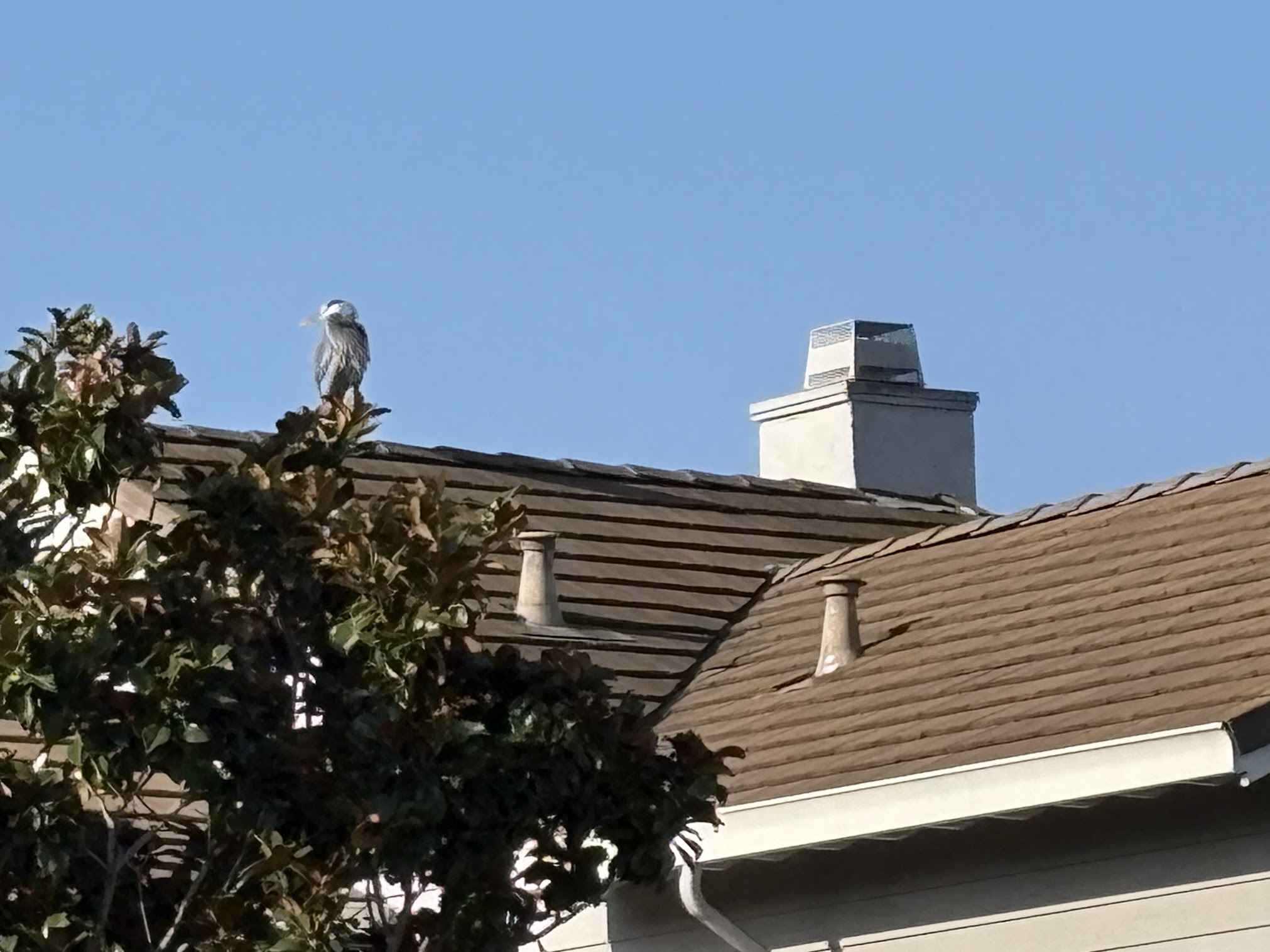
I was fascinated to read that  the idea struck the author of Crane Husband, Kelly Barnhill, when she saw a crane land on a rooftop while she was driving through the countryside from somewhere to somewhere. What an evocative inspiration? 

I remember thinking of the book, every time I spotted a crane by the riverbank. The raw sadness of the tale stayed with me for days afterward.

cd3693d5-3eaa-4d3b-ab97-d7c865de8707

Such inspirations are not unheard of. A few days ago I read a folk tale about the Crane Wife, in the book,

Beneath the Moon, Tales, Myths, and Divine Stories From Around the World by Yoshitani, Yoshi

All of us have  a mental chest of drawers and some of us rely on it more than others, but those memories shape and define us in ways we do not realize. 

Murakami writes about his journey and how he stumbled upon the conviction that he wanted more than anything else to be a novelist at the age of 29. His journey was not one of writing obsessively throughout his childhood, but of simply deciding one day to become a writer.

He writes about how his formative years were fairly trauma free apart from a stint in college where there seems to have been unrest among the student community. He writes:

“I have never been comfortable in groups or in any kind of collective action with others, so I didn’t become a member of any student groups, but I did support the movement in a general sort of way.”

But as time went on, he realized that:

“Something criminally wrong had wormed its way into the movement. The positive power of imagination had been lost. I felt this strongly. As a result when the storm passed, we were left with the bitter taste of disappointment. Uplifting slogans and beautiful messages might stir the soul, but if they weren’t accompanied by moral power they amounted to no more than a litany of empty words,

Words have power.

Yet that power must be rooted in truth and justice. Words must never stand apart from these principles.”

It was perhaps this realization that led him to lose faith in the movement and turn towards writing as a career when the epiphany hit him one day while watching a baseball game that he might be a novelist yet. 

I am sure a conviction as deep as that would find its way into his writing and if there are specific examples or suggestions of books regarding these, please let me know.

I remember a discussion in which it was mentioned that ‘You need war or love if you need a complete series.’

While that is true, the pursuit of truth, peace, justice, the power of words all seem to be good enough inspirations too.

Books:

  • Novelist as a Vocation – By Haruki Murakami
  • The Crane Husband – By Kelly Barnhill
  • Beneath the Moon – Fairy Tales, Myths and Divine Stories from Around the World – By Yoshi Yoshitani

Qi 🧘🏼‍♀️Yin 🧚🏼‍♂️ & Yang 🪷

I remember one rainy monsoon afternoon when I walked into my friend’s house dripping water all over the floor. Their mother (one of my favorite aunts) looked amazing in a saree and I complimented her – ‘makes you look dashing’ I said. She was reading a Sidney Sheldon novel which I found cool in and of itself since I knew very few adults who read the same novels we did. She looked at me and said, “Oh my! Isn’t that nice? I am 43 years old – so I will accept the compliment.” 

I thought 43 was ancient then- I mean I knew people are old, but to have a prime number that big as an age must’ve been quite the thing. The sentiment must’ve showed on my face for she laughed and said, “You think that is very old don’t you?” And she patted my cheeks lightly and laughed her way out. 

I am in my forties now and feel that way when the daughter and her friends look at me like I am ancient but holding up pretty well. When I tell them about taking reading choices from the daughter and son, I see their look of incredulity for one trying to be the cool reader even when that old, and I can hardly stop a full-throated laugh from escaping my heart and gurgling up through my nostrils and mouth. I hope these children will remember these little scraps when they are in their 40s and chuckle to themselves. The circle of life and all that. 

So, it was that I was sitting on the verandah one evening noodling the daughter on the phone and telling her about a book that she’d suggested a few months ago. The House in the Cerulean Sea – By T J Klune. 

“You were right! I really liked it. I really like visiting the magical world my dear. Ever since All the Young Dudes from earlier this year, there’ve been so many nice little trips to magical realms, and I feel younger up there thanks to all that. Even as the neurons doddle and wither, I see them perk up with some magic and decide to stay zippy for a bit.”

She laughed, and I was happy with that. 

“Did you know they are remaking the Little Mermaid movie again? Better graphics and live action?” I said and moaned. 

Why do we keep going back to the same movies over and over again? It isn’t like there is any dearth of stories in the magical realm. Here are a few that I would love to see made as movies.

  • 🐉The House in the Cerulean Sea – by T J Klune has excellent characters, beautiful storylines, and the redeeming quality of beings : love and sense of belonging in a world that constantly is shaping and drawing graphs of absurd belonging all the time. Who doesn’t like a story of children fighting to belong? So what if the children are garden gnomes, sprites, wyverns, or even the child of satan? If all one wants is some heart-warming action, this story has it all.
  • 💊The Apothecary – By Maile Meloy. This booklegger award winning book has a good dose of intrigue, history, potion making, and old magic. Do you want to know about how to create a potion that makes you a bird? Or a nursery that has such rare and unheard of plants that every civilization is aching to get their hands on them? Or a book that has the learnings of generation between its respectable covers? This one has your covered.
  • 🦆Twelve Topsy-Turvy Very Messy Days of Christmas – By James Patterson. This story has whimsy, humor, and magic woven from the lyrics of the Christmas song. The hilarity of the increasing chaos of receiving these gifts in a suburban home makes for pleasant drama and I am sure will make for a fairly gripping movie.
On the 12th day of Christmas

My true love sent to me

12 drummers drumming

Eleven pipers piping

Ten lords a-leaping

Nine ladies dancing

Eight maids a-milking

Seven swans a-swimming

Six geese a-laying

Five golden rings (five golden rings)

Four calling birds

Three French hens

Two turtle-doves

And a partridge in a pear tree

These books are charming, witty, intriguing and so, so open-hearted that you can’t help developing alongside them. To accept our fellow beings with all their quirks, flaws and weaknesses. 

IMG_5616-COLLAGE

“Like in school y’all have literature, math, science, and history, we should have literature, art, engineering and science in our jobs! Help us stay young and all that. What do you think?“ 

“You are itching for a compliment aren’t you? Fine ma! You are young and remain kooky even at your grand age!”,said the daughter and I chuckled as I headed towards another meeting in which we may not have magic, but the magic from the books and the forced compliment was enough. The qi to the yin and yang of life and all that.

Moons : Worlds of Mystery

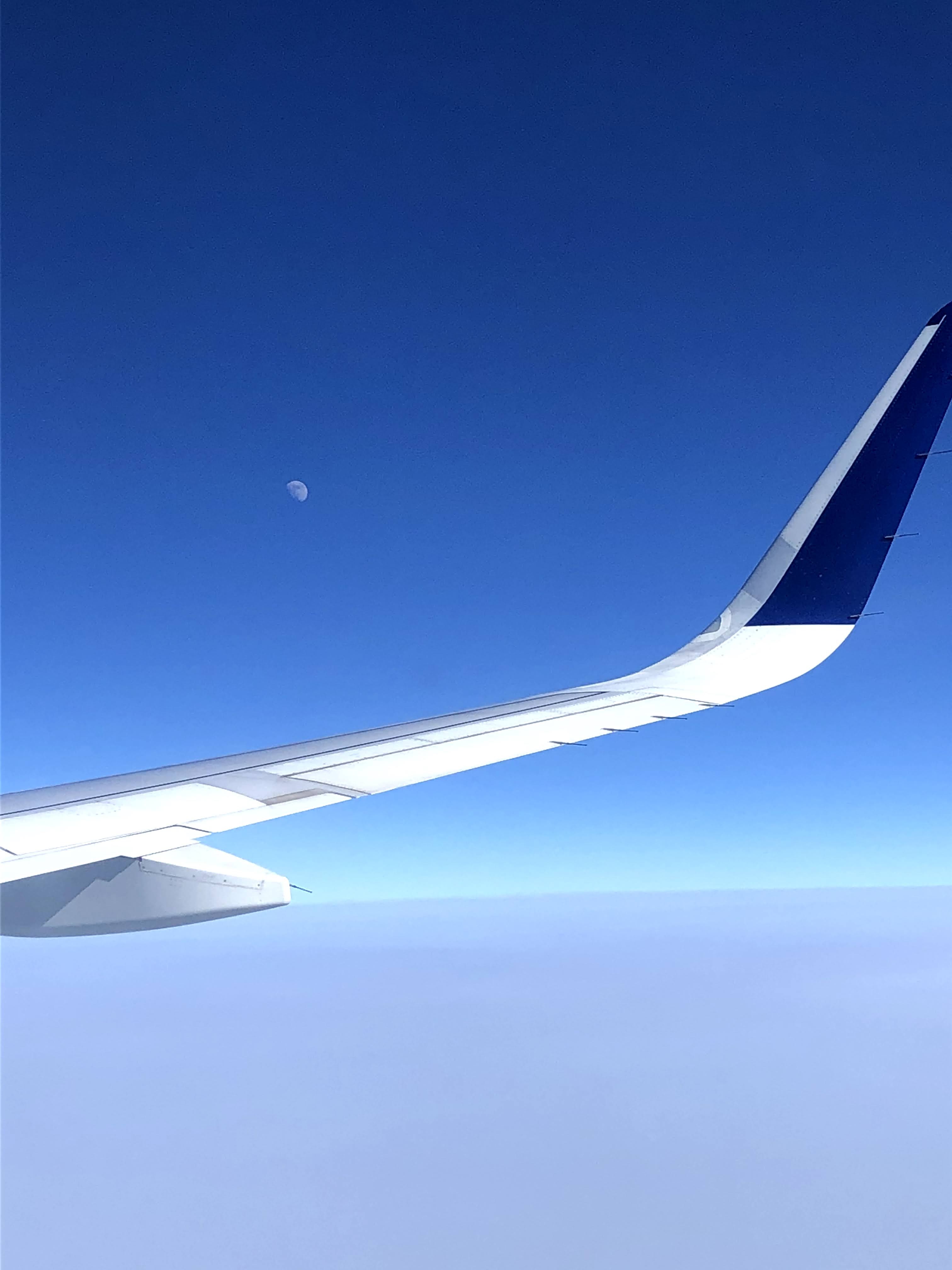
“Aah…..see…see the moon!” I said. The moon had risen alongside our flight wing on the way to Boston, and the son and I were enamored by it. We usually are. The daughter ensconced on a different row from us on the flight gave me a carefully controlled eye-roll. Love for her mother tussled against the desire to show that the crazy moon lady was her mother, and she went in for a I-may-know-her-vaguely-as-an-acquaintance stance. I beamed and smiled as only a mother could. Luckily, the mask hid the genuine full-moon nature of the smile for the time-being.

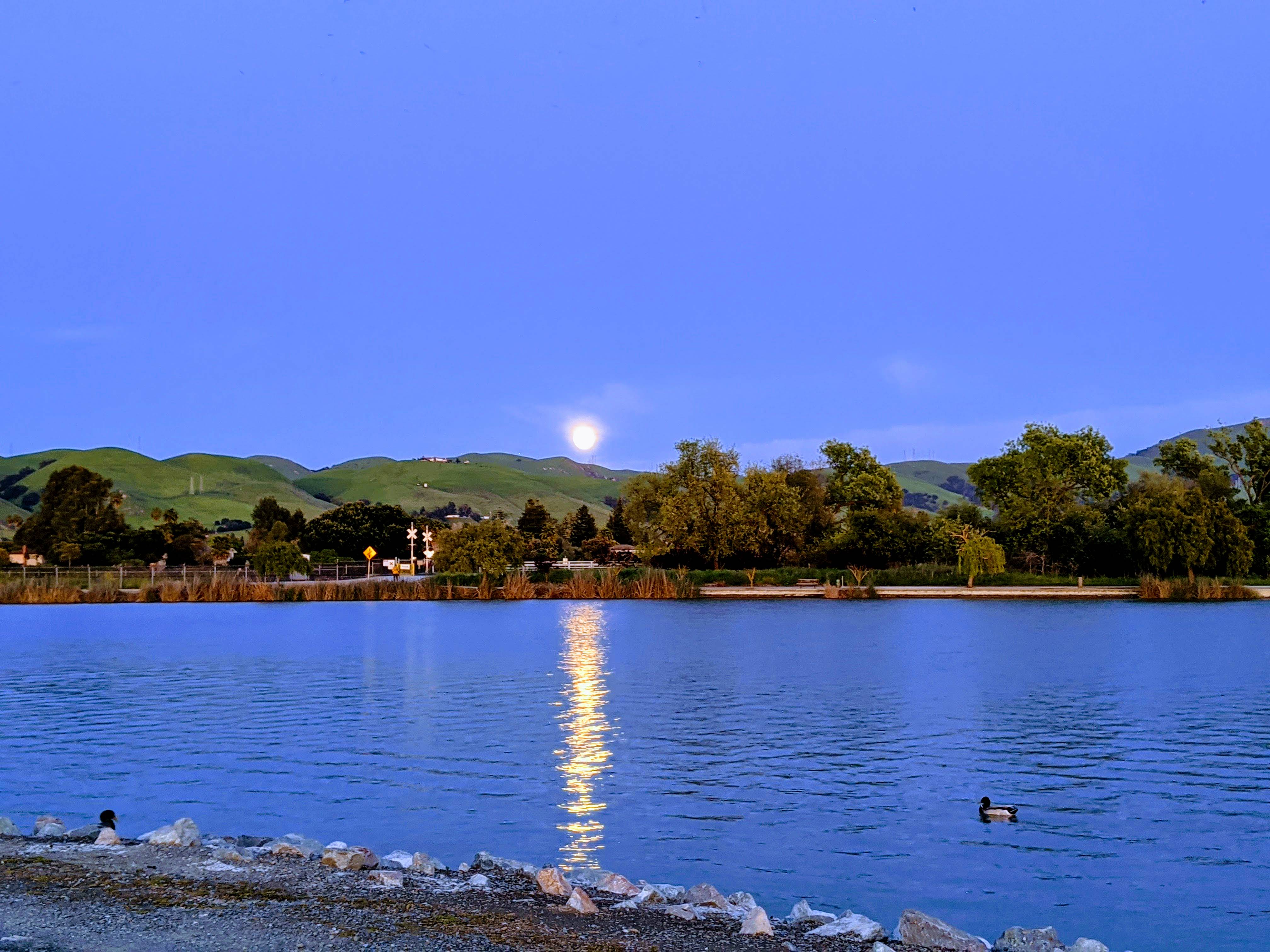
The moon has long fascinated all creatures I think. I take long walks by the river and lake in our hometown during the waxing moon season, and wonder about how the beautiful creatures of the land perceive it. The deer, coyotes, water-rats, pelicans, fish, manta-rays, octopi, geese, ravens and hawks. Do they notice and set their little rituals by it, or is it something human-beings rave over?

It wasn’t till the pandemic that I noticed the timing of the moon rising and setting. The waxing season giving us unexpectedly delightful glances of our lovely sole cosmic neighbor, while the waning cycle going for days without seeing our delightful companion. No wonder, songs have been written about, the magic of moon-drops milked by fantastical thinkers, and lovers for centuries gazing and strolling in the moonlight.

The next day, I was pointing to the pale gibbous moon that was visible between the towering buildings of Boston downtown. 

“Ma! Would you stop it with the moon? The moon comes everyday, and is the same!” Said the teenaged daughter, who despite (or may be because of) my nature-kookiness remains cautiously apathetic to it. Could have been Toni Morrison’s best pal the way she ignores the phenomenon. 

“How many ways can you describe the sky and the moon?” —Toni Morrison

The son, like me, though, raves and pulsates with the cosmos – the moon, stars and planets excite him to no end. The next day, the husband had a surprise in store for him. We had planned a day at the Boston Science Museum, but the crowning glory came with the planetarium show focusing on the Moons of the Solar System – Moons – Worlds of Mystery

The show was spectacular. Starting with our very own Moon, it goes on to explore the moons of Jupiter, Saturn, Mars and Pluto. How every planets close cosmic neighbors were formed to the exciting possibility that some of them could harbor life in its watery oceans, and icy surfaces, it was a show that appealed to his every being. If ever a being was made of stars, there he was! When the camera plunged into Enceladus and Titan, he quavered, and the seat shook.

The pair of us headed out after the show, subconsciously scanning the skies for the near full-moon over the Bostonian skies, while the daughter conceded the magic of the moon and its strange pull on us. If it was a tonic to us, then so be it.

Books:

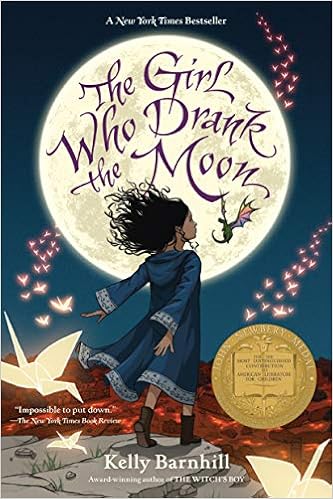
  • The Girl Who Drank the Moon – By Kelly Barnhill
  • The Edge of the Sea – by Rachel Carson
  • Cosmos – shows by Neil DeGrasse Tyson & Carl Sagan

The Girl Who Drank The Moon

I was dawdling one evening. Quite uncharacteristically I might add. For the evening walks I go on are brisk and filled with purpose: I focus on getting the day’s stresses out of my head and to appreciate the larger world around us. I arrive after these walks, therefore, a trifle breathless maybe, but mostly refreshed in mind and spirit. 

“Are you tired?”, asked a solicitous neighbor. 

I smiled and said truthfully that I had been very tired when I set out on the walk, and after briskly taking in the sights, was now rejuvenating myself in the magic of the moonlight. “Moon-Bathing!” I called it, and she gave me an indulgent smile knowing my leaning towards nature.

Sometimes, all it takes is a peek of the waxing moon, or the brilliant hues of the setting sun, or the clouds in the skies painting a thousand pictures for us, or a hummingbird flying in the light of dusk, or geese flying overhead with the light of the moon on their wings never failing to remind me of the beautiful song in The Sound of Music : These are a few of my favorite things.

All good things are wild and free. – Thoreau

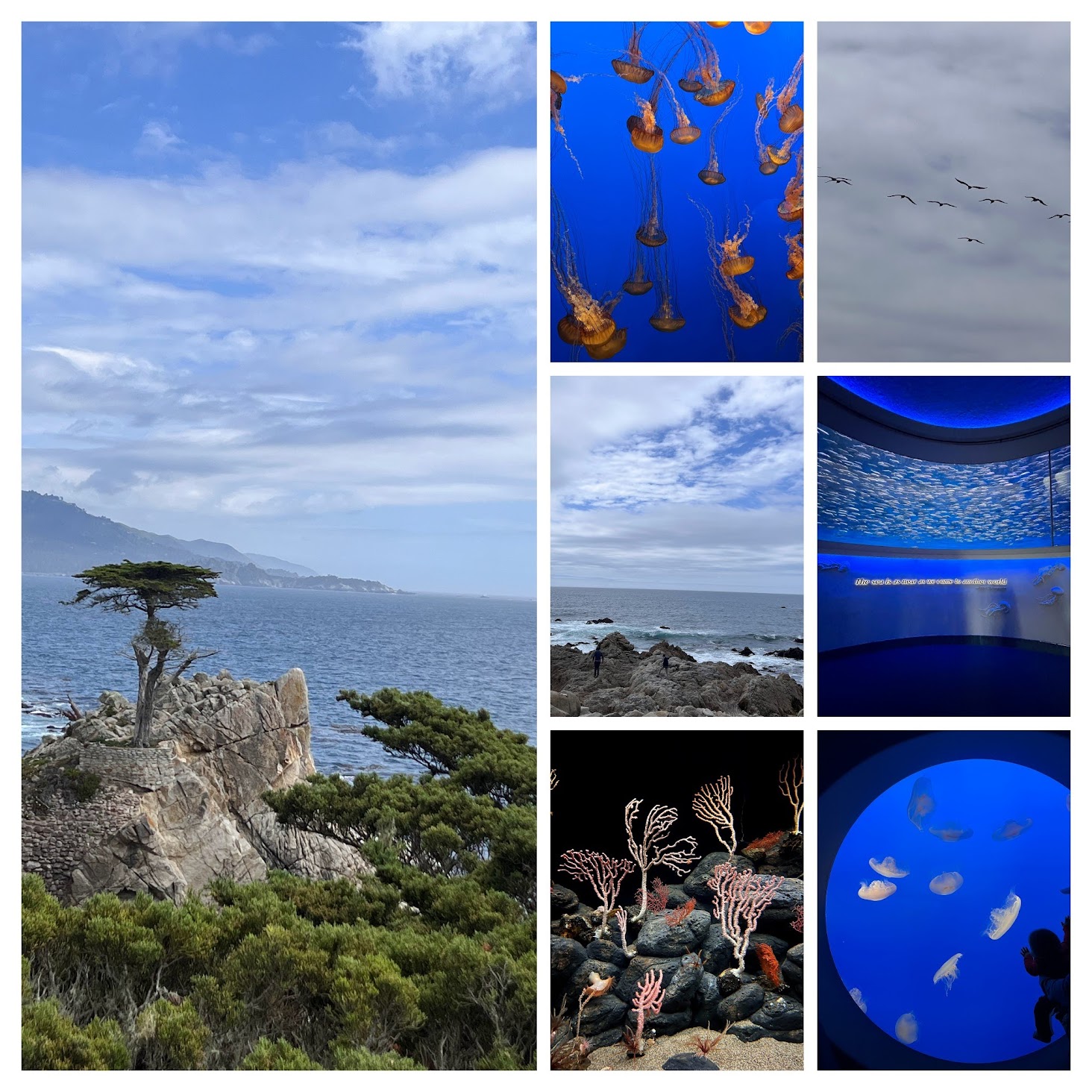
IMG_1157-COLLAGE

Other times, it is inordinately hard. I find it very hard to leave the village behind as Thoreau says. 

“I am alarmed when it happens that I have walked a mile into the woods bodily, without getting there in spirit.”  – Henry David Thoreau

I feel the Earth works doubly hard at these times. Always granting a little something extra by the end of it all to make up for the time lost in thought and worry. The wintry evenings of the past few days have been working hard at setting my mind at ease and helping the stresses of the day take flight into the unknown tendrils of the night. Lost in space, till I can grab newer positive strands from the cosmos and replace them consciously.

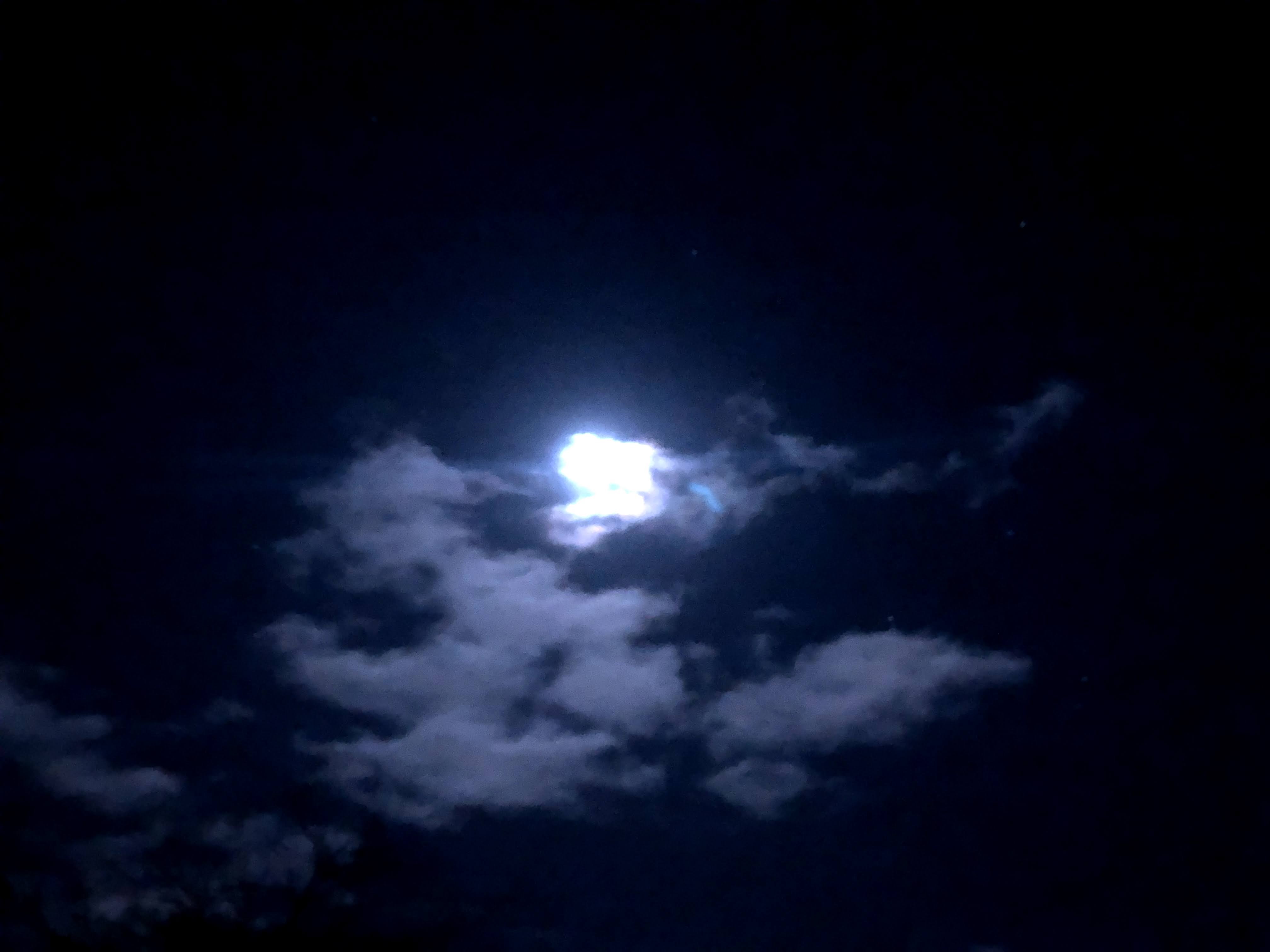
That evening that I was dawdling, had been one of these evenings. The light of the full moon shone through the clear dark skies, and I felt the strength of its benign light seep into my very being. The wintry skies have the magic of starlight, but the days when the moon is also at play, the nights feel vibrant with possibilities and magic.

img_1175

Maybe I was feeling poetic because of all the beautiful poetry in the book I had just finished reading. For those of you wanting a strong dose of magic, I strongly recommend The Girl Who Drank The Moon by Kelly Barnhill.  

“The heart is built of starlight 

And time.

A pinprick of longing lost in the dark.

An unbroken chord linking the Infinite to the Infinite.

My heart wishes upon your heart and the wish is granted.

Meanwhile the world spins.

Meanwhile the universe expands.

Meanwhile the mystery of love reveals itself,

again and again, in the mystery of you.

I have gone.

I will return.

Glerk” 

Kelly Barnhill, The Girl Who Drank the Moon

It maybe because of the waxing and waning of the moon, and the fact that we have only one moon, the sheer delight of catching a glimpse of its benign light in the evening skies is magic enough. The son, as regular readers knows, is a cosmologist and a curious wonderer at heart. One night, when he was a toddler, he asked me, “Imagine how it must be to take a walk on Jupiter, and you look up and see 64 moons in the sky.

Note: Jupiter has 79 known moons, and more are being discovered.

I suppose the magic of that sort of walk must be exemplified, but for now, I am grateful for a peaceful Earthly existence, with the ability to gaze and gain peace with the one moon we do have.