Preparing for Tsunami Warnings: Lessons Learned

 Emergency Warnings – Tsunami 

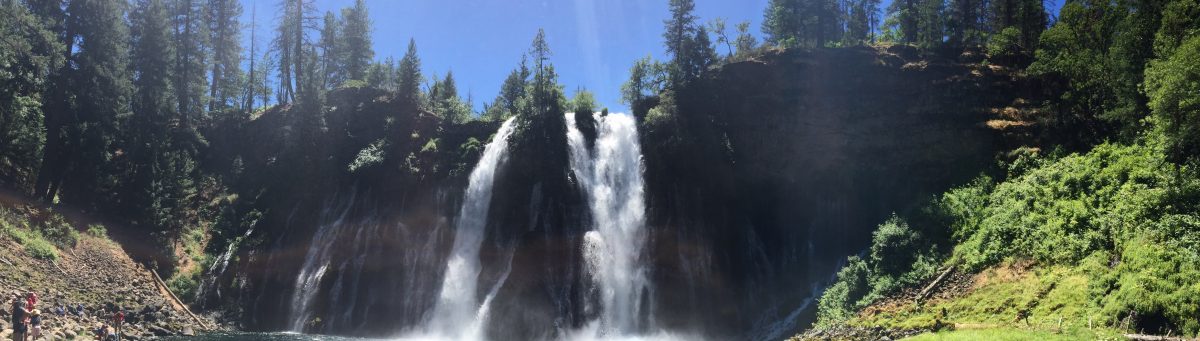
A week ago, we were all a-twitter. You see? We received a tsunami warning. There had been a 7.0 earthquake in Northern California – about 3 hours north of where we live.

We technically live not near the coast but we are quite close to the bay in the Bay Area.

This was the first tsunami warning we had received. So, while the tsunami warning made sense, we also had no idea on what to do with it. So, we did the only thing that humans in modern times do: Took to the phone and tried figuring out what others thought.

What is a yellow warning? We live a few miles from the shores of the bay – could that mean a sudden inundation?

Responding to Warnings

There are times when mass communications (by that I don’t mean communicating to the masses, I mean masses of communication) make sense, but this was not one of those occasions. Everyone said different things, people worried. Staying away from the bay seemed like a good option, but apart from that, no one had any idea on what to do. Should we head to the hills like we’d read long back somewhere?

So, we all did a lot of hand-wringing and sent more messages. Ultimately, the tsunami warning was revoked, but not before letting us know exactly how unprepared we were in case of a real emergency.

When that alert had come it was up to us to determine the next course of action. For one thing, we were a couple miles inland, so what was required of us? That’s when I realized the old fears I had for our little family when we both worked on the other side of the bay. I had wondered what might happen in case of an earthquake that stranded us all on the other side of the Bay. But a Tsunami could just as well have done that. 

The tsunami warning was lifted, and in a few hours, people went about their business as usual. Which is to say traffic snarls were everywhere, week-end parties and events did not bother to acknowledge that which could have been life altering.

It is a testament to the human temperament that we can so flippantly treat that which could have been a disaster with a wave of the hand. 

🦌 Emergency Drills -Earthquake, Fire 

I volunteer in elementary schools from time- to-time. The experience is a wholly enriching one as I get to work with children – which is refreshing. They are inventive, imaginative, kind and un-jaded in their outlook towards life.

I got to experience an earthquake and fire drill with them one day, and I cannot tell you how impressed I was by their skill and competence. Even when scrambling under desks – they looked out for each other as much as possible. When they filed out into the fields nearby, they kept to their classrooms and straight lines, and I was more than impressed by them on more than one occasion that day. 

I had seen firsthand how incompetent adults could be, when the tsunami warning came, and it was refreshing to see children knowing how to handle fire and earthquake warnings.

I suppose natural disasters are called that for a reason. They are erratic, chaotic, and tend to surprise humanity every time even with emergency warning systems, safety drills and the like. The school systems managed to highlight these things and taught me a thing or two: keep calm and fall back upon training.
Multi-Generational Family Sagas

Multi-Generational Family Sagas

I read two family sagas this year spanning multiple generations, and several decades each. 

Both were highly acclaimed books, and written well. However, both of them suffered from meandering plots, and unnecessary diversions. Making them swollen at least by a few hundred pages. 

“It was a bit like listening to my father tell a story about some character in his village. He’d tell me all about this character, his relatives, his relative’s friends, and the marriages that made the whole thing impossible to untangle, and so much more. By the time he finished the story, you’d be wondering what the point of it was.” I said to my friends after finishing The Covenant of Water. 

I understand too how that can be a daunting task. The mother had seven siblings, the father nine. Their parents, I am not even sure, for I might have switched off in between.

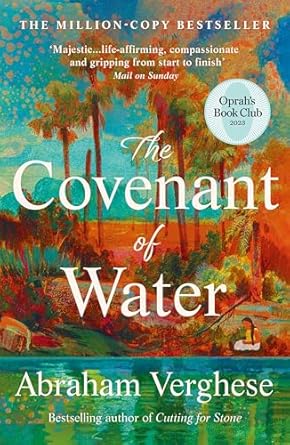
The Covenant of Water – By Abraham Verghese

The writing is beautiful – lyrical, and his characters have endearing qualities to them – resilience, love, grace, flaws. Abraham Verghese is also a doctor by profession, and therefore the details of all the medical terms made for a depth even if the average reader does not need as much information (ex: how a particular surgery was being performed, or how the stent would have served better from a particular perspective) 

Set in Kerala, South India, the book spans the family of Big Ammachi (the matriarch of the family) between  1900 and 1977.

covenant_of_water

It would also have been nice to know a little bit more about the living conditions and life in that time period. For instance, there is a character, Uplift Master, who derives his purpose from getting the village around Perambil (the ancestral village in which the whole saga takes place) developed and to march into the twentieth century in style. Knowing the problems Uplift Master faced in terms of discrimination by the British Raj, or bribery would have been useful. 

Casteism is touched upon, the perils of life as a leper is well depicted. 

The plot itself could have been condensed. That apart, it is a good book.

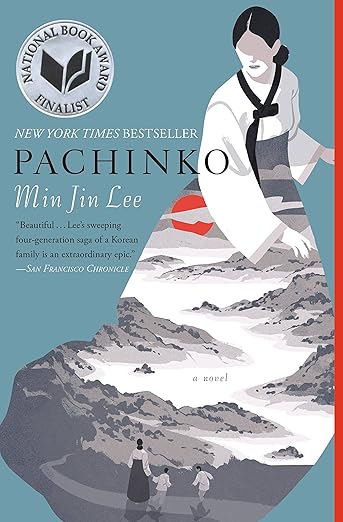
Pachinko: Min Jin Lee

Pachinko is set in a similar time period in Japan(1910-1989). It outlines the generational problems existing between Koreans and Japanese. 

The story also spans multiple generations and revolves around the life of Sunja – a poor Korean who moves to the city with her husband, Baek Isak, and child from a previous tormented relationship.

pachinko

Reading about the effects of racism, poverty and war is never easy. Writing about them keeping the humanity of the characters intact is even harder. Min Jin Lee manages to do that with ease. It would have been nice to see how things were changing as the century progressed, but we do not see too much of it. 

The Tides of Humanity

The tides of humanity are apparent even if there are literally oceans separating the stories.

  • The Covenant of Water is set in Kerala, South India(1900-1977).
  • Pachinko is set in Japan(1910-1989)

They both deal with matriarchal characters (Big Ammachi alias Mariamma & Sunja) who do their very best by their kith and kin in difficult times. Providing love, trust, and hard work as tenets to a good life.

I think this line from Noa (Sunja’s firstborn) in Pachinko,  outlines the angst of humanity pretty well: 

Noa didn’t care about being Korean with anyone. He wanted to be, to be just himself, whatever that meant; he wanted to forget himself sometimes. She could not see his humanity, and Noa realized that this was what he wanted most of all; to be seen as human.

– Min Jin Lee, Pachinko

There is plenty to be learnt in life as a human, wherever one lives.

In the Covenant of Water, Philipose (Big Ammachi’s son) says it best:

“Ammachi, when I come to the end of a book and I look up, just four days have passed. But in that time I’ve lived through three generations and learned more about the world and about myself than I do during a year in school. Ahab, Queequeg, Ophelia, and other characters die on the page so that we might live better lives.”

Abraham Verghese, The Covenant of Water

🌸🌸🌸 Oubaitori in Spring Time 🌸🌸🌸

Spring is here, and with it, the delightful uncertainties of the weather. 

Would it be a cold, bright, cloudless day, or a cold, cloudy day, or a warm sunny day? The possibilities are endless. Sometimes, I feel like a lamb in spring-time ready for a spot of prancing and rollicking in the hills, other times, like a caterpillar not yet ready to shed the cocoon.

Springtime is a fantastic excuse to wear a silly hat and chase after unicorns, wouldn’t you agree?

– Uncle Fred in the Spring Time – By P G Wodehouse

With the increasing length of our days, it is a beautiful feeling to step out into the sunset at the end of the day, The golden hour seems more radiant, and seems to even linger more, though that just may be due to the fact that the body has had the time to sip a cup of tea at the end of the day before sunset. 

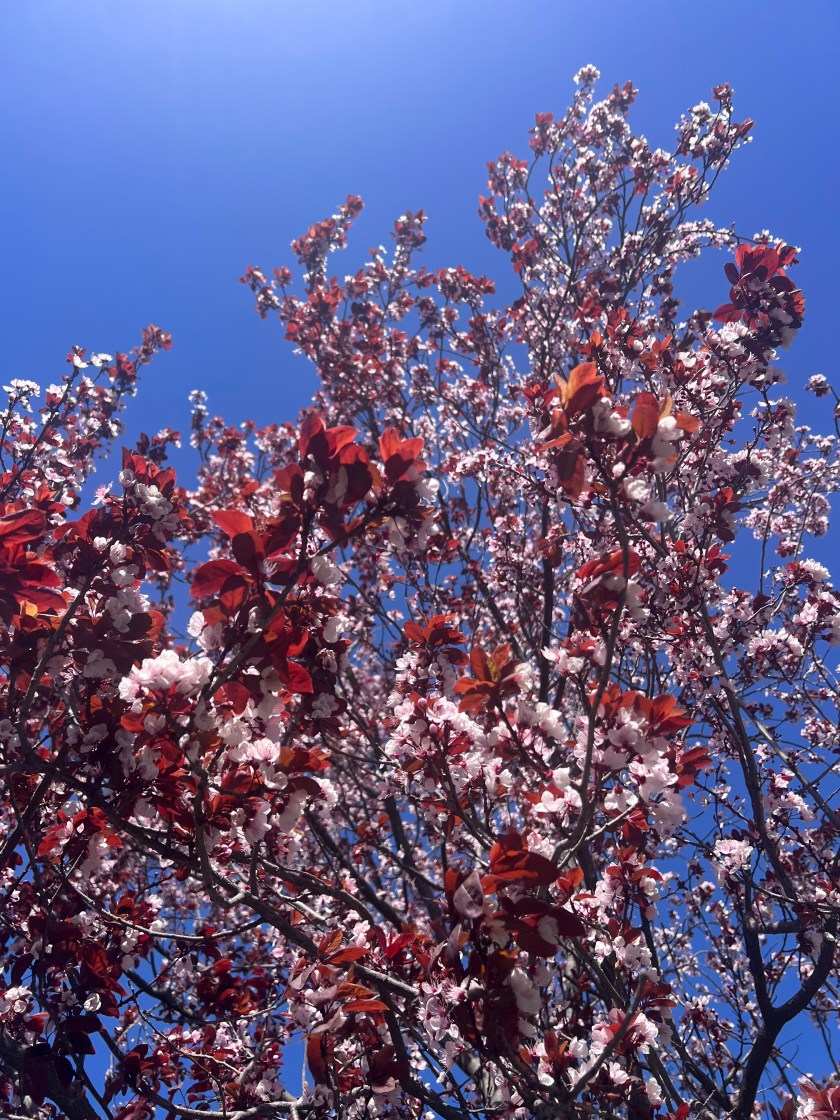
One evening, I stopped to savor a fat plop of a raindrop on my face, and saw that the cherry trees had leaves on them. The flowers had all but gone. They were there two days ago. I peered at another tree not far away, still resplendent in its floral beauty, and another one that had a good smattering of brown leaves along with their pinkish blossoms. Once again, that longing to capture the blooming and blossoming in slow-motion came over me. How lovely it would be to sit and watch for the leaves to come in? 

Ah! What little things give us pause?! 

I read about a beautiful Japanese concept, Oubaitori

The ancient Japanese idiom, Oubaitori, comes from the kanji for the four trees that bloom in spring: cherry blossoms, plum, peach, and apricot. Each flower blooms in its own time, and the meaning behind the idiom is that we all grow and bloom at our own pace.

img_0119

A few days later, I went on another walk, this time peering up at a clear blue sky, and no jacket, only to notice the young gingko trees in the neighborhood beginning to sprout their light green leaves of beauty. I remembered the large gingko tree we’d long admired. That large tree, over a century old, fell in the winter storms this year, and I felt a pang. The patch on which it stood was overgrown with fresh grass, and a meadow full of yellow flowers. Nature’s lessons and epiphanies are rarely novel, but always welcome. 

Making a mental note to go for a short hike in the beautiful green hills nearby, I reluctantly headed home. 

Spring time is nature’s way of saying, ‘Let’s Party’!

– Uncle Fred in the Spring Time – By P G Wodehouse

Maybe it is time for a spot of springtime laughter with the maestro, P G Wodehouse himself.