The Mystery Of the Blue Hot Box

Weekly once is Trash Night. It is that night of the week when I marvel at humanity’s ability to generate trash. It is that night when I look efficient and bustle, while the children scramble to save their Works Of Art. The husband throws a protective arm around wherever he is sitting and says. “Please! Not now – I will sort it out later. “

“When?” I demand. He treats it as a rhetorical question and wisely refrains from answering.

As I gather the copious amounts of trash we generate from the various dustbins, I ponder: If one household had this much trash, what would happen to the Earth as the population grew? What are the lessons we are learning? I didn’t realize then that the trash was to give me a valuable lesson soon.

Fifteen years ago when I first set foot in a mall in the United States, I was awed that this rich country had such vast, sprawling areas set aside for the activity of shopping alone.

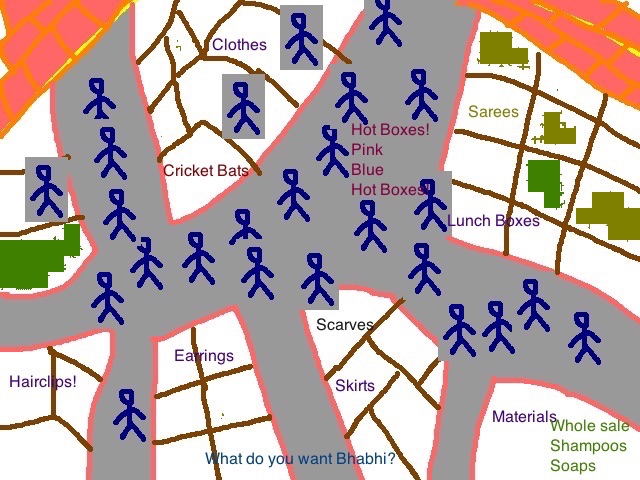
This initial awe soon gave way to disappointment. I missed the chaos of bazaars, I missed the joy of finding a treasure in the pile, I missed the call of the vendors beckoning me to take just one look before deciding. I distinctly yearned for the abundance of prints, styles, and fabrics that shopping in the tiny shops in India had accustomed me to.

The last time I visited my family in India therefore, I plumped for a bazaar – no fancy malls for me please. What I wanted was beauty in the seemingly chaotic.

The little bazaar had tiny shops that had the dimensions of a large dining table, but enough merchandise crammed inside them to fit a garage. We were like kids in a china shop. When I paid what was asked for, I was lovingly chided that I had forgotten the crucial step of bargaining. But I was happy. I was not going to haggle with a small business owner, I said. The head shake that greeted us from family and store-owners alike said, ‘These NRIs!’.

bazaar

Among the merchandize that day was a cricket bat, and some lunch boxes. You know those ones that profess to retain the heat? Those ones. They are imaginatively called hot-boxes.

Back home, we displayed all the things we had picked up. We held up the pink and blue hot boxes with pride.

“Why didn’t you tell us that this is what you wanted?” asked the parents-in-law in rare unison. “We are always re-gifting these hot boxes!” they cried.

“In fact, if you buy sarees worth Rs 5,000 in one store, they give you two hot boxes for free!”, cried the mother-in-law stung at being deprived the joy of getting free lunch boxes for the children.“These NRIs!” they said to each other and shook their heads.

Back in the US, after the school year started, I lovingly used the hot-boxes. The daughter is a fussy eater, as has been well documented in these chronicles. What that means is that all things food related completely misses her sonar and radar. If the lunch boxes she has lost, held lids and stood in a line, it would snake around Lake Tahoe. So, every time I put the hot boxes in their lunch bags, I reminded the children to bring back the boxes.

For the first few weeks, things went charmingly well. Slowly, the novelty of the hot box wore off, and soon, the lunch boxes went missing. I put on my investigator’s hat and tried narrowing down possibilities.

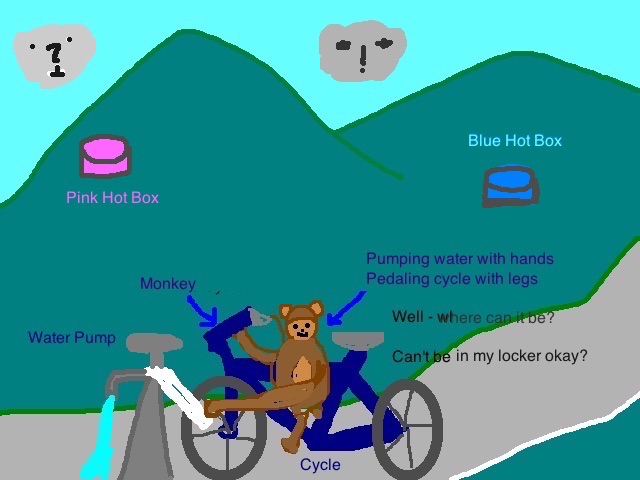
Could it be your locker? Or maybe you just forgot it somewhere in your school bag? Did you eat what was in there? I asked. The daughter rammed her foot up and down, like she was practicing how to pump water and pedal a cycle at the same time, and said in response to my accusatory glances that it was not she who had lost them. “I don’t know, but I didn’t lose them, okay?” she said as though she had enough with lunch boxes to last her a decade. The husband, who tries hard not to lose an opportunity to support the daughter,  said I was getting a bit tiresome with the lunch boxes, and told me to cheese it.

lunch_box

So I did.  Till that day when I was doing the little trash musing. I picked up the trash in the kitchen and I felt something heavy in there. Something round and heavy and light blue and moldy. I suppose Sherlock Holmes felt the same way when a breakthrough came in his investigations. I felt a tingling in my nerves. Whether Sherlock Holmes ever solved a case by sticking his hand in the kitchen trash, I do not know, but I confess I gingerly used a straw to poke around. And there it was: The light blue hot-box covered in potato peels, and tea leaves.

I ah-ha-ed! Give me a chance to gloat like this, and I can show you how it is done. I started off with the subtle angle first, “Anyone realize how we pick up skills that we don’t even know we have?”

“NO!”, said the family trooping in to the kitchen for dinner. I avoided gazing at the sink holding the evidence of the moldy blue hot box. It lay there in hot water, soaking, and looking like a little love would not be a bad thing.

I then proceeded to give the closing arguments for the case and summarized how life has taught me various things over decades, sometimes overtly, sometimes subconsciously. Never did I know that I had the ability to wonder why a kitchen trash bag was heavy.

The husband burst out laughing as I explained the mystery, while the daughter looked discomfited. “If you are so proud of yourself because you know how much the kitchen trash weighs amma, that doesn’t sound like a high and promising life does it?” she said.

She had me there.

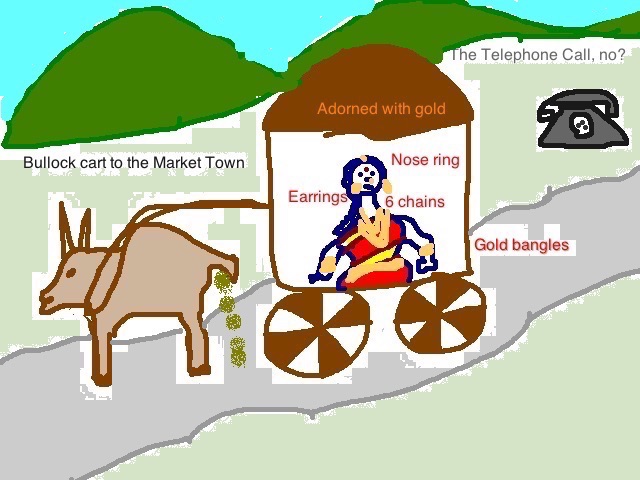
“Remember, your grandmother sacrificed buying sarees for this lunch box.”, I said, and smartly went out with the trash before she would work that one out.

Do You See The Problem Now?

I am all for progress and am generally highly appreciative of the advances made in medical science, but when it comes to determining one’s eye power, I can be heard sharply drawing the breath. One need not be a sensory expert to know that I am being censorious. Stay with me while I explain the case.

One time, there I was, strapped in at the optometrists chair, by those offensive looking goggle-like contraptions across the bridge of my nose. The ophthalmologist, a brisk, happy old man, asked me to relax. He put in a lens and asked me to read something
I D 1 0 T
P I G

He then put in another one and asked me to do the same thing.
I D 1 0 T
P I C

By now, I had the Idiot Pie in apple order and could read them with my eyes closed, but they make doctors Diligent & Determined, and he would not let go of me. Can you see better with this? Or with this? Or this? Or the one before that? he said swapping the lens out and in like a conjurer pulling a rabbit trick in front of his admiring audience. He smiled with every swap of the lens and reminded me of an old avuncular dentist of my childhood days, who had the same courteous friendly bedside (chair-side) manner though he knew fully well that getting up and running was not an option for the patient and could have danced a doodah-dance with sticks.

I was tested this way and that and that way and this way again, making the poor doctor a very confused man. I could not understand this. Was he not happy that I could read? Was I doing something wrong?

I quizzed him and he said in a very concerned voice, ‘Are you sure you can read this?’
Well, if I try hard and squint a bit, I can read it, I said. I got the distinct feeling that had professionalism not stopped him, he would have thought nothing of giving me a quick one across the head with a fly swatter.
‘No, no – don’t strain your eyesight! What’s the point of straining your eyes when we are trying to get you glasses so you don’t have to strain your eyes? Just relax and tell me whether you can see.” he said.

I said okay, but I have to come square and confess: I had no idea how to relax and see. When people tell me to see, I try hard to see. Try, try and when you cannot, try harder was something I was told almost perpetually and yet, now at this crucial juncture of forgoing dinner at the optometrists chair, I was being told not to try hard. Curious.

He did a few more impressive lens swaps, and his round face crinkled with worry again, and I asked him what the problem was. He said that for my age, the power should be increasing or staying the same, but I was saying that it was reducing, and he wanted to make sure that I was getting the right pair. So, I buzzed with a light bulb over my head and told him to start off with my current power and take it up from there. It was the end of a long day, and he wanted to go home, and so did I. I emerged after a few minutes, bleary eyed, looking like a rhinoceros sentenced to rimless spectacles on my horn, while he headed home mopping his brow, filled to his brim with tales of how he is forced to earn his living getting idiots to see.

rhino_glasses.jpg

A few days later, there was some sort of medical fair in the old work spot, and I was told that I needed to swab my cheeks with a earbud. Apparently, that was enough to do gene sequencing or some such thing. I took the information hard, and looked up with a jerk running the risk of losing my precious spectacles. With a cheek swab, if we can find possible donors for bone marrows and what-not, why can we not have a simple procedure to find one’s eye power?

Lens making has been around for at least three hundred years now: Telescopes and microscopes we nailed, yet we seem to need a conjurer to do the magic of rabbit swaps to find our eye power today. Tut Tut. Most baffling.

Of Dinosaurs, Genes & Aliens

The thing about travel is it lets you indulge in conversations that you otherwise may not have: With car drivers (White Tiger, Driver Shiva or Murugan and Driver KillerMan ) for instance.

We were returning from a trip to Chichen Itza by van. The drive is a good three hours, and the husband was chatting amiably with the van driver, while we pulled out our books to read. I settled down with ‘The Gene’, By Siddhartha Mukherjee. The book is one that requires concentration, especially for one who made stout Biology teachers quail. The book is held tight by a web weaving historical context, scientific detail and personal insights. It is a fascinating read, if somewhat heavy going in places.

Screen Shot 2017-05-05 at 10.30.25 AM

Genetics as a discipline had a number of misdirections and key researches almost lost to mankind, like Mendel’s experiment with pea plants, but for a lucky discovery of his article over 50 years after his death. The book touches upon many such instances. It talks about the supposed brilliance of scientists, how scientists are after all human and how their personalities can sometimes thwart and stifle growth. I particularly enjoyed the little quotations at the beginning of every chapter.

Every now and then, I stopped to take in the rustic scenery outside in the Yucatan province. Up in the front, the conversation was flourishing, if in a somewhat one-sided fashion. The van driver liked his audience and his theories grew wilder, and his tales more grandiose.

The man said he was originally from Canada, then moved to US before settling in Mexico. His tales, at any rate, portrayed a colorful life – a trucker, a pop-star, construction, sound recording. We had niggling doubts as to why his life had followed the pattern it had, but did not dig too closely. (He had the power of the van remember?)

‘How is Gene?’ asked the husband turning his head wife-ward. I had gotten past the horrifying section on Eugenics thankfully and said a thing or two about what all mankind is answerable for. Evolution, I said, better have a good reason for cruelty.

’Ah! Evolution. I don’t believe in evolution as a theory. I have a theory’, said the van driver, perking up since he hadn’t spoken for all of three minutes. He bore the look of a man doing a grand flick off some sad sop’s tale from the internet, ‘My theory is that aliens are responsible for life on earth. I think that the aliens had tried to see if life can flourish on Earth with dinosaurs.’
Four second pause.
‘And then they found them too big. The dinosaurs were too big, you know? I think that the asteroid that hit the Earth was nothing but a nuclear bomb sent by aliens. You see it all the time, don’t you?’

‘Eh… What do I see all the time?’ I asked. I have to come clean and admit that I don’t see dinosaurs all the time. Or aliens if you come to think of it, and definitely hope not to see nuclear bombs sent by the unseen aliens to hit the now extinct dinosaurs. I like a quiet life.

Aliens_theory

‘I mean, look at the size of those computers earlier on, and look at them now.’ He stopped here for dramatic effect, like one coming with the argument that clinches all.’ The aliens then got a much better model with humans and current life forms and decided to drop a nuclear bomb on Earth to get rid of the dinosaurs.They were just too big for them.’

The husband and I exchanged significant glances in our minds without once looking at each other. “I will take it that you just consider it a theory.”, said the husband, a man who would have obviously done well in the diplomatic services.

“Well…evolution is a theory no doubt,” said the driver, as though conceding a poorly paid chess move by dim witted opponents. “But aliens is a better concept. You know the supposed asteroid that wiped out the dinosaurs fell right here? Yes – right here in the Yucatan desert.” , he said opening his arms wide, and the van jerked alarmingly. I implored him to hold the steering wheel, to which he laughed, ‘Of course, it was a nuclear bomb sent by aliens, and it is funny that centuries later, we are talking about it, and trying to fit in theories like evolution.”

crater
The Chicxulub crater in the Yucatán Peninsula, the site of the impact that decimated the dinosaurs.(Illustration: Detlev van Ravenswaay / National Geographic)

I set out to explain the experiments with pea plants, how the evidence set up the basis for genetics etc, but the man was bored, and said I must open my mind a little and consider the aliens theory. I bridled. I love a tall tale as much as the next one, but… The husband seem to sense my state, and shot me a warning look.

I had to concede that here was a fellow who had obviously educated himself on the Internet, and was proud of it. The Science teachers in his school days had done their best, and I too must learn to accept that he liked his erudition because he understood complex theories like aliens implanting life on earth.

By the end of the trip I needed some time to reflect, and when I did, I realized that travel had once again made sure I met a person so different in ideologies than myself. I hope he thought a little bit about things that could be proven vs things that could not be, when he reflected later on.

I, for my part, was able to understand why it is easy to believe compulsively written theories on the Internet.

http://theoatmeal.com/comics/believe?utm_source=nextdraft&utm_medium=email

Science lessons seem so far off tucked away in the recesses of the childhood brain. What time is left after earning one’s livelihood can easily be spent in the entertainment industry’s efforts to keep us glued: An industry that thrives on blurring the lines between fact and fiction.

As Lisa Randall says in Dark Matter and the Dinosaurs:
The beauty of the scientific method is that it allows us to think about crazy-seeming concepts, but with an eye to identifying the small, logical consequences with which to test them.

https://www.brainpickings.org/2015/11/28/dark-matter-and-the-dinosaurs-lisa-randall/

What we need is to be able to travel more, so we get to see another’s view point every now and then, even if we do not agree. Especially if we do not agree.

After all, we are nothing but star dust.

https://www.brainpickings.org/2017/02/01/we-are-all-stardust-steven-weinberg-interview/

Do Jaguars Cry Like Birds?

We went on a short vacation to Cancun. The husband is in charge of booking trips. He is the planner. I am the slacker. Give the husband a task like planning a vacation, and he bustles about most impressively (on the couch of course). In true form, he booked a lovely place to stay, surprised his daughter with a day with dolphins, and booked a van to spend the day  with the  ancient Mayans at the pyramid at Chichen Itza. All in all it turned out to be a marvelous vacation with novel experiences.

The drive to Chichen Itza is a good three hours from Cancun, and we settled down with books, games, snacks, and water to keep us occupied on the journey.

The husband was chatting amiably with the van driver, while we pulled out our books to read. Up in the front, the conversation was flourishing, if somewhat one-sided. The van driver liked his audience, and his theories grew wilder, and his stories more grandiose.

The scenery outside was rustic. We were passing village after village tucked away in the Yucatan province. Outside the opulence of the tourist city of Cancun was where we got a peek into the real Mexico. Small brick buildings, children in slippers and shorts, palm trees, livestock, dogs. The rising heat was already setting the tone for the rest of the day. The talk inside the van turned to regional flora and fauna. I asked about tropical birds, and he assured me that they were plenty and marvelous.

‘Have you heard the cry of the Jaguar?’, he said.

‘No! Indeed!’, we cried.

The van driver then went on to explain. ‘Well….what is most impressive about those ancient Mayans is that if you clap your hands at the foot of the pyramid, you will hear the Jaguar cry from within the pyramid. Jaguars are sacred animals to the Mayans. You’ll hear all from the guide no doubt’.

The toddler was impressed. ‘Could I really clap like this, and jaguars will come?’ he asked clapping his hands and blinking his eyes at the same time.

The guide at Chichen Itza, told us about the ancient agrarian economy, and how the ruling class were probably mathematicians and scholars, and not wizards like the peasant class believed at the time. There was an impressive sort of buildup to the clap-echo section: the children even scoured the bushes for hidden jaguars.

When it came to the clapping section, the guide’s CLAP reverberated through the pyramid. It just goes to prove that practice makes a world of difference – our claps were like birds rustling leaves compared to the thunder-shots that rang through when he clapped. That guide clapped for a living and it showed.

It was lovely to stand there in the heat under a perfectly blue sky with lazy clouds flitting here and there, and listen to the chirruping sound that emanates. For some reason, I thought the Jaguar ’s cry would sound like a roar or even a grumble – piteous, scary or ominous, but I was not prepared for it sound like a bird call.

chichen_itza
http://news.nationalgeographic.com/news/2002/12/1206_021206_TVMayanTemple.html

The call we heard, the guide told us, was the sound of the elusive Quetzal bird.

The toddler was disappointed: maybe he expected a Jaguar to come out from the pyramid’s top. A bird flying out was not half as impressive as a Jaguar leaping out, but finally neither came out. We showed him an iguana sunning himself nearby, to which he gave us a look that made his teen sister proud and drooped away to the shade.

Moments later, he philosophically resigned himself to treating life’s disappointments with ice-cream. Jaguars and quetzals could cry or fly, but they didn’t get ice-cream and he did. That was all that mattered.

Coming up next: The Van Driver’s Theory Blasting Evolution to Pieces.

Swimming With Dolphins

The daughter and I were lazing around one night a few months ago: she, reading me snippets from her Harry Potter book and gushing about Patronus charms, and self, reading out snippets from mine, The Cosmic Connection By Carl Sagan.

I was reading the fascinating piece on Elvar the Dolphin. The daughter’s favorite animal is a Dolphin. She has drawings of mermaids with Dolphins everywhere. The sea fascinates her in ways that amuse us. Dolphins, mermaids and narwhals enchant her mind, and her endeavor is to become one if possible.

So, obviously, I read the whole piece out to her.

wind-in-the-reef.jpgElvar had the brilliant scientist stumped after a brief interaction. Elvar-the-dolphin and Sagan-the-human, on being introduced, started playing a game initiated by Elvar wherein he swam to Sagan, and thumped his tail completely drenching Sagan. When after the fourth splashing, Sagan refused, the dolphin swam up to him and said ‘More’. Completely flustered with this turn of events, Carl Sagan ran to his fellow neuroscientist friend and said he might have heard the Dolphin say the word, ‘More’. To which the neuroscientist said that Elvar the Dolphin knew upto 50 words in English, and could use them in context.

It is of interest to note that while some dolphins are reported to have learned English — up to fifty words used in correct context — no human being has been reported to have learned dolphinese. – Carl Sagan

A marvelous essay that only serves to remind us about the virtues of humility. We can barely understand other languages that fellow humans speak, and are quick to erect barriers between ourselves, but here was a dolphin willing to pick up English in order to engage with human-beings.

“You know Amma? Dolphins are so lovely right?”

I nodded. I did love the little flubberty gibbets.

“I think I know what my patronus is – My patronus must be a dolphin. I love them amma. They are so magical and real too.”, she said her eyes gaining that dreamy quality that often accompanies magic.

So, imagine how we felt when on our recent vacation to Mexico, the husband had booked a ride with Dolphins.

We were first introduced to a pair of dolphins – a charming male and female, called Manta and Sole. We hugged, patted and kissed them. I have never in my life touched something that soft, warm, and plush pulsing with the robust health of life. I coo-ed with that tone of voice I use around babies, and the daughter tried her best to distance herself from me in embarrassment, unlike the dolphins, who seemed to enjoy the attention.

‘Would you like to ride with them?’, asked the instructor, and I got to tell you that I was apprehensive. I mean – weigh the facts. Dolphins can swim at the stupendous rate of 20 miles per hour. I swim, if you can call it that, at the rate of 2 strokes a minute, stopping to gulp water in between, spluttering a bit, gasping, coughing and rasping, then regaining my breath before taking another deep gulp to sustain myself for 2 strokes.

Would a Dolphin for the first time experience condescension? I had to find out.

It took me what felt like 20 minutes to swim a couple of hundred meters out to where the dolphins could meet me. I huffed and puffed, and flawlessly executed the gulped-water, sputter and choke routine before I felt able to say I was ready. The moment I nodded, she gave them the signal.

In under a second, I felt the dolphins streak toward me under water, and they were there wiggling their fins under my arm and assuring me in their playful way that all was well. Their faces looked like they were smiling which I suppose is a gift they are born with. Their demeanor indicated none of that condescension or judgment that I was dreading, but simply an amused curiosity.

In another second or two, they had deposited me on the shallow end. The pictures reveal an ecstatic look on our faces as we were carried gently ashore by the dear creatures. My heart was bursting with joy. Maybe my patronus changed to a Dolphin too.

dolphin_swim

If we truly were smarter than Dolphins, we would be totally giving you the works in Dolphinese. What I can do is to dance like they did for us.

I only hope their interaction with us was a happy one too. Boink – Thank-You in Dolphinese.

Another World

We are back from what can only be termed an exotic vacation by the seaside, and the old brain nudged me to look for something written on marine life a while ago, and I did. I had written this post a few months ago, and forgot to publish it.

puertov

So, here is the old post while I marshal my thoughts from the vacation.

One evening over dinner, the husband asked in what he thought was a nonchalant tone whether we should go to the Monterey Bay Aquarium that week-end.

“Hmm…Did they send you the renewal plea for the annual pass?” I asked shrewdly.

He laughed and said that they had indeed.

We are as gullible as galloping oysters in fish sauce when it comes to the annual pass gab. We look and analyze the thing from all angles and figure that if we go just once more in the next year, it all makes sense and buy the annual passes. The year ahead seems to be sprawling with empty week-ends. Week-after-week, month-after-month: having nothing to do, we say why not set aside one week-end a month for the Science museum, one for the zoo, one for the natural history museum and another for ecological preservation?

Then, of course life unfolds, which in the nourish-n-cherish household has been established to be somewhat erratic, and hectic, and we are left wondering whether the weekdays with all its attendant worries is calmer than week-ends with all its hectic activity. Before we know it, the renewal plea arrives and we try our best to scramble in another visit before the annual pass expires.

“If we go straight to the Diwali party from the museum, we can work in that week-end.”, we say and scramble in a trip to the Aquarium.

Anyway, what I meant is that we went to the Monterey Bay Aquarium a few months ago. The salty, tangy, eucalyptus-scented air ruffles your hair as you make your way towards the museum. The cawing of the seagulls and the faint smells of seals and seaweed greet you long before the wonders inside.

Observing marine life is as mesmerizing as it is mystical. Standing there in front of the large glass tanks and looking at sharks, turtles, fish of every color and variety, is magical.

There is one section where we can see jellyfish boink around. Jellyfish that are colored brilliantly, transparent jellyfish, and jellyfish that contain bioluminescent bacteria. As I was standing there marveling at the brilliance of nature, I noticed that there were patterns in the glowing bacteria. Some had patterns that if one squinted one’s eyes resembled constellations in the night sky. I don’t know whether the patterns in the jellyfish are unique to each one much like the Zebra’s stripes are, but it would definitely not surprise me if that were the case. Nature’s patterns are as varied as they are diverse.

We came home that night, reluctantly pulling ourselves away from the enthralling environs of teeming marine life, and sat around for a hastily thrown together dinner. The conversation drifted towards marine life, a topic that is dear to the daughter’s heart. The love started young as we know to our chagrin – we might have watched Finding Nemo five hundred times when she was growing up. Every little fish and piece of coral was much loved in the home. The conversation flitted dangerously close to the ‘I wish I could live in the sea’ theme. The husband watched us for a moment and said in a strangely ruminative tone: “It is a scary world out there isn’t it? A-fish-eats-fish world.”

I was reminded of a quote that floats up in my mind every so often when I am observing the world around us. A quote that is prominently placed in the Monterey Bay Aquarium too:

The sea is as near as we come to another world: Anne Stevenson

Yes, it is a fish-eats-fish world, but it is also the world of beauty, survival, co-existence, and a symbiosis of life.

From Dostoevsky to Dr Seuss

uOne evening, I arrived a tad grumpier than I’d like on a spring evening. That day on the train, there was some commotion ahead of me, and I heard a person rudely shout and say, ‘What are you all doing here? Go back.’ His pugnacious intent scared people. He stared at me and shouted. I was unnerved, Then he looked at another one and shouted at her too. In the peak hour rush, he lay there sprawled across two seats and shouted down at everybody. Another one of those people who was spewing hatred post-election. It was a sad sight, and my senses were more alert than usual.

Hate is a virulent organism that thrives on people’s inclination to adopt it. In fact, if you do not put up an active resistance towards it, it will consume you.

A few weeks ago I read, Dr Seuss and Mr Geisel, the biography of the beloved author, Theodore Seuss Geisel or more famously Dr Seuss.

IMG_5232

In the early chapters, one realizes how bigotry and hatred are vicious poisons that can affect people more deeply than we realize. Ted was a school going child in Springtown, Massachusetts, when the first world war started. The Geisel’s were first generation German Americans and though they were citizens at the time of war, it turns out the world around them did not treat them kindly. It is disheartening to read that young Ted Geisel was persecuted for his lineage. He never really got over the nickname he was given as a child, The Hun.

Outings grew rare as Germany became the common enemy and nativist prejudices arose; German Americans sought whatever anonymity they could. Ted and his sister, Marnie, grew even closer, sharing advice on how to cope with taunts on playgrounds and sidewalks.

This boy went on to write books that are loved and adored by children of all races, religions, nationalities and backgrounds. His books only asked for an open mind whether it was imagining an elephant gingerly climbing up a tree to hatch an egg, or a rajah taking a walk down Mulberry Street.

To think that a century later, we are still labeling entire swaths of humanity with these broad labels is deeply concerning. To parrot a divisive slogan is easy, but true growth comes when we question what is being parroted to us.

Our narratives matter, for they become history, and history then forms the basis of our myths. In this beautiful essay by Fyodor Dostoevsky (Dostoyevsky on Good Fellows – Brain Pickings), he says :
It is our responsibility as human beings, to peer past the surface insecurities that drive people to lash out and look for the deeper longings, holding up a mirror to one another’s highest ideals rather than pointing the self-righteous finger at each other’s lowest faults.

Why was that poor man shouting at people on the train? And how can we resist succumbing to this fate?

Dostoevsky:

Judge [the people] not by those villainies which they frequently perpetrate, but by those great and holy things for which they long amidst the very villainy.

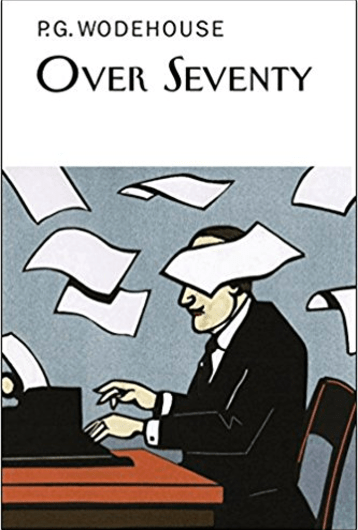
Coming up next: We cannot and must not hate in the plural. A lesson taught by one of my favorite authors, P.G.Wodehouse.

P.S: Also listen to this commentary on German-Americans on the centenary of American entering the First World War: http://www.npr.org/templates/transcript/transcript.php?storyId=523044253

An Elephant is Faithful 100%

“Ughhh! Amma, why is this boy so bright in the morning?” moaned the daughter. The daughter and I are slow to rise and shine. The eye first creeps open, the bath helps a little but not much. By the time, we muster the energy to throw our weight around, it is mid-morning. We are like sunbeams trying to break through a misty, foggy, cold morning. The husband and son, on the other hand, are like light bulbs. When they are up, the switch is on and they beam brightly with all the wattage available. The duo look indecently chirpy in the morning and bustle around with breakfast, cracking jokes and what-not. The daughter and I exchange dark looks and shudder a bit at this exuberance.

sun_bulb.jpg

One morning, the son looked at me, shook his head with pity and said, “I know what will wake you up! Let’s listen to Horton Hatches An Egg”, and we did. The toddler son was cracking up with hilarious laughter in the car and I don’t care what you say about speed of light being a constant and all that, I must confess that the sun beams broke through the misty morning fog a little faster. It is a marvelous book, and takes one through the most hilarious plot of an elephant hatching an egg.

I recently read Dr Seuss and Mr Geisel, by Judith & Neil Morgan, a biography of the beloved author, Dr Seuss. Ted Geisel confessed that he saw the world through the ‘wrong end of the telescope’ and  he seemed to have stayed in touch with his childlike curiosity and joy through life.

IMG_5232

Ted’s family was well-off. His father, after running the successful family business for several years, later worked for the public parks system with access to a zoo. He puts many of his influences down to the natural loafing around in the countryside with access to animals as a child. His mother, had a knack of reading things in verse to him in a way that stuck in his brain. Over his brilliant career, he would combine both these influences in a charming manner to enable an entire generation to love reading.

Reading about his foibles and his educational escapades gives a glimpse into the kind of endearing personality he must have been. Especially in the early part of the book, you see the boy and young man Geisel was not exactly a Grade-A student. From an early age, he exhibited a wonderful personality with humor, zest and curiosity.

His college sweetheart, and later, wife, Helen Palmer, was the first person to suggest to Ted that he may be better off drawing and writing than pursuing an academic career at Cambridge. He says this was around the time he realized that writing and drawing were like the Yin and Yang to his work.

One day she watched Ted undertake to illustrate Milton’s Paradise Lost; he drew the angel Uriel sliding down a sunbeam, oiling the beam as he went from a can that resembled a tuba.

“You’re crazy to be a professor. What you really want to do is draw.” she blurted out. She glanced at a cow he had drawn and said, “That is a beautiful cow!

Praise from one you love is truly lovely, and it set him on the course of his career.

Ted was used to taking brisk walks during frequent breaks from his studio in La Jolla, California. One time, he accidentally left a window near his desk open. When he came back, he saw that one transparent sketch had flown over the other, resulting in a strange juxtaposition of an elephant sitting on a tree. This set off a magnificent thought process in his head. What was the elephant doing on the tree, why, hatching an egg of course. Why is he there – what happened to the mother bird and so on. What resulted after months of mulling this train of thought and multiple revisions is the brilliant book, Horton Hatches The Egg.

“I meant what I said and I said what I meant. An elephant’s faithful one-hundred percent!”

Horton_hatches_the_egg
Image Source: Wikipedia 

If you haven’t read it, please do so. Fantasy is a necessary ingredient to living: Dr Seuss.

dr seuss

Coming up next:

Ted was a school going child when the First World War started. The Geisels were first generation German-Americans and though they were naturalized citizens at the time of war, it turns out the world around them did not treat them kindly.

Of Hailstones & Laundry Baskets

“I have a great idea! “, said the kindergartener. His face was shining with excitement. I braced myself and nodded for him to go on. I had between my teeth, a clip that threatened to tie my tongue together, my hands were yanking a large unruly mess of hair into a pony-tail for the daughter, and the stove was hissing ominously.

“Why don’t I wear the red laundry basket to school?” said the kindergartener. That tied my tongue, the daughter yelped because I pulled on the hair making her pony tail look like a sausage through a tree, and the stove boiled over.

The past week has been a whimsical one. It was ‘Read Across America’ week to honor Theodore Seuss Geisel’s birthday and the little world around us lit up. In Elementary schools, everyday of the week, it seemed, was a special one, and fliers exhorted all of us to jump in. I love the Elementary school age-group when the human mind is at its most creative, supple and fertile and is bursting at its seams with curiosity and enthusiasm.

Wear As Many Colors As You Can Day
Crazy Hat Day (the red laundry basket is always being worn as a hat by the toddler at home, and he thought it was a marvelous idea to go like that to school)
Favorite Story Book Character Day
What Do You Want To Become Day (What do you want to be?)
Mismatched Fox in Socks Day

Somewhere along the line, we lose that element of fun, and I admire how children can help us tap into it at times. The past week was a hectic one, but I must say that I enjoyed wearing mismatched socks on purpose just as much as the children did. There were times during the stern day when I smiled to myself thinking of my striped sock and my polka dotted mismatched socks that had resulted in so such mirth in the morning rush.

I had with all good intentions gotten a biography of Dr Seuss to read before his birthday, but in my typical feather brained inefficiency had not so much as moved past the Prelude to the Introduction (why do books do that?) So, the Dr Seuss post would just have to wait.

Dr Seuss was very much on our minds as we stepped out for a walk by a river to wrap up the week. There we were, ambling along a roaring river with the backdrop of the mountains in the distance. It was also a deceptively cold day(I am too cold), for there were patches of sun(I am too hot), patches of dark grey clouds scudded past the cumulonimbus clouds and the wind whooshing at times knocked off our hats (not laundry baskets.)

drseuss.jpg

Minutes into the walk, we were stringing together nonsense Seuss-ian style and cackling:
I am too cold
I am too hot
Why are you always too something?
I thought you were five
No I am not five cold
I am not five hot
I am too cold
I am not two but too
I thought you were five

And so it went….

You know how they tell you in these be-calm lessons not to do anything suddenly? Ignore it. For suddenly, the rain pelted down, and not just that, it pelted down with hail stones. Silly or not, being pelted with hailstones is amusing and annoying especially when the good intentioned mother did not bring an umbrella on a walk. But the toddler tackled the problem with a whining grace. He ducked under his jacket and we raced to a tree, and stood under the tree sticking our tongues and hands out to catch the hailstones.

“Eat it”, I said as I popped a hailstone into my mouth.
“What? No! Amma! You cannot do that. “
“Yes you can – you may like it. Try it Try it if you may.”
“Say! I like Green Eggs and Ham”, finished the toddler and popped in the hailstone looking amused.

Colors

It is perfectly normal to be mistaken for normal if you wear laundry baskets and eat hailstones, thanks to Dr Seuss.

https://www.brainpickings.org/2015/07/29/what-pet-should-i-get-dr-seuss/

Good Food Mood

This article was published in The Hindu 

Some of my articles, especially ones that involve the night sky have me pondering on the nature of our existence and how minuscule we are in the scheme of things. The precise sequence of things that led to this particular form of life on this planet and so on. Generally, the night sky is simply a becalming experience that inspires humility, and some vague musings.

The scale of the universe is one that is awe inspiring. We are minuscule compared to the universe, but we also contain millions of minuscule particles compared to our own size. As far as the microbes are concerned, we, each of us: deer, goose, humans are a universe unto ourselves. There is something deeply spiritual in that : we contain multitudes and we enable multitudes. The diversity and beauty of the microbial world is immense, and one that is still emerging in our understanding of it. With the sound of rain pattering outside, I was sitting snugly inside reading I Contain Multitudes by Ed Yong, stopping every now and then to read out an interesting piece to the children.

Ayar padi maligaiyil thaai madiyalil kanrinnai pol
ஆயர்பாடி மாளிகையில் தாய் மடியில் கன்றினைப்போல்
maya kana thoongugindran thaalaelo
மாயக்கண்ணன் தூங்குகின்றான் தாலேலோ
Avan vaai niraiya mannai undu mandalathai kaatiya pin
அவன் வாய் நிறைய மண்ணை உண்டு மண்டலத்தை காட்டிய பின்

Roughly translates to: Here is little Krishna, sleeping like a little calf after eating a handful of mud and showing us the universe within it.

The son played the video for the nth time on the television, and the daughter said, “Oh no – not that again. How many times will you see that video?”

“See…see here – when baby Krishna opens his mouth, his mom can see the whole universe inside it. The whole universe!” he says his eyes widening, quite unable to comprehend why this fact is not as astounding to his elder sister.

“Yes – but you said that already.”

“I always watch what you are seeing!” said the fellow stung at this accusation of hogging the television. His sister scowled, the toddler tensed and I sensed it was time for dinner before the situation escalated, and rivers of tears joined the gurgling rivers of rainwater outside.

Inside the house, we sat down around the dinner table with hot food and slurped at it. We kept getting interrupted by alerts giving us flash flood warnings, and it increased the gratitude for being inside, relishing warm food and enjoying one another’s company. Minutes into the meal, the situation had considerably lightened and the children were rolling off their chair giggling at something inane. I watched them bemused.

Countless writers have written about the effects of good food. Jerome K Jerome from Three Men in a Boat goes on to describe the effects in great detail:

It is very strange, this domination of our intellect by our digestive organs. We cannot work, we cannot think unless our stomach wills so. It dictates to us our emotions, our passions. After eggs and bacon it says, “Work!” After beefsteak and porter, it says, “Sleep”. After a cup of tea(two spoonfuls for each cup, and don’t let it stand for more than 3 minutes), it says to the brain, “Now rise and show your strength. Be eloquent and deep and tender; see with a clear eye, into Nature, and into life: spread your white wings of quivering thought and soar, a god like spirit over the whirling world beneath you, up through long lanes of flaming stars to the gates of eternity!”

What is it with food and mood? Is there a direct connection between the gut and the brain?

It turns out that there is. In ‘I Contain Multitudes’, Ed Yong goes on to write that there are now studies directly linking gut bacteria with mental well-being. We have a long way to go in understanding the role of gut bacteria.  Some studies indicate reduced symptoms of depression in people with irritable bowel syndromes after consuming certain types of probiotics.

If research advances enough to diagnose certain types of borderline psychiatric patients and is able to treat them with specific types of probiotics to enable well-being, would that not be great?

An excellent article on the topic by Maria Popova here: https://www.brainpickings.org/2016/08/10/i-contain-multitudes-ed-yong/

The future could hold in store for us enough advances in microbiology & genetics, to enable personalized treatment options that aims at holistic healing. That is a promising, if distant, future to strive towards.

Quote:
It is estimated that every human contains 100 trillion microbes, most of which live in our guts. By comparison the Milky Way contains between 100 million and 400 million stars.

Maybe the mud that baby Krishna swallowed contained bio luminescent bacteria that made the universe inside of him light up when he opened his mouth.

krishna_universe

Whatever it is, like Jerome K Jerome says: “We are but the veriest, sorriest slaves of our stomach, Reach not after morality and righteousness, my friends; watch vigilantly your stomach and diet it with care and judgement. Then virtue and contentment will come and reign within your heart.”