Biblio oi filoi

I am glad to have biblio companions (The root, biblio, in Greek means Books, and oi filoi is the Greek translation for Friends according to Dr Google) . I hope that I shall continue to be blessed with having access to them. Over the past year, I spent a good amount of time with my biblio companions.

For instance, political climates may seem new to us, but Storm before a Storm by Mike Duncan made me realize that for millennia of mankind’s experiments with power and ambition, we have not really evolved that much. 

moment_of_lift 

  • Some helped me laugh (P.G Wodehouse, Herge’s Tintin series, Asterix comics) 
  • Some helped me keep the fantasy and mythical aspects alive (Rick Riordan’s books, Ursula Le Guin’s Buffalo Gals & Lathe of Heaven, Circe by Madeleine Miller)
  • Some made me stop and think (Bad Blood – Secrets and Lies in a Silicon Valley Startup, Te of Piglet – Benjamin Hoff )
  • Some helped me form my guiding philosophy (Snow Leopard by Peter Matthiessen)
  • Some helped me understand the physical world around me better (Black Hole Blues by Janna Levin, My First Book for Quantum Physics – Ferrón, Sheddad Kaid-Sala)
  • Some helped me appreciate the importance of life (Everything in its Place by Oliver Sacks)

I read over 130 books – some of the children’s books I didn’t kept track of. We do not keep track of moments, but aren’t they precious all the same? But, they all taught me something, even if it was as simple as holding my attention for a few moments at a time. (Alphabreaths – Christopher Willard (a clinical psychologist) & Rechtschaffen MA, Daniel (a counselor) Illustrated by:  Clifton-Brown )

To that, I am grateful.

Here is to a wonderful reading journey in the coming years as well.

In the Land of Dreams

The Dream Weavers Web

It had been a few years since we had taken the magical pill. When the daughter was younger, she was enamored with Disney movies, was obsessed with unicorns and mermaids (the mermaids still hold sway), but the general euphoria with Disney has come down somewhat, or so we thought. It turns out, magic may be dormant, but thankfully not absent. When those Mickey ears came on, so did the smiles, the magic, the ridiculous mixed with the plausible, the tales with long tails, the myths and legends, everything came bubbling up in one hot cauldron full of fun and adventure.

I must say I was thrilled too. The day to day living tends to routinely pound magic out of us unless we make a concerted effort to keep it. The schools manage to do so for the children. There are Dr Seuss weeks, there are Read-a-thons, crazy hair days and crazed sock days to keep it all intact. But as the business of earning a living and adult hood takes on, there is a brush working in the background to make us more even keel, more predictable and less whimsical.

Reading children’s books keeps it for us in some ways.

I had expected to have a good time at Disneyland. I manage to put my whimsies on with a delight, and get the children going too. So far so good. But there are serendipitous surprises lurking even in the most magical of places. The Disney World in Florida was even better than I had expected. There was Animal Kingdom, in which I expected plastic hippos and lions made to scale. Consider my surprise then when we went on the Kilimanjaro safari to be taken into the hinterlands with animals in relatively free reign. It is marvelous to see a bloat of hippos, a tower of giraffes, a something of warthogs, and a blush of pelicans roaming freely. When a white horned rhino waddled across our path, we simply waited for it to move quietly. Even the children, though looking awed, did not utter a sound. There is majesty in nature.

One of the best surprises for me was the onus on conservation of our beautiful planet for the years to come. There were green houses showing us the marvels and possibilities of vertical farming. It was apparent to those of us floating in the boats by the lazy river taking us through these green houses, that many of us had never seen plants of many vegetables and fruits before. One excited child pointed to an eggplant plant, and squealed – “Look the eggplants are hanging from them!” I could see it was a beautiful revelation for the child who had simply assumed you picked it up in the grocery aisles of the supermarket, while making a passionate case for a Hot Wheels toy car at the billing counter.

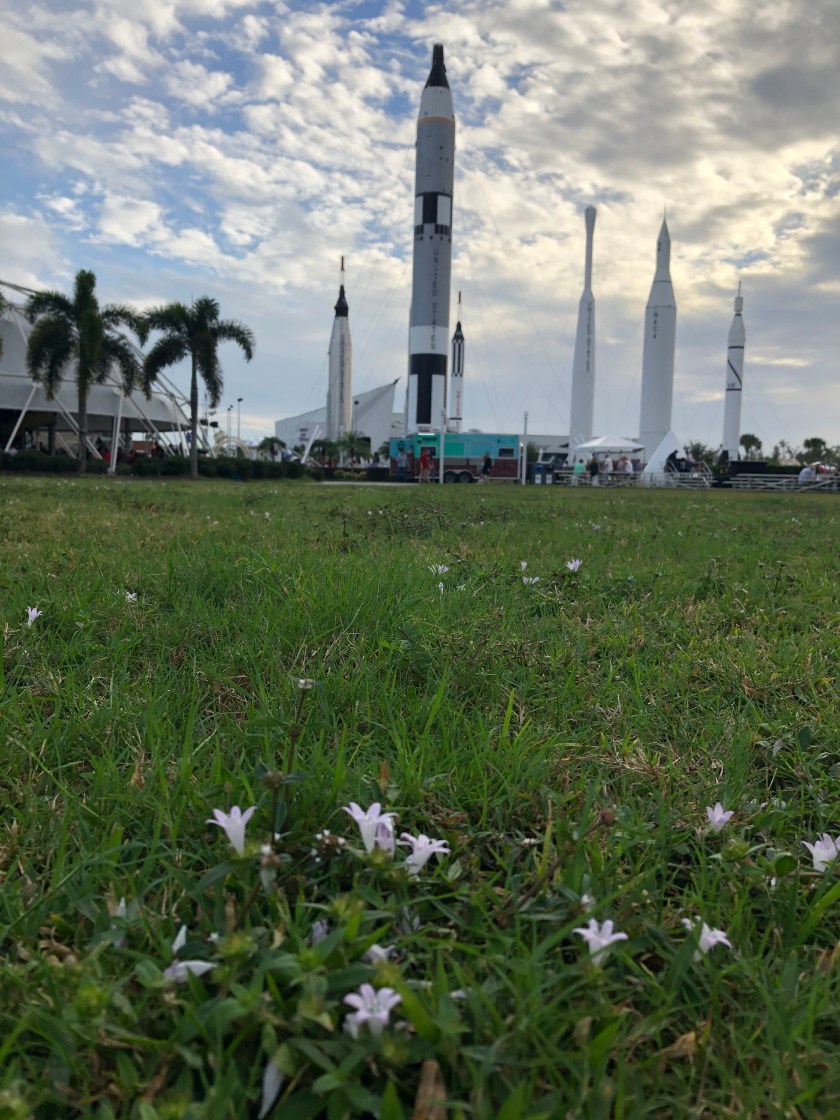
Saturated with the magic of life on this beautiful planet, we spent a day amidst the shots to space. Kennedy Space Center. The past merged with the magic of fairy-tales, the present beautifully thrumming with possibilities for conservation and conversation, and the future hits among the stars. Looking for possible planets for us to expand into.

It is marvelous to see we are on the cusp of a decade that holds so much promise. For among the young I saw in the parks, there will be quite a few starting their careers in the coming decade.

IMG-6125

The whole time, I was absorbing the atmosphere around me, little words were forming themselves into sentences. I was making my journey on the river of time and I was grateful for so many things. Some good sentences disappeared because I had not written them down, but I didn’t fret. It is often like this – playing with the words to relive my experiences.

Imagine how I felt then, when I read Ursula Le Guin’s essay on Writing. I felt the sage author’s words like balm, and nodded along. Writers are creators, but unlike potters and weavers, our products are less tangible. Our dreams are webs weaved in the magical recesses of the brain, and not all of it worth reading or sharing.

“Writing is a risky business. No guarantees. You have to take the chance. I’m happy to take it. I love taking it. So, my stuff gets misread, misunderstood, misinterpreted, – so what? If its the real stuff, it will survive almost any other abuse other than being ignored, disappeared, not read.”

When I read this piece in the essay though, I was grateful. I have written 800 posts over the past 14 years, and I would never have done that if not for the encouragement I have received from my dear friends and readers. It is magical. Encouragement like Love, is so fuzzy a thing to try to describe. For both the forces have the power to gently nurture, nudge, and poise for acceptance.

Thank you for all of that. Let the magical dreams weave on in the coming decade as well. Happy New Year and Happy New Decade – May the River of Time course on gently.

Charming Blooming Murmurations

It was a lovely morning before the rains set in. The hillsides definitely looked like they could do with some rain. The parched Earth still looked beautiful in the early rays of the sun. We saw a hawk at such close quarters eyeing a trip of rabbits down below that I felt a surge of its power course through the hills.

We were out on a hike and the son was ebullient. The morning air had lifted his spirits, and he was happily talking of this and that and taking us up steep hillsides.

On we went, through troughs and peaks, listening for the sounds of animals, birds and inhaling the fresh air. On top of one of the peaks, we stopped to catch a breath. I mock held my hips and said “Oh have a heart and give your old mother a break!” He guffawed and pointed out the next steep hill with gusto. I smiled, and held a finger to my lips – it was as we were standing there atop a hill overlooking a bay that we heard the murmur above. A susurration of starlings flying this way and that, forming and reforming beautiful circles in the sky.

A group of starlings are aptly called a Murmuration of Starlings.

I don’t know how often we have stood close enough to hear a whole flock of birds wings flock together – if you haven’t, it is truly magical.

A few days later, we were heading to Monterey Bay Aquarium? After tucking into their mac-n-cheese, which is apparently the best, we meandered our way through the place. Marine biology, research, conversation of species and all the noble things follow a splendid Mac N Cheese. The clouds were out gamboling in the blue skies. They had reason to. They had been grey and full of themselves for the past few days, They had made terrible whooshing noises as the rains thundered through the Bay Area. Having taken their load off though, they looked lovely in the skies.

“Hey amma! Do you see that one? Just the top of it looks like a dog!”
“Whoops! Now it is changing shapes to become a shark!”

Watching a billow of clouds is always a magical experience.

Later that day in Monterey Bay Aquarium, Nature showed us beautiful species of fish that could collectively shoal and swarm forming beautiful shapes as they swam in large numbers together.

Clip from Wiki:
During the sardine run, as many as 18,000 dolphins, behaving like sheepdogs, herd the sardines into bait balls, or corral them in shallow water. Once rounded up, the dolphins and other predators take turns ploughing through the bait balls, gorging on the fish as they sweep through. Seabirds also attack them from above, flocks of gannets, cormorants, terns and gulls.

Sardines
By TANAKA Juuyoh (田中十洋) – sardines / 鰯(いわし), CC BY 2.0, https://commons.wikimedia.org/w/index.php?curid=7998525

A bloom of jellyfish is enough to fill one’s heart with joy for hours – floating seemingly aimlessly, their pulsing, electrifying bursts are nothing but therapeutic.

img_5165

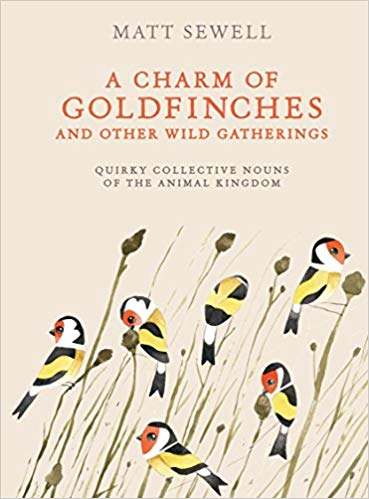
A Charm of Goldfinches by Matt Sewell is a marvelous book outlining why we have the collective nouns that we do. Why do a Trip of Rabbits thrill us? Why are Charms of Goldfinches so charming?

With beautiful illustrations, it is a charming book indeed.

charm_goldfinches

I remembered a game we played on a car trip some time ago. It had to do with the one big super power we could wish for. While there were things like Lightning Blasters, I think the one that took everyone’s fancy that day was Shape Shifters.

We are so corporeal in our bodies that we rarely of even think of things we can shift into. But this kind of species shifting shapes at will collectively and in a coordinated manner is not just fascinating, it is mesmerizing.

Watching clans of humans though, not so much!

Tick-Tock Tick-Tock

“October 29th, 1969 is the day the internet was born did you know that?” said the husband. I have seen pups don that look when out and about in sunny meadows with a new bone to boot.

“Google icon huh?!”

I suppose life has taught him to take in his leaping enthusiasm with our barely noticeable uh-huh with equanimity. “Hey! Let’s try again. Today is the birthday of the internet!”

“No….just fun fact. Oct 29th, 1969 – The first-ever computer-to-computer link is established on ARPANET, the precursor to the Internet. And then in 1974, the first protocol for communicating over the Internet was conceptualized. T-C-P – tada! Finally, in November 1977, the internet was functional as the ARPANET for the Defense.

“It wasn’t until the late 1980’s and 1990’s even that the internet was functional the way we know it!”, he said awe dripping from him. “I suppose in a way we were the perfect generation to see the wave take off.”

“So you guys are as old as the internet?! Oh my gosh – that is so old!” quipped the little fellow, mentally slotting us with the dinosaurs. “How did you guys live without the internet? ” , said he puzzled. He has taken to asking Google Home all sorts of things during the day:

“Okay Google – what is the atomic number of Boron?”
“Okay Google -what is the time right now?”
“Okay Google – tell me a Halloween joke.”

“Well – we lived quite well I suppose.” said I, throwing in a bit of philosophy about the simple life needing few things other than sustenance for the body and the mind. “We did not need the internet to entertain ourselves. We played outside, made forts out of mud, ran around, and had fun all the same. No battles on that game of yours – Clash Royale is it?!  We battled it out with sticks and stones.” I said, and the more I talked about our lives pre-internet, the more I realized that humanity had truly passed a technological milestone. It was like the power of electricity – it changed our lives forever, and though life is possible without electricity, it has become so much harder to sustain without it. Looking at the children born after the age of the internet, I realized that connectivity is much the same for these children.


tangled_web

“You want to know what I did with the Internet today?” asked the teenage daughter.

“I’ll show you!” she said in her effusive tones. There was then a rather jerky video of her popping into her mobile phone’s camera from various angles – one upside down and by the sounds of it rather clumsily, for we heard a dull thud followed by an “oww”.

“Not my best video – but how about this one? ” She then went on to show us another jumpy jerky video with some sort of a meme thrown in for good measure. I groaned.

“What is this?! Does anyone even see stuff like this? Tick tock is it?” I looked appallingly at her, and said, “Oh goodness child! You don’t tell me you actually posted this!”

I feel it is worth noting here that the App is called TikTok, not Tick-Tock as I thought up until a minute ago when I went looking for the wikipedia entry – sigh! I am as old as the Internet I suppose!

“For your information Amma, tons of people see this stuff. It is original see? This is the one that is going viral now. Already 30,000 likes and 100,000 views.”, she said, proud of herself.

My jaws dropped. “For this?!”

“Supportive. Mother. Supportive – remember?”

“But I’ve seen plenty of videos – even your own that are much better than this – even the one you showed us before where you banged yourself on the floor by the sound of that dull thud had a comical quality to it. ” I said, and she laughed hard, agreeing wholeheartedly.

“Fame doesn’t need merit Mother.”

“Fame is a fickle friend Harry!” said I in a brilliant imitation of Professor Lockhardt from Harry Potter and the Chamber of Secrets.

“Fame is as fame does!” said she, and we all laughed.

“Just goes to prove that all our inventions and resources take on a life of their own, and that is what will keep us busy as a race I suppose.” I said.

“All the brilliant protocols developed and conceptualized for dumb Tick-Tocks like this to go viral. What is the world coming to?” said the husband.

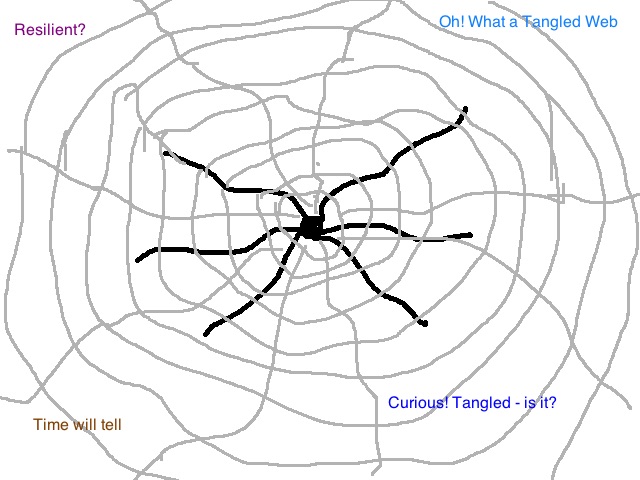
“What a tangled web we weave when we choose to connect?” I said paraphrasing not Shakespeare as it turns out, but William Scott in the poem Marmion, and looking around proudly for acknowledgement. Completely lost on the group of course. I sighed and continued – there are times when you explain your jokes and times you don’t. Not when something viral is competing for attention.

“Poor appa! Let’s throw him a bone and listen to him about the philosophy of the internet dears. ” said I, and we listened to him as he explained – his own fascination overtaking him, about how the internet developed and (d)evolved into what it is today.

Here is an interesting video with all the leading websites over time.

More videos here : Data is Beautiful

How we will continue to evolve is anybody’s guess, which leads me to a wonderful essay I read by Ursula Le Guin on the different types of fantasy. (coming up next)

Moonbeams in the Morning

The morning alarm trinkled: Dawn’s misty summons. I got up, wondering why the nights passed so quickly, hoping for a little more precious sleep in the mornings. I stepped out of my bed and gingerly peeked out the window. Dawn was doing the same thing – trying to sleep in a little more, while the moon shone high above the tree tops, bathing the surrounding clouds in a magical shroud of moonbeams. The dew drops on the trees glistened in the same benign light. I stood there shivering a little for the night temperatures had dipped, and there had been a mild drizzle.

IMG_3869

The moon is there every night, the sun rises every morning, and yet the moments of quietly standing there before the hustle and bustle of our days started made me appreciate everything a little more sharply. When the son woke up, I held a finger to my lips not ready to start talking just yet, and made him peek out at the fine moon too. His eyes widened a little at the beauty of the morning, dew drops, trees, clouds and the moon. He chattered in his bright tones that sent the waves of sleep flying from him, “Did you know? We may not be able to enjoy the view of the moon for very much longer?”

“Why?” I asked in spite of myself.

“Well… we are already working on building colonies on the moon. Soon, the moon will be full of houses just like ours, and then who knows how the moon will look from here?”

“Who told you that?”

“No one!”

“Okay….where did you read that?” So much for quiet mornings bathed in contemplation.

“In the Time for Kids magazine. It seems we are already planning on moving there.” he said a tinge worried that I hadn’t received his original memo in my sleep addled state.

“Well…for all the things we have built on Earth, from outer space, it still looks beautiful you know? Maybe it will be the same for the moon. Although, I am not sure I am happy with the idea of looking in on someone’s home like that. Wouldn’t it be creepy?!”

He laughed.

I was reminded of the essay by Oliver Sacks in the book, Everything in its Place: Who Else Is Out There?

everything_place

In it, he starts with his thoughts on the book, First Man on the Moon by H.G.Wells.
Anybody Out There?- Oliver Sacks essay
One of the first books I read as a boy was H.G.Wells First Man on the Moon. The two men, Cavon & Bedford lie in an apparently barren and lifeless crater just before the lunar dawn. Then as the sun rises, they realize there is an atmosphere – they spot small pools and eddies of water, and then little round objects scattered on the ground. One of these , as it is warmed by the sun, bursts open and reveals a sliver of green.’A seed! “says Cavor, and then, very softly, says ‘Life!”.They light a piece of paper and throw it into the surface of the moon. It glows and sends up a thread of smoke indicating that there is oxygen.
This was how Wells conceived the prerequisites of life: water, sunlight (a source of energy), and oxygen. “A Lunar Morning” was my first introduction to astrobiology.

While it is interesting for us to dream of conquering alien worlds and expanding our footprint with habitable planets, such as K2-18b circling a red star called M Dwarf; it is also highly interesting to see that even on Earth that is our original home, we require a very specific set of circumstances for our life to thrive. We need our oxygen levels to be exactly right, our carbon dioxide levels to not rise too much, we need our microbiomes to be in a particular state of harmony with the larger ecosystem.

Read: Good Food Mood

Take for instance, this excerpt from cosmonaut Alexei Leonov – the first man to walk in space for 12 minutes. Excerpt :
“I decided to drop the pressure inside the suit … knowing all the while that I would reach the threshold of nitrogen boiling in my blood, but I had no choice” Leonov said

I enjoyed Oliver Sacks’ footnote, for in one sentence, it reconciled both the resilience and delicate nature of our entire species.

“If Wells envisaged the beginning of life in the The First Man on the Moon, he envisaged its ending in The War of the Worlds. where the Martians, confronting increasing desiccation an loss of atmosphere on their own planet, make a desperate bid to take over the Earth (only to perish from infection by terrestrial bacteria). Wells, who had trained as a biologist, was very aware of the both the toughness and the vulnerability of life.”

How many species have left behind their fleeting impressions on the cosmic playground? Our own are laughably recent. Will the Quod-liop-tukutuk-sfaunusaurus call us by the same name when they dig up our remnants millennia from now?

Books:
The First Man on the Moon : H.G.Wells
War of the Worlds : H.G.Wells
Astronaut Alexei Leonov: First Man to Space Walk
Everything in its Place : Oliver Sacks

Running like Elephants

“Guys! Let’s hurry up a little. I like how we are dawdling, but the school bell waits for no ships to sail across the seas! ” I said. There had been a mild spattering of rain across the dry summer season. A few snails had popped out to enjoy the moist, and the son and his friends were looking at them as they chatted and made their way to school. Rain drops on the late summer roses and oleander flowers made the scene a rather endearing one.

img_3991-effects

The response from the children was predictable – they ran, and I ran shouting like a charioteer pulling the reins on the excited steeds, “Slow down! No running here – oncoming traffic!”
“But you asked us to hurry up!”
“Yes – run like Elephants!” I said.

I had told the children earlier about the Elephant’s gait, and they exchanged glances and started laughing. The snail they were studying looked startled and showed a leap of speed as it made its way back to the comfort of the garden bed.

Is this walking? *giggle*
Is this running? *giggle giggle*
Is this fast walking? * giggle giggle giputly duggle*
Is this slow running? *giggle puddle chuckle duffle*

I smiled slowly. “Pretend you are Elephants teaching Snails to run.”

elephant_snail

I suppose that was a wrong metaphor altogether. By the time we arrived in the school, not only were we out of breath with the laughing, but we were also fashionably disconcerted. The legs seem to not remember how to walk straight or run properly, and were caught in this limbo of the Elephant’s Gait.

Later that week, I was sitting in the garden and watching the world go about its true business of living. I watched a hummingbird’s fast-paced wing movements up in the trees. A few butterflies were flitting hither and tither. A skein of geese were flying overhead in that beautiful v-shaped formation. Closer to the ground, a few snails were marking their slow way across the courtyard.

This combination of sitting in a garden, and watching life flit by had me take a hundred pictures with my phone. Pictures that may or may not be seen and appreciated again. I could capture the slow motion video of the humming bird whizzing up above or the butterflies in my midst. I could use time-lapse videos to capture the slow moving snails and a dozen pictures to capture the beautiful movement of the caterpillars.

As I sat there musing on the ease with which we capture movement these days, I could not help comparing and contrasting humanity’s struggle to capture that. I remember yawning in the Art galleries after seeing the n-th painting of a horse or the x-th statue of a horse drawn chariot.

But as I sat there that afternoon, I wondered whether I had appreciated them enough. After all, at the time of their making, studying movement was not all easy. One had to have an almost eidetic memory to understand the muscles and the way they moved.

Leonardo Da Vinci’s work is appreciated because of the lengths he went to study the anatomy of the creatures in his works. 300 years ago, movement must have been particularly hard to study.

In Oliver Sacks’ essay on Elephant Gaits in the book, Everything in its Place, he writes about the problem of studying movement.

everything_place

More than a century ago, Etienne-Jules Marey had made a pioneering investigation of elephant gaits. Of course, he did not use video analysis then, but still photography. I quote: “Marey’s lifelong fascination with movement started with the internal movements and processes of the body. He had been a pioneer here, inventing pulse meters, blood pressure graphings and heart tracings – ingenious precursors to the mechanical instruments used in Medicine even today.

Later, he moved onto the animal movements and analysis.
For animal analysis he used pressure gauges, rubber tubes, and graphic recordings to measure the movements and positions of limbs. From these recordings, he rotated in a zoetrope, reconstructing in slow motion the movements of the horse.

Muybridge, a contemporary of Marey, however, a peripatetic artist as Sacks describes him used 24 cameras along a track where the shutter would be tripped by the horses themselves as they galloped past to capture the movements of the horse as they raced.

When a similar technique was used to analyze the fast movement of elephants, it was found that they neither walked nor ran, but rather a combination known as fast walking.

I remember a long ago conversation with a friend who was training for a marathon on the more recent study of leopards running, and how he had changed his running technique to take a few tips from the world’s fastest runner.

As we watch the world around us, I wish different creatures could teach us some of their marvelous techniques. The dragonfly and the humming bird for flight; mallards and coots for water locomotion. Doesn’t Biomimicry as a field of study sound more fascinating than ever before? I positively yearn to be Dr John Dolittle at times!

Books/Articles to be read/referenced in this post:

Leonardo Da Vinci’s Horse

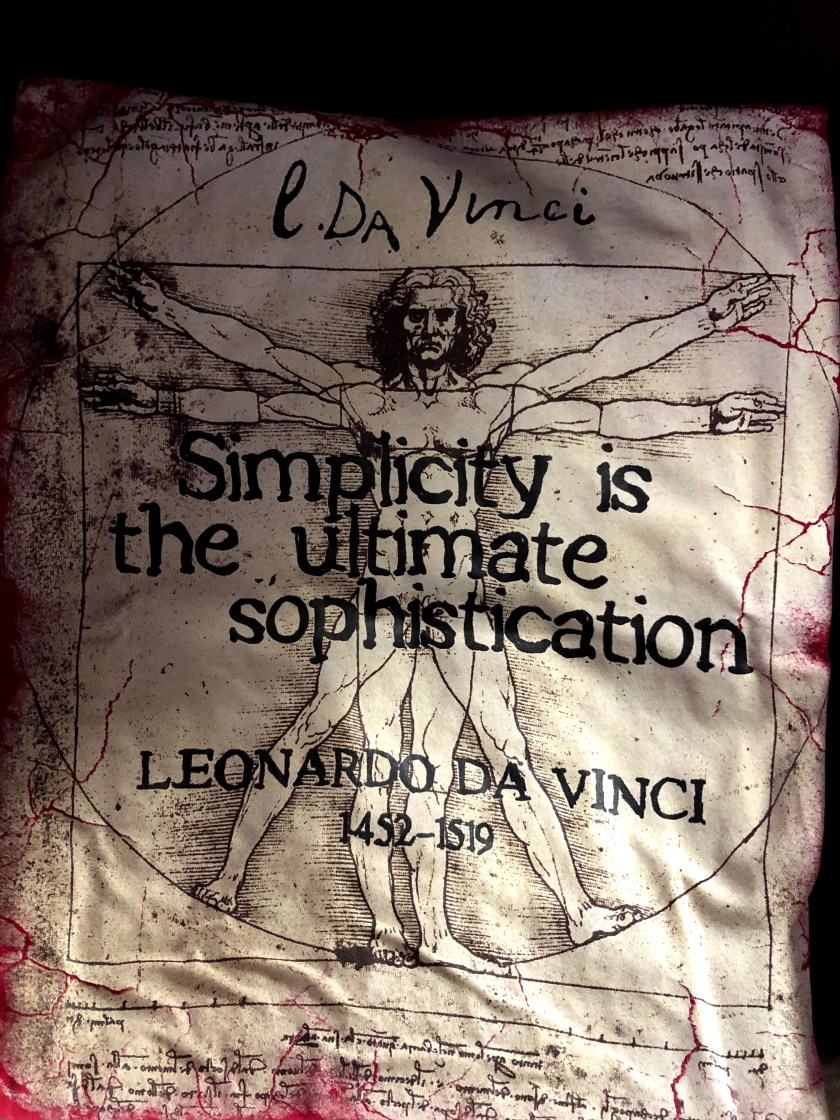
The husband was wearing a red t-shirt that had Leonardo Da Vinci’s drawing on it, that said, Simplicity is the ultimate Sophistication.

He was particularly fond of the t-shirt, especially as he was reading the biography of the great man.

img_4057

“Be like Leonardo Da Vinci guys. Be simple and eh… persistent.”, I said.

“Oh! I don’t know about that! Did you know about Leonardo Da Vinci’s horse? “, said the husband. He was reading the biography of Leonardo Da Vinci by Walter Isaacson, which is to say we almost read it. The book is a lengthy one, and as he made his way through it, he shared tidbits of things that fascinated him.

Time has probably been kind to the memory of Leonardo Da Vinci. Most of us only seem to be remember his genius in art, his legendary stature as a polymath, he said. The husband chuckled as he read and told us about Walter Isaacson’s portrayal of him – a tempestuous man who often did not complete the commissions given to him. Leonardo Da Vinci’s horse is an excellent example.

He then went on to relate the tale to much mirth and chuckling from the children. Apparently, what was commissioned to him was to build an epic statue of the Duke’s son riding a horse. He then went off to live on a farm, to study horses. The farm life yielded a treatise – an unpublished book, on different kinds of horses, equine surgeries to understand horse anatomy etc. He had originally planned to create a statue of a rearing horse.

This is an image that is much popular in the art forms at Italy, I remembered. The raw power of a horse rearing up on its hind legs is both attractive and magnetic. I am not sure how riders feel when they are about to be bucked off, but it makes for good Art. The prince would have to look brave while clinging onto dear life.

Study_for_the_Sforza_Monument
Abandoned Design. Image Courtesy: Public Domain, https://commons.wikimedia.org/w/index.php?curid=59580

Anyway, after a few years studying horses, their physiology, their movements etc, he started developing models for his statue. Clay, lead and bronze made its way from the armies to Da Vinci for his great statue. Then, he figured that the greatest statue of the magnitude he had in mind would not be supported by the hind legs structurally, and he went on to make it a standing horse. The prince riding the horse resplendently was forgotten!

These things took time, but it did not seem to perturb him. His sponsors may have been antsy, the bronze supplies may have been running low, the armies getting fidgety with not having enough new armor, but that was their problem, seemed to be his opinion.

In time, a large clay model of a beautiful horse may its way for the Duke’s inspection. The model won Da Vinci much critical acclaim. It truly was beautiful. If the Duke was slightly upset about not seeing his son on the horse, he did not show it. The royalty raise their children well.

Soon, war broke out, and no longer could his rich patron commission bronze and lead to be diverted to the most magnificent horse statue of all time. The clay model was put up in Milan, and was used as target practice by the young lads joining the army.

“But isn’t there a big horse in Milan or Florence? Da Vinci’s horse? I remember seeing a picture somewhere.” said I.

“Yes, but that was not done by him. Years later, somebody else finished it. “, said the husband.

By now, we were all laughing.

“What is remarkable is his insatiable curiosity and creativity however, and though he went off down rabbit holes, it was from a deep motivation to understand the world around him “, said the husband.

Read also : Gates Notes on Leonardo Da Vinci

“These days it is so easy to take a picture of a horse, model it, and run a simulation for structural evaluations. We sometimes forget how hard studying movement must have been!” I said, remembering the essay by Oliver Sacks on the Elephant’s Gait, in the book, Everything in its Place.

everything_place

He writes about how more than a century ago, Etienne-Jules Marey & Eadward Muybridge pioneered the study of animals running using 24 cameras along a track where the shutter would be tripped by the horses themselves as they galloped past to capture the movements of the horse as they raced.

Persistence comes in various forms, we all agreed. Muybridge and Marey were examples in a long list of people for whom a problem was intriguing enough to delve deeper and deeper into things that may or may not yield results.

But we never know the breakthroughs possible, and how things will change. That is why I am vary of futurists. A few centuries ago, to study the muscles straining for a horse running, one had to have an almost eidetic memory, along with a decent understanding of anatomy.

Today, photography has come so far as to allow us to snap a thousand pictures, take slow motion videos, and analyze everything from a butterfly flutter to the swift flying of hummingbirds. People are still extraordinarily creative with photography, and as long as we retain curiosity and creativity, I suppose we shall thrive.


The Art of Breathing

A colleague caught me mid breath one day. It was one of those days that butterflies would have looked on me with mixed emotions.

On the one hand with pride: When did this caterpillar learn to flit like this?

On the other hand with amused tolerance: The half-wit seems to be forgetting the sweet joy of collecting nectar amidst pretty bright flowers, with all the fast paced flitting. Forfeiting the sweet thing about flitting – tut tut!  Flutter tutter utter nutter! (I am not high up on the poems caterpillars learn to sing about when still creepy crawlies; and the butterfly metaphor only goes so far!)

Anyway, it was one of the many days in which I flitted about the old work spot tasking, multi-tasking, sub-tasking, reminding others about their tasking, setting reminders for my own tasks and so on. Thoroughly immersed in my second self that Mary Oliver so succinctly calls the Social Self…yes, it was one of those days.

Mary Oliver’s, Upstream, is a book of many marvelous essays.  The essay, Of Power and Time, talks about the three selves in many of us:

•The Child Self

•The Social Self &

•The Eternal Self.
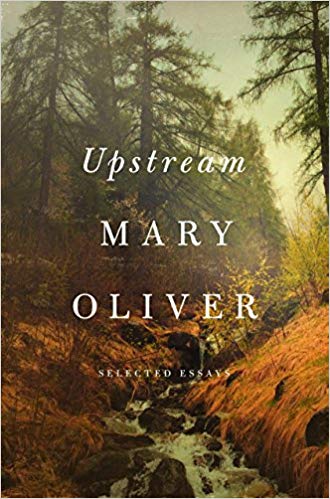
 

upstream

Though in the essay, Mary Oliver, refers to the Eternal Self as the artistic self, I like to interpret it as the Creative self.

• The Child Self is in us always, it never really leaves us.

• The second self is the social self. This is the do-er, the list maker, the planner, the executer.

• Then, there is the third self: the creative self, the dreamer, the wanderer.

T’was during one of these trying days that I remembered the deep breath technique my Yoga teachers had tried to teach me about. Take deep breaths, and concentrate on it filling your stomach, feel it coming in and out of your nostrils and so on. So, I started my deep breaths as I was walking from one meeting to another. Deep breath, exhale, deep breath, exhale and so on. I had thought no one watched, but one colleague caught me, and grinned. “That should be your GIF you know?” he said.

I nodded sheepishly, and went back to my brand of breath-less flitting within minutes.

Later that week-end I ran into this beautiful children’s book in the library. A book that was just waiting to be written. A beautiful capture of all the different types of breath, Alphabreaths 

Written by : Christopher Willard (a clinical psychologist) & Rechtschaffen MA, Daniel (a counselor)

Illustrated by:  Clifton-Brown


The book is a lovely read urging us to Breathe like a Dolphin taking a dive, or our favorite one, The Ninja Breath – silently and slowly. The illustrations too make for a marvelously relaxing read. Please check out their Youtube clip : here


Mindful breathing and Yoga are excellent concepts to teach the children, and I am always in awe of those who can take complex concepts and make them palatable for the consumption of young and old alike.

If you happen to come home and find the son and I swimming like dolphins or getting ready for a Star Trek mission on the floor while Yoga-ing along with the Cosmic Kids Yoga series by Jaime Amor , do not be alarmed. Her yoga videos are appealing and fun. If, along the way, we do something to calm ourselves down – then great, else, we have had a great time.

There are so many aspects to the Philosophy of Being (I am amused it has such a strictly medical sounding name: Ontology)

Ontology is the branch of metaphysics dealing with the nature of being, and reading the Wikipedia page itself boggles my simple mind (A post on the Study of Philosophy is sitting up on its hind legs and begging to be written). Maybe, what is required is a Ninja Training on Ontology. Excerpt from the wiki page:

Such an understanding of ontological categories, however, is merely taxonomic, classificatory. Aristotle’s categories are the ways in which a being may be addressed simply as a being, such as:[9]

  • what it is (its ‘whatness’, quiddity, haecceity or essence)
  • how it is (its ‘howness’ or qualitativeness)
  • how much it is (quantitativeness)
  • where it is (its relatedness to other beings)

*** Taking a Y for Yawning Breath before a Z for zzzz breath about now ****
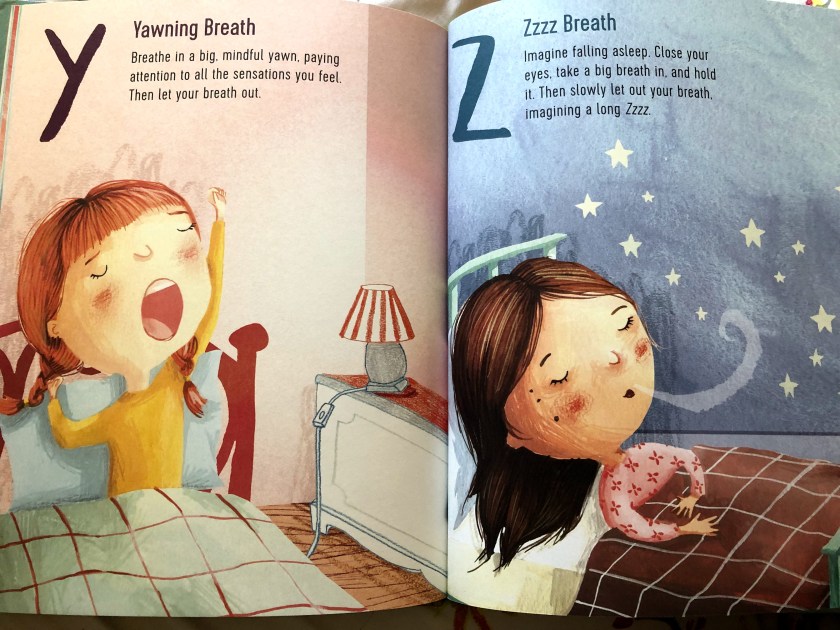
img_4049

Keeping ontological explanations aside, if The Nature of Being comes down to simple techniques of breath, fluidity and movement, it makes the simplicity behind it all brilliant.

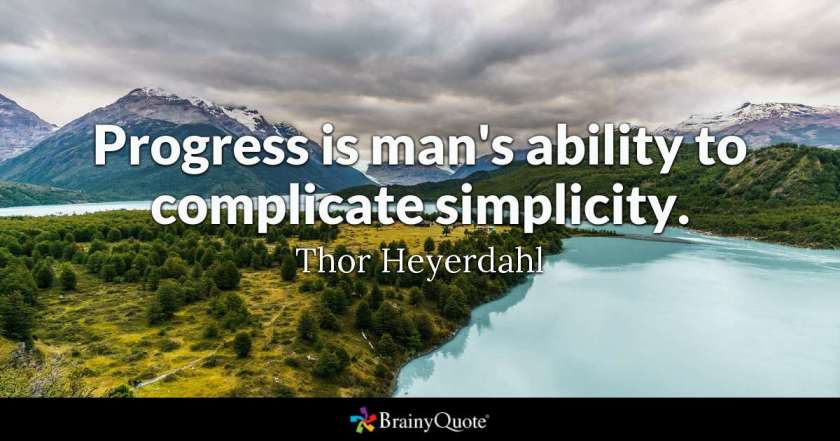
It was one of those ‘Simple is brilliant’ types of  quotes that I went looking for. I know many brilliant blokes and blokees have said marvelous things about simplicity -I know old Leonardo Da Vinci said something about it, so did old man, Einstein. In any case, looking for one of those made me fumble on this one by Norwegian explorer, Thor Heyerdahl

From Wikipedia: Thor Heyerdahl became notable for his Kon-Tiki expedition in 1947, in which he sailed 8,000 km (5,000 mi) across the Pacific Ocean in a hand-built raft from South America to the Tuamotu Islands. The expedition was designed to demonstrate that ancient people could have made long sea voyages, creating contacts between separate cultures.
thorheyerdahl1-2x


Continue reading “The Art of Breathing”
Sketching Freedom

It fell to the teenaged daughter to keep her little brother and nephew in line during our forays into the forest. While they generally listened to her, they also enjoyed pulling her leg. Smarty pants that she is with me, it is sweet indeed to see her stumped by her little brothers. One such time when she was speechless, she said something wise and insightful. I looked at her with awe – “So, you finally got around to reading Marcus Aurelius’ Meditations I see!” I said beaming. Pride shone through my pores though I tried my best not to show it.

“Nope – still boring! Siri told me.” said she and laughed at my expression.

“Confucius, Buddha,  Marcus Aurelius, and a thousand other philosophers in your Kindle, and you go for Siri?”

I shook my head and went off to do some philosophizing of my own. The walking philosopher if ever there was one. I walked into the sunset philosophizing, as I said.

Sunsets are beautiful things anywhere – enjoy them with a rustic feel, and they can be few things more poetic or romantic. That evening’s sunset had been particularly fruitful – it isn’t everyday that one gets to see a dozen peacocks take flight into the horizon, witness the chirp-filled fooling around of parrots, cuckoos and at least a dozen different kinds of birds, and encounter the folly of frogs skipping and narrowly avoiding one’s feet.

I traipsed indoors, happy with life, still rattling on about the beautiful image of the peacocks and parrots taking flight together in the evening light. “I wish I could be a bird sometimes! So Free!” I said, and walked straight into the trap.

“What is Freedom for you Amma?” said the daughter. She was sitting on the bed, looking happy and sketching.

“Well…errmm, eh?” After this coherent response, I decided something more was warranted and fumbled a bit more. ” Well…umm…it is the ability to be able to live without fear I suppose. ”

“So, is a free country a place where people aren’t scared?”

I paused – my answers were shaky. Why did I think birds were free? Because they could take to the skies when they wished? But they also take flight when startled or scared. Hmm. I have never been one of those lawyer types who could cover all angles, and espouse something that if examined from all angles will hold water. This needed thought.

So, I did the next best thing, and reached into the recesses of my teenage brain. I remember a song we used to sing at morning assembly in school, and a particular set of phrases that I liked at the time without fully realizing the impact of it all. It went something like this:
Blah Blah Blah-dee-blah
Freedom from Want & Fear
Freedom of Worship
Freedom of Speech & Thought
Blah-Blah-Blah

That was it. The husband said – “Hmm – good answer!” with the tone of one who wished he had thought of the answer himself.

Pretty soon, the discussion on Freedom took on multiple angles, and the whole family was there weighing in with their take on the concept of Freedom.

Is Freedom of Choice a thing?
What of the rules and laws required for a free society?
What about Freedom to Live? Is Immortality a worthy goal then? If so, is the opposite a freedom as well?
Freedom to Dream? Is there a limit on one’s dreams?

I remembered Trevor Noah’s narrative in Born a Crime on dreams,

“We tell people to follow their dreams, but you can only dream of what you can imagine, and, depending on where you come from, your imagination can be quite limited.”

Born_a_Crime_by_Trevor_Noah_(book_cover).jpg

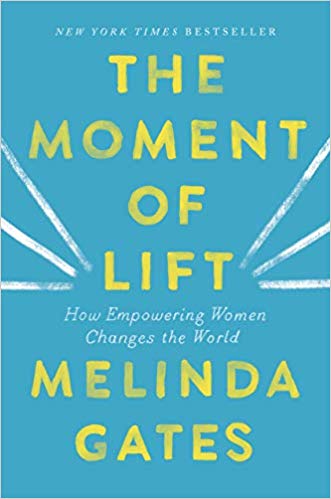
The concept of our Imaginations being limited by our circumstances is an interesting and clairvoyant one. It got us discussing the dreams of women in far flung places like the toothless old lady we had met earlier that evening – what were her dreams for her life? In her book, Moment of Lift, Melinda Gates gives us a sneak peek into the lives of hard working women struggling in remote places. What were their dreams and ambitions? Do our dreams all follow Maslow’s triangle and what then for those who have reached the zenith – is there more at the end of it.

moment_of_lift


The daughter continued sketching looking strangely amused by the heated and fast pace at which Freedoms were galloping in the laid back villages of South India. It seemed to be the only thing galloping at the moment.

“So why do you ask about Freedoms my dear?” I asked.

“Oh, I was thinking of drawing a girl who was free, and I kept imagining a happy one. But free is not always happy, is it?!” said she.

I looked around at the serious faces of the gathered folks and burst out laughing. “Really! Gotten us arguing on freedom to dream and imaginations and the Lord knows what else. You sketched us all having a good go I suppose – Well, my dear, what did Wise Siri tell you that Freedom was?” I said

She laughed raucously, and swished her long hair freely.

“Show us what you’ve got and we’ll see which face looks Free!” I picked two random ones from the 5 or 6 she showed us.

Which one looks free?


Galactic Plumes

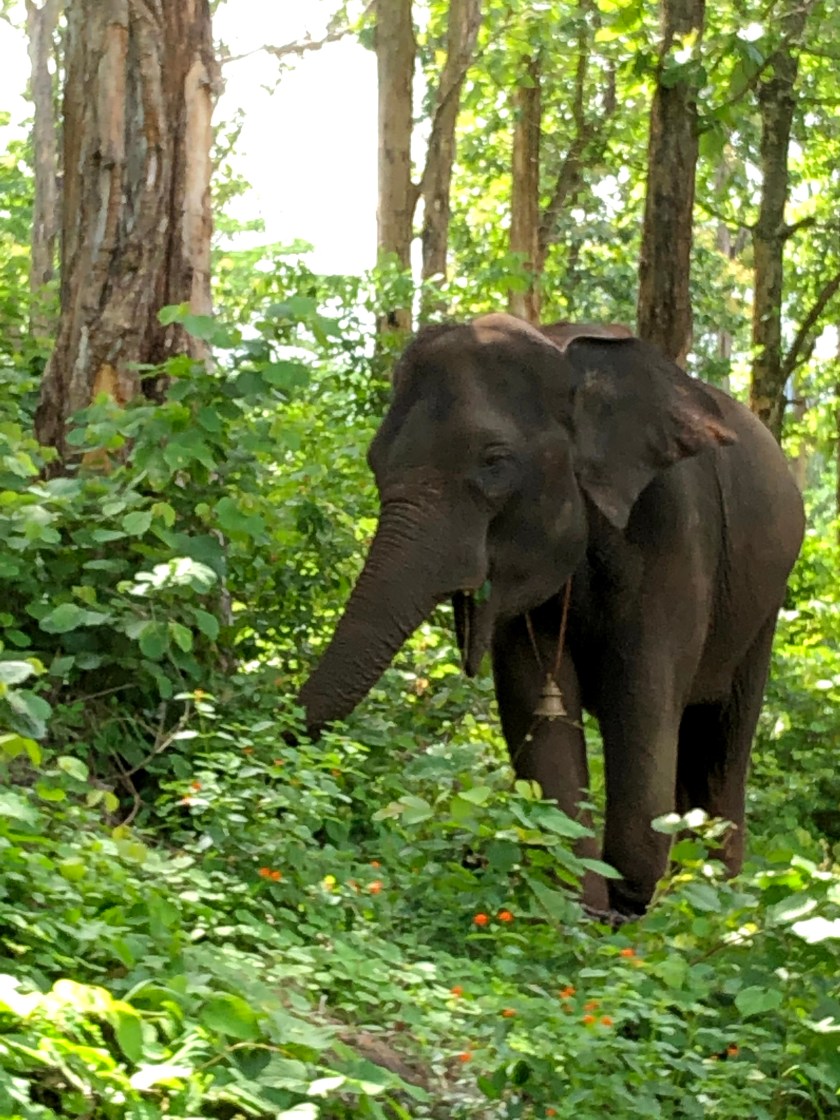
I had been mooning about the fields outside in the village where we stayed near Topslip National Forest. People told me to be careful about venturing out far – “There are Elephants nearby, and they love the fields. “, they said emphasizing the word, Elephants. My eyes lit up. The villagers exchanged looks that doubted my sanity and hurried on, “It isn’t Good seeing Elephants in the fields – you never know what they will do. If you hear fire crackers in the distance, come straight back here!” said one toothless fairy godmother, and her husband (I think) nodded in agreement vigorously.

img_3588

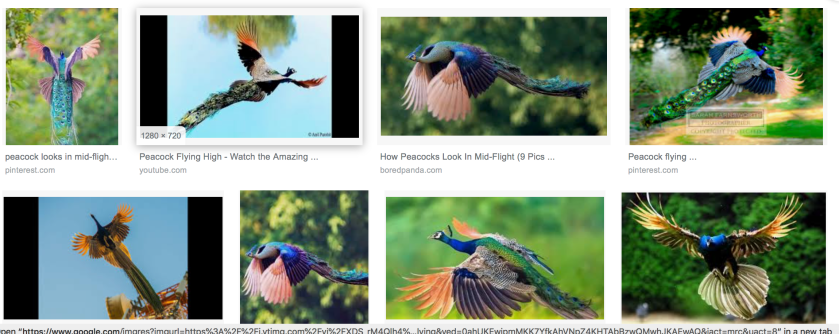
Off we went then, sauntering through the fields, listening to the loud orchestra of birds, crickets and frogs, accompanying the beautiful colors that nature was setting forth for us to see. It is magical indeed to see a half dozen peacocks take flight into the sunset. By the time, we fumbled for the phones they were gone, and I was glad I did not waste those precious moments of seeing them start off awkwardly and then gain elegance in flight by trying to get a picture. I have it in my mind’s eye, along with the indescribable moment of feeling your heart soar with the peacocks’ trajectory.

Screen Shot 2019-08-16 at 9.52.43 AM.png

Peacocks have long feathers, and while they know how to fan them out and preen in front of peahens looking splendid in the process; when they fly, it looks like it can feel like long hair feels to women.

Gather your tresses,
Of plume and multi-colored beauty
Tuck them in,
Letting it stream behind you elegantly while
Trying not to let it look messy
And all the rest of that.

It was then in the distance that we heard firecrackers go off in the distance. I don’t know about you, but this is the sort of thing that holds mystique. It is what inspired my Mother’s Day in the Jungle tale. Trumpy elephant going off to Farmer Hasalot’s farm – there is such an element of thrill and romantic mysticism to this kind of thing, though I think the elephants and farmers in question disagree.

Screen Shot 2019-08-23 at 10.06.10 AM

I spent dusk in a similar fashion enjoying the fading sunlight, the rising moon, the fields, the clouds, the village, the children, the adults and creatures of beautiful Earth. Every now and then, crackers went off in the distance – elephants in the distance we whispered. Though, why we were whispering we had no idea. Dusk seems to call for these things. A laid back village in South India tucked away in the recesses of the Western Ghats with all the fascination of the bucolic. An occasional rumble of a vehicle is all there was to remind us of civilization, corporates, power tussles, wars, micro/ macro economics, nuclear heavy-lifts, and motives of profit.

Post dinner, I traipsed indoors, happy with life, still rattling on about the beautiful image of the peacocks taking flight together in the evening light. We stayed chatting happily into the night (Part 2)

It was well past midnight when the electricity went out, and the husband said, “Outside now! Completely dark – yes!”

Off we went, self carrying the son piggy-back to see the stars in all its glory outside. With the electricity gone, it was pitch black outside.
Oh!
My foot!
Not there.
Ouch!

We bumped into one another spectacularly and I tripped on a chair outside in the verandah, carrying the little fellow on my back. Both of us went crashing down, self trying to save the poor fellow from being dropped from my back. One splendid moment later, I truly saw what ‘seeing stars’ meant.

The pair of us dragged ourselves off our feet and took our eyes skyward. The light pollution we have unleashed on our planet means that there are very few places in the world that humanity can stand and gaze at the sheer immensity of the universe in which we live. On an average dark-ish day, we can see about 3000 stars, on a day like this surrounded by mountains, forests and fields for miles around us, we could see tens of thousands of them lighting up entire bands of the sky with their luminance. The stars and galaxies are always there, and maybe because of this very permanence, it is seldom appreciated.

Standing there in the surrounding darkness with people I love, I felt light-headed. There we were, standing on an Earth that was spinning incredibly fast in its journey around the sun; the sun was swirling around the Milky Way galaxy; and the galaxy itself was spinning and whirling away into vaster expanses. Carrying us all: our ethereal thoughts, wishes and desires; and our solid physical selves on a solid planet.

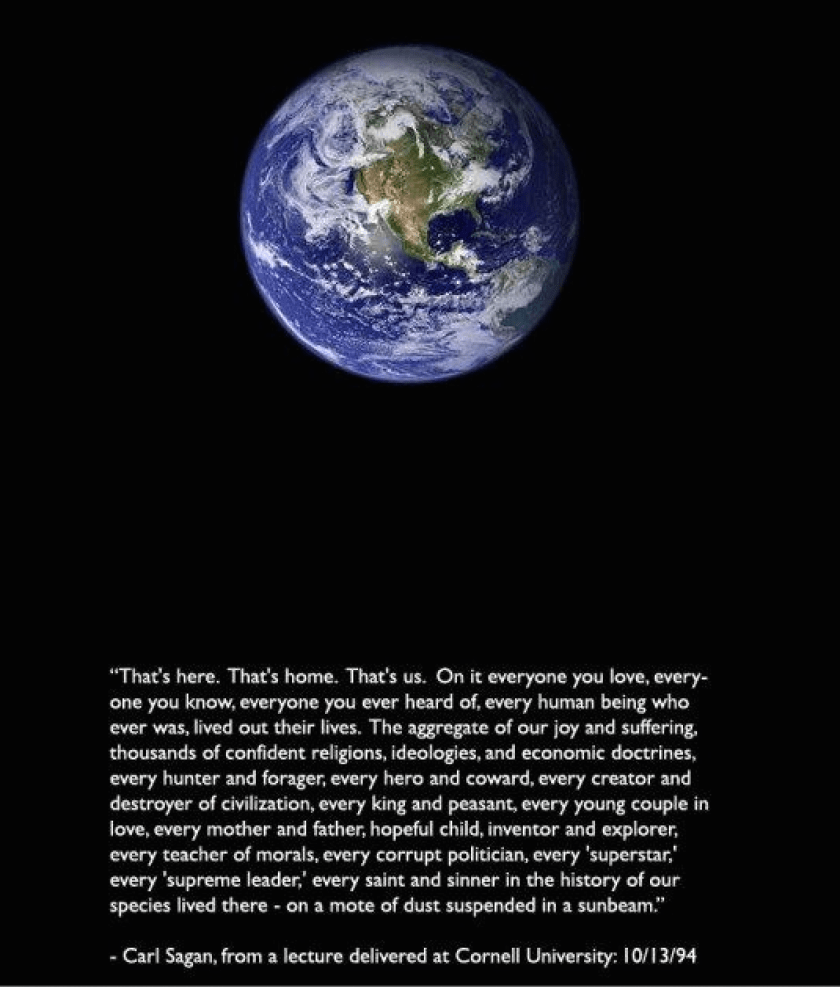
The galaxy tucking its star-studded plumes behind it gracefully, and taking flight with all its organic and inorganic components streaming gracefully along its path. Huge balls of gas and flames hurtling through space, and some spots in this beautiful expanse sanguine enough to cool down for a spot of life to flourish. #The Pale Blue Dot.

pale_blue_dot

The beautiful image of the peacocks taking flight earlier that evening came to me, and in that moment, the galaxies above looked like peacocks taking flight into horizons unknown.

Do the dreams of galaxies have limits? Do they have purposes?

Thinking back on that beautiful spin through the gathering darkness, I am reminded of this quote by Ursula K Le Guin:
“Things don’t have purposes, as if the universe were a machine, where every part has a useful function. What’s the function of a galaxy? I don’t know if our life has a purpose and I don’t see that it matters. What does matter is that we’re a part. Like a thread in a cloth or a grass-blade in a field. It is and we are. What we do is like wind blowing on the grass.”