The Storms of Vincent

Regular readers know that I am a pluviophile (one who loves the rain). On my recent visit to India, I was out walking around the apartment complex our family lived in one night, and found myself caught in the most brilliant and relentless rain they’d had in months apparently. 

I was delighted. 

rain

I was on a late night phone call to the family back in the US, and I rushed to the building in the center taking refuge there and looking stupendously happy for someone who had no idea how to get back home in the rain, or if the door would be open for me when I did get back. None of that mattered just then. Living in the present and all that. I poked my tongue out to catch a few raindrops.

“Hello!” said a neighbor, and I gulped feeling foolish. She smiled and I smiled back sheepishly, hoping she hadn’t seen. 

“I don’t think this is going to stop just yet. I am just going to run for it. “ she said and gave me one of her dazzling smiles, and plopped off through the rain. 

I stood transfixed by the pouring sheets of rain. It would have definitely been classified as ‘a storm’ in California.  Lightning lit up the skies, and thunder rumbled. It was beautiful.

I don’t know how long I stood there gawking like that, but soon I realized that the downpour was not stopping any time soon, And it was close to midnight. Unless I wanted to spend the whole night outside, I would have to run through the rain. So I did. I splashed into the house – luckily the daughter was still awake, chatting with her friends on the phone and she opened the door. She gave me a disapproving cluck and said “Oh my gosh – let me get you a towel.”

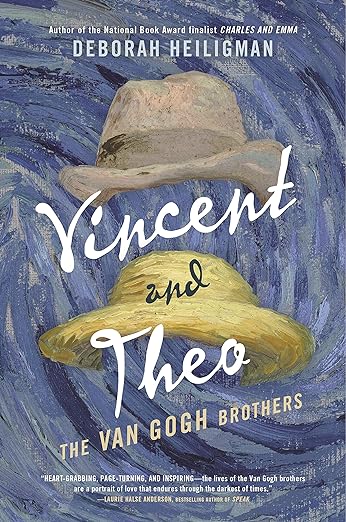
As I watched the rain pour itself out, the little rivulets of water sliding down the building walls, and the flashes of lightning illuminating the cityscape every now and then, I found I could not sleep and picked up the Vincent and Theo book by my bedside, and flipped to the part where Vincent likes painting storms.

vincent_theo

Excerpt:

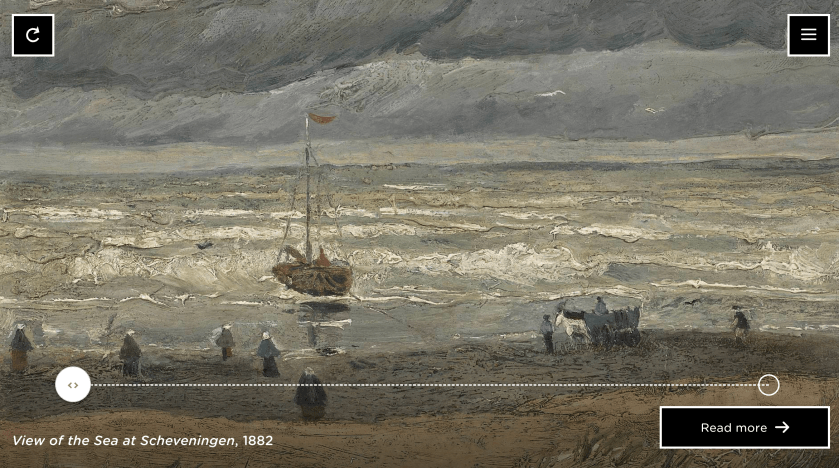
It’s been stormy and stormily beautiful to Vincent in Scheveningen lately, and into the squalls he goes. He is just starting to paint with oil and is not used to them yet, but he takes oil paints into the storm to paint the beach, the waves crashing one after the other, the wind blowing, the sea the color of dirty dishwater. He makes one of his first oil paintings, View of the Sea at Scheveningen, with a fishing boat and several figures on the beach. The wind is fierce, kicking up the sand. Sand sticks to the thick, wet paint.

Vincent loves capturing the turbulence of a storm. “There’s something infinite about painting”, he tells his brother. “I can’t quite explain – but especially for expressing a mood, it’s a joy.”

A few days later, on a quieter day, he sketches the beach. Sending the sketch to Theo, he describes a “Blond, soft effect and in the woods a more somber, serious mood. I’m glad that both of these exist in life.”

Wild and somber. Room for both. Room for all.

https://ontrafel.vangogh.nl/en/story/167/traces-of-a-nasty-little-storm

Please check out the View of the Sea painting and further details here

Screenshot 2023-09-25 at 2.35.11 PM

Vincent’s life was a stormy one too. He was not an easy person to live with and this caused many rows with his family, though he was intensely dedicated to all of them: his parents, siblings (especially Theo), uncles etc.

I looked out of the window again. We all live through the storms in our lives. But, the good thing is that no storm lasts forever. Not all living beings would have the luxury of drifting off to sleep like that, and that made me very grateful for a warm bed and dry clothes.

“There is peace even in the storm”

― Vincent van Gogh, The Letters of Vincent van Gogh

raindrops

The Joy of Effort – A Sense of the Infinite?

I was reading the book, Vincent and Theo – the Van Gogh Brothers by Deborah Heiligman. There are many aspects of the book that appeal to me. The narrative style, short chapters, clear language, not withstanding, it also touches upon difficult temperaments and the strain on relationships, Vincent van Gogh’s mental health, and his subsequent descent that led to the accident of cutting his ear off. 

vincent_theo

To Vincent van Gogh, portrait painting became an almost urgent need to master – just before his spiral towards insanity started. Uncle Cent, after whom he was named, was the closest uncle to him, though he was disappointed in Vincent, and left him with no legacy or inheritance. He left it all to his brother, Theo, instead. Still it moved Vincent at the time. He was in the process of prolific creation, and thoughts of mortality made him think of portrait painting with a sense of urgency.

This is a self portrait of Vincent van Gogh made in 1887. This portrait is on display in the Rijksmuseum in Amsterdam.

Screenshot 2023-09-18 at 10.43.48 PM

“Uncle Cents death makes him think more than ever about mortality – and immortality. Maybe there is an afterlife, maybe not. But if he paints someone well, that person is alive forever.

In the time he will spend in Arles – 444 days- he’ll make two hundred paintings and one hundred drawings, a huge number for an artist. He’ll paint landscapes, still lifes, scenes of cafes at night, furniture, rooms, flowering trees, flowers-he is about to begin painting his favorite again, sunflowers. But painting portraits is the thing that moves him most deeply, that gives him “a sense of the infinite”.”

I put the book down and thought about the meaning of effort in our existence. For many artists art gives a sense of meaning. To capture the infinite as Vincent van Gogh says. 

What has happened to portrait painting as a venue since photography came in? Maybe, photographers tend to capture the infinite. 

I thought of all the different mediums slowly replaced by a quicker technology. 

  • Writing  & Editing – ChatGPT, Grammarly and ProWritingaid are all quickly gaining traction for this hobby. 
  • Painting – there are tools available to take any picture and make it look like a painting. You can even choose the style you’d like your photograph transformed into
  • Knitting & Embroidery – almost lost to mechanization and mass production 

While newer and quicker mediums are welcome, I wonder about the appeal of the slow and steady. After all, half the joy is in the effort. I know I enjoy mulling and aching over my words – whether it is a short article, a children’s book, a novella, short story, or larger book. But I do also enjoy using my laptop – the ease and speed far enhanced from the days of penning my thoughts in notebooks as I used to do. 

I am sure all of our tools will lead to different hobbies and pursuits – after all, human imagination can rarely remain idle. I only hope the newer ones provide as much satisfaction in the effort.

The Magic of Malgudi

Maybe it was the fact that we visited the home of R K Narayan after the opulence of the Mysore Palace, or the fact that while all of rural Karnataka seemed to have decided on Mysore Palace, nobody had thought of R K Narayan’s abode, but the author’s bungalow on a quiet residential street was like a little cocoon of quiet and peace. A lovely setting in which to imagine the most magical tales of small-town Malgudi.

It isn’t a humble abode – it is a beautiful house set in an upper middle class neighborhood. White and two-storeyed, it is a lovely home and while inside, I couldn’t help remembering his own notes on how he had acquired the piece of land on which it was built. 

rknarayan

Book: The Grandmother’s Tale – By R K Narayan.

Far away from the town center as it was then, the realtor had promised him that it would be the bustling center of town one day. He left his noisy abode in Vinayak Street, and moved to this one – with the railway tracks to one side, the lilting hills and the then empty lands stretching between the home and the Mysore Palace.

img_7457

With his characteristic wit, he wrote of his gardener, Annamalai, who helped maintain the land around his house. Annamalai, like most men of the soil, intuitively knew how to clean and maintain lands.

I stooped to look at the plants for a brief moment before entering the home and remembered Annamalai’s classification: “This is a poon-chedi” (flowering plant) and chuckled to myself. 

“If he liked a plant, he called it poon-chedi and allowed it to flourish. The ones he did not like, he called “poondu” (weed), and threw over the fence.”

  • R K Narayan –  The Grandmother’s Tale (Story: Annamalai)

Annamalai was no horticulturist but seems to have taken care of the great man’s lands well enough.

Inside the house, it was largely quiet and the lady who stood at the entrance was happy enough to receive us. She was diminutive, and oddly neither welcoming nor dismissive. She surveyed us as if mildly annoyed with herself for being interested in us. She sometimes followed us as we entered the household and read the quotes off the walls. When it was obvious that we were in awe, and really happy to be in the place where R K Narayan wrote his gentle tales of Malgudi, she turned into a hesitant hostess and urged us to explore the rest of the house too. “Go upstairs and see the bedrooms. That’s where he slept.” she said, and I had to resist chuckling. 

I wondered what the master literary giant would have to say about her. It would be an insightful description no doubt and one tinged with the gentility and charm that he saw humanity with. That much was certain. 

The thing is: going to this quiet house tucked away in a residential locality in Mysore was comforting, and I thanked the brother profusely for showing me this gentle giant’s house. 

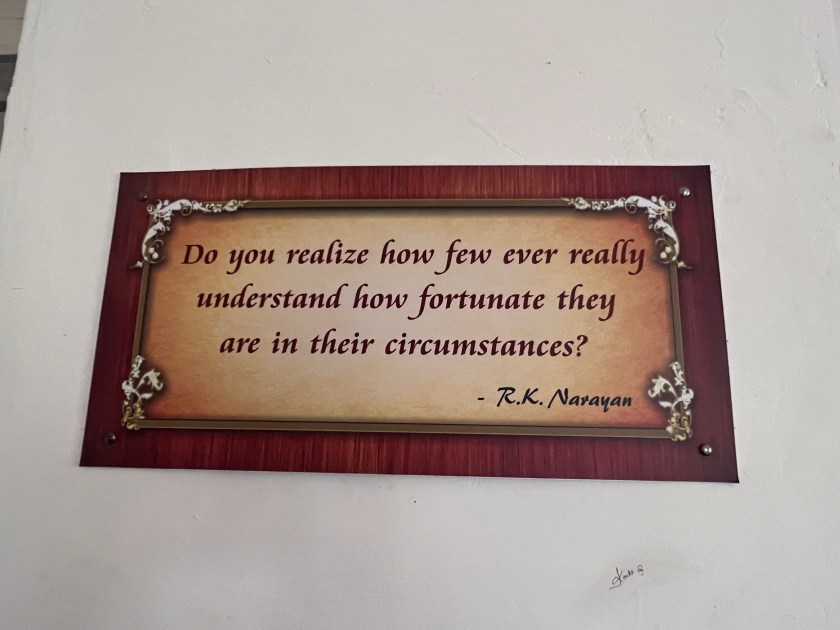
“Do you realise how few ever really understand how fortunate they are in their circumstances?”

– R K Narayan

img_7473

Rasipuram Krishnaswami Iyer Narayanaswami, the author and Rasipuram Krishnaswami Iyer Laxman, the cartoonist together enthralled the world with the spontaneity, humor and joy of Indian life. 

img_7468

Also read: 

A Rosely Abode

The rose bushes were blooming all summer and every time I saw the blossoms fade, I felt a pang. How did these bouquets in stores retain their freshness for that long while my blossoms faded so quickly? There was one white rose still unfaded before the next set of blooms came in, and I stopped to admire it. I’ve always loved white roses. I leaned over to pluck the beautiful blossom, picturing the peaceful looking flower in Buddha’s hands.

Peace. 

Such a nebulous quality in our lives, I mused. Also, something that one only appreciates wholly when threatened or is lost. Maybe turbulence is a necessary component of life in small doses so we appreciate sturdy peace when we do have it. 

roses

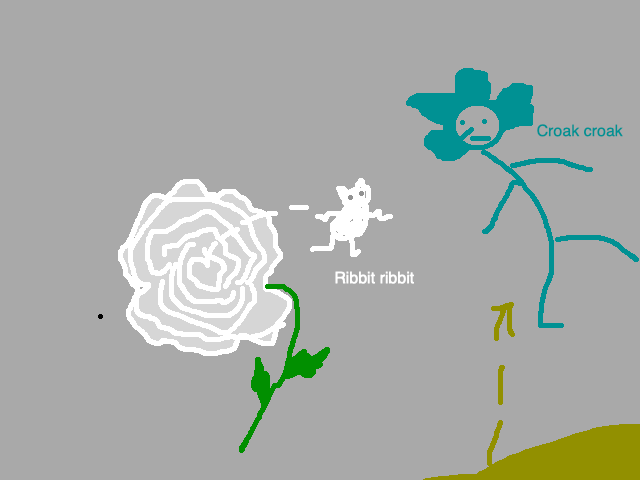
I peered into the rose and saw an inner petal that looked slightly less white than the surrounding petals. Maybe it had started to brown, I said to myself and reached in gingerly to pull the petal, when I gasped and leaped back. A small albino frog leaped out at me from within the white rose petals. 

I don’t know whether any of you have had albino frogs leap up at their faces, but if you haven’t, I can tell you it is quite the shock especially when you are expecting to loosen rose petals and have amphibians leaping at you instead.  It is like finding crocodiles in your bath-tub.

I gasped and tried regaining my composure. All thoughts of peace forgotten – the heart hammered against the ribcage as if on a great adventure, I willed it to stop. So much for courage – a frog is all it takes. Maybe it wasn’t a good thing. I thought forlorn, as irrational thoughts came flooding in. 

What is it with adrenaline and irrationality?

frogs_in_roses

Regardless of that first reaction, frogs are apparently omens of good luck, prosperity and fertility. 

Later that night, as I drifted off into sleep, I couldn’t help thinking of the little frog in the white rose that I had inadvertently disturbed. What a lovely abode? Drinking nectar, snuggling into the softest petals, and resting in the fragrance of a rose. Sometimes, the gifts of nature are marvelous. I wish I had the sense to take a photograph. White frogs are rare enough. White frogs in white roses must be even rarer. As for, white frogs leaping up at writers from within white roses: well, who says that nature doesn’t have a sense of humor?

I’ve always admired bees for having their feet dusted by a thousand blossoms as Ray Bradbury says:

bee_in_rose

‘Bees do have a smell, you know, and if they don’t they should, for their feet are dusted with spices from a million flowers.’

– Ray Bradbury

Rainbow Colored

I picked up two books on separate trips to the library and enjoyed reading them. The first was a book of fairy tales retold in the African diaspora: Crowned. A book of fairy tales is always enjoyable, and one that has a good smattering of classic fairy tales combined with some myths from the African heartlands are a joy. 

The children shown as the princesses and princes are the best. The costume designs and makeup are exemplary, as are the re-imaginings of their origins. Most books illustrate Cinderella and Snow White as fair-skinned princesses, and it is refreshing to see these pictures.

The second book was: The Dark Fantastic – By Ebony Elizabeth Thomas

Race and the Imagination from Harry Potter to the Hunger Games

The Dark Fantastic is a book of essays exploring the absence of color in fantasy. The author starts off the book with Vernon Dursley’s famous saying in Harry Potter and the Philosopher’s Stone: “There is no magic.”.

She then goes on to explain her upbringing in working-class Detroit in the 1970s. 

“The existential concerns of our family, neighbors, and city left little room for Neverlands, Middle-Earths, or Fantasias. In order to survive, I had to face reality. “

A few sentences on, though the author states:

“In the realm of the fantastic, I found meaning, safety, catharsis - and hope, Though it eluded me, I needed magic.”

I identified with this statement of needing magic. Humanity’s need for magic is evident in our myths and epics from thousands of years ago. 

  • Was there a flying carpet? A pushpak vimana?
  • Are there heavens and hells?

Yet, for thousands of years, we have told ourselves increasingly fantastical stories to keep our spirits alive, and our imaginations intact.

“I like nonsense. It wakes up the brain cells. Fantasy is a necessary ingredient in living.” Dr Seuss. 

A common thread emerging from lack of diversity in books, is that children don’t see enough of themselves in the books. I lay the books down musing on this. I, like many in my generation, grew up surrounded by the fairy tales of snowy white princesses, and the fantasy worlds of Enid Blyton. Yet, I don’t think I ever wondered whether I would be able to climb up the Magic Faraway Tree to have adventures, or swish away on the Wishing Chair to magical places.  The protagonists were all British children, but it did not seem to make the slightest difference to a middle class brown skinned Indian child. Maybe I was just lucky that it never occurred to me. But did it occur to my friends? If it did, I am not sure we discussed it. 

That sort of limitation in thinking only came as we grew up and saw for ourselves the inequity of opportunities. I am grateful, of course, to see a book in which a child refers to their mother as ‘Amma’ as we do at home. (Why is my Hair Curly – by Lakshmi Iyer)

Or see that picnics can involve rotis and potato curry, and not just sandwiches. But I am more grateful for the reach of fairy tales. They provided a much-needed element of magic and hope. 

As children, the inhibitions of things like race, creed and color are not there. I fondly remember the picture drawn by the son in kindergarten when his teacher had told all children to have more colored people in their illustrations. He had drawn all their faces rainbow-colored 🙂 

Sword & Drumstick Warriors

As I watched the man-child and the child who yearns to be a man battle with their latest acquisition, I couldn’t help laughing. The pair of them had mysteriously disappeared at the Arts and Craft Fair and came back clutching a sword. A Sword! The son looked chuffed, and the father sheepish, but there was no denying that the sword would long play heroic roles in imaginating battles in the home

Some things just need to be. 

They were swishing themselves hoarse around the dinner table, when the daughter and I exchanged glances. Hers exasperated, mine indulgent.

“We should’ve bought two swords!” said the husband. He was brandishing a very seedy looking drumstick instead of a sword, while the son revelled in his sword. 

“I need shorts with belt buckles so I can stash the sword cover!”

“Scabbard.” I said.

“Huh?” he said with a nifty jump from the top of the sofa to the carpet beyond.

“That’s where you put the sword away – a scabbard.”

“What you need is a belt to hold up those pants – scrawny little fellow!” she turned towards me, “Why would you let this fellow buy a sword, as if he doesn’t jump and swish around enough!” she huffed.

sword-drumstick

I couldn’t help thinking of the book I’d read recently,  Bertie’s Guide to Life and Mothers – By Alexander McCall Smith.

It is a gentle book about some folks who live at 44 Scotland Street. Humorous and lilting – it makes for pleasant reading. I think the writing could’ve been crisper in parts and the book could’ve tied the plot-lines up a bit better. But I cannot deny that I enjoyed his portrayal of Bertie’s mother. Poor Bertie Pollock is gearing up for his 7th birthday, though he would like to gallop straight to his 18th, just so he could have his own life. What he wants more than anything else is a Swiss Army Knife, but Bertie’s mother is appalled at the violence inducing toys that boys these days play with, and instead gifts him with a UN Peacekeeping set & a figurine (not G.I.Joe, just Jo) instead. Poor Bertie is appalled.

Quote:

 "Will I get any presents?" he asked. Irene smiled. "Of course you will, Bertie."

"I'd like a Swiss Army penknife," he half- whispered. "Or a fishing rod."

Irene said nothing.

"Other boys have these things," Bertie pleaded. Irene pursed her lips. "Other boys? Do you mean Tofu?" 

Bertie nodded miserably.

"Well the less said about him the better," said Irene. She sighed. Why did men and little boys too-have to hanker after weapons when they already had their . . . She shook her head in exasperation. What was the point of all this effort if, after years of striving to protect Bertie from gender stereotypes, he came up with a request for a knife? It was a question of the number of chromosomes, she thought: therein lay the core of the problem.

Don’t we all know someone like that? Well intentioned, spouting psychological theories, and ensuring that their children’s choices are the most scientifically determined ones, only to find that they comically clash with the innate nature of the child in question.

I looked at the daughter who was obviously waiting for an answer. While I did agree with her, I told her, “Ah! Boys will be boys and a plastic sword does not a warrior make!”

“Yes! But it does a headache give!” said the smart-quipper.

Some people don’t need swords to slash.


The Humanity of Humans

It has been a month since we visited Banff in Canada. On the flight back, my mind buzzed with the possible posts to write about the place. 

The wonderful conversation we had with one of the locals in a coffee shop before we started off on our long drive to Jasper was one such. These are some of my favorite moments while traveling. Usually, we are on a tourist loop, and meet fellow tourists from different parts of the world, which is just as enjoyable. (The Elephant Keeper) But interacting with people who live and experience the very place that we go to, to make our magical memories is something else.

Living in a tourist attractive spot has its disadvantages. (We pay in terms of parking permits for instance. ) But it also has gifts galore. Knowing that what you get everyday is something people plan and take time out to enjoy is a gratitude pill hidden in plain sight. 

On those days when the routine banality of life throws us a particularly unstimulating day, it is marvelous to take an evening walk along a lake that people literally get on planes, trains and automobiles to get to. To know that within one drive over the week-end, we get to a world famous spot is mind-boggling even if we do take these things for granted a bit. 

That day, as we spoke to Jack in the coffee shop, we asked him what it was like living in Banff. He smiled, tentatively, wanting to be polite at first, but then went on to talk about how much he enjoys winter sports in the Canadian Rockies. One couldn’t help smiling listening to that thrill of adrenaline I am sure he feels as he skis down those steep mountains. You could hear the gush of the arctic winds in the rush of his voice. 

IMG_6497-COLLAGE

As our chat meandered, his wry sense of humor surfaced, and he asked us where we were from, and how we met etc. We told him about our arranged marriage and his reaction was as swift a time-travel capsule as ever there was. I was whisked twenty years into the past when our colleagues gawked at us the same way. He smiled and said what many showed us in their looks all those years ago. “Hmm…yet you folks seem to be alright!” 

The husband and I threw our heads back and laughed exchanging a quick look of understanding between us, while the children rolled their eyes. 

As we sat there, swapping stories, and the days of our lives, I was reminded of how the world is always trying to show us how we are different from one another, but really, we are no different from one another (trying to find the exact quote with little luck). The humanity of our being human is never more evident than in the simplest of things like enjoying a relaxed cup of coffee before starting the week-end.


Dinosaurian Thoughts

“You look excited!” said the children eyeing me suspiciously. I identified that wary look and chuckled. Usually it means an additional hike or a walk, or something done ‘together – as a family!’.

I could feel the eye-roll coming on.

As a teenager, the daughter has a reputation to maintain, and as her loyal side-kick, her brother is torn between wanting to humor his mother and learn how to become the cool teen. 

“Relax! I am just waiting to start a new book tonight. It is about the era of the dinosaurs!” I said with a grand sweep of my hands featuring the landscape that just a few million years ago could’ve been home to tyrannosauraus rexes or brontosauruses. 

“Looking at the animals here, my bet would be on the runts of the species!” said the husband.

“We do have the great descendants of the velociraptors here in plenty!” I said eyeing the birds in the riverbed.

That led to an interesting discussion on dinosaurs, and how the dinosaur bones could probably have been the inspiration behind the legends of dragons. While paleontology as a discipline of study and research may be relatively recent, digging and unearthing relics of the past isn’t and neither is human imagination. From there, we somehow landed up discussing the best designs for helmets and body armors while fighting dragons and dinosaurs, and had a good time anyway. 

dinosaur

Later that night, glad to have a night free of late night meetings, I swished away to sit by the window sill taking in the full moon rising outside and pondering on the lives of dinosaurs of long ago perceiving the moonlight, and the millions of years in which mammals have been fascinated by the same. 

It turns out the book I had in my hand was not one on dinosaurs but on the history of mammalian life from the shadows of the dinosaurs. Oh well!

Book: The Rise and Reign of the Mammals – A New History – From the Shadown of the Dinosaurs to Us

By Steve Brusatte (Author of BestSelling The Rise and Fall of the Dinosaurs)  

51zcbWeULeL

Honestly, book covers these days are the most illuminating ( award-winning, best selling, top researching, nominated for best selling lists!) 

Nevertheless, I had a quiet few moments reading before a call interrupted the quiet of the night, and I had to set the book aside. 

The Dinosaurs seem to have gone millions of years without needing any of these to live their quiet lives on Earth. 

Does anyone miss snail post?


The Egg That Got Back Up!

Every now and then, a children’s book arrives that makes one sit up and relish the simple genius of it. 

“After the Fall : how Humpty Dumpty got back up again” is one such. Written by Dan Santat, it went on to win the Booklegger Award.

humpty_dumpty

We all know Humpty Dumpty sat on a wall

We all know Humpty Dumpty had a great fall

But ….

Do We all know that all the king’s horses and all the king’s men 

Did put Humpty Dumpty together again?

The book starts off with the ‘Great Fall’ that poor Humpty Dumpty is famous for.

But something happened to the Humpty Dumpty who was put together again. He developed acrophobia (a fear of heights)

The illustration accompanying this is brilliant. Notice the cereal boxes in the bottom shelf? Bo-rings, Cardboard, Grown-Up Food, Bland 

humpty_dumpty_1

Compared to the all-so smile inducing Choco Duck, Rainbow Bites and Pirate Crunch occupying the higher shelves.

But one day, Humpty Dumpty is inspired – if not to fly himself, at least to design a paper plane that can fly like his dreams.

But accidents happen as Humpty Dumpty knows, and how Humpty Dumpty overcomes his fear of heights to morph into The Egg Who Got Back Up and realized far more than he had ever expected is a story that will leave you inspired and smiling.

humpty_dumpty_2

A sublime change, and a very relatable tale of living:  living with fear, and living with hope, and living with the faint possibility of overcoming our fears is what the book is all about. And isn’t that enough?

Isn’t that all we all yearn for in our lives?

That hope that we can overcome our own selves and go on to inspire ourselves beyond our wildest dreams?

humpty_dumpty_3

Navigating by the Starlight

Navigating by the Starlight – Listen on Spotify

Rest, nature , books, music, such is my idea of happiness.

– Leo Tolstoy

I sat looking out at the lake, with a book on life in the Oceans by Sylvia Earle in my hand. I was not exactly reading. That in itself was worth musing about: with a book in a quiet spot, but not reading. Usually I can zone into a book within seconds. It is a source of being teased in the home. But that day, I found thoughts fleeting, the mind elsewhere: it’s this pace of life, I told myself sagely. Not much time for nourish-ing and cherish-ing. I chuckled at that (I know! )

I had been on a brisk walk at the campsite a few hours from where we lived. The drive up there was relaxing in itself.  The long, solitary drive gave me the space to make a few phone calls, listen to some music and an audiobook. It was perfect. This kind of solitude is rarely available and I was determined to enjoy it.  

Where was I? Yes – sitting and doing nothing but taking deep breaths and looking lazily out at the lake in front of me. 

img_7039

The Eye of the Earth quote playing on my mind. Looking across the lake, I saw a bush of greenery that reflected so beautifully in the lake as so resemble a human eye. Some boys were skipping stones lazily across the lake, and faint music was heard elsewhere. 

Later that night, the skies opened up. At first the faint light did not reveal the nightly glory – the cosmic dance that plays out every night. But by 11 p.m., there was no escaping the stage of the heavens. In our heavily populated urban areas we rarely see this skies like that:  The Milky Way in all its glory. There was the international space station circling the Earth, and thousands and thousands of stars, with familiar shapes of the constellations that our ancestors mapped over the ages.

At one point, I had to walk from point A to point B, and found that I had lost my way amidst a thicket of trees. I felt a strange sense of unease – How did birds migrate by the starlight? I looked up, enthralled, my breath stolen from me in a gasp of wonder, but also acutely aware navigating by the stars is tougher than it looks.

I read a while ago, that birds align with the electromagnetic patterns of Earth and then use that to orient and navigate against the stars. From the magical birds who sense the Earth’s magnetic field for their migration journeys to the fish who are able to navigate by the position of the stars from deep under the ocean, we each have our own unique way of living. Of Life.

In Dr Oliver Sack’s book, Musicophilia, he says:

“Every act of perception, is to some degree an act of creation, and every act of memory is to some degree an act of imagination.”

Oliver Sacks, Musicophilia: La musique, le cerveau et nous

https://www.nytimes.com/1958/10/17/archives/study-finds-birds-guided-by-stars-migrating-flocks-are-led-by.html 

All this may be fine. But how was I to get back? My electromagnetism wasn’t helping, and the stars seemed to be twinkling and having their little joke up high in the skies. It is then I caught glimmer of the starlight reflected in the lake down below, and like a thirsty wildebeest pushes towards the water, did the same, urging the body to orient itself with the lake and the paths around it like I had done earlier during the day.

One day, I shall have to take lessons from the birds and learn to navigate by the stars instead. “Stop using the GPS while driving first!” said a little voice of truth, and I chuckled. Yes – baby steps. Driving first, and then flying.