👻🎃 I Am Hopeful Because 👻🎃

I sat on All Hallows Eve bathed in an orange glow, marking and judging entries for a literature contest. If ever there was a content pumpkin contest, there I was, readymade. It was quite an enjoyable task, and I sat quietly reading stories, poems and essays on the topic, “I Am Hopeful Because”. 

Throughout the evening, I waddled out of my desk to open the door and bellowed, “Who dared to ring the bell? Ho ho ho!”. I thought I was doing pretty well till the son asked me why Santa was ho-ho-ho-ing on Halloween. Oh well!

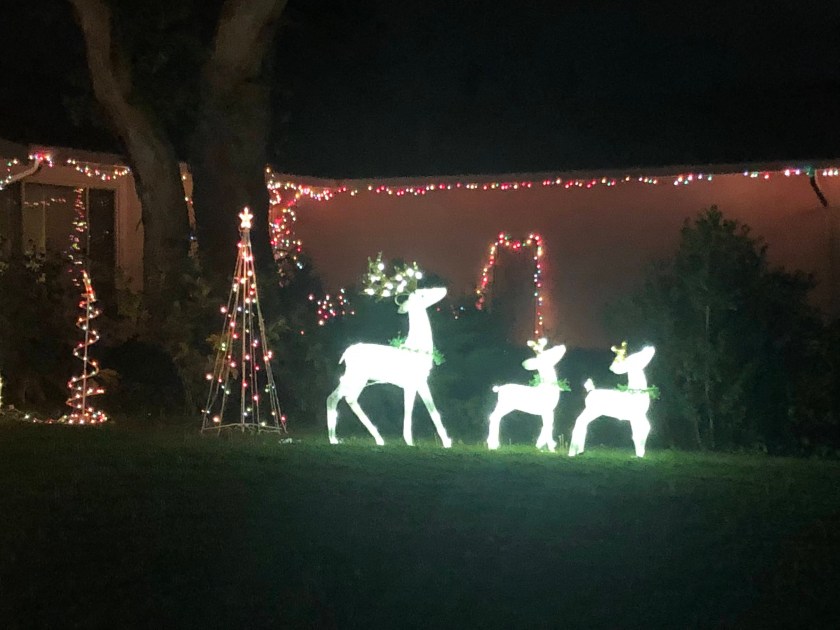
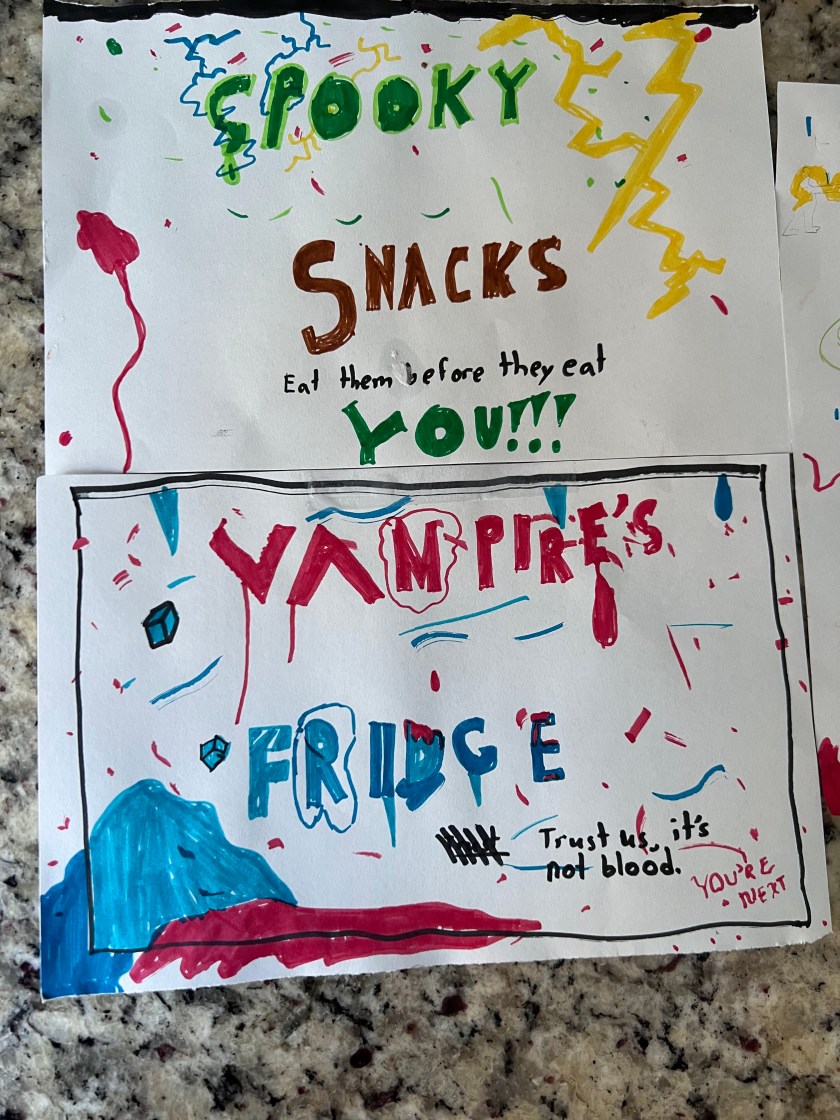
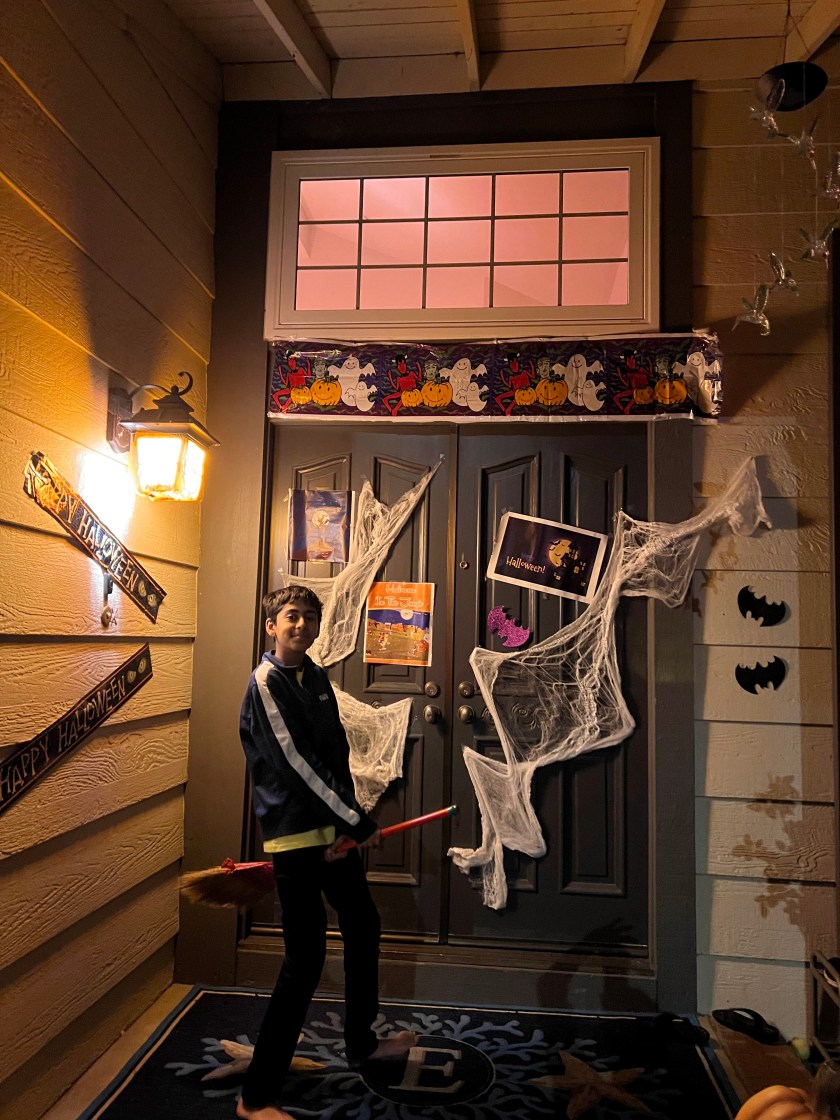
Halloween is one of my favorite American festivals.  The house was reasonably well decorated. Pretty soon, penguins, vampires, mermaids, peanut butter and jelly sandwiches all come knocking on the door despite the ominous sign by the door that read, “Knock if you dare!”.

img_8351

 The son and his friends had a roaring Candy Exchange Business going on the side I understood later. He came into the house looking flushed from the cold, and bursting with news. Apparently, he’d been able to auction a Kit-Kat for 2 Twix, a Ghirardelli white chocolate piece, and an M&M packet. He also had instituted a monopoly on all the Sour Patch Candy, and found himself bartering and trading like the fellows on the stock exchange. I smiled. 

“How was your evening?” he asked. It had been one of those rare Halloween evenings when I had stayed put inside the home instead of gallivanting with the revelers. I love the atmosphere of Halloween as regular readers know, but this time a minor biking accident had me sitting inside, while the Halloween revelers roamed the candy laden streets. They mapped best routes, best homes to hit for the best candies resulting in rounds of discussion. It was all marvelous.

img_8259

I did miss the magic of the halloween streets with moonlight filtering through the clouds, black cats slinking through the streets, raccoons wondering what all the fuss was about, and chattering children racing towards lit up porches for some Halloween candy. But it was also a surreal, beautiful evening. A reminder of the joys of winter evenings, of warmth drawing in as the evenings became colder. That first feeling of Hygge. 

I told him that I was hopeful because the evening was full of well-behaved children. The children all seemed to be so happy to receive a piece of candy, even though they all live in an economy and a community where far too much sugar is available for consumption. One or two of them even returned a couple of pieces of candy when they’d had a few more than they thought they wanted. 

The sweet honesty of these children in times when we are constantly reminded of our flaws and failures was refreshing, and the gentle interactions through the evening with adults and children alike, was very pleasant indeed.

halloween_ij

“We’re all mad here.”

– Lewis Carroll, Alice in Wonderland

☀️ Energy Sources 🗺️

The son and I were discussing this and that when we hit upon one of our favorite topics of discussion: energy sources. The fellow has been very happy that we now have a solar roof.

“And now – we generate more solar power than we use. Isn’t that awesome?!” he piped up as we were out on a walk one evening after a particularly hot October day. (I wondered if the solar energy could be bounced off our heads too, and that earned a weak chuckle and an eye-roll.) Of course, this led to an interesting discussion on energy sources and we got talking on the recent articles or books we’d read.

“There is one place where they take your steps and convert that into energy. Like you step on the floor and that becomes stored energy. Cool right?”

“Cool!” I agreed, and screwed up my face at the nearby freeway noise. “I am sure if we can just figure out a way to take all that wasted energy from all the fast and noisy cars on the freeway, and use it to power the cars behind them, that would be even better – you know get off gasoline altogether? ”

“They are already working on it somewhere. Life is so exciting in these energy fields!”. he said.

Later that night, he bellowed that he’d left me an interesting article to read on my bedside table on Energy Sources. 

August 2023 Issue of OYLA – Energy All Around Us- Generating Electricity from Dance Floors, JellyFish and more

#33 AUGUST 2023

If I haven’t raved about OYLA before, allow me to. The magazine is a gem of science and mathematical tidbits . I was enthralled by the article and read it all agog, exclaiming at the right intervals. It pleased the son.

  • A thoroughly fascinating article in which the different types of energy sources are briefly touched upon. Piezoelectricity – the technique of using our movements to power energy. 
  • The many ways in which sound vibrations can be turned into electricity (apparently a new generation of architects are working on powering skyscrapers powered with noise energy – so the hustle and bustle of the city, the blaring sirens, freeway noise everything is actually used to power the building – isn’t that brilliant?)
  • In another section, it says nanoantennas are more efficient than conventional solar cells and they have a ‘good chance of displacing conventional solar panels’.

All highly exciting possibilities. I was especially thrilled to read this bit about jellyfish and their green fluorescent proteins. 

Quote: (from the Bioelectricity section) 

“Some jellyfish glow in the dark. This is due to the green fluorescent proteins (GFP) that are present in their cells. Such an element may not need sunlight at all and could instead “feed” on bioluminescent radiation (like in fireflies) and ultimately they might be used in nanodevices.”

It must be wonderful being a jellyfish or a firefly. Were there some jellyfishes who glowed more than others, the same way some human beings are more energetic than others? 

Individual energy levels is a common topic of discussion in our household as we are surrounded by friends and family who seem to be made up of inexhaustible sources of energy and positivity. ‘How do they manage it?’ we say as we admire these folks, but it is something I’d love to gain an understanding about.

Would it make the difference between glowing, glowing less, or glowing more?

Also Read : Life’s Determinants

Source: August 2023 Issue of the OYLA Magazine. Article: Every Volt Counts 

\

25 years on?

On a whim one week-end night we watched the Kung Fu Panda – 3 movie. This movie, in my mind, was a stroke of genius with respect to the storyline. All three Kung Fu Panda movies are brilliant when it comes to storyline, characters and humour. But this one was sublime in the way it helped us understand why Oogway stood by his decision of choosing Po – the panda, to be the Dragon Warrior, when he accidentally fell out of the sky as the choice for Dragon Warrior was being made. 

  • The first movie: Po destined to be the Dragon Warrior
  • The second movie: Po, the Dragon Warrior’s, background – where he came from, what happened?
  • The third movie: explains why Oogway the turtle stood by his decision to choose Po as the Dragon Warrior.

In the third movie, a villain, Kai, is wrecking the spirit realm so he can come back and drink the Chi (life force) from the major characters. He manages to come back to the physical realm and is shocked to see that nobody remembers him, but many seem to remember his arch nemesis, Oogway the Turtle. Well, Kai had died 500 years ago – so it was quite obvious that people had forgotten him, but what we were discussing is not that people had forgotten Kai, but how Kai managed to find his way around at all. 

Screenshot 2023-10-24 at 4.16.05 PM

If someone were to fall asleep and wake up 25 years later, it would be hugely disconcerting. Think of all the things that have changed just in the past 25 years:

  • People now walk around with cell-phones – the equivalent of magic wands in fantasy stories these days. 25 years from now, people will wonder how folks in our generation ever got anything done without aid from these devices. We can’t seem to navigate to our destinations, talk to our dear ones,  or create images and thereby memories without our precious devices. 
  • The usage of the internet in the past 25 years. In many ways, our generation of software engineers crested the wave with the rising innovations in this space – search engines, email, chat, video conferencing, news channels, social media, streaming entertainment. If somebody went to sleep in 1990 and got up in 2025, it would be hugely disconcerting.
  • Rising economic fortunes mean that travel has become more achievable and adventures await more of us at every turn.
  • Reading has evolved – After maybe 500 years of only having the physical book, the Kindle paved the way for e-reading. The Internet opened doors for all types of reading: short bursts, medium posts, long articles. 
  • Entertainment – the kinds of entertainment itself has evolved so drastically. Streaming channels, live TV, YouTube videos, Twitch, online gaming
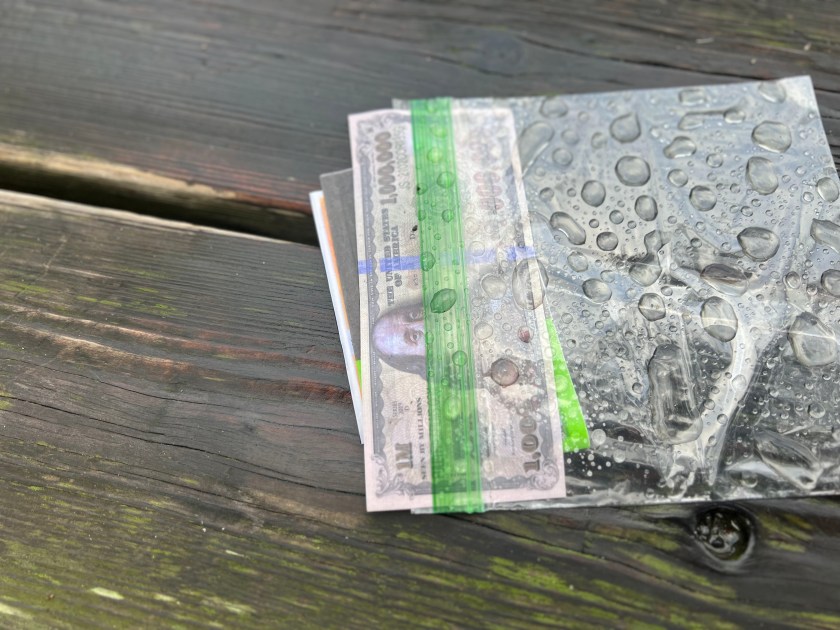
  • Payment methods: Where previously we needed access to banknotes as cash, we have gone to increasingly easier and secure methods of payment transactions. From high-end stores in New York to street vendors in rural India, the money language has evolved too.  

“Maybe human-beings are like frogs in water with respect to technology – slowly exposed to increasingly higher levels of complexity and we just adapted. Babies and children are truly amazing- imagine their learning curve!”, I said and we laughed.

Maybe Kai was going about it all wrong, we said after discussing some of this. Kai should’ve come back to Earth 500 years after Oogway had died and then, he’d have realized that nobody remembered Oogway either. More importantly, how did it matter whether anyone remembered you or not 500 years from now? You wouldn’t be here to know – you’d be partying in the spirit realm, wouldn’t you?

What are your guesses on how life would look 25 years from now?

Once Upon a Goat

The son and I stood by the river bed near our home once more gazing upon the goats in the riverbed. An endlessly fascinating pastime, we always return smiling and shaking our heads fondly at the kids and goats, and a little awe at the sheep dog whose job it is to herd them all.

75AA2498-E9FE-4C9F-B211-BFFB9F499459

One evening, we saw two dogs gaze into each others eyes with an understanding that seemed to acknowledge their respective roles in life, while the goats gathered around looking curiously at the new dog behind the fence.

5E935F80-BB6D-40C3-8DE6-667BFCC5A791

“Hmm – maybe you should write about the goats huh?!” Said the son one day after we had spent a few minutes chuckling at their antics. I agreed. I had written a rather serious post by my standards, and I was in the mood for something light, something that shows the lightness of being, joie-de-vivre and all that. Goats seemed like a good option.

As luck would have it, the first book I had to read that evening was a children’s book on goats. I picked it off the shelf, and the son chuckled approvingly. “Oh – this is such a good book, right?”

“Yep! I love it too!” I said grinning too.

Children’s books are such a reliable source of light. Where else in this world would you be able to find as unalloyed a source of whimsy, fun, and a sheer exaltation of the nonsensical?

This book seemed to tick all of the above.

Once Upon a Goat – By Dan Richards, illustrated by Eric Barclay

once_upon_a_goat

A king and a queen want to start a family and ask the fairy godmother for a kid who has “glowing skin, bright eyes and hair like ocean waves”.

I did wonder how they arrived at this combination to ask for in lieu of a hundred other qualities, but remember this is a fairy godmother asking them what they’d want. I suppose I’d be flustered too. What would you ask for?

Anyway, the fairy godmother, busy with hundreds of wishes like these I hope, grants them a kid with just these qualities. Only it is a goat kid and not a human one. The king and queen are flabbergasted, but go on to accept and love the goat kid anyway. Their lives are more messy than they’d have liked perhaps, and their rose bushes suffer a bit maybe, but otherwise, they are a happy family.

It is when the fairy godmother stops by to check on how the little family is faring, that she realizes her folly. In the meanwhile, a human baby is being raised by goats in the countryside. 

What follows makes for a hilarious take on families, and acceptance.

Hint: A large heart makes for great joy and from generosity of spirit stems more happiness.

Who knew goats would play such a big part in our laughter that day?

Successful Transitions

Reminders of time passing are all around us. It is there in the first drizzle of October nights, in the nippy mists of November mornings, and the frigid temperatures of the freezing winter months, as much as it is in the growth of hope and new leaves in spring.

IMG_7697-COLLAGEYet, even after a few years of these cycles, we still do not comprehend the effects of time as effectively as when we see those around us age, or loved ones lose their vigor. It has been a hard lesson and one everyone goes through in life. But the past few trips to India have really brought this to us with increasing clarity and sadness. Sadness, not for the coming of the inevitable, but for our own reluctance in accepting it.

It is hard seeing once vibrant aunts and uncle lose their vigor and charm. Precious few hold on to their good graces as they age. Many lapse into complaining about their lot. Still others, refuse to accept their diminishing physical prowess, and insist on being in-charge even in situations where they are clearly past it.

What will our folly be?

The more I saw of the aging and the elderly, the more I wonder whether there is an easy way for us to move towards acceptance. I understand first-hand the shock of it. I remember thinking with shock when my daughter’s friends called me ‘Aunty’ for the first time all those years ago. When had I become an ‘aunty’? But now, I love it when the friends of my children call me ‘Aunty’ – it is a word that fills me with joy.

This is also a reason I find myself attracted to books by authors like Miss Read. (Jacqueline Winspear was recommended to me recently and I like the style and wisdom in her writings as well). Fictional and functional characters such as Miss Clare and Mma Ramotswe of the No 1 Detective Agency come to mind. They bring to life the kind of people we admired through our childhoods: normal people living life with grace, common sense and love for those around them. It is comforting to read that practicing these apparently simple tenets lead to a good life.

As I read the essay on psychosocial intelligence in the book: Putting the Science in Fiction – Collated by Dan Koboldt , I could not help nodding along at the bits of writing related to our lifespans as outlined by the essayist Maria Grace. Maria Grace is a psychologist and a curious observer of the human condition. In it, she says that

🍀”Psychosocial development encompasses the changes in an individual as they manage various societal expectations across the lifespan.”

While there are many books that guide us through adolescence (now more than before) , I am constantly looking for good books that guide us through the middle and later stages of our lives. There are always philosophical works – the wisdom of humankind through the ages distilled in our myths, fairy-tales, vedas, religious texts, fables and epics. Philosophers such as Seneca, Aristotle and Buddha who have given us a peek. 

When we are children, we rarely understand what adults mean when they say childhood is far easier. I don’t think I ascribe to that theory. Those of us lucky enough to have people looking after us certainly have things to be grateful for, but adolescence is also a period of great uncertainty and angst.

However, I understand now what teachers and parental figures meant when  they said childhood was easier, for adulthood brings with it a whole host of different challenges. The expectations of our roles in society, the ability to care for different generations – older parents, our siblings, colleagues and peers, and younger children ( our own, niblings, friends children, those in our care).

🍀”In addition to the tasks of preparing older progeny for launch into the world and managing the increasing needs of older parents, individuals at this stage of the lifespan are also expected to step into social leadership roles. A commitment to lifelong learning and growth marks a positive resolution to this stage, whereas Ebenezer Scrooge-like preoccupation with self and comfort mark an unsuccessful one.”

As I read on to the late adulthood sections of the essay, specifically, navigating the travails of old age and its associated ailments. She goes onto say:

🍀“Those who manage this transition (late adulthood) successfully do so by recognizing the worth of their previous and continued contributions to their society and future generations. Depression, despair and giving up mark unsuccessful transitions.”

I have yet to read any books by Maria Grace, but her essay on psychosocial development in the Putting Science in Fiction book is an excellent one. (Essay: Character Development Beyond Personality Quirks)

science_in_fiction

Raindrops on Roses

The tasks of the day done, I plonked myself on the window ledge, hoping to catch a glimpse of the waning moon before heading to bed. The nights in a waning moon cycle seem to hold a twinge of disappointment – the moon rises later and later. It is like the beautiful moon  is teasing us to forget its luminous glow before it starts up again, gaining in hope and luminosity as the waxing cycle kicks off.

I peered out of the window into the dark driveway outside and let out a gasp. It had been raining, or drizzling, and I was completely unaware. Oh!

Earlier that evening, the son and I had gone out for a stroll, hopefully clutching our umbrellas, and peering at the clouds overhead, but nothing happened. By the time we headed back the clouds had started parting, and we didn’t think anymore of it.

But now, sitting on the wooden ledge, I felt a pang. I have mentioned californian summers before – bursting with wildflowers, brown hills, aside, they also tend to linger on. By the time October rolls around, there is a distinct shabbiness to the summer looks – the flowers have dried out or faded on their stems, the hills have gone from a golden hue to a dull brown. All in all, there is a yearning for cooler days. 

I sat and watched the quiet wet scene for a few minutes longer. It felt good to do nothing for a few moments after a long day of doing. Sometimes, I feel Mary Oliver’s three selves (The child, the doer and the dreamer) are constantly being overshadowed by the doer.

upstream

The child only peeks out occasionally, and when it does, it is always joyful, hopeful and wondrous. The promise of a new day, the beauty of a flower, the cool air after the rain and so on. The dreamer and the child self seem to get along quite well – one encouraging the other, teasing and prodding along the way. 

https://www.themarginalian.org/2016/10/12/mary-oliver-upstream-creativity-power-time/

This quiet contemplation at midnight was so refreshing, I had no desire to head to bed even though the adult self knew I must. The doer beckoned the next day.

The next morning as we stepped out into the fresh rain-covered morning, the son and I sniffed the cold air. We stopped to peer into a rose still wet from the rains of the previous day. A moment of peace nudged its way into the usually harried rush to school, and we looked up together smiling at the same time.

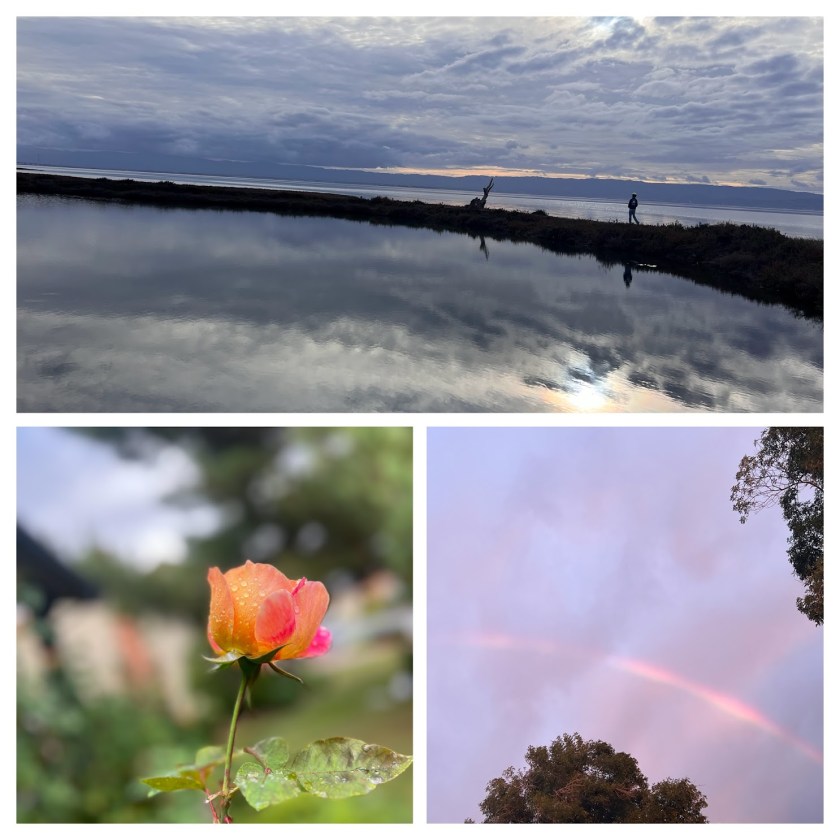
raindrops_on_roses

‘Tell me, what is it you plan to do with your one wild and precious life?’

  • Mary Oliver

Our Invisible World Made Visible

I pulled Atlas of the Invisible from the library shelves looking pleased. Here was another book straight from the dream shelf. As I thumbed through the pages, I felt a familiar flutter of anticipation. I could already visualize the happy hours spent looking into the different maps and visualizations to help understand the world around us better. 

Many of us have heard of the map Dr John Snow drew up of the cholera epidemic in London as he went about his duties as a doctor. With the aid of his map, he was able to isolate and identify the contaminated water pump from which the water-borne disease was spreading. 127 people died in 3 days and over 600 people died within a month. Here was a groundbreaking example of multiple skill sets coming together to identify and problem solve. 

Of course, data and its importance has only increased in the intervening century and a half since. In Dr Hans Rosling, Anna Rosling & Ola Rosling’s book, Factfulness: Ten Reasons We’re Wrong About the World–and Why Things Are Better Than You Think , examples of data collection, sampling, analysis and visualizations help us think of the world in eye-opening ways. The progression of populations from under-developed to developing to developing is fascinating and gives hope for a future that has solved many of mankind’s problems. 

life-on-4-levels

<Infographic from Factfulness book mentioned above.>

Now, several leading newspapers such as the New York Times commission data analysts to present their findings and even have visualization teams to help with the most succinct presentation of data. 

Atlas of the Invisible – By James Cheshire and Oliver Uberti is a treat for those who enjoy analytics. 

atlas_invisible

Example charts – to see if you like the book:

IMG_8034

We are all data points in this world. I chuckled as I read about the folks who revealed a high security defense location in the middle of the desert simply by turning on Strava to keep track of their daily activities. A good reminder that like many of our inventions, this penchant for data tracking and analysis too will bite us in unexpected ways.

I hope you enjoy the books as much as I did.

Recommended Reading on this subject:

The Storms of Vincent

Regular readers know that I am a pluviophile (one who loves the rain). On my recent visit to India, I was out walking around the apartment complex our family lived in one night, and found myself caught in the most brilliant and relentless rain they’d had in months apparently. 

I was delighted. 

rain

I was on a late night phone call to the family back in the US, and I rushed to the building in the center taking refuge there and looking stupendously happy for someone who had no idea how to get back home in the rain, or if the door would be open for me when I did get back. None of that mattered just then. Living in the present and all that. I poked my tongue out to catch a few raindrops.

“Hello!” said a neighbor, and I gulped feeling foolish. She smiled and I smiled back sheepishly, hoping she hadn’t seen. 

“I don’t think this is going to stop just yet. I am just going to run for it. “ she said and gave me one of her dazzling smiles, and plopped off through the rain. 

I stood transfixed by the pouring sheets of rain. It would have definitely been classified as ‘a storm’ in California.  Lightning lit up the skies, and thunder rumbled. It was beautiful.

I don’t know how long I stood there gawking like that, but soon I realized that the downpour was not stopping any time soon, And it was close to midnight. Unless I wanted to spend the whole night outside, I would have to run through the rain. So I did. I splashed into the house – luckily the daughter was still awake, chatting with her friends on the phone and she opened the door. She gave me a disapproving cluck and said “Oh my gosh – let me get you a towel.”

As I watched the rain pour itself out, the little rivulets of water sliding down the building walls, and the flashes of lightning illuminating the cityscape every now and then, I found I could not sleep and picked up the Vincent and Theo book by my bedside, and flipped to the part where Vincent likes painting storms.

vincent_theo

Excerpt:

It’s been stormy and stormily beautiful to Vincent in Scheveningen lately, and into the squalls he goes. He is just starting to paint with oil and is not used to them yet, but he takes oil paints into the storm to paint the beach, the waves crashing one after the other, the wind blowing, the sea the color of dirty dishwater. He makes one of his first oil paintings, View of the Sea at Scheveningen, with a fishing boat and several figures on the beach. The wind is fierce, kicking up the sand. Sand sticks to the thick, wet paint.

Vincent loves capturing the turbulence of a storm. “There’s something infinite about painting”, he tells his brother. “I can’t quite explain – but especially for expressing a mood, it’s a joy.”

A few days later, on a quieter day, he sketches the beach. Sending the sketch to Theo, he describes a “Blond, soft effect and in the woods a more somber, serious mood. I’m glad that both of these exist in life.”

Wild and somber. Room for both. Room for all.

https://ontrafel.vangogh.nl/en/story/167/traces-of-a-nasty-little-storm

Please check out the View of the Sea painting and further details here

Screenshot 2023-09-25 at 2.35.11 PM

Vincent’s life was a stormy one too. He was not an easy person to live with and this caused many rows with his family, though he was intensely dedicated to all of them: his parents, siblings (especially Theo), uncles etc.

I looked out of the window again. We all live through the storms in our lives. But, the good thing is that no storm lasts forever. Not all living beings would have the luxury of drifting off to sleep like that, and that made me very grateful for a warm bed and dry clothes.

“There is peace even in the storm”

― Vincent van Gogh, The Letters of Vincent van Gogh

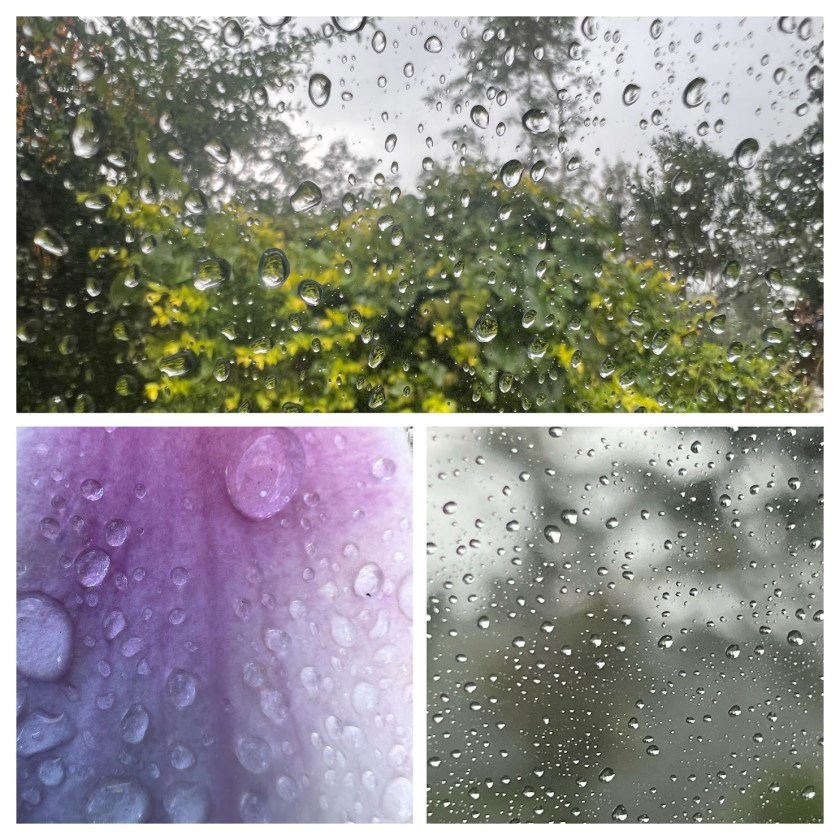
raindrops

The Joy of Effort – A Sense of the Infinite?

I was reading the book, Vincent and Theo – the Van Gogh Brothers by Deborah Heiligman. There are many aspects of the book that appeal to me. The narrative style, short chapters, clear language, not withstanding, it also touches upon difficult temperaments and the strain on relationships, Vincent van Gogh’s mental health, and his subsequent descent that led to the accident of cutting his ear off. 

vincent_theo

To Vincent van Gogh, portrait painting became an almost urgent need to master – just before his spiral towards insanity started. Uncle Cent, after whom he was named, was the closest uncle to him, though he was disappointed in Vincent, and left him with no legacy or inheritance. He left it all to his brother, Theo, instead. Still it moved Vincent at the time. He was in the process of prolific creation, and thoughts of mortality made him think of portrait painting with a sense of urgency.

This is a self portrait of Vincent van Gogh made in 1887. This portrait is on display in the Rijksmuseum in Amsterdam.

Screenshot 2023-09-18 at 10.43.48 PM

“Uncle Cents death makes him think more than ever about mortality – and immortality. Maybe there is an afterlife, maybe not. But if he paints someone well, that person is alive forever.

In the time he will spend in Arles – 444 days- he’ll make two hundred paintings and one hundred drawings, a huge number for an artist. He’ll paint landscapes, still lifes, scenes of cafes at night, furniture, rooms, flowering trees, flowers-he is about to begin painting his favorite again, sunflowers. But painting portraits is the thing that moves him most deeply, that gives him “a sense of the infinite”.”

I put the book down and thought about the meaning of effort in our existence. For many artists art gives a sense of meaning. To capture the infinite as Vincent van Gogh says. 

What has happened to portrait painting as a venue since photography came in? Maybe, photographers tend to capture the infinite. 

I thought of all the different mediums slowly replaced by a quicker technology. 

  • Writing  & Editing – ChatGPT, Grammarly and ProWritingaid are all quickly gaining traction for this hobby. 
  • Painting – there are tools available to take any picture and make it look like a painting. You can even choose the style you’d like your photograph transformed into
  • Knitting & Embroidery – almost lost to mechanization and mass production 

While newer and quicker mediums are welcome, I wonder about the appeal of the slow and steady. After all, half the joy is in the effort. I know I enjoy mulling and aching over my words – whether it is a short article, a children’s book, a novella, short story, or larger book. But I do also enjoy using my laptop – the ease and speed far enhanced from the days of penning my thoughts in notebooks as I used to do. 

I am sure all of our tools will lead to different hobbies and pursuits – after all, human imagination can rarely remain idle. I only hope the newer ones provide as much satisfaction in the effort.

The Magic of Malgudi

Maybe it was the fact that we visited the home of R K Narayan after the opulence of the Mysore Palace, or the fact that while all of rural Karnataka seemed to have decided on Mysore Palace, nobody had thought of R K Narayan’s abode, but the author’s bungalow on a quiet residential street was like a little cocoon of quiet and peace. A lovely setting in which to imagine the most magical tales of small-town Malgudi.

It isn’t a humble abode – it is a beautiful house set in an upper middle class neighborhood. White and two-storeyed, it is a lovely home and while inside, I couldn’t help remembering his own notes on how he had acquired the piece of land on which it was built. 

rknarayan

Book: The Grandmother’s Tale – By R K Narayan.

Far away from the town center as it was then, the realtor had promised him that it would be the bustling center of town one day. He left his noisy abode in Vinayak Street, and moved to this one – with the railway tracks to one side, the lilting hills and the then empty lands stretching between the home and the Mysore Palace.

img_7457

With his characteristic wit, he wrote of his gardener, Annamalai, who helped maintain the land around his house. Annamalai, like most men of the soil, intuitively knew how to clean and maintain lands.

I stooped to look at the plants for a brief moment before entering the home and remembered Annamalai’s classification: “This is a poon-chedi” (flowering plant) and chuckled to myself. 

“If he liked a plant, he called it poon-chedi and allowed it to flourish. The ones he did not like, he called “poondu” (weed), and threw over the fence.”

  • R K Narayan –  The Grandmother’s Tale (Story: Annamalai)

Annamalai was no horticulturist but seems to have taken care of the great man’s lands well enough.

Inside the house, it was largely quiet and the lady who stood at the entrance was happy enough to receive us. She was diminutive, and oddly neither welcoming nor dismissive. She surveyed us as if mildly annoyed with herself for being interested in us. She sometimes followed us as we entered the household and read the quotes off the walls. When it was obvious that we were in awe, and really happy to be in the place where R K Narayan wrote his gentle tales of Malgudi, she turned into a hesitant hostess and urged us to explore the rest of the house too. “Go upstairs and see the bedrooms. That’s where he slept.” she said, and I had to resist chuckling. 

I wondered what the master literary giant would have to say about her. It would be an insightful description no doubt and one tinged with the gentility and charm that he saw humanity with. That much was certain. 

The thing is: going to this quiet house tucked away in a residential locality in Mysore was comforting, and I thanked the brother profusely for showing me this gentle giant’s house. 

“Do you realise how few ever really understand how fortunate they are in their circumstances?”

– R K Narayan

img_7473

Rasipuram Krishnaswami Iyer Narayanaswami, the author and Rasipuram Krishnaswami Iyer Laxman, the cartoonist together enthralled the world with the spontaneity, humor and joy of Indian life. 

img_7468

Also read: