Do Jaguars Cry Like Birds?

We went on a short vacation to Cancun. The husband is in charge of booking trips. He is the planner. I am the slacker. Give the husband a task like planning a vacation, and he bustles about most impressively (on the couch of course). In true form, he booked a lovely place to stay, surprised his daughter with a day with dolphins, and booked a van to spend the day  with the  ancient Mayans at the pyramid at Chichen Itza. All in all it turned out to be a marvelous vacation with novel experiences.

The drive to Chichen Itza is a good three hours from Cancun, and we settled down with books, games, snacks, and water to keep us occupied on the journey.

The husband was chatting amiably with the van driver, while we pulled out our books to read. Up in the front, the conversation was flourishing, if somewhat one-sided. The van driver liked his audience, and his theories grew wilder, and his stories more grandiose.

The scenery outside was rustic. We were passing village after village tucked away in the Yucatan province. Outside the opulence of the tourist city of Cancun was where we got a peek into the real Mexico. Small brick buildings, children in slippers and shorts, palm trees, livestock, dogs. The rising heat was already setting the tone for the rest of the day. The talk inside the van turned to regional flora and fauna. I asked about tropical birds, and he assured me that they were plenty and marvelous.

‘Have you heard the cry of the Jaguar?’, he said.

‘No! Indeed!’, we cried.

The van driver then went on to explain. ‘Well….what is most impressive about those ancient Mayans is that if you clap your hands at the foot of the pyramid, you will hear the Jaguar cry from within the pyramid. Jaguars are sacred animals to the Mayans. You’ll hear all from the guide no doubt’.

The toddler was impressed. ‘Could I really clap like this, and jaguars will come?’ he asked clapping his hands and blinking his eyes at the same time.

The guide at Chichen Itza, told us about the ancient agrarian economy, and how the ruling class were probably mathematicians and scholars, and not wizards like the peasant class believed at the time. There was an impressive sort of buildup to the clap-echo section: the children even scoured the bushes for hidden jaguars.

When it came to the clapping section, the guide’s CLAP reverberated through the pyramid. It just goes to prove that practice makes a world of difference – our claps were like birds rustling leaves compared to the thunder-shots that rang through when he clapped. That guide clapped for a living and it showed.

It was lovely to stand there in the heat under a perfectly blue sky with lazy clouds flitting here and there, and listen to the chirruping sound that emanates. For some reason, I thought the Jaguar ’s cry would sound like a roar or even a grumble – piteous, scary or ominous, but I was not prepared for it sound like a bird call.

chichen_itza
http://news.nationalgeographic.com/news/2002/12/1206_021206_TVMayanTemple.html

The call we heard, the guide told us, was the sound of the elusive Quetzal bird.

The toddler was disappointed: maybe he expected a Jaguar to come out from the pyramid’s top. A bird flying out was not half as impressive as a Jaguar leaping out, but finally neither came out. We showed him an iguana sunning himself nearby, to which he gave us a look that made his teen sister proud and drooped away to the shade.

Moments later, he philosophically resigned himself to treating life’s disappointments with ice-cream. Jaguars and quetzals could cry or fly, but they didn’t get ice-cream and he did. That was all that mattered.

Coming up next: The Van Driver’s Theory Blasting Evolution to Pieces.

Swimming With Dolphins

The daughter and I were lazing around one night a few months ago: she, reading me snippets from her Harry Potter book and gushing about Patronus charms, and self, reading out snippets from mine, The Cosmic Connection By Carl Sagan.

I was reading the fascinating piece on Elvar the Dolphin. The daughter’s favorite animal is a Dolphin. She has drawings of mermaids with Dolphins everywhere. The sea fascinates her in ways that amuse us. Dolphins, mermaids and narwhals enchant her mind, and her endeavor is to become one if possible.

So, obviously, I read the whole piece out to her.

wind-in-the-reef.jpgElvar had the brilliant scientist stumped after a brief interaction. Elvar-the-dolphin and Sagan-the-human, on being introduced, started playing a game initiated by Elvar wherein he swam to Sagan, and thumped his tail completely drenching Sagan. When after the fourth splashing, Sagan refused, the dolphin swam up to him and said ‘More’. Completely flustered with this turn of events, Carl Sagan ran to his fellow neuroscientist friend and said he might have heard the Dolphin say the word, ‘More’. To which the neuroscientist said that Elvar the Dolphin knew upto 50 words in English, and could use them in context.


It is of interest to note that while some dolphins are reported to have learned English — up to fifty words used in correct context — no human being has been reported to have learned dolphinese. – Carl Sagan

A marvelous essay that only serves to remind us about the virtues of humility. We can barely understand other languages that fellow humans speak, and are quick to erect barriers between ourselves, but here was a dolphin willing to pick up English in order to engage with human-beings.

“You know Amma? Dolphins are so lovely right?”

I nodded. I did love the little flubberty gibbets.

“I think I know what my patronus is – My patronus must be a dolphin. I love them amma. They are so magical and real too.”, she said her eyes gaining that dreamy quality that often accompanies magic.

So, imagine how we felt when on our recent vacation to Mexico, the husband had booked a ride with Dolphins.

We were first introduced to a pair of dolphins – a charming male and female, called Manta and Sole. We hugged, patted and kissed them. I have never in my life touched something that soft, warm, and plush pulsing with the robust health of life. I coo-ed with that tone of voice I use around babies, and the daughter tried her best to distance herself from me in embarrassment, unlike the dolphins, who seemed to enjoy the attention.

‘Would you like to ride with them?’, asked the instructor, and I got to tell you that I was apprehensive. I mean – weigh the facts. Dolphins can swim at the stupendous rate of 20 miles per hour. I swim, if you can call it that, at the rate of 2 strokes a minute, stopping to gulp water in between, spluttering a bit, gasping, coughing and rasping, then regaining my breath before taking another deep gulp to sustain myself for 2 strokes.

Would a Dolphin for the first time experience condescension? I had to find out.

It took me what felt like 20 minutes to swim a couple of hundred meters out to where the dolphins could meet me. I huffed and puffed, and flawlessly executed the gulped-water, sputter and choke routine before I felt able to say I was ready. The moment I nodded, she gave them the signal.

In under a second, I felt the dolphins streak toward me under water, and they were there wiggling their fins under my arm and assuring me in their playful way that all was well. Their faces looked like they were smiling which I suppose is a gift they are born with. Their demeanor indicated none of that condescension or judgment that I was dreading, but simply an amused curiosity.

In another second or two, they had deposited me on the shallow end. The pictures reveal an ecstatic look on our faces as we were carried gently ashore by the dear creatures. My heart was bursting with joy. Maybe my patronus changed to a Dolphin too.

dolphin_swim

If we truly were smarter than Dolphins, we would be totally giving you the works in Dolphinese. What I can do is to dance like they did for us.

I only hope their interaction with us was a happy one too. Boink – Thank-You in Dolphinese.

Another World

We are back from what can only be termed an exotic vacation by the seaside, and the old brain nudged me to look for something written on marine life a while ago, and I did. I had written this post a few months ago, and forgot to publish it.

puertov

So, here is the old post while I marshal my thoughts from the vacation.

One evening over dinner, the husband asked in what he thought was a nonchalant tone whether we should go to the Monterey Bay Aquarium that week-end.

“Hmm…Did they send you the renewal plea for the annual pass?” I asked shrewdly.

He laughed and said that they had indeed.

We are as gullible as galloping oysters in fish sauce when it comes to the annual pass gab. We look and analyze the thing from all angles and figure that if we go just once more in the next year, it all makes sense and buy the annual passes. The year ahead seems to be sprawling with empty week-ends. Week-after-week, month-after-month: having nothing to do, we say why not set aside one week-end a month for the Science museum, one for the zoo, one for the natural history museum and another for ecological preservation?

Then, of course life unfolds, which in the nourish-n-cherish household has been established to be somewhat erratic, and hectic, and we are left wondering whether the weekdays with all its attendant worries is calmer than week-ends with all its hectic activity. Before we know it, the renewal plea arrives and we try our best to scramble in another visit before the annual pass expires.

“If we go straight to the Diwali party from the museum, we can work in that week-end.”, we say and scramble in a trip to the Aquarium.

Anyway, what I meant is that we went to the Monterey Bay Aquarium a few months ago. The salty, tangy, eucalyptus-scented air ruffles your hair as you make your way towards the museum. The cawing of the seagulls and the faint smells of seals and seaweed greet you long before the wonders inside.

Observing marine life is as mesmerizing as it is mystical. Standing there in front of the large glass tanks and looking at sharks, turtles, fish of every color and variety, is magical.

There is one section where we can see jellyfish boink around. Jellyfish that are colored brilliantly, transparent jellyfish, and jellyfish that contain bioluminescent bacteria. As I was standing there marveling at the brilliance of nature, I noticed that there were patterns in the glowing bacteria. Some had patterns that if one squinted one’s eyes resembled constellations in the night sky. I don’t know whether the patterns in the jellyfish are unique to each one much like the Zebra’s stripes are, but it would definitely not surprise me if that were the case. Nature’s patterns are as varied as they are diverse.

We came home that night, reluctantly pulling ourselves away from the enthralling environs of teeming marine life, and sat around for a hastily thrown together dinner. The conversation drifted towards marine life, a topic that is dear to the daughter’s heart. The love started young as we know to our chagrin – we might have watched Finding Nemo five hundred times when she was growing up. Every little fish and piece of coral was much loved in the home. The conversation flitted dangerously close to the ‘I wish I could live in the sea’ theme. The husband watched us for a moment and said in a strangely ruminative tone: “It is a scary world out there isn’t it? A-fish-eats-fish world.”

I was reminded of a quote that floats up in my mind every so often when I am observing the world around us. A quote that is prominently placed in the Monterey Bay Aquarium too:

The sea is as near as we come to another world: Anne Stevenson

Yes, it is a fish-eats-fish world, but it is also the world of beauty, survival, co-existence, and a symbiosis of life.

Drones on Kaapi Conspiracy?

The news, is and has been somewhat of a Debbie-Downer and I have kept clear of it. We have instead been listening to heartening material such as Horton Hatches The Egg. This morning, I switched to NPR, and as usual, the news was ready with a bucket of cold water to pour on my head.

The correspondent droned on about how companies in the USA are rethinking employees’ travel plans given that people are made to give up their phones, laptops and even social media usernames and passwords. This was an idea that was floating around in late January:

http://www.nydailynews.com/news/national/white-house-foreign-visitors-social-media-accounts-article-1.2958851

This idea of asking for social media profiles is abhorrent to me, given that we are further enabling algorithms to slice and dice the populace based on one’s likes and dislikes. But I burst out laughing while listening to it, and probably had folks wonder why.

Lexicon: Maama: Uncle; Maami: Aunty; Kaapi: Coffee

Let us assume Kittu Maama is planning to visit his daughter in the Golden Land of the USA to celebrate his 70th birthday with his grandchildren. Kittu Maama has been flagged as having strong opinions on Sasikala, Filter Coffee pronounced Kaapi and Dasavatharam (still baffled whether his views are on the movie or mythology).

In any case, they being the Esteemed and Respected Parents of Silicon Valley Engineers of Indian origin, the administration rubs their hands in glee to data science the heck out of this one.

That’s when the Mannar & Mannar Coffee Conspiracy comes to light.

Kittu Maama and Maami’s social media posts are intriguing.

Day 1: Shared: Good morning – filter coffee is good.

Day 2: Shared: Good morning – filter coffee is the best.

Day 3: Shared: Good morning – filter coffee.

Day 4: Shared: Good morning – filter coffee is very good.

Filter_coffee_South_Indian_style

Riveting as these posts were, investigators are unable to fathom the train of thought here.

(a) The posts are being shared from someone’s feed, and this person does not seem to rank high on Kittu Maama’s or his wife’s list of adored folks. Baffling. Why would they go and share it everyday?

(b) The original photograph on closer examination (after using sufficient zooming techniques), had inscriptions on the coffee cup that translated to, ‘This cup was stolen from Muruga Vilas.

Could Kittu Maama be tipping off gangs on stolen silverware?

A few days later, Kittu Maama’s daughter calls from the USA, and asks how they are doing. “What is with your coffee posts everyday?, “ she asks.

The investigators on the nose of this Mannar & Mannar Coffee conspiracy case pick up the dials on the board: Phone calls being made and substance being discussed. Tap and apply algorithm. Quick.

“You only said that we should share if we like something? I don’t know why he puts coffee out everyday, I know Ambujam Maami does not make filter kaapi like that.”, said Mrs Kittu Maama alias Kittu Maami.

To which Kittu Maama chimed in, “Yes, in fact when I go there, I hastily say no to coffee. I stop at Saravana Bhavan on the way back and have good filter coffee there before heading back. “

The FBI is stumped. There must be something here. Could there really be no conspiracy here? Just daughter-discussing-ditchwater-kaapi? But everyday on Facebook, and on International Phone Calls?

A dial spins in the other room. WhatsApp shared: Helpfully labelled ‘Coffee joke’

Is it worth putting a drone on them?

Not just yet.

Note: While the scenario above was light-hearted and frivolous, it is useful for us to know exactly how our social media profiles have been used, and can be used in the future.

Excerpt from Nextdraft (http://nextdraft.com/archives/n20161123/turkey-shoot/)

Cambridge Analytica worked on the Trump campaign. They also worked for those in favor or Brexit. Now they’re in talks to score a couple new big contracts.

https://en.wikipedia.org/wiki/Cambridge_Analytica

A Fairy Tale Ending

When the daylight savings time change happens, regardless of how tiring the day and the commute has been, I will pep up in the evenings. Just listening to the twittering birds on the trees outside, the sight of young trees in bloom, and the new leaves are like a soothing balm to the soul.  The children who come out to play have all invariably shot up during the winter months and it is heartening to see them revel in the evenings on their bicycles or tricycles. The hues the setting sun throws against the sky never fails to lift my heart.

It is as the poets say, only I cannot say it half as well or correctly as they do. Isn’t it something like: February goeth like a lamb and March springs in like a lion or is it March goeth like a lamb? Or something about March springing like lions or going like lions. Anyway, the point is that March goeth just like February goeth and January goeth.

I stepped into the home one evening to find the evening chaos was worse than usual. Everywhere I looked, it seemed to me a bit of spring cleaning was in order. Piles of paper were on tables, coats and backpacks were strewn on sofas and floors, shoes with socks spilling out of them lay everywhere. My heart sank. I cradled my head in agony at the sight.

“There is so much junk in this house!” I said and started clearing up frenetically. The do-er is the worst, for it makes the non-doers squirm with guilt. The daughter squirmed, and the son looked discomfited.

“Oh you are cleaning up. Why, is anyone coming?”, quipped the teenaged daughter, and I moaned. I like to dispel this notion that we must clean up only when someone is visiting the old home, and I said so, loudly.

“Okay…okay…no need to get all learn-a-life-lesson-y, just asking.” The look she gave me suggested I was one screw short.

I donned my efficient look and got on with my cleaning spree keeping a running commentary up on the junk collection.

I picked up some plasticine (why do we spoil the environment with this trash?), a rubber ball (anyone plays with this still?), a torn glove(how did this beautiful glove tear and where is the other one?), a fruit bowl with what looked suspiciously like glue caked and dried(what is this? ), and a book of fairy tales that had come apart at its bindings. The pages were not held together by glue anymore, but they were still there inside the cover. (I had nothing to say but I smiled).

Heavens – how dearly I remembered the old book! The torn and tattered pages that I held gingerly in my hands seemed to take me back to those lovely spring evenings years ago when the daughter, then a toddler, would come to me clutching the large book in her hands asking to be read a story from it. The book was as large as her torso, and she tottered under the weight, but she loved the book. I knew she liked those stories so much. She listened intently, and sometimes, she would re-tell her grandfather the stories much to his delight.

fairytale

We had learnt morals, taken leaps of faith, and realized that external appearances do not matter all that much.

I looked at the torn book in my hands, and smiled again. Now more than ever, we must obsessively read our fairy tales and children’s books. Beautiful princesses can control their destiny, frogs can be princes, beasts can be gentlemen, elephants can hatch eggs and good always triumphs over evil.

Albert Einstein on Fairy Tales:

https://www.brainpickings.org/2014/03/14/einstein-fairy-tales/

If Mimosa Pudica Met Humpty Dumpty

The children ask me interesting stories about my childhood every now and then. They seem to think I lived in a fairy tale and maybe I did. I find my reminiscences are often seen through the endearing lens of time ignoring the trials and strife of living in a wet, rainy, cold place. My stories often feature panthers, wild boars, and tigers. Occasionally, just to spice things up, I tell them about the different berries, clovers and exotic plants that were native to the Nilgiri Hills and they marvel at the wonders in this world and how on earth I am alive and kicking today when I seem to have used such loose food control mechanisms as picking berries to plop into my mouth. Today, when I attempt to pluck a wild berry and put it in my mouth, I am met with aghast looks and stopped with pleas appealing to my remaining sanity.

I remember being enamored over touch-me-nots too. Have you played with touch-me-not plants? If not, I suggest taking the term and tucking it firmly in the back of your brain and keep looking out for the curious species. The scientific name is Mimosa Pudica.

https://en.wikipedia.org/wiki/Mimosa_pudica

The fascinating little plants react to external threats by closing up their leaves as if in tune to a rhythmic heartbeat. There is something deeply soothing about watching them close their leaves to one’s touch and then open them again. To the immense delight of the children, we found clusters of touch-me-nots on our last trip to the Nilgiris and they spent an entire morning playing with them.

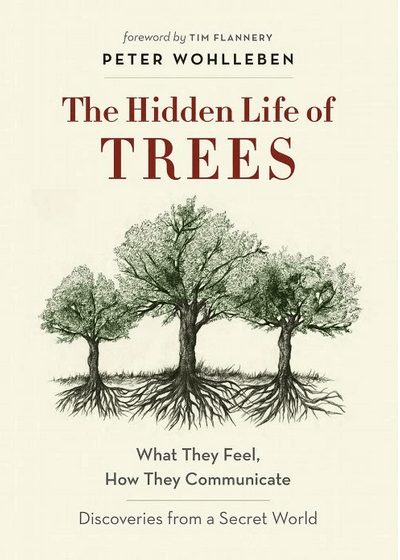
In the Hidden Life of Trees, Peter Wohlleben cites a piece of research showing that plants learn and indeed have memories. What the researchers did was take the shy mimosa plant into the laboratory. The mimosa plant closes itself up on external stimuli. So, to see whether the plant can learn, researchers set up the plant under a steady trickle of water.

Quote:

Dr Monica Gagliano designed an experiment where individual drops of water fell on the plants’ foliage at regular intervals. At first, the anxious leaves closed immediately but after a while, the little plants learned there was no danger of damage from the water droplets. After that, the leaves remained open despite the drops. Even more surprising was the fact that the mimosas could remember and apply their lesson weeks later.

Screen Shot 2017-03-14 at 8.59.19 AM

It is a good lesson for us to learn in these times of constant interruptions, distractions, news and fake news. These are steady drips and we the mimosas can learn and adapt.

Like the mimosa plant, it may be a worthwhile skill to find methods to rise and react when required rather than when Mr Donald Trump wants to divert attention onto something other than what he wants us looking at.

http://nextdraft.com/archives/n20170320/tweet-grinder/

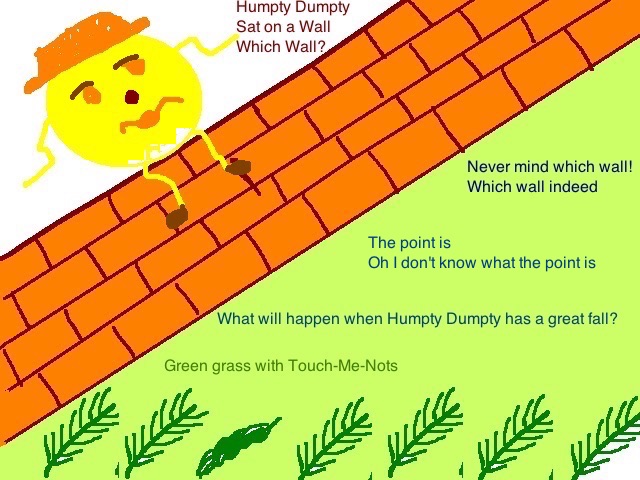
The last time President Trump faced an uncomfortable moment, he tweeted the Obama-phone-hack claim, and all the kings horses and all kings men went chasing after the latest tweet leaving the egg he wanted to crash to do so unattended.

mimosa_humpty

If Mimosa plants met Humpty Dumpty regularly, what would they do? It is a great philosophical question to ask oneself.

Can Llamas Use Zebra’s Mascara?

‘What can I do to help you for your play? Can I help you rehearse or give you some tips on how to render your lines?’, I asked the daughter one night. She is starring in ‘The Lion King’ musical in her school and I wanted to show my support. An act she was quite keen to avoid. We were fiddling about when I offered help, and she bucked alarmingly at this train of thought. She can diagnose an enthusiastic helper when she sees one, and she did not like it one bit.

‘No! Thanks.’, she said. Frosty and a tad too vehement perhaps, but I let it go.

‘How about ..?’

‘Amma – no! How about this? Apparently, we need to put on some make-up for the play… ’

I tchah-ed her and said, ‘We already have stuff from past years – I am sure the powder and the lipstick can be used – so what if it is a year or two or three old?’

‘Amma – there is an expiry date!’

‘Fine – we’ll check it. What else?’

‘Apparently, we need mascara – I am a hyena this time remember, so why don’t you go to the store and get me mascara? That’s help right?’, she said, and I agreed. She will make a good robotic manager one day.

Please stop me if you have heard me babble about my demented fashion sense or crocodile-crocodile before. One of the things I would have said, had I been a cosmetologist going about designing these moistening creams and so on,  was that there were so many different shades of people in the world. I mean, how do you come up with a cream that suits every complexion type? That is why the great cosmetic industry has given me a miss thus far and has prospered without my help.

Drop me in a cosmetic store and I bumble famously. Mascara, unlike facial creams, is easy. One color – black. I strode into the store with confidence. I surveyed the area and located the cosmetics section. Once in there, I balked at the lipsticks and sneered at the nail polishes and went straight to the section that has eye-stuff. Golly beans!

I mean, I had no idea, which just goes to prove that confident strides mean nothing if you don’t know the different types of eye make-up available in the eye cosmetic department. I stared limply at the multi-colored eyebrow pencils, eye pencils (they are different apparently, and I had no idea green eye liner was a thing), liquid eye liners, eye shadows, and I had not even touched the eyelid section. By the time I crawled to the eyelash section, my eyes looked like it could do with a dash of all the above to make it look peppy.

eye

Finally, I saw what I was looking for: extra voluminous mascara, the label screamed and one confident that mascara and eye lashes go together, picked up one number. Back in the confines of the home, I gave it to the daughter proudly, and we opened it.

‘Gee – thanks Amma – Good job!’, she said and patted me in a puppy-dog-good-doggie manner. We tore open the packaging like lions tearing their prey apart.

Something was amiss. The product we had in hand may have suited a zebra, but they certainly did not seem to be for the human eye. It was white. Do you know of any person whose eye lashes are white? So, why was this white?  Curious. Very Curious.

We pieced together the ripped apart packaging like piecing a puzzle together and it seemed that this white colored voluminizer was meant to fluff up your eyelashes till they look like a chihuahua’s tail, and then you put the actual mascara on top to get the real effect.

This of course led to an interesting discussion in which the daughter insisted that zebras have black eyelashes, while I said they could be white in one eye and black in the other. The zebra, wherever it was, decided it was better to meditate than listen to this hypothesis.

zebra_mascara

It turns out that zebras have black eyelashes. Humble pie tastes marvelous.

Llamas, on the other hand, have beautiful white eye lashes. But the last time, a meditating zebra checked with a llama, it did not want our mascara. Plus, the Lion King play has no place for llamas, and it is too late to change the script.

I am heading back to the store. Let me know if you’d like anything.

An Elephant is Faithful 100%

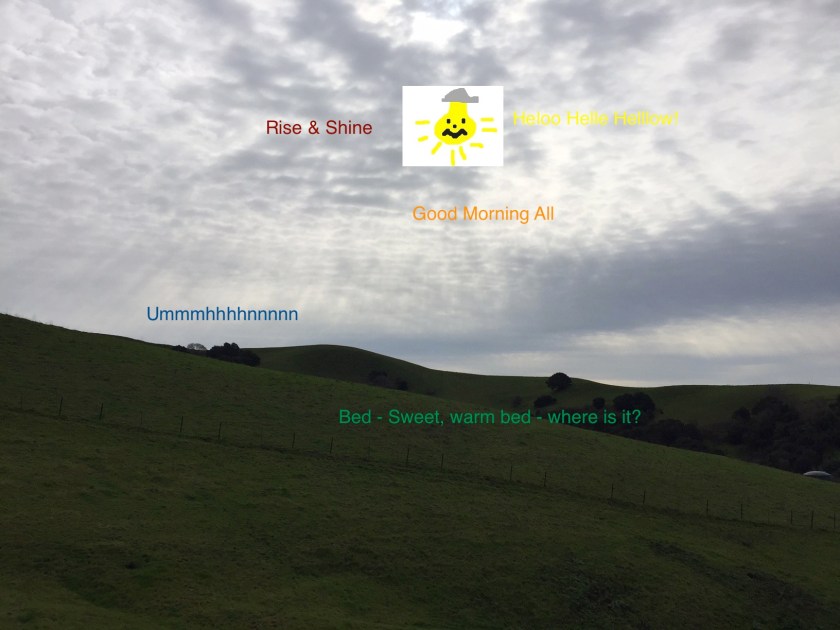
“Ughhh! Amma, why is this boy so bright in the morning?” moaned the daughter. The daughter and I are slow to rise and shine. The eye first creeps open, the bath helps a little but not much. By the time, we muster the energy to throw our weight around, it is mid-morning. We are like sunbeams trying to break through a misty, foggy, cold morning. The husband and son, on the other hand, are like light bulbs. When they are up, the switch is on and they beam brightly with all the wattage available. The duo look indecently chirpy in the morning and bustle around with breakfast, cracking jokes and what-not. The daughter and I exchange dark looks and shudder a bit at this exuberance.

sun_bulb.jpg

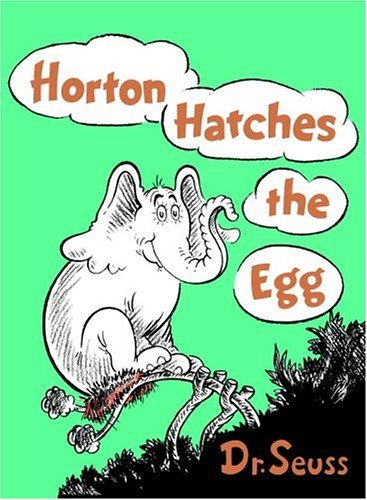
One morning, the son looked at me, shook his head with pity and said, “I know what will wake you up! Let’s listen to Horton Hatches An Egg”, and we did. The toddler son was cracking up with hilarious laughter in the car and I don’t care what you say about speed of light being a constant and all that, I must confess that the sun beams broke through the misty morning fog a little faster. It is a marvelous book, and takes one through the most hilarious plot of an elephant hatching an egg.

I recently read Dr Seuss and Mr Geisel, by Judith & Neil Morgan, a biography of the beloved author, Dr Seuss. Ted Geisel confessed that he saw the world through the ‘wrong end of the telescope’ and  he seemed to have stayed in touch with his childlike curiosity and joy through life.

IMG_5232

Ted’s family was well-off. His father, after running the successful family business for several years, later worked for the public parks system with access to a zoo. He puts many of his influences down to the natural loafing around in the countryside with access to animals as a child. His mother, had a knack of reading things in verse to him in a way that stuck in his brain. Over his brilliant career, he would combine both these influences in a charming manner to enable an entire generation to love reading.

Reading about his foibles and his educational escapades gives a glimpse into the kind of endearing personality he must have been. Especially in the early part of the book, you see the boy and young man Geisel was not exactly a Grade-A student. From an early age, he exhibited a wonderful personality with humor, zest and curiosity.

His college sweetheart, and later, wife, Helen Palmer, was the first person to suggest to Ted that he may be better off drawing and writing than pursuing an academic career at Cambridge. He says this was around the time he realized that writing and drawing were like the Yin and Yang to his work.

One day she watched Ted undertake to illustrate Milton’s Paradise Lost; he drew the angel Uriel sliding down a sunbeam, oiling the beam as he went from a can that resembled a tuba.

“You’re crazy to be a professor. What you really want to do is draw.” she blurted out. She glanced at a cow he had drawn and said, “That is a beautiful cow!

Praise from one you love is truly lovely, and it set him on the course of his career.

Ted was used to taking brisk walks during frequent breaks from his studio in La Jolla, California. One time, he accidentally left a window near his desk open. When he came back, he saw that one transparent sketch had flown over the other, resulting in a strange juxtaposition of an elephant sitting on a tree. This set off a magnificent thought process in his head. What was the elephant doing on the tree, why, hatching an egg of course. Why is he there – what happened to the mother bird and so on. What resulted after months of mulling this train of thought and multiple revisions is the brilliant book, Horton Hatches The Egg.

“I meant what I said and I said what I meant. An elephant’s faithful one-hundred percent!”

Horton_hatches_the_egg
Image Source: Wikipedia 

If you haven’t read it, please do so. Fantasy is a necessary ingredient to living: Dr Seuss.

dr seuss

Coming up next:

Ted was a school going child when the First World War started. The Geisels were first generation German-Americans and though they were naturalized citizens at the time of war, it turns out the world around them did not treat them kindly.

Essential or Eternal Communication?

I recently read a book called The Hidden Life of Trees written by a forester, Peter Wohlleben.

Screen Shot 2017-03-14 at 8.59.19 AM

Trees have always fascinated me. I have tried becoming one with little success.

Their calm, stoic essence of being is reassuring. Trees are social beings, and they are capable of immense internal processes that not only sustain their lives, but also those of others around them.

Reading the book is like dipping into a life that we as a race can barely contemplate for as the author reminds us in the book, trees live life in the slow lane, and that is what made the reading experience refreshing. It is largely based on observations and of the forester’s study on the forests he helps to manage. Throughout the book, he cites relevant research studies that have been carried by botanists.

Trees are social beings and know that they can thrive if they look out for one another. Many interesting anecdotes dot the book such as the one with the giraffes chomping down the leaves of the acacia trees in the Savannah.

The giraffes there were feeding on umbrella thorn acacias, and the trees didn’t like this one bit. It took the acacias mere minutes to start pumping toxic substances into their leaves to rid themselves of the large herbivores.

The acacia trees that were being eaten gave off a warning gas (specifically, ethylene) that signaled to neighboring trees of the same species that a crisis was at hand. Right away, all the forewarned trees also pumped toxins into their leaves to prepare themselves. The giraffes were wise to this game and therefore moved farther away to a part of the savannah where they could find trees that were oblivious to what was going on. Or else they moved upwind.

How beautifully nature equipped the trees and giraffes for survival.

After reading about how effectively and essentially Trees communicate, I could not help comparing and contrasting our lives with those of our stoic friends. This frenzied communication lifestyle we have adapted as our own, often leads to amusing outcomes, but sometimes to questionable ones.

One morning, I set out to enjoy a leisurely week-end breakfast with the children. When the menu card says ‘Noodles’, the beaming sous chef in the home is more active than is called for. I doubt restaurant kitchens have sous chefs standing on chairs next to the chef gabbling instructions for all to hear, but our kitchen does.

AF1QipPGhzxZ4rpk1xkI0U0emQ8aWQ9bWbIm6mGj3v3r=I.jpg

Minutes later, we clattered down with our bowls of steaming instant noodles – there is something deeply satisfying about slurping the long noodle strings noisily, and reveling in the liberating feeling of not being governed by the ticking minutes of the clock for a change.

I was doing my best to ignore the incessant modes of communication that is our bane today, but I was still interrupted with the International Phone Call.  On the call, I was given the shocking news that Facebook, Twitter, and WhatsApp had been vying to give me, and told to check it all immediately. Apparently, the noodles I was eating that very day had 17% lead content. 17% lead. Funny because I did not feel like I had a metal tube lodged in my intestines after eating it, nor did I feel like an old ceiling waiting to be torn down. What it meant to say of course is that there were supposedly 17 parts per million of lead in the offending food item, a claim that in itself proved to be baseless later on.

lead

Quote from link: http://nextdraft.com/archives/n20170310/leaky-gut-reaction/

The wrongness of the initial stories is the result of a perfect storm of three factors: Technical subject matter, a master of disinformation, and always on race to publish stories quickly. It’s yet another reminder of the Internet’s five least common words: Let me think about that.

Should we learn the art of essential communication, and develop the ability to chaff it from the demands of eternal communication? Maybe learn a lesson or two from our stoic friends.

For a quick read: https://www.brainpickings.org/2016/09/26/the-hidden-life-of-trees-peter-wohlleben/

How To Become Dandelions?

I have wracked my mind to find what it is I would like to share about Women’s Day. Surely, I have something to say. Everyone had something to say: We celebrate women, we demand equality and abhor the crimes committed against womenkind. Yet, there I was on the sidelines still twiddling my thumbs and looking lost. Some said ‘Happy Something’. The day passed, and I must say critics would call the tripe I had written ‘pedantic and whiny’, and what is more, I would have to agree with them wholeheartedly and shake their hands for the right choice of words.

I mostly like being female.

Except when I am told not to laugh too much because I am a girl #Direnkahkaha anyone?

Or when I am told not to apologize. I am sorry, did I step on your toes? Tough Luck Buddy! Hee Her Haw Haw….

NY Times: When an apology is anything but

Or being told to be a man to be a woman. Huh?!

Medium: Leveling both sides of….

I mostly like being female. I say mostly because there are times when I feel being a dandelion would be better. You know a gust of wind would take care of reproduction, and one does not have to worry so much about being a female dandelion or a male dandelion, and policy makers do not have to concern themselves about dandelion population. We don’t yet know how to interpret dandelion communication, but when I see a circle of dandelions, I see a beautifully androgynous group reveling in each other’s company – till a deer comes along and chomps them down of course. (We recently read this sunny little children’s book.)

Screen Shot 2017-03-08 at 9.35.01 AM.png

So, what is with reproduction? Human beings are obsessed with reproduction though it is established beyond doubt that the human race is in no jeopardy. We are always in danger of nuking ourselves of course, but that is idiocy not procreation – quite different.

I remember clearly one hot summer afternoon several years ago.  I had just had the son, and his doting older sister was casting adoring glances at her infant brother. She told me that her first grade classroom had sang congratulations for her that day when she told them she had a baby brother. ‘Though, it is a lot of work Amma.’ she said looking solicitous. I was touched by her observation and told her about imagining a lifetime of hot summers with a new baby every other year. She whooped and said golly and giggled like elementary school children do, and I went on to tell her about my stellar grandmother who had nine children, all bawling, healthy and hungry.

Why didn’t she stop with two or even three? Nine seems like so much. she said in a matter-of-fact tone, and I told her in terms as best as I could about how the concept of planning one’s family size itself was a luxury only afforded to the past two or three generations. How many children to have and when to have them was not things women controlled then, I said.

grandma

I am saddened indeed that on International Women’s Day (about a century after this day was officially set up), this news item pops up.

Planned Parenthood rejects Trump proposal to stop abortion services – CNNPolitics.com

What will it take for reproductive choices for Women to become a civil liberty?

Back to the Dandelion theory, wouldn’t it be nice to just have have a storm knock the wind out of us, scatter and reproduce thus – all of us men and women. I’d like to see whether men will control the wind intensity and direction of the wind then.

I can barely state things better than Melinda Gates though:

https://www.gatesnotes.com/2017-Annual-Letter

Towards becoming Dandelions then!