Thoughts Gained & Lost

I looked at this note written a few days ago: both amused and exasperated at it.

**** The children said something – what? As I was walking around by myself, it came to me loud and clear, and now cannot seem to remember it! But remember, and remember to WRite about it!!

It had obviously been something marvelous that I felt the need write myself this note. I have tried and tried to jog my memory though. I don’t have a clue. It could have been anything.  Sports, tea, school, politics, travels, books or social media?

I remember the walk though.

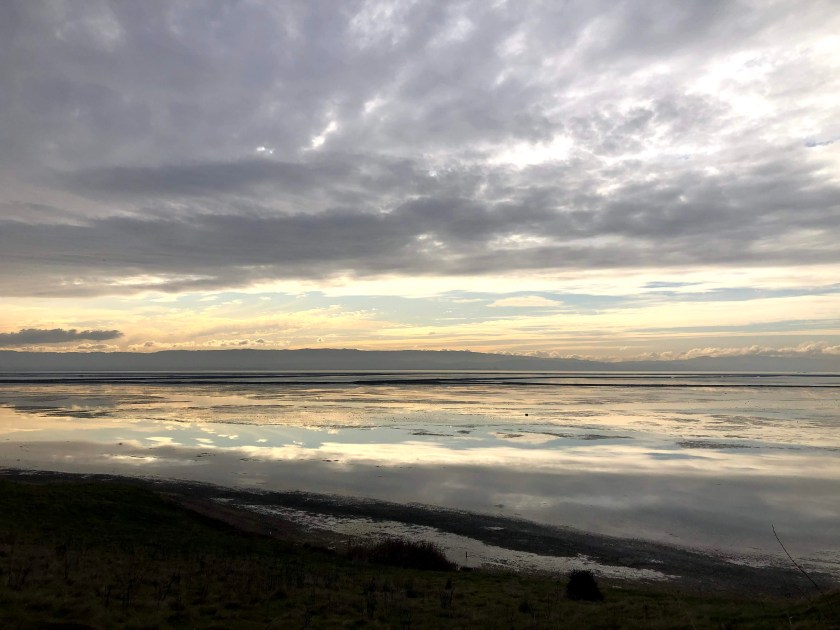
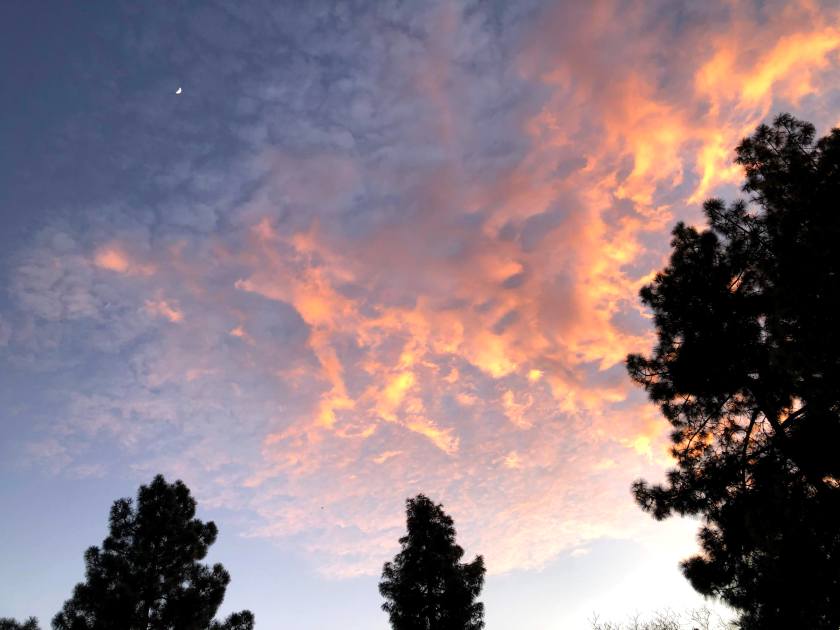
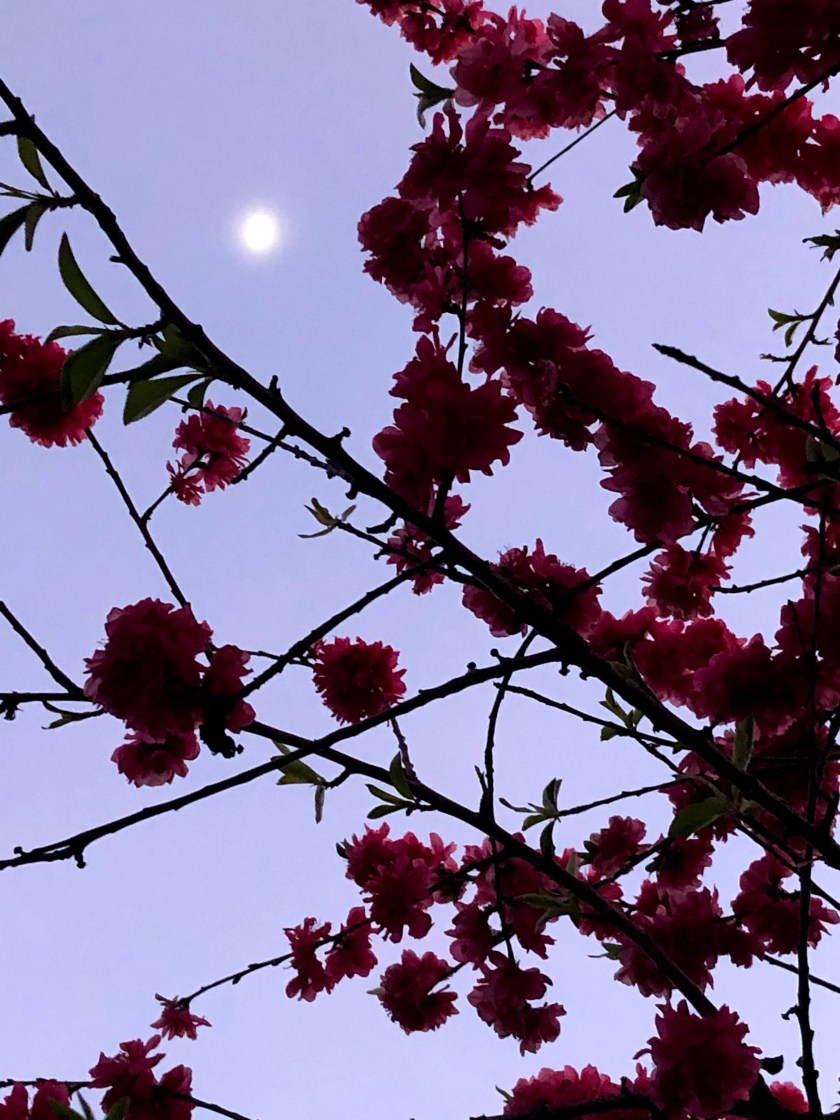
The full moon was beaming – there was no other word for it. It looked larger than usual, felt much closer to earth and glowed a golden yellow in the early evening skies. I am a confirmed selenophile (a lover of the moon) there isn’t a doubt. The pinkish hues of the sunset was just giving rise to the purplish hues and slowly but surely the inky blues of the night would creep in, as though slowly covering the blanket gently over the world.
img_7345

The family had all called or texted me to look up at the skies from wherever they were, and I glowed in the beaming moonlight, fading sunlight and the glorious inner light born of happiness that the children in particular had thought of me when they had seen something beautiful.

I was enjoying the quiet of a moon that rises on an early evening over a week-end. Things seemed surreal in this light and time. This, I felt, was the truest way to bring oneself down to our marvelous Earth.

The birds don’t fly any faster just because the world around them pants and coughs up smoke in automobiles charging from one place to another. The buds are still furled in the tree boughs or the plants below – they don’t rush to unfurl their petals just because February sped past, and beautiful March roared its way in. The grass sways to the speed of the winds whipping them – the winds react to the atmospheric pressures, no one can change their pace.

The world moves on measurably, one moment at a time. The full moon grew predictably over the past fortnight, and there it beamed at me, and my little family, wherever we were at that point in time.  I thought of different posts to write up, beautiful phrases flitted in, and then by the looks of it, evaporated just as quickly. If only I could shore up the energy and determination to write up all the lovely things that occur to me as I walk on!

Later when I read this Brain Pickings post on Walking as Creative Fuel, I nodded along at the wise words of Kenneth Grahame.

Kenneth Grahame – the author of Wind in the Willows wrote:
“Not a fiftieth part of all your happy imaginings will you ever, later, recapture, note down, reduce to dull inadequate words; but meantime the mind has stretched itself and had its holiday.”

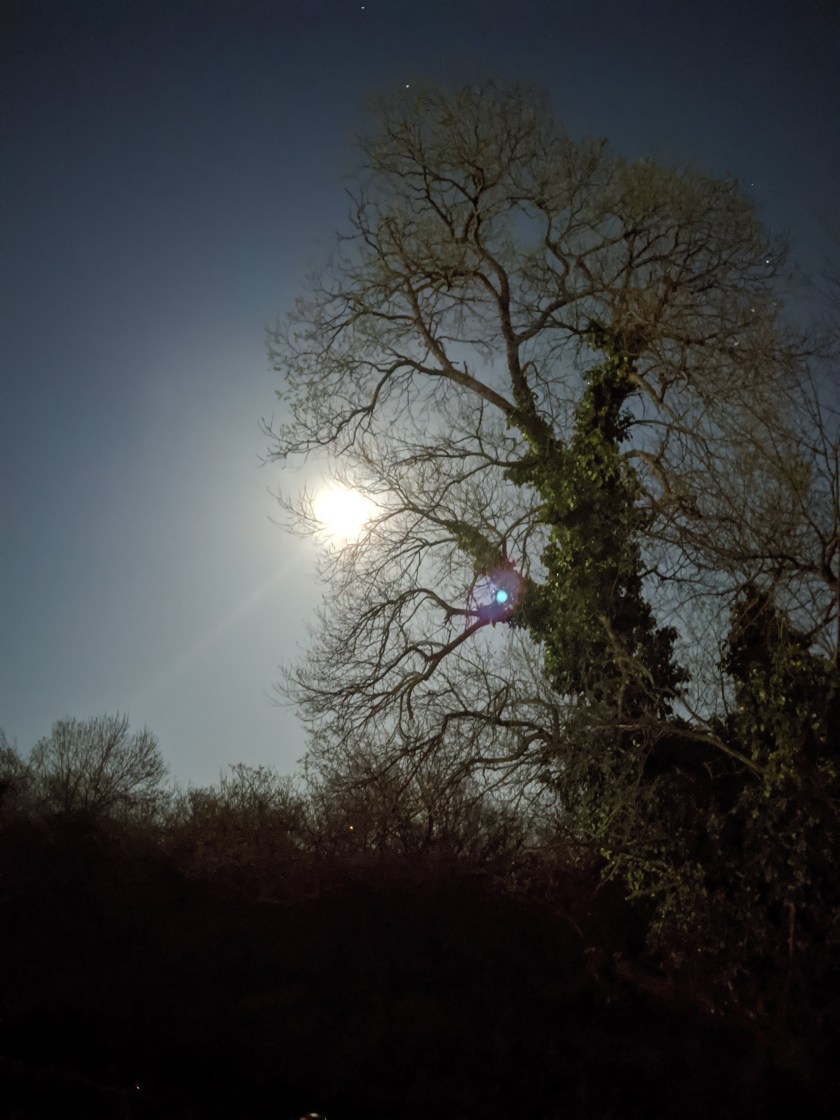
Out on the walk that day, what he says seems to have been true. I relished the enthusiasm and the energy in the note to myself – the asterisks, exclamation points and the half-capitalized words written out in haste. It definitely wasn’t the first such note to myself.
img_20200208_193142

Well, the universe alone knows how many great works of literature have been lost, and gained by writers enjoying themselves on their walks. I am glad for the simple act of walking and musing. The meandering of the soul is special because of them.


Tea!

“There is some Tea in school, and everyone is acting really weird!” said the daughter announcing her entry into the house a couple of years ago, dumping her school bag where it must not be dumped.

“Oh – did you have some? Did you like it?” I said a trifle too eagerly. I am a tea-lover myself, and have been trying to get some company in the house whenever I brew the marvelous beverage. All efforts have fallen flat thus far. The husband likes coffee, and the children swear by chocolate flavored drinks (the teenager also has her tongue out for Boba – a heady mix of tapioca pearls and sugar that suddenly coasted into popularity like the record albums of these young artists you had never heard of before.)

If I could exalt any beverage to Divinity, I would pump for the humble Tea.

teas

I have been teased multiple times about High Tea and every now and then pick up a Miss Read book for she properly exalts Tea and the ritual of Tea drinking:

“The very ritual of tea-making, warming the pot, making sure that the water is just boiling, inhaling the fragrant steam, arranging the tea-cosy to fit snugly around the precious container, all the preliminaries lead up to the exquisite pleasure of sipping the brew from thin porcelain, and helping yourself to hot buttered scones and strawberry jam, a slice of feather-light sponge cake or home-made shortbread.”

“Isn’t Tea just marvelous?” I said again, for the scholar had lapsed into a silence.

“Generally, I am like not opposed to like Tea as long as like it doesn’t like you know like hurt anyone, but this time they are all like acting so weird! I mean like come on! Like nobody is going to remember it like next week!” she said liberally sprinkling the ‘likes’ in the sentence.

I was fogged. When had Tea hurt anyone?

“Please! Please! How many likes will you put into a sentence that doesn’t need ‘Like’ A.n.y.!” I said carefully quoting the ‘like’ in my sentence with air quotes. “If I were to write out that sentence, no one would give you any Tea!” I said, looking proud of myself for bringing the topic of disc back to the marvelous beverage of my dreams and likes.

The daughter looked at me with the tender look one reserves for the dim-witted, and tousled my hair. “Oh! you don’t know what Tea is right?”

I drew myself up. I may not have any accomplishments of note in other areas, but in the area of Tea, you could not say that. “ I am not just boasting about the fact that I can be counted upon to have Tea with Friends any time, I also take pride in knowing some friends who know all about Tea! The Nilgirisis a major producer of the divine drink – the beautiful hills does not only use its marvelous climes to produce this drink of the gods, but also nourishes the people who have the luck of calling the hills their home, you know?” I said looking proud of myself. “And – and I am not done yet! Though I may not be able to tell you the process and the differences in tastes of the different types of Tea, there are plenty of good friends of mine who can. “

tea_plantation

“You’re just salty that your posts on Tea don’t even like get half as many ‘Likes’ as the number of likes in my sentence!” she said.

Ouch!

“OOOOHHHH!” said the cheering squad witnessing the exchange in the kitchen.

“Okay – Like I told you before: you really need to listen to what I say more closely! Anyway, like I was saying: Tea is mildly annoying stuff that isn’t great. It isn’t as bad as Gossip …” she said, knowing how I will frown upon gossip. “but sometimes can start bordering on that line.”

The English Language is ever evolving and fluid language is marvelous to behold. Really Tea is essentially a social activity, even though we have taken to gulping it down to and from meetings in the most unceremonious manner these days. What I would do to have a proper Tea Time marked in the calendar to catch up with friends instead of this frenzied gulping? So, I suppose using Tea as a word for this essential yet inessential banter is amusing and I must appreciate the folks who thought of using it for this purpose.

I remember enlightening my parents on my trip from College about adding Pongal & Kadalai to our jargons.

In college, I found to my amusement that Kadalai and Pongal did not mean groundnuts and boiled rice with lentils & pepper. It refers to Tea with the Gender specifications added in (You ground-nut-ted when with the opposite sex, and Pongal-ed er rice-lentil-with-pepper-ed with those of the same sex)

Essentially, these refer to non-essential communications that are essential. They are the stuff that link us humans together – one groundnut, lentil piece, or cup of tea at a time.

Language and stylistic constructs will continue to evolve, and that is as it should be. Our languages will continue to merge, diminish, and ebb and flow with our populace and time.

“I’d like to sip some Tea while listening to your Tea dear!” I said finally looking proud of myself.
“Good one Amma! Waiting to say that haven’t you?”
“Yep! “I said. Triumph comes in tea-sized bites.

tea_with_friends

The Lover of Dusks

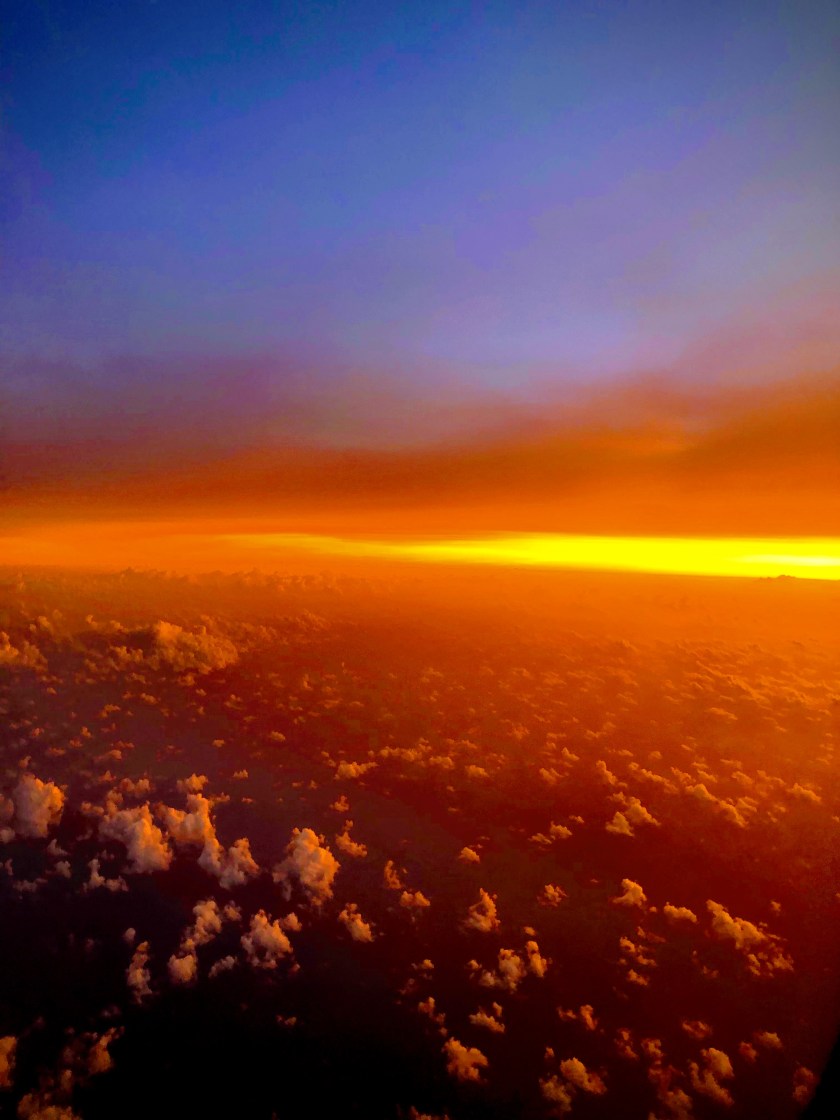
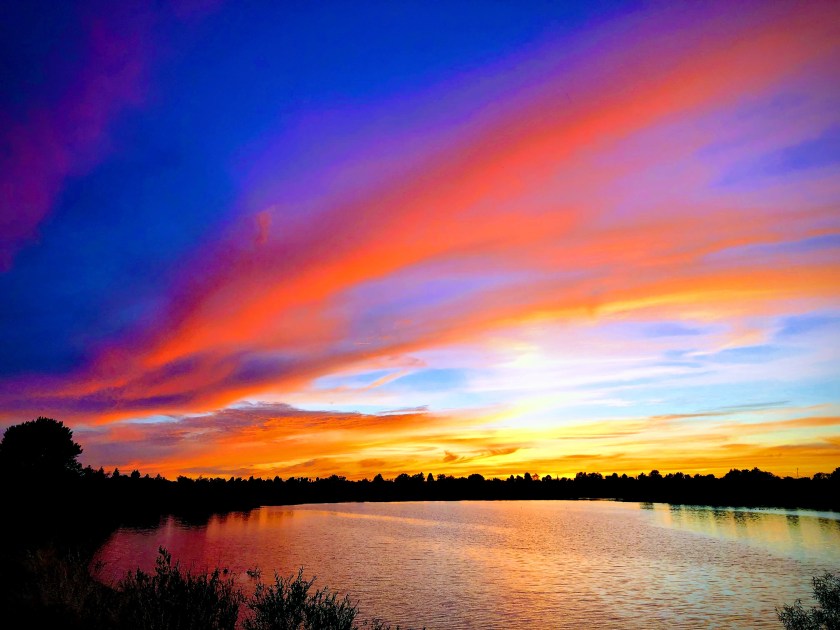
The sun was setting in the West as the train pulled up from a tunnel. That day, the clouds were weaving patterns of sand dunes in the skies – wispy ones strewn across the skies in no particular concentration. Definitely not corporeal in shape. Do clouds blush? These ones certainly were – they were blushing in the rosy hues of the sun, in the admiring glances given by every living being that took a moment to notice. A truly astounding sunset was in the making. The kind of sunset I would have liked to watch sitting atop a mountain, or by the seaside, watching the waters join the evening show with its myriad possibilities for reflection.

img_6659

But, like I said earlier, I was on a crowded train standing, and glad, really very glad, I was standing facing the window showcasing the sunset instead of having to face the other way. One does not always get the choice. My old heart swelled – I was never one to turn its back on Nature’s beauty. That evening, it burst forth in song. The red planet, Venus, peeped out from behind the rose-tinted clouds. However conditions are on Venus, from here on Earth, she looks marvelous in the early evening skies.

IMG_6753

I turned smiling to my fellow passengers to be greeted with: Nothing. If I wasn’t that euphoric, I might have despaired. Nobody looked up from their cellphones not even a glimpse into the beauties outside. I now realize how Artists feel when their best work is ignored. There the star was, shoring up extra hydrogen and fusion-ing the stores like no planet has before, to helium. The clouds, as already established, were blushing and putting on their best show, and no one looked up from their scrolling! T’was enough to make the poet in me curl up and wail. Instead, I hitched myself up and pointed the sunset out helpfully to the ones standing near me. Every one of them, when they saw the sunset, had a moment in which their pupils dilated, and they stood awestruck.

It felt like a fitting tribute to one who was reading The Little Prince by Antoine Saint Exupery at that very moment. Translated by Richard Howard, himself a poet, this rendition of The Little Prince matched the spirits of the sunset outside. The Little Prince enjoyed seeing sunsets so much – one time he actually shifted his chair multiple times around his little planet to catch the sunset 44 times.

Little_Prince

Excerpt from The Little Prince:

“One day,” you said to me, “I saw the sunset forty-four times!”

And a little later you added:
“You know– one loves the sunset, when one is so sad…”

“Were you so sad, then?” I asked, “on the day of the forty-four sunsets?”

But the little prince made no reply.”

I understood The Little Prince’s yearning for the sunset. I can be seen drooling over the sunset when the world is watching Super Bowl matches, or busy accomplishing something. I tell myself that watching the sunset is an accomplishment.

img_5532-effects

Sunrise and sunset are times of transformations, and probably the reason we enjoy them so much. They are beautiful, do not last forever, and set the pace for the next few hours of one’s life. The beautiful transformations are always the gradual, fluid ones – the ones that can assure us of our capabilities to adjust to the coming states – good or bad. A lesson in life’s rhythms.

I came home that evening and gabbled on about the folks on the train who missed the sunset. “Just imagine! What they could have enjoyed, and instead they all looked into their devices!” I said incensed.

The daughter gave me a look of exasperation as if to say  “Did you make a pest of  yourself and point it out to others?”, and went on to enact a scene with her little brother.

Child: “Do you really want to go out today? It is so so cold! And windy!”  

Mother: “Yes! I want to catch the sunset – why don’t you come with me?” 

Child: “Nope! You are nuts – I will look at the sunset from here, are you at least going to wear a jacket or no?” says she.

Mother (shrugs): “Jackets – phsih tosh bigosh! Jackets are for weak people!””

Child: “Amma!  No. You know what, that’s it. Either layer up properly – cap, jacket, shoes etc and then head out, or you are not going to see the sunset!” she says, her lips firm, and a smile twitching at this nature-kook of a mother of hers. 

“You know? You really do become a child with sunsets and fiddle-dee-dumps!”

I laughed heartily at this compliment. Like the author says in The Little Prince: the more he sees of adults, the less he thinks of them.

“I have lived a great deal among grown-ups. I have seen them intimately, close at hand. And that hasn’t much improved my opinion of them.”
Antoine de Saint-Exupéry, The Little Prince

I was doubling up and cackling with the children after their marvelous performance, and said smartly “Yes my dear children! Sunsets, like life, do not last forever! You want a sense of purpose? Catch the  Sunset!”

They rolled their eyes.

IMG_3013-EFFECTS

Candles in the Dark

I remember talking to a man who was our van driver in the Yucatan peninsula. His theories were astounding, and he seemed to have scoured the internet for the plausible and marvelous, completely ruling out the possibilities of evolution and what science proved to us. He was obviously a man whose love for the marvelous made him an interesting story-teller, and was probably well-received  at parties.

Here is a clip from his conversation:
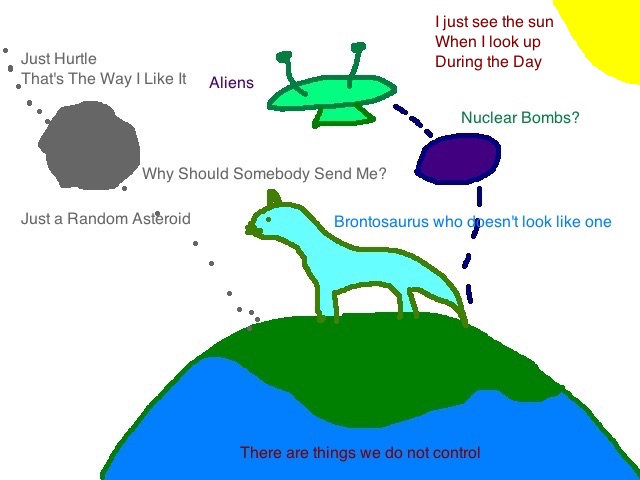
’Ah! Evolution. I don’t believe in evolution as a theory. I have a theory’, said the van driver. ‘My theory is that aliens are responsible for life on earth. I think that the aliens had tried to see if life can flourish on Earth with dinosaurs.’
Four second pause.
‘And then they found them too big. The dinosaurs were too big, you know? I think that the asteroid that hit the Earth was nothing but a nuclear bomb sent by aliens. You see it all the time, don’t you?’

‘Eh… What do I see all the time?’ I asked. I have to come clean and admit that I don’t see dinosaurs all the time. Or aliens if you come to think of it, and definitely hope not to see nuclear bombs sent by the unseen aliens to hit the now extinct dinosaurs. I like a quiet life.

aliens_theory

I felt sorry for the man. His mind was after all curious, and he was obviously in awe of the marvelous. He wanted to know what happened to the dinosaurs, he wanted to know how we came to be. A Science education, half-heartedly imparted in the faraway days of his youth were hardly enough for him to find and keep the wonder in Science. Moreover, Science was a demanding master. Every hypothesis required proofs, validation by peers. It all proved too much for the man. He was happy enough believing that an alien race came and bombarded Earth with their nuclear missiles when they felt dinosaurs were of no use to them. We could do the same to another planet, couldn’t we?

I am currently reading Science as a Candle in the Dark – In a Demon Haunted World by Carl Sagan.

In his usual manner Carl Sagan had hit the problem on its head:
We have arranged a global civilization in which most crucial elements – transportation, communications, and all other industries; agriculture, medicine, education, entertainment, protecting the environment; and even the key democratic institution of voting – profoundly  depend on science and technology. We have also arranged things so that almost no one understands science and technology. This is a prescription for disaster.  ”

I found myself nodding along as I read: One the one hand, while we know about Machine Learning and how it is used to change our ways  of life, we do not always understand all the variables involved and how each value affects the outcomes. We do not really know the chemistry behind the medicines we take and why they work  on our biological systems, and so much more.

On the other hand, somebody had shared yet another spurious discourse given by a religious figure. This time, the man spoke glibly – his half baked theories about the nature of the Universe had his audience enthralled. The man spluttered forth a jumble of high-sounding words, and the audience cheered and applauded.

Again, the audience was looking for nothing more than understanding a complex world. A world made more complex everyday with our technologies and applications.

The truth is the world is a complicated place. Grants determine research, enabling rich businesses and corporations to drive and set the tone for research (Remember the studies where the Sugar industry completely misguided the population by funding research related to Fats instead? ) Big money corporations also have the ability to have their own research facilities, and they are not always going to watch out for the common man. (Privacy concerns by Ethicist Tristan Harris – the  former employee at Google)

More than ever, we need to find a way to incorporate Science as a way of life, and equip ourselves with Baloney Detection Kits as Carl Sagan named them. We need to enlighten ourselves – maybe light ourselves a candle in the dark.

Books: Science  as a Candle in the Dark – Demon Haunted  World – By  Carl Sagan


The Wonder Formula

Someone told me once that we lose the joy and wonder in things as we knew more and more about how things work. If we knew the conditions were right for a rainbow to form, or the planets will shine in the evening skies brighter than usual, we seem to expect them, and then lost the magic of it all.

I have pondered on that often – could adding a pleasurable anticipation make up for the lost serendipity? As we watch the bleak skies of the winter, we can wait and feel the weight of the buds in the spring snowflake 🌱 plants, or watch the tulips bulbs shoot up from the Earth admiring their sense of timing, can’t we?.

While, waiting for the rains to subside, we can nurse a secret longing for a rainbow – I know I do.

Aside from all else, what isn’t lovely about a World that has rainbows? Maybe on other planets, with different atmospheric makeups than our own, rainbows themselves manifest differently or not at all, but it is comforting to know the colors of the rainbow and their perfect arc will be this way on this Earth as long as the suns rays can diffract the light in the moisture laden droplets.

img_6569

One day during the Winter holidays, I got to sit in a beach. It being the rainy season, there weren’t as many people around. There were a few beach lovers, so we curled up our beach towels and all set to greet the noisy seagulls. There I sat watching the Atlantic ocean with my umbrella open, sitting on a Mickey Mouse towel with a book in hand.

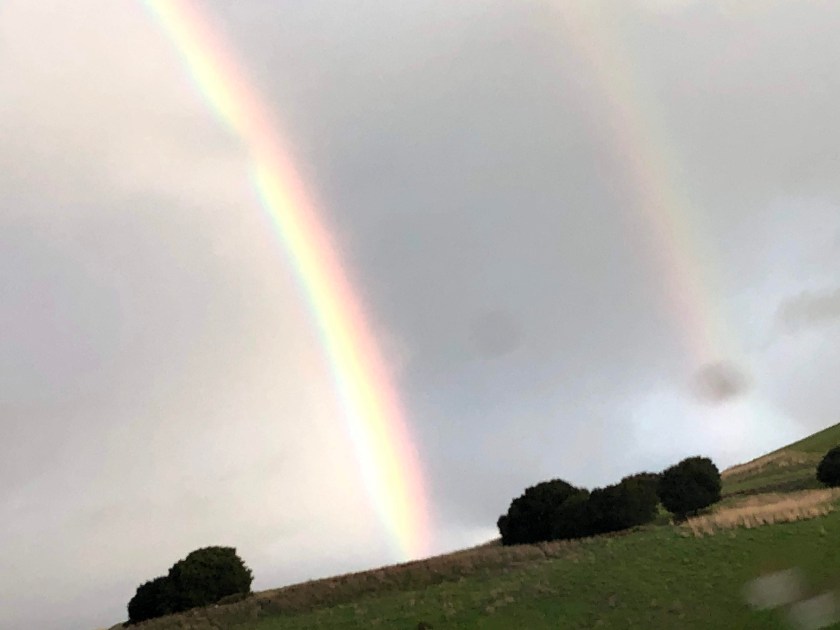
It was a few minutes afterward that we discerned the rainbow forming in the sky. How marvelous and wondrous an experience to watch the rainbow go from a faint smearing of smudged colors as though making up its mind whether to come out in all its glory or not; and then watch a colorful, bright rainbow full of the conviction of Being play on the horizon. The son came running across from where he was playing, flush with excitement pointing at the rainbow -🌈 “I knew it will come now.”

Sometimes, I wonder why we cannot be like children. Even though, they know the hows and whys behind things, they still retain Shoshin: the Zen concept of wonder as in a beginner’s mind. I smiled and patted him to sit next to me and take in the rainbow 🌈 with me.

After a while, he went back to playing in the ocean waves with his sister. I sat there, nourishing my musings with whimsy. I remembered some drawings of the daughter when she was much younger. Dolphins leapt out of the seas, with a rainbow arc-ed beautifully around them. Of course, children imagine the best possible things together – there isn’t any dearth or rationing in their imaginary worlds, is there?
Because when you are imagining, you might as well imagine something worth while.” as Anne of Green Gables would say.

The dolphins may get to see rainbows, but the fish do not. But maybe their world is marvelous enough with a thousand prickling and tricks of light that the water medium presents to them.
Musing in a world of rainbows is nothing short of magical even if I do know the concept of light refracting and producing the colors of a rainbow. My heart still lifts.

I had been traveling during the past few weeks. One such time on my sojourns, I left my home amidst brown hills. The summer sun had toasted the hillsides, and I yearned for a little respite to the eyes. In the two weeks that I was out, the rains had lashed the area liberally, and when I came back, the hillsides had turned a marvelous green. The rolling hills lifted their misty veils every morning, and I felt my heart pound with the magic of it all. Yes, I knew the rains make the grass grow, but the transformation is still a miracle that my heart waits for every year.

When I watch the dew drops glisten on the spring snowflakes,
When I watch the rainbow makes up its mind and throw itself like a garland across the skies
When I watch the eight-legged marvels creations catch in the sunset
When I watch the waves lap and play with the sandpipers

I feel hope stir in the spirits
I feel decisive and conviction in Being
I feel solitude’s gift can be tangible and needs to be nurtured for its fragile state
I feel engaged with the planet and all its gifts

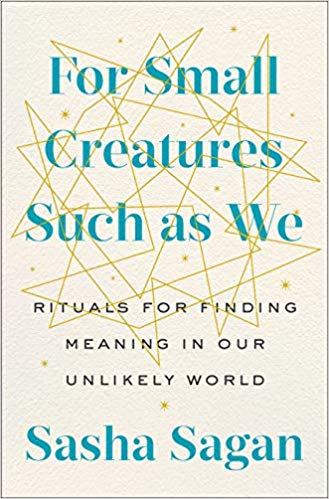
I recently read a book bySasha Sagan, that is full of the joy of being. Titled: For Small Creatures Such as We: Rituals for Finding Meaning in Our Unlikely World, the book immediately caught my attention and I savored its many truths and facts about our rituals and festivals – the meaning behind life’s celebrations.

“My parents taught me that the provable, tangible, verifiable things were sacred, that sometimes the most astonishing ideas are clearly profound, but when they get labeled as “facts”, we lose sight of their beauty. It doesn’t have to be this way. Science is the source of so much insight worthy of ecstatic celebration.” – Sasha Sagan

sasha_sagan

I was also reminded of Richard Feynman’s meditations on 🌺 flowers.

Ode to a Flower – By Richard Feynman.

There is beauty in knowledge, and wonder in anticipation. We just need a formula linking the two now.

For Small Creatures Such as We ( Sasha Sagan )

As I set out the kanu leaves in the backyard on a bitingly cold morning , the rain drops from the trees above dripped onto my back. When one refers to shivers down the spine, I suppose that is a literal enough description. I charged back into the warmth of the kitchen multiple times as I drew out the squiggly lines with rice flour – quick kolams to appease whom or what I did not know. I am not one for following rituals every much, but some how I like this one.

Kanu Pongal – Celebrated during Makara Sankranthi

Rains are lashing the Earth, and I am grateful. Last week, we celebrated the Indian version of Thanksgiving, Makara Sankranthi – the beautiful festival thanking Mother Earth for providing us with plentiful food, a nourishing environment, and so much more.

Kanu is typically celebrated by having the daughters in the family set the morning kanu for two reasons: (1) our forbears supposedly come and eat the offerings as crows, (2) the girls pray for the well-being of their brothers, who then give them gifts for their prayers and wishes.

In our feminist household of course, we have long since modified the ritual. It isn’t just the women who set out the kanu for the brothers – we all set the kanu and pray for our siblings’ well-being. We celebrate not just gratitude to Mother Earth for feeding our rather populous brood of humanity with her harvests, but also for the gift of sibling love in this large world.

Coincidentally, I picked up the book, For Small Creatures Such as We, By Sasha Sagan. (The daughter of Carl Sagan and Ann Druyan). After all, her father’s Cosmos book and her parents’ TV show, Cosmos, still has me ringing with the Joy of Existence every time I dip my feet into the “shores of the cosmic ocean“.

Sasha Sagan’s book does not disappoint. She says, and I quote:
Beneath the specifics of all our beliefs, sacred texts, origin stories, and dogmas, we humans have been celebrating the same two things since the dawn of time: astronomy and biology.

I sat there savoring that sentence for its simple truth, and elegant choice of words. Festivals and rituals are our ways of making sense of ourselves with respect to the larger cosmos – and her book marvelously outlined rituals and festivals in various parts of the world in different cultures and religions.

Discerning the sentiments behind the rituals is a particularly savory task, partly because I have a healthy skepticism about the Gods, and oscillate between being a secular agnostic and a believer. For those who are Secular in outlook, Sasha Sagan’s book is a marvelous read. It encourages us to come up with our own models for celebrating life in this cosmos.

sasha_sagan

That cold morning as I set out the kanu, I wondered, not for the first time, why we set out cooked rice pongal for the crows. Is it to acknowledge our evolution as mankind to be where we are? Using fire to cook, was probably the single biggest leap in our journey, followed by becoming agriculturists from the hunter/gatherer mode. How different would everything have been if these two had not happened?

I especially thought of the brilliant poem she had referenced in the book by Vietnamese Zen Master, Thích Nhất Hạnh :
In this plate of food,
I see clearly
the presence of the entire universe
supporting my existence.

I also read a poem by Mary Oliver on Rice in the book. Blue Iris, and together with the books For Small Creatures Such as We, and Cosmos, it makes for a marvelous way to start the decade.

Rice – A Poem by Mary Oliver

It grew in the black mud.
It grew under the tiger’s orange paws.
Its stems thicker than candles, and as straight.
Its leaves like the feathers of egrets, but green.
The grains cresting, wanting to burst.
Oh, blood of the tiger.

I don’t want you to just sit at the table.
I don’t want you just to eat, and be content.
I want you to walk into the fields
Where the water is shining, and the rice has risen.
I want you to stand there, far from the white tablecloth.
I want you to fill your hands with mud, like a blessing.

As more and more of us move towards urban hubs for living, the less we realize all that happens to make food available for us to consume. How many of us have seen rice plants, or coffee plants or pepper vines – actually even if we have, how many of us consciously think of the journey from farm to table in its cooked form?

It is truly an enterprise of staggering proportions to realize how much has to happen for smooth functioning of Society, and it is lovely to read a book that is so full of joie-de-vivre

I like the concept of  thanking Mother Earth for her bountiful gifts to life (Did I mention this already?). When it starts off with fierce winds ripping branches from your backyard trees, followed by glimpses of sunlight illuminating the clouds during the sunrise, followed by mild rain, and then seeing a glorious double rainbow; what is not there to feel thankful about?

img_6569

Books:

Teachable Moments

I was telling the husband casually about a friend of mine. “She is thinking of taking up primary school teaching.”

“Huh?! Really?” said the son, his ears twiddling, for the news interested him. He loved this particular aunt.

“Well – maybe I should tell her the best grades to teach then!” said he.

“What do you mean the best grades to teach? ” I said cautiously for I felt a moment to savor coming on in my bones, but acted as nonchalant as possible. “Elementary school teaching – doesn’t that mean kids in your school?”

“Well, you know how it is? We aren’t all just cute kids like you think Amma! There are some grades you want to be careful with.” he said with a meaningful look in his eyes.

“What do you mean? I’ve seen you children in Elementary School – so sweet you all are!” I said – knowing fully well the reaction this would elicit.

“Ha! Okay, okay – I’ll tell you. Kindergarteners are naughty, 1st graders are okay, 2nd graders are rowdy, 3rd graders are sassy, 4th graders think everything is lame, and 5th graders are okay.”

I stifled a hearty laugh for the moment, and asked him, “So only 1st and 5th grades are okay to teach huh?!”

“Yep! Pretty much! ” he said.

I gave into a full throated laugh, not for the first time admiring and thanking all the stellar teachers of the Naughty, Sassy, Rowdy, and Think-Everything-Is-Lame children. Somehow, these magicians strive to make students of them all.

teachers

Later that evening, the daughter came moaning into the kitchen – “Gosh! There is just so much homework! I mean – these teachers think we are awesome, but we really aren’t!”

Coming hot on the wheels of the Elementary School analysis, this seemed to be something to be milked for its true worth. So I tried.

“Are you saying your teachers are poor things for trying to uplift you and so on?”

“Of course they are!” said she.

“Remember they were teenagers too once, and probably realize that teen potential is high. They do want to give you the best opportunity to attain your true potential!” I said, thinking of the stalwart teachers of the folks who make the 30-under-30 and 20-under-20 lists.

Yeeaaarrcccchhh!” she said. I am quite sure Yeeaaarrcccchhh isn’t a real word, but a guttural sound open to interpretation. After a moment she said, “I sometimes think to myself what my teachers must be like if they were teenagers today. ”

There was silence for a moment. A silence I did not break while she gathered her thoughts. This was going to be something, I knew. When the daughter thinks of smart-aleck moments, it is best for the waiting populace to take cover.
“My Chem teacher would probably be obnoxious, but not a super smart version of Sheldon. My Math teacher would be a shy but sweet kid. My history teacher would have been the low key popular kid who is friends with everybody.”

I laughed enjoying this analysis as she went down the list of teachers. And then, I asked looking as innocent as it was possible to be. “What would you think of me as a teenager?”

“HA! Not falling for that one – better luck next time Mother! Mother, who is long past her teenage years!” she said, ruffling my head like I was a cute dog, and made off for her room to tackle the oodles of homework her stellar teachers had set out for her.

As a child I was keenly aware of both sides of the coin. Both my parents were teachers, but that did not stop me from becoming a dab hand at imitating my teachers, and giving them fond pet-names when required. The father and I enjoyed the creativity there.

All in all, I know in the name of professionalism and growing up, we lose this marvelous trait of making light of things, but I wish we didn’t.

For those who enjoy light tales of children in their schools, these are all good reads and worth chuckling anytime one feels the weight of the years settling in on them.

Some whimsical poems here:

We-Are-Teachers.Com

The Dream Weavers Web

It had been a few years since we had taken the magical pill. When the daughter was younger, she was enamored with Disney movies, was obsessed with unicorns and mermaids (the mermaids still hold sway), but the general euphoria with Disney has come down somewhat, or so we thought. It turns out, magic may be dormant, but thankfully not absent. When those Mickey ears came on, so did the smiles, the magic, the ridiculous mixed with the plausible, the tales with long tails, the myths and legends, everything came bubbling up in one hot cauldron full of fun and adventure.

I must say I was thrilled too. The day to day living tends to routinely pound magic out of us unless we make a concerted effort to keep it. The schools manage to do so for the children. There are Dr Seuss weeks, there are Read-a-thons, crazy hair days and crazed sock days to keep it all intact. But as the business of earning a living and adult hood takes on, there is a brush working in the background to make us more even keel, more predictable and less whimsical.

Reading children’s books keeps it for us in some ways.

I had expected to have a good time at Disneyland. I manage to put my whimsies on with a delight, and get the children going too. So far so good. But there are serendipitous surprises lurking even in the most magical of places. The Disney World in Florida was even better than I had expected. There was Animal Kingdom, in which I expected plastic hippos and lions made to scale. Consider my surprise then when we went on the Kilimanjaro safari to be taken into the hinterlands with animals in relatively free reign. It is marvelous to see a bloat of hippos, a tower of giraffes, a something of warthogs, and a blush of pelicans roaming freely. When a white horned rhino waddled across our path, we simply waited for it to move quietly. Even the children, though looking awed, did not utter a sound. There is majesty in nature.

One of the best surprises for me was the onus on conservation of our beautiful planet for the years to come. There were green houses showing us the marvels and possibilities of vertical farming. It was apparent to those of us floating in the boats by the lazy river taking us through these green houses, that many of us had never seen plants of many vegetables and fruits before. One excited child pointed to an eggplant plant, and squealed – “Look the eggplants are hanging from them!” I could see it was a beautiful revelation for the child who had simply assumed you picked it up in the grocery aisles of the supermarket, while making a passionate case for a Hot Wheels toy car at the billing counter.

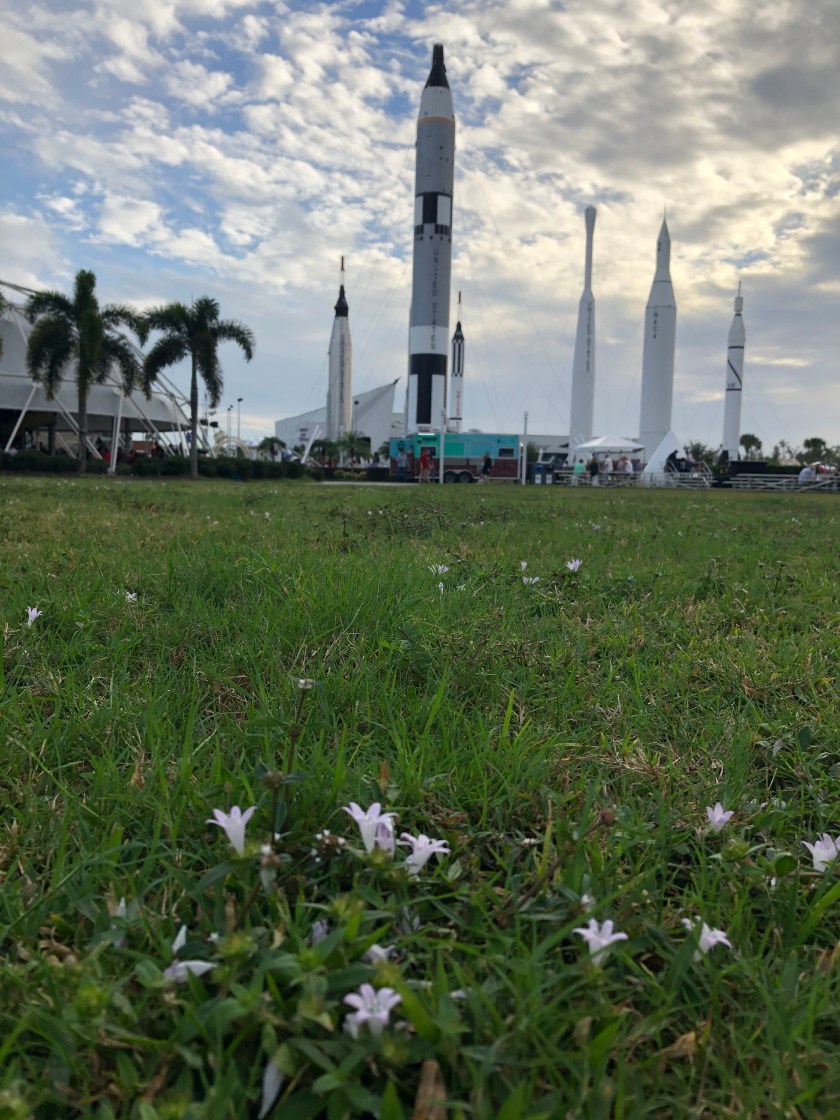
Saturated with the magic of life on this beautiful planet, we spent a day amidst the shots to space. Kennedy Space Center. The past merged with the magic of fairy-tales, the present beautifully thrumming with possibilities for conservation and conversation, and the future hits among the stars. Looking for possible planets for us to expand into.

It is marvelous to see we are on the cusp of a decade that holds so much promise. For among the young I saw in the parks, there will be quite a few starting their careers in the coming decade.

IMG-6125

The whole time, I was absorbing the atmosphere around me, little words were forming themselves into sentences. I was making my journey on the river of time and I was grateful for so many things. Some good sentences disappeared because I had not written them down, but I didn’t fret. It is often like this – playing with the words to relive my experiences.

Imagine how I felt then, when I read Ursula Le Guin’s essay on Writing. I felt the sage author’s words like balm, and nodded along. Writers are creators, but unlike potters and weavers, our products are less tangible. Our dreams are webs weaved in the magical recesses of the brain, and not all of it worth reading or sharing.

“Writing is a risky business. No guarantees. You have to take the chance. I’m happy to take it. I love taking it. So, my stuff gets misread, misunderstood, misinterpreted, – so what? If its the real stuff, it will survive almost any other abuse other than being ignored, disappeared, not read.”

When I read this piece in the essay though, I was grateful. I have written 800 posts over the past 14 years, and I would never have done that if not for the encouragement I have received from my dear friends and readers. It is magical. Encouragement like Love, is so fuzzy a thing to try to describe. For both the forces have the power to gently nurture, nudge, and poise for acceptance.

Thank you for all of that. Let the magical dreams weave on in the coming decade as well. Happy New Year and Happy New Decade – May the River of Time course on gently.

The Gingko Trees 🌳

“Did you know about the Gingko trees?” I said, knowing fully well the reaction it would elicit from the daughter.

“Oh Please! There is no need to tell everyone you meet about the Gingko trees you know?” she said.

“But there is! Maybe I will write about it.” I said. The gingko trees have given me no end of pleasure , and I must say, a certain amount of anticipation tinged with a spot of trepidation, during the past few months. The one interesting fact I know about them has been beaten to mythical status and back like the shedding and revival of the seasons.

“Are you seriously telling me that you haven’t written about the blasted Gingko trees yet?” the daughter’s voice was tinged with laughter and embarrassment. The conversation was happening in front of her friends after all.

If you really want to embarrass your teenage child, please take them for a walk explaining obscure horticultural facts along the way. Touch the leaves of the Gingko trees, tell them the scientific name is Gingko Biloba, take them back to the time when the dinosaurs roamed feeding off these very leaves and the time travel is bound to work wonders on them.

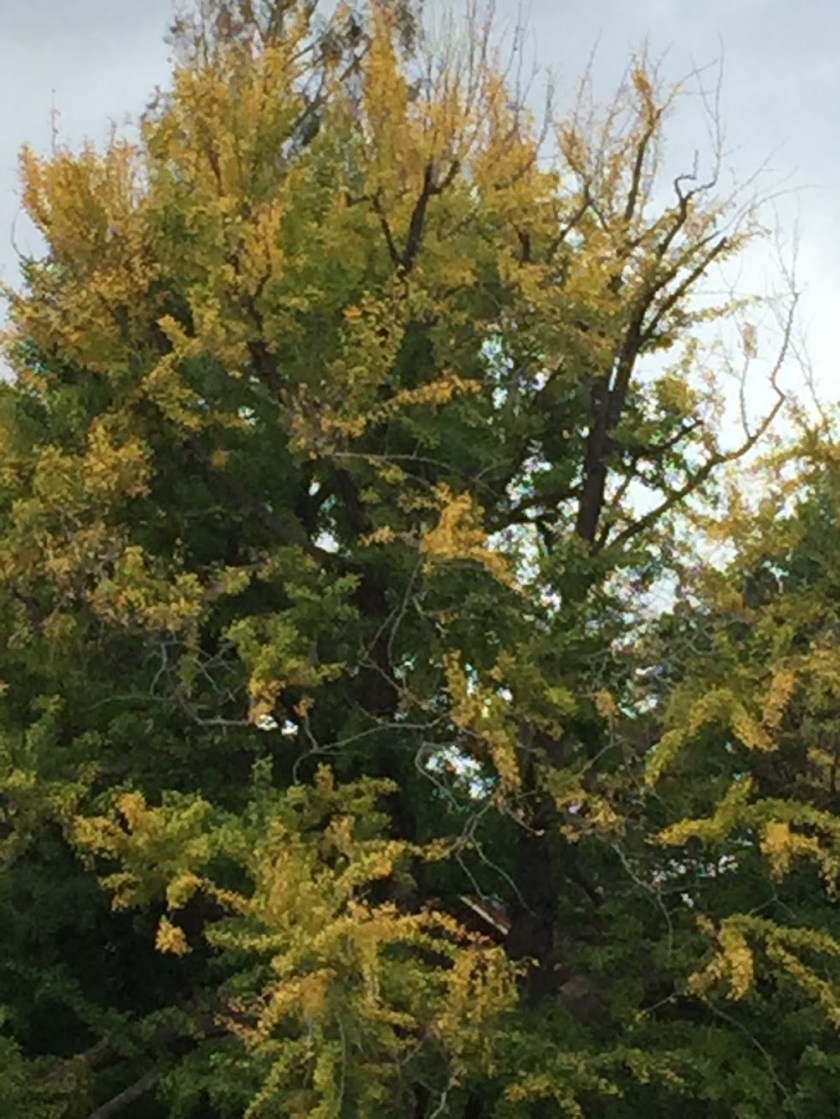
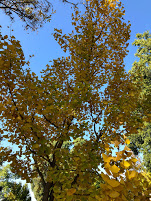
Only the teenager most proud of their parents is bound to glow like the dew drops glistening on a Gingko tree at the first rays of the sun. Mine looked like a cross between a beetroot and a maple 🍁 . I stood there poetically exclaiming that the beautiful Gingko trees had shed their golden tresses after all; happy that the interesting fact had been borne out truly by the sturdy trees.

gingko_2.jpg

Months before, as the colors of the leaves changed from olive green to golden yellow, I had told her about the fact that Gingko trees shed their leaves all at once.

“Don’t they all?!” she said being clever, but I had my answer ready.

“No they don’t as the crunch parties we have all of October and November show you. But the Gingko trees in the vicinity all shed together on one day in November apparently.” I said. “It is like the day of the party, and they somehow decide the day between themselves. Nature’s signals are truly quixotic!”

“Did you also know that Gingko trees have been around from the days of the dinosaurs?”
“And how do you know that?” the family asked looking at me curiously, as if my age was finally becoming clear to them. I did not like where this was going, and hastily assured them that paleontologists seemed to have found fossils and put their necks on the line with that fact.

Ever since, throughout November, we watched the Gingko trees with fascination, and self with a tinge of dread, for I had bored the family stiff with tales of the Gingko tree ever since I read the essay by Oliver Sacks in the book, Everything in its Place. He wrote of his learnings from the Horticultural Society of which he was a part, and he had said quite categorically that the Gingko trees party was one day in mid November.

gingko

Mid November came and went, and the yellow leaves swung their tresses proudly as the cold winds coursed through them. Rains lashed at them, and they swished them some more. Haughty Princesses they’d make, I thought to myself.

Thanksgiving came and went, and the family was now baring their fasts at me. “After all those months with the blasted gingko tree, if they don’t shed, you’ve had it Mother dear!” they said. I said that November in New York probably meant December in California, but I also prayed a little. You see, I had made a bit of a pest of myself over the past few months, and I knew it. Oh the horror if they didn’t!

December came, and I went out of the state for a couple of weeks. I cannot say that the Gingko trees were in my thoughts for very long during this time. Year end work-travels don’t give time to think of Gingko trees.

I came back, and I had come for the walk with the girls, when the Gingko trees swam into my thoughts again. Luckily for me, Oliver Sacks, was an astute man. Though, I don’t know whether they had all shed their leaves on the same day, when I saw them, all the Gingko trees in the vicinity, young and old, were bare. Their leaves lay in a heap around their trunks, and I looked vindicated. Thank you Oliver Sacks and Thank you Gingko Trees! I said privately heaving a sigh of relief.

I told the girls about the whole thing: the pest I’d made of myself, and how the solid trees had helped me after all, and they laughed heartily. “I told you my mom is a nature kook! ” said the daughter, but there was laughter there – I seemed to have redeemed myself in front of her friends.

I am not sure when I will be willingly invited next: I’d better get going on some Spring facts to dazzle the lot.

everything_place

Book: Everything in its Place

By: Oliver Sacks

Essay: The Night of the Gingko

The Paradox of Philosophy

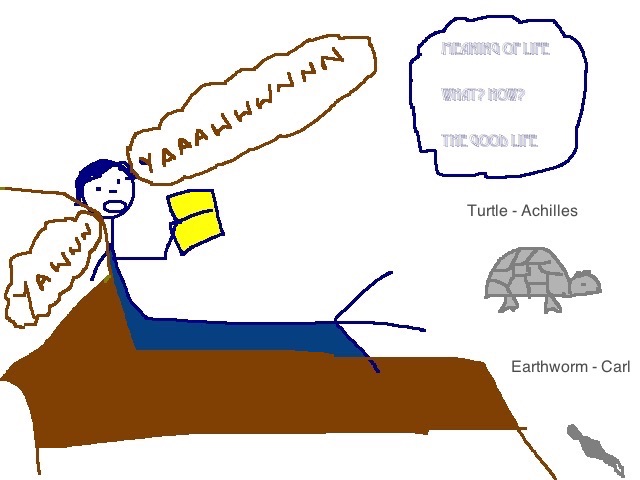
One evening, the husband was yawning loudly. The kind of yawns where after a few of these, you worry for your loved one’s jaws. The children and I exchanged knowing smiles. “He must be reading that Philosophy Book of his!” we said in unison, and started laughing.

The husband decided that to uplift himself, he must invest in a book of Philosophy. If ever there is a soporific cure for insomnia, that seems to be it, looking at the effect it has on the husband. The Philosophy book has him floored regardless of time of day. Whether at 9 am or 10 pm, within minutes the man is snoring much like the philosophers say the man with a good life should. (Only he hasn’t got to that part yet).

meaning_philosophy.jpg

In an attempt to retain enthusiasm in the text, he has taken to explaining things to us. It hasn’t gone well so far, for we scent his Philosophy lessons from a mile away, and scuttle like that turtle Achilles is supposed to catch up with. According to Zeno, Achilles would never be able to catch up with the Tortoise since the Tortoise would always be ahead of Achilles albeit by a smaller margin.

Achilles & The tortoise
Zeno’s paradox of motion

The husband has evolved and now solicits our attention on walks and hikes. Zeno would have either been proud of us during these evening walks, or been utterly shocked at the frivolous way in which we were treating his treatise on paradoxes. Known as Zeno’s Paradox, old Zeno does not seem to be a guy known for this love of exercise. He preferred to spout philosophies on how it must be quite impossible to get to one place from another. (Hence the paradox, since we all know that we can get to one place from another in a finite amount of time).

Zeno might have been offended, but not the husband. No Sir! He ran after us trying to explain Zeno’s paradox, while we ran even faster – “See, this is why Zeno’s Paradox doesn’t work. We are running faster than you, and unless we slow down or you speed up, which seeing the state of your dinner plate is not possible, you cannot catch up with us!” we said panting. The somewhat heavy dinner protested inside us – “Hey!Hey! You said mild walks to calm the system down. This is not a mild walk. This stroll is a Paradox is what it is!”

To be fair to old Zeno, his philosophies were laid out about 2000 years before Calculus was invented.

Of course if old Zeno were to be around today, he would be shown the following you-tube video
The Essence of Calculus – (3blue 1 brown)

To which the old fellow would have said with good humor and grace, “This is so cool!” and he could go back to come up with other interesting questions in life

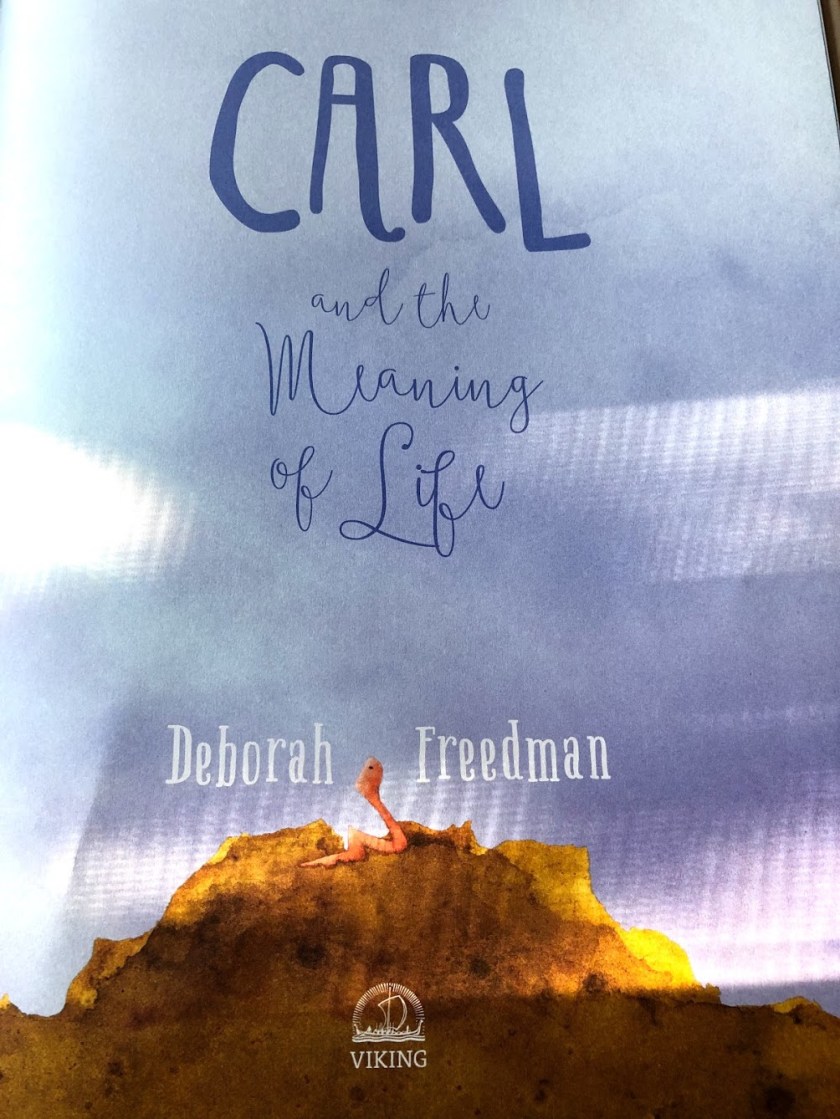
It is indeed refreshing to find hours of lectures, the huge books written by all and sundry summarized in a children’s book, Carl and the Meaning of Life.

carl_life.jpg

Carl, the Earthworm spends his time underground, digging, tilling and keeping the soil soft and fluffy. When asked about his purpose in life, Carl is unsure and sets out on a quest to find out his purpose in life.

Sadly he returns to where he started from after finding no answers to his purpose of being and finds that the ground has become hard and dry. Vegetation has dried up, and the rabbits are moving elsewhere in search of greener pastures. It is one of the most joyous things for the poor earthworm – he realizes then what his purpose is. He burrows underground and spends months, raking the soil and turning it upside down.The flowers start to bloom, the rabbits linger on and therefore, so do the foxes, and all of life thrives again.

I read the book out to the husband one day to save his jaws and his guffaws sent the earthworms in our backyard scuttling back to work. He flung his Philosophy book, and leapt out of bed and said his purpose just then was to not fall asleep and watch 2 hours of television in which he hoped to finish 10 different movies.

I laughed. Maybe the meaning of life comes to those of us who do not think too much, but do.