Blame The Toxos

Every once in a while a book comes along that changes the way you fundamentally view things. I Contain Multitudes by Ed Yong is one such. In the book, the author covers various types of microbes, bacteria and pathogens that we carry within ourselves or encounter in the world. A fascinating adventure awaits the reader on this microscopic journey.

The book shows us how each being is a complex symbiosis unto itself. A concept we know vaguely but appreciate deeply when we read the book.

screen-shot-2017-02-20-at-1-04-57-am

We have heard of parasitic infections that control the minds of hosts like rabies. Rabies makes its carriers aggressive and the only way for it to spread is by biting and scratching another being. ( Rabies is probably the basis for the myth of the werewolf.)

There is one particular type of parasite that is chilling in its tale. Toxoplasma Gondii or Toxo is a single celled organism that latches itself onto brains. It is also referred to in the TED talk linked below for further information.

Quote : Toxoplasma Gondii is a brain parasite otherwise known as Toxo. It can only sexually reproduce in a cat; if it gets into a rat, it suppresses the rodents natural fear of cats and replaces it with something more like sexual attraction. The rodent scurries towards the cats with fatal results, and T.gondii gets to complete its life cycle.

Toxo has been known to manipulate mammals. It makes rats run towards cats and offer themselves as prey just so toxo can reproduce. Classic tale of self destructive behavior, wouldn’t you agree? It is also proven that many humans play host to Toxo.

TED Talk by Ed Yong

The book led to many happy, wild conjectures such as:
(a) Could that be the reason Cat videos are so popular on You-tube? I mean, I have always wondered: Why Cat Videos? Why not hippo videos?

(b) Humans affected with Toxo also fare differently on personality tests, showing different trajectories when it comes to risk taking and pleasure seeking behaviors. Could a combination of Toxo and Dopamine releasing behaviors such as increased reliance on social media have engineered the elections?

It sounds like a weird sci-fi scenario: Toxo encourages self-destruction, dopamine clamors for fake news, and the world falls prey to single celled organisms manipulating mammals (us), while we run around like zombies thinking we have free will.

The understanding of human biology has fascinated mankind for centuries. But advances in microbiology itself is less than 200 hundred years old. Even then, our narrative surrounding the understanding has been harsh: Bacterial infections, germs, plagues, survival of the fittest. While there are numerous examples of these, the truth is that we also play host to a large number of helpful microbes and bacteria.

Theodore Rosebury, a microbiologist, wrote in 1928, during his research that:

“The knowledge that micro organisms can be helpful to man has never had much popular appeal, for men as a rule are more preoccupied with the danger that threatens their life than in the biological forces on which they depend. The history of warfare always proves more glamorous than accounts of co-operation.”

A fact so timeless that we ought to have it framed in halls of learning if it isn’t already.

P.S: Please watch the TED Talk by Ed Yong – it is only 13 minutes long.
Stop and Look at the Snails

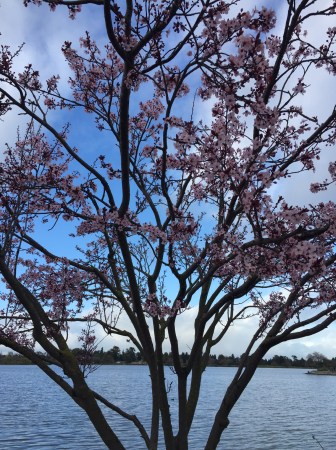
After enduring a particularly long spell of drought, we are relishing the rains lashing down on us this year. The clean, fresh air after the rain is one we relish. As the toddler son and I make our way to school every morning, our heart lifts at the marvelous rainbows, the cherry blossoms starting to bloom and the beautiful snails out on the roads.

img_5103

Sometimes, we come up with silly names for the little creatures we find on our path. Turbo the Snail is always a welcome sight. Earthy Worm invokes the same curiosity if not adoration. Toby Turtle is remembered with affection, and we wonder aloud how we can find ways to hobnob more freely with turtles.

Watching the snails leave a shiny trail behind them one rainy day, we squatted there wondering whether that trail left behind by snails is poisonous. That innocent minute squatting on the sidewalk looking at snails criss-cross our path raised so many questions. It looked to us like a snail could not get very far if it had to flee a predator.

Where do they live when it is not raining and can’t move?
What if we had slippery slopes for snails? said the toddler always keen to help.
Do only snails walk the slippery slope? (completely lost on the toddler of course) and so on.

pets


“Amma, we will be late! Hurry up.” said the conscientious fellow and we galloped past the snails wondering how much there was to do in the world, and how little we manage to do.

The thought that there is so much more to be done can sneak up at you in the most unexpected moments. Like the time I was reading a love story written by Alexander McCall Smith in the book Chance Developments. The story imagined the life of a young man in Scotland using a vintage photograph of a young man helping to change a car tire in the presence of a beautiful young lady in a cream colored coat.


In the book, the young man is taking a stroll around a loch and is fascinated by some plants that many ignored because they were believed to be poisonous, but he nibbles at them lovingly almost, since his father had tried and demonstrated to him that these particular plants were not poisonous at all. He had studied the properties of the plant, and traced the origins of the myth to a Celtic folktale, and though most tales started off with a kernel of truth, this one probably did not.

How is a story as innocuous as that supposed to make one feel like there is so much to be done? Because they are so many ways in which we can remain curious, to question the this-is-how-it-is-done-s of the world. The fact that we can bust one myth just by questioning it is good. And it proves that we pave the path for one more myth to be broken and then one more.

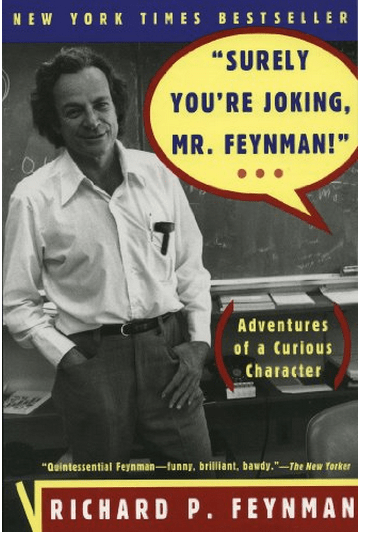
It has been a few years since I read ’Surely, You’re Joking Mr Feynman – Adventures of a Curious Character’ By Richard Feynman. I remember one passage in which the celebrated scientist talks of watching ants as they made their way around his backyard. Marveling at how they navigated obstacles placed in their path, and admiring the innate steadfastness of the species.

Screen Shot 2017-02-16 at 10.28.43 AM.png

The quest for knowledge can be a curious, interesting journey, if only we take the time to stop and look at the snails.

Richard Feynman on the Meaning of Life – Brain Pickings

Toby Turtle’s Lessons on Life

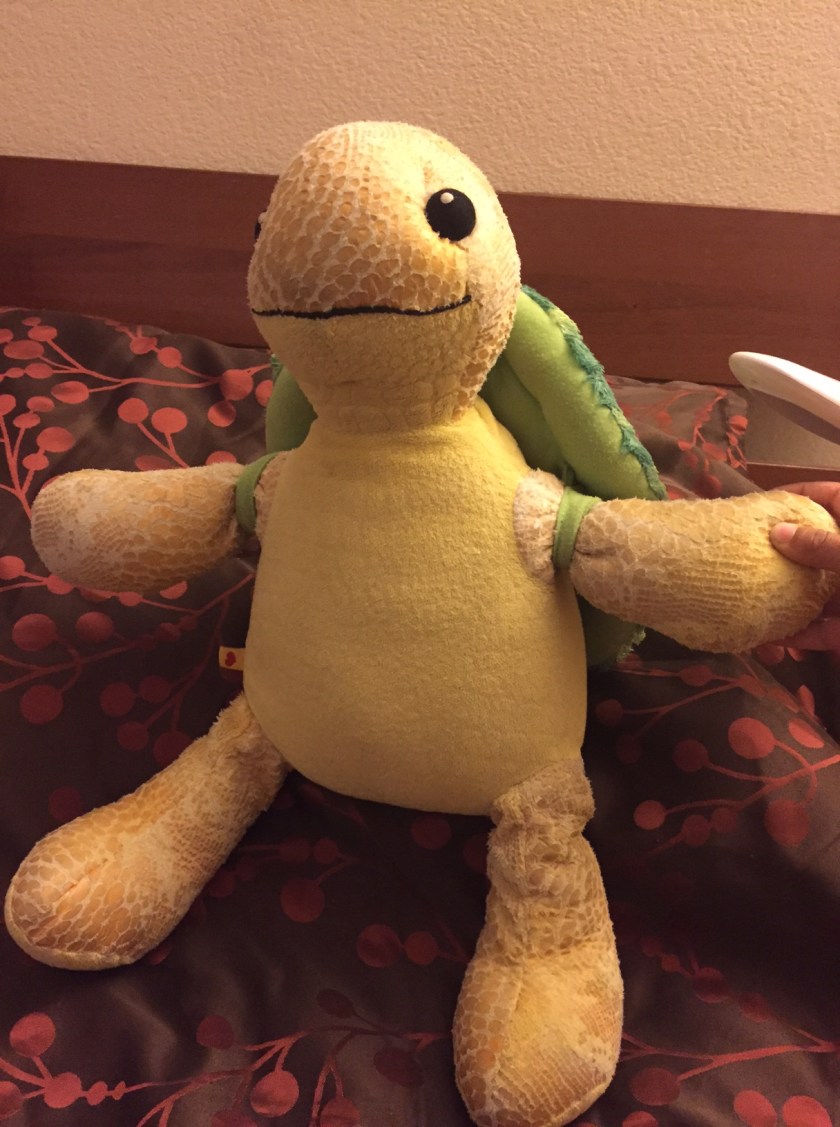
Toby the Turtle came home for a week. He was a much loved member of the family, and soon after helping to cook a meal would join hands with heroic forces to battle evil in Spiderman Vs Sinister Six wars. Toby the Turtle is the kindergarten classroom stuffed toy who comes home for a week to the proud Star of the Week. It is a great honor for the children, and I saw the kindergartener in our home puff out his chest and look important, as he carried Toby around. He loved having someone to take care of, and I must say Toby lightened the atmosphere in the house.

img_4965

We all seemed to like having the stuffed toy around, not least because of the change in pace, but also because Toby brought the class journal with him. Every child who had Toby had written a page or two about what they did with Toby, and how much they loved him.

“Toby is my friend.”, ” I wish I could keep Toby with me forever.” seemed to be common sentiments across all the pages in the journal, and I must say had I been Toby, I would have loved it.

In other news, I recently read a book on aging, Being Mortal: Medicine and What Matters in the End by Dr. Atul Gawande. Atul Gawande is a surgeon, and the book is a must read for all of us who must contemplate mortal life. The business of living with dignity, pride, compassion and meaning. In the book, Dr Gawande explores the process of aging using multiple examples, interspersed with his experience with his own father, who was also a surgeon. His father gradually loses his health, and despite his deterioration, was determined to lead life on his own terms.

Modern medicine has made phenomenal advances. Life expectancy has increased, and for the first time in the history of mankind, we have as many people under the age of 5 as above 80.

When something happens and people make it into hospitals, the attending surgeons and doctors will do everything in their power to ensure that they can save lives, and often let the near and dear know what the problem is, and what the medical options are, but not much more.

Dr. Gawande explains that it is up to us, as patients, family members or friends to ask and be equipped with the critical questions of living. Questions such as:

1. What is your understanding of your illness and how far along has the condition progressed?

2. Your fears or worries for the future

3. Your goals and priorities

4. What outcomes are unacceptable to you? What are you willing to sacrifice and not?

And later,

5. What would a good day look like?

Though it examines a serious subject, it is not a morbid book, and pragmatically looks at the problem of aging in the current medical system. There are lively portions that explore the elements of a happy life as much as it opens our eyes to mortality. Take for example: Bill Thomas’s effect on Geriatric care.

Dr Gawande talks about one scenario where Dr Bill Thomas, a director of a medical facility in upstate New York, was upset about the well-being of those in the geriatric ward. He being a quirky, brilliant gentleman, and felt that it was the lack of vibrant life around hospitals that is the cause for long term residents to suffer from boredom, loneliness and depression.

Having grown up on a farm himself, he petitions the management that the missing link was teeming life. After some work, he manages to convince the management that having some plants, birds etc would help people get better sooner. As soon as the nod came, he got busy, and before people knew what was happening, truck loads of living beings descended on the premises: Not a dog here and a cat there, but hundreds of parakeets, dogs, cats, rabbits, hens – a whole menagerie.

aging

The next few days were mayhem as nurses and doctors worked hand in hand trying to get the birds into cages and making sure there was someone to feed the birds and so on. The hospital was furious, nurses complained about having more to do as if caring for the old people were not enough. Administrators complained about infections, they complained about cleanliness.

But something phenomenal came about from the experiment: Patients who were uninterested and mute took notice. They would watch the birds, and weeks later would talk, and in some cases, patients cared for the birds, and whenever they could, took up feeding the birds. In time, it resulted in fewer health interventions. People were happier and general health improved. Every body liked having some being to care for.

(You can read the section of his interview here, though the book has the whole story)

http://nymag.com/scienceofus/2014/10/atul-gawande-on-being-mortal.html

Quote:

And it didn’t boil down to how the animals saved them. It boiled down the idea that people need to have purposes in their lives, and that you could offer ways that they could connect to them. That they could live for something larger than just being alive.

That is the essence of humanity. We need to care, we need to feel needed and wanted, and we need to feel empathy: whether we are 5, 40 or 80.

Toby the Turtle taught us that. Kindergarten teaches us about life in lovely ways.

The Mute Painter

A version of this post, The Colour Blue, appeared in The Hindu dated 30th January.

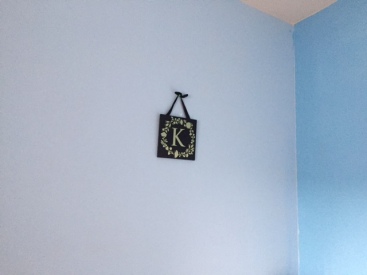
I had written in an earlier post about how the daughters room looked like the Flying Zoos of Babylon. It was time for a radical change.

Multiple trips to the hardware store had yielded one decision: the room was to be painted in shades of blue. It is funny how an unassuming speech-impaired mute painter influenced our choices three decades on, on the opposite side of the world.

Years ago, when I was about the daughter’s current age, we were having our house painted. Regular readers know that I lived in a small mountain village nestled in the Nilgiri Hills. One of the advantages of a small place like that was that everybody knew everybody else. The local barber came home to cut hair, the tailor stopped by our place on his way home from work. The maid knew the milkman’s wife. The train driver waved to my mother and waited while she skated down the slopes to catch the train. When the postman’s daughter wanted to marry the station master’s son, the mediating talks for the cross religious marriage were willingly handled by all of the above people.

Therefore a matter such as painting the house was just handed over to a genial pair of fellows who everyone knew did a good job. One of whom was mute – not being able to speak hardly deterred him however, and he used guttural sounds, shakes of his head and hand gestures to communicate. And when we finally got the import of what he was trying to say, he gave us one of his beaming, innocent smiles that made you want to smile too.

My father, always had a soft spot for those less abled, partly because he was hard of hearing himself, and used a hearing aid. Consequently, all of us have developed somewhat loud voices in the house: When we ask for the cereal to be passed across the table, cereals are passed across tables in all houses in the neighborhood.

When the  painter and his assistant showed up to paint the house, they asked us the colors to use to paint the house.

Cream was boring, and it showed dirt. Maybe the living room could have cream, but all other rooms could use a different color, the father said in his stentorian tones. The  painter nodded indicating that it was sound logic and that he approved of it.

Yellow for one bedroom (nod from painter.)

Light brown (beige) for another room (nod from painter)

Light pink for girl’s room (vigorous head shaking and bah-bah sounds with his hands gesturing NO)

Clearly, he did not approve of pink for my room.

‘Why?’, said the father and I in unison.

Gesturing and loud interpretations followed. Anyone who did not want to listen to what the other man had to say could simply have wrung his hands and given up. The easiest route would have been for the father to say ‘Pink it is!’ since the choice had been mine in the first place, and for the painter to just shrug and paint it since that is the way we wanted it. But all of us wanted to hear the other’s viewpoint, and even though it was difficult and somewhat hilarious to a casual observer, it was well worth it.

dumb_painter

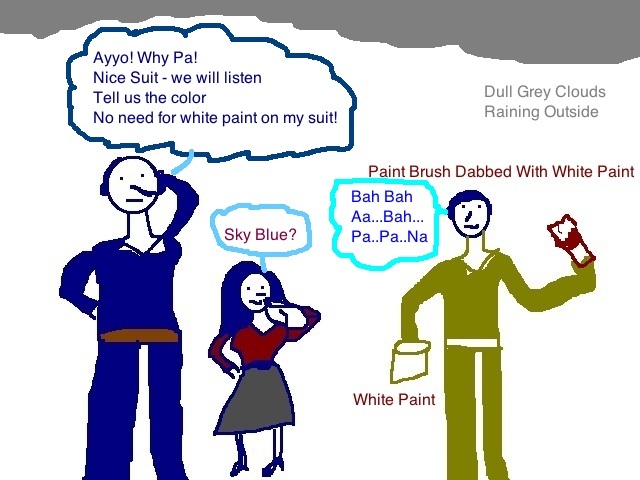
The father was wearing his favorite Navy blue striped suit. The painter used that for starters. Bah – bah, he said pointing to the dress.

‘Navy blue? Too dark pa. We want the child’s room to be bright.’ , shouted the father.

More frustrated nods greeted us at this, and the painter went and brought in a tin of white paint which he carried with him at all times by the looks of it.

He took the paint and indicated painting white over my father’s navy blue suit. I can’t say that pleased my father very much, but he managed to leap back from the paintbrush and crack a joke.

He tried several other things to make us see reason. It took a while but the painter finally huffed out towards the door, and we quizzically followed him. It was not like the good-natured fellow to huff off like that. He opened the door, braving the pouring rain outside, and he pointed up at the grey, cloudy sky and the wall and then me.

‘Sky blue?’,  I asked.

He stopped, look at me and gave me one of his beaming smiles that blessed my intelligence when it should have been doing just the opposite.

Sky blue it was. Ever since, almost every house we moved to within the campus had at least one room in light blue.

I noticed that as we were looking out color choices for the daughter’s room, I was gravitating towards the light blue, and maybe I managed to convince the daughter too, for she too was leaning towards that. In today’s world, the painter would whip out an app and show us the room in light blue, and we would have nodded our assent, the whole thing from start to finish taking less than a minute.  But, I am glad we didn’t have an app. That smile he bestowed on us would not have been half as wide had we not tried that hard to understand each other, nor would the sight of a light blue wall have any meaning.

Sometimes, hard is good. Life is after all a string of memories held together by strands of time, and the strength of the emotions in our interpretations and recollections.

IMG_4955.JPG

I do not know whether the painter remembers this, but I remembered him in the room that day as I regaled the tale to the family. We dabbed on the first stroke of sky blue paint to test the color, and smiled at each other, as wholeheartedly as if the silent speech-impaired painter had convinced us.

The Flying Zoos of Babylon

A few years ago – about the time when I could stroke the daughter’s hair without lifting my hands, or standing up on a stool, we let her paint things on her room walls. Fresh from reading The Last Lecture by Randy Pausch, we were the cool-parents who let her draw on the walls.

Within Our 4 Walls

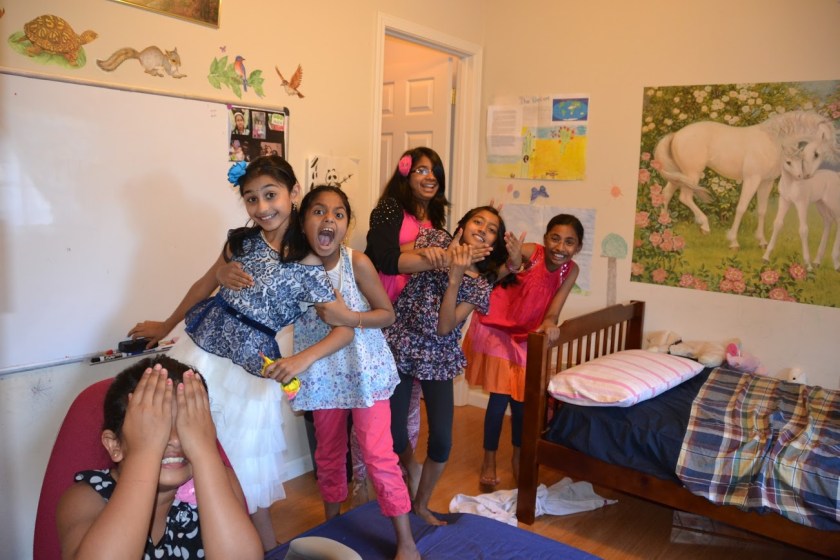
Her friends trooped into her room with longing looks on their happy faces, and said their parents would never let them do that.  The daughter glowed when she heard that and she painted some more. ‘Sistine Chapel may have a dome, I have a wall’, being the general sentiment. Fat blue unicorns ran from multi-colored balloons that flew at the same height as the lampposts in saffron. Ice-cream cones sparkled under rainbows and Some other pictures that I cannot classify into shapes also dotted the walls. The effect was quite endearing once you got over the shock of it all.

Then, one of her doting aunts got her wall murals for the remaining walls. One wall was a beautiful wildlife themed one. It had wild grass, and in there were rabbits, squirrels, deer and a large tree on which birds sat. Looking down upon this forest floor teeming with flora and fauna was a monkey shaped clock faithfully ticking away. One wall boasted of a height chart with Winnie-The-Pooh themes. I cannot deny that the room looked beautiful. These DIY blogs and Instragram feeds are always showing off that kind of thing. I have seen pictures of rooms like that taken up from multiple angles, at different times of the day, used and reused in multiple posts, with an alarming number of people liking them. We forgot to take pictures. I salvaged a few from the scraps.

keena_room

Then, the intervening years mulched the room somewhat.  Santa came in one Christmas morning with a large white board to be mounted on the wall containing the wildlife murals. The monkey clock faithfully counted the days as they passed. One fine day, the deer peeled off.

Interior design has never been her grandfather’s strong suit.  In a stroke of brilliance, he decided to save the remaining animal murals. The rabbit took a giant leap for rabbit kind and landed up above the white board cruising at the same altitude as the birds.  It became legend and I am sure he is much bandied about in rabbit-lore similar to that rabbit,El-ahrairah, in the charming Watership Down series written by Richard Adams.

watership_down

Squirrels (live ones) peeked through windows and confirmed the tale to the animals. It was true – this rabbit (maybe he was El-ahraihrah) was flying at the same altitude as the birds even without wings. The raccoon felt sad at this and though he lost a toe during the process, made the leap too and sat atop the white board. So, the stumps of grass languished below the white board, while the rabbit, raccoon and birds flew above the white board. It truly looked like the Flying Zoos of Babylon.

Monkeys, whatever you may say, have a dignity they like to maintain when it comes to mingling with rabbits and raccoons. They like to taunt and tease and then scramble up to the top. But there was no top to go to now. The status quo had changed. Darwin had not prepared monkeys for this eventuality, and the monkey clock’s life ebbed out. Time stood still as the decor of the room deteriorated. Only magic could save the room now.

room_fun

Enter Moonshine and Sundrop. A large unicorn mural, featuring 2 unicorns lovingly christened Moon-s. and Sun-d. were mounted to hide the now-hideous drawings.

For some time atleast, peace was restored. The room continued to host hordes of friends.

You know these time lapse videos that show the changes on Earth over the last million years? Something similar would do justice to the changes in the daughters room over the past few years. Poster boards came, photo frames went, wall hangings came, murals went, bunk beds came, bunk beds went,  desks and bookcases came, much larger ones took their place. All under the benign twinkling of the glow-in-the-dark stars on the roof fading with the ravages of time.

There was one thing that was evident. It was time for a change.

That is why you saw the whole family hanging off the walls at various heights on New Years Day. (Part 2)

Would You Rather?

On a recent trip, we were caught up in a snow storm. Fresh from the battering of the storms, as we drove through the pouring rain in the gathering darkness, I sat looking out the window when the husband turned and looked at me.  Have I told you about the husband giving me work to do? I must have. It is a common enough gripe in the car. If you peer into the car as we tootle along somewhere, you will see the daughter lolling around in the back seat with a pillow, several books, a quilt in the winter etc – (Queens in their palanquins could not have lolled in such comfort), the son looking out the window unnecessarily excited by those trucks carrying precariously perched cars, and self trying to soak in the passing scenery if the husband is driving.

The husband, far from contenting himself to driving, feels the need ‘occupy’ our time. We have tried telling him that we don’t need to be entertained, and that we are quite happy left to our own muses during the car-ride, but that does not seem to deter him.  You see, I do not enjoy checking the route to see whether the road ahead shows a red stretch on the Google maps app. If there is heavy traffic, it will be red being my sagacious view of the thing. What can one do about it? But the husband demurs. He wants me to check if there is red ahead, what alternate routes we could take if there is a red ahead, for how long does the red stretch – is it like a quick spot of kumkum worn to appease a priest or the devout kind that streaks the entire span of the forehead parting like in Tamil serials? Is there also a touch of the turmeric before and after the red? (Baboons in Tamil Serials)

haldi_kumkum

The skies had turned into an inky blue and the dark grey clouds hung heavily over us as the rain pelted down at us. The traffic ahead slowed down a little bit and the brake lights glowed red against the dark skies. The husband looked at me, I avoided his gaze and said with aplomb. How about we all play the Would-You-Rather game? We had just learned of the game from our friends and this seemed as good a time as any to try.

Would-You-Rather check the traffic or play a game?

Would-You-Rather is a sterling game in which one asks questions such as :

Would-You-Rather be (Rich & Unknown) or (Poor & Famous)?

Would-You-Rather be Hunted or be a Hunter?

Would-You-Rather be a Teacup or the Tea?

When played with the right set of questions, it can be quite a stimulating game, since it really makes one think.  Some of the questions were creative and some humdrum, but it was interesting to see the range of questions.

The daughter’s were creative and sometimes invoked magic.

Would-You-Rather  be a famous scientist who invented the most powerful thing that can destroy life, or be an unknown scientist who increased food production?

Just when you beamed at her and felt like it was a good-question, she’d say:

Would-You-Rather  be on a hill with unicorns or in a city with pixies?

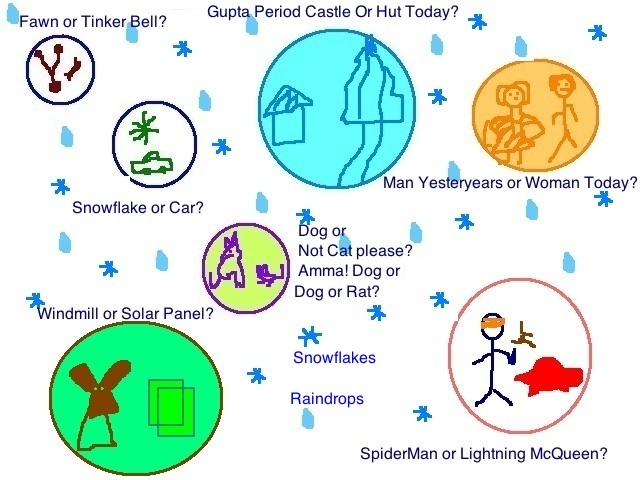
Since we had been crawling through snow and getting through mountain passes, the bulk of the little son’s questions had cars, snow, super-heroes (super-heroes are always there!)

Would-You-Rather  be a car or a snowflake?

Would-You-Rather  be Spiderman or Lightning McQueen?

Would-You-Rather be a car in the snow or a car in the rain?

Parents true to form can never really pass up any opportunity, and so ours had science, history, economics or magic:

Would-You-Rather  be a windmill or a solar panel?

Would-You-Rather  be Tinker Bell or Fawn (Engineer or Zoologist basically)

Would-You-Rather  be a Woman in Today’s Age or a Man in the Golden Age of the Gupta period?

would-you-rather

Most questions segued (segwayed) into interesting discussions and we were rather enjoying ourselves. Maybe I looked too relaxed in the passenger seat, for the husband’s angel tapped him on the shoulder and reminded him of his stern duty to give me work. He glanced at me in that swift appraising fashion that I know spells trouble for me. ‘Look up some questions on the internet to see what they’ve got.’  he said, and I moaned.

“What is wrong with the set of questions we have now eh?’ I asked heatedly. ‘Here we are having a perfectly good time and you want me to see what the great folks on the internet with their bulbous brains have for the game.’

‘Just check – maybe there are some really good ones in there.’

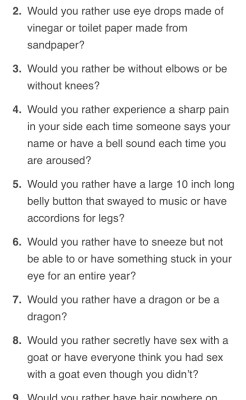
So, I checked and this is what I got.

fullsizerender

Would you rather snort into toilet-paper or tissues – my foot! That should teach us that the internet is only as good as our weakest link.

The Would-You-Rather is a jolly good game to play in the New Year as we are being pressured into taking New Year resolutions.

Would-You-Rather try to fix some aspect of your personality that is bothering you, or learn something new?

Would-You-Rather resolve to exercise more or improve your well-being

Would-You-Rather Dance or Run?

Would-You-Rather learn to entertain yourself or be entertained?

What Would You Rather Do or Not Do?

Scoff at Coffee Or Chess With a Super-Hero?

This winter has been a time of amazing road trips:

Dodo, Dragon, Dinosaur Dis-apparitions
In Boysenberry Jelly & Mistletoe Jam
The Wind, The Snow & The Rain – Part 1
Weaving The Sequins Of Time
The Curious Curvy Trees
The Salons of Bodie

With all the excitement of the trips and the experiences therein, there is also the time in the car. Audio books and songs compete for time with games in the car. Playing games with children is an experience unto itself. Peacekeeping forces are deployed every now and then, council meetings to determine rules and regulations, are required. Who said the family isn’t a mini-government unto itself? In spite of all this, hiccups arise in the most unexpected quarters.

I remember the time we were playing hangman. I was wondering what the words were and how I was getting them all wrong before I realized that for playing hangman properly one needs to know the spelling of the words, and foneticaly speaking, that is a very different game for kindergarteners.

‘Let me give you a hint’, the toddler son said one day as I was waiting for a cup of coffee en-route to somewhere. He was trying his best to mask his frustration, since my A, E, S and I, had all gone to nearly hang the man. He then coughed and sputtered and then beamed up at me expectantly. Could that be C-O-U-G-H?

‘O?’

‘Yes! Very good amma,’ he said and added O at the second place. I was frazzled. He had 4 dashes laid out. What could mean ‘Cough’, but be spelt with 4 letters?

C? I got another very-good, and after that nothing. The G finally got the man’s throat and he gasped and croaked. After another few trying minutes, in which the brain felt fairly rattled, the fellow wrote C-O-F-F.  Cough, see? He beamed rather freely at this, and the doting tween sister of his scoffed and ruffled his hair.

‘Scoff all you want, but cough up the dough for my coffee. ‘, I said to my unappreciative audience as I went to get my fortifying cup of coffee.

‘Would You Rather Coff Or Have Coffee? Get it?’,  said the daughter and I rolled my eyes.

I was reminded yet again of a charming book written by Miss Read. The book, Farewell to Fairacre,  written by Dora Saint,  is based in the imaginary village of Fairacre in the English countryside. The protagonist and narrator, Miss Read, taught at the village school, and said of her children.

‘More worldly children require computers and video games to occupy themselves, but the children of Fairacre are quite happily engaged with paper and pencils’

playing_games

I am glad we are able to derive our pleasures in simple ways still.

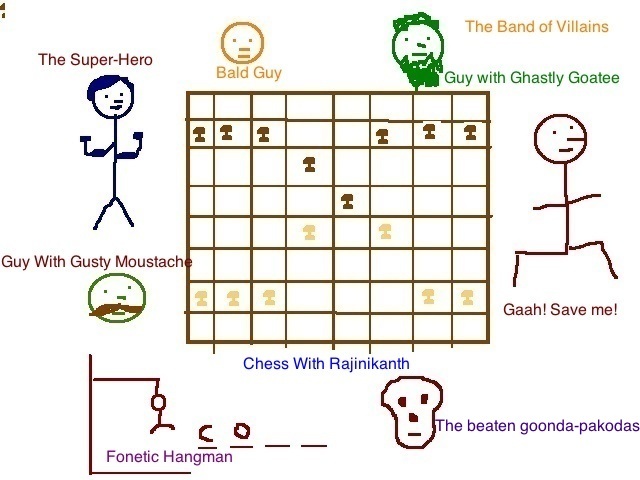
Then of course, if ever anyone wants to see how Rajinikanth plays Chess, you can come by and watch the toddler play chess with his imaginary friend when bored. If one has watched the old Tamil movies, one knows how villains attack Cinema heroes. The villains would stand around the hero. Cornered. See? Then, they’d go on to scowl, growl, grimace and crack their knuckles on the sidelines, touching their bald heads, caressing their unshaven beards and glaring like tigers given melons for lunch.

The hero stands there sizing them up and then one fellow comes and aah! He gets beaten up in a giffy. You’d think that would knock some sense into the remaining goonda pakodas, but it doesn’t. They all roar and then send another huge guy into the rink. Thulped. Another grimace and still no learning here. All fourteen idiots would go one at a time and get beaten up.

All known laws of Physics are also massacred in the process. Thermodynamics, laws of motion are all left begging for reprieve along with the band the villains.

Apply the same principle to the Chess board and you have the game: Every pawn comes one at a time and gets beaten up by the toddler’s side of the chess set. His shining knight battles on destroying his opponent’s pawns and his brave army thinks nothing of thumping Queens and locking bishops in with his own pawns.

Would You Rather be a Villain in a Tamil movie set or a pawn in Rajinikanth’s Chess? Get it?

Which brings us to the stimulating Would-You-Rather game (Part 2)

In Boysenberry Jelly & Mistletoe Jam

On the drive back from the Inyo Canyons, in one day, we found ourselves dealing with gusty winds, a snow storm and a rain storm before the day was out. The Wind, The Snow & The Rain – Part 2.

We were now stuck in a snow storm. The highway men had come and swapped the rustic freeway sign to ‘Snow Chains Required’ and left. We had snow chains and I supposed they worked.

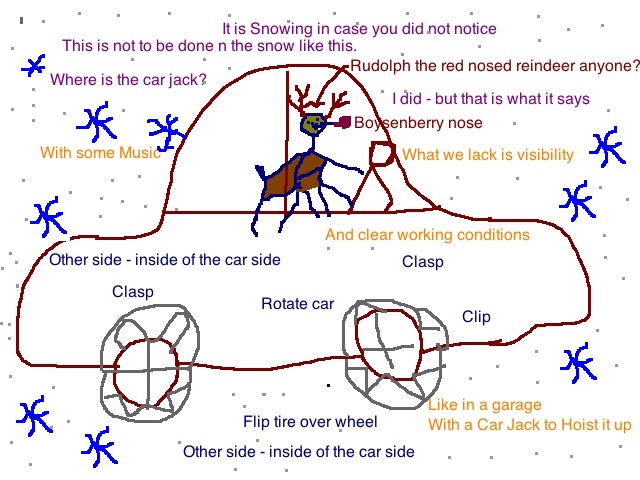
By the time we had pulled out the snow chains, we were covered with snow. Our brains were exhorting the toes to wiggle but there was no inclination from the toes to w. Miss-tle-toe for you. The nose was thirty degrees below freezing point. Rudolph the red nosed reindeer anyone? Ours had turned a lovely boysenberry color and had a reindeer been about would gladly have chomped off our noses. We peered into the snow chain package. The husband beamed like a snowman with a crooked twig for a smile and said he had opened the case prior to leaving in a rare state of prescience. I gave him the my-hero look and fumbled for the instruction manual. There it was: in 8 easy steps, it laid out how to install snow chains.

Take clip, Clasp to the tire,  Move to opposite side of tire,  Do something on the side of the tire facing the inside of the car, Take clip and clasp to the tire,  Rotate the chain under the tire and, Clasp,  Click

It looked easy enough to do on a sunny day with our garage door open, some music in the background and no car on top. But the instructions seemed to have completely missed the car on top of the tires in the pictures. One look at the tires, the snow, our freezing hands, and the car on top of it was enough. There are times when we look competent, and times when we don’t. This was one of those times when we were not. Looking c I mean.

reindeer_snowchains

It is at moments like this that the husband really comes into his own. While I was fumbling with the instructions, he was gone. One second, I was oh-see-this-ing to him and the next moment, I was oh-see-this-ing to a sympathetic looking fir tree. He bolted like a hare into the tavern conveniently located on the opposite side of the road, and came back with an eminently more competent looking chap from the pub. The cherubic fellow rubbed his hands together and said he could help. ‘I have done snow tires before, but you really should try it out once you know. ‘ he said plainly putting a decent face to his thoughts.

In less than ten minutes, the chap had installed the snow chains. I clasped his hands with gratitude looking like a dying duck who had just been given a new lease of life. I quacked on to thank him effusively and went so far as to call him a brother in need. The daughter, keen as always, asked me why I said that since she was not sure her Anand Maama would be any help with installing snow chains even if he had been in the car. A fair point.

There is something grandiose about snow chains. I suppose emperors frequently feel this way once they wear their crowns. They get a swagger, a dangerous over-confidence. The snow chains were the crowns to the tires, and off we went all smiles, confidence and swagger.

Post snow chains, in about 43 seconds, we found the car doing the reindeer-magic-mushroom sequence again with renewed vigor and whim. The car was not just mobile but intent on being perpendicular to the road and spinning a good 180 degrees.

Nature had not even shown her fury, and there we were spinning on highways, making boysenberry jelly with our noses, playing mistletoe with our toes,  and wondering whether we would be able to get out – snow tires or not, before nightfall. In what is a miracle,after about an hour in which a child tumbling could have overtaken us, we emerged into the rain and not an ounce of snow. It was as if they were different worlds.

As we were fumbling on the roadside in the rain to take the snow chains off, a brilliant red fire truck pulled up behind us, and the firemen helped us out smiling and chatting amiably all the while. We did the dying-duck-thank-sequence, and off we went on our way driving in the pouring rain.

In one day, we had whipped past gusty, gale-like winds, glided helplessly in a snow storm and thundered through a heavy rain storm.  The bright blue skies had turned grey and murky to ink blue and thunderous all in the span of a few hours.

We tottered into the house for a hastily made rasam and rice, and sighed like octogenarians with our feet in front of the heater that there was no place like home.

Dodo, Dragon, Dinosaur Dis-apparitions

We just got back from the Inyo Forests nestled in the Sierra Nevada mountains. This time, the mountains were explored by the children with a friend who was just the right companion for both of them. He is aged smack in between the daughter’s age and the toddler’s age, and is an amiable, interesting fellow, thereby providing ample company to both of them. The toddler son thought him a hero and the daughter found in him another quirky little brother. He was obviously pleased with this state of things, and settled down to the hero-slash-honorary-little-brother role with aplomb.

It was quiet, and the darkness in the mountains was unreal. We could see Venus glowing brightly like a torch up in the sky. Inside the car,  it was toasty and warm, and the game of Twenty Questions was thriving: it is a sophisticated game in which you think of an animal and everyone can ask questions to guess the animal you thought of.  Animals were chosen and guessed at with hilarity.

“Amma! This little bobbicles knows nothing about his animal and expects us to guess it. How can you not know whether it is a carnivore or not?” The toddler said something like, maybe it likes to eat meat, but maybe it doesn’t, I don’t know. He then laughed raucously at his sister’s disbelief. He seemed to think that these trivial things should not stop a zoo-linguist-to-be from guessing the animal. (That reminds me that I have to get down to writing a blog on how the toddler plays games.)

Inyo_20Q.jpg

His friend-slash-hero agreed and took the car for a spin with mythical creatures from shows we had never seen. As the going got tough, the rules got tougher – “Hey! Mythical creatures only restricted to Greek mythology or Harry Potter or till level 10 of Pokemon Go!”. The hero-slash-lil-bro was something of a Pokemon expert and went on about zilletoes and monekchoes or things that sounded like them, with glee.

“How about Hanuman?” asked the toddler in a matter-of-fact tone.

Before Spiderman and Batman were added to the mix, the husband and I swooped in with some impressive peacekeeping efforts that folks in the United Nations could learn from.

After several minutes of quiet, the conversation started up again with the daughter asking a question: If you could bring one animal back from extinction, which one would it be and why?

As the conversation gathered fervor, the surrounding Inyo Forests resounded with the spirits of animals long gone. Sabre tooth tigers romped along side mammoths, T-rexes chased Brontosauruses. A short pause later, dragons and phoenixes joined them too. If the conversation were being animated real-time, I’d have liked to see the reactions of the various spirits as they made their mystical apparitions from the dead.

“You do know that phoenixes and dragons are mythical creatures right? They aren’t exactly extinct because we don’t know whether they really existed, “, said the daughter laughing to split.

“Okay – then Pidgeot”

“No! pidgies and pidgeottos! Before you ask, chargats don’t count either. Pokemon Go is not the real world you know?”

I could hear the gears spinning in the boys’ brains. This was one tough game, they thought.

After an intense argument that examined the merit of mythical creatures in the extinct category, and the virtual creatures in the ethereal category, the conversation slowed down again and landed softly near the dawdling dodo birds. We waddled by them, and the daughter explained that she felt the dodo birds deserved to be back because those poor creatures were extinct purely because of man’s greed.  The children smiled as though her goodwill towards the dodo could truly summon it back from the extinct category.

inyo_canyon

“Anyway, which animal would you bring back?”, asked the daughter.

“I want to bring back the Titanis bird.”  said the hero-slash-hon-b.

We exchanged glances. It was difficult to figure out whether there really was a bird  called Titanis which was extinct, or one that appeared in the fellow’s video games.

“Really, there is a bird called Titanis. They are so beautiful. I want to bring them back. “ He sounded so sincere that the daughter’s heart melted. It often happens this way. The daughter is a softie underneath the bossy exterior and coo-ed.

“Oh! That is so sweet. Why do you want them back?”

“So, I can take a gun and shoot them! “, said the h-s-h-b.

I wonder whether you have played ping-pong. Just when you think the ball went, back it comes to you again. Right at your face. It was a bit like that. Just when you got the sweet daughter version, an outraged cry left her lips. The sweet dodo apparitions were gone. The dragons poof-ed themselves out, and titanis was gone too.

“Oh! How could you? “ she cried, the animal activist in her flaring up.

“Why? They have beautiful feathers. “

“Exactly! So admire the birds with their feathers!”

“But if we shoot them, we can collect their feathers.”

“Why bring them back if you want to shoot them?”

“How else will we get those beautiful feathers?”

The three of them played in our car till the toddler son fell asleep in the gathering darkness as we drove up to our destination.

I am not sure whether the dodo or the titanis will want to come back if it means holding a conversation with the specimens in our car.  Maybe we should give them a choice, what do you think?

Oh Snap!

I attended a conference last week, a vast sprawling area brimming with people having an analytical bent of mind, or at least that is what they do for a living.

It was wonderful, for many reasons: It not only provided a good change of pace for me, but it also helped me cope with the post election disbelief by observing vast numbers of people from different parts of the country.

Before one of our trainings, our instructor put up a hashtag on the screen and requested everybody to tweet with that hash tag, so we could analyze the data coming in for that hashtag for the exercise.

For our convenience, he was also streaming the tweets as his code picked them up. For a hall containing at least 200 people, the tweets were trickling in. 5 and then 10 and then a plateau. After some time, another few.

The instructor then showed us how he was going to analyze this data and when he tried to pull up the dashboard he had created for the purpose of the training, the server went down. As it turns out, the instructor was embarrassed, obviously, that his carefully prepared presentation ran into a glitch in this uncharacteristic manner, but he had a Plan B, and going by the way he conducted his training, probably had Plan C, and D. Competence and Determination. He took a derogatory stab at himself, got a laugh, and moved on. He chose instead to recreate the dashboard from scratch, so we all get to see how it is done, instead of showing us the finished product.

The person right next to me, pulled out his phone though, and tweeted the hashtag almost instantly saying “#Hashtag Demo not working. Not Cool.” I was sitting right next to him , so I could see his tweet. I also remembered that he had not tweeted when the instructor asked us all to tweet so that he could get a dataset, but when it came to calling someone’s failures out, he was more than willing to do so.

That is human nature. We all suffer from it. So, I am not blaming this person by any chance, but rather hoping to use this as a call to introspection. Are we so quick to judge that we are losing our ability to empathize just because we now have the power to quickly voice our opinions? That could have been us fumbling when the server went down unexpectedly, couldn’t it?

I was reading an article in which President Obama warned us in a similar manner about snap judgments that social media enables us to make:

Obama, without directly naming Trump, appeared critical of the political discourse in the United States, saying social media has made it easier “to make negative attacks and simplistic slogans than it is to communicate complex policies.”

Obama-Merkel issue joint rebuttal to the coming era of Donald Trump

Every tool has its place, but if we attempt to mow the lawn with a kitchen knife, it will not work. I cannot help thinking of our gardeners, who in my mind have magical abilities, get things done quickly and efficiently, while I blubber and fly rudderless because I do not use the right tools for the job. (Divine Intervention of the Gardening Gods)

mow_the_lawn

Now is the time for all of us to tap the critical thinkers in us, to read extensively, to seek the truth and take up the job of providing a voice of reason. All of us know how distorted our consumption of information can be. Sites like Snopes.com have their work cut out for them in the age of social media.

Snopes.com Check Facts!

P.S: I loved Angela Merkel’s measured response to Trump’s victory:

Angela Merkel in her note to Trump offered cooperation reiterating that cooperation should be based on “a common platform of democracy, freedom, advocacy for human rights all over the world and championing the open and liberal world order.”

After all, we all may have to pack up and go to different planet soon (in which case we are all in the same boat regardless of race, creed or gender.)
Stephen Hawking’s prediction that humans have at best 1000 years in which to find another planet to inhibit