Multi-Generational Family Sagas

Multi-Generational Family Sagas

I read two family sagas this year spanning multiple generations, and several decades each. 

Both were highly acclaimed books, and written well. However, both of them suffered from meandering plots, and unnecessary diversions. Making them swollen at least by a few hundred pages. 

“It was a bit like listening to my father tell a story about some character in his village. He’d tell me all about this character, his relatives, his relative’s friends, and the marriages that made the whole thing impossible to untangle, and so much more. By the time he finished the story, you’d be wondering what the point of it was.” I said to my friends after finishing The Covenant of Water. 

I understand too how that can be a daunting task. The mother had seven siblings, the father nine. Their parents, I am not even sure, for I might have switched off in between.

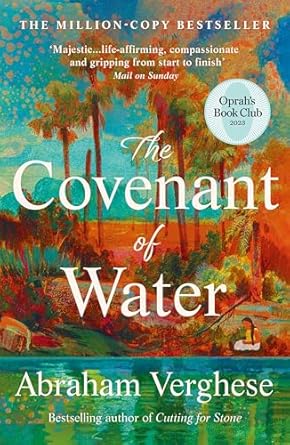
The Covenant of Water – By Abraham Verghese

The writing is beautiful – lyrical, and his characters have endearing qualities to them – resilience, love, grace, flaws. Abraham Verghese is also a doctor by profession, and therefore the details of all the medical terms made for a depth even if the average reader does not need as much information (ex: how a particular surgery was being performed, or how the stent would have served better from a particular perspective) 

Set in Kerala, South India, the book spans the family of Big Ammachi (the matriarch of the family) between  1900 and 1977.
covenant_of_water

It would also have been nice to know a little bit more about the living conditions and life in that time period. For instance, there is a character, Uplift Master, who derives his purpose from getting the village around Perambil (the ancestral village in which the whole saga takes place) developed and to march into the twentieth century in style. Knowing the problems Uplift Master faced in terms of discrimination by the British Raj, or bribery would have been useful. 

Casteism is touched upon, the perils of life as a leper is well depicted. 

The plot itself could have been condensed. That apart, it is a good book.

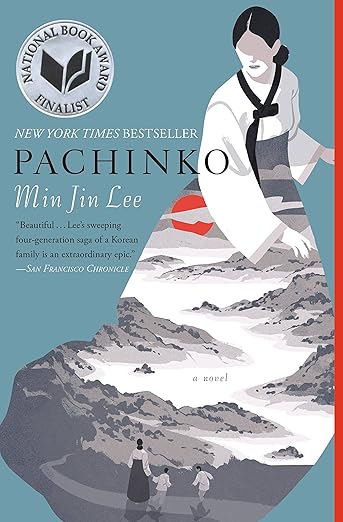
Pachinko: Min Jin Lee

Pachinko is set in a similar time period in Japan(1910-1989). It outlines the generational problems existing between Koreans and Japanese. 

The story also spans multiple generations and revolves around the life of Sunja – a poor Korean who moves to the city with her husband, Baek Isak, and child from a previous tormented relationship.
pachinko

Reading about the effects of racism, poverty and war is never easy. Writing about them keeping the humanity of the characters intact is even harder. Min Jin Lee manages to do that with ease. It would have been nice to see how things were changing as the century progressed, but we do not see too much of it. 

The Tides of Humanity

The tides of humanity are apparent even if there are literally oceans separating the stories.

  • The Covenant of Water is set in Kerala, South India(1900-1977).
  • Pachinko is set in Japan(1910-1989)

They both deal with matriarchal characters (Big Ammachi alias Mariamma & Sunja) who do their very best by their kith and kin in difficult times. Providing love, trust, and hard work as tenets to a good life.

I think this line from Noa (Sunja’s firstborn) in Pachinko,  outlines the angst of humanity pretty well: 

Noa didn’t care about being Korean with anyone. He wanted to be, to be just himself, whatever that meant; he wanted to forget himself sometimes. She could not see his humanity, and Noa realized that this was what he wanted most of all; to be seen as human.

– Min Jin Lee, Pachinko

There is plenty to be learnt in life as a human, wherever one lives.

In the Covenant of Water, Philipose (Big Ammachi’s son) says it best:

“Ammachi, when I come to the end of a book and I look up, just four days have passed. But in that time I’ve lived through three generations and learned more about the world and about myself than I do during a year in school. Ahab, Queequeg, Ophelia, and other characters die on the page so that we might live better lives.”

Abraham Verghese, The Covenant of Water

Historically Speaking …

I looked at the delectable pile of books by my side waiting to be read. The top of the pile was the beautifully annotated ‘Jane Austen’s History of England. –

Just the sort of history book that appeals to me. Written by Jane Austen when she was 16 years old, the book bears the hallmark of her humor.

Screen Shot 2017-07-06 at 1.26.31 PM

I sat smiling at some of the things written about Henry the 8th & Anne Boleyn.

The book certainly sounded like some of the answer papers of my youth.

I have always felt that History was one of those subjects that was calculated to freeze my brain. Good though my teachers in the subject were, bless them, they could not but help say that the Second Battle of Panipat was fought in 1556. Inside my brain, this simple fact would start a whistling train of thought:

1556. Hmm … funny number.

How to remember that number?

55 in the middle and 6-1 = 5. 

Why not 6551? Because that is in the future.

Very clever. But what about the number 6? Why 6 and not 7?

Maybe, History is the sixth period(?)

But only on Wednesdays.

If only it were 1596, 15*6=90  and then add 6

“Can anybody tell me what happened to Akbar after that battle?” These teachers have voices that have a way of cutting through the most interesting meanderings of the mind.

“What battle?”, I’d write on the side margin, and slip it across to my friend. There she would be, sitting by my side at the wooden desk with a vacant expression on her face biting her pencil. But at this urgent message, she’d stoutly pull herself together and write back, “The Battle of Panipuri, I think.”

Then the exams would roll along, and after days spent cramming the dates and emperors, I would come to the conclusion that all emperors who sought to reign should be made to stand in line in shorts and recite the dates of all those who aspired to power before them.  If they still want to reign, may their shorts fall while they lead the charge – that should teach them not to add to that horribly long list.

To make matters worse, the rumor mills during examination time worked overtime:

(a) The teachers likes diagrams, one person would say, stating emphatically that whatever you do, make sure you draw a diagram for it.

Feverishly, we would start drawing Africa maps, and label the Gold Coast, and the Sahara desert, throwing in the Kilimanjaro for luck. Never mind that the question was about Egypt.

(b) The more you write, the better will be your marks.

So, we would write double-spaced and add spice to the Spice Wars.

history

One time I remember writing about Alexander’s Horse. Our History teacher had on one occasion told us about the fine breeds of horses that emperors prided themselves on. My brain tick-tocked away with Alexander’s Horse, and I found to my amazement that the brave stallion was heroic beyond what History books knew. I imagined the horse pulling his great emperor across the blizzards of the mountains one day just by trusting its instinct. The marvelous animal found a stream of fresh flowing water for its emperor. I wrote about 16 sentences on the virtues of the horse, borrowing heavily from my recent reading of Black Beauty (also a black horse with a star on its forehead, duh!) I wrote of its aching muscles, its loyalty that was much admired, and how stable managers had a job that was olfactorily unsatisfactory maybe, but really quite a prestigious one, if it meant looking after the emperor’s horse. I also gave him a name, Macedonia, if I remember right – sealing my understanding of the reign once and for all. (Alexander’s Horse, Bucephalus, would have turned in his grave and asked ‘Is she talking about me? Neigh! ‘ )

He_ran_toward_the_horse_and_seized_the_bridle
By Walter Crane – The story of Greece : told to boys and girls

“15 more minutes.” the examiner said, and I looked to see that while the paper had a brilliant character sketch of the horse, it had very little about Alexander the Great.

I hastily started another paragraph on the the horse’s rider and finished up the paper. I came out into the brilliant sunshine from the exam hall when my friend said looking at me in admiration, “How much you wrote! I saw you taking two extra sheets! I am sure you are going to ace it!”

I shrugged off this undue praise guiltily, feeling a little sorry for the teacher who had to read such drivel.

It was years later that I read “I, Claudius”, the historical fiction book written by Robert Graves,  and came upon Incitatus, Caligula’s horse. Whether it was fiction or not I cannot say, but this was the horse that the Roman ruler, Caligula, sought to make a senator, and invited to State dinners.

http://www.history.com/news/ask-history/did-caligula-really-make-his-horse-a-consul

The truth is stranger than fiction, but it is because Fiction is obliged to stick to possibilities; Truth isn’t. Mark Twain

I smiled at these pleasant memories, and opened the book in my hand.


Jane Austen said,

Edward the 4th

This monarch was famous only for his Beauty & his Courage of which the Picture we have here given of him, & his undaunted behavior in marrying one Woman while he was engaged to another are sufficient proofs. His Wife was Elizabeth Woodville, a Widow who, poor Woman! was afterwards confined in a Convent by that Monster of Iniquity & Avarice Henry the 7th. One of Edward’s Mistresses was Jane Shore, who has had a play written about her, but it is a tragedy & therefore not worth reading. Having performed all these noble actions, his Majesty died, & was succeeded by his son.