Toby Turtle’s Lessons on Life

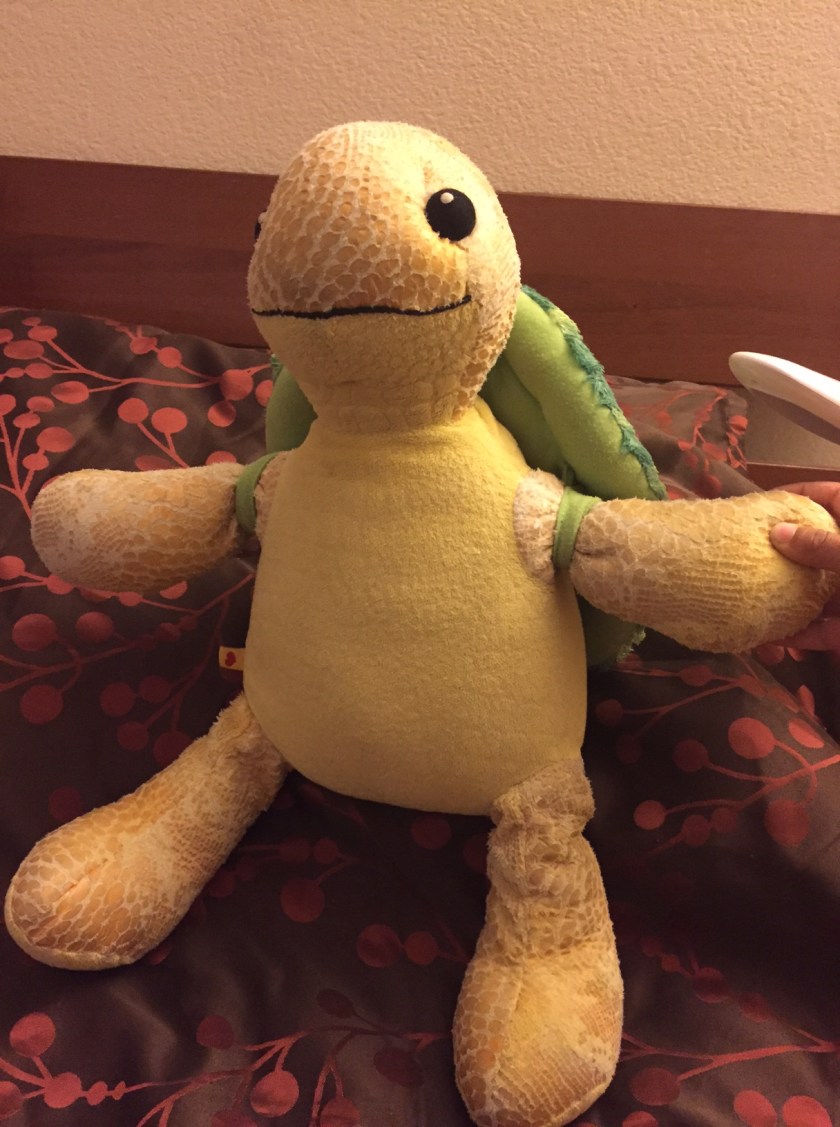
Toby the Turtle came home for a week. He was a much loved member of the family, and soon after helping to cook a meal would join hands with heroic forces to battle evil in Spiderman Vs Sinister Six wars. Toby the Turtle is the kindergarten classroom stuffed toy who comes home for a week to the proud Star of the Week. It is a great honor for the children, and I saw the kindergartener in our home puff out his chest and look important, as he carried Toby around. He loved having someone to take care of, and I must say Toby lightened the atmosphere in the house.
img_4965

We all seemed to like having the stuffed toy around, not least because of the change in pace, but also because Toby brought the class journal with him. Every child who had Toby had written a page or two about what they did with Toby, and how much they loved him.

“Toby is my friend.”, ” I wish I could keep Toby with me forever.” seemed to be common sentiments across all the pages in the journal, and I must say had I been Toby, I would have loved it.

In other news, I recently read a book on aging, Being Mortal: Medicine and What Matters in the End by Dr. Atul Gawande. Atul Gawande is a surgeon, and the book is a must read for all of us who must contemplate mortal life. The business of living with dignity, pride, compassion and meaning. In the book, Dr Gawande explores the process of aging using multiple examples, interspersed with his experience with his own father, who was also a surgeon. His father gradually loses his health, and despite his deterioration, was determined to lead life on his own terms.

Modern medicine has made phenomenal advances. Life expectancy has increased, and for the first time in the history of mankind, we have as many people under the age of 5 as above 80.

When something happens and people make it into hospitals, the attending surgeons and doctors will do everything in their power to ensure that they can save lives, and often let the near and dear know what the problem is, and what the medical options are, but not much more.

Dr. Gawande explains that it is up to us, as patients, family members or friends to ask and be equipped with the critical questions of living. Questions such as:

1. What is your understanding of your illness and how far along has the condition progressed?

2. Your fears or worries for the future

3. Your goals and priorities

4. What outcomes are unacceptable to you? What are you willing to sacrifice and not?

And later,

5. What would a good day look like?

Though it examines a serious subject, it is not a morbid book, and pragmatically looks at the problem of aging in the current medical system. There are lively portions that explore the elements of a happy life as much as it opens our eyes to mortality. Take for example: Bill Thomas’s effect on Geriatric care.

Dr Gawande talks about one scenario where Dr Bill Thomas, a director of a medical facility in upstate New York, was upset about the well-being of those in the geriatric ward. He being a quirky, brilliant gentleman, and felt that it was the lack of vibrant life around hospitals that is the cause for long term residents to suffer from boredom, loneliness and depression.

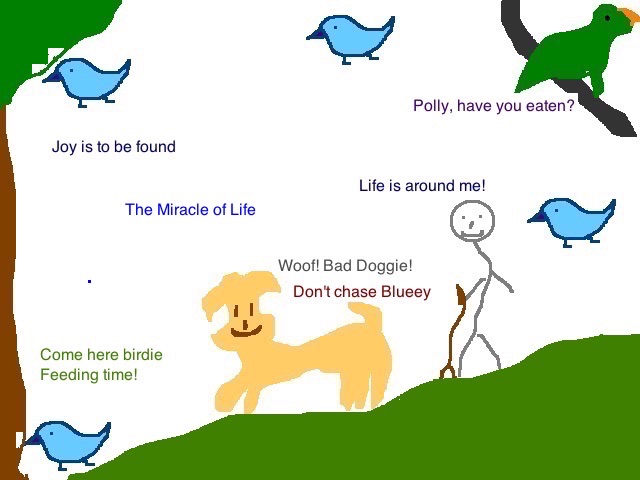
Having grown up on a farm himself, he petitions the management that the missing link was teeming life. After some work, he manages to convince the management that having some plants, birds etc would help people get better sooner. As soon as the nod came, he got busy, and before people knew what was happening, truck loads of living beings descended on the premises: Not a dog here and a cat there, but hundreds of parakeets, dogs, cats, rabbits, hens – a whole menagerie.
aging

The next few days were mayhem as nurses and doctors worked hand in hand trying to get the birds into cages and making sure there was someone to feed the birds and so on. The hospital was furious, nurses complained about having more to do as if caring for the old people were not enough. Administrators complained about infections, they complained about cleanliness.

But something phenomenal came about from the experiment: Patients who were uninterested and mute took notice. They would watch the birds, and weeks later would talk, and in some cases, patients cared for the birds, and whenever they could, took up feeding the birds. In time, it resulted in fewer health interventions. People were happier and general health improved. Every body liked having some being to care for.

(You can read the section of his interview here, though the book has the whole story)

http://nymag.com/scienceofus/2014/10/atul-gawande-on-being-mortal.html

Quote:

And it didn’t boil down to how the animals saved them. It boiled down the idea that people need to have purposes in their lives, and that you could offer ways that they could connect to them. That they could live for something larger than just being alive.

That is the essence of humanity. We need to care, we need to feel needed and wanted, and we need to feel empathy: whether we are 5, 40 or 80.

Toby the Turtle taught us that. Kindergarten teaches us about life in lovely ways.

The Yin & Yang of Diwali & Halloween

This post was also published in India Currents magazine dated 3rd Nov 2016

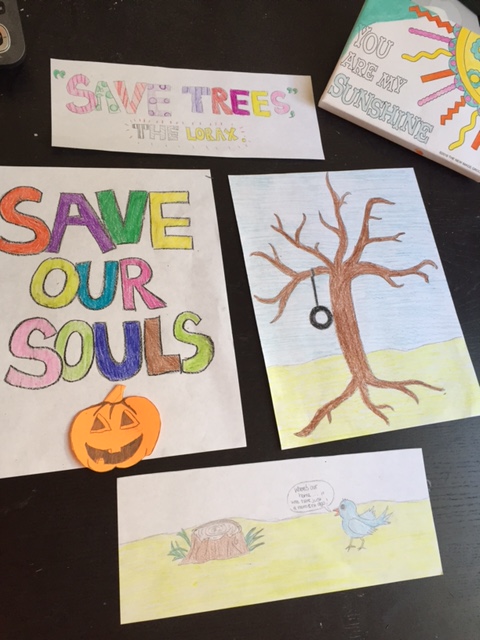
Wrinkled brows, scorching cuts and decisive strokes greeted me as I went upstairs a few days before Diwali. We have to get started on our Halloween decorations, said the daughter cutting out a spider. The toddler son was lying on his stomach on the floor, helping his sister by coloring the ghost she had cut out from white paper, white. A cozy, merry scene with the sunlight streaming in from the windows.

When bees create their colonies, I am sure they don’t care about a little mess. Neither did my bee-lings. I navigated the crayons strewn on the floor and walked past the strands of paper littering my path to peek at the objects of art.

A morose sort of skeleton was being drawn and I shuddered at the image. I hated to take a pail of cold water and swamp their enthusiasm with it, but then I did. Sorry guys. That weekend is Diwali and I won’t have skeletons and cobwebs hanging off the front door on Diwali. (This year, Diwali fell on a week-end and Halloween the day after, on a Monday.)

A mutinous roar went up. Amma – Diwali is the opposite of Halloween. It is the festival of lights. You’ll put up those little diyas everywhere and light everything up and then you’ll make everyone dress up beautifully – it is the complete opposite of Halloween.

I disagreed. They may be celebrated differently, but they are both meant to fight evil. Ward off evil – whatever. The concept is to banish your demons. Even the inner demons. So, Diwali and Halloween are like that Yin-Yang thing. Black and white together. Both are there in us and in the world around us.

yin-yang

I felt like a teapot spouting philosophy from my long snout to a couple of trouts in the stream. I sometimes think children must feel we played tag with Confucius and hide-and-seek with Buddha. I tried desperately to gain ground again.

You can always find light in the darkest of places if only you remember to turn on the lights. Remember who said that?

Albus Dumbledore in Harry Potter And The Prisoner of Azkaban

Albus Dumbledore! sighed the daughter. Dementors – yes! Maybe we will do dementors also this time.

Also Voldemort – we can draw Voldemort and hang him outside, piped the toddler son. He has no fear of He-who-must-not-be-named, and his sister beamed with pride at her little Gryffindor brother.

Guys! Guys! I won’t have Voldemort hanging on my front porch on Diwali either. Does Halloween have to be gory? Think of some themes and see if you can come up with decor that does not drip blood. Something positive, a call to action and also save our souls. How about that? I said.

When the daughter said, Fine!, I left them to their own devices and pottered around the house.

I must say that I was mighty impressed with the resulting effort.

keena_halloween_nature

We picked your favorite theme, Nature, amma. So, you can put up some of this stuff for Diwali too. Then after Diwali, the next day, we can quickly put up bats and pumpkins all around and we are set, she said.

I agreed.

img_3701

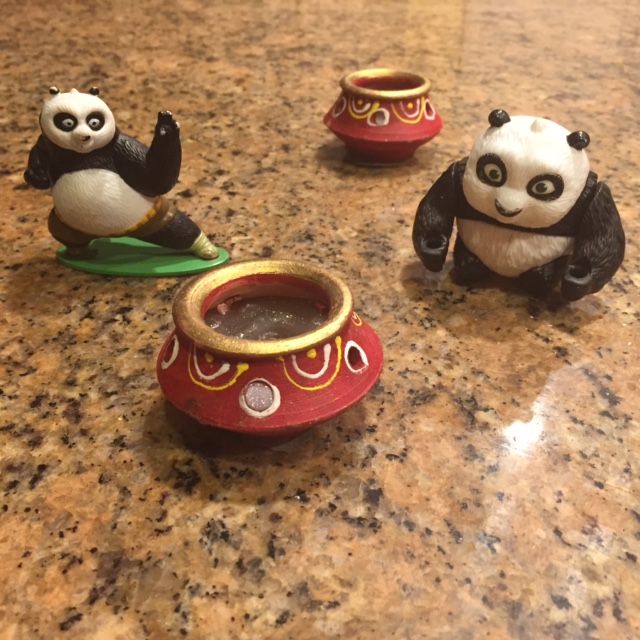
On the Diwali rangoli, we placed a large pumpkin surrounded by little lamps. The rain helpfully washed away the rangoli that very night leaving a damp, morose spot for the Pumpkin the next day. All very satisfying.

Happy Diwali and Happy Halloween. May we learn to take care of our World, the living beings we share it with, and balance our yin and yang for a beautiful whole.

img_3874

The Noetic Touch to the Poetic Muse

A Version of this article appeared in India Currents Mar 2017 issue titled ‘Muse, Tweens & Teens’

The husband may not be able to carry a tune to get the car parked, but you can’t fault him with lyrics. In fact, he once won a singing competition.  The judges pleaded with him to not sing, but to simply recite the beautiful words in the song, and their team sailed home with the cup (or whatever it is these college competitions have the budget to give).  He won it solely on the strength of his lyrics. For being able to appreciate the beauty of the poetry in the lyrics. The husband’s Antakshiri prize is rather like Bertie Wooster’s Scripture prize, and is much bandied about in our home.

It is also the husband who stops a song from lilting and mesmerizing and repeats the words – his eyes shining with the hidden meaning in the rhythmic poetic delights of the verse. I must admit some of the songs have such a beautiful lyrical quality about them, that had he not stopped and replayed them, I would have been completely lost in the melody of the piece. When your breath produces a rainbow or the mists clear to reveal your innermost thoughts or whatever it is, it makes you smile a little at the metaphor. Things you would not ordinarily stop to think and appreciate.


முன் அந்திச் சாரல் நீ
முன் ஜென்மத் தேடல் நீ
நான் தூங்கும் நேரத்தில்
தொலைதூரத்தில் வரும் பாடல் நீ
பூ பூத்த சாலை நீ
புலராத காலை நீ
விடிந்தாலும் தூக்கத்தில்
விழி ஓரத்தில்
வரும் கனவு நீ..

Incidentally, the guy who waxes lyrical at hidden meanings in poetic songs is also the guy who listens to ‘Why this kolaveri kolaveri dee?’ and introduced me to what is known as ‘Gaana’ songs. Viz. stuff that makes you want to sit down and pull out each strand of hair one at a time.

One day the daughter set out to make me listen to some of the songs that their generation listens to. You know the cool stuff?  So, we did, and I was wondering when the husband who usually listens with her, will stop the song to appreciate and discern inner meanings and things, but he did not find the need to:

Won’t you have a cup of coffee with me? We used to drink coffee together, but don’t anymore. I miss you when I drink coffee these days.

There was no hidden meaning – could the coffee refer to life? But still there was no building on the coffee theme. Hardly the kind of stuff that needs the brain cells to stir.

“Are there any other songs that we can listen to – you know where it is not a guy yearning for a girl, or vice-versa”, I asked. “Or with those wonderful hidden meanings like in poems?”

The daughter shook the head. “Well, teenagers mostly listen to stuff about love”, she said rolling her eyes. “Especially famous songs ma – it is like you are just talking with a guitar strumming in the background.”, said the daughter scornfully.

poetic_lyrics

I am not a teenager anymore, so I can’t say whether the teens today are happy with the fare laid out in front of them, but I would have liked some variety. Sure, it is the time for the stirrings of the teenage hormones and what-not, but that is not the only awakening one finds in the teenage body and mind is it?

It is also the time for confusion about life and career choices, the time when it truly feels like you can tap into your reserves and see how well you can perform in that game, or how competitive you can get on that track. It is the time the mind is grappling trigonometry and unraveling the beautiful complexity of organic chemistry, the time you are surprised at the lucidity with which artists can tap into their inner stamina and creativity and unleash things on canvas or on stage. It is the time for broadening of our intellectual horizons, and the time to goof off and make questionable choices with friends. It is the time you freak out after lighting candles on the Ouija board.

https://nourishncherish.wordpress.com/2010/08/13/friggatriskaidekaphobia/

It is the time you read Dostoevsky and ponder upon life. It is the time you make fun of soppy love stories, but secretly hope for your own Prince Charming one day. It is a time of intense moral learnings and the time when crushes are a part of life.

You know how we see these caricatures in cartoons, with an abnormal potato sized head tottering on pea sized bodies? It seems the song industry is like that when it comes to love. Sure love is a potent force, but is all love of the sexual kind? Surely not. Why not write a beautiful song about friendship, why not write about abrasive teachers and the camaraderie that goes on with the children while dealing with it? Or a funny song about goofing off PE.

Teenage angst is a whole package, it does not just mean broken hearts and tears when people fall apart. If song lyrics are stuck in teen brains all day long, why not give it some work and smile inwardly when you get that hard metaphor?

Here is a call to all you smart teenagers, pre-teens out there. Dazzle us with your breadth and depth of your making sense of the world. For as adults, we still don’t know, but most of us have given in to the familiarity of routine and the rigmarole of paying bills. What we need is the thirst and energy of youth, and that you can gift to us with your poetic lyrics, your songs and your view of the troubled world.

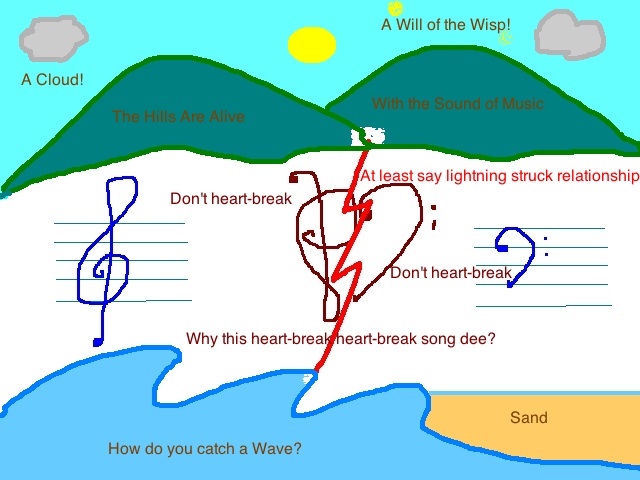
How do you solve a problem like Maria?
 How do you catch a cloud and pin it down?
 How do you find a word that means Maria?
 A flibbertigibbet! A will-o'-the wisp! A clown!

Many a thing you know you'd like to tell her
 Many a thing she ought to understand
 But how do you make her stay
 And listen to all you say
 How do you keep a wave upon the sand?

Nature’s Adventures

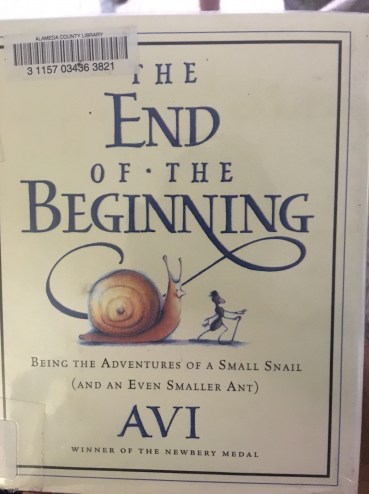
The son and I read a chapter book together. Hitherto, we watered gardens with Liam in The Curious Garden, or ate cookies out of a tin with Frog and Toad. This time we decided to spend several days with Edward and Avon in ‘The End of the Beginning‘. Avon, the snail wants an adventure and he seeks it with the help of his friend, the ant Edward. Over the next twenty odd chapters, the pair of them meet salamanders and have perilous snail crossings on narrow bridges. The beauty of the whole thing is that they had never really left their tree branch. At the end of their long and arduous journey, the pair of them find themselves facing the end of the branch and turn back. The Beginning of the End. Or does the end signal a new beginning?

The book had many philosophical sayings, and the next time the son and I observe a snail, we shall wonder what goes on in that animal’s brain.  Adventures do not need exotic settings or the need to traverse large oceans. It is all right there on the tree branch.

a447d33d-4ce1-48e8-b5f9-e437cc08e6de

It also brought back some of the best adventures I had had as a child in the Nilgiri Hills growing up in those wonderful surroundings cradled by Mother Nature. Everyday from our Elementary school a few kilometers away, we took a different route walking home. One day we stuck to the narrow roads laid out by the municipality as an occasional vehicle passed us. Another day, we slid down the hills, picked some berries at the bottom of the hill and found another narrow footpath leading home. There were days when the walk took us twenty minutes, and days when it took us an hour. The whole place was tiny enough to not merit a marking on the map of the state, but it held adventures enough for a lifetime for us.

sultan's life

The toddler son and I enjoy taking a walk in our neighborhood and finding little by lanes within our neighborhood. For us, it is a revelation of sorts. One path leads you to the shaded path with oleander trees sagging with the weight of the summer flowers.

img_3410

Another path in the neighborhood has an plum tree that shows you how squirrels thrive near that tree. We see clusters of plums flung to the ground with nothing but a bite taken off of them. Every time I see those little eaten plums, I think back to one glorious summer afternoon spent in a friend’s garden. We had a blue quilted comforter laid out on the lawn and were watching the breeze gently ruffle the grass and skim the trees  as the children played. The son was then a baby and sat up in that adorable fashion that made him look and sway like a bowling pin used to prop open a door. Pretty soon, the topic turned to squirrels and fruit trees. Our host then set about plucking plums from his tree before the squirrels got them. We sauntered over to inspect, suggest and generally hinder the fruit picking process when I heard a slurp. Turning around we saw we’d saved the plums from the squirrels, but the baby human squirrel in our midst was looking triumphant: red-lipped, red-cheeked and red-chinned having bitten into the plums himself. Talk about being caught red-handed .

Night Life

There are wonders galore in our own little branch, if only we set out to find them.

To Live Like Sultan

It has been fifteen years since I saw Bangalore. 15 years in which I heard stories about the beautiful city bursting to its brims and enduring horrendous traffic snarls. I had spent some very pleasurable years early in my career in Bangalore, and some of the friends I made there still warm my heart, so I was obviously interested to see how it fared a decade and a half later.

I was dismayed at the way the city had exploded. Every place has to fall prey to urbanization. There is no way around it, but in Bangalore, once known as the Garden City, it was particularly brutal to see matchbox like apartments all over the city. The roads were struggling with cars from every one of those apartments, and the infrastructure was barely holding up. As I looked up into all those apartments, I wondered how many fellow residents each one knew, and the answer was what saddened me even more. In every apartment block of maybe 100 homes, residents hardly knew another 5 families. It seemed to me that more the people clustered together, the less we knew of one another.  

I stayed in Bangalore for just a day before we made our way to our childhood home, the dear old Nilgiri Hills.

sultan's life

It has been about a decade since I visited Nilgiri Hills – the home of my childhood days. This time, I was determined to go and visit. When mia familia heard  of my wish to do so, everybody joined in, and pretty soon, there we were bumping up the hills in a van loaded to the brim with luggage, children and people. Traveling light is a concept we often hear about, but we have absolutely no idea as to how it works. Maybe an experiment would help one day.

As the van made off with 11 people and 14 pieces of baggage, not including the toy cars and planes that had to ply within the van to ensure sanity and peace, I noticed that the pace of life steadily slowed down as we got farther and farther away from Bangalore city. Like an aircraft slowing down from 500 miles an hour to zero as it comes to rest. It was marvelous to see how it all culminated in one grand stroke to life with sultan.

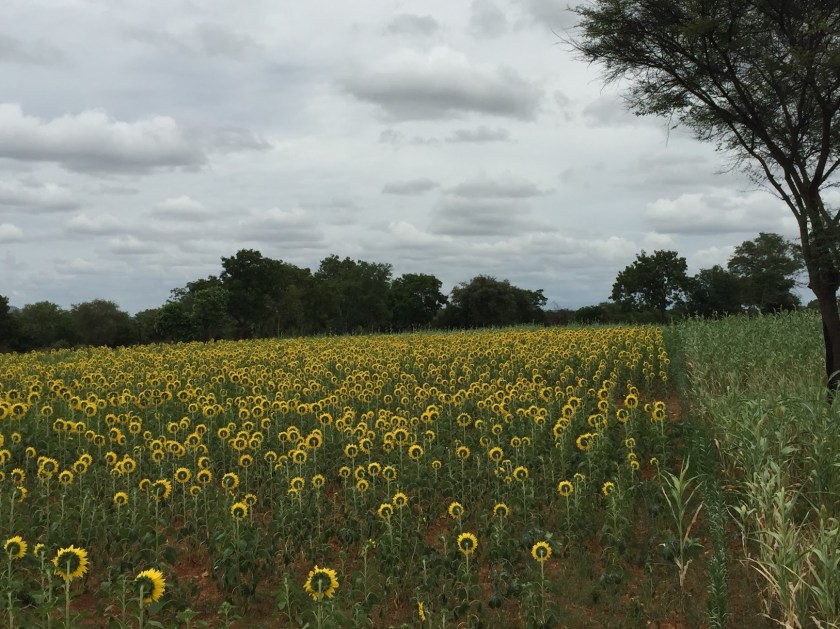
I was looking forward to hop off at the sunflower fields en-route to the Nilgiris from Mysore. The sunflower fields were marvelous after the never ending concrete jungle that Bangalore has transformed into.

sunflower_fields

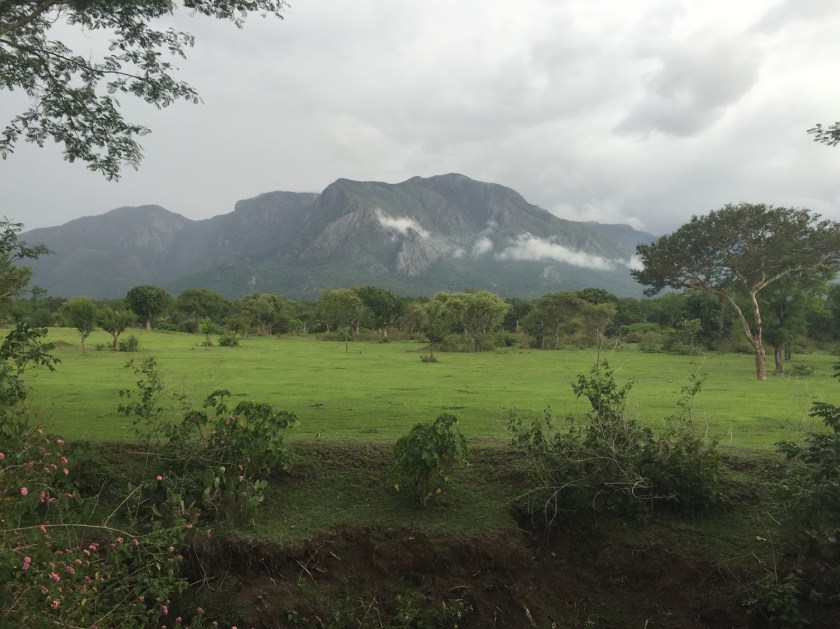
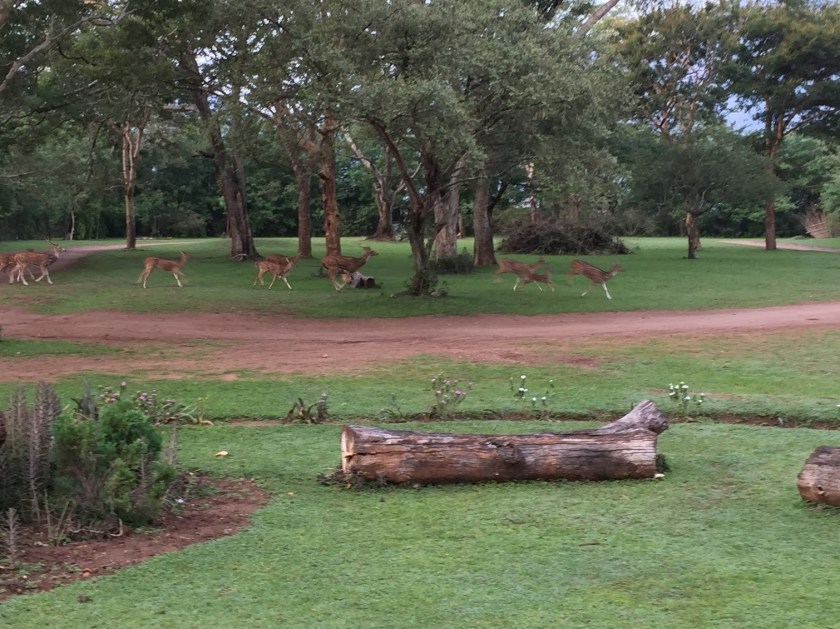
Likewise, once the van started bumping up the hills, I was happy and contented to take in the scent of the Nilgiri Hills and found myself taking in large gulps of the pristine air. Every now and then, we spotted elephants, bisons and deer freely roaming the forests.

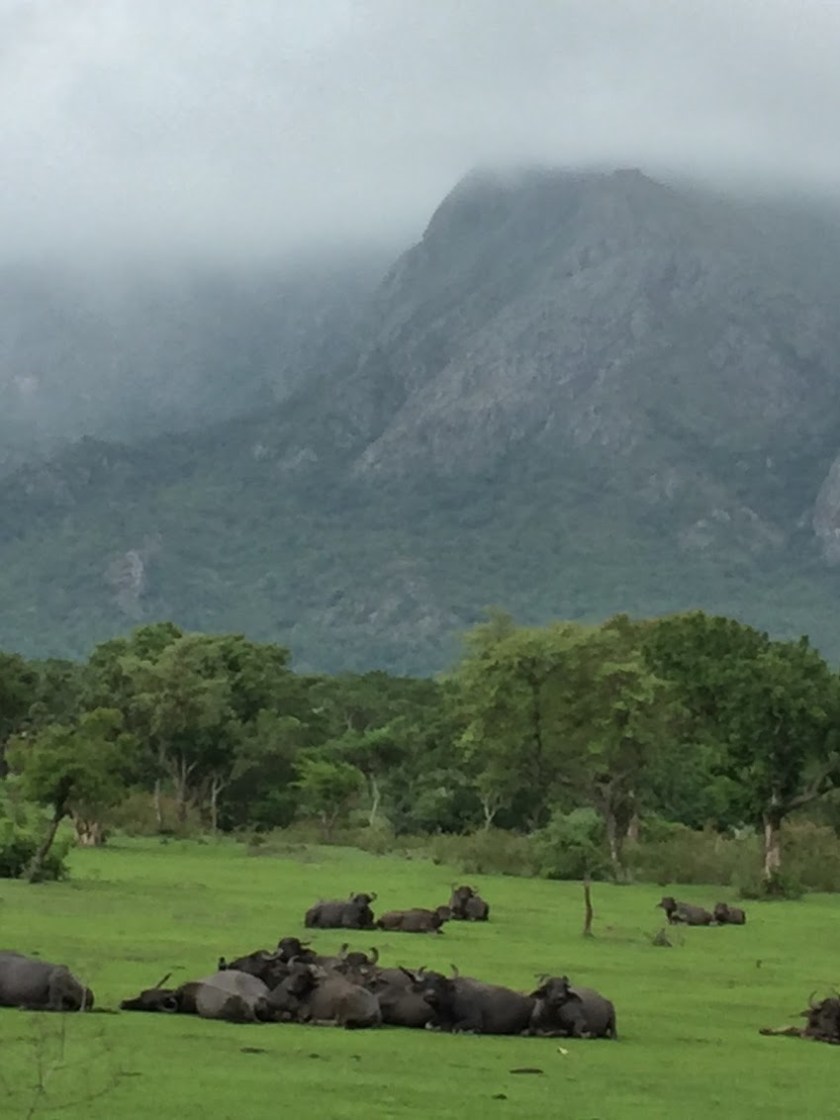
bisons
Bisons in Mudumalai
deer_resort
Deer in Mudumalai
elephants
Elephants in Bandipur and Mudumalai

We stayed for a couple of days in a resort in Masinagudi. The beautiful resort was nestled in the hills with only 7 cottages, plenty of rolling hills, deer, bison, horses and a donkey. The children spent a good half day marveling at touch-me-nots as they folded and unfolded.

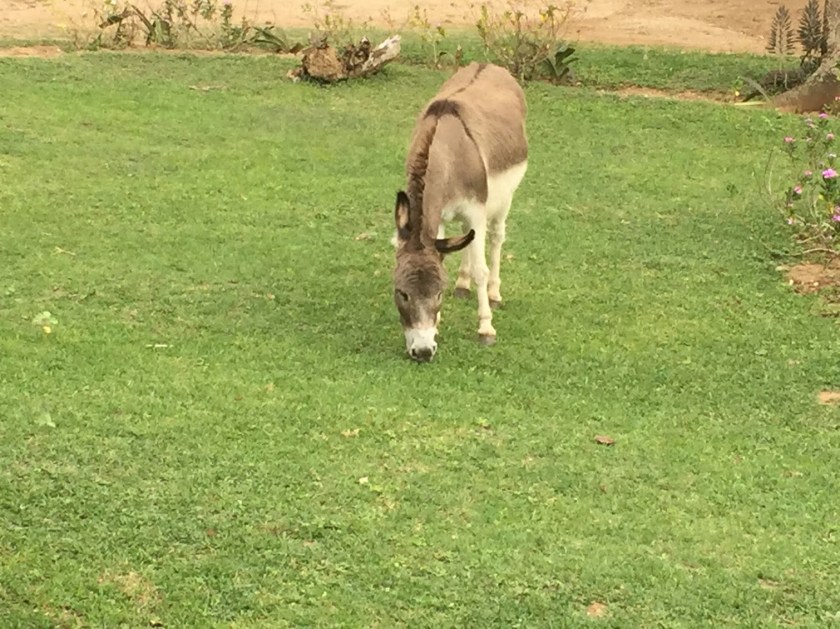
It was here we met Sultan. Sultan is a donkey and he was found by the resort owner in the streets of Chennai, where he was being teased and not given his due. She took pity on him and had him transported to this resort.  Sultan’s mates at the resort were two horses who occasionally gave the children a ride on their backs. Sultan had no such obligations as no one seemed interested in taking a picture riding a donkey, so he just grazed, all the while thinking he was a horse. He was a great favorite among the guests and was often called upon for a loving pat on the nose or a rub on the chin. Sultan knew all the residents of the resort.

sultan

It has since become a motto of sorts within our family to Live Like Sultan. A life of love, commendable self worth, fresh air, a contented mind and a slow pace of life to relish the many gifts that Earth has to offer.

An Email About Plants On Mars

Weekday nights, apart from startling Californian flora and fauna out of their wits with the chaos and noise in the home, also means that the old father is busy. A note about the pater’s emailing habits. He settles down with a serious look on his face, a glass of warm water by his side, and corresponds with his trader in the Indian Stock Exchange. From 10 p.m to well past midnight, he is the paragon of efficiency. He painstakingly types out instructions, his tongue peeking out with concentration, leaning forward in his chair, his browser tabs opened to Gmail & Economic Times. His mind composes the shortest possible sentence before he starts typing, since he has to spend some time finding the right alphabets on the keyboard. Once a teacher, always a teacher, and he insists on using the right punctuation: commas, spaces, periods and semi-colons. Sometimes, he hits tabs for the extra space, and that lands up sending the email instead of moving the cursor, and then he starts over. The wonderful lady on the other side turns an indulgent eye on the septuagenarian’s emails, and sends him trade notifications and acknowledgements to the correct email.

Friday nights are different. The Indian Stock Market is closed, schools and offices in the USA are closed on Saturday. So the couch is cluttered with cushions, throws and comforters from the bedrooms, and the old television settles down to air a movie or television show down to the audience. Friday nights at the home always contain a general air of excitement. One would think that through the week, the children work 16 hours a day, with sparse meals and little fun, the way they whoop at the Friday evening fun. Entertainment choices are always a bit tricky given the age groups the television has to cater to at once. The son and daughter want different things. Throw the grandparents into the mix and it becomes a telling lesson in democracy. Sometimes, the choices made by popular votes turn out to be so bad that the voting audience clamors for a change midway through and the process begins again.One does not need to follow #Brexit and #Bremain for democratic ulcers.

One night we settled on The Martian. The budding toddler astronomer in our family agreed that he liked to go to Mars one day as a Space Racer, and helpfully showed us a rocket lift-off. (Space Racers is an animated television series. The main characters—Eagle, Hawk, Robyn, Starling and Raven—are cadets at the Stardust Bay Space Academy. The cadets spend each episode traveling through outer space) The old pater shelved his urgent emailing needs and settled in to watch. The rocket made a spectacular landing on the grandfather-tummy-airfield, and the audience quietened down to watch the movie.

Every time I watch a movie, I am amazed how clipped and to the point people speak. No rambling on the way we do, no unnecessary smiles. Maybe if we edited our speech thus, we would be as impressive. Meaningful glances that seal the decision of landing, curt nods that signal victory,  measured smiles that indicate tension. Waah Waah!

For those of you who have not watched The Martian, it involves an expedition to Mars going awry and people having to take off from Mars earlier than planned, thus clipping their mission short. One of the crew, Matt Damon, is left behind on Mars, and the story revolves around what he does on Mars instead of twiddling his thumbs and waiting for a slow, painful death.

Communication channels are broken, Mars looks unforgiving. Matt Damon is very sad, wondering what to do, when the pater piped up,  “If I was there, I would send an email to NASA and go to bed. “

A few scenes on, Matt Damon is growing potatoes on Mars. I know.

Martian

“What do you think happened to those organic vegetables that we planted ma? “ asked the father showing off rare horticultural curiosity.

The garden looks ready for a visit by the gardener every few months. That sturdy son of the soil comes over, sets the place to rights in an hour, and leaves after a tooth-ful smile. Last time in preparation for the gardener, the father and husband had picked up from Costco, some oddly shaped packets that looked like seed bombs to be dropped into the ground. Lo and behold, we were told, we should soon be playing host to some luscious, organic vegetables.

Anyway, it had been a few weeks since the planting of the seeds, and though the summer flowers were thriving, there did not seem to be much happening on the vegetable front. I looked forlorn: We seem incapable of growing potatoes on Earth, imagine doing it on Mars?

The toddler piped up and said he knew how to grow vegetables on Mars, since he had seen a program in which the Space Racers grew them on Mars. If I am stranded on Mars with these two, one can grow food, and the other can email NASA. It was a comforting thought to head to bed with.

Baboons In An Orchestra Aid Bold-And-Beautiful Actress

We played host to a few relatives from Tamil Nadu, India lately. Uncles-in-law & aunts-in-law have been taking in a spot of the Californian sun and we added ourselves a few pounds of weight with all the cooking and eating that ensues. In all the hustle and bustle that visiting folks entail, I was not entirely surprised to see that Tamil TV serials reared their ugly heads in the television too.

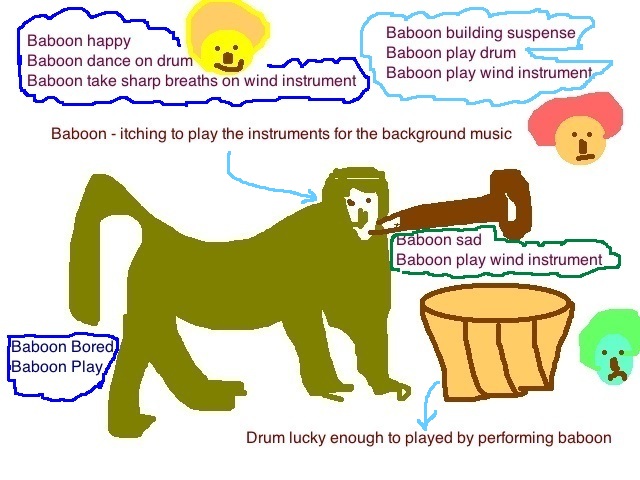
Before I start, I want you to imagine a cage with a baboon waiting to get near an orchestra of badly tuned musical instruments nearby. Bear with me, I shall explain why a baboon is caged nearby.

I was cleaning up in the kitchen after an impressive sort of meal while the visiting folk switched on the Tamil serials. I need not have worried that I had not been following the serial for the past year and a half. In ten minutes, I knew the whole plot: Rohit and his father were bad, bad men and bold-actress-with-lots-of-make-up, had filed a police complaint against Rohit. Bad Rohit’s bad father clutched his heart when his Rohit was arrested and was carted off to the hospital with a weak heart. Rohit’s mother came to plead with bold-and beautiful actress with lots of make up, who was sitting at home and reading a magazine, to take back the case, and cried a river. All with me so far? Good. For it is here, that we wade into murky waters.

Bold-and-beautiful actress said she could withdraw the complaint but she had one condition.

The baboon breaks out of his cage and is now letting loose on a harmonium, while thumping his feet on the drums and the horrendous background music prepares everyone in our house, and the neighbor’s house too, that impressive stuff is about to happen.

B-and-B actress goes to visit ailing father in hospital and tells him her conditions for withdrawing the police complaint. Baboon is warming up now and lets you know that. Apparently, reprehensive Rohit had raped poor Divya, gotten her pregnant and not only had he abandoned her, but bad Rohit and his bad father then tried their best to get poor Divya killed.

The baboon now tries a windpipe sort of instrument that makes one forlorn and wane.

The B-and-B actress sets forth her condition: Rohit must marry Divya.

The baboon bangs, clangs and deafens one with the din on an impressive scale.

baboon

There are loud murmurs of approval from the audience, and I am shocked. I should know better than to expect anything else from a TV serial, but I still am shocked. I mean to condemn that poor girl Divya with a rascal of a husband is nothing short of criminal. She could have carved out a life for herself (and her baby if she wanted to keep the baby that is) with dignity and self-respect. Who wants her to be saddled with the rapist for life?

The maudlin entertainment pulled my attention when the parents or parents-in-law were here several times previously. There the heroine is:  impeccably groomed, dressed like she is going for a party, to receive her abusive husband or to confront angry relatives. She babbles on paying no heed to the social cues, and pretty soon, there is an explosion of sorts and everything thuds to a stop with a slap on her face. The glycerine acts immediately and there are tears and dubious sentiments on culture and I gag (once again) in the confines of my home.

For all our efforts at education, social reform and trying to open the mind to gender equalization, I think we have an epic fail with the Television serials. The producers may say that in the end, good triumphs, and after three years of bearing abuse, the emancipated young lady defies that kind of ill-treatment in the last one week of the television show and their souls are salvaged.

But where is my apology? Where is the apology to the audience? For three years, you send misogynistic messages every evening to the audience – an audience comprised of young, impressionable children, parents of married daughters, parents of daughters-of-marriageable-age, parents of young sons,  parents of sons who are married, not to mention every human-being, who actively seeks or passively receives the entertainment. What is the social message you are sending them? There is no subtlety there – the socially disgusting messages are there in Techni-color with dialogues.

Like my young daughter says, “Oh. In Tamil TV, everybody slaps the women when they don’t want to talk about something anymore. They never just walk away!”

That feels like a slap. Let loose baboons on drum now.

The Telling Problems

I enjoy looking at the projects put up on the class room walls in Elementary Schools. Good though my schools were, when I was young, the walls were pristine. Nothing covered the walls. An odd calendar maybe, but nothing more.

Whereas the schools of today have beautiful art work done by the children covering the walls. Cows looking like dysfunctional zebras pushed through a rectangular pipe, lions with sunny, smiling faces, water-melons so red that the sunsets beg to be pink instead.

IMG_2307

One evening, a couple of months ago, I walked into a 3rd grade classroom, and I could not help noticing that the topic for the session was New Year Resolutions. I am always curious to see what runs through the minds of children. Their disclosures are never disappointing, and often amusing.

The new year resolutions of the third graders were sweet. A number of them had confessed to being warring partners with their siblings and resolved to address that issue pronto. It was also apparent that it was the area in which they received active feedback from the parents.

In the New year, I will try to be nice to my little brother

In the New Year, I will not fight with my older sister

In the new Year, I will look after my little brother and be nice to him.

Heart-warming notes all, in varying levels of penmanship, and most of them emphasized the be-nice motif. All very heartening to note in the younger generation. If these are the children who are to grow up and work towards World Peace, it seems a good place to start.

A few months ago, we went to a Science Fair for middle school and high school children. The topics under advisement there were marvelous and varied. Some of them were telling of the immediate problems they faced, and it was interesting to note that their concerns had moved on from the play-nicely-with-sibling motif:

Is yawning contagious? 

Do grades improve with playing games?

How music affects our coherence while doing homework

The number of projects in Environmental and Earth Sciences was the largest bucket, and that in itself was encouraging.

If peace and conservation of earth are occupying the minds of the young, I think we shall be okay.

The Snoof Struck Dumb

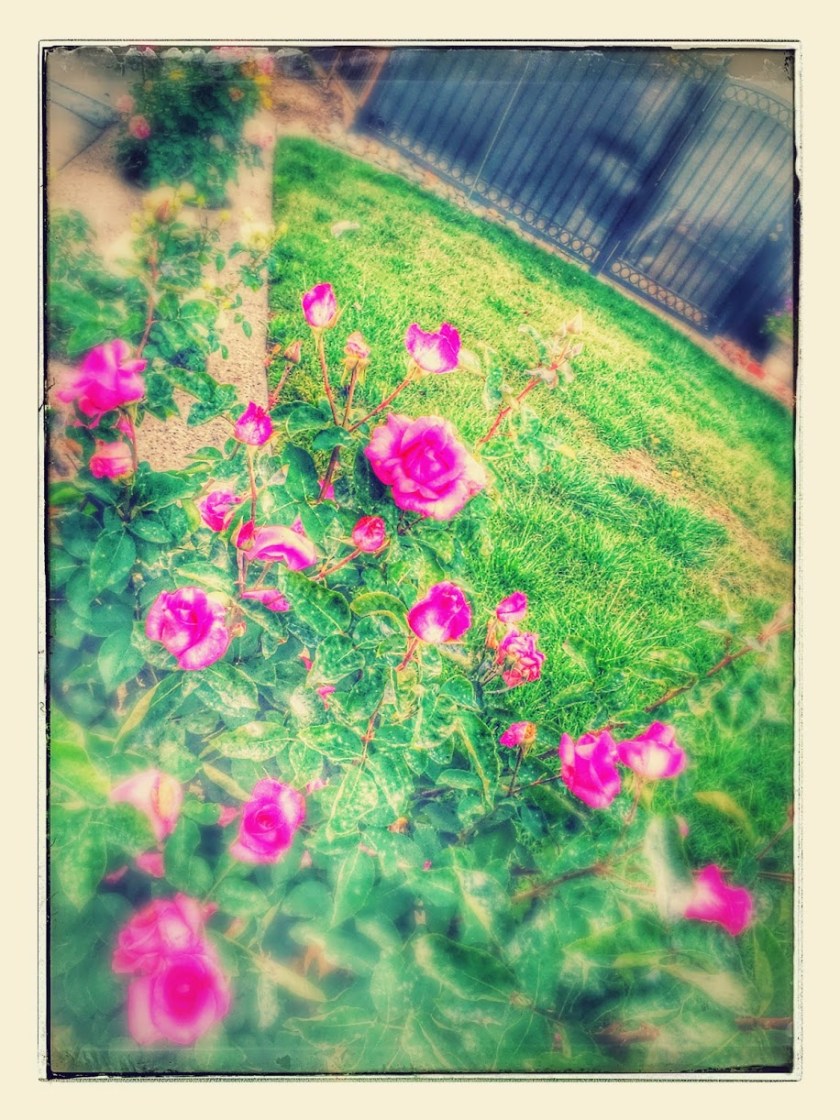
I love Spring. Every flowering tree bursts out in glorious bloom and the bushes are all brimming with flowers. Primroses, roses, jasmine, chrysanthemums, snap dragons, hill lupines,  and wild clovers jostle with each other making one’s eyes dance with joy. It is also the heady season of wondrous scents wafting through the air. Eucalytpus scented trees mingled with creeper jasmines and roses should make a highly pleasant combination, but I would not know.

IMG_2326-EFFECTS

Come Spring and I also become a snoof https://en.wiktionary.org/wiki/snoof. I can conduct an orchestra of sneezes, sniffle-puffs and croaky throats. Like an orchestra in which owls, bats and frogs are the main participants. This Spring, I also had the privilege of silence. The throat was affected. At times, there was a competition between the scratchy throat and the stuffy nose. For some time, things were rocking along pretty smoothly with an achoo here and an achichoo there, when one morning my throat gave out completely and nothing emanated.

It was marvelous I tell you, simply marvelous. Our culture suffers from a talking epidemic: it is as though talking is an art, a hobby, a vocation even. Everybody is encouraged to voice their opinions and to have a view point. Sometimes, we feel the need to say something that we don’t really mean or understand.

But you see, all that was stripped from me when I lost my throat. There were no expectations. I spend the most gleeful week possible. I would walk into meetings and try to look apologetic as I pointed to my throat. It was hugely introspective and rewarding. Like a time-out for myself in a noisy world. Colleagues had tea with me in companionable silence, marveling that it did not feel awkward at all to not have a single word between us.

https://www.brainpickings.org/2015/01/13/paul-goodman-silence/

I quote from article:

Like Paul Goodman writes:

Not speaking and speaking are both human ways of being in the world, and there are kinds and grades of each. There is the dumb silence of slumber or apathy; the sober silence that goes with a solemn animal face; the fertile silence of awareness, pasturing the soul, whence emerge new thoughts; the alive silence of alert perception, ready to say, “This… this…”; the musical silence that accompanies absorbed activity; the silence of listening to another speak, catching the drift and helping him be clear; the noisy silence of resentment and self-recrimination, loud and subvocal speech but sullen to say it; baffled silence; the silence of peaceful accord with other persons or communion with the cosmos.

IMG_2326

I wish we could all choose one day of the week, every week, in which to stay silent and just observe what is going on around us. I am sure it will make us better listeners and more appreciative of the gift of the gab.

Lessons From The Little Blue Train

The Article below also appeared in The Hindu in the Open Page on May 10th:

http://www.thehindu.com/opinion/open-page/looking-back-at-a-little-blue-train/article8576823.ece#comments

My mother ran downhill through a steep slope in order to catch her little blue train to get to school, where she taught, everyday. We lived in a small place nestled in the Nilgiri Hills, where everybody knew everybody else and even though we might not have been invited to Tea at the train driver’s house,  he obviously knew my mother. He would see her pelting down the hill, practically skating on the little seeds dropped from the Eucalyptus trees above, as he maneuvered the train around the mountainside. He would wave a friendly hand to her telling her to slow down indicating that he would wait for her to board. What is a minute here and a minute there was his philosophy, and one that entirely suited the place and times.

lovedale

The Nilgiri Mountain Railways was not competing with the Rajdhani Express or the electric trains of Mumbai. The little steam engine was a joy, and intended to show people that true joy in living came from hard work with a dose of huffing while going uphill and a friendly toot and speed moderation while going downhill. The journey, it steamed, was the most important thing. Chug past the lakes and mountains, cling to the cliffs, take deep breaths of the nippy air and keep moving while you can.

Nilgiri_Mountain_Railway

From Wikipedia: Picture Credit: By Nsmohan – Own work, CC BY-SA 4.0, https://commons.wikimedia.org/w/index.php?curid=37242880

When people ask me about the banes of urban living, I rank not knowing the train driver quite high up on the list of grievances. I have to run up 50 stairs like an asthmatic calf to get to the platform.  So many times, just by virtue of being stuck behind a set of folks who refuse to budge on the escalator, I have missed the train. More often, I charge into the train just in time to have the doors close behind me and then stand there panting and mooing for breath.

When one considers how often I have flown past steps and hopped past debris and skidded into the train, I suppose it is only fair. A matter of tempting fate long enough. One day last week, a quick look at the watch (set to two minutes past the actual time), and another look at the car clock (set to three minutes past the actual time) revealed that I have a 30% percent chance of making it to the train if it was on time and a 43% percent chance if it was a minute late. Give me a chance at something like that and I mysteriously transform into a demonized matador bull:  I will lower my head and point head train-ward and charge like a demon with horns. However I was not feeling sufficiently bull-like that day, more like The Reluctant Dragon.

reluctant_dragon

The Reluctant Dragon is a marvelous children’s book written by Kenneth Graham. In the book, the villagers are keen to slay the Dragon assuming all dragons are vicious. The Dragon, however, wants no fighting or flame spewing. He simply wants to rest his back against a rock, think and write poetry.

The train doors above me opened and I looked upwards while running. I forgot about the raised platform around the 57th step. It was then that I took a toss. Now, when I say ‘Toss’ in that flippant manner, it does not truly capture how much an ass it makes one look.  Well, there really is no comparison with the animal kingdom, I mean have you seen deer trip or donkeys slip on the mud? That is set aside for the two-footed I believe.  The point is that the step hurled me and I fell spectacularly. My bag flew one way, my legs the other, while my knees scraped along trying to keep the bag and legs together. I lay there trying to resist a bizarre urge to laugh out loud, though I could feel the stinging pain in my scraped knees. I did chuckle to myself though – I must have looked like a prized fool sprawled there first thing in the morning when folks have important things to do and places to be. One cyclist evidently late for her own train, said, “You okay?” and I said “Yes”. She gave me the Thumbs Up and cycled off.

As I stared at the departing train to see if I could detect a smirk from anyone on the train, I need not have worried. The shiny silver train streaked off glinting against the morning sun as efficient and indifferent as ever. I did not know which was worse, the physical pain from the bruises or the indifference of the departing train. Just as quickly as laughter had come, I found much to my embarrassment, that tears stung my eyes.

No one knows whether the kind train driver who waved to my mother is still alive today, but I miss the likes of him in today’s world.