When you look up the definition for religion, it states among other things that it is “a pursuit or interest to which someone ascribes supreme importance”
How many conflicts has the world endured, is enduring, and will continue to endure because of this belief to which one ascribes supreme importance? I had written about it here (religion).
Who was it who said that every good kind of learning can be obtained from Childrens’ books? I whole heartedly agree.
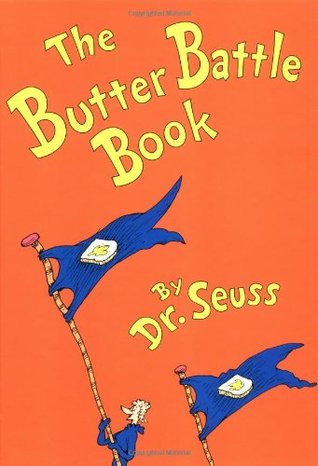
The latest book that I am babbling about is the Butter Battle book, by Dr Seuss.
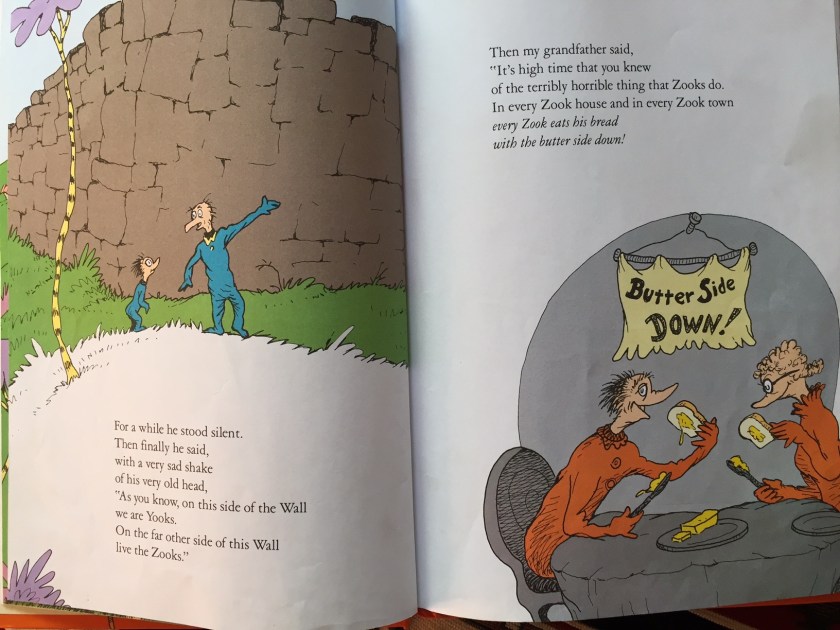
The Yooks and the Zooks live on either side of a long, meandering wall. The Yooks wear blue, the Zooks wear orange.
The Yooks think the Zooks silly for buttering their bread with the butter side down, while the Zooks think the Yooks are somewhat dim-witted for buttering their bread with the butter side facing up. The flags of the Yooks and Zooks represent the belief in buttering bread, and the animosity builds from this bread-butter-theory to which they attach supreme importance.
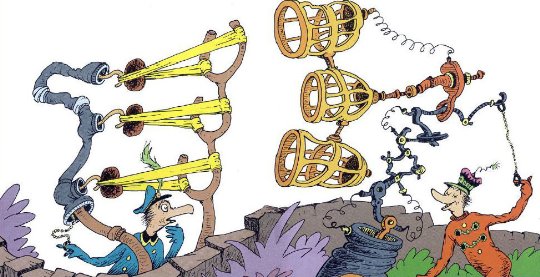
One day, the Yook patrolman is prowling the place with his Tough-Tufted Prickly Snick-Berry Switch, when a Zook pelts him with a slingshot. This sets in motion an escalating conflict, with both sides coming up with more and more exotic and dangerous arms with which to fight each other.
The Triple Sling Jigger, the Jigger Rock Snatchem, the Blue Goo-er, the Kick-a-poo kid operated by a cocker spaniel – Daniel, the Eight-Nozzled Elephant-Toted Boom Blitz.
The last page has the Yook patrolman sitting atop the wall with a Zook warrior. Both of them have in their hands a Bitsy Big-Boy Boomeroo – a small bomb that can annihilate life as we know it, signifying the nuclear threat.
I know we ask of no formal training as a politician: there are no politician licenses, no courses one has to complete to take up public office, but I really think there should be a set of children’s books that they all have to read and re-read as refreshers every year in order to stay in office. We could call it the Butter Battle Course.
The Butter Battle Book has of course given rise to great hilarity in the house. “Do you want to be a Yook or a Zook?”, we ask taking out the butter and the bread. We now butter our bread on both sides so we can be Yooky-Zooks, and sometimes Zooky-Yooks.
The next time any two nations start warring, I suggest thrusting bread buttered on both sides to both parties.
I looked at the delectable pile of books by my side waiting to be read. The top of the pile was the beautifully annotated ‘Jane Austen’s History of England. –
Just the sort of history book that appeals to me. Written by Jane Austen when she was 16 years old, the book bears the hallmark of her humor.
I sat smiling at some of the things written about Henry the 8th & Anne Boleyn.
The book certainly sounded like some of the answer papers of my youth.
I have always felt that History was one of those subjects that was calculated to freeze my brain. Good though my teachers in the subject were, bless them, they could not but help say that the Second Battle of Panipat was fought in 1556. Inside my brain, this simple fact would start a whistling train of thought:
1556. Hmm … funny number.
How to remember that number?
55 in the middle and 6-1 = 5.
Why not 6551? Because that is in the future.
Very clever. But what about the number 6? Why 6 and not 7?
Maybe, History is the sixth period(?)
But only on Wednesdays.
If only it were 1596, 15*6=90 and then add 6
“Can anybody tell me what happened to Akbar after that battle?” These teachers have voices that have a way of cutting through the most interesting meanderings of the mind.
“What battle?”, I’d write on the side margin, and slip it across to my friend. There she would be, sitting by my side at the wooden desk with a vacant expression on her face biting her pencil. But at this urgent message, she’d stoutly pull herself together and write back, “The Battle of Panipuri, I think.”
Then the exams would roll along, and after days spent cramming the dates and emperors, I would come to the conclusion that all emperors who sought to reign should be made to stand in line in shorts and recite the dates of all those who aspired to power before them. If they still want to reign, may their shorts fall while they lead the charge – that should teach them not to add to that horribly long list.
To make matters worse, the rumor mills during examination time worked overtime:
(a) The teachers likes diagrams, one person would say, stating emphatically that whatever you do, make sure you draw a diagram for it.
Feverishly, we would start drawing Africa maps, and label the Gold Coast, and the Sahara desert, throwing in the Kilimanjaro for luck. Never mind that the question was about Egypt.
(b) The more you write, the better will be your marks.
So, we would write double-spaced and add spice to the Spice Wars.
One time I remember writing about Alexander’s Horse. Our History teacher had on one occasion told us about the fine breeds of horses that emperors prided themselves on. My brain tick-tocked away with Alexander’s Horse, and I found to my amazement that the brave stallion was heroic beyond what History books knew. I imagined the horse pulling his great emperor across the blizzards of the mountains one day just by trusting its instinct. The marvelous animal found a stream of fresh flowing water for its emperor. I wrote about 16 sentences on the virtues of the horse, borrowing heavily from my recent reading of Black Beauty (also a black horse with a star on its forehead, duh!) I wrote of its aching muscles, its loyalty that was much admired, and how stable managers had a job that was olfactorily unsatisfactory maybe, but really quite a prestigious one, if it meant looking after the emperor’s horse. I also gave him a name, Macedonia, if I remember right – sealing my understanding of the reign once and for all. (Alexander’s Horse, Bucephalus, would have turned in his grave and asked ‘Is she talking about me? Neigh! ‘ )
“15 more minutes.” the examiner said, and I looked to see that while the paper had a brilliant character sketch of the horse, it had very little about Alexander the Great.
I hastily started another paragraph on the the horse’s rider and finished up the paper. I came out into the brilliant sunshine from the exam hall when my friend said looking at me in admiration, “How much you wrote! I saw you taking two extra sheets! I am sure you are going to ace it!”
I shrugged off this undue praise guiltily, feeling a little sorry for the teacher who had to read such drivel.
It was years later that I read “I, Claudius”, the historical fiction book written by Robert Graves,and came upon Incitatus, Caligula’s horse. Whether it was fiction or not I cannot say, but this was the horse that the Roman ruler, Caligula, sought to make a senator, and invited to State dinners.
The truth is stranger than fiction, but it is because Fiction is obliged to stick to possibilities; Truth isn’t. Mark Twain
I smiled at these pleasant memories, and opened the book in my hand.
Jane Austen said,
Edward the 4thThis monarch was famous only for his Beauty & his Courage of which the Picture we have here given of him, & his undaunted behavior in marrying one Woman while he was engaged to another are sufficient proofs. His Wife was Elizabeth Woodville, a Widow who, poor Woman! was afterwards confined in a Convent by that Monster of Iniquity & Avarice Henry the 7th. One of Edward’s Mistresses was Jane Shore, who has had a play written about her, but it is a tragedy & therefore not worth reading. Having performed all these noble actions, his Majesty died, & was succeeded by his son.
Hiking through the rolling hills one day, I noticed one hill that had the touch of our greed all over it. It was probably a quarry. Set against a state park, this stark mountain made me wince. It was visible from many points in the park, and I moved my eyes away from it as though it was a raw, open, visceral wound. I noticed later in the dozens of pictures I had taken that day, I had deliberately cut this mountain out from my lens. Like my cutting out a mountain from the frame will remove it from my conscience. But it didn’t. I can still see its jagged unnatural edges in my mind’s eye – edges that have been scraped by metal against rock abruptly, not shaped by wind and water over time.
A sight like that got me started on the book called Biomimicry by Janine Benyus, for we have devised a way of life that is not sustainable.
Our corporations, keen on profitability, raced each other to figure out the best ways in which to make us consume more and more. But we have taken the race too far. It is time we stepped away from the treadmill.
As I gurgled on in this vein, I could not help noticing that there was a spring gurgling nearby. I stopped chattering like a monkey and quietened down, and as I did so, I felt a queer feeling seep into me and fill my being. Could it be happiness or gratitude? Whatever it was, I liked it. When birds, butterflies, rabbits, pinecones, free flowing water, trees and mountains jostle in friendly ambience in the early morning sunshine the way that Gaia intended it to be, it is refreshing.
I looked at the vegetation around me, and I found I did not quite know the type of trees or the plants around me. Gone were the days when I could tell you which berries were good, which ones made you itchy, and which flowers you could sip to get a wisp of nectar. How do animals know instinctively what works and what doesn’t, while we do not? I thought of the chimps in Gombe Stream National Park, the most studied species in the planet thanks to Jane Goodall’s work.
Quote From Biomimicry by Janine Benyus: Observing a chimp in Gombe Stream National Park, anthropologist Richard Wrangham, says:A chimp I was observing had woken up sick and instead of rolling over for more sleep, she got up and made a beeline. Twenty minutes later she stopped at an Aspilia plant [a cousin of the sunflower that grows as high as 6 feet]She suckered up her face and swallowed a dozen leaves before she moved back to her troop. It was obvious from her grimace that this was not a taste treat.Though chemical analysis of the ingested leaves showed no conclusive proof of medicine, he saw that a spike in leaf swallowing behavior coincided with the months of host tapeworm infection.
We too had this kind of instinctive knowledge with us, and instead of adding to its repertoire, we have accidentally followed another path.
Most frightening of all reports is that one in four wild species(including all taxonomic categories) will be facing extinction by the year 2025.
All this huffing up hills takes a toll on amateur knoll-climbers, and on the pretext of admiring a giant pine cone, I stopped to regain my breath. The pine cone was beautiful: It’s tough exterior, perfect symmetry and overall shape made me look at it and wonder why we cannot build jam jars like that pine cone.
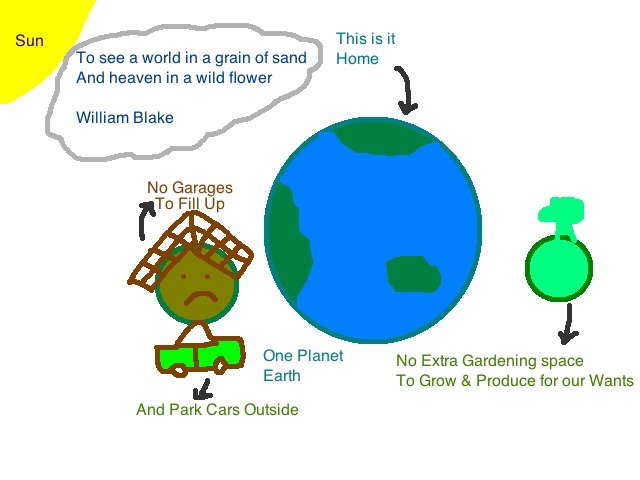
It is hardly the first nor the last time I will come across a Mountain of Greed. We have made extraordinary progress in areas pertaining to the skies, the seas, connectivity etc, but seem to grapple with the simple fact that we have one finite resource on which to live. There are no garages to be built for Earth. No extra closets. This is it.
I sound extraordinarily sententious in this post, so maybe what we need is a reward system for eco-sustenance, so each of us can tap into the Naturalist nestled in us.
To see a world in a grain of sand To see a heaven in a wild flower – William Blake
I recently read a book called Biomimicry by Janine Benyus. A book, whose underlying concept appealed to the very core of my being, for it outlined how little we know of the world around us, and how much more there is to learn from Nature’s processes.
How do we become harmonious citizens of a planet that houses, apart from 7 billion of us, billions of plant and animal forms? It is a question that floats into my mind every so often. How beautifully a bee arranges its hive, how marvelously a dandelion reproduces, how trees take in water, how they produce energy. All of these things make me wonder and marvel at Nature the Tinkerer.
I am afraid I made rather a pest of myself with friends and family. I cornered parents-in-law while they were taking a rest and spoke to them of Do-Nothing farming, I got a children’s book on the subject and read tantalizing bits of information out to the children. I bored friends with it. I could see the scramble-and-run-before-it-is-too-late look on everyone’s faces when I stopped to admire the squirrel prudently checking whether the fruits are ripe before digging in.
‘Why is it wet winter or hot summer, some grasslands thrive?’, I’d ask, only to find that tasks of monumental importance spring up requiring immediate attention for my audience.
Did that stop me? No. If anything, I am going to go and do on the blog what I have been physically doing to those around me.
The book is arranged into the following sections:
Echoing Nature Why Biomimicry now?
How will we feed ourselves? Farming to fit the land: Growing food like a prairie
How will we harness energy? Light into life: Gathering energy like a leaf
How will we make things? Fitting form to function: Weaving fibers like a spider
How will we heal ourselves? Experts in our midst: Finding cures like a chimp
How will we store what we learn? Dances with Molecules: Computing like a cell
How will we conduct business? Closing the loops in commerce: Running a business like a redwood forest
Where will we go from here? May wonders never cease: Toward a biomimetic future
Higher education in Science has arranged itself along silo-ed areas of expertise. Biologists rarely study Computer Science. Mechanical Engineers rarely take up Zoology.
The author writes of her interactions with various scientists who have successfully transcended narrow areas of study to walk the line between disciplines to see where we can benefit from nature.
1) The materials science engineer who combines fibre optics and biology to study the beauty and resilience of spider silk
2) The agriculturist who, over decades, has perfected the technique of do-nothing farming, conscientiously chipping away at unnecessary practices while studying natural prairies and grasslands to see how plants grow in the wilderness, thereby coming up with the highest yield of natural grain per acre.
3) The anthropologist who studies chimps and how they cure themselves to see how we can identify cures for common problems.
Quote: In exploring life’s know-how, we are reaching back to some very old roots, satisfying an urge to affiliate with life that is embossed on our genes. For the 99% of time we’ve been on Earth, we were hunter and gatherers, our lives dependent on knowing the fine, small details of our world. Deep inside, we have a leaning to be reconnected with the nature that shaped our imagination, our language, our song and dance, our sense of the divine.
This about sums up our position on Earth. “In reality we haven’t escaped the gravity of life at all. We are still beholden to ecological laws, the same as any other life form.”
Now is the time for us to take our place as one species among billions in the ecological vote bank, and make wise choices.
Dinner was done, the kitchen was clean enough, and the children were smelling delightful after a hot bath (They looked and smelled like mops after playing all evening just an hour ago). The kindergartner and I had read a children’s book. After a few minutes, I thought I heard the rhythmic breathing that meant he fell asleep and, I started fiddling about with the phone. I had started with the intention of checking my email, and had gone all over the place, finally grazing my Facebook feed.
Every now and then, an article pops up in my feed exhorting me to rise to greater heights and tell me in 10 easy ways how to become a Better Person. Over the past decade, the nature of these articles has changed. At first, it said great things like Manage Priorities in your list and how best to Stick to Plan and all that.
Now, things have been taken down a couple of notches. We will get you effective to the point of Making Lists. Then, you are on your own. Go back to your phone if you like. If you want to stick to the lists, you must already be efficient enough, the articles say and throw up their hands.
This one told me how to Be Productive in the age of notifications.
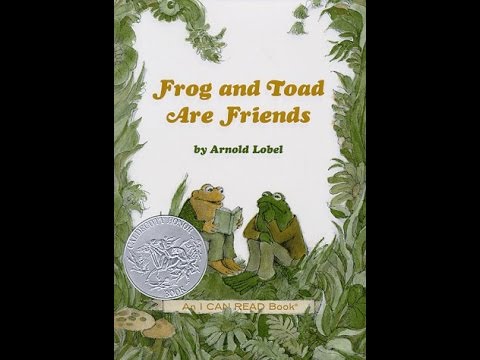
‘It has been a long time since we read Frog & Toad’, said a sleepy child’s voice by my side. I looked up and the pair of us started laughing.
‘You didn’t sleep yet!’
‘No!’ he chuckled.
I gladly set aside my phone – pesky little thing telling me how to be Effective and Efficient. Like I wanted that. Pssk Tssk and Zsssk.
’Let’s read it then!’, I said. ‘Yeah!’, he said, and we settled down together. I love those books. I am drawn to the simple problems, the bonds of friendship that endures between them and the humor in them.
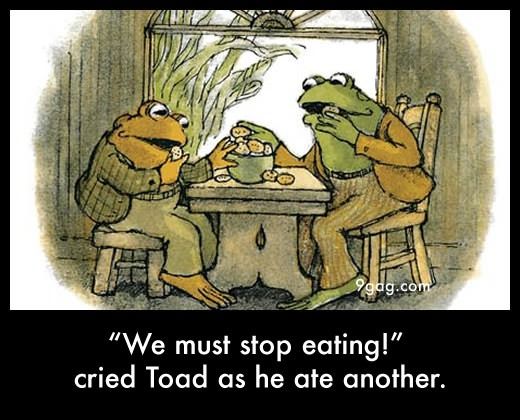
Frog & Toad sat at the tables eating cookies out of a jar. Frog had made the cookies and the friends could not stop eating them.
Hmmm….the brain said, and I glanced at the phone buzzing and blinking with a notification.
Frog and Toad ate many cookies, one after another. “You know, Toad,” said Frog, with his mouth full, “I think we should stop eating. We will soon be sick.”
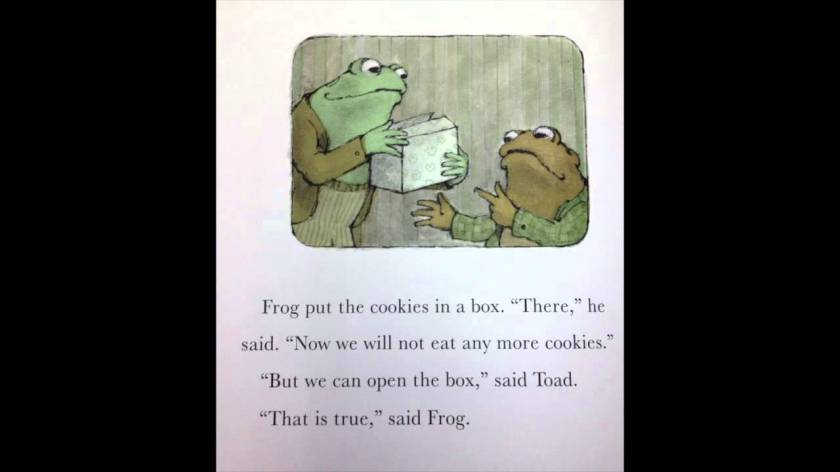
The friends try closing the jar each time after taking a cookie. But they find they can open the jar every time.
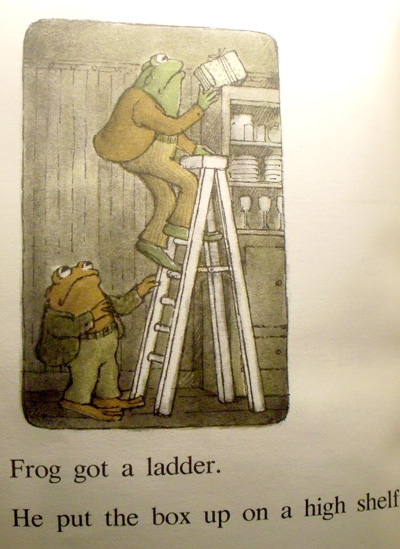
They then try closing the jar, and putting it on a high shelf where you have to mount a ladder. They find that they can climb a ladder, open the jar, and eat the cookies.
My mind could not help drawing parallels to the article I had just been reading. The article told me that the way to stop the habit of grazing your favorite apps was to move the oft-used icons to a different, hard to find area in the phone. I had done that, but found myself, swiping a few screens, opening a folder with the apps, and going after them anyway.
I was Frog getting on a ladder and opening the jar of cookies.
Frog & Toad now figure they are going to get a stomach ache soon, and are desperate to stop eating the cookies. So, they decide that as long as they know the cookies are there, they cannot stop. The best path forward would be to share the cookies with the birds and the cookies are done, they agree, and take the cookie tin out into the Spring evening to share with the birds.
Like the wise friends above, it might be a better thing to do, to just ‘share the cookies with the birds’ and be done with it. I pushed the phone away from me resolutely, and we took to discussing cookies. ‘Yummy- I love cookies. Let’s bake them one day.’, said the little fellow. I agreed, and content with that promise, he settled down and fell asleep almost instantaneously.
I lay musing. It is a good reminder for us to read how our brains respond to the demands of technology (we know the effects of Dopamine, we know how companies gain by making us spend more time, but yet…)
“Never before in history have a handful of technology designers working at three tech companies … influenced how a billion people spend their attention.”
Weekly once is Trash Night. It is that night of the week when I marvel at humanity’s ability to generate trash. It is that night when I look efficient and bustle, while the children scramble to save their Works Of Art. The husband throws a protective arm around wherever he is sitting and says. “Please! Not now – I will sort it out later. “
“When?” I demand. He treats it as a rhetorical question and wisely refrains from answering.
As I gather the copious amounts of trash we generate from the various dustbins, I ponder: If one household had this much trash, what would happen to the Earth as the population grew? What are the lessons we are learning? I didn’t realize then that the trash was to give me a valuable lesson soon.
Fifteen years ago when I first set foot in a mall in the United States, I was awed that this rich country had such vast, sprawling areas set aside for the activity of shopping alone.
This initial awe soon gave way to disappointment. I missed the chaos of bazaars, I missed the joy of finding a treasure in the pile, I missed the call of the vendors beckoning me to take just one look before deciding. I distinctly yearned for the abundance of prints, styles, and fabrics that shopping in the tiny shops in India had accustomed me to.
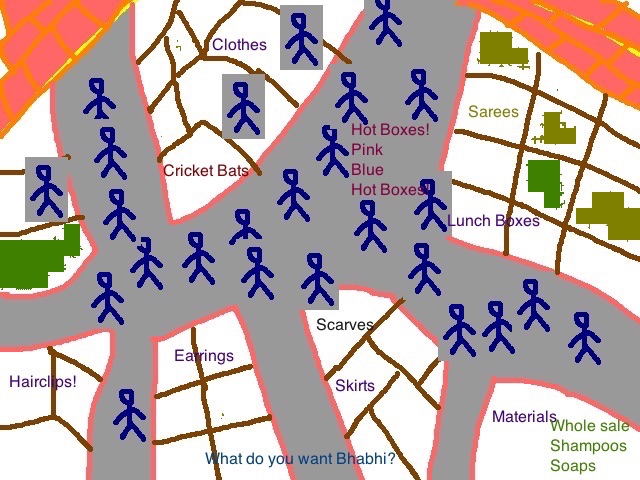
The last time I visited my family in India therefore, I plumped for a bazaar – no fancy malls for me please. What I wanted was beauty in the seemingly chaotic.
The little bazaar had tiny shops that had the dimensions of a large dining table, but enough merchandise crammed inside them to fit a garage. We were like kids in a china shop. When I paid what was asked for, I was lovingly chided that I had forgotten the crucial step of bargaining. But I was happy. I was not going to haggle with a small business owner, I said. The head shake that greeted us from family and store-owners alike said, ‘These NRIs!’.
Among the merchandize that day was a cricket bat, and some lunch boxes. You know those ones that profess to retain the heat? Those ones. They are imaginatively called hot-boxes.
Back home, we displayed all the things we had picked up. We held up the pink and blue hot boxes with pride.
“Why didn’t you tell us that this is what you wanted?” asked the parents-in-law in rare unison. “We are always re-gifting these hot boxes!” they cried.
“In fact, if you buy sarees worth Rs 5,000 in one store, they give you two hot boxes for free!”, cried the mother-in-law stung at being deprived the joy of getting free lunch boxes for the children.“These NRIs!” they said to each other and shook their heads.
Back in the US, after the school year started, I lovingly used the hot-boxes. The daughter is a fussy eater, as has been well documented in these chronicles. What that means is that all things food related completely misses her sonar and radar. If the lunch boxes she has lost, held lids and stood in a line, it would snake around Lake Tahoe. So, every time I put the hot boxes in their lunch bags, I reminded the children to bring back the boxes.
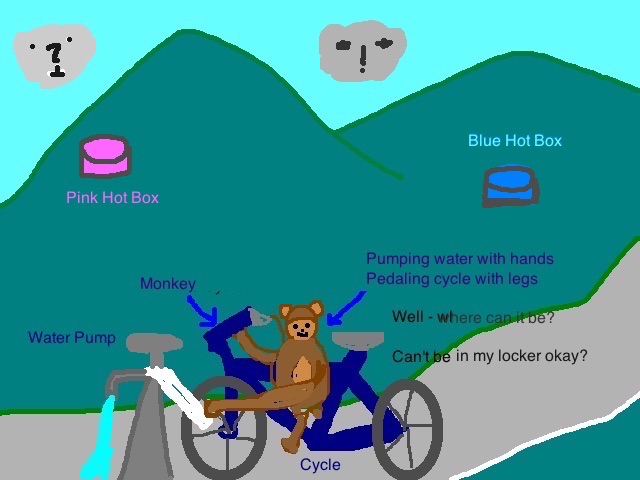
For the first few weeks, things went charmingly well. Slowly, the novelty of the hot box wore off, and soon, the lunch boxes went missing. I put on my investigator’s hat and tried narrowing down possibilities.
Could it be your locker? Or maybe you just forgot it somewhere in your school bag? Did you eat what was in there? I asked. The daughter rammed her foot up and down, like she was practicing how to pump water and pedal a cycle at the same time, and said in response to my accusatory glances that it was not she who had lost them. “I don’t know, but I didn’t lose them, okay?” she said as though she had enough with lunch boxes to last her a decade. The husband, who tries hard not to lose an opportunity to support the daughter,said I was getting a bit tiresome with the lunch boxes, and told me to cheese it.
So I did.Till that day when I was doing the little trash musing. I picked up the trash in the kitchen and I felt something heavy in there. Something round and heavy and light blue and moldy. I suppose Sherlock Holmes felt the same way when a breakthrough came in his investigations. I felt a tingling in my nerves. Whether Sherlock Holmes ever solved a case by sticking his hand in the kitchen trash, I do not know, but I confess I gingerly used a straw to poke around. And there it was: The light blue hot-box covered in potato peels, and tea leaves.
I ah-ha-ed! Give me a chance to gloat like this, and I can show you how it is done. I started off with the subtle angle first, “Anyone realize how we pick up skills that we don’t even know we have?”
“NO!”, said the family trooping in to the kitchen for dinner. I avoided gazing at the sink holding the evidence of the moldy blue hot box. It lay there in hot water, soaking, and looking like a little love would not be a bad thing.
I then proceeded to give the closing arguments for the case and summarized how life has taught me various things over decades, sometimes overtly, sometimes subconsciously. Never did I know that I had the ability to wonder why a kitchen trash bag was heavy.
The husband burst out laughing as I explained the mystery, while the daughter looked discomfited. “If you are so proud of yourself because you know how much the kitchen trash weighs amma, that doesn’t sound like a high and promising life does it?” she said.
She had me there.
“Remember, your grandmother sacrificed buying sarees for this lunch box.”, I said, and smartly went out with the trash before she would work that one out.
I am all for progress and am generally highly appreciative of the advances made in medical science, but when it comes to determining one’s eye power, I can be heard sharply drawing the breath. One need not be a sensory expert to know that I am being censorious. Stay with me while I explain the case.
One time, there I was, strapped in at the optometrists chair, by those offensive looking goggle-like contraptions across the bridge of my nose. The ophthalmologist, a brisk, happy old man, asked me to relax. He put in a lens and asked me to read something I D 1 0 T P I G
He then put in another one and asked me to do the same thing. I D 1 0 T P I C
By now, I had the Idiot Pie in apple order and could read them with my eyes closed, but they make doctors Diligent & Determined, and he would not let go of me. Can you see better with this? Or with this? Or this? Or the one before that? he said swapping the lens out and in like a conjurer pulling a rabbit trick in front of his admiring audience. He smiled with every swap of the lens and reminded me of an old avuncular dentist of my childhood days, who had the same courteous friendly bedside (chair-side) manner though he knew fully well that getting up and running was not an option for the patient and could have danced a doodah-dance with sticks.
I was tested this way and that and that way and this way again, making the poor doctor a very confused man. I could not understand this. Was he not happy that I could read? Was I doing something wrong?
I quizzed him and he said in a very concerned voice, ‘Are you sure you can read this?’
Well, if I try hard and squint a bit, I can read it, I said. I got the distinct feeling that had professionalism not stopped him, he would have thought nothing of giving me a quick one across the head with a fly swatter.
‘No, no – don’t strain your eyesight! What’s the point of straining your eyes when we are trying to get you glasses so you don’t have to strain your eyes? Just relax and tell me whether you can see.” he said.
I said okay, but I have to come square and confess: I had no idea how to relax and see. When people tell me to see, I try hard to see. Try, try and when you cannot, try harder was something I was told almost perpetually and yet, now at this crucial juncture of forgoing dinner at the optometrists chair, I was being told not to try hard. Curious.
He did a few more impressive lens swaps, and his round face crinkled with worry again, and I asked him what the problem was. He said that for my age, the power should be increasing or staying the same, but I was saying that it was reducing, and he wanted to make sure that I was getting the right pair. So, I buzzed with a light bulb over my head and told him to start off with my current power and take it up from there. It was the end of a long day, and he wanted to go home, and so did I. I emerged after a few minutes, bleary eyed, looking like a rhinoceros sentenced to rimless spectacles on my horn, while he headed home mopping his brow, filled to his brim with tales of how he is forced to earn his living getting idiots to see.
A few days later, there was some sort of medical fair in the old work spot, and I was told that I needed to swab my cheeks with a earbud. Apparently, that was enough to do gene sequencing or some such thing. I took the information hard, and looked up with a jerk running the risk of losing my precious spectacles. With a cheek swab, if we can find possible donors for bone marrows and what-not, why can we not have a simple procedure to find one’s eye power?
Lens making has been around for at least three hundred years now: Telescopes and microscopes we nailed, yet we seem to need a conjurer to do the magic of rabbit swaps to find our eye power today. Tut Tut. Most baffling.
We are back from what can only be termed an exotic vacation by the seaside, and the old brain nudged me to look for something written on marine life a while ago, and I did. I had written this post a few months ago, and forgot to publish it.
So, here is the old post while I marshal my thoughts from the vacation.
One evening over dinner, the husband asked in what he thought was a nonchalant tone whether we should go to the Monterey Bay Aquarium that week-end.
“Hmm…Did they send you the renewal plea for the annual pass?” I asked shrewdly.
He laughed and said that they had indeed.
We are as gullible as galloping oysters in fish sauce when it comes to the annual pass gab. We look and analyze the thing from all angles and figure that if we go just once more in the next year, it all makes sense and buy the annual passes. The year ahead seems to be sprawling with empty week-ends. Week-after-week, month-after-month: having nothing to do, we say why not set aside one week-end a month for the Science museum, one for the zoo, one for the natural history museum and another for ecological preservation?
Then, of course life unfolds, which in the nourish-n-cherish household has been established to be somewhat erratic, and hectic, and we are left wondering whether the weekdays with all its attendant worries is calmer than week-ends with all its hectic activity. Before we know it, the renewal plea arrives and we try our best to scramble in another visit before the annual pass expires.
“If we go straight to the Diwali party from the museum, we can work in that week-end.”, we say and scramble in a trip to the Aquarium.
Anyway, what I meant is that we went to the Monterey Bay Aquarium a few months ago. The salty, tangy, eucalyptus-scented air ruffles your hair as you make your way towards the museum. The cawing of the seagulls and the faint smells of seals and seaweed greet you long before the wonders inside.
Observing marine life is as mesmerizing as it is mystical. Standing there in front of the large glass tanks and looking at sharks, turtles, fish of every color and variety, is magical.
There is one section where we can see jellyfish boink around. Jellyfish that are colored brilliantly, transparent jellyfish, and jellyfish that contain bioluminescent bacteria. As I was standing there marveling at the brilliance of nature, I noticed that there were patterns in the glowing bacteria. Some had patterns that if one squinted one’s eyes resembled constellations in the night sky. I don’t know whether the patterns in the jellyfish are unique to each one much like the Zebra’s stripes are, but it would definitely not surprise me if that were the case. Nature’s patterns are as varied as they are diverse.
We came home that night, reluctantly pulling ourselves away from the enthralling environs of teeming marine life, and sat around for a hastily thrown together dinner. The conversation drifted towards marine life, a topic that is dear to the daughter’s heart. The love started young as we know to our chagrin – we might have watched Finding Nemo five hundred times when she was growing up. Every little fish and piece of coral was much loved in the home. The conversation flitted dangerously close to the ‘I wish I could live in the sea’ theme. The husband watched us for a moment and said in a strangely ruminative tone: “It is a scary world out there isn’t it? A-fish-eats-fish world.”
I was reminded of a quote that floats up in my mind every so often when I am observing the world around us. A quote that is prominently placed in the Monterey Bay Aquarium too:
The sea is as near as we come to another world: Anne Stevenson
Yes, it is a fish-eats-fish world, but it is also the world of beauty, survival, co-existence, and a symbiosis of life.
Some of my articles, especially ones that involve the night sky have me pondering on the nature of our existence and how minuscule we are in the scheme of things. The precise sequence of things that led to this particular form of life on this planet and so on. Generally, the night sky is simply a becalming experience that inspires humility, and some vague musings.
The scale of the universe is one that is awe inspiring. We are minuscule compared to the universe, but we also contain millions of minuscule particles compared to our own size. As far as the microbes are concerned, we, each of us: deer, goose, humans are a universe unto ourselves. There is something deeply spiritual in that : we contain multitudes and we enable multitudes. The diversity and beauty of the microbial world is immense, and one that is still emerging in our understanding of it. With the sound of rain pattering outside, I was sitting snugly inside reading I Contain Multitudes by Ed Yong, stopping every now and then to read out an interesting piece to the children.
Ayar padi maligaiyil thaai madiyalil kanrinnai pol
ஆயர்பாடி மாளிகையில் தாய் மடியில் கன்றினைப்போல்
maya kana thoongugindran thaalaelo
மாயக்கண்ணன் தூங்குகின்றான் தாலேலோ
Avan vaai niraiya mannai undu mandalathai kaatiya pin
அவன் வாய் நிறைய மண்ணை உண்டு மண்டலத்தை காட்டிய பின்
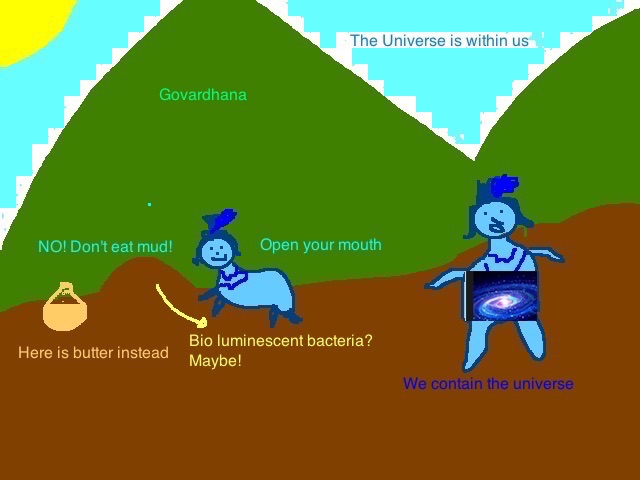
Roughly translates to: Here is little Krishna, sleeping like a little calf after eating a handful of mud and showing us the universe within it.
The son played the video for the nth time on the television, and the daughter said, “Oh no – not that again. How many times will you see that video?”
“See…see here – when baby Krishna opens his mouth, his mom can see the whole universe inside it. The whole universe!” he says his eyes widening, quite unable to comprehend why this fact is not as astounding to his elder sister.
“Yes – but you said that already.”
“I always watch what you are seeing!” said the fellow stung at this accusation of hogging the television. His sister scowled, the toddler tensed and I sensed it was time for dinner before the situation escalated, and rivers of tears joined the gurgling rivers of rainwater outside.
Inside the house, we sat down around the dinner table with hot food and slurped at it. We kept getting interrupted by alerts giving us flash flood warnings, and it increased the gratitude for being inside, relishing warm food and enjoying one another’s company. Minutes into the meal, the situation had considerably lightened and the children were rolling off their chair giggling at something inane. I watched them bemused.
Countless writers have written about the effects of good food. Jerome K Jerome from Three Men in a Boat goes on to describe the effects in great detail:
It is very strange, this domination of our intellect by our digestive organs. We cannot work, we cannot think unless our stomach wills so. It dictates to us our emotions, our passions. After eggs and bacon it says, “Work!” After beefsteak and porter, it says, “Sleep”. After a cup of tea(two spoonfuls for each cup, and don’t let it stand for more than 3 minutes), it says to the brain, “Now rise and show your strength. Be eloquent and deep and tender; see with a clear eye, into Nature, and into life: spread your white wings of quivering thought and soar, a god like spirit over the whirling world beneath you, up through long lanes of flaming stars to the gates of eternity!”
What is it with food and mood? Is there a direct connection between the gut and the brain?
It turns out that there is. In ‘I Contain Multitudes’, Ed Yong goes on to write that there are now studies directly linking gut bacteria with mental well-being. We have a long way to go in understanding the role of gut bacteria. Some studies indicate reduced symptoms of depression in people with irritable bowel syndromes after consuming certain types of probiotics.
If research advances enough to diagnose certain types of borderline psychiatric patients and is able to treat them with specific types of probiotics to enable well-being, would that not be great?
The future could hold in store for us enough advances in microbiology & genetics, to enable personalized treatment options that aims at holistic healing. That is a promising, if distant, future to strive towards.
Quote: It is estimated that every human contains 100 trillion microbes, most of which live in our guts. By comparison the Milky Way contains between 100 million and 400 million stars.
Maybe the mud that baby Krishna swallowed contained bio luminescent bacteria that made the universe inside of him light up when he opened his mouth.
Whatever it is, like Jerome K Jerome says: “We are but the veriest, sorriest slaves of our stomach, Reach not after morality and righteousness, my friends; watch vigilantly your stomach and diet it with care and judgement. Then virtue and contentment will come and reign within your heart.”
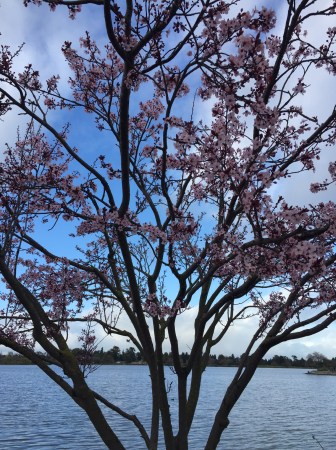
After enduring a particularly long spell of drought, we are relishing the rains lashing down on us this year. The clean, fresh air after the rain is one we relish. As the toddler son and I make our way to school every morning, our heart lifts at the marvelous rainbows, the cherry blossoms starting to bloom and the beautiful snails out on the roads.
Sometimes, we come up with silly names for the little creatures we find on our path. Turbo the Snail is always a welcome sight. Earthy Worm invokes the same curiosity if not adoration. Toby Turtle is remembered with affection, and we wonder aloud how we can find ways to hobnob more freely with turtles.
Watching the snails leave a shiny trail behind them one rainy day, we squatted there wondering whether that trail left behind by snails is poisonous. That innocent minute squatting on the sidewalk looking at snails criss-cross our path raised so many questions. It looked to us like a snail could not get very far if it had to flee a predator.
Where do they live when it is not raining and can’t move?
What if we had slippery slopes for snails? said the toddler always keen to help.
Do only snails walk the slippery slope? (completely lost on the toddler of course) and so on.
“Amma, we will be late! Hurry up.” said the conscientious fellow and we galloped past the snails wondering how much there was to do in the world, and how little we manage to do.
The thought that there is so much more to be done can sneak up at you in the most unexpected moments. Like the time I was reading a love story written by Alexander McCall Smith in the book Chance Developments. The story imagined the life of a young man in Scotland using a vintage photograph of a young man helping to change a car tire in the presence of a beautiful young lady in a cream colored coat.
In the book, the young man is taking a stroll around a loch and is fascinated by some plants that many ignored because they were believed to be poisonous, but he nibbles at them lovingly almost, since his father had tried and demonstrated to him that these particular plants were not poisonous at all. He had studied the properties of the plant, and traced the origins of the myth to a Celtic folktale, and though most tales started off with a kernel of truth, this one probably did not.
How is a story as innocuous as that supposed to make one feel like there is so much to be done? Because they are so many ways in which we can remain curious, to question the this-is-how-it-is-done-s of the world. The fact that we can bust one myth just by questioning it is good. And it proves that we pave the path for one more myth to be broken and then one more.
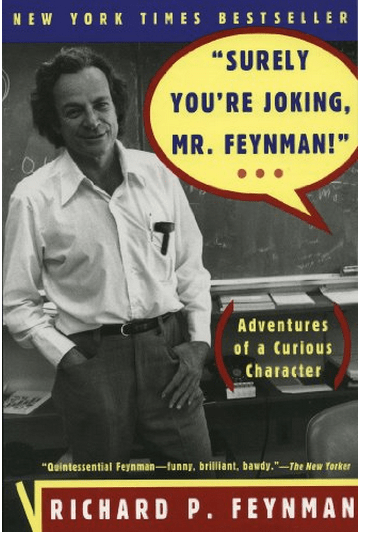
It has been a few years since I read ’Surely, You’re Joking Mr Feynman – Adventures of a Curious Character’ By Richard Feynman. I remember one passage in which the celebrated scientist talks of watching ants as they made their way around his backyard. Marveling at how they navigated obstacles placed in their path, and admiring the innate steadfastness of the species.
The quest for knowledge can be a curious, interesting journey, if only we take the time to stop and look at the snails.











 Nourish-n-Cherish