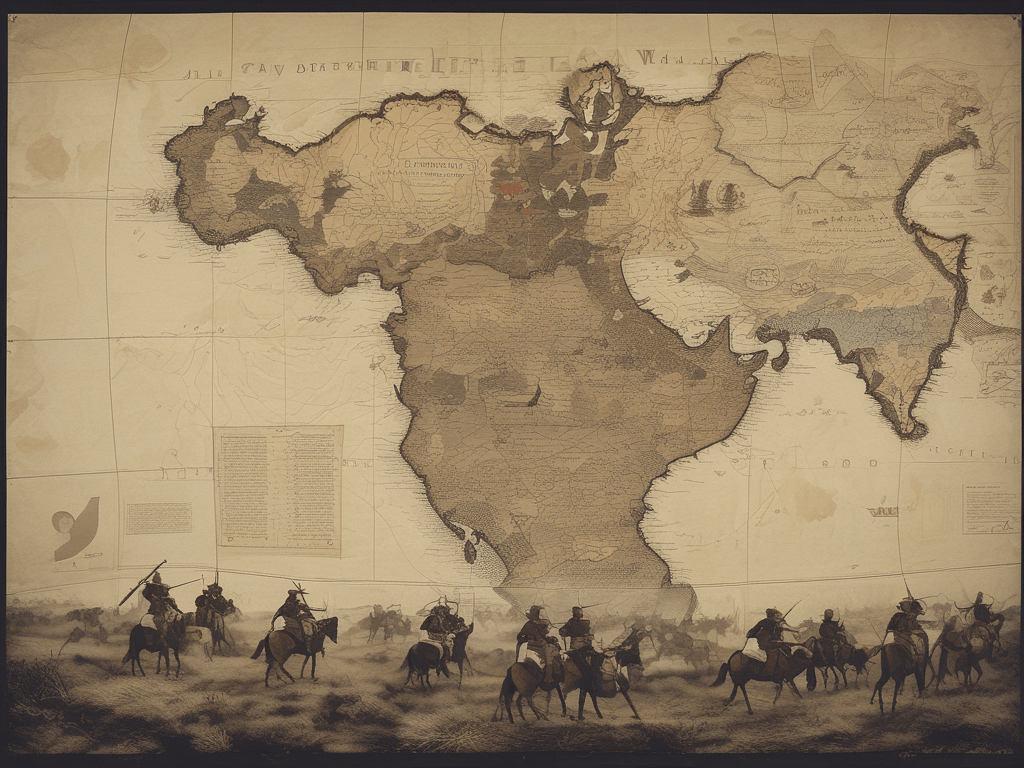
Maps of War: A Fascinating Insight into Historical Warfare

Maps of War

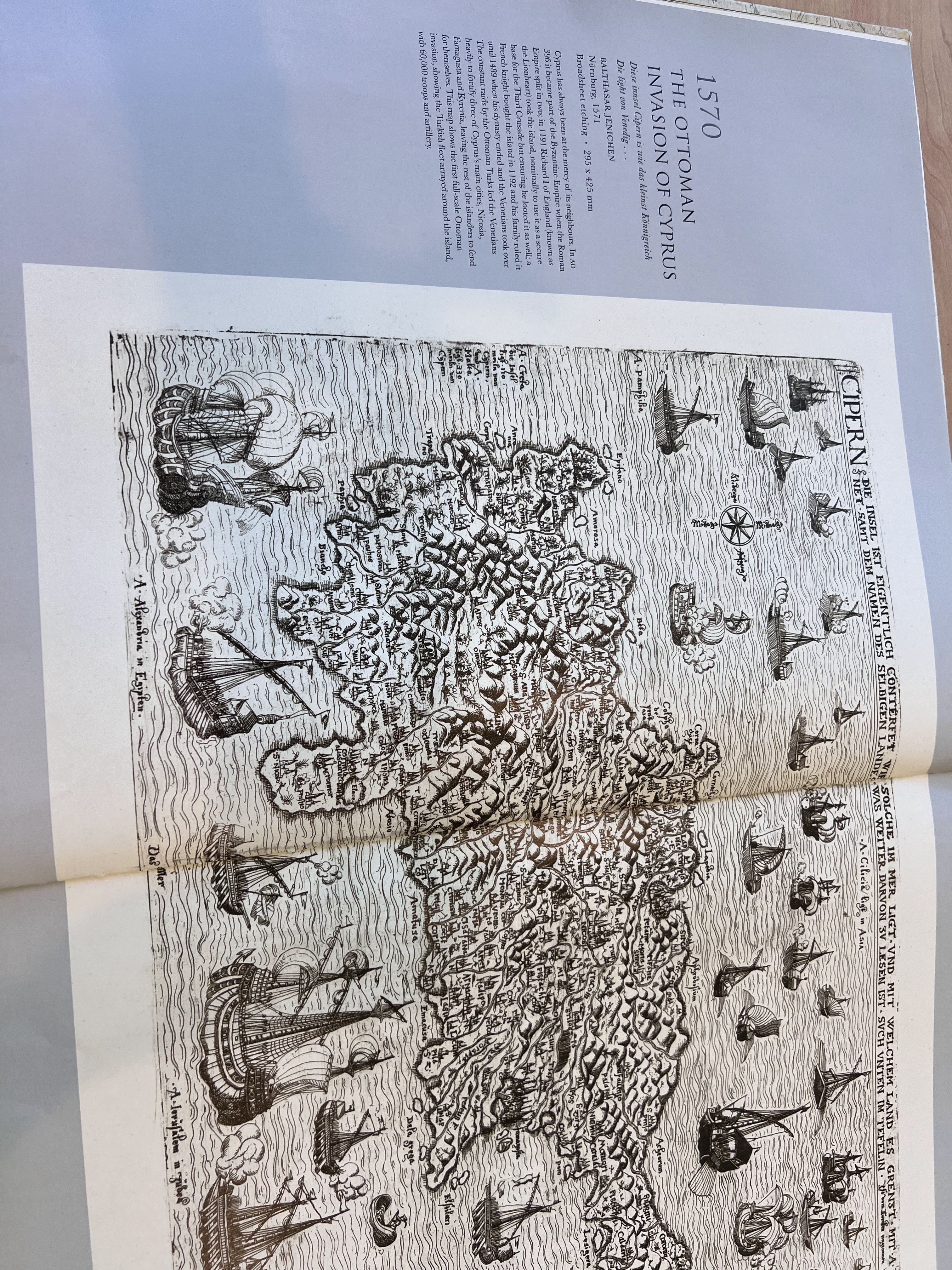
I picked up the huge tome titled Maps of War – Compiled by Ashley & Miles Baynton-Williams, and started browsing. The book had been the fascinating battleground to Avengers and superhero battles, not to mention the hours of entertainment and insight into the son’s latest hobbies of drawing maps of the world at various points in time.

img_1947

I saw the lure of the book. It had beautiful imagery, interesting ways to depict maps, and drove home the point that war was such an integral part of humanity’s history. This book only covered 130 wars between 1547 – 1902.

The foreword mentions why every conquering army was so keen to put out their own maps of war. That was their key to proclaim victory, garner public support and justify the wars. For every major map that made it to the book, imagine the thousands of skirmishes and conflicts that did not. The battles that were turning points in the wars, but were too minor to mention because it did not fit into the story being spun for the conquerors. It certainly was not a comprehensive look at all major wars during this period. 

“Lovely it is to witness great battle-plans of war, carried out across the plains, without your having any share in the danger.”  – Lucretius

 The maps of war are the larger picture of generals, and kings playing their games of strategy. 
img_1944

Impacts of War

What is not depicted is the culture, love, and familial struggles depicted as a map on a page. 

It is hard to imagine the individual lives of millions of lives lost. Yet, every single one of them were flawed human beings too. Some heroes in the eyes of their comrades; some troubled youth finding their way to vent their violence; some gentle souls caught up in another meaningless war; some hoping to gain power for themselves, some spying and hoping for the best outcome, some hoping their livelihood could be provided for if only they managed to make it back in one piece. Almost all of them terrified at the loss of peace in their individual lives, pining for the peace and love of their loved ones in faraway places while they hoped for probability to work in their favor every time they poked their heads out of the trenches, victims to random throes of arrows, or minefields. 

Well – The problem with society’s revolutions as Haruki Murakami mentions in his book, Novelist as a Vocation, is that in the world of war nothing makes sense as time goes on. Even if there is justification in the original act of going to war – remaining there is a whole different set of sacrifices. Yet, time and time again mankind goes in for that. Centuries of warfare and careers, egos, lives lost in the eternal quest for what? 

For in war, people never win. Maybe countries do, ideologies maybe. 

Though I wonder whether we’d have come up technological innovations such as we have if not for warfare: war has spurred technological innovations – fireworks, firearms, tanks, artillery, radar, sonar, cryptology, drones, nuclear power, chemical weapons, space travel. (We’d have come up with different ones if wars weren’t providing the impetus, for sure)

What is the Solution?

Is there a way to know how many wars started as peacekeeping missions and remained so? We may never know.  The son & I were discussing these very things one evening on our walk, when we fell to discussing another species that is just as war-mongering (maybe even more so) : Ants. 

Do we ever stop to think of territorial conquests of ants? Isn’t that how our own wars must appear in the scheme of the universe? 

man_in_stars

The only saving grace I could think of was to be grateful that we probably do live in one of the peaceful eras of history (“Touch wood!”, I said, grabbing a passing tree trunk, which made the son laugh) . 

“Yes Mother! You grabbing tree trunks will stop World Wars!” I heard the children’s voice chuckle in my ears, and I laughed too. May not be a bad suggestion to the United Nations Security Council, would it?

War & Peace, Love & Power

“You need to have either love or war; those are the only ones that can sustain a long running saga!” the daughter said as an off-hand comment one day when we were discussing the art and craft of world building, and she was convincing me to read another series – one with a female protagonist. I was hesitant to start reading a series that not only had 7 books but all seemed to be progressively bigger in size too. She guffawed at this and said,  “You’ll enjoy it, so what’s the problem?”

The problem with wars is that nothing makes sense as time goes on. Even if there is justification in the original act of going to war, the long-running losses and frustrations often eclipse the original intent. It becomes a cascading pile of losses that fuel more losses.

I was reading Haruki Murakami’s book, Novelist as a Vocation. There was one particular section when with the book still open in my hand, the mind started to meander, trying to make sense of what was said, and trying to piece things together as they might have been.

He writes about the time he witnessed civil unrest as a student in college long before he decided to become a writer. Coming from a stable family, and not having endured any significant challenges or wars in his lifetime, he writes about the period in his life when he witnessed strife. He confesses that he felt drawn to the cause originally, but gradually could see cracks beginning to appear. Slowly, he saw how words lost their integrity, and he felt he could not identify with any of it anymore.

“As time passed,.., and internecine warfare between the student factions grew more and more violent and senseless – an apolitical student was murdered in the classroom we often used, for example-many of us became disenchanted. Something criminally wrong had wormed its way into the movement. The positive power of imagination had been lost. I felt this strongly. ….Uplifting slogans and beautiful messages might stir the soul, but if they were not accompanied by moral power they amounted to no more than a litany of empty words…..Words have power. Yet that power must be rooted in truth and justice.”

I felt a heavy sadness settle over me as I finished reading that section of the passage again. Thus it has always been. With war, with power, with long-running angst. It sometimes seems to me that human beings are remarkable for still allowing light to seep through – to be hopeful, happy, joyous, friendly, loyal, trusting, loving and giving. But I am glad of this tug-of-war too, for without one, we may never learn to fully appreciate the other. 

News of war and conflict have always plagued humanity, and exactly a century ago, the whole world reeled from wars back to back that sent the world careening into madness. The insanity of it, the dreariness of it, we hoped would be deterrent enough for at least a few centuries – but I doubt it. For just as ubiquitous as love seems to be conflict. 

In centuries of warfare, there have been gains and losses. All things fragile to begin with (egos, lives, trust, careers), they all seem to shatter in the eternal quest for what? Seldom in war do people win. Maybe countries do, armies do, but never the individual. And yet without collective action, where would we be?

In our very contradictions lies our greatness. 

I eyed the book series on war & love the daughter had given me, and wondered whether to start another saga.

It seems so simple to say: All we need to do is figure out a way to value Peace over War, and Love over Power. Oh well! That is the saga of the human life, isn’t it?

🐲Imagine Dragons 🐉

There are sections of the book, Novelist as a Vocation by Haruki Murakami that I enjoyed. I did think he was self-deprecating, and unwilling to take a little credit for his successes as a writer though. While being published and being received favorably are a function of luck to a certain degree, there is the fact that a consistent writer has to keep themselves out there. They need to remain vulnerable and suffer acutely all the emotions that their characters do with a passion. It is a tough vocation, and not always a lucrative one.

“Writing novels is, to my way of thinking, basically a very uncool enterprise.”

Haruki Murakami, Novelist as a Vocation
Version 1.0.0

He goes on to tell the story he read as a child in which two men go to see and understand why Mt Fujiyama is revered thus, and what was special about it. The smarter of the two men apparently sized the mountain from various vantage points and decided he knew enough about it, and went on his way. Efficient, Fujiyama seen, and admired.

The other one, apparently, went on to climb the mountain by foot, agonizingly conquering the mountain. “Finally, he has understood it or perhaps grasped its essence at a less conscious level.”

Murakami equates the latter with a writer. In other words, the harder route. He calls the endeavor of novel writing as sometimes being thankless, other times laborious, and at times a strenuous job.

I think I agree with all of the above. Every good novel I read has me in awe. For it takes a different kind of empathy and a wholly different kind of perseverance to imagine a world, make sense of the characters, imagine what each of them will do, how they would react to a situation and so much more. 

So, when I finished reading When Women Were Dragons – By Kelly Barnhill, I took the story with me everywhere. I read the author’s note scribbled at the end. The vote of thanks piece. The credits when people leave the cinema theatre. I read this because of the enormous respect I have for a piece of creative work – fiction or non-fiction – and the universe that helped create the book that I had just enjoyed. 

I am sharing a bit of Kelly Barnhill’s note here:

“And, thank you to my wonderful family – … -who have to live with a person often hijacked by her own imagination, and wounded by the world. The work of storytelling requires a person to remain in a state of brutal vulnerability and punishing empathy. We feel everything. It tears us apart. We could not do this work without people in our lives to love us unceasingly, and to put us back together. “

Kelly Barnhill (Acknowledgement) When Women Were Dragons

The depths and capacity for creative work continues to astound me – blessed is an intellect that can imagine, and blessed indeed is a culture that promotes growth through imagination.

On Writing

It is always fascinating to understand the process behind the craft. To everyone, the process is different, the resulting work is different, and maybe that is why everyone’s voice and stories are different. Though some things seem to be common enough: curiosity and observing people.

Haruki Murakami in his musings, Novelist as a Vocation, writes about his mental chest of drawers – a place in which he places relevant and irrelevant information to be extracted when he is writing a novel. Some of the remaining ideas are used in his essays he says but the rest are there for the taking.

The truth is that none of us can imagine the beautiful fierce power of our own imagination. Where will it take us, or what it can do for us if we wrestle with it long enough? Few of us get to find out and fewer get it out into the world. How are some authors able to create the Harry Potter universe, others write books that evoke such deep rooted emotions such as The Crane Husband? 

I was fascinated to read that  the idea struck the author of Crane Husband, Kelly Barnhill, when she saw a crane land on a rooftop while she was driving through the countryside from somewhere to somewhere. What an evocative inspiration? 

I remember thinking of the book, every time I spotted a crane by the riverbank. The raw sadness of the tale stayed with me for days afterward.

cd3693d5-3eaa-4d3b-ab97-d7c865de8707

Such inspirations are not unheard of. A few days ago I read a folk tale about the Crane Wife, in the book,

Beneath the Moon, Tales, Myths, and Divine Stories From Around the World by Yoshitani, Yoshi

All of us have  a mental chest of drawers and some of us rely on it more than others, but those memories shape and define us in ways we do not realize. 

Murakami writes about his journey and how he stumbled upon the conviction that he wanted more than anything else to be a novelist at the age of 29. His journey was not one of writing obsessively throughout his childhood, but of simply deciding one day to become a writer.

He writes about how his formative years were fairly trauma free apart from a stint in college where there seems to have been unrest among the student community. He writes:

“I have never been comfortable in groups or in any kind of collective action with others, so I didn’t become a member of any student groups, but I did support the movement in a general sort of way.”

But as time went on, he realized that:

“Something criminally wrong had wormed its way into the movement. The positive power of imagination had been lost. I felt this strongly. As a result when the storm passed, we were left with the bitter taste of disappointment. Uplifting slogans and beautiful messages might stir the soul, but if they weren’t accompanied by moral power they amounted to no more than a litany of empty words,

Words have power.

Yet that power must be rooted in truth and justice. Words must never stand apart from these principles.”

It was perhaps this realization that led him to lose faith in the movement and turn towards writing as a career when the epiphany hit him one day while watching a baseball game that he might be a novelist yet. 

I am sure a conviction as deep as that would find its way into his writing and if there are specific examples or suggestions of books regarding these, please let me know.

I remember a discussion in which it was mentioned that ‘You need war or love if you need a complete series.’

While that is true, the pursuit of truth, peace, justice, the power of words all seem to be good enough inspirations too.

Books:

  • Novelist as a Vocation – By Haruki Murakami
  • The Crane Husband – By Kelly Barnhill
  • Beneath the Moon – Fairy Tales, Myths and Divine Stories from Around the World – By Yoshi Yoshitani