What We Do

I bobbed among the sea of fresh laundry. The children were helping with the folding and sorting, while I cackled and rattled around like a mother hen. Mother hens don’t fold clothes, I know, but it is a metaphor, or a simile or an odious comparison when viewed from the angle of a hen. Anyway, the conversation was quicker than the folding and after some time, I patted them on a job well done, and sent them over for a spot of week-end television. They tumbled off clucking happily. A prized activity they seem to think it is, though they seem to watch the same programs over and over again. 

After some more cleaning, I took stock. True, there was loads of cleaning left to do, but that was always the case. For now, the boats of laundry were taken care of, the family fed, the kitchen scrubbed, the shoes, jackets and all the paraphernalia that is plopped all over the place were back where they belonged. The children were happily watching their week-end television, and the husband was pretending to do some work on the computer. All was well.

I gingerly stepped out for a breath of fresh air even though it was cold. As soon as I opened the door, the wind gently lifted my hair welcoming my foray into the quiet pleasures of a Winter day. I surveyed my flower pots weathering the wind, rain and still cheerfully raising their heads welcoming the end of Winter. If that isn’t an invitation for a stroll, I don’t know what is, I told myself and set off, an umbrella swinging on my arm, and my spirits slowly rising to meet the clouded skies above.

img_1995.jpg

I stopped to gaze up at the trees sprouting the early Cherry Blossoms every now and then. One particular tree looked marvelous: There seemed to be a luminous glow on the cherry blossoms, with the dew drops glistening on them, and I could not help standing there, and catching a respite from the never ending activity that swirled around me. Our tasks and accomplishments seem to be so loud and cantankerous compared to this marvelous phenomenon of early Spring don’t they? 

The blossoming of a flower. 

I stood there wondering how lovely it would be to see the flower blossom, to actually see it expand into a flower from a bud. I suppose you could show me hundreds of time-lapse videos, but I still wanted to see the real thing. In front of my eyes. 

That is the sort of thing that will try the Dalai Lama’s patience, and I am happy that the thought to at least try it crossed my mind, since I knew my limits when it came to stilling the mind. A monkey mind if ever there was one. 

Watching a flower bloom is a thought that has occurred to many before me, and will occur to many after me. All we need to do is stop and admire a flower. In the River of Consciousness by Oliver Sacks, he says that as a boy, he used time lapse photography using multiple photographs and frames to develop the blossoming of a flower. To play with time in a sense.

“I experimented with photographing plants. Ferns, in particular, had many attractions for me, not least in their tightly wound crosiers or fiddleheads, tense with contained time, like watch springs, with the future all rolled up in them. So I would take set my camera on tripod and take hourly photographs…and make a little flick book. And then, as if by magic, I could see the fiddleheads unfurl, taking a second or two, for what in real time took a couple of days.”

river_sacks

When seen this way, we are all time machines, slowly growing and morphing all the time, are we not? Unfurling with furious energy that detracts at times, but all of us unfurling all the time, hopefully evolving into what we shall and can be.

I gazed up at the flowers again and wondered whether self reproach, achievement, contentment, ambition, or any of the things that seem to matter so much to human beings meant anything in the grand scheme of things. I am reminded of one of my favorite quotes by Ursula Le Guin.

“Things don’t have purposes, as if the universe were a machine, where every part has a useful function. What’s the function of a galaxy? I don’t know if our life has a purpose and I don’t see that it matters. What does matter is that we’re a part. Like a thread in a cloth or a grass-blade in a field. It is and we are. What we do is like wind blowing on the grass.”

The rain picked up, and I opened up my umbrella. I had stood there a long time, and my feet and hands were numb. I went in to the home, and put my wet, cold hands against the warm cheeks of the children watching TV, and they squealed half in exasperation and half in fun as the rain drops trickled down their cheeks. They chided me, united in their purpose: “Walking in the rain – being nuts! again? You will catch a cold. Go and get warm. Now!”

It was lovely to see the chicks take charge, and get a glimpse of the unfurling.

The Degree of Shoshin

I wonder sometimes how the brain works. I mean, some references make us link to something else across the bridges of time and space where no ostensible link exists. Was astronomy the link? But that seems weak given that I ogle at the stars every opportunity I get. Could the 12 degree landing of Insight be the link? But the slopes that my mind linked to were at a 11 degree incline. And we were very proud that our little corner of the world could provide just the right 11 degree slope too – that is why I remember the incline so clearly.

Ignorant men raise questions that wise men answered a thousand years ago. Johann Wolfgang von Goethe

Maybe it was something to do with the specific angle at which the Insight can land on Mars that brought back memories of a trip to the Radio astronomy center in Mutthorai in Nilgiris – who knows?  The radio astronomy telescope on the slopes of the Nilgiris was magnificent and awe-inspiring. It still is. I remember hearing that the Tata Institute for Fundamental Research (TIFR) had scoured plenty of slopes in India and this humble village was deemed just the right one to capture radio waves. It had the right level of incline(11 degrees), minimum light pollution at nights, and we were proud of our unassuming Nilgiri hills for providing such a marvelous slope.

By Own work – Ooty Radio Telescope, CC BY 3.0, https://commons.wikimedia.org/w/index.php?curid=7463023


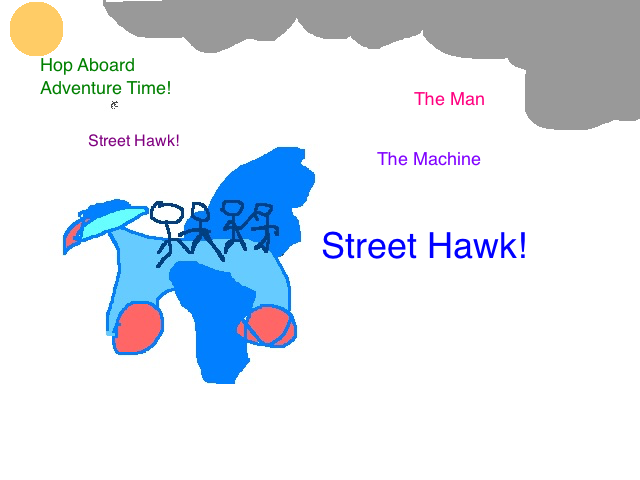
I remember going to visit the center with the father one rainy afternoon during the monsoon season. We often piled onto his scooter that the kids had lovingly nick-named Street Hawk given it tore through the streets with a ear shattering noise, even if we could run beside it. (I often wonder how it must feel for someone who goes to India for the first time from a country like the US or Canada, and sees a family precariously making their hazardous way through the haphazard traffic – obviously uncomfortable, but looking joyous and confident. Even cars here seem so cranky – “departing lane, departing lane” it goes on like a parrot on caffeine. Fine – relax! Talk about sticking to the straight and narrow path – sheesh kababs.)

Anyway that is how we toured the Nilgiris during our school holidays. We would start out on a supposedly clear day, the brother standing in front, his feet making sure not to come under the brakes foot pedal, the sister on the pillion seat, and self squashed between the driver’s seat and the pillion seat, my face turning a ninety degree angle to make sure I could breathe, and off we would go on our adventures. Sometimes, our Street Hawk could not quite pull up the intense slopes of the Nilgiris such as the Katteri falls, and we would all good-naturedly pile off, let the pater go up the slope on 1st gear, trudge up there, and pile on again. What was life without these little pleasures?

street_hawk

Invariably midway through our trips somewhere, the skies would attempt a volte-face: the sun would dip behind the clouds, a brisk wind would start around us, and the first raindrops would start. Sometimes, if the downpour got heavy, we would shelter at a random farm or village and nibble into the ample snacks packed for the trip, and head out again after the fierce downpour stopped. The dubious weather reports then were listened to with the amusing attitude of one indulging a child, and if it all went towards building the weather reporters’ confidence, it was time well spent was the general attitude. Ours was a forgotten corner of the world, and we loved it just the way it was. 

Off I went meandering around the countryside when I should have been sticking to the Radio astronomy tower as usual. The point is, I remember thinking as a child standing on that steep incline with the monsoon winds buffeting us from all directions, struggling to stay upright, and thinking for the first time how we must be standing at all. We are spinning on a very fast ball after all, gravity is all very well, but what would happen if Earth decided to just let us go for one instant? It was a terrifying thought, I clung a little harder to the pater’s solid hands and redoubled my wonder at how we exist at all. 

That is the beauty of space exploration isn’t it? It rekindles wonder. If retaining wonder in our day to day living is the mark of a meaningful existence to paraphrase the German philosopher, it is no wonder that we marvel childhood with its fresh perspectives, and its great capacity for wonder. The beauty of #Shoshin

“The highest goal that man can achieve is amazement.” ― Johann Wolfgang von Goethe

Dressed Like a Mom or a Hippie?

“I am not a typical teenager, okay? Everyone always stereotypes teenagers, and we are not like that!”

I nodded (sagely, if I might add.)

“And I am not a drama queen! “, said the teenaged daughter stamping her foot dramatically, though I could already begin to see glimpses of her impish smile twitching there on the corner of her lips. 

“Of course you are not!” I said rolling my eyes, which she promptly caught. “So, when you remember what you are upset about, will you tell me?” I asked her.

Cheeky as she is, she had the good cheer to see the position, and she chuckled. 

“I don’t suppose it is fair for teenagers to be judged this way, especially when they do nothing stereotypical like buying MOM jeans!” I said pushing relentlessly to clinch the deal. 

The chuckle changed to full blown guffaws at this, and she rolled on the bed laughing.

“Appalling those jeans are! I never wear anything like that, and yet you had the cheek to go and pay more for them, and they are called MOM jeans for God’s sake. Not stereotypical at all, my dear!”

Timbered richly with the sound of her laughter, she agreed. “The jeans are pretty terrible! But I took a poll on Insta, and everyone agrees that it is a very good idea. Hippies do dress like that. With a tie-dye t-shirt and a flower headband, it’ll be lit!“

Lit, I am amused to hear, does not mean that she will be lit up in those little fairy lights. In today’s lingo, “Lit means like Awesome, you know Lit?”

“So, Lit is good?”

“Yes! Sheesh!”

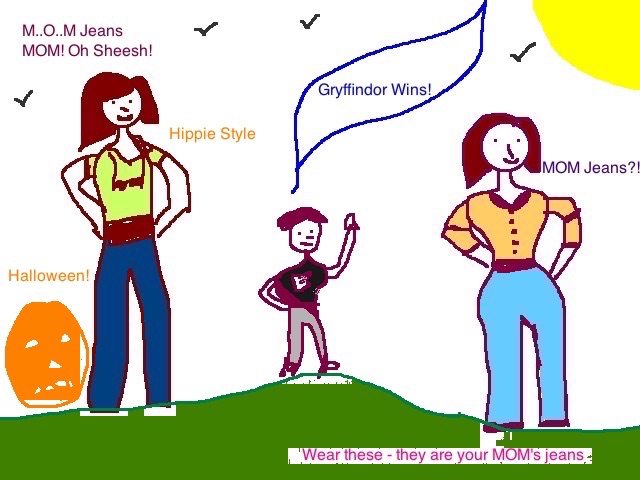
We were discussing her proposed ensemble for Halloween. She wants to dress up as a hippie, and went out with her father and bought MOM jeans. In all fairness, she asked me for them, and I said, “MOM jeans?! Why not just wear my jeans with a belt?”

Ever the voice of reason, that’s me.

She rolled her eyes  (not in typical teenage fashion, since we are on the point of not stereotyping these saintly marvelous children)

mom_jeans

Her creative side was in full blast. All she had read in her Greek myths, watched in her television shows: shows with raucous characters & sketchy parenting; combined to give her the idea for her Halloween costume. The idea was soundly seconded by her little Gryffindor brother, and her could-have-been-Gryffindor (if only he resisted the idea) father.

What blows my mind is how Marketing departments function. They took a bunch of overstocked baggy jeans that were languishing in the lots ever since the skinny jeans came into fashion, and gave it a name called MOM jeans and these children are willingly wearing them. I must learn some of that for my own sake. I have some long skirts that apparently are “Not Lit!”, that just may be made “Lit” again. Let’s see.

Should I dress as a teenager? Accessorize with sass, punch with pizzazz and cut being droll like a troll? That’ll be like totally lit!

Happy Halloween everyone!

A Life Well Lived

One of my earliest memories were of sitting next to the grand old man and pressing the mole on his hand. It was a button, he said, that made him laugh. Every time I pressed it, he sent a shiver down his body and laughed. That is the kind of game that cannot ever tire a 4 or 5 year old child. I’d press the button at random times hoping to catch him off-guard. But the button always worked. It even worked last year when I showed the button to my little son as an adult. The great grand old man laughed.

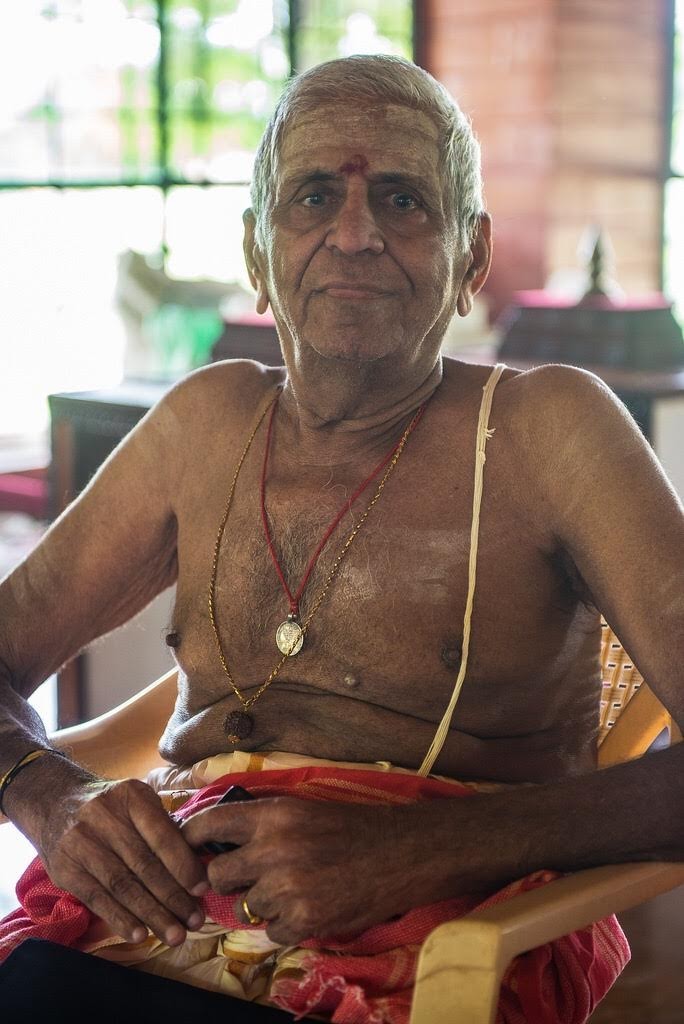
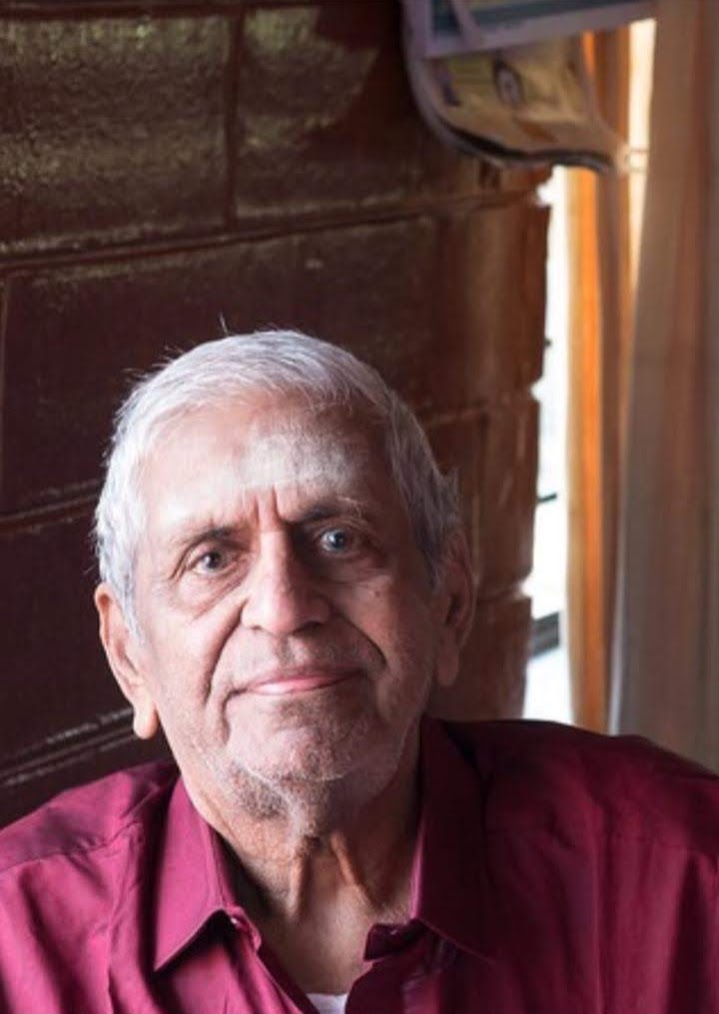
He was known as Pattu-Mani, a loving nickname given to the bluish—gray-eyed handsome boy with a twinkling smile and pleasant personality.

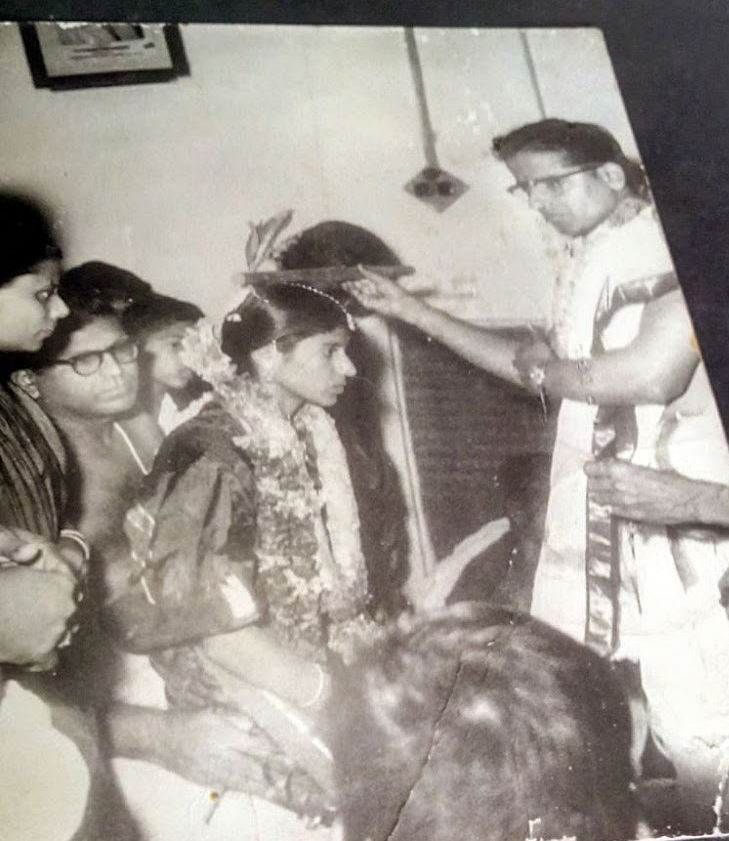
He was the closest my mother had to a father. (How I Mother Saw Her Father)

Pattu-mani maama
My Mother Being Given in Marriage By Pattu-Mani Maama(Kanya Daanam – usually given away by the girl’s father)

I remember listening wide-eyed to the stories of my maamas (Pattu-mani and Ambi as they were popularly known) and how they raised and educated my mother, their little sister. (My mother was the last born in a family of seven. When she was 3 years old, her father passed away. A shock that left the family bereft, and sent their mother into a decline from which she never recovered. )

The one who regaled the story was often my father. He was the story-teller in the household. In his stentorian voice, he would go on to narrate how they educated their sisters making them the first graduates in their village, in a time and age that girls were married off before completing high school.

These people were the true heroes of the #HeForShe movement.

The same loving, doting aunts and uncles who bathed us in the warm glow of their smiles were heroes?

As a young girl, I cannot quite describe the impression it made on me.

Clad modestly in cotton dhotis with no fancy degrees or awards, living lives of modest means in normal houses with dignity and self-uplifted from poverty; the ideas of personality, achievement and greatness conflicted with the world’s idea of greatness. Was it not always associated with wealth and fame?

Confusing as it all was as a child, it helped me understand that greatness comes in so many shapes and forms. It helped me understand that life is unfair, but we have to fight fairly anyway. That there is no correlation between (wealth, fame), and (wisdom, greatness). Sometimes, the wealthy and famous are also wise and great, but not all wise and great people are wealthy and famous.

So, what constitutes a worthy life?

pattumani_maama3

Is it in the fact that every one of us nieces, nephews, and grandchildren felt they were special to him?

Is it in the fact that the entire town showed up to say farewell to him when he died last week? The very town to which he came barefoot and penniless, looking for work as a teenager after his father’s sudden death.

Or is it in the sparkling affection behind the smiles he bestowed on those around him every time?

All the world’s a stage, and all the men and women merely players: they have their exits and their entrances; and one man in his time plays many parts. William Shakespeare

Here is to a man who played every role well, who made the show enjoyable for all those who had the privilege of sharing the stage with him.

My heart aches, my eyes tear up as I hear things like ‘end of an era’, ‘great soul’ etc. Maybe his parting gift is the meditation on what constitutes a good life, and working towards the very qualities he embodied.

TED Talk on a Worthy Life: here

The past few days have been a glorious recollection of a life well-lived.

A life that shouldered responsibility with élan
A life that never questioned sacrifice and duty
A life that gave and accepted love
A life whose inner light lit the world around him
A life that showed us how extraordinary an ordinary life can be
A Life Well Lived.

I have a small birth-mark where he had a mole, I propose to make that my laugh button. My way to remember Maama and to remind me to laugh when life gets me down.

pattumani_maama2

I love and miss you dear Maama. Thank you for your influence, your love and your beautiful presence in our lives.


The Big, Little and Half Domes at Yosemite

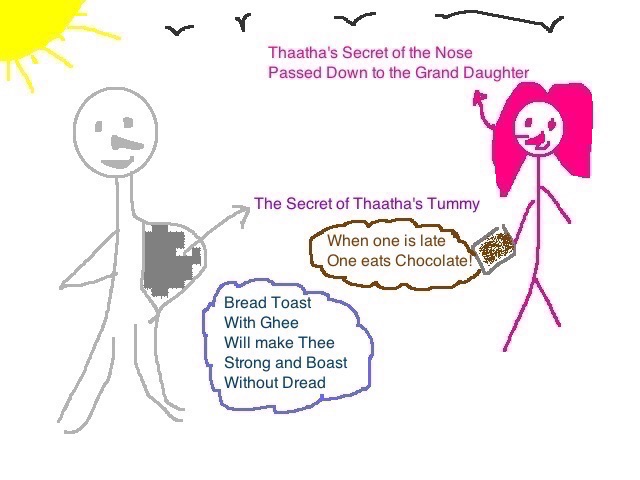
The grandparents arrived, and the grandchildren are reveling in the attention, food and companionship that grandparents bring in their wake. The pater is the Self Appointed Head Counsel for Advice in the household. When you take out a slice of bread, and don’t know how to bite it, he is the authority to seek out: Bread is best eaten when toasted with ghee on both sides in a frying pan, not toaster, and then you must liberally spread jam or even condensed milk. This new fangled chocolate on everything is not good for health, and one must keep away from large doses on chocolate on everything, he says to the children who have perfected the Art of Pacifying Thaatha (Thaatha – Grandpa) with a smile, and fleeing with the chocolates. The teenaged daughter is particularly adept at this. One time, he was advising her on how to leave the house for School without causing mayhem in the morning. “Remember, I went to School for 60 years!” said the old man. (He was a school teacher.) 

“Clearly, it wasn’t enough!” said the tongue-in-cheek grand-daughter to much mirth on Grandpa’s side. I don’t quite understand the rhythms of relationships between grandchildren and grandparents.

Bread_secret

Anyway, point is: Thaatha can give life advice on anything. Grandchildren can ignore life advice on everything. So, an easy truce prevails with each doing exactly what they want to do, with affection and love. It is a sight to behold.  

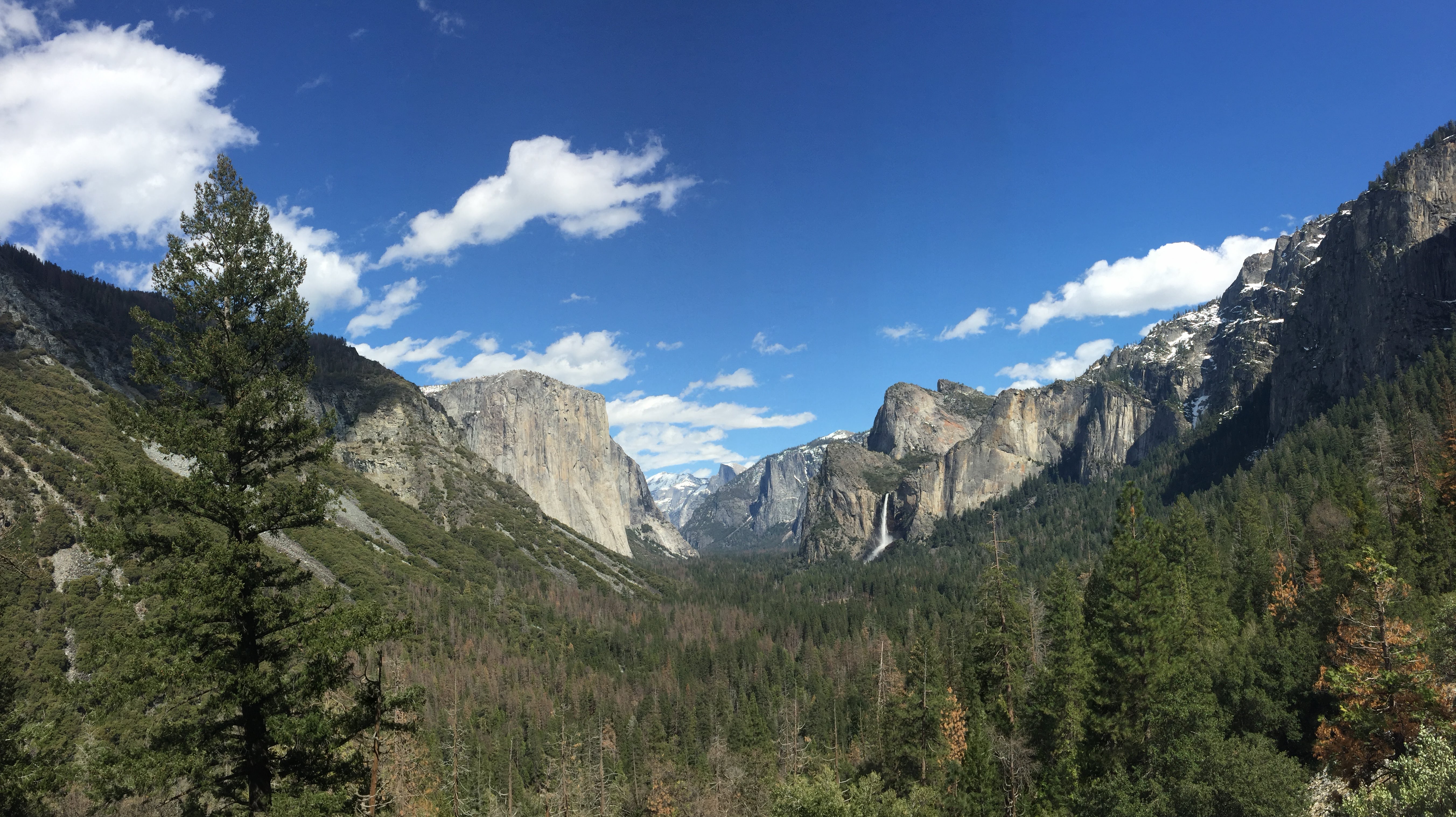
In other news, April rolled along, bringing Spring break in its wake, and off we went to Yosemite National Park for a few days. Gazing over the rain washed Yosemite valley, makes one think yearningly of the phrase: Where every prospect pleases and only man is vile. 

IMG_8356.jpg

Yosemite is a poet’s heaven, an artist’s dream, a hiker’s paradise, a parking headache, and a last minute accommodation seeker’s nightmare all rolled into one.

Luckily for us, we found a beautiful house about an hour away from the park’s valley. The second day of the trip,  the grand (children and parents) opted to stay in the house enjoying the environs nearby. This gave the husband and I an opportunity to sneak off on a hike, and we enjoyed the day and the views it gave us.

That day, the former school-going grandfather and current elementary-school-going grandson also set out on a hike of their own near the house.  

They were asked to take a phone along, and this suggestion was advised away saying the younger generation relies too much on technology, and that good common sense will always lead you in the right direction. “Especially on a walk, just note down the important roads and junctions, and you will increase your memory, …

“Okay okay Thaatha – you come back and teach me how to take a walk okay? I am only going to lie down and read today. Sure, you don’t want the phone? Okay! Bye! “ said the teenager and plonked herself on a couch that looked like it was made by fairies, and stuffed with dandelion twinkles.  She ruled the heavens of her imaginations with queenly delight and grace the whole morning.

Out in the streets, the walk started out sweetly enough. Grandpa advising his grandson on how to notice all the road signs, and distinguishing features, so they don’t get lost. About 2 hours later, the pair of them rolled up to the home in a police escort vehicle to much agitation in the household. The grandfather got himself out, somberly shook hands with the young officer, and his stentorian voice could be heard “ Thank you very much Officer. May God bless you. I am very sorry for the inconvenience caused to you, and we very much appreciate you bringing us home. ”

The son was seen shyly high-fiving the officer. 

“What happened?”, went the collective pry, and after a weary sigh, the duo set out to explain their walk.

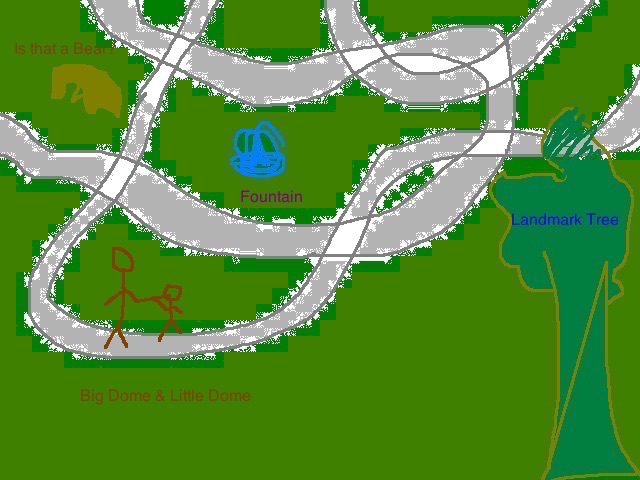
The grandfather had started off by advising the little fellow about how not to lose his way. “Take note of the road name, and you can always find your way back.”, said Big Dome to the Little Dome. The Little Dome said, “Oak Dr, Oak Road, Oak Trail, Oak Grove, Fountain Road, Fountain Circle. “

“Don’t remember them all, that would confuse you.”

“But you said …”,  and off they went giving and imbibing life lessons for all of us.

About a mile afterward when they decided to come back was when the fun started. It was a confusing place to get to, and several times the same road names looped one over the other. Was it Fountain Circle, or Fountain Drive that they had passed last. What about Lion Cove? Was Lion Cove parallel to Fountain Drive or perpendicular to Fountain Circle? The poor things went round and round in circles, till Officer Dave had driven by. The Little Dome helpfully rattled all the street names he remembered, and Big Dome apologized for having forgotten the route, though he remembered the name of the street the house was on. The police officer was most gracious and helpful to the grateful duo, and gave them a ride to the house on the prairie.

Roads

Thereafter, for the rest of the trip, Big Dome was teased about remembering the names of the streets, and landmarks. “Thaatha – this is Half Dome. Always remember that rock, and you will not get lost in the valley. If you get lost, keep walking towards Half Dome. From up there, you can see everything clearly, and can find your way.”

Never a dull moment, and that is just as life should be.

Henry David Thoreau At Walden Pond:

I am convinced, both by faith and experience, that to maintain one’s self on this Earth is not a hardship but a pastime, if we live life simply and wisely.

Also read:

Slay The Dragon, Not The Parrot

How My Mother Saw Her Father

My mother saw her father for the first time last week. She is 73 years old.

Her older siblings are in their eighties and nineties. Yet, their reactions on unexpectedly seeing their father made one think the last seven decades never happened. Will miracles never cease? Geriatric Joy is a lovely thing to behold.

My mother was the last born in a family of seven. When she was 3 years old, her father passed away. A shock that left the family bereft, and sent their mother into a decline from which she never recovered. Kind relatives helped, but there was no denying that the household was headed for turbulent times. Her older brothers, then teenagers, made for the nearby towns in search of work. They were hard-working boys, and slowly, the boys managed to bring the rest of the family to the town. Despite all the hardships and the lack of money and resources, they sent my mother and her sister (still young children) to school.

The girls did not disappoint them. Their intelligence, hard work and perseverance was easily recognized by their schools, and soon, they were encouraged to get a college degree. When all the world around them judged the brothers for spending their hard earned money on educating the girls (That too sisters, not even daughters wagged the tongues in the village), they did it anyway. The sisters became the first graduates from their village and went on to become Physics and Chemistry teachers.

Life’s tempests may have denied my uncles the opportunity to study, but they did not hesitate when it came to educating their little sisters. They, in my mind, are the true heroes of the #HeForShe movement.

“O, brave new world

that has such people in’t!” 

William Shakespeare, The Tempest

I remember reading the children’s book, Are You My Mother, By P.D.Eastman . In the book, an egg hatches when the mother bird is out. The chick goes out into the world searching for its mother. The little chick asks all types of creatures: dogs, cows, and even cars and planes, “Are You My Mother?”. 


I remember thinking that my mother must have felt the same way about her father. She had no recollection of how he looked, and this was something that always wrung my heart given how much I adore my own father. She, however, was stoic and practical about it, just as she is about life. She always considered herself lucky to have been a sibling to such a loving set of brothers and sisters, all of whom dote on her to this day.

Her brothers, our dear maamas, told us that they looked and searched for any photographs of their dear father, the good-looking, duty bound man.  They had combed through the scant wedding albums, peered into old archives since he had worked as a chef in the Kanchipuram Sankaracharya’s Mutt,  but they were disappointed. Though many people had good things to say about him, and even went on to say my mother looked a lot like him, there were no photographs anywhere. He lived on in the memories people had of him, but my mother did not even have any of those to hang on to.

Then, one spring morning in 2018, on a new moon day,  her 90 year old brother sat down with his morning coffee in hand and opened Dinamalar, the Tamil newspaper. That day the newspaper had printed some pictures from the Kanchipuram mutt’s archives. And there he was. In the frame beside Sankaracharya stood their father. Maama recognized him, and immediately hollered to his son, to send the picture to my mother. “She is the only one who has no memory of how he looked.”, he said smiling like a child again.


So, at 73, my mother finally saw her father. R Iyer had 7 children, two of whom have already passed away. The youngest is a septuagenarian. What were the chances of a 90 year old man still retaining the habit of reading the newspaper every morning? Why he had been reading that particular newspaper that day? The fact that he retained the mental acuity to recognize his father who passed away 70 years ago is nothing short of a miracle.

I sat with my mother while she massaged her arthritic knees, and asked her how she felt at seeing her father’s face finally. Her face broke into a slow, wide smile, and she said, “I felt very happy to see him of course! You should have heard anna and akka (elder brother and sister) though. They were so excited and happy to finally show me my father!”

amma_thaatha.jpg

I love the word, Serendipity.  If this isn’t Serendipity, what is? Though a tiny analytical piece of me nudges me about probability and coincidence, I think R Iyer wanted his youngest daughter to have a glimpse of him in her lifetime, and he revealed himself to her.


Oscar Nominations for Dumb-Charades

There are many games that appeal to people of all age groups, but our favorite by far is Dumb-Charades.  This stellar game asks for nothing other than enacting the title out. The grandparents are given movie names in Tamil to enact, the children are given children’s books and movies, and a good time is had by all.

Usually, one of us gives the movie name to mime, and that person refrains from guessing the title.

We started off with Disney Pixar titles for the elementary school aged son. I have noticed how boys in that age group generally play the game.  Never mind if the movie was called ‘Slumbering Sloths’. If in the movie, there was a 5 second scene showing the sloths thundering against each other and charging, that is what they would mime. Most trying on the audience the whole thing is.

We all suffered in the same keen way when the son started miming. To make matters worse,  he said he would select a movie on his own (I will think of a movie in my mind by myself). This meant that there was not a single other person in the room who knew what the movie title was.

I would have liked to capture the whole thing on video, but we were so mystified and desperate to find the real name, that it hardly occurred to any of us to tape the thing. He ran around the living room that had a clunky tea table in the center and tumbled out of sight.

We looked at each other quizzically. Spiderman?
He shook his head, smiled and ran fast around the table again before tumbling out of sight.

Superman!
No! He looked crestfallen that his superb miming was getting him nowhere. He pointed at his chest and ran fast and tumbled again. If not for the carpet, the child might’ve hurt himself. Usually, his sister comes to our rescue for the pair of them flit between each other’s imaginary worlds quite easily, but this time she too looked perplexed.

“Try something different this time.”, she told him. He perked up at this suggestion and ran around the table once again and tumbled thrice before sitting up beaming.

The psyche of the group by this time was worth noting. The actor was fatigued and wondering whether the audience, much as he loved them, had any dramatic sense at all. Might a few broad hints help to prod the dim group along?

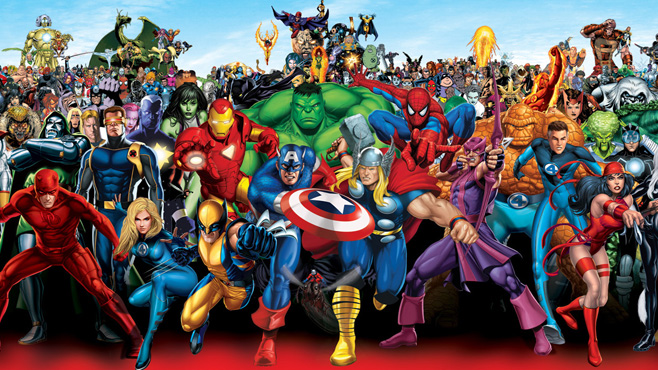
The spot under the table looked spotless now, and we were no closer to guessing the movie name. The audience was insistent on not letting Superheroes rest. Superman, Spiderman, Captain America, Batman, Transformers, Flash (from Incredibles) had all come and gone.

superheroes.jpg

“No Superheroes!”, he said finally speaking up, and thus leaving us completely clueless. With superheroes, there was a chance we could find the right fellow eventually, but this was like being told there are no oases in the desert. None.

We looked imploringly at the daughter, and she finally asked him to confide the title in her, so she could help him out. Clearly, we weren’t quite up to par in the brain department. He agreed, pulled her out of the room in exaggerated gestures, and told her the title. She came back laughing to split, and said she was going to have some more fun watching us figure this one out, now that she knew how easy it was.

Now Really!

You think you’d get a break given all that we do for these children. I gave her a disappointed look, and she said, ‘Believe me, you will like my sense of humor once you find out the name of the movie.”

After 2 more attempts, she relented seeing the looks of dumb anguish on our faces, and told him, “Bobbicles, do what we talked about inside.”
The little fellow looked stung. “But, I told you! They don’t do that in the movies.”
“I know, I know. But they may guess the actual word at least even if they do not do that in the movies.”
“Fine! “, said the artiste making it plain that he usually did not dilute his high standards for the sake of the audience, but was doing so this time. .

He put on a face that showed so much disappointment that we felt quite cowed. Finally, he used his hands to mime a steering wheel of a car.

Cars!” we yelled.
“No!” he said.

The daughter was clutching her sides and cackling with laughter and said, “Stop! Stop! It is Cars….but what Cars?”

Cars 2?
No
Cars 3?
YES! said the little fellow wiping his brow.

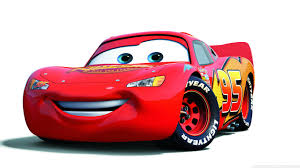
cars-lightning.jpeg

We asked him why he simply did not show the steering wheel to start with, to which he said, “But in the Cars movies, they don’t use the steering wheels to drive!  They just drive. I was showing you how Lightning McQueen races around the track, and then has an akiscent (accident) and tumbles! Amma – you should know that. Remember you said, Oh! Poor Lightning! when we were watching the movie?”

Cars_2006.jpg
—-
He showed us his Mappy face, which is a sort of grimace containing both mad and happy expressions rolled into one. I took my reprimand with grace, high-fived the fellow and instituted a new rule: One cannot think of their own titles to mime. At least one other person in the room should be able to help if need be.

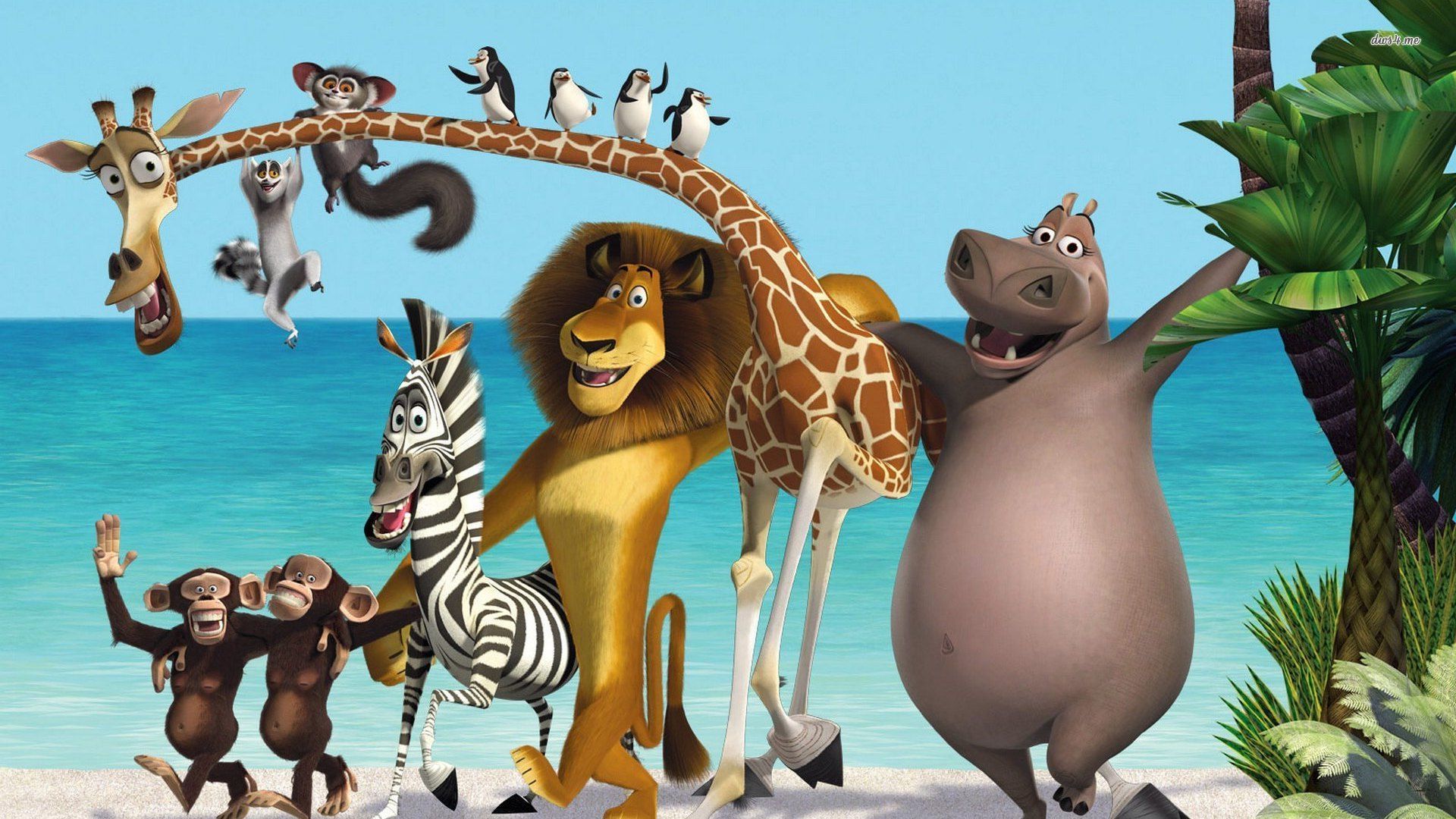
Madagascar”, I whispered to the daughter when it was her turn. Laughing at us for Cars 3 are we? That should fix her.

“Oh come on! I expected Appa to give me something like that. Not you!” she said pulling an emotional toss with ease.

She tried waddling like Penguins and everyone shouted ‘Emperor Penguins!” to which she glared and showed, “1 word!”
Finally, she split the word into 3 portions:
For the 3rd part, she pointed to her brother, ran around the table and tried tumbling out of sight.
Cars! The triumphant audience yelled.
Mimed a fart for gas (really sometimes I wish these children would be a tad bit more classy)
Gas!
Her brother’s mappy (mad+happy) face
Mad?
Madagascar?

madagascar.jpg

Car & Gas indeed!
“No more Oscar nominations tonight!” we said. I don’t think we could have handled anymore.


The Magic of Biomimicry

I recently read a book called Biomimicry by Janine Benyus. A book, whose underlying concept appealed to the very core of my being, for it outlined how little we know of the world around us, and how much more there is to learn from Nature’s processes.

How do we become harmonious citizens of a planet that houses, apart from 7 billion of us, billions of plant and animal forms? It is a question that floats into my mind every so often. How beautifully a bee arranges its hive, how marvelously a dandelion reproduces, how trees take in water, how they produce energy. All of these things make me wonder and marvel at Nature the Tinkerer.

I am afraid I made rather a pest of myself with friends and family. I cornered parents-in-law while they were taking a rest and spoke to them of Do-Nothing farming, I got a children’s book on the subject and read tantalizing bits of information out to the children. I bored friends with it. I could see the scramble-and-run-before-it-is-too-late look on everyone’s faces when I stopped to admire the squirrel prudently checking whether the fruits are ripe before digging in.

‘Why is it wet winter or hot summer, some grasslands thrive?’, I’d ask, only to find that tasks of monumental importance spring up requiring immediate attention for my audience.

Did that stop me? No. If anything, I am going to go and do on the blog what I have been physically doing to those around me.

The book is arranged into the following sections:

Echoing Nature
 Why Biomimicry now?
How will we feed ourselves?
 Farming to fit the land: Growing food like a prairie
How will we harness energy?
 Light into life: Gathering energy like a leaf
How will we make things?
 Fitting form to function: Weaving fibers like a spider
How will we heal ourselves?
 Experts in our midst: Finding cures like a chimp
How will we store what we learn?
 Dances with Molecules: Computing like a cell
How will we conduct business?
 Closing the loops in commerce: Running a business like a redwood forest
Where will we go from here?
 May wonders never cease: Toward a biomimetic future

Higher education in Science has arranged itself along silo-ed areas of expertise. Biologists rarely study Computer Science. Mechanical Engineers rarely take up Zoology.

The author writes of her interactions with various scientists who have successfully transcended narrow areas of study to walk the line between disciplines to see where we can benefit from nature.
1) The materials science engineer who combines fibre optics and biology to study the beauty and resilience of spider silk

2) The agriculturist who, over decades, has perfected the technique of do-nothing farming, conscientiously chipping away at unnecessary practices while studying natural prairies and grasslands to see how plants grow in the wilderness, thereby coming up with the highest yield of natural grain per acre.

3) The anthropologist who studies chimps and how they cure themselves to see how we can identify cures for common problems.

Quote:
In exploring life’s know-how, we are reaching back to some very old roots, satisfying an urge to affiliate with life that is embossed on our genes. For the 99% of time we’ve been on Earth, we were hunter and gatherers, our lives dependent on knowing the fine, small details of our world. Deep inside, we have a leaning to be reconnected with the nature that shaped our imagination, our language, our song and dance, our sense of the divine.

This about sums up our position on Earth.
“In reality we haven’t escaped the gravity of life at all. We are still beholden to ecological laws, the same as any other life form.”

Now is the time for us to take our place as one species among billions in the ecological vote bank, and make wise choices.

P.S: Please see the TED talk on Biomimicry

Nothing For Something

We were listening to the audio books of the Hitchhikers Guide to the Galaxy over the numerous trips we took during the holidays. There is a section where the Earthlings manage to meet the creative team that designed Earth. The designer walks out very proud of his latest fjords in a section resembling current-day Africa, and I remember being awed. How marvelous would it be to think up new concepts, new colors and new landscapes. What shades to give the acacia tree bark? How about the Palm tree bark? Rustic brown or brown acacia sparkle? How about hay? Should hay’s shade be different from the dried grass bundles?

screen-shot-2017-01-30-at-4-46-53-pm

I suppose it will be a salutary task for everyone to create something beautiful from scratch just to see the myriad choices and decisions one is faced with. There is beauty in creationism. Much more than in consumerism.

Henry David Thoreau would have been pleased indeed that his words about the world being a canvas to the imagination, was taken to heart.

The activity we had chalked out for New Year was painting the daughter’s room, and talk of shades of colors was ripe. I never knew that this many shades of light blue existed with such exotic sounding names.

If somebody had given me the list of colors from the paint section of the hardware store, I could have stumped my audience in Crocodile-Crocodile. Those of you who have not had the pleasure of playing Crocodile-Crocodile should do so at least once to experience the joy of looking up new colors. “Crocodile Crocodile, may we cross the golden river?” is a stellar game in which the crocodile has to catch a person who is attempting to run across the river (strip of land) if they don’t have the color on their persons.

Crocodile, crocodile, may we cross the golden river?

Yes you may. If you have Turquoise Blue.

What is Turquoise Blue? Is it the color of a turquoise? Is a turquoise a turtle or a tortoise or a porpoise or just a turquoise who is blue?

croc_croc

Anyway, once the paints were in, the smell of fresh paint along with the envisioned end product of a beautiful, clean wall was enough to get us going. There we were, looking ebullient and hanging off the walls at various angles and heights with rollers in our hand. Music played in the background and talk turned to various topics, including the dumb painter, Randy Pausch’s Last Lecture, Tom Brown’s School Days, the Asian Paints advertisement featuring a boy who looked remarkably like a cross between Mark Twain’s Tom Sawyer and R.K.Narayan’s Swami which of course led to Mark Twain’s short story of Tom Sawyer and his friends painting a fence.

After a few hours, I noticed that the toddler son had taken a break from painting. I asked him what he was doing. ‘Nothing.’, he said. ‘Just sitting and seeing you paint,’ . There he was sitting criss-cross-apple-sauce on the floor with his cheeks cupped in his hands looking enamored with the soothing aura of activity around him and content to absorb.

It is an answer I love to get from children. In their world, it is okay to say they were sitting, and doing nothing. It is those of us who have bought into this idea of being busy who loathe the term.  Sometimes, nothing is good. Maybe we all need to carve out worthwhile moments of doing nothing, so we can do something worthwhile.

“I soon realized that what I really wanted was time to ruminate, time to observe, and often time to be alone.”

Miss Read, Early Days

It reminds me of this drawing that occurs often in Brain Pickings articles : Everybody should sit quietly near a stream and listen.

Everybody should sit by a little stream and listen

In fact, I think it would be phenomenally better for our current President to do nothing at all. That will be something, and something is better than nothing.

Scoff at Coffee Or Chess With a Super-Hero?

This winter has been a time of amazing road trips:

Dodo, Dragon, Dinosaur Dis-apparitions
In Boysenberry Jelly & Mistletoe Jam
The Wind, The Snow & The Rain – Part 1
Weaving The Sequins Of Time
The Curious Curvy Trees
The Salons of Bodie

With all the excitement of the trips and the experiences therein, there is also the time in the car. Audio books and songs compete for time with games in the car. Playing games with children is an experience unto itself. Peacekeeping forces are deployed every now and then, council meetings to determine rules and regulations, are required. Who said the family isn’t a mini-government unto itself? In spite of all this, hiccups arise in the most unexpected quarters.

I remember the time we were playing hangman. I was wondering what the words were and how I was getting them all wrong before I realized that for playing hangman properly one needs to know the spelling of the words, and foneticaly speaking, that is a very different game for kindergarteners.

‘Let me give you a hint’, the toddler son said one day as I was waiting for a cup of coffee en-route to somewhere. He was trying his best to mask his frustration, since my A, E, S and I, had all gone to nearly hang the man. He then coughed and sputtered and then beamed up at me expectantly. Could that be C-O-U-G-H?

‘O?’

‘Yes! Very good amma,’ he said and added O at the second place. I was frazzled. He had 4 dashes laid out. What could mean ‘Cough’, but be spelt with 4 letters?

C? I got another very-good, and after that nothing. The G finally got the man’s throat and he gasped and croaked. After another few trying minutes, in which the brain felt fairly rattled, the fellow wrote C-O-F-F.  Cough, see? He beamed rather freely at this, and the doting tween sister of his scoffed and ruffled his hair.

‘Scoff all you want, but cough up the dough for my coffee. ‘, I said to my unappreciative audience as I went to get my fortifying cup of coffee.

‘Would You Rather Coff Or Have Coffee? Get it?’,  said the daughter and I rolled my eyes.

I was reminded yet again of a charming book written by Miss Read. The book, Farewell to Fairacre,  written by Dora Saint,  is based in the imaginary village of Fairacre in the English countryside. The protagonist and narrator, Miss Read, taught at the village school, and said of her children.

‘More worldly children require computers and video games to occupy themselves, but the children of Fairacre are quite happily engaged with paper and pencils’

playing_games

I am glad we are able to derive our pleasures in simple ways still.

Then of course, if ever anyone wants to see how Rajinikanth plays Chess, you can come by and watch the toddler play chess with his imaginary friend when bored. If one has watched the old Tamil movies, one knows how villains attack Cinema heroes. The villains would stand around the hero. Cornered. See? Then, they’d go on to scowl, growl, grimace and crack their knuckles on the sidelines, touching their bald heads, caressing their unshaven beards and glaring like tigers given melons for lunch.

The hero stands there sizing them up and then one fellow comes and aah! He gets beaten up in a giffy. You’d think that would knock some sense into the remaining goonda pakodas, but it doesn’t. They all roar and then send another huge guy into the rink. Thulped. Another grimace and still no learning here. All fourteen idiots would go one at a time and get beaten up.

All known laws of Physics are also massacred in the process. Thermodynamics, laws of motion are all left begging for reprieve along with the band the villains.

Apply the same principle to the Chess board and you have the game: Every pawn comes one at a time and gets beaten up by the toddler’s side of the chess set. His shining knight battles on destroying his opponent’s pawns and his brave army thinks nothing of thumping Queens and locking bishops in with his own pawns.

Would You Rather be a Villain in a Tamil movie set or a pawn in Rajinikanth’s Chess? Get it?

Which brings us to the stimulating Would-You-Rather game (Part 2)