
Development of Morality & Value Systems

Going back to a high school reunion after 3 decades is nothing short of illuminating. We had planned to meet regularly while leaving school. Then somehow, we all scattered into our various little lanes and holes, only to resurface like eager bunny rabbits after all these years. 

As far as social experiments go, this has to be one of the most interesting. 
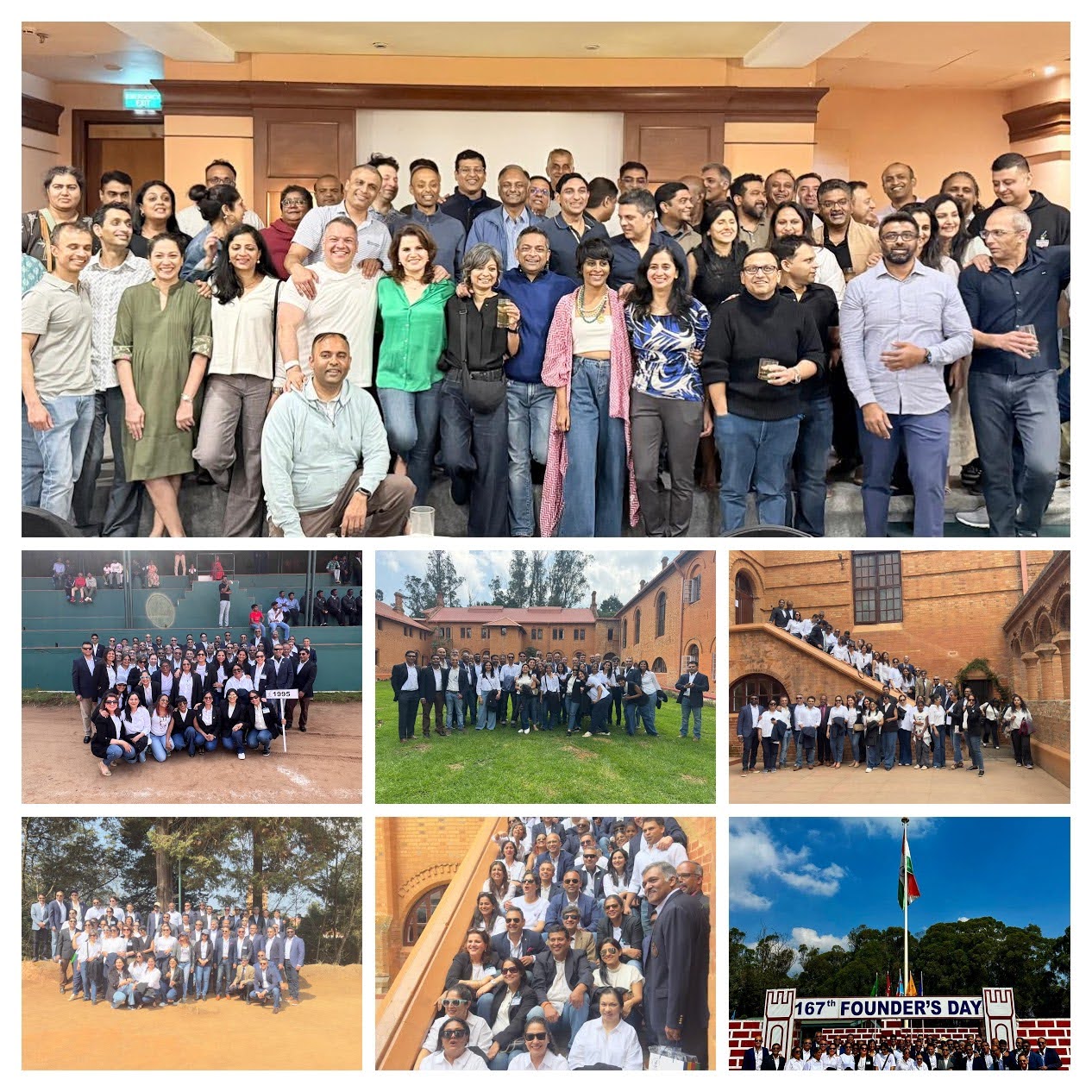
Life seems to have been inventive, unique and predictable at the same time in all the ways it presented us with trials and tribulations. As we walked through the hallways of our school – it was curious to see how we fell back into familiar patterns of who we navigate towards. In 3 days time, it seems we fell back to familiar patterns and the intervening decades might not have happened at all. 

This fascinating behavior led to an interesting discussion on the subject and development of morality and values. At what point in time do we actually develop values, and our internal moral compasses?

I was shocked to find out that morality can start to form under the age of 1, and can easily be noticed between the ages of 2-5. Of course, morality and value systems continue to develop in noticeable leaps and bounds – till we are 10 years of age, then as teens shaped by societal and peer pressure, and as adults. But are they largely shaped by our early childhood? If there are any psychologists or anthropologists who have studied this, please let me know your thoughts. I would be interested to know.

Morality & Values

Childhood friends, when met after decades apart, can resurface memories good and bad. It was interesting to see how friendships played out over all these years. Sometimes, geographic proximity helped shape adult bonds. Sometimes, the bonds of friendships survived geographic distances. 

However, when gathered back in such a large group of classmates, it was interesting to note all the ways in which we fell back to familiar patterns in a matter of 3 days. The ones who were friends in school seemed to fall back into their familiar groups, even while a few new friendships were forged. 

A friend and I fell into a stimulating discussion on morality and values. It is obvious that we are drawn to people with values we admire. So, when looking back at our childhood selves, when was the inner moral compass formed? How did we know whether to be attracted to kindness or the lack of it? Were we drawn towards lightness of being and joy?

Could we be trained into ways of coping – I am sure we can. Pavlov’s experiment is proof of that. Our own behavioral patterns formed so early in childhood help shape how we navigate through life. Some of us are conflict avoiders, some conflict seekers, others do not seek conflict, but do not flinch when it comes to them. 

Is there an Inherent Moral Compass

I remember having a subject called Moral Science in primary and elementary school. It was a lovely class if only because the stories were always interesting, but how much did that help shape our inner compass, I wonder. It is true that reading about myths, and relatable struggles help us through our own. Hopefully, for most of us, our inner compass is strong in good times. It becomes tougher in times of stress and strife, and somehow life only makes these situations more and more complex.

Given that some of us had become friends when we were 5 years old, it was curious indeed. A quick google search reveals that moral based behaviors can be observed in children as early as 2 years old. So, is there such a thing as an inherent moral compass, and can we change ourselves enough and embrace growth through our learned experiences quite as much? Which brings us neatly to the nurture vs nature debate, and we could go on all day and all night.

https://www.mentalhealth.com/library/understanding-moral-development#:~:text=Between%20the%20ages%20of%202,when%20they%20break%20the%20rules.

There are values and morals shaped when we begin to question authority as teenagers, and then as adults when we learn a little bit more about all  the shades of grey, character motivations, and the like.

What are your thoughts? 

  • Do you think that our moral choices begin to be shaped in infancy, and if so, can they be changed over time (not just in small increments but in polar ways) 
  • When that young, do we consciously migrate towards value systems that appeal to us, or not?

https://www.betterhelp.com/advice/morality/morality-quotes-to-help-us-better-understand-ourselves/

How Much is Too Much?

The husband gave me a significant look, and shook his head disapprovingly. I understood his sentiment. He was reading Bad Blood: Secrets and Lies in a Silicon Valley Startup by John Carreyrou.

I spent the whole time shaking my head disapprovingly, and wondering how one could have started out so nobly and have gone astray so quickly when caught in the web of her own lies, myths, and ambitions.

While being driven is often seen as a good thing in our Society, it generally needs a heathy helping of morals and ethics and all the rest of it. Take the visible case of Elizabeth Holmes.

I had heard of the story of Theranos, the medical blood-testing company that promised to revolutionize the medical industry by doing all blood tests on a single drop of blood instead of the vials and vials that were currently drawn. “That.Is.Amazing!” I thought to myself. Like millions of others, I don’t particularly like having vials of blood drawn, and this was a development waiting to happen.

No wonder the company was valued at billions and more importantly had the potential to save thousands of people. Elizabeth Holmes seemed to be the visionary that everyone yearned for – dropped out of Stanford, after inventing ground-breaking technology in her sophomore year, and it was nice that she was a Woman. The press likes that.

Then, a few years later, a friend sent me an article on the company after an investigative reporter found the whole premise a fabricated one. I was a little dubious at first. How can one be touted as a visionary for this long by this many people have fabricated a premise like that? I mean she was on the cover of Time, Fortune magazine and Business Insider’s darling. Could she have done all that on what we in the software industry refer to as a ‘manual workaround’.

“By positioning Theranos as a tech company in the heart of the Valley, Holmes channeled this fake-it-until-you-make-it culture, and she went to extreme lengths to hide the fakery.” 
― John Carreyrou, Bad Blood: Secrets and Lies in a Silicon Valley Startup

How one manages to fool this many people for so long astounds me, but it also explains our fervent, if pathetic need, for super-heroes. We need someone to adulate, someone to fawn over, someone whose story can inspire the young, and we latch on greedily to anyone the media deems worthy.

“Like her idol Steve Jobs, she emitted a reality distortion field that forced people to momentarily suspend disbelief.” 
― John Carreyrou, Bad Blood: Secrets and Lies in a Silicon Valley Startup

I recommend reading Bad Blood: Lies and Deception in a Silicon Valley Startup by John Carreyrou.

bad_blood

It is a chilling tale cautioning us about the importance of grounding oneself in reality, the importance of listening, and the underlying question of morals and ethics. Essentially, Elizabeth Holmes seemed to have used her considerable charisma and influence to get top names on her Board, while running a tight ship. Not having any real breakthroughs in terms of technology was a minor problem. Instead, they seem to have come up with less than efficient techniques to dilute blood samples, and test them on standard Seimens equipment.

Why none of her Professors, Board of Governors, Journalists ever stopped to understand the true technology claims of Theranos is beyond me. Or is it that she played into the sweet spot of attention spans to give people what seemed like important information, while not revealing anything?

Whatever, it was. it begs the question of ethics and ambition.
“Her ambition was voracious and it brooked no interference. If there was collateral damage on her way to riches and fame, so be it.” 

― John Carreyrou, Bad Blood: Secrets and Lies in a Silicon Valley Startup

Ultimately, how much is too much?

“Great ambition is the passion of a great character. Those endowed with it may perform very good or very bad acts. All depends on the principals which direct them.”
Napoleon Bonaparte

P.S: In that gloomy account of ambition gone awry, there are two rays of sunshine. The young interns, Tyler Schultz & Erica Cheung.  In their early twenties, their inner light never wavered. Not when they knew it was time to resign, nor when it was time to reveal the real goings-on in the company. This was not some website that did not deliver a feature after all, it was blood test results that affected people in real ways.

Aren’t those the type of heroes we need to look for in our Society? When we talk about drive and  ambition for ourselves or our children, these are the people we should be referring to.