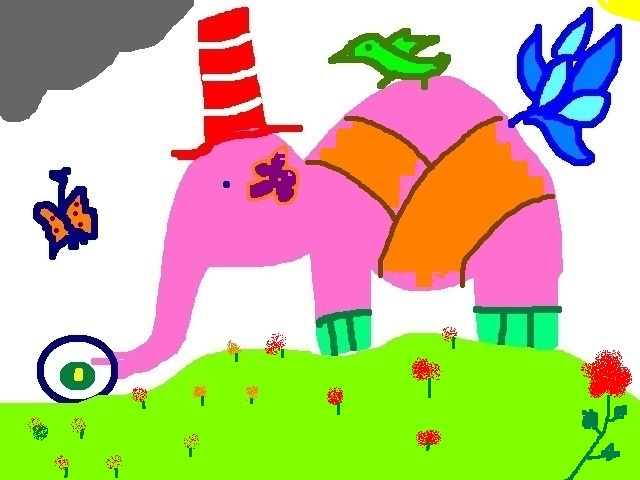
Celebrate World Elephant Day: Protecting Our Gentle Giants

World Elephant Day

August 12th, is World Elephant Day. Seeing elephants (even the cute AI generated pictures) makes me smile. The huge, gentle, loving, empathetic, loyal, family and community oriented animals have always captured the human spirit. It is the reason one of the most popular gods of Hinduism features an elephant-headed god. His birthday is celebrated with so much pomp and splendor, I am sure the elephants wonder what the fuss is all about on those days. 

I am not sure if they’ve heard how much their stories resonate with human-beings – Water for Elephants or Rosy is my Relative for instance. Even my own modest attempt, Mother’s Day in the Jungle, was such a joy to write. Oby Elephant and his pals are all that we want our children to be. 

https://books.apple.com/us/book/mothers-day-in-the-jungle/id874603773
Mother’s Day in the Jungle

It is no wonder that elephant related documentaries are always a hit. We want to see them succeed, we want to know that peaceful living can take us far. 

The question is, are we happy to suppose that our grandchildren may never be able to see an elephant except in a picture book?

– – David Attenborough

Temporal Range of Elephants 

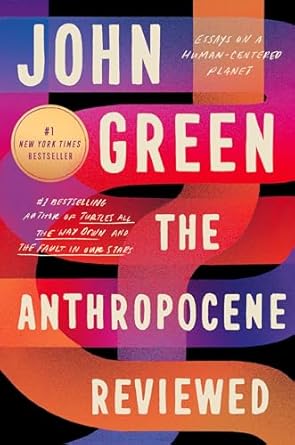
In the essay, Temporal Range, in the collection of essays by John Green, The Anthropocene, he talks about how long these majestic creatures have been a recognized species – 2.5 million years as opposed to humans who were only classified as such for the last 250,000 years. Yet in that short time, we have endangered almost every other notable species on the planet in small and big ways. 
Dolphins have been here for 10-11 million years – with their songs of wisdom, playful natures, and community based raising of their pods. Dolphin grandmas are delightful, and critical in the raising of their young. The same way the matriarch of the elephant herd is instrumental in passing on skills to the younger generation of pachyderms. Humans have somehow managed to emulate and disregard this ancient piece of wisdom by denying women freedom and basic rights, but also making them critical to the caring of the family unit. Sigh.

When we talk about accumulated wisdom,  most of the philosophy we have at our disposal caps out at 5000 years. But, elephants and dolphins? Please. They have figured out how to live out their lives cancer-free. 

Unpacking 🐘🐘🐘, 🐬🐬🐬 & 🐦🦚🐧🕊️

A friend of mine shared this article, Face it! You’re a crazy person, on unpacking the life of someone’s job. As I read what it meant (trying to visualize every Tuesday afternoon for the next few years, the day-in-the-life-of series), I found myself thinking that I would love to unpack being an elephant in the wild, a dolphin in the oceans, or a bird in the gardens before deciding whether to remain a human-being.

Wouldn’t that be wonderful?

What are some things related to elephants you’d like to share? Anything.

Happy World Elephant Day!

Nilgiris: Nature’s Abundance on an Early Drive

“We need to leave by 4:30 a.m. if we are to beat the traffic!” the brother said. 

There were enthusiastic nods. I kept the alarm for 3:30 a.m, confident in our abilities to get going that early in the morning. After all, there is nothing as pleasant as a drive up to the Nilgiris from Bangalore. 

The route passes through two beautiful national forest reserve areas – Bandipur and Mudhumalai. The hills are usually green and welcoming at this time of year. Early summer in the Nilgiris is a joy – there are flowers blooming everywhere, the rivers and streams are flowing with healthy levels of water, and all of life seems like it should be: Full of beauty and abundance. 

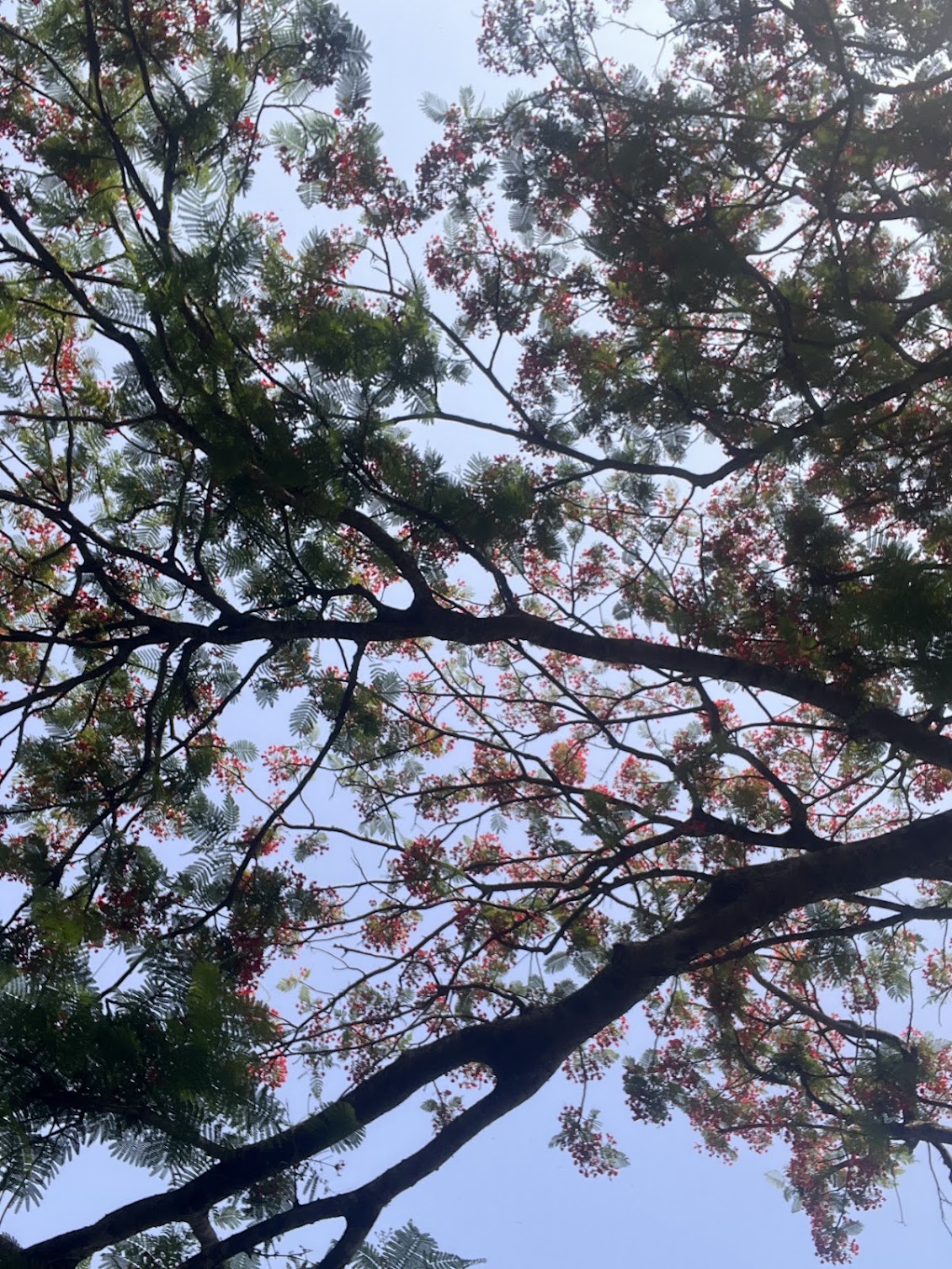
I had quite forgotten the true splendor of a gulmohar tree in full bloom, but oh! What a joy to see these resplendent looking trees! 

You can spend all day gazing up at the branches – all the different ways in which the light dances and trickles through the very orange blossoms, all the different shapes the branches have spread themselves – no two trees the same, yet distinctive enough that they cannot be misunderstood for another tree.

The brother who is always in his element when he is driving anywhere other than city roads, shook his head as he saw me bouncing in my seat. He pulled over by a side road, and if you were to ask me the previous evening to imagine this road, I would not have been able to do it justice. I grew up in the Nilgiris, and have visited many times in the past two decades, but every time the hills surprise me (mostly good ways, but the increasing population and traffic snarls contribute to the bad ways) 

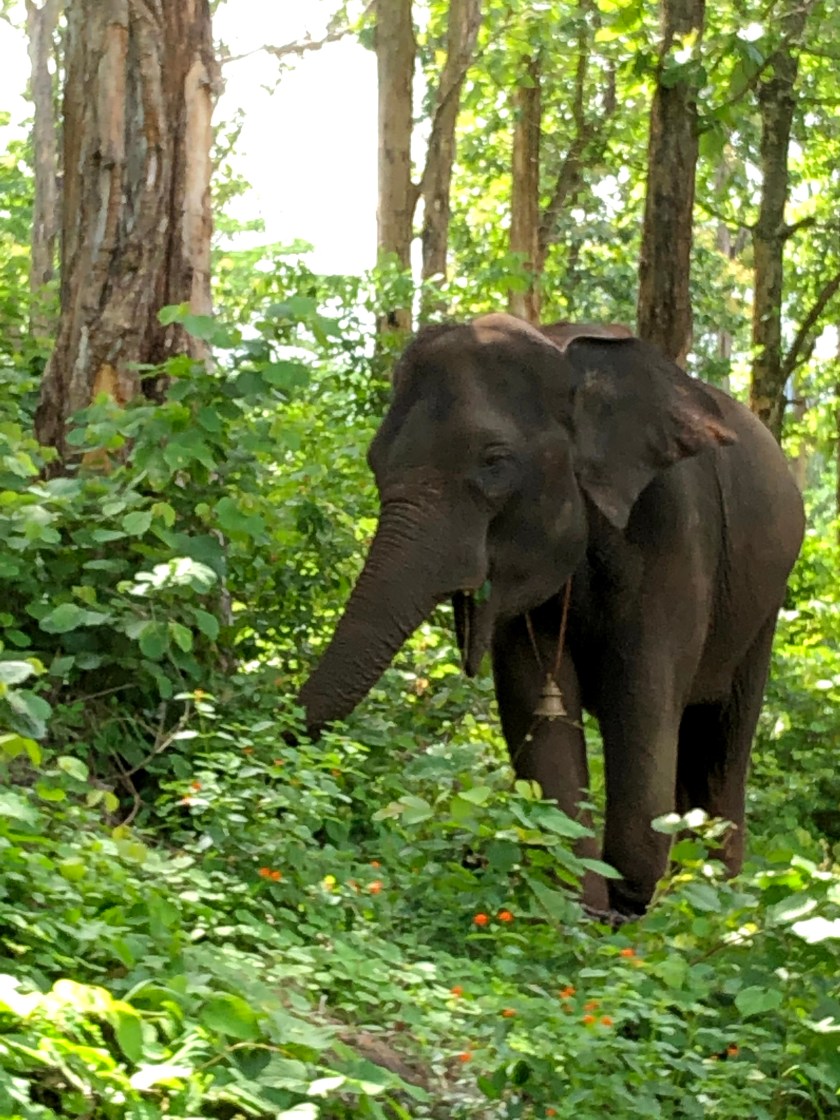
I tumbled out of the car, my heart bursting with song. Luckily it was just my heart that was singing, for who wants to frighten a bunch of elephants taking a calm dip in the Moyar River? 

The peacocks cooing in the distance provided a musical backdrop.

As we headed back to the winding road of 36 hairpin bends, all of the forest seemed to have risen. There were peacocks, sambar deer and spotted deer, iguana-like creatures, monkeys, langurs, and elephants. I cannot think of another experience where the soul feels as nourished or sated. 

By the time we had passed through the forests, we had been filled with the beautiful imagery of flora and fauna of the Nilgiri Hills. It is always so humbling to call this marvelous place home along with the thousands of creatures who live more unobtrusively in these parts.

The cheeky road signs only added to the allure of the morning forest scenes.

“Watch for deer crossing the road, remember the road is crossing their home!”

“Attention: Crocodiles in the River – do not swim. Survivors will be prosecuted.”

🐘🐘🐘🐘🐘 The Tusks of Extinction 🐘🐘🐘🐘🐘

The Mammoth Tale

Few passages capture the bane of consumerism like this one does. It is from the novella, The Tusks of Extinction by Ray Nayler.

The premise of the book is an intriguing one. 

  • It is set in a future when mankind has figured out how to upload one’s consciousness into the cloud. A manner of immortality. This is very much in the realm of possibility.
  • It is also set in a time where the Siberian mammoths have been resurrected. This has already transcended realms of possibility into reality

The wooly mammoth is being resurrected – being cross bred from the genetic remains frozen in the Siberian Tundra with  the Asian elephants (because they are gentler than African elephants). 

Thus, begins the tale of a doctor whose life was hacked from him moments after he uploaded his thoughts and knowledge to the web. This man, Dr Damira, was a passionate naturalist, a man who studied the African elephants and their ways. He fought for their conservation but failed. This is set in a future where the last of the elephants no longer roam the Earth. 

tusks_extinction

The resurrected mammoths in Siberia are facing difficulty thriving in the wild. They have all been bred in captivity, and do not understand how to survive the demands of living by themselves, caring for each other, and forging paths so they can forage and live through the cruel winters. They are thus being killed by poachers in a cry that reminds scientists of how the elephants were all killed off one by one. 

In an attempt to give them a chance at life, the doctor’s consciousness is uploaded to a mammoth – a matriarch by the name of Damira. 

Bane of Consumerism

There are several aspects of this novella that can appeal to us, but one in particular stood out to me, and that was how our consumerist culture alienates us from the natural world. For we buy things, we want things, we accumulate, we hoard – who is it hurting? I am earning and I am buying. It is all helping the economy is it not?

Extract:

In offices-a tusk in a case, beautifully carved, transformed into a world of its own, worked by human hands into a chain of elephants walking trunk to tail. Beautiful, lifeless elephants carved from the destruction of an elephant, hacked into what had once been a part of a body, a tooth, a tool. A part of a life.

“Among the skyscrapers, there were also older places-little streets of cramped shops, survivors from another Hong Kong. Marginalia that had been missed by the eraser of progress. And there, in the shop windows, so crammed with clever things, there it was. My eyes found it over and over again. Ivory. Ivory jewelry, ivory stamps used to sign decrees that were meaningless now, ivory game pieces of every kind. Ivory turned into useless gewgaws, dripping with the blood in my home. It could be carved into any lovely shape they wished, but all of it began in killing. No-more than that all of it began in killing that took place far away. That took place somewhere the people who thought of ivory as a material could not see. Killing that took place in an extraction zone.

I remember the horror I felt when I first learnt that certain types of leather were obtained from the skin of crocodiles and were thus priced higher. 

Cities like Hong Kong and New York and London at the center, vortexes into which the currents of trade accelerated, into which goods from all over the world were pulled. Places where things became materials. Where things became commodities.

Many of us rarely stop to think of the source of all the things we use as part of our daily lives. In all honesty it is overwhelming to do so. How does the kidney bean come to be in its packet in the grocery store? Once we start down that road though, what about the almond flour, the diamond ring, the leather handbag, the silk scarf, the perfume, the spice, the watch, the gold ring, the ceramic jug? Everything has its tale, its journey, its place in the human chain of wants and needs. 

What Can We Do?

In reality, we cannot give in to an almost paralyzing analysis of source-to-table for everything we consume. Is there economic exploitation along the way, unscrupulous practices, inhumane treatments? Would we be happy to know it all and make informed decisions – yes, (I am hoping that humans have enough humanity to make the right choices if we do), but can we do so? Not always. 

I spent a pleasurable few hours at the mall the other day, and found my fellow human beings doing the same. Glancing around at the happy faces of those of my fellow humans that morning, I did not see malice or greed – I simply saw folks at a mall on a rainy week-end. 

I like that mass production has made life easier, the jobs it has created, alleviating entire nations from poverty. I like that poor children can have new clothes, and that horizons have expanded thanks to the general prosperity of nations. I do not, however, like the ever-increasing pressure to produce and consume more. 

Is the economy to be weighed against the Earth’s resources at every step in the mall? Or just more more meaningful consumption? I do not know.

🐘🐘🐘What Elephants Know 🐘🐘🐘

The book starts with the Zen teaching: 

Sooner or later we have to see that what we do and what happens to us are the same thing.

A curious saying that, I am sure, has a fair number of interpretations. I was not sure I liked the ones that came to my mind seeing that I was thinking about agency, free will, and opportunities from a few different angles over the past few days. 

Intrigued, I ploughed on, and read the first sentence:

“My mother is an elephant and my father is an old man with one arm. Strange, I know, but true.” 

– What Elephants Know – By Eric Dinerstein

For a few paragraphs, I could not help but wonder: was the protagonist an elephant or a human? Either would’ve made sense of course: it is a children’s book after all. 

elephants_know

Elephants have always occupied a special kind of love among beings for me. The home is littered with tiny elephant figurines, and soft toys. Hailing from the Indian subcontinent, this is not peculiar or unheard of. It is, in fact, quite common. Intelligent, empathetic, wise, loving beings with a range of emotions, and wisdom, I feel lucky to share the planet with these gentle giants of the land. So obviously, when I saw the book What Elephants Know written by Eric Dinerstein, with glowing reviews from none other than Jane Goodall herself, I picked it up. 

I am so glad I did. 

Set in the beautiful borderlands of Nepal, this book is told from the first person POV of a young child, Nandu, whose mother is Devi Kali, the benevolent matriarch of the royal stables of the King of Nepal, and father is Subba Sahib, the head of the royal elephant stables. Devi Kali, is the elephant who found the child, Nandu, abandoned in the forests. Nandu was taken in, and raised by Subba Sahib. Thus, begins a gentle lilting story of a magical childhood. The child has his perspectives broadened by education, his keen natural senses honed by a naturalist who collects specimens and conducts research for the Smithsonian museum. 

It is a rare pleasure to be able to relate to a young boy, and feel his love for the nature surrounding him. How Nandu manages to save the elephant stables from closure forms the rest of the tale. 

img_3588

Most importantly though, this book evoked a sense of having spent time amidst nature ourselves. That is the biggest achievement of the book – for several times in the week following, I found myself sighing and bringing up the imagery of the thick forests of Nepal. Something that not even the best documentaries manage to do. Maybe it is something to do with the slow creation of the imagery in our minds as we conjure up the descriptions and a version of the forestlands, but it is a worthwhile read.

The creatures of the land, the many birds, and life of naturalists is gently shown to us.

Mothers and Calves

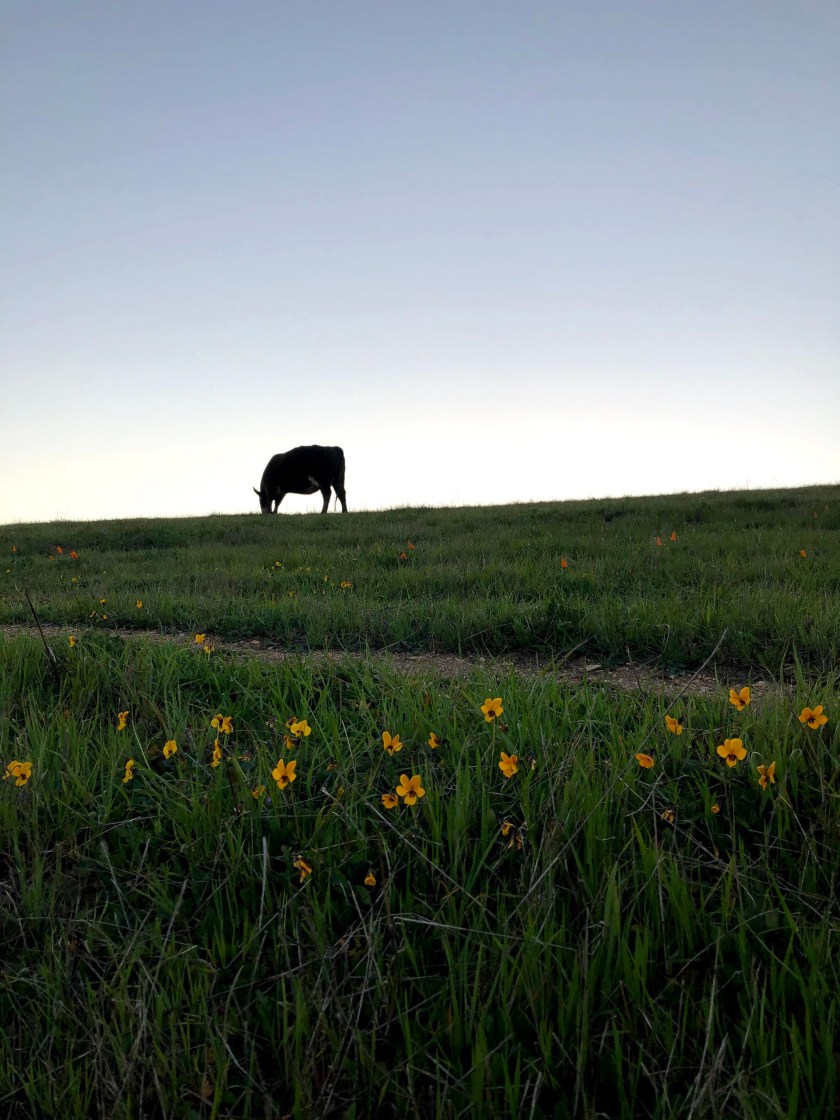
During the few months of spring and early summer, the bay area resembles fairy land itself. The mustards are blooming alongside the lupines and golden poppies forming a profusion of yellows, violets and oranges against the lush green backdrop of the grassy hills.

img_1677

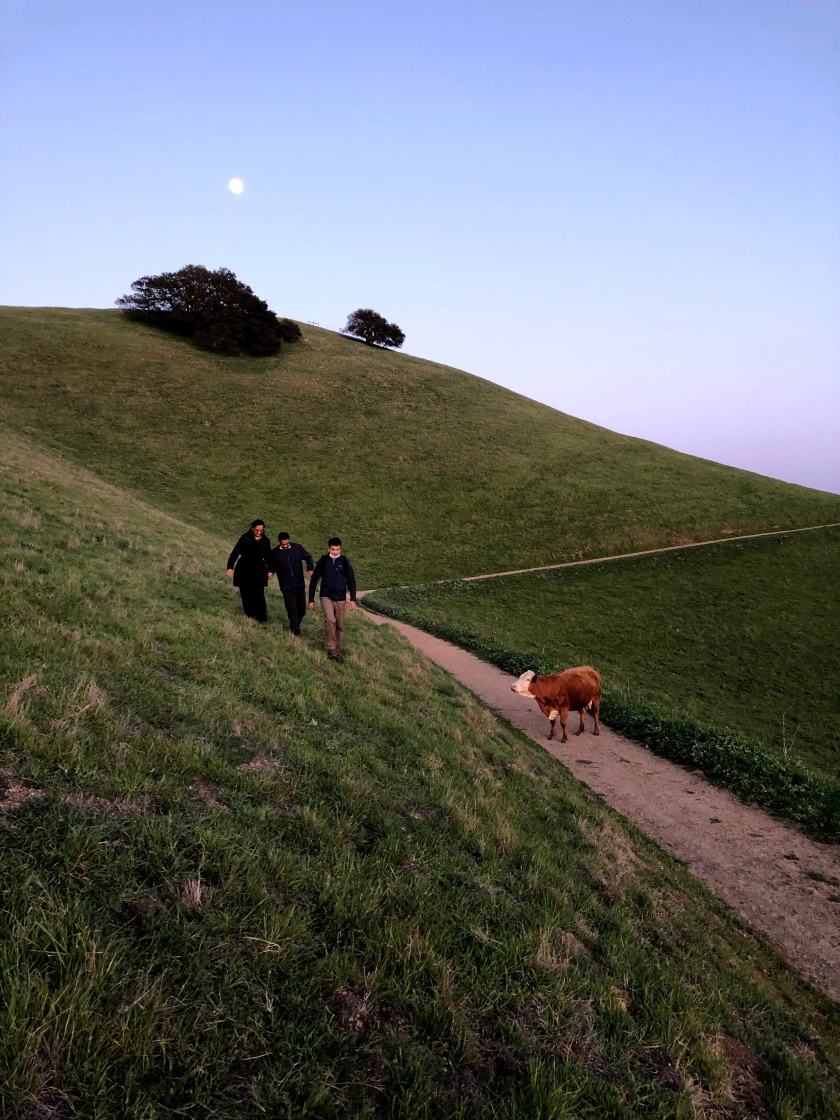
As I made my way through the green hills with my friends, who unwittingly agreed to a walk on a Friday evening, I chirped on happily. A few minutes in, there we were stalled in our tracks, faced with a herd of happy cows who didn’t seem too happy to see us. Right across our path they stood clustered around holding a conference of sorts, while one calf decided that the best place to drink mother’s milk was the pathway. This was one of the few places on the trail where a steep ravine drops on one side, and a rather incline presents itself on the other.

So, we stood, patiently awaiting the calf to finish drinking milk. Looking at my friends’ faces – not to mention the cows’ faces, I realized that this may not be the best time to tell them heartwarming stories of the elephant calf drinking milk on the Bandipur highway. (Galactic Plumes) So, I cheesed it, but here it is:

Along the roads from Karnataka towards the Nilgiri Hills are thick forests on either side. The Bandipur and Mudumalai national forests lie on this path. A drive through these roads is picturesque and can grant many marvelous views. Bison, spotted deer, and elephants are only a few of the marvels along this road. One such time when I had taken the night bus home, the bus stopped with its headlights off, and did not budge. The whole bus was awake within minutes and all of us were starting to get excited in those loud tones when the bus driver and conductor shushed everyone vehemently and told us to quieten down. It was apparent from their faces that there was potential trouble. Peering out into the road, we realized, they were indeed correct. There, in the middle of the road – on a national highway no less, stood an elephant mother, and her calf, who had decided to drink milk at 2 a.m. 

img_3588

While this may seem a trifle dramatic, the one thing elephant mothers do not tolerate is being disturbed when their infants are feeding. There have been several instances of a mother elephant losing it, and sending vehicles tumbling down ravines if disturbed. So, we waited. The waiting vehicles snaked for miles on each side, while the calf drank peacefully in the glow of the moonlight, and the headlights dimmed out of courtesy. How no one honked is beyond me, for Indian traffic is not known for its patience. Maybe, the road only attracted regulars, and they knew the ways of the forest creatures well. In perfect silence, the hundreds of vehicles waited on either side, quietly, patiently. Finally after 45 minutes, the calf had had its share, and the mother sagely moved to the forest. The drivers let out a perceptible sigh and slowly revved their engines on again, before proceeding. 

Where am I going with this? Well, replace the elephant with a cow, and add a herd of them in the middle of the road, and that was the situation facing us. We stood there, carefully waiting for the calf to finish its evening snack. Whoever termed the phrase ‘Mama bear’ got it right. Mamas aren’t to be messed with especially when they are in Mothering mode. It was a fitting lesson for Mothering day. (In the UK, Mothering day, different from Mother’s Day, is celebrated close to Easter.) 

I don’t know if you have ever walked through a herd of cows and calves before. If you haven’t let me assure you, it isn’t easy. It isn’t that the cows are going to do anything. Like the son said fairly during the wait, “We are in its home. So, it is better we wait!”, but the weight of even a calf is enough to send us tumbling down, and no one wants a stampede of cows. 

Anyway, we stood there feeling braver and looking dafter every passing minute. Funny how the braver we felt, the farther we seemed to be inching away from the cows. The cows seemed to be enjoying every minute of the predicament too. There were amused glances and tittering amongst them, I swear! Pretty soon, a cyclist came buzzing down and just parted the herd as he made his way past them. This seemed to give us courage, and we made our way too, though I must say I almost wet myself when the calf and mother gave me a warning as we passed. 

In ‘The Road To Little Dribbling‘, Bill Bryson writes of encountering cows in his walks. I couldn’t help thinking of the book at several points in the walk.

You know how we anthropologize our fellow creatures? I think this particular cow was messing with us. Probably make for a hilarious retelling at the water hole later on. You see, there she was, grazing on the hillsides, and just as she saw us coming, she turned a quiet eye towards us mocking us, and shuffled onto the road. There was simply nothing for us to do, but for us to scramble on to the hillsides ourselves while she looked on amused. The setting sun on one side, and a bright full-ish moon on the other, this picture is truly priceless. If only I could share it with the cow, so it lends her tale credence at the water hole! 

img_1691

People sometimes ask me what it is I find so enthralling in nature that I rave about it so much. Well: This is just it.

“I like being in a country where when cows attack, word of it gets around. That’s what I mean when I say Britain is cozy.”
Bill Bryson, The Road to Little Dribbling: More Notes from a Small Island

Running like Elephants

“Guys! Let’s hurry up a little. I like how we are dawdling, but the school bell waits for no ships to sail across the seas! ” I said. There had been a mild spattering of rain across the dry summer season. A few snails had popped out to enjoy the moist, and the son and his friends were looking at them as they chatted and made their way to school. Rain drops on the late summer roses and oleander flowers made the scene a rather endearing one.

img_3991-effects

The response from the children was predictable – they ran, and I ran shouting like a charioteer pulling the reins on the excited steeds, “Slow down! No running here – oncoming traffic!”
“But you asked us to hurry up!”
“Yes – run like Elephants!” I said.

I had told the children earlier about the Elephant’s gait, and they exchanged glances and started laughing. The snail they were studying looked startled and showed a leap of speed as it made its way back to the comfort of the garden bed.

Is this walking? *giggle*
Is this running? *giggle giggle*
Is this fast walking? * giggle giggle giputly duggle*
Is this slow running? *giggle puddle chuckle duffle*

I smiled slowly. “Pretend you are Elephants teaching Snails to run.”

elephant_snail

I suppose that was a wrong metaphor altogether. By the time we arrived in the school, not only were we out of breath with the laughing, but we were also fashionably disconcerted. The legs seem to not remember how to walk straight or run properly, and were caught in this limbo of the Elephant’s Gait.

Later that week, I was sitting in the garden and watching the world go about its true business of living. I watched a hummingbird’s fast-paced wing movements up in the trees. A few butterflies were flitting hither and tither. A skein of geese were flying overhead in that beautiful v-shaped formation. Closer to the ground, a few snails were marking their slow way across the courtyard.

This combination of sitting in a garden, and watching life flit by had me take a hundred pictures with my phone. Pictures that may or may not be seen and appreciated again. I could capture the slow motion video of the humming bird whizzing up above or the butterflies in my midst. I could use time-lapse videos to capture the slow moving snails and a dozen pictures to capture the beautiful movement of the caterpillars.

As I sat there musing on the ease with which we capture movement these days, I could not help comparing and contrasting humanity’s struggle to capture that. I remember yawning in the Art galleries after seeing the n-th painting of a horse or the x-th statue of a horse drawn chariot.

But as I sat there that afternoon, I wondered whether I had appreciated them enough. After all, at the time of their making, studying movement was not all easy. One had to have an almost eidetic memory to understand the muscles and the way they moved.

Leonardo Da Vinci’s work is appreciated because of the lengths he went to study the anatomy of the creatures in his works. 300 years ago, movement must have been particularly hard to study.

In Oliver Sacks’ essay on Elephant Gaits in the book, Everything in its Place, he writes about the problem of studying movement.

everything_place

More than a century ago, Etienne-Jules Marey had made a pioneering investigation of elephant gaits. Of course, he did not use video analysis then, but still photography. I quote: “Marey’s lifelong fascination with movement started with the internal movements and processes of the body. He had been a pioneer here, inventing pulse meters, blood pressure graphings and heart tracings – ingenious precursors to the mechanical instruments used in Medicine even today.

Later, he moved onto the animal movements and analysis.
For animal analysis he used pressure gauges, rubber tubes, and graphic recordings to measure the movements and positions of limbs. From these recordings, he rotated in a zoetrope, reconstructing in slow motion the movements of the horse.

Muybridge, a contemporary of Marey, however, a peripatetic artist as Sacks describes him used 24 cameras along a track where the shutter would be tripped by the horses themselves as they galloped past to capture the movements of the horse as they raced.

When a similar technique was used to analyze the fast movement of elephants, it was found that they neither walked nor ran, but rather a combination known as fast walking.

I remember a long ago conversation with a friend who was training for a marathon on the more recent study of leopards running, and how he had changed his running technique to take a few tips from the world’s fastest runner.

As we watch the world around us, I wish different creatures could teach us some of their marvelous techniques. The dragonfly and the humming bird for flight; mallards and coots for water locomotion. Doesn’t Biomimicry as a field of study sound more fascinating than ever before? I positively yearn to be Dr John Dolittle at times!

Books/Articles to be read/referenced in this post:

The Swirling Kaleidoscope

In a fit of inspiration, we planned a whirl wind of a trip to India and UAE. The grandparents, aunts and uncles were unduly enthusiastic, and we were welcomed with joy everywhere. The past month is a beautiful blur of family and friends, multiple cities, delicious foods, tropical fruits, flora and fauna like seen nowhere in the United States, and national forests. 🌳

I have tried explaining India to my colleagues and friends in the United States who have never visited. How does one capture the pure joy of peacocks dancing in the rain, the unease of the stray dogs barking and chasing you as your make your way to the ATM around the corner on the same day? (I did not stop to take pictures of the stray dogs chasing us – self preservation is a dear thing.)

It is difficult to capture the pulse of the buzzing populations, the incessant sounds of the chaotic traffic in cities, the mosquito bites, the sweat from the heat, the beautiful rains, the warmth of the people you know, the helpfulness of those you don’t, the colors and fashions like nowhere else, the birds, flowers, stray dogs, cows, street vendors, disappearing footpaths, haphazard constructions, the quintessential maids, the eateries, the clothes line, the flooring, the beautiful national forests and through it all, the keen and heightened senses required to be aware of the ever-present dangers in highly populated areas.

How does one explain the ubiquitous presence of religions – the call of the masjids, the church bells, the sounds of the temples? The paradox of freedom in a culture that is still quite demanding in its expectations of behaviors in its populace.

The varieties of music – traditional music to start off the days, the filmy beats to take one through the rest of the day: whether one asks for it or not!

It really is Incredible India.

If we stirred out into the urban areas, I quickly yearned for the quiet of home. If I was home, I was exhorted to go out, since there was so much to do, so many people to meet, and so little time. Even so, I did not do as much as I wanted to. Did not meet as many people as I wanted to.

Indian cities are a kaleidoscope of swift whirling colors, its countrysides a different kaleidoscope altogether but equally vibrant.

Consequently, back on the flight to our home in the United States, I realize I have had little time to slow down, read and rest. As the flight drones on, I nap, read, watch a movie, eat, stretch; rinse; and repeat; thrice only to see the flight blink back at me that there are 2 more hours to land. A grim reminder as to how very far away I live . My heart literally stretched across the entire span of the globe.

I cannot help thinking of Virginia Woolf’s saying on Women:
As a woman I have no country. As a woman my country is the whole world.

Too short, too fast and too little, but just enough to make me smile fondly.

The Elephant Keeper 

I had been on a short trip to a Green island staying at a Purple hotel with White Christmas decorations in a city center. While there, I decided to make the most of it, and hopped on a tour bus to take in the sights of Ireland. It had been a dry few months in … Continue reading “The Elephant Keeper “

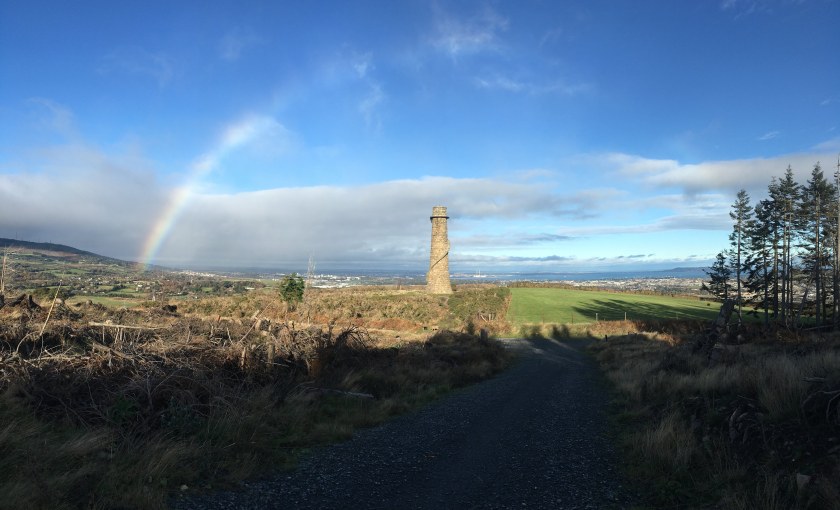
I had been on a short trip to a Green island staying at a Purple hotel with White Christmas decorations in a city center. While there, I decided to make the most of it, and hopped on a tour bus to take in the sights of Ireland.

It has been a while since I went meandering off on my own. As I boarded the day trip for Wicklow mountains and Glendalough lakes, that wily Master of Doubt was trying to work his way into the old brain stand, and I was becoming a little unsure. Most people had come with at least 1 travel companion. I saw the knots of people comfortable in their own little groups as we waited for the bus to come and pick us up.  I wondered whether I shall be alone. Not that it mattered much since I had a book about a jolly esoteric family to keep me company on the trip.

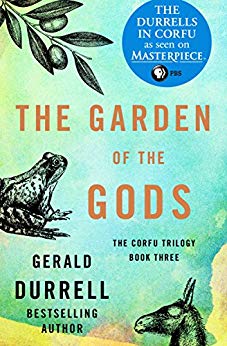
Sitting tentatively in the van, I was reading The Garden of the Gods by Gerald Durrell on the kindle. I giggled before I could help it. I was peeking out at the passing scenery every now and then, and imagining the little household at Corfu. The author, Gerald Durrell, then a boy, lived with his ‘Family and Other Animals’ in the island of Corfu. A budding naturalist, his boyhood is a most interesting one in which no living creature escapes his admiration. His bedroom plays hosts to barn owls, field rats, bats, along with the more traditional form of pets such as cats and dogs. He also has a donkey named Sally, and I could not help laughing at the resulting antics this menagerie produced with his esoteric family.

corfu_3

The Corfu Trilogy is set in the island of Corfu, and since I read each book in the series a few months apart, it was most satisfying.

I could barely believe that it was possible for somebody to live the way he described it. The Universe is not always kind to doubting dunlins, but this time it was.  Within the hour, I was to meet someone whose life was remarkably like the one I had just read about.

The tour bus dropped the folks who had opted to spend time at a Garden. Only two of us had opted for a hike instead of an amble around the Gardens to the dismay of the tour guide. The look we exchanged affirmed that we would be far happier being buffeted by the roaring winds, and gazing longingly at the rolling hills around us. I recognized a kindred nature loving spirit in her, and soon we got walking and talking.

As we loped up the trail with an enthusiastic whoop, she told me a little bit about herself, and I was so glad she did. She loved animals, she said, and lived in a home teeming with pets. I truly did not believe that Gerald Durrell’s family was possible, much as I loved reading his books. But her answer astounded me. She said they had a donkey, 2 geese, 2 cats, 2 dogs and 12 hens. Her business trip was the most interesting one I have heard to date. She worked as an Elephant Keeper in a Zoo in Holland. She was here, she said, on an week-long program to work at the Dublin zoo’s Elephant department, but would be going back to her own zoo at the end of the week.

elephant_keeper

I told her that the children would love to meet her, and she nodded understandingly. Looking at the excitement of their mother, she very kindly sent me some pictures and videos of the animals she worked with in her work spot.  She too had come alone, and the pair of us spent the whole day together – on windy hillsides, amidst towers and remnants of castles looking like giant rooks and bishops on a chess board.

img_0044

I was so glad that my earlier doubts had not stopped me from having a wonderful day: the serendipity of finding companionship, the beauty of learning of another way of life, and above all, the opportunity of shaking oneself out of the familiar and the tried and tested.

The universe finds a way of showing us the rainbow if only we stick with the rain.