Celebrate World Elephant Day: Protecting Our Gentle Giants

World Elephant Day

August 12th, is World Elephant Day. Seeing elephants (even the cute AI generated pictures) makes me smile. The huge, gentle, loving, empathetic, loyal, family and community oriented animals have always captured the human spirit. It is the reason one of the most popular gods of Hinduism features an elephant-headed god. His birthday is celebrated with so much pomp and splendor, I am sure the elephants wonder what the fuss is all about on those days. 

I am not sure if they’ve heard how much their stories resonate with human-beings – Water for Elephants or Rosy is my Relative for instance. Even my own modest attempt, Mother’s Day in the Jungle, was such a joy to write. Oby Elephant and his pals are all that we want our children to be. 

https://books.apple.com/us/book/mothers-day-in-the-jungle/id874603773
Mother’s Day in the Jungle

It is no wonder that elephant related documentaries are always a hit. We want to see them succeed, we want to know that peaceful living can take us far. 

The question is, are we happy to suppose that our grandchildren may never be able to see an elephant except in a picture book?

– – David Attenborough

Temporal Range of Elephants 

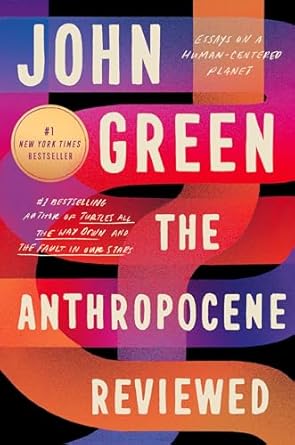
In the essay, Temporal Range, in the collection of essays by John Green, The Anthropocene, he talks about how long these majestic creatures have been a recognized species – 2.5 million years as opposed to humans who were only classified as such for the last 250,000 years. Yet in that short time, we have endangered almost every other notable species on the planet in small and big ways. 
Dolphins have been here for 10-11 million years – with their songs of wisdom, playful natures, and community based raising of their pods. Dolphin grandmas are delightful, and critical in the raising of their young. The same way the matriarch of the elephant herd is instrumental in passing on skills to the younger generation of pachyderms. Humans have somehow managed to emulate and disregard this ancient piece of wisdom by denying women freedom and basic rights, but also making them critical to the caring of the family unit. Sigh.

When we talk about accumulated wisdom,  most of the philosophy we have at our disposal caps out at 5000 years. But, elephants and dolphins? Please. They have figured out how to live out their lives cancer-free. 

Unpacking 🐘🐘🐘, 🐬🐬🐬 & 🐦🦚🐧🕊️

A friend of mine shared this article, Face it! You’re a crazy person, on unpacking the life of someone’s job. As I read what it meant (trying to visualize every Tuesday afternoon for the next few years, the day-in-the-life-of series), I found myself thinking that I would love to unpack being an elephant in the wild, a dolphin in the oceans, or a bird in the gardens before deciding whether to remain a human-being.

Wouldn’t that be wonderful?

What are some things related to elephants you’d like to share? Anything.

Happy World Elephant Day!

🐘🐘🐘🐘🐘 The Tusks of Extinction 🐘🐘🐘🐘🐘

The Mammoth Tale

Few passages capture the bane of consumerism like this one does. It is from the novella, The Tusks of Extinction by Ray Nayler.

The premise of the book is an intriguing one. 

  • It is set in a future when mankind has figured out how to upload one’s consciousness into the cloud. A manner of immortality. This is very much in the realm of possibility.
  • It is also set in a time where the Siberian mammoths have been resurrected. This has already transcended realms of possibility into reality

The wooly mammoth is being resurrected – being cross bred from the genetic remains frozen in the Siberian Tundra with  the Asian elephants (because they are gentler than African elephants). 

Thus, begins the tale of a doctor whose life was hacked from him moments after he uploaded his thoughts and knowledge to the web. This man, Dr Damira, was a passionate naturalist, a man who studied the African elephants and their ways. He fought for their conservation but failed. This is set in a future where the last of the elephants no longer roam the Earth. 

tusks_extinction

The resurrected mammoths in Siberia are facing difficulty thriving in the wild. They have all been bred in captivity, and do not understand how to survive the demands of living by themselves, caring for each other, and forging paths so they can forage and live through the cruel winters. They are thus being killed by poachers in a cry that reminds scientists of how the elephants were all killed off one by one. 

In an attempt to give them a chance at life, the doctor’s consciousness is uploaded to a mammoth – a matriarch by the name of Damira. 

Bane of Consumerism

There are several aspects of this novella that can appeal to us, but one in particular stood out to me, and that was how our consumerist culture alienates us from the natural world. For we buy things, we want things, we accumulate, we hoard – who is it hurting? I am earning and I am buying. It is all helping the economy is it not?

Extract:

In offices-a tusk in a case, beautifully carved, transformed into a world of its own, worked by human hands into a chain of elephants walking trunk to tail. Beautiful, lifeless elephants carved from the destruction of an elephant, hacked into what had once been a part of a body, a tooth, a tool. A part of a life.

“Among the skyscrapers, there were also older places-little streets of cramped shops, survivors from another Hong Kong. Marginalia that had been missed by the eraser of progress. And there, in the shop windows, so crammed with clever things, there it was. My eyes found it over and over again. Ivory. Ivory jewelry, ivory stamps used to sign decrees that were meaningless now, ivory game pieces of every kind. Ivory turned into useless gewgaws, dripping with the blood in my home. It could be carved into any lovely shape they wished, but all of it began in killing. No-more than that all of it began in killing that took place far away. That took place somewhere the people who thought of ivory as a material could not see. Killing that took place in an extraction zone.

I remember the horror I felt when I first learnt that certain types of leather were obtained from the skin of crocodiles and were thus priced higher. 

Cities like Hong Kong and New York and London at the center, vortexes into which the currents of trade accelerated, into which goods from all over the world were pulled. Places where things became materials. Where things became commodities.

Many of us rarely stop to think of the source of all the things we use as part of our daily lives. In all honesty it is overwhelming to do so. How does the kidney bean come to be in its packet in the grocery store? Once we start down that road though, what about the almond flour, the diamond ring, the leather handbag, the silk scarf, the perfume, the spice, the watch, the gold ring, the ceramic jug? Everything has its tale, its journey, its place in the human chain of wants and needs. 

What Can We Do?

In reality, we cannot give in to an almost paralyzing analysis of source-to-table for everything we consume. Is there economic exploitation along the way, unscrupulous practices, inhumane treatments? Would we be happy to know it all and make informed decisions – yes, (I am hoping that humans have enough humanity to make the right choices if we do), but can we do so? Not always. 

I spent a pleasurable few hours at the mall the other day, and found my fellow human beings doing the same. Glancing around at the happy faces of those of my fellow humans that morning, I did not see malice or greed – I simply saw folks at a mall on a rainy week-end. 

I like that mass production has made life easier, the jobs it has created, alleviating entire nations from poverty. I like that poor children can have new clothes, and that horizons have expanded thanks to the general prosperity of nations. I do not, however, like the ever-increasing pressure to produce and consume more. 

Is the economy to be weighed against the Earth’s resources at every step in the mall? Or just more more meaningful consumption? I do not know.

Will Macedonian Job Listing Interest Korean Elephant?

I’ve read through a fair share of job listings. I remember looking in the Indian newspapers as a girl, hoping to find some hidden gems of novelty, and was almost always rewarded. If nothing else came up, there was at least the seedy lawyer asking for someone to be employed in some capacity and almost always had a combination of the words: prosecuting, witness, clerk, short-hand, typing etc. in legalese. (Lawyer offices are incapable, by design, of simple sentences and take pride in complicating things.)

However, I must say this Macedonian minister takes the cake. He wants to employ certified genii as assistants. He would not settle for any IQ scores below a 140 it seems. Apparently, the intelligent minister has not stopped to ponder about why a person endowed with an IQ of more than 140 would want to work as his assistant.

http://www.modbee.com/2012/11/08/2447578/macedonian-minister-looking-for.html

Maybe, somebody would be kind enough to send him Koshik’s resume for the position if Koshik is interested.


macedonian minister

Who is Koshik? Well, he is an elephant in a Korean zoo.

http://news.yahoo.com/elephant-south-korean-zoo-imitates-human-speech-080222456.html

Koshik is astounding scientists there with his intelligence. Koshik can utter more than a few words in Korean, and is evidently picking up human speech patterns.

The question, of course, is whether the Macedonian Minister will he have the IQ enough to understand what the elephant is telling him?